Industrial Lasers
Industrial lasers are employed for various tasks, including cutting metals and fabrics, marking tracking codes for industrial traceability, precisely welding metals, cleaning metal surfaces, modifying surface roughness, and measuring part dimensions. Although lasers exist in various powers, colors, and beam widths, they all operate according to the same principles. So what is an industrial laser, and how does it operate? Using a laser, common in several industries like the EV and primary metals industries, could be advantageous in various industrial applications. Industrial laser systems are now a major part of modern manufacturing because they give operators a highly concentrated, controllable energy source that can process materials with speed, repeatability, and a strong degree of precision. In production environments where cycle time, quality, part consistency, and automation matter, industrial lasers are often selected because they can support everything from fine micro-processing to heavy-duty cutting and joining operations.
Industrial Lasers FAQs
What are industrial lasers used for?
Industrial lasers are used for cutting, welding, marking, drilling, additive manufacturing, cleaning, measuring, and surface modification. They are widely used in industries that need accurate, repeatable, and high-speed material processing.
What properties make laser light useful in manufacturing?
Laser light is valuable in manufacturing because it is directional, monochromatic, and coherent. These properties allow the beam to be tightly focused and deliver concentrated energy for precise industrial work.
What are the main components of an industrial laser?
The main components of an industrial laser include a gain medium and an energy source. The gain medium produces light at the needed wavelength, while the energy source excites that medium so the laser beam can be generated.
Why are industrial lasers used for cutting and welding?
Industrial lasers are used for cutting and welding because they can deliver focused energy with very high precision. This helps create clean cuts, strong welds, small heat-affected zones, and consistent results in repetitive production work.
What are the benefits of industrial lasers?
Industrial lasers can improve accuracy, support automation, reduce maintenance in some processes, increase production speed, and limit the use of certain consumables. They are often chosen when manufacturers want better repeatability and cleaner processing.
What are the disadvantages of industrial lasers?
Industrial lasers can involve high upfront cost, greater process complexity, and safety concerns if not properly controlled. Some applications also require careful setup for beam alignment, temperature, speed, and material response.
How do buyers choose the right industrial laser supplier?
Buyers typically compare suppliers based on application experience, process capabilities, support, equipment options, and industry focus. Reviewing multiple suppliers and requesting quotes can help narrow the choice to a provider that fits the production need.
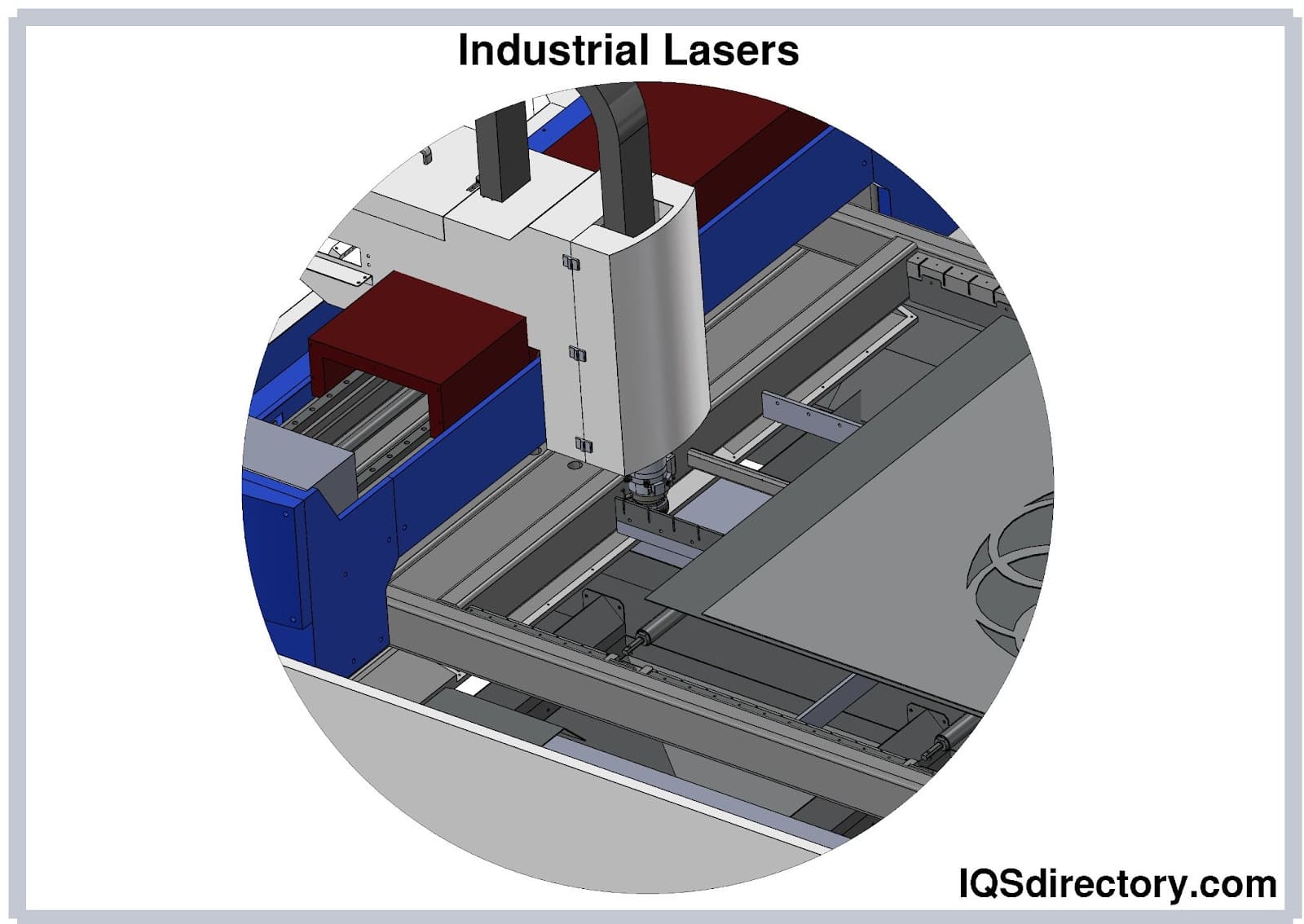
Properties of Industrial Lasers
An industrial laser is a light beam; for it to work well, it should have the following light properties. These characteristics are what make laser processing different from broader, less focused forms of light or heat. Because the beam can be concentrated so precisely, manufacturers can use industrial lasers in applications where tight tolerances, detailed geometry, and repeatable energy delivery are needed.
- Single Direction
- Monochromatic
- Coherent
Single Direction
The laser beam has a modest, nearly constant beam diameter across a vast area and is pointed in a single direction. As a result, lasers can generate extremely high power levels when light is concentrated in a single direction. That narrow, directed beam makes it possible to focus energy into a very small spot size, which is a major reason lasers are used for cutting, engraving, welding, drilling, and precision measurement. In industrial settings, beam directionality also supports automation because the beam can be positioned and repeated with consistent accuracy from part to part.
Monochromatic
Laser light is monochromatic, meaning its color is limited to a single distinct hue. The wavelength of the electromagnetic waves that make up light determines its color. The beam can be visible, infrared, or ultraviolet. The wavelength of a typical industrial red laser (helium-neon, for instance) lies between 632.800 and 632.802 nanometers. Wavelength matters because different materials absorb laser energy differently. That means the laser source selected for metal cutting may differ from the one used for plastic marking, medical device processing, surface texturing, or measurement. In practical manufacturing terms, monochromatic light helps improve process control because the beam behavior is more predictable.
Coherent
The word "coherent" refers to the synchronization of all the light rays within the beam. As a result, they share the same polarity and phase. The beam's tremendous strengths are also made possible by this coherence. Coherence allows the beam to stay organized and tightly focused over distance, which is one reason industrial lasers can produce such clean, concentrated energy at the point of contact. For manufacturers, that helps support fine detail, controlled penetration, and consistent process quality across repetitive operations.
Components of Industrial Lasers
- Gain Medium
- Energy Source
Gain Medium
The substance utilized in the laser cavity is known as the gain medium. It can be a liquid (like a dye solution) or a gas (like a ruby crystal) (a helium-neon mixture). The crucial characteristic is that it emits light with the desired wavelength when activated. Depending on the system design, the gain medium may also be solid-state, fiber-based, gas-based, or based on other engineered materials selected for a particular wavelength, output level, and application. In industrial use, the gain medium influences the laser’s behavior, processing speed, beam quality, and compatibility with different materials.
Energy Source
The gain medium in the laser cavity emits light from the energy source. Diode lasers are frequently used as an energy source because they convert electricity into light. For example, a short electrical discharge in a CO2 laser can make the gas emit light. The energy source, sometimes called the pump source, is what excites the gain medium so the laser process can begin. In manufacturing systems, the type of energy source used can affect efficiency, maintenance needs, operating cost, and how easily the system integrates into automated production equipment.
Industrial Laser Applications
Numerous industrial areas employ lasers as manufacturing tools. Some of these applications are listed below. In many factories, lasers are used because they combine speed with precision and can often be integrated into robotic cells, conveyors, CNC systems, vision systems, and digital traceability workflows. This makes them attractive in sectors such as automotive, aerospace, electronics, EV battery production, primary metals, medical device manufacturing, and general fabrication.
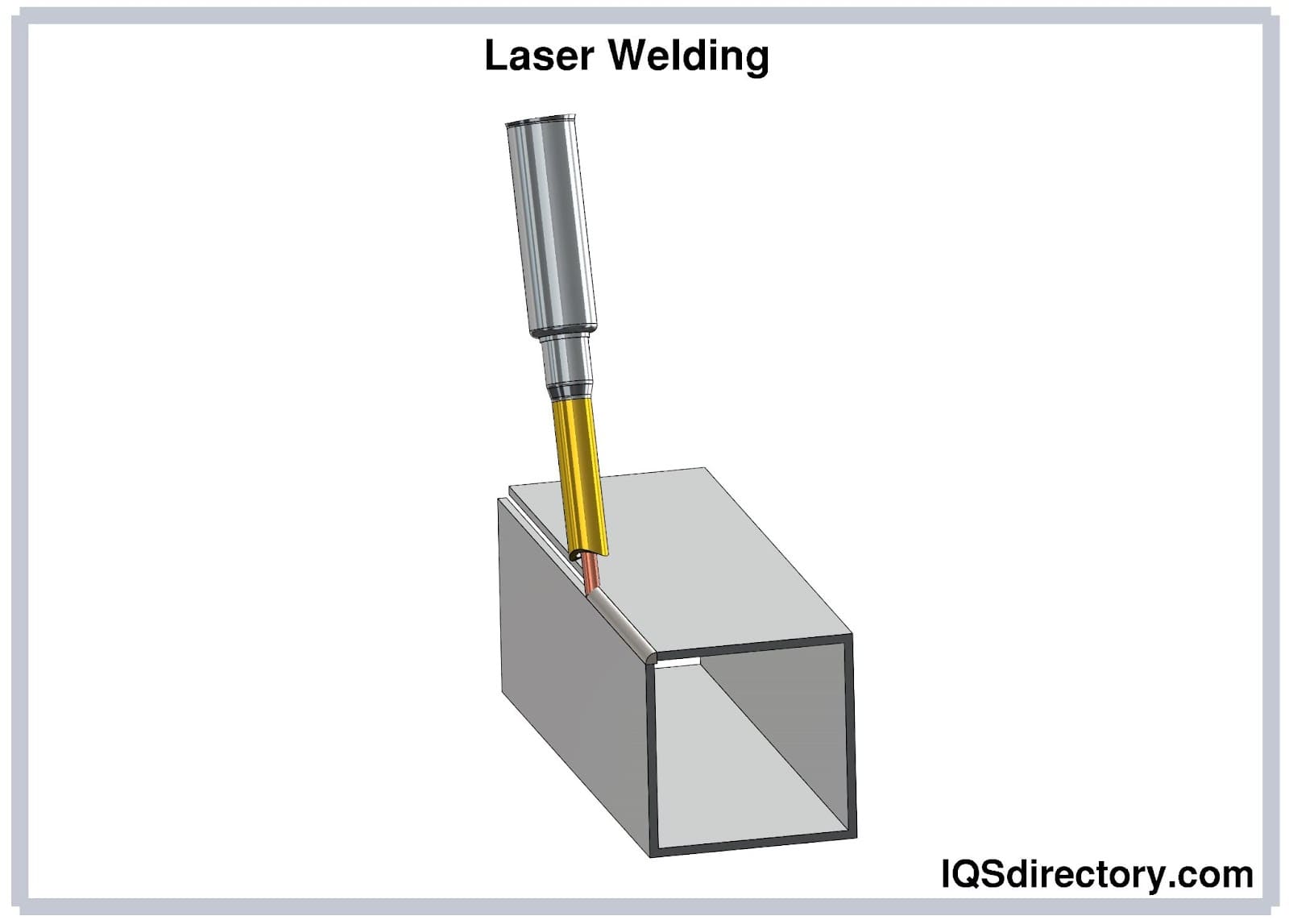
Laser Welding
Laser welding produces strong welds and high-quality joints even when joining incompatible materials. Laser welding is highly suited to production processes with repetitive operations due to consistent accuracy. It is often selected when manufacturers want narrow weld seams, strong joint quality, controlled heat input, and good repeatability across large production volumes. Laser welding is also used where appearance, speed, and reduced post-processing are important considerations.
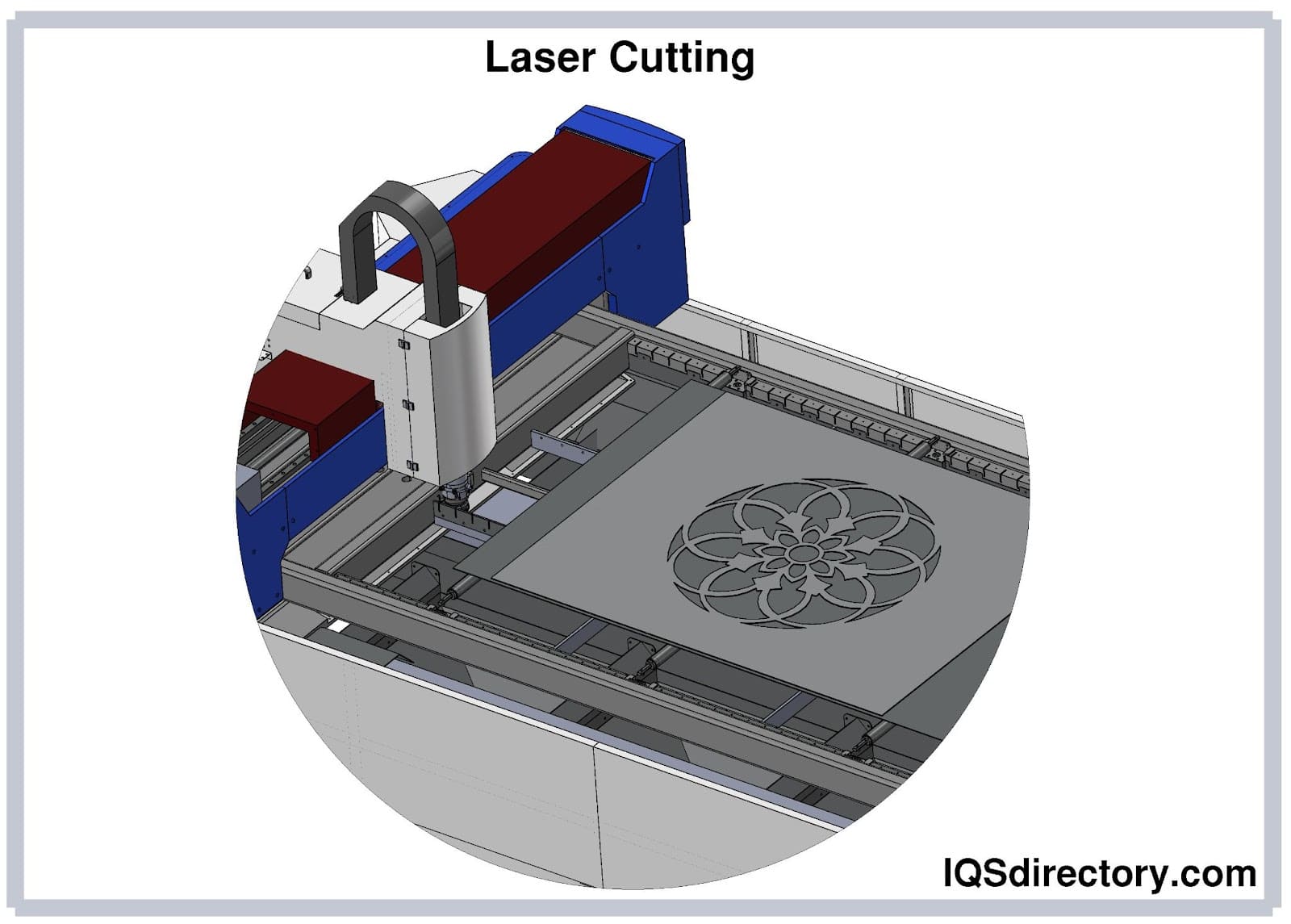
Laser Cutting
The output of a powerful laser is focused on the material to be cut in a laser cutter. The targeted region can be heated, melted, or vaporized by a powerful beam of coherent light, which also leaves a smooth, burr-free edge with a superior surface finish. Although modern laser-based cutting systems can process steel up to one inch thick, lasers are normally employed to treat thinner materials. Laser cutting is widely used for sheet metal fabrication, precision components, signage, textiles, plastics, and many other materials where cut quality and repeatability matter. It is often valued for fast changeovers, reduced tooling needs, and the ability to cut detailed shapes with limited mechanical contact.
Additive Manufacturing
A laser beam forms a melt pool on a metal substrate or other material in additive manufacturing applications like 3D printing and laser deposition. Layer by layer, the finite component is constructed. In industrial additive manufacturing, this approach can support complex geometries, reduced material waste, rapid prototyping, and the production of specialized components that may be harder to manufacture through conventional subtractive processes. Laser-based additive systems are often discussed in relation to aerospace parts, medical implants, tooling, and custom metal production.
Laser Marking
The use of a laser to leave a permanent mark on almost any surface or material is now common in factories. Compared to other techniques, this one is high resolution, suitable for metals and plastics, and incredibly quick. Laser marking is often used for serial numbers, QR codes, barcodes, logos, lot numbers, and traceability marks that need to remain legible throughout the life of a part. In regulated industries, this can play an important role in quality systems, product tracking, and manufacturing documentation.
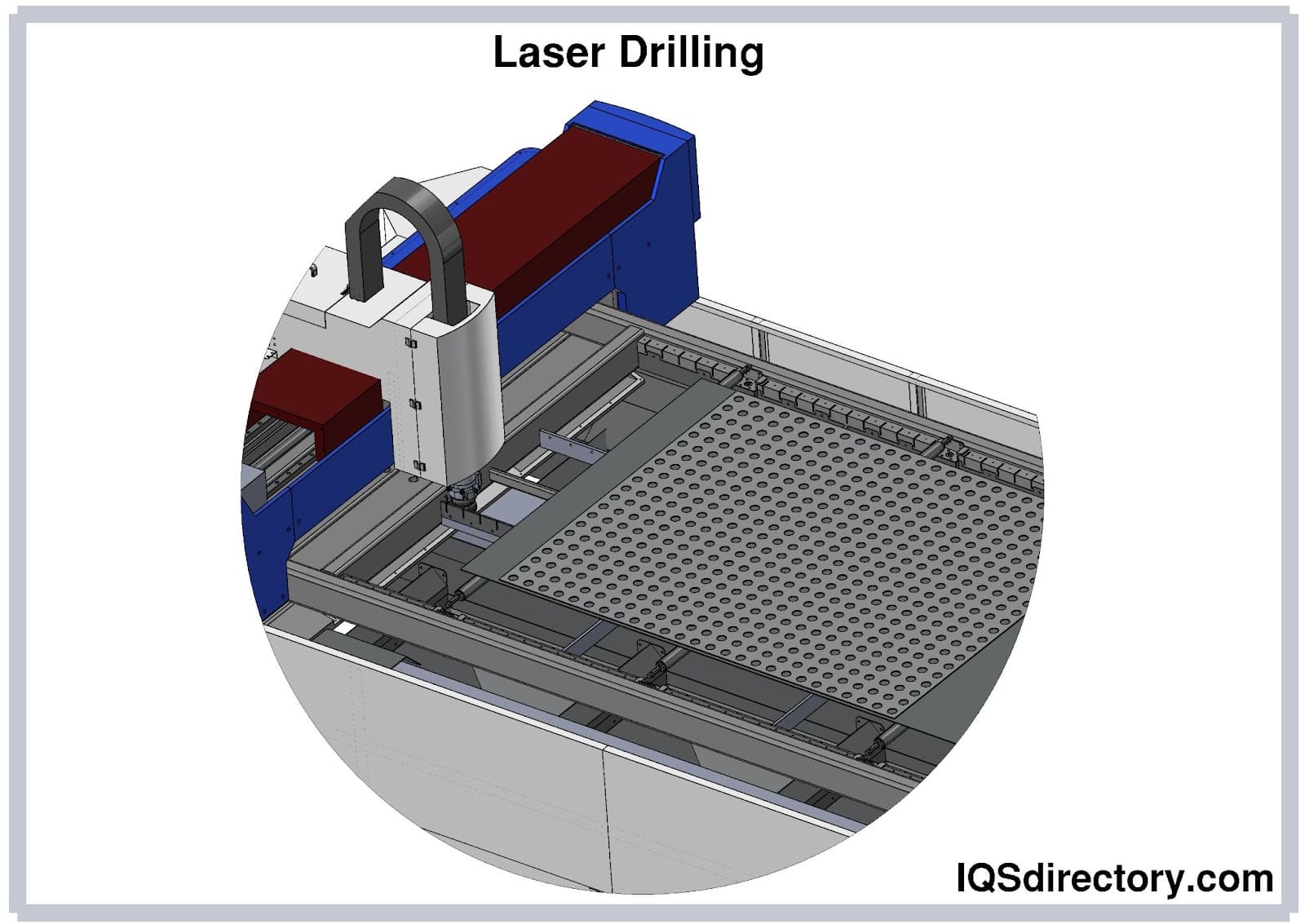
Laser Drilling
Laser drilling has become a useful technique for making tiny holes, as small as 0.0005" in diameter. A laser can drill holes, to be more precise than other options. This makes the process attractive for applications requiring micro-holes, controlled geometry, or fine repeatability in hard-to-machine materials. Laser drilling may be used in electronics, aerospace components, medical products, and high-performance industrial parts where conventional drilling methods may struggle to match the required precision.
Benefits of Industrial Lasers
Better Accuracy
The fine focus of modern laser beams is one-thousandth of a millimeter. The laser allows measuring, marking, or cutting to be carried out with the highest level of accuracy. After a laser cut, the material is completely free of deformation and burrs. This accuracy is a major reason lasers are used where tight tolerances, detailed geometry, or repeatable processing are required. In many production settings, improved accuracy also helps reduce scrap, rework, and downstream finishing time.
Automation Benefits
Shorter cycle times, reduced maintenance, and more cost-effective production are all benefits of using lasers in manufacturing. Operations previously time-consuming and prone to error can be completed quickly and perfectly. In addition, processes can be done at astounding speeds when automation and laser technology are used together. On the production line, lasers are now the fastest way of cutting and welding. Because many industrial laser systems integrate well with robotics, CNC motion, machine vision, and traceability software, they fit naturally into automated cells and digitally managed production workflows.
Environmental Benefits
Compared to their conventional equivalents, lasers require a small amount of energy. As a result, lasers can replace production processes that use wasteful consumables like welding fluxes, steel grits, ink, and labels. By doing this, significant waste is prevented during these other processes, along with the emissions brought on by the production and transportation of the goods required to perform them. In some operations, laser systems may also help reduce the need for contact tooling and secondary cleanup steps, which can support a cleaner overall process.
Disadvantages of Industrial Lasers
Cost
It costs money to stay current with the technology, adding to the cost. Industrial laser systems can involve substantial capital investment, especially when paired with motion systems, enclosures, extraction systems, automation hardware, and specialized controls. For many buyers, the decision comes down to balancing the upfront cost against long-term gains in throughput, precision, and process efficiency.
Increased Intricacy
Design intricacy depends on laser or other equipment, increasing treatment complexity and duration. While laser processing can simplify some production steps, it can also introduce added planning around beam control, fixturing, optics, cooling, extraction, and process parameter setup. That means the surrounding equipment and process design matter just as much as the laser source itself.
Cutting Cycle Issues
In the cutting cycle, the laser bar is delicate to handle. A slight error in adjusting the temperature and distance may cause the metals to copy or discolor. Additionally, more force is needed throughout the cutting cycle. Material response, beam quality, focal position, assist gas settings, and heat management can all influence cut results. For that reason, laser cutting systems often require careful calibration and process tuning to maintain edge quality and dimensional consistency over time.
Harmful to People
People are harmed by them. Industrial lasers frequently eat into people with which they come into contact. Because industrial lasers concentrate significant energy into a focused beam, they require careful guarding, interlocks, shielding, training, and safe operating procedures. Eye and skin exposure risks make safety systems an important part of any industrial laser installation.
Choosing the Proper Industrial Laser Supplier
To ensure you have the most productive outcome when purchasing an industrial laser from an industrial laser supplier, it is important to compare several companies using our directory of industrial laser suppliers. Each industrial laser supplier has a business profile page highlighting their areas of experience and capabilities, along with a contact form to directly communicate with the supplier for more information or request a quote. Review each industrial laser business website using our patented website previewer to quickly learn what each company specializes in. Then, use our simple RFQ form to contact multiple industrial laser companies with the same form. When comparing suppliers, buyers often look at application experience, beam technology options, service support, integration capability, automation knowledge, and whether the supplier has worked in the same industry or material category before. The strongest match is usually the supplier that understands both the laser equipment and the production demands surrounding it.