Contract Manufacturing
Contract manufacturing is a business model in which one company produces parts, components, subassemblies, or finished goods for another company, usually the original equipment manufacturer, or OEM. In most arrangements, the OEM owns the design, product specifications, and brand identity, while the contract manufacturer supplies the production capacity, process control, labor, equipment, and quality systems needed to build the product efficiently. Companies use contract manufacturing to reduce overhead, improve speed to market, expand capacity without building a new plant, and gain access to specialized manufacturing expertise.
The phrase “contract manufacturing” is often discussed alongside private label manufacturing, outsource manufacturing, contract assembly, and subcontract machining. These models overlap, but they are not identical. Private label work often gives the manufacturer more influence over product format or formulation, while outsourcing is a broader term that can describe almost any third-party production relationship, domestic or overseas. For buyers comparing manufacturing partners, understanding these distinctions can make supplier selection, quoting, compliance review, and long-term planning much easier.
Contract manufacturing supports a wide range of markets, including chemical processing, automotive manufacturing, construction products, food and beverage production, marine systems, pharmaceuticals, defense, electronics, and aerospace programs. In high-volume sectors such as electronics, medical products, precision metal fabrication, plastics, and engineered assemblies, contract manufacturing is often the operating model that makes competitive pricing, reliable supply, and scalable production possible.
Contract Manufacturing FAQs
What is contract manufacturing?
Contract manufacturing is a production arrangement in which one company makes products for another, usually an OEM or brand owner. The contract manufacturer follows the OEM’s drawings, specifications, tolerances, and quality requirements, then delivers finished goods or components under the OEM’s brand. This model is widely used to lower overhead, improve production efficiency, and add manufacturing capacity without expanding an in-house plant.
How did contract manufacturing develop in the United States?
Modern contract manufacturing in the United States grew from electronics manufacturing services in the 1970s, when suppliers began producing assemblies for large OEMs instead of only building for their own direct customers. By the 1990s, the model had spread into pharmaceuticals, consumer goods, industrial products, and medical manufacturing as more companies separated product development from large-scale production.
What are the main advantages of contract manufacturing?
The main advantages include lower capital expense, better use of internal labor, faster production ramp-up, specialized process knowledge, and stronger quality systems. OEMs can spend more time on engineering, marketing, and sales while the manufacturing partner manages sourcing, fabrication, assembly, testing, and delivery.
What are the risks of using contract manufacturers?
Possible drawbacks include longer lead times, inconsistent quality, intellectual property exposure, material shortages, and disruption caused by transportation or political instability. These issues are usually reduced through supplier vetting, detailed manufacturing agreements, process validation, quality audits, and steady communication between the OEM and the manufacturer.
What industries rely most on contract manufacturing?
Electronics, pharmaceuticals, aerospace, defense, automotive, industrial equipment, plastics and rubber processing, and metal fabrication all depend heavily on contract manufacturing. These industries benefit from specialist equipment, scalable production lines, compliance systems, and repeatable quality control.
How does contract manufacturing differ from private label or outsourcing?
Contract manufacturing usually centers on building a product to an OEM’s specifications and selling it under the OEM’s brand. Private label production often gives the manufacturer more influence over the formula, design, or packaging. Outsourcing is the broader term for moving work to a third party, whether that work is domestic, nearshore, or offshore.
What factors should OEMs consider when choosing a contract manufacturer?
OEMs should evaluate manufacturing capability, industry certifications, quality history, geographic location, communication style, pricing transparency, tooling support, prototyping capacity, and on-time delivery performance. A good contract manufacturer should also be flexible enough to support changing demand, design revisions, and long-term production planning.
The History of Contract Manufacturing
The wide use of contract manufacturing today is closely tied to better transportation networks, faster communication, digital planning tools, and the globalization of supply chains. Even so, the basic idea is much older. Long before modern factories, many finished goods depended on multiple specialists working under a shared commercial arrangement. Furniture, tools, vehicles, and building systems often required coordinated work from tradesmen who each handled a specific process. In that sense, the logic behind contract manufacturing has been present for centuries, even if the scale and terminology are newer.
The modern version of contract manufacturing is most closely associated with electronics manufacturing services, or EMS. In the mid-1970s, suppliers in Alabama began shifting from government and aerospace work into commercial electronics production for OEMs such as IBM. As printed circuit board fabrication, component assembly, testing, and systems integration became more specialized, many OEMs realized they could move production to dedicated manufacturing partners and focus more directly on design, product management, and customer acquisition. That transition changed electronics production and created a model that many other industries would later follow.
What started in electronics gradually spread into apparel, industrial manufacturing, pharmaceuticals, medical products, packaging, consumer goods, plastics, and metalworking. By the early 1990s, contract manufacturing had become a mainstream strategy rather than a niche production method. OEMs increasingly relied on outside manufacturers for prototyping, machining, assembly, packaging, validation, and fulfillment, especially when they needed flexible output without carrying the full cost of an in-house production footprint.
Today, contract manufacturing is a core part of supply chain strategy in the United States and around the world. Buyers can compare domestic manufacturing, offshore production, and nearshore manufacturing based on cost, lead time, shipping exposure, labor availability, tooling support, and compliance requirements. Growth in pharmaceutical manufacturing, electronics assembly, and industrial outsourcing shows how attractive the model remains for companies that want scalable production and dependable delivery while keeping internal teams focused on engineering, sales, and market growth.
Advantages of Contract Manufacturing
Contract manufacturing agreements are often written around a production term, forecasted volume, or a defined purchase commitment. Companies enter these partnerships because the benefits can be substantial when the right manufacturer, process, and quality systems are in place. For many OEMs, the value is not limited to lower cost. It also includes faster quoting, smoother ramp-up, access to production engineers, better material sourcing, and a more predictable path from prototype to full-scale manufacturing.
Maximization of Time
A well-run contract manufacturing partnership allows OEMs to spend more time on product development, market research, customer support, branding, and revenue generation instead of managing every fabrication detail internally. That is especially attractive when a product requires specialized machining, electronics assembly, injection molding, packaging, or process validation that the OEM does not want to build and maintain in-house.
This time advantage is really a specialization advantage. When each company focuses on the work it handles best, the entire supply chain tends to move faster, make fewer avoidable mistakes, and respond more effectively to new product introductions, demand changes, and engineering revisions.
Economic Savings
Contract manufacturing can lower capital expense by reducing the need for new buildings, production equipment, staffing, compliance systems, and raw material inventory. Manufacturers that serve multiple OEMs often buy materials in larger volumes, negotiate better pricing with suppliers, and spread overhead across many jobs. That can improve cost efficiency for both the manufacturer and the customer without weakening product quality.
For OEMs exploring domestic versus offshore production, cost savings should be weighed alongside freight, tariffs, communication, inventory carrying cost, and time to market. In many cases, the lowest piece price is not automatically the best long-term manufacturing value.
These financial gains are strongest when the contract manufacturer can combine purchasing power, process discipline, efficient labor use, and accurate forecasting. That is why cost analysis and supplier fit matter just as much as the quote itself.
Product Quality
Contract manufacturers often improve product consistency because they are organized around repeatable processes, documented work instructions, inspection standards, and quality assurance procedures. A manufacturer that focuses on one product category or one family of processes can develop stronger know-how in tooling, tolerances, process capability, validation, and root-cause analysis than a generalist operation that tries to do everything.
Commercial Stability
Longer-term manufacturing relationships can create steadier planning on both sides. The OEM gains a dependable production partner, and the contract manufacturer gains forecast visibility and recurring business. That stability can support better inventory management, smoother scheduling, more informed capacity planning, and better communication during design changes or demand spikes.
Disadvantages of Contract Manufacturing
Like any supply chain strategy, contract manufacturing comes with tradeoffs. The model works best when the OEM understands the production risks, communicates clearly, and selects a manufacturing partner with the right technical fit and operational discipline. Without that foundation, cost savings can disappear and production headaches can multiply.
Inefficient Use of Time
One of the most common problems in contract manufacturing is delay. A manufacturer may be handling many customers, multiple product lines, or volatile demand at the same time. If scheduling changes, raw materials arrive late, or capacity is tighter than expected, lead times can stretch quickly. Distance can add more friction when a program depends on international shipping, multiple languages, or large time-zone gaps.
Compromised Product Quality
Quality can suffer when the OEM and the contract manufacturer are not aligned on tolerances, inspection plans, packaging requirements, documentation, or change control. Because the product reaches the market under the OEM’s name, even small defects or late-stage surprises can damage brand reputation, increase returns, and create avoidable rework.
Intellectual Property Loss
IP exposure is a major concern in many manufacturing partnerships because drawings, formulas, process data, and product designs have to be shared to make the job possible. OEMs usually reduce this risk with strong agreements, limited-access documentation, segmented production steps, supplier audits, and tighter control over final assembly, firmware, packaging, or inspection.
Physical Risks
When production depends on distant regions or unstable conditions, natural disasters, labor disruption, transportation bottlenecks, regulatory shifts, or civil unrest can affect output. For that reason, many buyers ask whether domestic manufacturing, nearshoring, or dual sourcing would offer a safer supply chain profile than relying on one remote source alone.
Contract Manufacturing Images, Diagrams and Visual Concepts
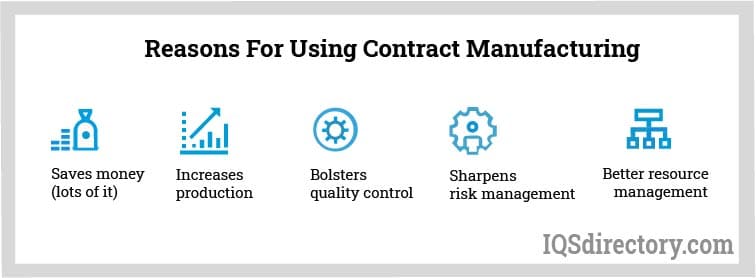 Common business reasons for using contract manufacturing include cost control, production flexibility, faster launch timing, and access to specialized manufacturing processes.
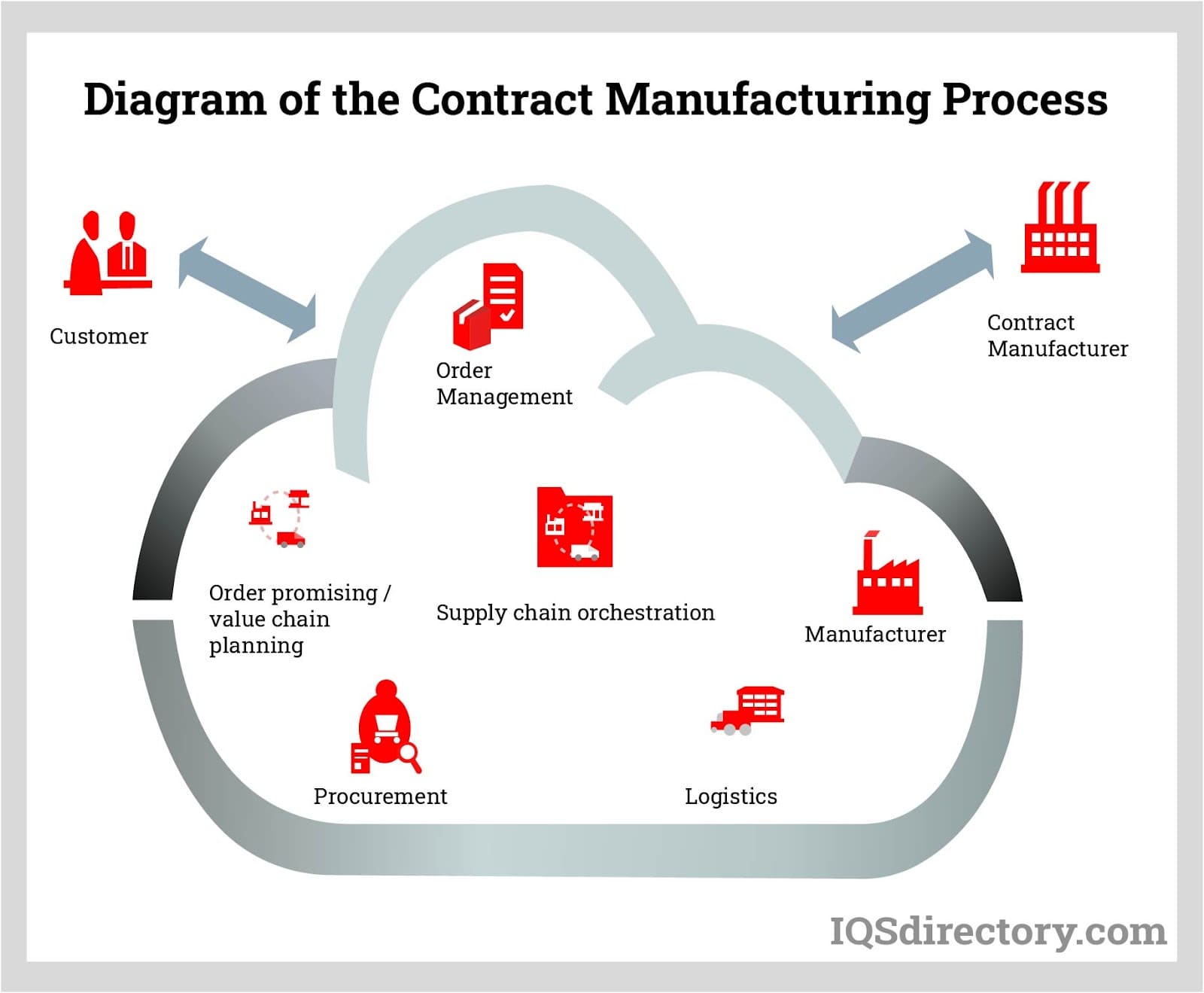 This diagram shows how materials, components, and finished products move through the contract manufacturing process before reaching the OEM, distributor, or end market.
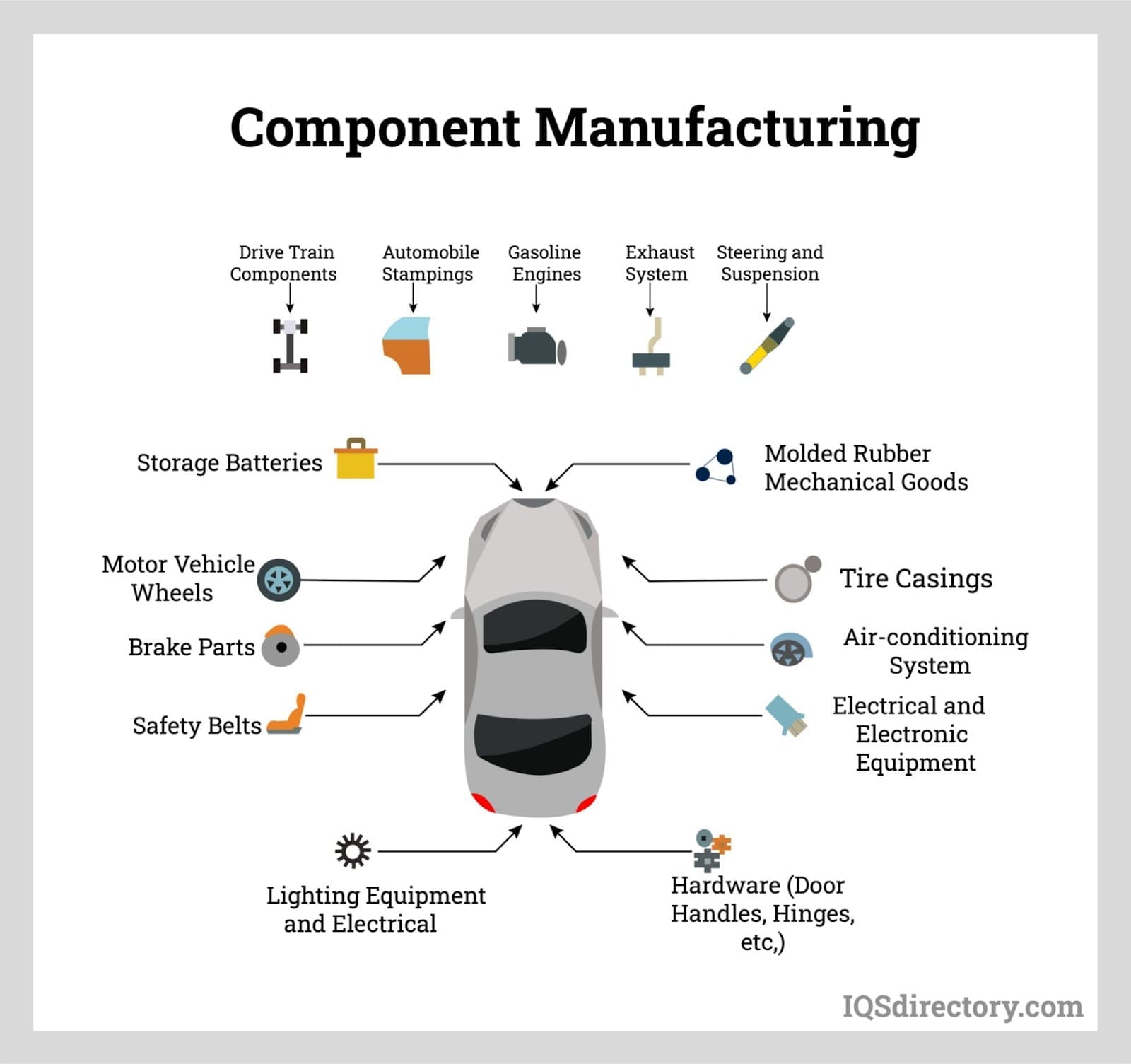 Component manufacturing helps companies source precision parts and engineered components when they do not have the in-house equipment, labor, or technical expertise to make them economically.
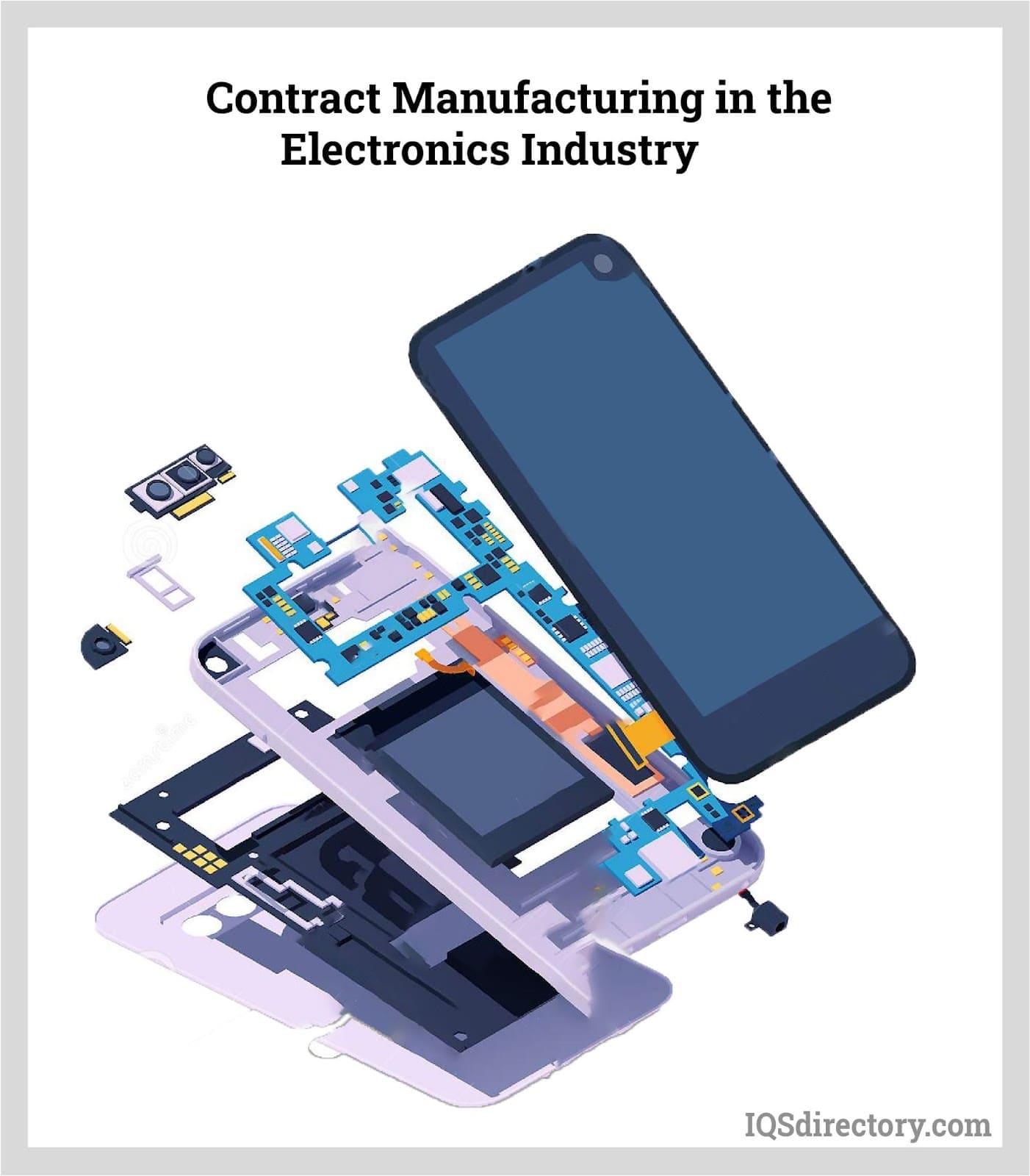 Electronics manufacturing remains one of the best-known examples of contract manufacturing because OEMs frequently rely on outside partners for board assembly, testing, integration, and packaging.
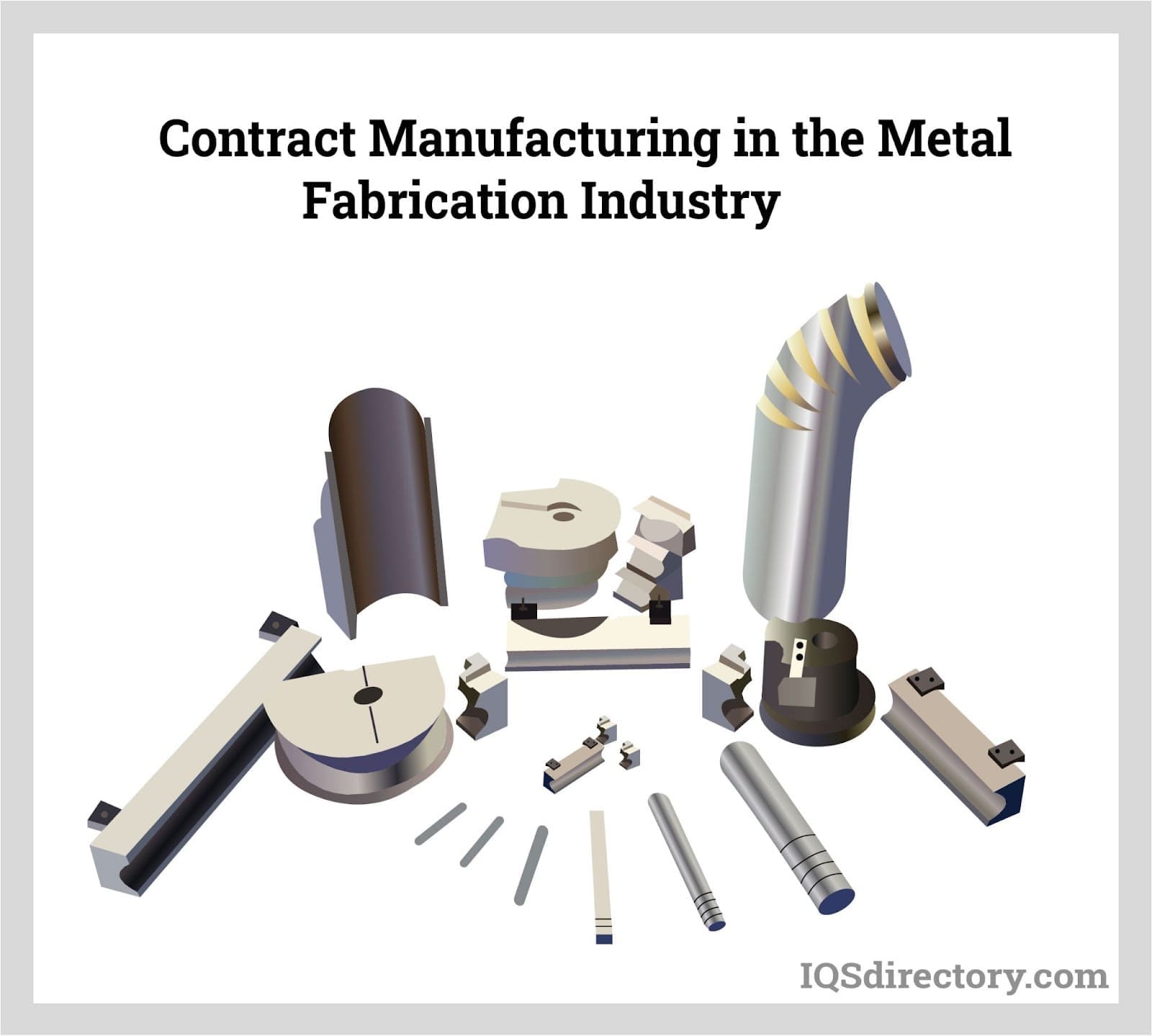 Metal fabrication providers often serve as contract manufacturers by offering machining, casting, forging, grinding, drilling, spinning, bending, broaching, and secondary finishing services for other companies.
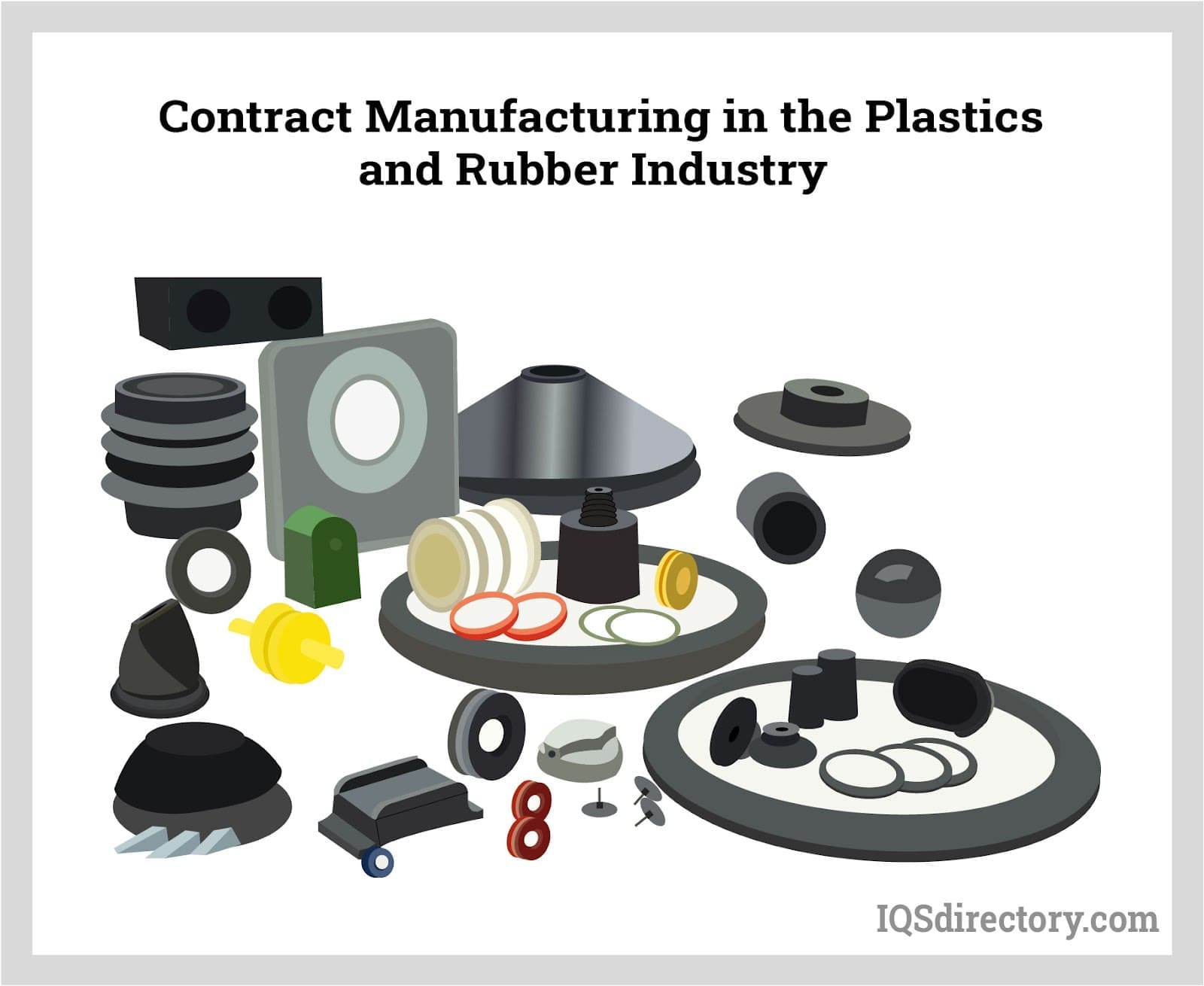 Contract manufacturers in plastics and rubber production may handle tooling design, mold fabrication, process setup, quality checks, and repeat production of semi-finished or finished components.
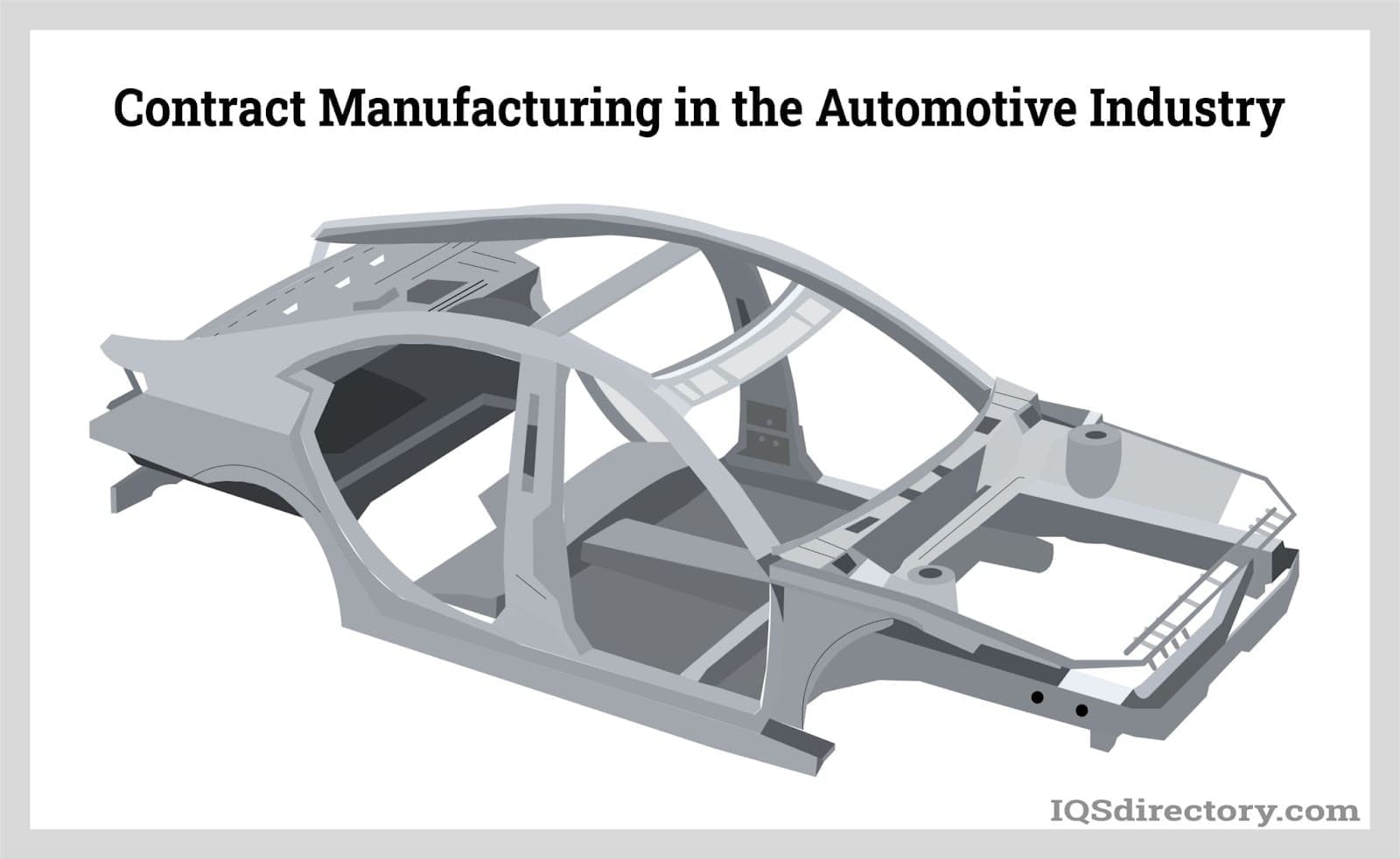 Automotive manufacturers often contract out large portions of component production and assembly so specialized suppliers can focus on repeatability, tolerance control, and dependable part quality.
Overview of Contract Manufacturing
Every supply chain depends on several connected roles, including raw material producers, suppliers, manufacturers, distributors, customers, and end users. The manufacturer occupies the stage where materials become usable products through machining, fabrication, molding, blending, filling, assembly, packaging, or other production methods. That step has an outsized impact on cost, quality, inventory movement, and customer satisfaction because it directly affects what reaches the market.
Contract manufacturing fits into this framework as outsourced production performed by a dedicated manufacturing partner. The OEM usually supplies product drawings, formulas, packaging requirements, or assembly instructions, while the contract manufacturer supplies the equipment, process controls, labor, purchasing, quality documentation, and production management needed to execute the work. Agreements may cover prototype work, pilot runs, regular production lots, service parts, secondary operations, or full turnkey manufacturing. In many programs, delivery timing and logistics are just as important as the actual fabrication because late shipments can disrupt the rest of the supply chain.
The core goals of supply chain management remain familiar: lower cost, shorter lead times, repeatable quality, and dependable product availability. Contract manufacturing supports those goals when the program is built around specialization, good forecasting, accurate documentation, and open communication. Buyers often ask whether a supplier can handle prototyping, engineering support, tooling, validation, packaging, kitting, and assembly under one roof because that can simplify purchasing and reduce handoff risk.
Global communication and freight networks have expanded the number of suppliers that an OEM can consider. A part may be designed in one country, fabricated in another, assembled somewhere else, and shipped into a final distribution market on a completely different continent. That flexibility creates buying power, but it also increases the need for supplier qualification, inventory planning, documentation control, and consistent quality management from the first quote through final delivery.
Variations of Contract Manufacturing
Contract manufacturing is sometimes grouped under the larger umbrella of outsourcing, but buyers often separate programs by geography. Offshore outsourcing usually refers to production outside the buyer’s country. Nearshoring refers to work performed domestically or in a nearby region to reduce transit time, communication friction, and freight uncertainty. When companies compare domestic manufacturing versus offshore production, they are usually balancing labor cost, shipping exposure, tariff impact, supply chain resilience, and speed of response.
Contract manufacturers also vary by the processes they offer. Some focus on machining, milling, drilling, grinding, turning, and other subtractive methods. Others handle contract assembly, plastics molding, blending, packaging, or advanced processes such as electrical discharge machining, electrochemical machining, ultrasonic machining, or precision finishing. For OEMs, process fit matters because the best manufacturing partner is usually the one whose equipment, engineering support, and quality routines already match the product being sourced.
The scope of contract manufacturing extends across a wide range of industries:
Electronic Contract Manufacturing
This sector helped define the modern contract manufacturing model and remains a leading category for board assembly, cable assemblies, box builds, testing, integration, and related electronics manufacturing services.
Industrial Contract Manufacturing
Industrial contract manufacturing can include heavy equipment components, rail products, fabricated metal parts, custom plastics, rubber components, robotics-related parts, and other engineered products that require dependable tolerances and repeatable process control.
Medical Device Contract Manufacturing
In medical device manufacturing, contract manufacturers produce finished devices or precision components according to strict regulatory, traceability, cleanliness, and documentation requirements. Buyers in this market often look for validation support, lot control, packaging discipline, and reliable quality records.
Pharmaceutical Contract Manufacturing
Pharmaceutical manufacturers, often known as CMOs or CDMOs, may produce tablets, capsules, creams, liquids, sterile products, containers, labels, and packaging systems for other brands under tightly controlled process and documentation standards.
Chemical Contract Manufacturing
Chemical contract manufacturing includes formulation, blending, synthesis, batching, filling, and packaging performed for another company. Depending on the program, the manufacturer may supply raw ingredients, manage processing equipment, and deliver either bulk chemicals or finished market-ready products.
Military Contract Manufacturing
Military and defense manufacturing is handled by qualified suppliers that can produce aircraft components, shelters, protective equipment, weapons-related systems, and other defense products while meeting demanding documentation, security, and certification requirements.
Aerospace Contract Manufacturing
Aerospace contract manufacturing covers precision parts and assemblies for airplanes, helicopters, unmanned aerial vehicles, satellites, and related systems where traceability, documentation, material control, and tight tolerances are a routine part of production.
Choosing a Contract Manufacturer
Choosing a contract manufacturer is both an operational and strategic decision. The supplier you select affects quote accuracy, manufacturability, throughput, quality, inventory exposure, customer experience, and long-term brand perception. In a crowded global market, buyers often narrow the field by asking a practical question first: can this manufacturer build our product repeatedly, at the required quality level, and deliver it on time without creating avoidable supply chain risk?
Soft factors still matter. A reliable contract manufacturer usually communicates clearly, responds to questions promptly, shows genuine familiarity with the product category, and is transparent about limitations as well as strengths. Buyers should look for a partner that is willing to solve problems, review drawings carefully, discuss quality expectations early, and provide realistic guidance instead of promising everything during the quoting stage.
Beyond those relationship signals, more concrete criteria should also be evaluated:
Technological Capabilities
Review the contractor’s equipment, automation level, process controls, engineering support, and willingness to invest in the tools needed to meet current and future production requirements.
Adherence to Industry-Specific Certifications and Standards
Industry certifications, traceability practices, audit results, and documentation discipline can tell you a great deal about whether a supplier is truly prepared for regulated or high-specification manufacturing work.
Industry Expertise
Look for experience with similar products, materials, regulations, and production challenges. A manufacturer that already understands the application usually reaches stable production more smoothly.
Geographic Proximity
Location affects freight cost, visit frequency, response time, inventory planning, and exposure to transit delays. For some products, being physically closer can be worth more than a small difference in quoted price.
Flexibility with Payment Plans
Flexible payment structures, transparent tooling charges, and clearly explained non-recurring costs can indicate a supplier that understands how to build a durable commercial partnership.
Production Turnaround Policies and History
Ask how the manufacturer schedules work, handles forecast changes, manages expedited jobs, and reports on-time delivery. Past performance is often one of the clearest indicators of what future production will look like.
Selecting the right contract manufacturer shapes more than one purchase order. It influences product launch timing, customer satisfaction, service levels, margin, and the long-term reliability of your supply chain.
Contract Manufacturing Terms
-
Bill of Materials (BOM)
A structured list of all components, subassemblies, raw materials, and quantities required to manufacture a product accurately and repeatedly.
Box-Built
An assembly term commonly used in electronics and systems integration for work that brings components into a final enclosure without focusing on printed circuit board fabrication itself.
Contract Assembly
A service in which one company sends parts or subcomponents to a contract assembler, who uses its own equipment, labor, and work instructions to create a finished assembly or market-ready unit.
Contract Machining
A contract manufacturing service that produces parts through machining processes such as milling, turning, drilling, grinding, wire EDM, and other precision operations.
Contract Manufacturers
Independent manufacturing companies that produce parts, assemblies, or finished goods for another business according to agreed specifications and delivery schedules.
Contract Manufacturing Services
All production services supplied by a contract manufacturer, which may include product design support, prototyping, validation, sourcing, assembly, testing, packaging, and ongoing engineering assistance.
Core Competencies
The specialized skills, process knowledge, and operational strengths that give a company lasting competitive value beyond any single product line.
Corrective Action Request (CAR)
A formal request asking a manufacturer to identify the root cause of a quality issue and document the steps taken to prevent the problem from recurring.
Engineering Change Order (ECO)
A controlled revision to the bill of materials, drawing package, or product configuration that explains what changed, why it changed, and when the change takes effect.
High-Mix, Low-Volume
A production model in which many product variations are manufactured in relatively small quantities, often requiring flexible scheduling and quick changeovers.
Intellectual Property (IP)
Original designs, inventions, formulas, methods, software, and other proprietary knowledge that a company needs to protect during manufacturing relationships.
Joint Service Agreement (JSA)
A commercial agreement that defines responsibilities, service expectations, metrics, and communication standards for the OEM and the manufacturing partner.
Low-Mix, High-Volume
A manufacturing model in which a smaller number of product types are built in larger quantities, often with greater emphasis on throughput and line efficiency.
Manufacturing and Supply Agreement (MSA)
A contract that describes what the contract manufacturer will supply, how the work will be performed, the commercial terms, and the obligations of both parties.
New Product Introduction (NPI)
The structured path for moving a product from design into manufacturable form while balancing quality, timing, process capability, and total production cost.
Non Recurring Expense (NRE)
One-time costs tied to a specific customer program, such as tooling, setup, programming, validation, or engineering work required before routine production begins.
Original Design Manufacturer (ODM)
A company that develops a product based on its own design work and may sell that product to other brands for relabeling or market distribution.
Original Equipment Manufacturer (OEM)
A company that owns the product design, markets the finished item under its own brand, and may outsource part or all of production to a contract manufacturer.
Outsourcing
The practice of assigning design, production, assembly, or support work to an outside provider instead of performing that work entirely within the OEM.
Prototype
An early model, trial build, or functional sample used to test design intent, gather feedback, and prepare a product for wider production.
Request for Quote (RFQ)
A formal pricing request from an OEM that outlines product requirements, quantities, drawings, and bill-of-material data so a manufacturer can prepare a reliable quote.
Subcontract Machining
Another term for contract machining, referring to precision cutting and shaping operations performed by an outside machine shop or manufacturing partner.
Time to Market
The total time it takes to move a product from concept or design into commercial availability.
Time to Volume
The time required to move from prototype or pilot production into stable full-volume manufacturing.
Volume Price Agreement (VPA)
A pricing agreement that defines deliverables, volume commitments, and cost adjustments tied to expected production levels.