Water Jet Cutting
Water jet cutting gives manufacturers, fabricators, artists, woodworkers, and product developers the ability to cut, shape, etch, and prototype a broad range of materials—including plastics, ceramics, and stainless steel—with a cold-cutting process that preserves edge quality. Because the stream does not introduce a heat-affected zone, waterjet cutting is widely used when buyers need burr-free parts, tight tolerances, material versatility, and clean results on heat-sensitive substrates.
Water Jet Cutting FAQ
What is water jet cutting used for?
Water jet cutting is used to shape metal, glass, stone, ceramics, plastics, rubber, composites, foam, and wood with very high precision. Manufacturers use it for custom parts, brackets, gaskets, panels, signs, architectural features, prototypes, and production components when they want smooth edges, tight tolerances, and little to no secondary finishing.
How does water jet cutting differ from laser cutting?
Unlike laser cutting, water jet cutting is a cold cutting process. It does not create a heat-affected zone, so it helps prevent warping, melting, scorching, or metallurgical change. That makes it a strong option for heat-sensitive plastics, laminates, rubber, composites, thick metals, and layered materials where edge integrity and material performance matter.
What materials can be cut with a water jet?
Water jets can cut stainless steel, aluminum, tool steel, copper, brass, titanium, stone, granite, marble, tile, rubber, foam, glass, ceramics, composites, food products, and many engineered materials. The best process depends on thickness, density, and moisture sensitivity, which is why manufacturers often compare pure waterjet cutting and abrasive waterjet cutting before placing an order.
What are the advantages of using water jet cutting?
Water jet cutting offers precision, material flexibility, no heat distortion, low burr formation, and a clean edge finish. It works well for prototypes and repeat production, supports intricate contours and internal cuts, and often reduces deburring, grinding, or rework. For many buyers, that translates into faster turnaround, better part quality, and more predictable fabrication costs.
What types of water jet cutting methods are available?
Common methods include pure water jet cutting for soft materials, abrasive waterjet cutting for metals, stone, and composites, CNC water jet cutting for repeatable automated fabrication, and hydro cutting for applications where heat-free processing is preferred. Shops may also provide piercing, etching, bevel cutting, nesting, and multi-head cutting depending on the part design.
How accurate is CNC water jet cutting?
CNC water jet cutting can deliver excellent repeatability and very fine detail, with some systems reaching resolutions up to 2,000 points per inch. Actual accuracy depends on machine quality, nozzle condition, abrasive flow, material thickness, feed rate, and programming, but the process is well known for producing consistent parts, intricate geometries, and dependable cut paths.
Is water jet cutting environmentally friendly?
Yes. Water jet cutting is often considered an environmentally friendly machining process because it produces no smoke or toxic cutting fumes, can recycle water and abrasive media in many setups, and helps reduce scrap through efficient nesting and accurate cuts. For companies focused on cleaner fabrication and lower waste, it is often a practical option.
History of Water Jet Cutting
The roots of water jet cutting reach back to 19th-century mining operations in New Zealand and South Africa, where pressurized streams of water were used to move rock and coal while keeping workers farther from unstable excavation zones. Although that early use was far removed from today’s precision fabrication environment, it established the same core advantage that still defines waterjet machining: forceful material removal without open flame, direct blade contact, or thermal distortion.
By the 1930s, engineers in Russia adapted the concept for cutting massive stone, and later development in the United States pushed the process toward industrial manufacturing. As pump systems, nozzles, and control software advanced, water jet cutting evolved from a rough utility method into a highly accurate CNC-controlled process. The addition of abrasive media transformed it further, allowing shops to cut thicker metals, stone, ceramics, and composite materials while also improving finish quality and dimensional control for custom parts.
Advantages of Water Jet Cutting
Unlike plasma, laser, or conventional blade-based cutting, water jet cutting produces precise shapes without heat buildup. That means fewer problems with warping, burnt edges, microcracking, or metallurgical change, and it also means many parts come off the table with a cleaner edge finish and little need for deburring. Buyers comparing water jet cutting vs. laser cutting often focus on exactly these points: material thickness, cut quality, tolerance requirements, and whether the job involves a heat-sensitive substrate.
The process is also highly flexible in a production setting. It can handle one-off prototypes, short-run custom fabrication, and repeat manufacturing with the same basic equipment, especially when the machine is paired with modern nesting software and multi-head cutting capability. For purchasing teams and engineers, that versatility can simplify sourcing because a single waterjet shop may be able to cut brackets, panels, gaskets, machine components, stone inlays, and specialty parts from many different materials under one workflow.
Design of Water Jet Cutting
Modern water jet cutting systems typically operate between 30,000 and 120,000 PSI, though the best pressure setting depends on the material, the thickness, the nozzle setup, and the cut objective. At the upper end of that range, fragile materials such as glass and ceramics may require special handling or lower-pressure strategies to reduce the chance of cracking. The accuracy of today’s machines comes from their integration with CNC controls, which manage pressure, traverse speed, pierce timing, compensation, and the detailed movement of the cutting head across the workpiece.
Materials Used in Water Jet Cutting
Water jet cutting is one of the most versatile machining processes in modern fabrication, but material behavior still matters. Some glass compositions and brittle ceramics can fracture under excessive force, while ultra-hard materials such as diamonds and certain specialty alloys may not respond efficiently. Moisture-sensitive and highly hydrophobic materials can also present limitations. Even so, the list of compatible materials is extensive and includes steel, stainless steel, aluminum, copper alloys, rubber, foam, composites, stone, and many forms of sheet material. For metal fabrication in particular, abrasive waterjet cutting remains a strong option when shops need dense materials cut accurately without heat distortion.
Water Jet Cutting Process
The performance of a water jet cutting system depends heavily on CNC control, nozzle condition, abrasive consistency, and programming quality. When those variables are dialed in, shops can achieve dependable cut paths, repeatable tolerances, efficient piercing, and high-quality edge finishes across a broad range of parts. Another major process benefit is the ability to reclaim and recycle both water and abrasive media in many installations. That lowers waste, reduces consumable costs, and supports a cleaner, more sustainable fabrication workflow while helping manufacturers get more value from each production run.
Water jet cutting also compares well from a safety and shop-environment standpoint. Because the process produces no open flame, no sparks, and no cutting fumes, it can be easier to manage than many hot-cutting methods in mixed production environments. Noise from high-pressure systems still needs to be addressed with hearing protection and workspacesoundproofing, but the overall process supports long operating cycles, cleaner work areas, and fewer thermal hazards. If your team is evaluating fabrication methods for enclosed shops or shared production floors, that distinction can weigh heavily in the buying decision.
Applications of Water Jet Cutting
Industries from aerospace and automotive to food processing, architecture, energy, and telecommunications rely on water jet cutting for speed, precision, and material flexibility. The method is especially useful for heat-sensitive materials such as thermoplastics and layered composites that can warp, discolor, or delaminate under conventional cutting heat. In woodworking and decorative fabrication, the same process supports intricate shaping, engraving, and custom contouring for furniture parts, architectural millwork, signage, instrument bodies, and specialty products that require detailed edge quality.
In food manufacturing, water jet cutting delivers sanitary, accurate cuts without crushing or contaminating the product, which makes it useful for items such as sausages, baked goods, noodles, confectionery, and decorative meal presentations. Artists, sign makers, and designers also use waterjet cutting to reproduce intricate patterns, logos, and shapes with strong repeatability. Many search for water jet cutting services specifically because they need a process that can move from prototype work to short-run production without sacrificing detail, symmetry, or consistency.
Machinery Used for Water Jet Cutting
Among machining processes, water cutting is relatively straightforward in concept, but every major component influences performance. The system centers on a nozzle—also called a focusing or mixing tube—that directs a high-pressure water stream through a very small opening. To reduce splash during operation, the nozzle is typically fitted with a muff made of sponge or brush material. High-pressure fittings on the mixing tube often include weep holes that redirect water safely if a leak develops, while an attenuator helps maintain a steadier pressure profile when the pump output fluctuates.
The cutting stream may use pure water or a mix of water and abrasive media, depending on the material and the finish required. Abrasive flow rate, mesh size, nozzle wear, and jewel condition all affect cut speed and edge quality. The CNC system is usually the most sophisticated part of the setup because it coordinates CAD/CAM-style toolpaths, nesting, scanning, pierce logic, and motion control. Once programmed, the machine can guide the water jet with very fine resolution, making it possible to produce detailed contours, internal cutouts, and repeatable part geometries across a wide range of material thicknesses.
Stainless steel is a common choice for nozzles and supply components because of its strength and corrosion resistance, and most systems also use a catch tank or enclosed cutting area to manage runoff and spent abrasive. From a buyer’s perspective, the machinery matters because it directly influences cut accuracy, taper control, maintenance intervals, and throughput. When comparing vendors, it often helps to ask what pump type, software, abrasive system, and nozzle technology the shop uses, especially for jobs involving tight tolerances, thick materials, or repeat production.
Water Jet Cutting Images, Diagrams and Visual Concepts
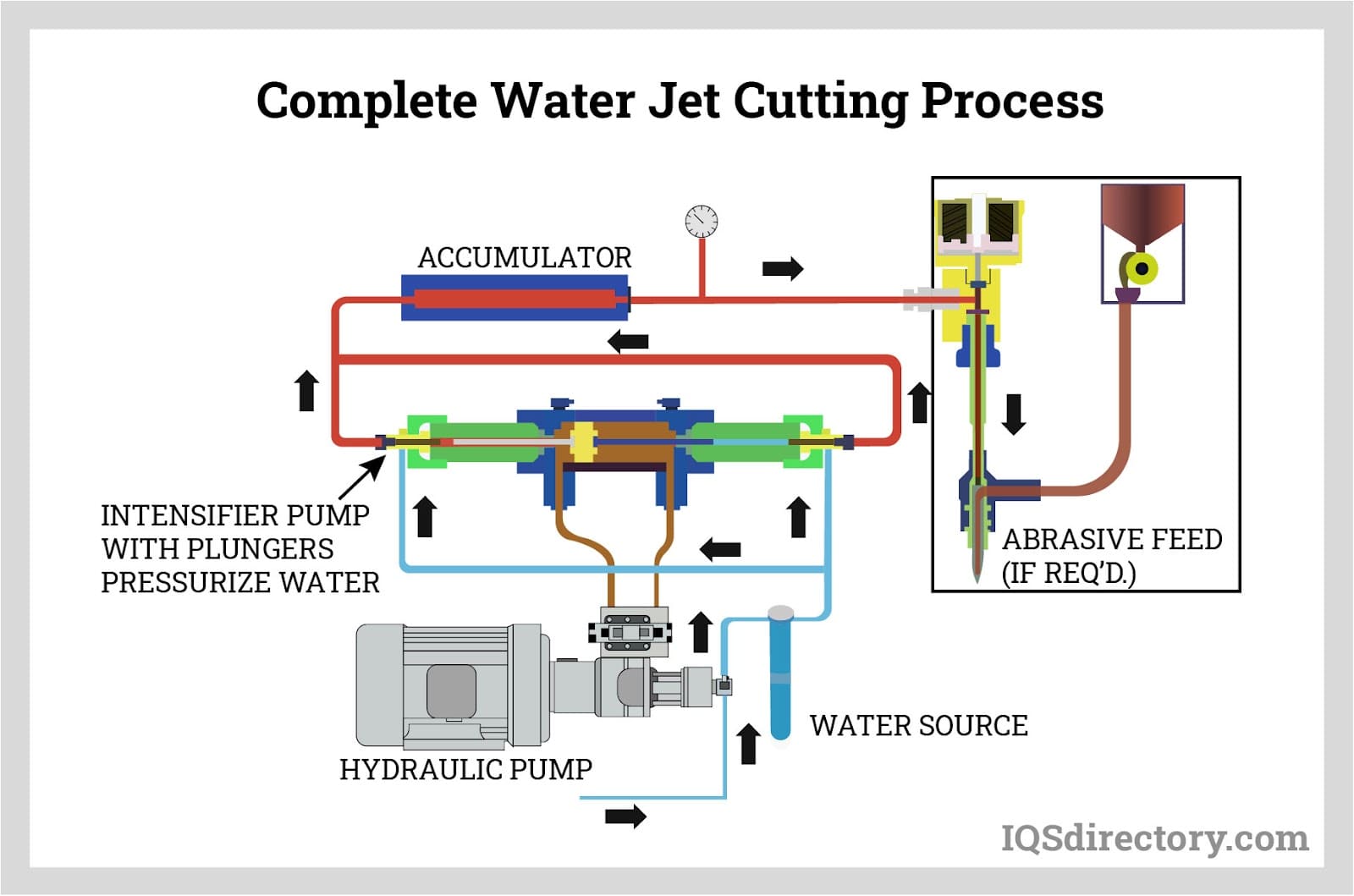 Water jet cutting, a manufacturing process using high pressure jets of water provided by pressurizing pumps to deliver a supersonic stream of water to shape various materials.
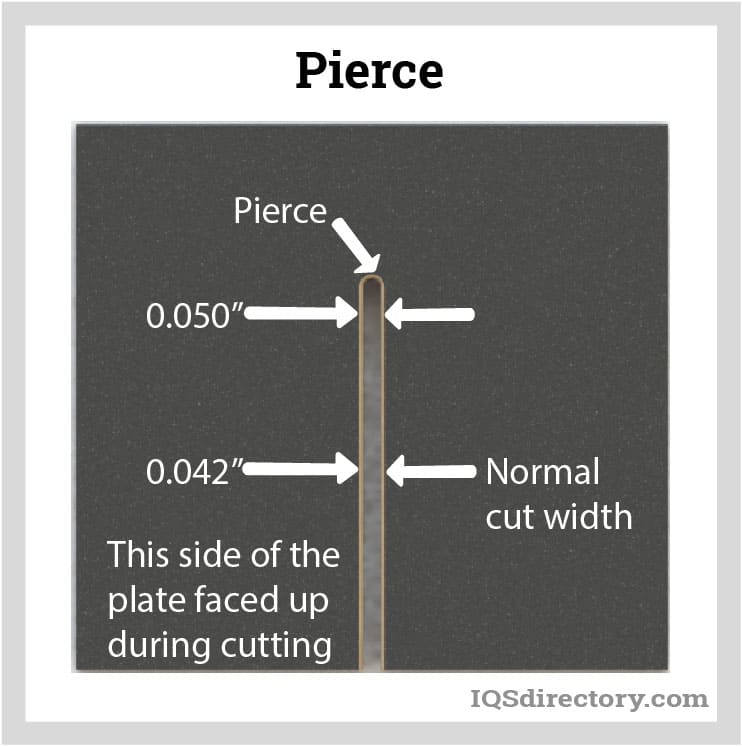 The initial cut is the pierce.
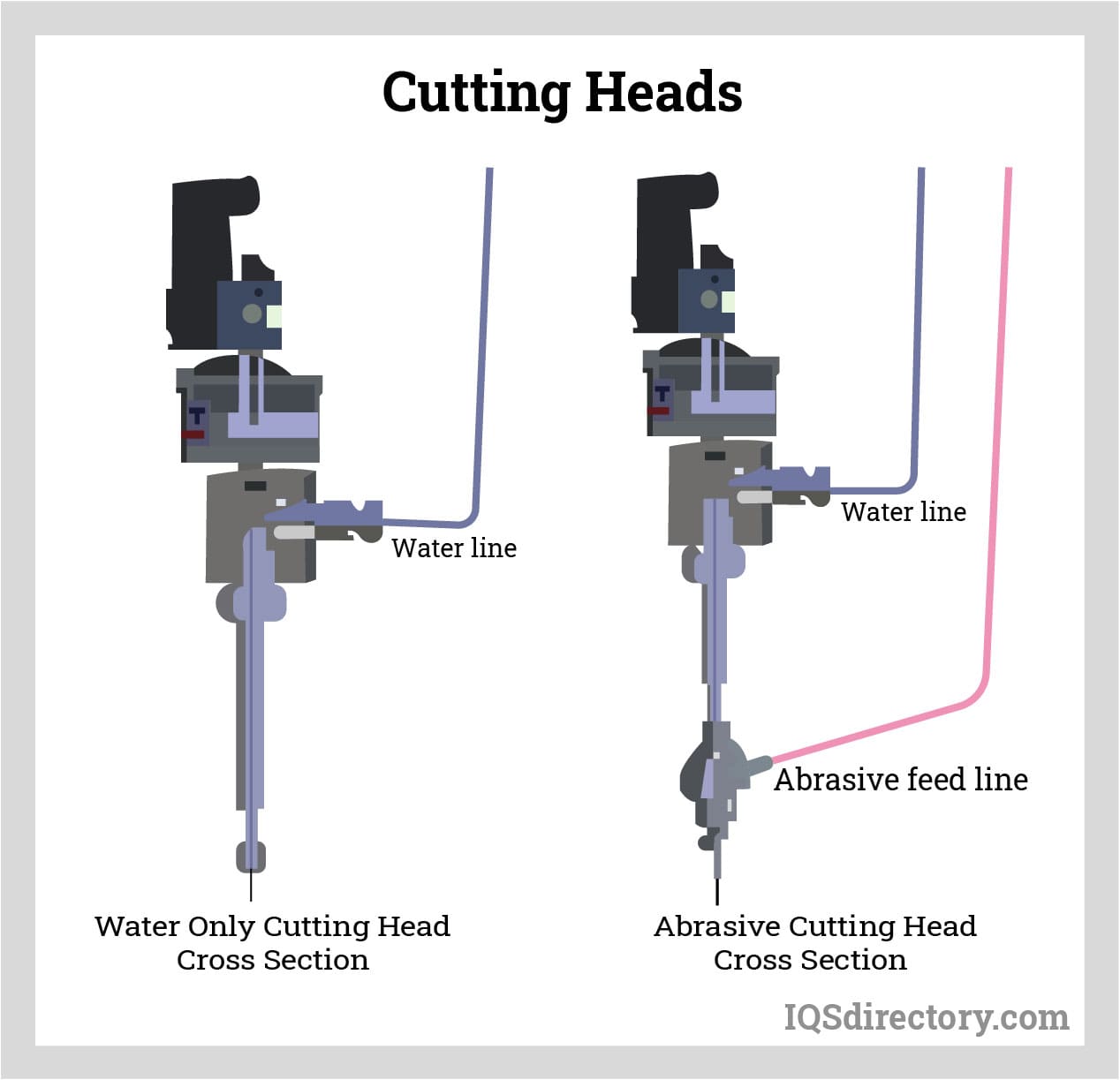 The pressurized water passes through the orifice of the cutting head with a hole smaller than the point of a pin and as water passes through, its velocity radically increases to over 90,000 psi.
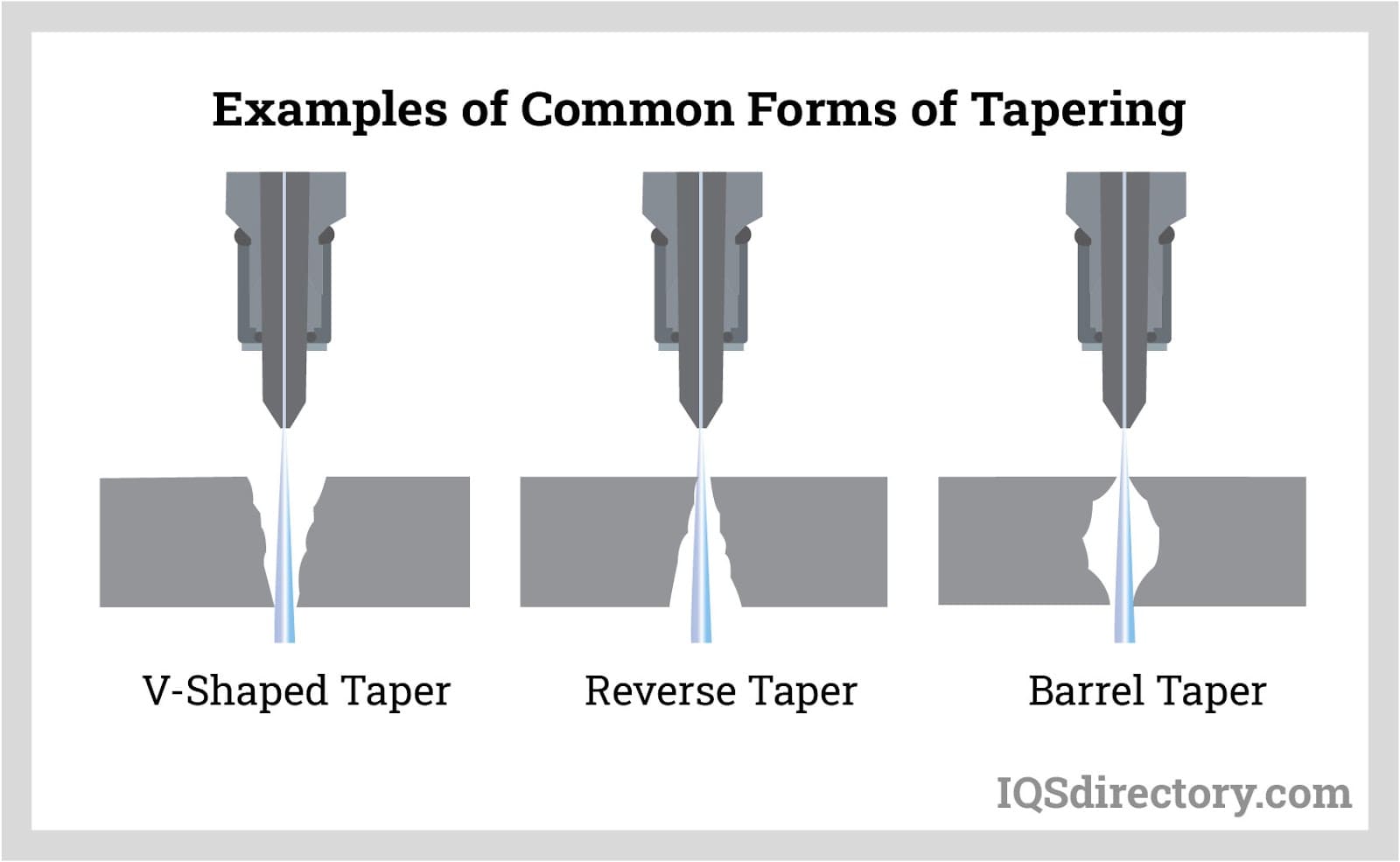 Examples of the different forms of tapering used in water jet cutting.
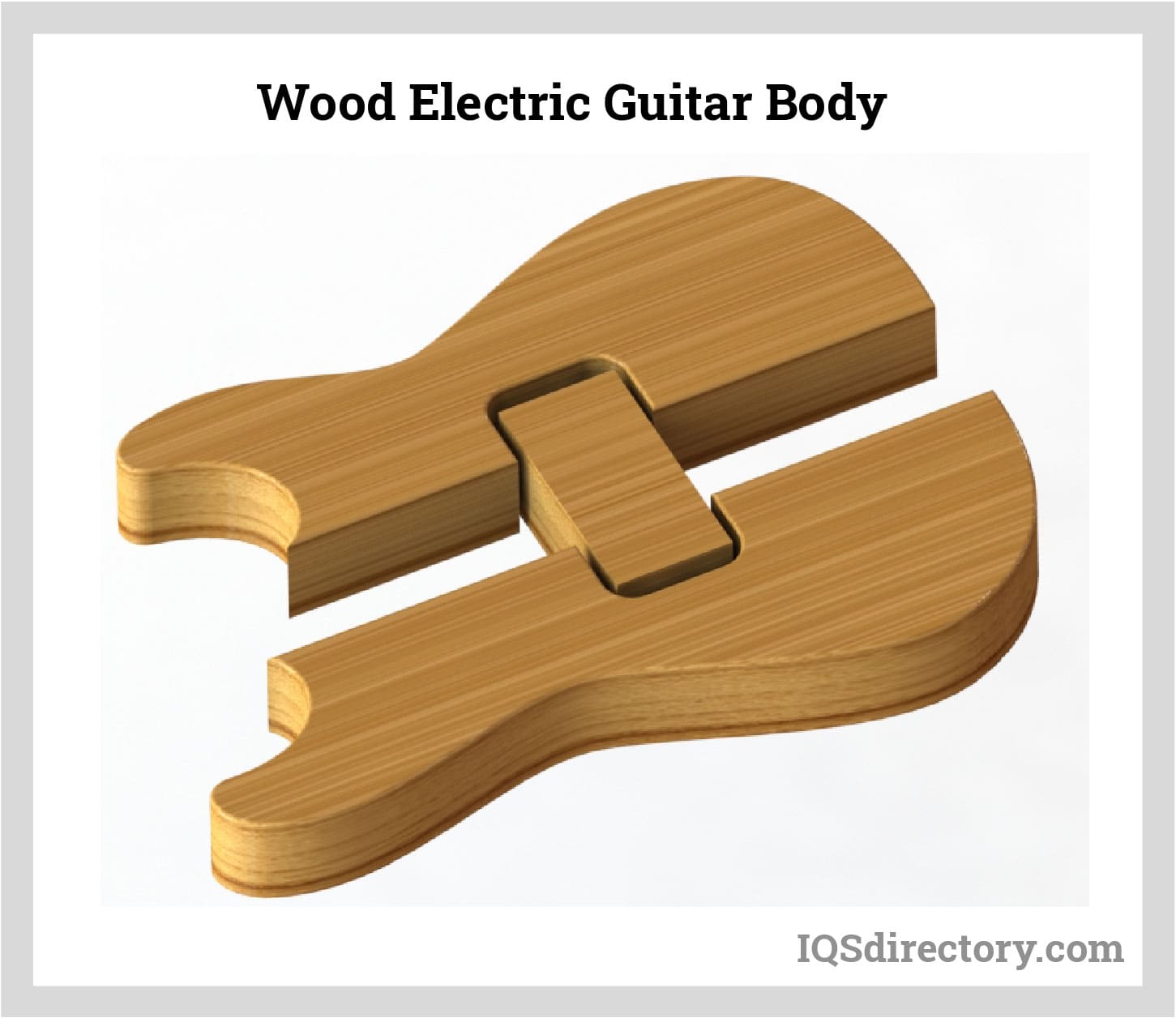 Since water jet cutting does not place a load on the piece, it is capable of cutting without damaging the grain of the wood.
 Water jet cutting of rubber is easier other cutting methods, since water jet cutting does not require special tools or dies.
Water Jet Cutting Types
Water jet cutting includes a range of specialized methods tailored to different material types, edge-finish goals, and production requirements. Buyers often start by asking whether pure waterjet or abrasive waterjet cutting is the better fit, but the real answer usually depends on thickness, hardness, tolerance needs, and whether the job involves cutting, drilling, etching, beveling, or secondary finishing.
- Abrasive Flow Machining (AFM)
- This secondary finishing process uses abrasive-laden water to smooth, polish, radius, and remove imperfections like cracks and burrs from internal or hard-to-reach surfaces of parts, products, and machinery.
- Abrasive Jet Machining
-
By introducing abrasive particles into the water stream, this method enhances cutting power, making it effective for machining tougher materials. The erosion is achieved not just by water, but by the high-speed impact of the abrasive.
- Abrasive Waterjet Cutting
- Instead of relying on pure water, this process mixes in abrasive materials such as garnet or diamond to cut through hard surfaces like metal, stone, ceramics, brick, and composite materials, offering precision shaping capabilities.
- CNC Water Jet Cutting
- This computer-controlled technique eliminates manual handling by automating the cutting, drilling, and engraving of various materials through programmable software, ensuring accuracy and repeatability.
- High Pressure Water Cutting
- Operating at extremely high PSI, this process can shape or cut virtually any material, including glass, marble, foam, plastics, and ceramics, without producing heat-affected zones.
- Hydro Cutting
- Also known as cold cutting, this method uses a high-pressure stream of water to cleanly slice through a wide array of materials without generating heat, making it ideal for applications where thermal stress must be avoided.
- Pure Waterjet Cutting
- This original form of water jet cutting involves a thin stream of high-pressure water directed through a tiny nozzle to cut soft materials like foam, rubber, textiles, and paper with remarkable precision.
- Water Jet Glass Cutting
- Tailored for glass, this method allows for clean separation, intricate detail work, and precision hole-drilling across different glass types without the risk of cracking from thermal shock.
- Water Jet Machining
- A versatile subtractive manufacturing process that uses high-pressure water jets to contour and shape materials, delivering consistent cuts regardless of material type or thickness.
- Water Jet Metal Cutting
- Capable of cutting through nearly any metal, this method combines the force of pressurized water with abrasives to handle steel, aluminum, and other dense materials with efficiency and minimal edge distortion.
Products Made From Water Jet Cutting
Water jet cutting supports an exceptionally wide product mix because it combines precision, material flexibility, and clean edge quality. Manufacturers use it to produce panels, machine components, brackets, shims, gaskets, decorative inlays, signage, tooling parts, and custom fabricated pieces from metal sheet, rubber, stone, plastics, and composites. Because the process can nest parts efficiently and avoid heat damage, it often helps shops get more yield from raw material while maintaining dependable dimensional results.
For parts that demand tight tolerances and reliable fit—such as bolts, gears, interlocking components, and custom mechanical parts—waterjet cutting delivers repeatable results at scale. CNC programming makes it possible to create holes, slots, contours, and internal geometries in virtually any dimension, whether the job is a simple circular cut or an intricate custom profile. Because it can process materials ranging from cork, wood, and foam to aluminum, copper, steel, acrylic, and granite, the process serves both industrial manufacturing and highly specialized custom fabrication.
Glass can be one of the more demanding materials in this process, but experienced operators can adjust pressure, pierce strategy, and setup to suit the application. Beyond the technical performance, water jet cutting also stands out for its lower environmental impact. It creates no heat-affected zone, the water can often be filtered and reused, and the abrasive materials are generally manageable within a clean fabrication workflow. That adaptability makes waterjet cutting a practical option for companies introducing new product lines, revising part designs, or moving quickly from concept to production with minimal tooling delay.
Things to Consider when Choosing Water Jet Cutting
Selecting the right water jet cutting manufacturer starts with a clear understanding of your material, thickness range, tolerance target, edge-finish expectations, and production volume. Some shops are best for prototype development and short-run custom work, while others are designed for high-volume production involving thousands of parts. Material expertise also matters because stainless steel, aluminum, rolled metals, composites, stone, and engineered plastics all respond differently to pressure, abrasive flow, and pierce strategy. Those variables influence machinability, cut speed, and part quality, especially in abrasive waterjet applications.
A qualified manufacturer should understand more than just how to cut a material. They should also be able to guide you on nesting efficiency, etching versus through-cutting, tabbing and bridging, taper control, lead time, inspection standards, and the best pierce method for your part geometry. Thicker materials may need a stationary pierce for a clean entry, while thinner sheets or delicate features may benefit from other approaches. If you are comparing water jet cutting companies, these process details often reveal more than a generic capabilities list.
Past work is one of the best indicators of a manufacturer’s real capability. Reviewing sample parts, discussing prior jobs, and asking about tolerances, rework rates, and inspection practices can help you judge whether the shop is the right fit. A reputable supplier should be comfortable providing sample cuts, material guidance, and a realistic production schedule based on current workload. If your application involves tight deadlines, recurring orders, or specialty materials, those conversations can save time and help avoid mismatched expectations later.
Disadvantages
Despite its many strengths, water jet cutting does have limits. Very brittle materials may crack under the force of the stream, while extremely hard materials and certain specialty alloys can reduce efficiency even with abrasive assistance. Water-sensitive or highly hydrophobic materials are also not ideal candidates. Even with those limits, waterjet cutting remains one of the most adaptable options available for precision metal cutting, custom fabrication, rubber and foam conversion, stone processing, and many cold-cutting applications where clean edges and low thermal impact are a priority.
Water Jet Cutting Terms
-
Abrasive Flow Rate
This refers to the speed at which abrasive material is introduced into the cutting head of a water jet system, directly affecting the cutting force and precision of the operation.
Abrasive Substances
These are the cutting agents in abrasive water jet systems, typically materials like garnet or sand-like particles, which enhance the jet’s ability to erode and slice through tough materials.
Attenuator
A pressurized vessel that helps stabilize and maintain consistent water output by compensating for fluctuations from the pump, ensuring smooth water jet performance.
Bridge/Bridging
A technique used during cutting where parts remain attached via a thin strip of metal to prevent them from falling into the catch tank; the bridge is removed once cutting is complete.
Catch Tank
Located beneath the cutting head, this tank dissipates the force of the water jet, prevents floor damage, and collects spent abrasive material from the cutting process.
Common Line Cutting
An efficiency-driven method where multiple parts are cut along shared edges to save time, though it is more complex to program and may reduce cutting accuracy.
Crankshaft Pump
A mechanical pump where plungers, powered by a crankshaft, generate the necessary pressure for the water jet to perform its cutting operations.
Cutting Index/Machinability
A numerical value representing how easily a material can be cut using a water jet or abrasive water jet process, factoring in material hardness, density, and thickness.
Cutting Model
A simulation or representation used to anticipate how the jet will behave during the cut, aiding in compensations for tool flexibility and process variables.
Draft Angle
The angle created by tapering during the cutting process, often noticeable on thicker materials or when using high-speed cuts.
Dynamic Pierce
This method initiates the cut by allowing the jet to move while piercing, reducing stress on the material and increasing precision.
Etch
A low-pressure marking process where the jet partially erodes the material surface without fully cutting through, commonly used for identification or decorative purposes.
Feed Rate
The speed at which the cutting head travels across the material during operation, influencing the cut quality and efficiency.
Focusing/Mixing Tube
A highly durable tube that channels and unifies the water and abrasive materials into a single, powerful cutting stream.
Frosting/Hazing
A visual effect caused by stray abrasive particles, typically appearing as a frosted area along cut edges or around initial pierce points.
Garnet
A durable, commonly used abrasive that offers excellent cutting power while preserving the lifespan of mixing tubes.
Hard Limit
A mechanical restriction built into the machine to physically prevent movement beyond certain boundaries, protecting both the equipment and the operator.
Hard Water
Water with high mineral content that can leave behind deposits, requiring more frequent maintenance of parts like filters, pipes, and jewels.
Intensifier
A hydraulic pump that multiplies input pressure to generate the extremely high pressures needed for water jet cutting.
Jet Lag
The offset or delay observed between where the water jet enters and exits the material, often visible as a curved or distorted edge on thicker parts.
Jewel
A precision-crafted orifice made from ruby, sapphire, or diamond through which the high-pressure water exits to form the cutting stream.
Kerf
The width of material removed by the cutting stream, determined by the nozzle size, abrasive flow, and cutting parameters.
Kick Back
The backward jolt or motion of the cutting head as it accelerates from a corner or sudden directional change during the cut.
Mesh
A grading scale for abrasives that indicates particle size and coarseness, affecting cutting power and surface finish.
Muff
A protective brush or sponge around the nozzle that helps contain splashback and water spray during operation.
Nozzle
The assembly that includes the mixing tube, jewel, and surrounding housing, responsible for shaping and directing the water jet stream.
Pierce
The process of initiating a hole through the material by holding the cutting jet steady until full penetration is achieved.
Reverse Osmosis
A water purification method used to filter minerals and impurities from the water supply, protecting equipment from scaling and buildup.
Slat
A support structure beneath the material being cut, designed to be replaceable as it becomes worn or damaged during use.
Soft Limit
A software-defined boundary set in the machine’s programming to control the cutting head’s range of motion and prevent collisions.
Splash Back
A messy byproduct of piercing, caused by water and abrasive bouncing off the support slats or material surface before full penetration.
Stationary Pierce
A method used to carefully pierce thin materials by keeping the water jet still until the hole is fully formed.
Striation Marks
Ripple-like patterns on the cut surface caused by minor fluctuations in jet motion; faster cuts typically show more pronounced striations.
Super-Water®
A proprietary additive that enhances cutting speed, stream concentration, and reduces wear on high-pressure components.
Tab/Tabbing
A method of leaving small material connections between the part and the base to keep the piece stable during cutting and prevent it from falling.
Taper
The deviation in cut width between the top and bottom surfaces of a part, often influenced by material thickness and jet behavior.
Tool Offset
A calibration adjustment that positions the jet slightly away from the cutting path to account for the stream's kerf width.
Traverse
The movement of the cutting head when it is repositioning between cuts or aligning itself, without performing any active cutting.
Velocity
The rate at which the jet or head moves through space, often expressed in feet per second, impacting precision and cut smoothness.
Water Jet Cutters
Machines that use high-pressure water—sometimes mixed with abrasives—to cut through a wide range of materials.
Water Knives
Tools that apply pressurized water streams to cleanly slice food products with minimal waste or deformation.
Waterjet
A high-pressure stream of water used to erode and cut through material surfaces with pinpoint accuracy.
Waterjet Cutting Machinery
Industrial systems designed to harness water under immense pressure to cut, shape, and grind material with fine control.
Weep Hole
A small opening in high-pressure fittings designed to safely release water in the event of a leak, preventing internal damage.
Wiggle Pierce
A faster piercing technique where the jet oscillates in place to break through material, typically used on tougher or thicker surfaces.