Steel Service Centers
Steel service centers occupy a central position in the steel supply chain, connecting mills, foundries, processors, fabricators, OEMs, and end users that need dependable access to steel products in the right form, size, finish, and quantity. These operations typically purchase metal from a metal foundry or another metal manufacturing plant, then process, shape, cut, finish, and tool the metal into forms suited to customer specifications before reselling it to manufacturers across a wide range of industries. For buyers comparing suppliers, steel service centers can simplify sourcing, shorten lead times, reduce internal handling, and improve production efficiency.
Steel Service Centers FAQs
What does a steel service center do?
A steel service center purchases raw metal from foundries, mills, or wholesalers, then processes, shapes, cuts, and tools it into usable forms before reselling it to manufacturers. These centers manage early-stage processing, helping customers reduce the need for in-house equipment, labor, storage space, and extra material handling.
What industries use steel service centers?
Steel service centers support industries such as construction, automotive manufacturing, shipbuilding, aerospace, electronics, infrastructure, heavy equipment, and general fabrication. They supply processed metals including carbon, stainless, alloy, and structural steels to meet performance, strength, finish, and dimensional requirements.
What are the benefits of using a steel service center?
Partnering with a steel service center can save time, labor, and floor space by reducing the need for in-house processing and large material inventories. Customers gain access to broad stock levels, knowledgeable support, custom steel processing, and faster delivery that can improve workflow, scheduling, and cost control.
What processes are performed at steel service centers?
Steel service centers perform metal forming and finishing processes such as hot rolling, cold rolling, galvanizing, coating, aluminizing, quenching, tempering, heat treating, and alloying. These methods can improve strength, appearance, wear resistance, dimensional consistency, and corrosion protection for many industrial applications.
What materials are commonly processed in steel service centers?
Common materials include carbon steel, stainless steel, alloy steel, spring steel, structural steel, tool steel, HSLA steel, and aluminized steel. Each grade offers a different balance of strength, hardness, ductility, machinability, corrosion resistance, and cost depending on the needs of the application.
How does hot rolling differ from cold rolling in steel processing?
Hot rolling forms steel at high temperatures, which makes shaping easier and supports larger structural products, though the finish is often less smooth. Cold rolling is done near room temperature to deliver higher strength, tighter tolerances, and a cleaner surface for precision applications.
What standards govern steel service center products?
Steel products processed through service centers are commonly produced to ASTM standards for quality and performance. The Metals Service Center Institute (MSCI) also represents North American members and supports industry practices related to materials, safety, handling, and service center operations.
Quick links to Steel Service Centers Information
History of Steel Service Centers
Steel service centers have operated in the United States since the colonial era, when they were known as ironmongers. Early ironmongers produced, stocked, and sold iron products for daily use, and the term is still used in Great Britain as another name for a hardware merchant. Historically, only a modest share of steel moved through service centers, but their role expanded as manufacturing became more specialized and customers increasingly looked for outside processing, inventory support, and just-in-time material availability. Today, service centers remain an established part of industrial metal distribution, helping buyers bridge the gap between raw mill output and production-ready steel products.
Steel Service Centers Benefits
Steel service centers offer a broad range of advantages for manufacturers, fabricators, contractors, and purchasing teams that need reliable access to metal stock and value-added processing. Because they handle early-stage steel processing, companies can avoid investing in additional floor space, labor, machinery, and material storage for every project. Buyers often turn to service centers when they need steel cut to size, processed to specification, or delivered on a schedule that aligns with production demands. For organizations comparing steel suppliers, this kind of support can improve workflow, reduce downtime, and help manage purchasing costs more effectively.
About 70% of steel purchased by service centers undergoes some form of pre-production processing. This lets mills and metal manufacturing plants focus on producing raw material at scale while downstream businesses dedicate their resources to fabrication, assembly, and finished product manufacturing. In practical terms, a steel service center can function as an inventory partner, a processing resource, and a distribution channel all at once, making it easier for customers to source steel in the grades, shapes, and quantities they actually need.
Design of Steel Service Centers
When designing steel products or selecting shapes for clients, steel service centers evaluate the full set of application requirements before recommending a grade, finish, and processing route. These considerations may include the required level of finishing, desired material properties such as strength, hardness, wear resistance, flexibility, corrosion resistance, machinability, and ductility, as well as order volume, budget, turnaround expectations, and any relevant industry specifications. Buyers asking, “What steel grade is best for my application?” or “Should I source hot rolled or cold rolled material?” often rely on service centers for guidance that supports both performance and cost efficiency.
Applications of Steel Service Centers
Steel service centers exist to support and supply metal manufacturing businesses that require dependable steel inventory and processing services. They source many alloys and raw material types, including carbon steel, stainless steel, structural steel, and specialty grades, then process them to meet the precise requirements of each customer. Depending on the job, this may involve forming, finishing, cutting, coating, or preparing the metal for fabrication, assembly, or direct end use.
Industries that depend on steel service centers include construction, automotive manufacturing, electronics, shipbuilding, aerospace, infrastructure, energy, transportation, and heavy equipment. Service centers are often selected when a buyer needs material traceability, repeatable quality, custom dimensions, or quick access to steel plate, steel tubing, beams, strips, and other industrial steel products. They are also useful for companies that want to reduce purchasing complexity by working with one source for inventory, processing, and logistics.
Steel Service Centers Process
Steel service centers follow a standard set of steps for processing steel:
They purchase steel from foundries, mills, or wholesalers based on the required grade, dimensions, finish, and anticipated customer demand.
Next, the steel is formed, shaped, cut, or otherwise processed into the required configuration for fabrication, assembly, resale, or end-use manufacturing.
When necessary, finishing processes are applied to improve surface quality, corrosion resistance, hardness, appearance, or other application-specific properties.
Once finished, the steel is either packaged and shipped to the customer, staged for scheduled release, or stored in inventory until it is needed for production.
The specific metalworking methods used by service centers depend on the intended product, required tolerances, finish expectations, and performance needs. Most processes fall into two primary categories: metal forming and metal finishing.
During the forming stage, service centers alter the shape or size of metal using techniques such as metal injection molding, metal casting, metal extrusion, spinning, stamping, continuous rolling, and related operations. In many applications, customers compare forming methods based on tolerance, surface finish, production volume, and end-use performance. The two core forming techniques used are hot rolling and cold rolling.
- Hot Rolling
- Hot rolling is one of the main methods for shaping steel. In this process, steel is heated above its recrystallization temperature, approximately 1650°F, and passed through rollers. The elevated temperature makes the metal more pliable and easier to form into structural shapes, plate, sheet, and other products. As it cools, surface oxidation can occur, which may leave a blue-grey finish and a less refined surface than cold rolled material.
- Cold Rolling
- For applications that call for high strength, improved dimensional control, and better surface finish, steel service centers use cold rolling, a process performed at or near room temperature. Because heat is not used during forming, oxidation is reduced and the resulting material can offer tighter tolerances. However, the range of shapes may be more limited because the steel is not softened by high temperature during processing.
- Metal Finishing
- Metal finishing involves altering the surface properties of metal to improve durability, corrosion resistance, wear life, appearance, or performance. Techniques include galvanization, coating, aluminization, oil quenching, air hardening, tempering, heat treating, anodization, and alloying.
- Galvanization
- Galvanization coats steel articles with layers of zinc to improve corrosion resistance and extend service life. This process is widely used when steel parts will be exposed to moisture, weather, chemicals, or demanding industrial, commercial, and residential environments.
- Coating
- Coating processes apply a thin protective or decorative layer to a substrate. The main purposes are to protect the material from environmental exposure, corrosion, abrasion, and wear, or to improve its appearance with characteristics such as color and texture.
- Aluminization
- Aluminization is a cost-effective process in which cold-rolled carbon steel is hot-dipped in a molten aluminum-silicon alloy, coating both sides of the sheet. Aluminized steel combines steel’s value, formability, and lower weight with aluminum’s rust resistance, conductivity, and smooth surface characteristics.
- Quenching
- Quenching rapidly cools steel in water or oil to increase hardness. High-strength low-alloy (HSLA) steels often contain elements such as copper, silicon, nickel, chromium, and phosphorus to improve corrosion resistance and strengthen the finished material for demanding service conditions.
- Anodization
- Anodization increases a metal’s surface hardness, wear resistance, and corrosion resistance by forming an oxide layer through an electrolytic process. Where applicable, it can improve surface performance and help components stand up to repeated use.
- Alloying
- Alloying involves adding other elements to steel to adjust mechanical and chemical properties. For example, small amounts of columbium, copper, vanadium, or titanium can improve strength and other performance characteristics. As more alloying elements are introduced, production costs often rise, but so can application value.
Materials Used in Steel Service Centers
Steel service centers provide a range of steel materials to match different manufacturing, fabrication, and construction needs, including the following common grades and categories:
- Alloy Steel
- Alloy steel contains elements like chromium and manganese in addition to carbon. These steels can provide higher tensile strength, better corrosion and oxidation resistance, and greater ductility than many standard carbon steels.
- Aluminum Steel
- This is steel sheet coated with an aluminum alloy to improve surface performance and application characteristics.
- Aluminized Steel
- Aluminized steel is created by hot-dip-coating steel in an aluminum-silicon alloy, combining the strength and light weight of steel with the rust resistance and smoother finish associated with aluminum-based surfaces.
- Carbon Steel
- Carbon steel is an iron alloy in which carbon is the second largest component. The carbon content has a direct effect on hardness, strength, formability, and overall performance.
- Cold Rolled Steel
- Cold rolled steel is formed without heat, resulting in a smoother surface and more consistent dimensions. It is often used in lighter-duty products, furniture, fabricated parts, and applications that benefit from improved finish and tighter tolerances.
- High-Strength Steel
- High-Strength Low Alloy (HSLA) steel refers to steel types other than mild low-carbon steel. HSLA is alloyed with metals such as copper, silicon, nickel, chromium, and phosphorus for better corrosion resistance, and elements like columbium, copper, vanadium, and titanium for added strength. More alloying can increase cost, but it also improves structural performance and can help reduce component weight.
- Hot Rolled Steel
- Hot rolled steel is made by heating large steel sections above their recrystallization temperature and rolling them into thinner sheets, plate, or structural forms. These products generally offer good formability, substantial thickness options, and the strength needed for many industrial uses.
- Spring Steel
- Spring steel is a low-alloy, medium-carbon steel with high yield strength, often containing silicon. It is elastic, allowing it to bend and return to shape. For improved performance at elevated temperatures, elements such as nickel or cobalt may be added. Spring steel is well suited for tools and plastic injection molding molds that need strength, resilience, and heat resistance.
- Stainless Steel
- Also known as "chromium steel," stainless steel is one of the most widely processed materials handled by steel service centers. Its corrosion resistance makes it a frequent choice in food processing, medical, clean manufacturing, and commercial applications.
- Structural Steel
- Also called "plate steel," structural steel is a low-carbon steel with manganese. It is used in construction and engineering for buildings, bridges, support systems, and transportation equipment. Structural steel is commonly hot rolled and may have a rougher surface texture than more refined sheet products.
- Tool Steel
- Tool steel is an iron alloy with chromium and other elements that improve hardness, durability, and wear performance. It is primarily used in manufacturing tools, dies, cutting implements, and other applications where hardness and service life matter.
Steel Service Center Images, Diagrams and Visual Concepts
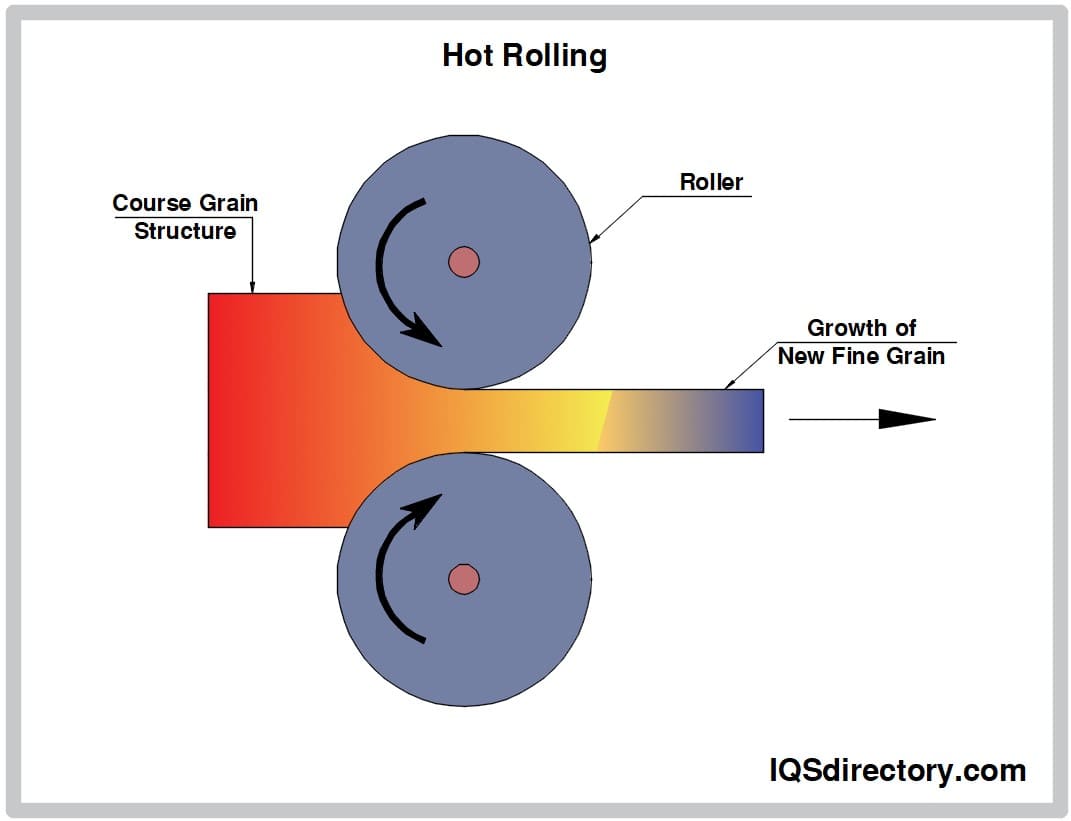 Hot rolling involves heating steel above its recrystallization point and pressing it to form various products more easily, especially when larger shapes or structural members are required.
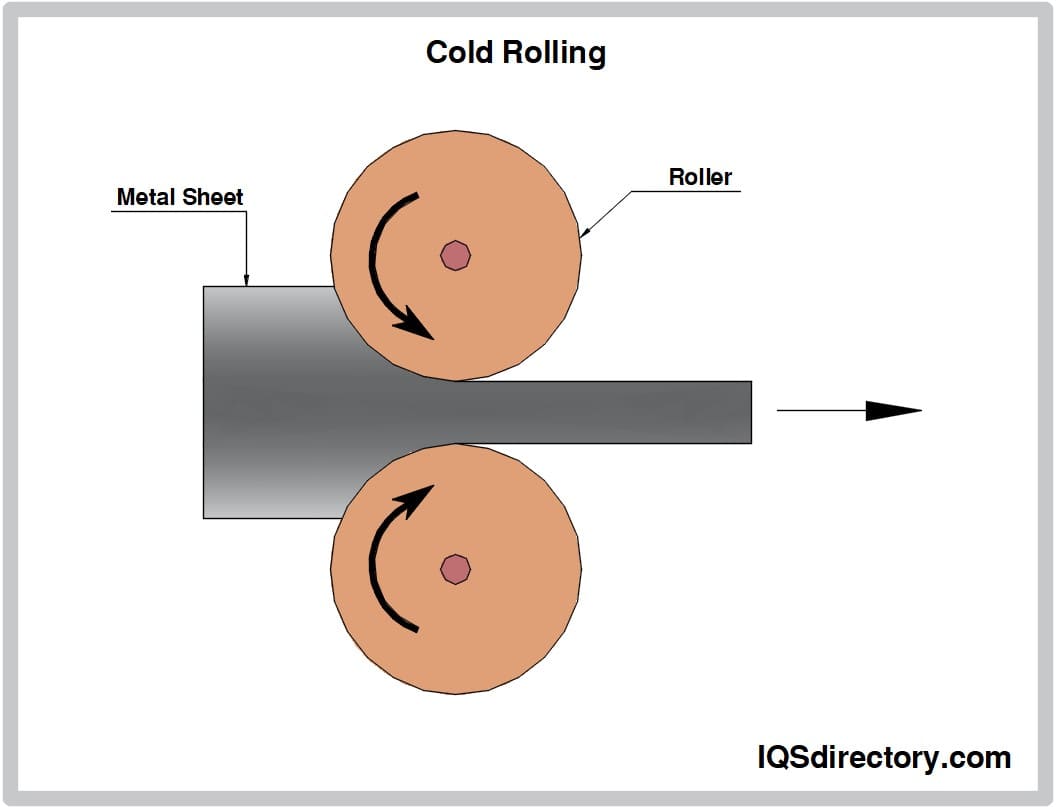 Cold rolling passes hot rolled steel strips through rollers to reduce thickness, improve surface finish, and produce tighter dimensional consistency.
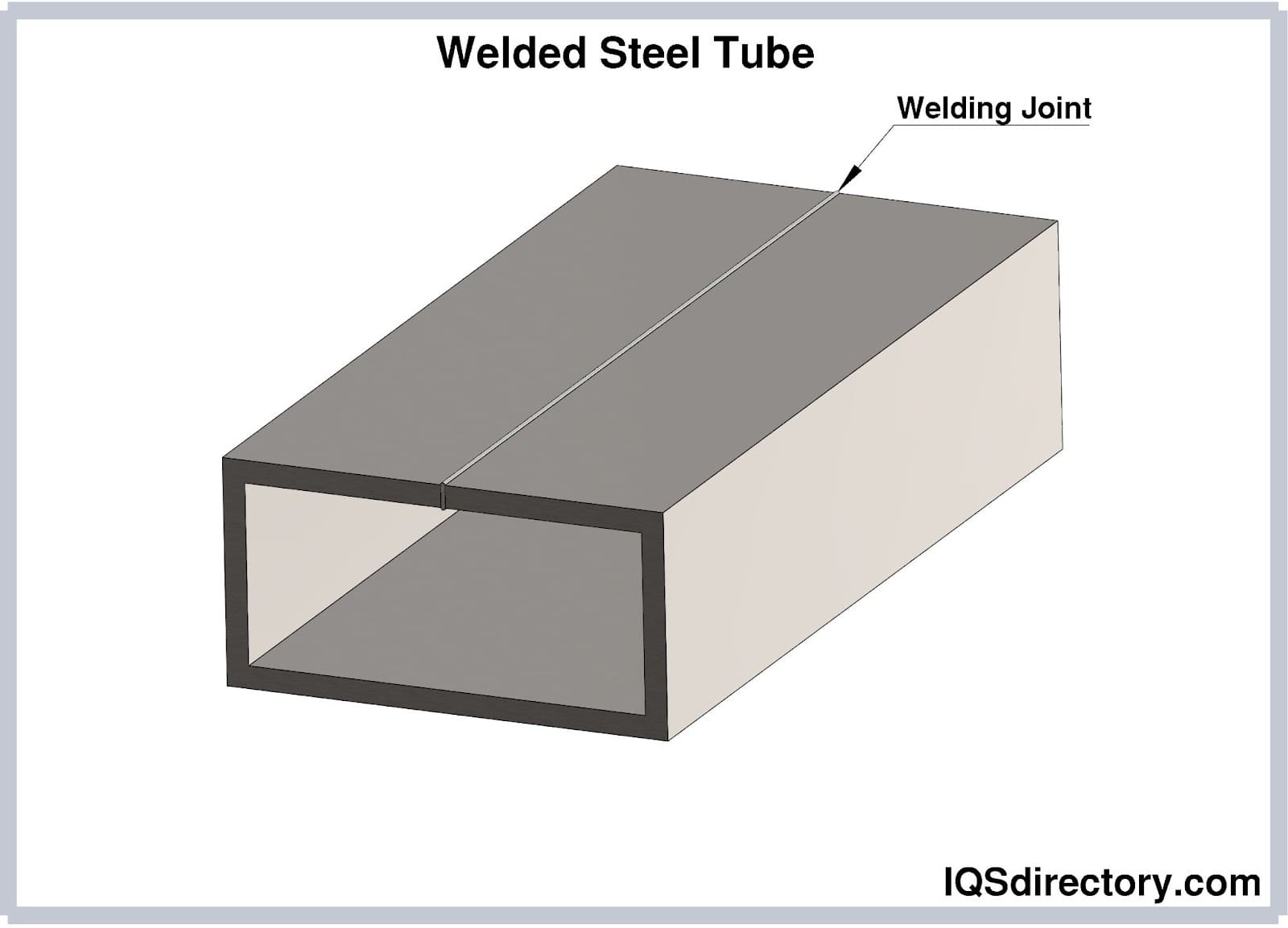 Welded tubes are created by shaping steel sheets or strips into tubular forms and longitudinally welding the seam for structural and fluid-handling applications.
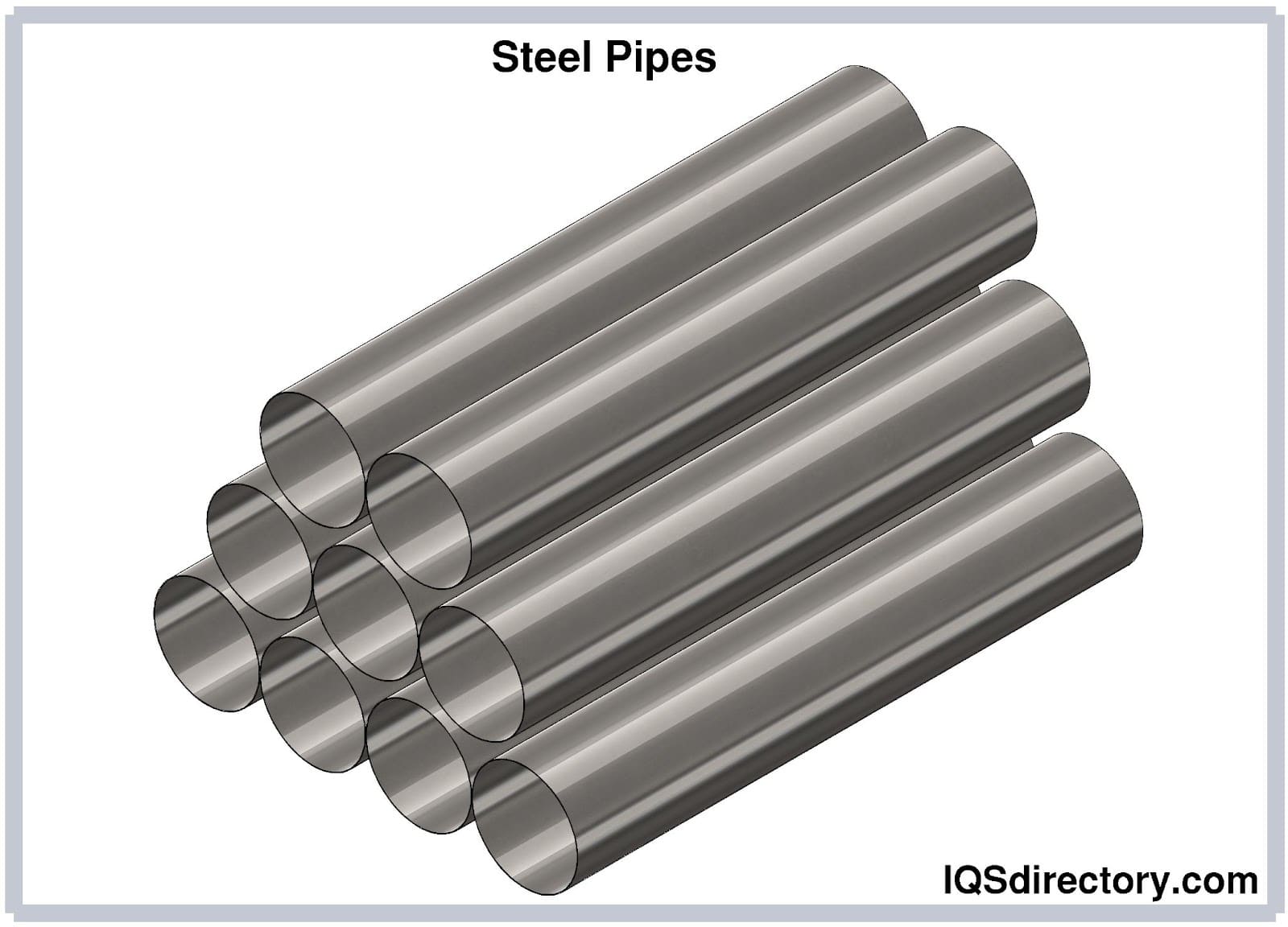 Seamless tubes are produced through extrusion rather than seam welding, creating a continuous pipe used in applications that demand uniform strength and pressure handling.
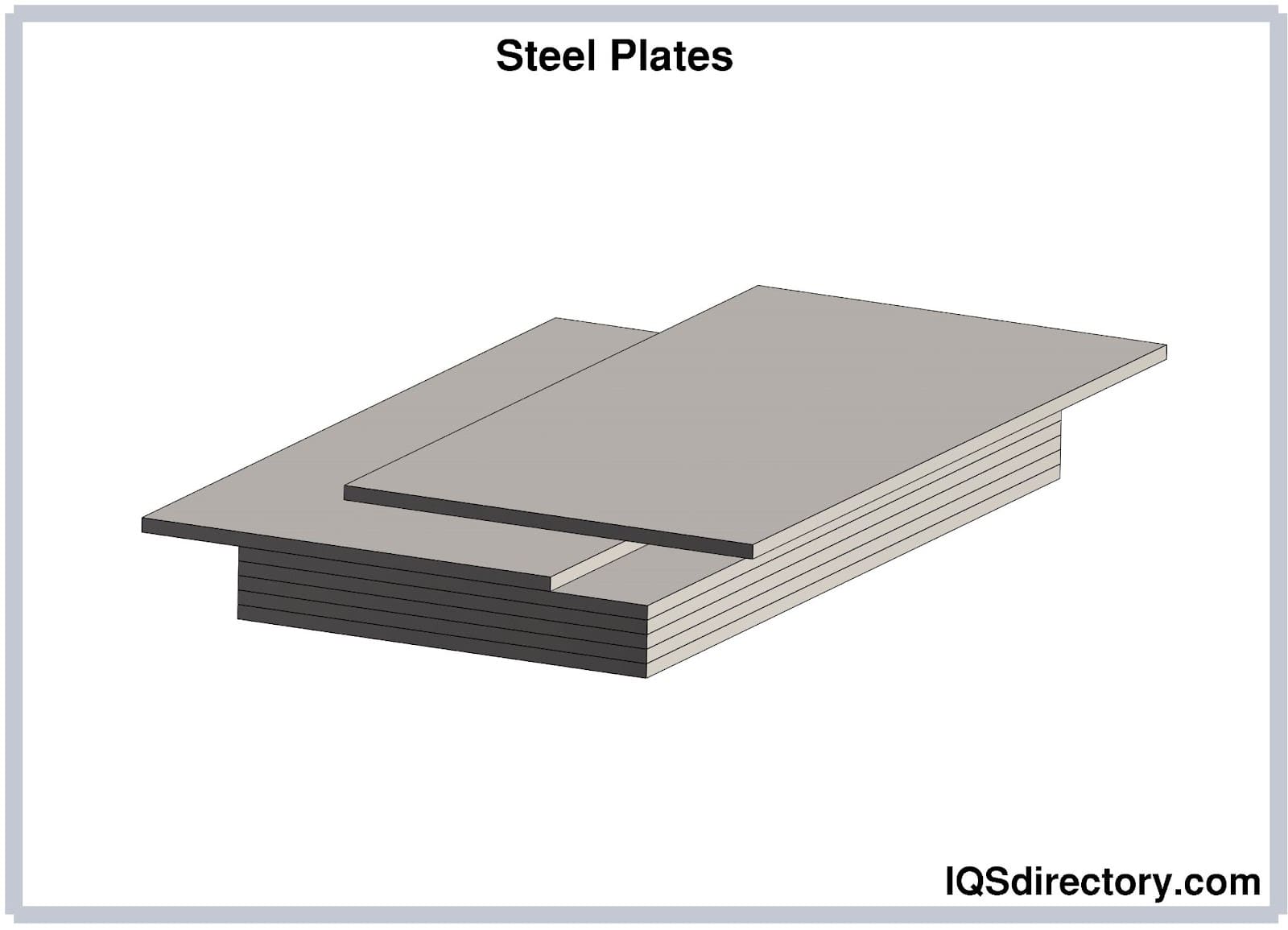 Steel plates are made through flat rolling and can be processed further for fabrication, machining, structural assemblies, and other steel product manufacturing needs.
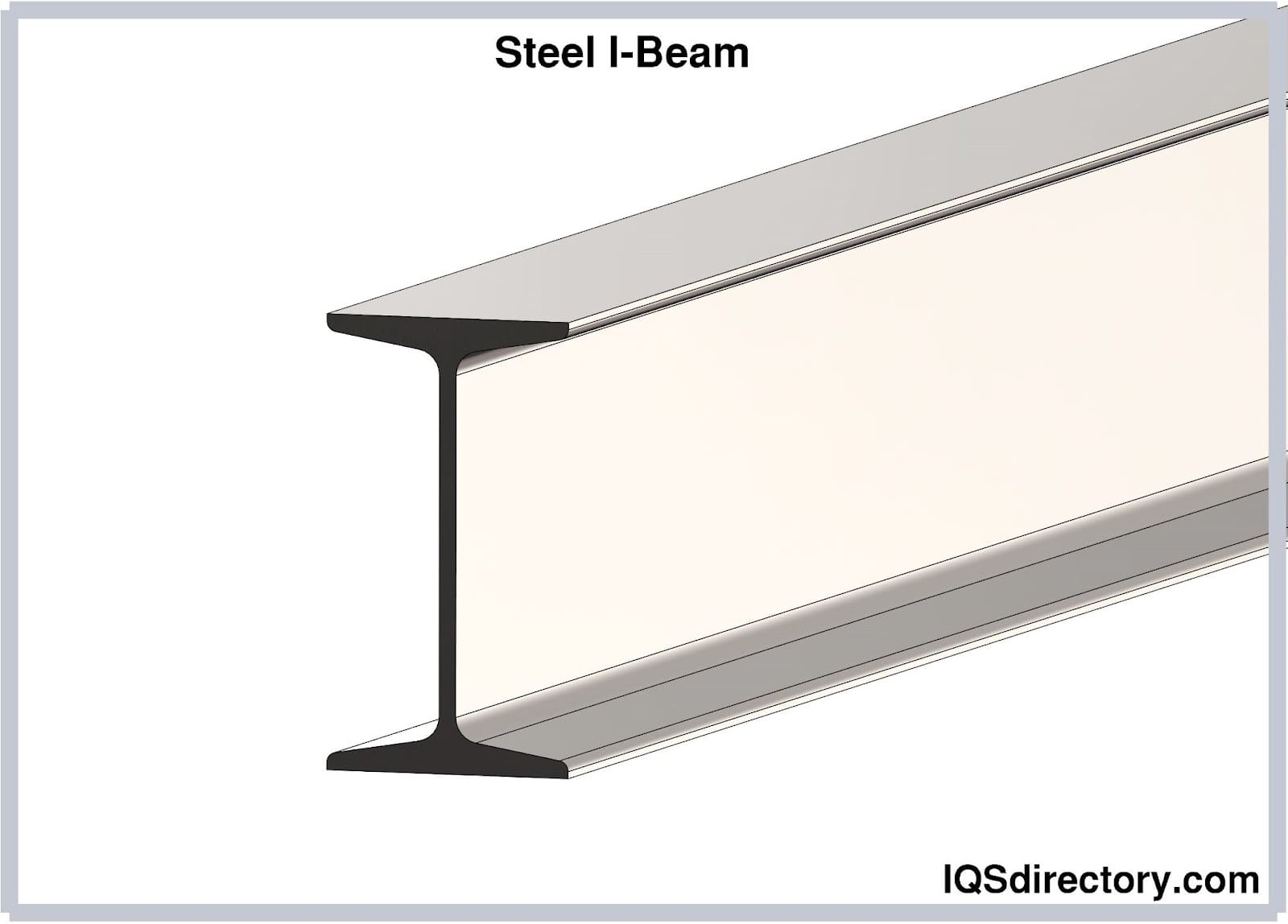 Steel beams provide structural support for large buildings and infrastructure projects and are engineered to withstand heavy loads and demanding service environments.
Products of Steel Service Centers
In addition to raw steel inventory, steel service centers process a variety of useful steel products for manufacturing, construction, fabrication, and industrial supply needs, such as:
- Plate Armor
- Flat-rolled steel plate commonly used in construction and engineering applications, valued for maintaining consistent thickness based on plate width and processing requirements.
- Steel Beams
- Widely used in construction and engineering, steel beams are designed to carry heavy loads and provide dependable support in buildings, bridges, and structural frameworks.
- Steel Pipes
- Round steel pipes are used to transport fluids and to provide structural reinforcement in bridges, buildings, staircases, frameworks, and industrial systems. Their uniform thickness and strength make them useful in demanding environments.
- Steel Strips
- Thin, flat-rolled steel sheets primarily used in trim, finishing, fabrication, and selected construction-related applications where narrow stock is needed.
- Steel Plates
- Flat-rolled sheets available in stainless, hot rolled, or cold rolled varieties for versatile applications ranging from fabrication and machinery to structural uses.
- Steel Tubing
- Steel tubing and conduits provide strong support for railings, ladders, poles, exercise equipment, and fabricated assemblies while also protecting electrical conductors and wiring.
- Structural Steel
- Hot-rolled low carbon steel with manganese, used in engineering and construction for buildings, bridges, equipment supports, and transportation structures. Steel beams are a common structural steel product supplied through service centers.
Standards and Specifications for Steel Service Centers
Founded in 1909, the Metals Service Center Institute (MSCI), formerly known as the American Steel Warehouse Association and Steel Service Center Institute, is a nonprofit trade association. MSCI represents 400 member companies operating from 1,500 locations in North America. These members inventory and distribute metals for industrial customers and perform initial processing. MSCI members annually purchase about 75 million tons of steel, aluminum, and other metals, serving 300,000 customers primarily in manufacturing and fabrication.
All steel products processed through steel service centers must be approved by the American Society for Testing and Materials (ASTM), a nonprofit organization dedicated to setting rigorous standards and supporting the quality of steel products, processes, materials, and services. For buyers evaluating suppliers, standards compliance often matters when comparing steel quality, consistency, and suitability for a given use.
The ASTM’s book of standards, updated annually, covers steel pipes, tubes, fittings, plates, and steel for both machine structural and specialty uses. ASTM has also developed standards related to annealed steel conductors. By consolidating requirements for annealed copper clad steel wire and hard-drawn concentric-lay-stranded copper clad steel conductors, ASTM helps provide clearer guidance for steel products used as alternatives to solid copper in selected applications.
Things to Consider When Choosing a Steel Service Center
IQS Directory offers a comprehensive list of steel service center companies. Use our website to research and compare steel service centers with user-friendly tools that help you source providers offering the steel processing services you need for your specific requirements. Buyers often begin with questions such as, “Which steel service center handles my material type?” or “Where can I find a steel supplier that offers custom processing?” and a well-organized directory helps narrow those options.
Our request for quote forms make it simple to connect with top steel service centers. Explore company profiles, website links, locations, phone numbers, product videos, customer reviews, news articles, and other production details. As a leading manufacturer directory, we help you find the right suppliers for steel services, steel service tubing, or metal service centers while making it easier to compare capabilities, turnaround expectations, and product focus.
Steel Service Center Terms
- Air Hardening
- Also known as "self-hardening," this refers to steel that becomes hardened simply by cooling in air, reducing the risk of distortion during treatment.
- Bloom
- A semi-finished steel product with a rectangular cross-section over 8" wide, later processed in mills to make I beams, H beams, sheet piling, and related structural products.
- Carburizing
- The process of adding carbon to a low-carbon steel surface to increase strength and surface hardness. This is achieved by heating the steel in a carbon-rich environment, then hardening it through heating and quenching.
- Casting
- A steel forming method where molten material is shaped in a mold, mainly used for specialized parts rather than general rolled steel production.
- Composite
- A material made by combining two or more distinct constituents, where each component retains its own characteristics while contributing to the performance of the finished material.
- Case
- The outer surface of steel that has a different composition due to exposure to elements such as carbon or nitrogen at elevated temperature.
- Case Hardening
- A treatment that produces a steel surface with greater hardness than the internal regions of the steel, improving wear resistance while preserving a tougher core.
- Cold Working
- A metal forming process carried out at temperatures low enough to prevent recrystallization, preserving the metal’s structure during deformation and often increasing strength.
- Core
- The innermost section of a steel part that remains largely unchanged during case hardening.
- Decarburization
- The loss of carbon from the steel’s surface layer due to chemical exposure, which can lower hardness, wear resistance, and strength.
- Ductility
- The ability of steel to deform without breaking, an important property in forming, shaping, and many alloy steel applications.
- Edge Rolling
- The process of rolling steel edges to create smoother, more functional surfaces and to reduce the chance of edge damage during handling or use.
- Hot Rolling
- A steel manufacturing technique involving heating and shaping steel into required forms through pressing and rolling at elevated temperature.
- I-Beams
- Steel beams shaped like a capital letter "I," commonly used in construction and structural support systems.
- Normalizing
- A heat treatment that refines grain size and relieves internal stresses by heating steel to 800°C–900°C (1472°F–1652°F) and then air cooling it.
- Quenching
- The rapid cooling of metal from a high temperature, usually to increase hardness and alter the final mechanical properties.
- Secondary Steel
- Steel that is rejected by an initial buyer due to defects or specification issues and is later resold by the manufacturer to another customer.
- Steamless Tubing
- Used to transport fluids or protect wires, seamless tubing is produced by extrusion or rotary piercing without welded seams. It is made by drawing a solid billet over a piercing rod, then pulling it through a die for more precise sizing.
- Specialty Steel
- Steels that include stainless, tool, alloy, and silicon electrical steels, as opposed to standard carbon steel grades.
- Tensile Strength
- The maximum stress a material such as steel can withstand while being stretched or pulled before failure occurs.
- Yield Stress
- The stress level at which a material begins to deform permanently, commonly represented as sy in engineering calculations.