Speed Reducers
Speed reducers are power transmission devices that lower motor or engine speed while increasing usable output torque. In industrial machinery, automation systems, and heavy-duty drive assemblies, that speed-to-torque conversion helps equipment move loads smoothly, start reliably, and hold the operating pace a process requires. Whether the application involves conveyors, pumps, mixers, packaging systems, or robotics, a properly matched speed reducer improves control, protects downstream components, and supports efficient mechanical performance.
Speed Reducers FAQs
What is the main function of a speed reducer?
A speed reducer lowers incoming shaft speed and converts that reduction into higher output torque. That combination allows motors to drive conveyors, pumps, mixers, and other equipment at a controlled operating speed instead of running at full motor RPM.
How do speed reducers improve equipment performance?
Speed reducers improve machine performance by matching motor speed to the real load requirement, increasing torque output, and reducing stress on bearings, shafts, and driven components. In daily operation, that can support smoother starts, steadier throughput, and longer service life.
What materials are used to manufacture speed reducers?
Most speed reducers use steel, alloy steel, cast iron, and other wear-resistant metals for gears, shafts, and housings because these materials handle heat, friction, and repeated load cycles well. In lighter-duty applications, engineered plastics may be used for select parts where lower weight, lower noise, or cost savings matter.
What are the main types of speed reducers?
Common speed reducer configurations include inline, parallel shaft, right-angle, and shaft-mounted units. Within those categories, buyers often compare worm gear, helical, planetary, spur, and cycloidal designs based on ratio range, torque density, mounting space, backlash, and operating efficiency.
How is a speed reducer installed properly?
Proper installation starts with correct shaft alignment, secure mounting, and careful control of radial or overhung load. Installers typically review pulley, sprocket, and coupling dimensions, calculate the load applied to the shaft bearing, and verify that the reducer operates within the manufacturer’s published limits.
Why is lubrication important for speed reducers?
Lubrication helps a speed reducer manage friction, transfer heat away from moving gear teeth, and maintain a protective film between metal surfaces. The right oil type, viscosity, and fill level can reduce wear, lower operating temperature, and support stable gearbox performance over time.
Which industries commonly use speed reducers?
Speed reducers are used across manufacturing, material handling, food processing, construction, packaging, mining, and automated assembly. They are common in conveyors, pumps, compressors, mixers, agitators, robotics, and other equipment that needs controlled speed and dependable torque.
The History of Speed Reducers
Speed Reducers in the 21st Century
-
Speed Reducers Before the 20th Century
The earliest descriptions of gear-driven speed reduction are often linked to Ismail al-Jazari, who documented sophisticated mechanical devices in 1206. His work showed how geared assemblies could change motion and manage rotational speed, laying conceptual groundwork for later gearbox and speed reducer design.
In 1817, Watt & Boulton Engine introduced an early gearbox arrangement that helped regulate rotational speed. By 1881, de Dion-Bouton was building gearboxes for steam-powered vehicles, showing how speed reduction was becoming part of real-world transportation equipment.
As automotive engineering advanced, inventors refined gear-and-shaft arrangements that made manual transmission and early reduction gearing more practical. Those developments improved torque transfer, supported smoother shifting, and accelerated the move from experimental drive systems to repeatable production designs.
Throughout the twentieth century, better metallurgy, improved machining, and tighter tolerances made speed reducers more durable and versatile. Designers were able to reduce gear grinding, improve load handling, and build transmission systems that performed more consistently under real operating conditions.
-
Today’s speed reducers are more compact, efficient, and application-specific than earlier generations. Precision gear cutting, improved housings, and better sealing technology help modern units transfer power with less loss while supporting demanding industrial duty cycles.
Modern reduction ratios now cover a wide range of torque and speed requirements, from compact precision drives to heavy-duty industrial gearboxes. Planetary designs, flanged outputs, and other packaging improvements also make installation easier where space is limited.
Manufacturers continue to refine speed reducer technology for higher torque density, quieter operation, stronger reliability, and easier maintenance. As equipment becomes more automated and production uptime matters more than ever, speed reducers remain a core part of industrial motion control.
Advantages of Speed Reducers
Speed reducers help machines run at workable operating speeds, boost torque, and reduce strain on connected components. They can also improve energy use, support smoother acceleration, simplify compact drive layouts, and extend the life of motors, shafts, bearings, and driven equipment.
Speed Reducers Design
-
Production Process
Speed reducers are built from gears, shafts, bearings, seals, and a rigid housing through a closely controlled manufacturing process. Gear teeth may be formed by hobbing, broaching, form milling, or blanking, while shafts are commonly cast, forged, or extruded before finish machining. The housing is then produced and the assembly is paired with a precision gear motor or other drive source as needed. After assembly, many units receive a durable powder-coated finish for wear and environmental protection.
-
Material Design
To withstand repeated load, friction, and heat, many speed reducers are machined from strong metals such as steel, alloy steel, and cast materials with strong wear resistance. For lighter-duty or weight-sensitive applications, some manufacturers use engineered plastics for select components. Whatever the material mix, corrosion resistance, abrasion resistance, and dependable lubrication all play a major role in long-term reducer life.
-
Equipment Operation
During operation, the motor delivers power to the reducer’s input shaft, where it is converted into a lower output speed. This adjusted speed is then transmitted to the connected load through the output shaft. The combined action of the gearbox and gear motor allows for the delivery of equal or increased torque, enabling precise control over speed adjustments.
Design Considerations and Customization
Speed reducers can be sized and configured for a specific load, ratio, mounting arrangement, and duty cycle. Buyers typically review torque capacity, load capacity, gear pitch, service factor, and target output before choosing features such as sprockets, V-belts, chain drives, and sheaves. That flexibility helps the reducer integrate cleanly into a broad range of industrial drive systems.
Speed Reducer Images, Diagrams and Visual Concepts
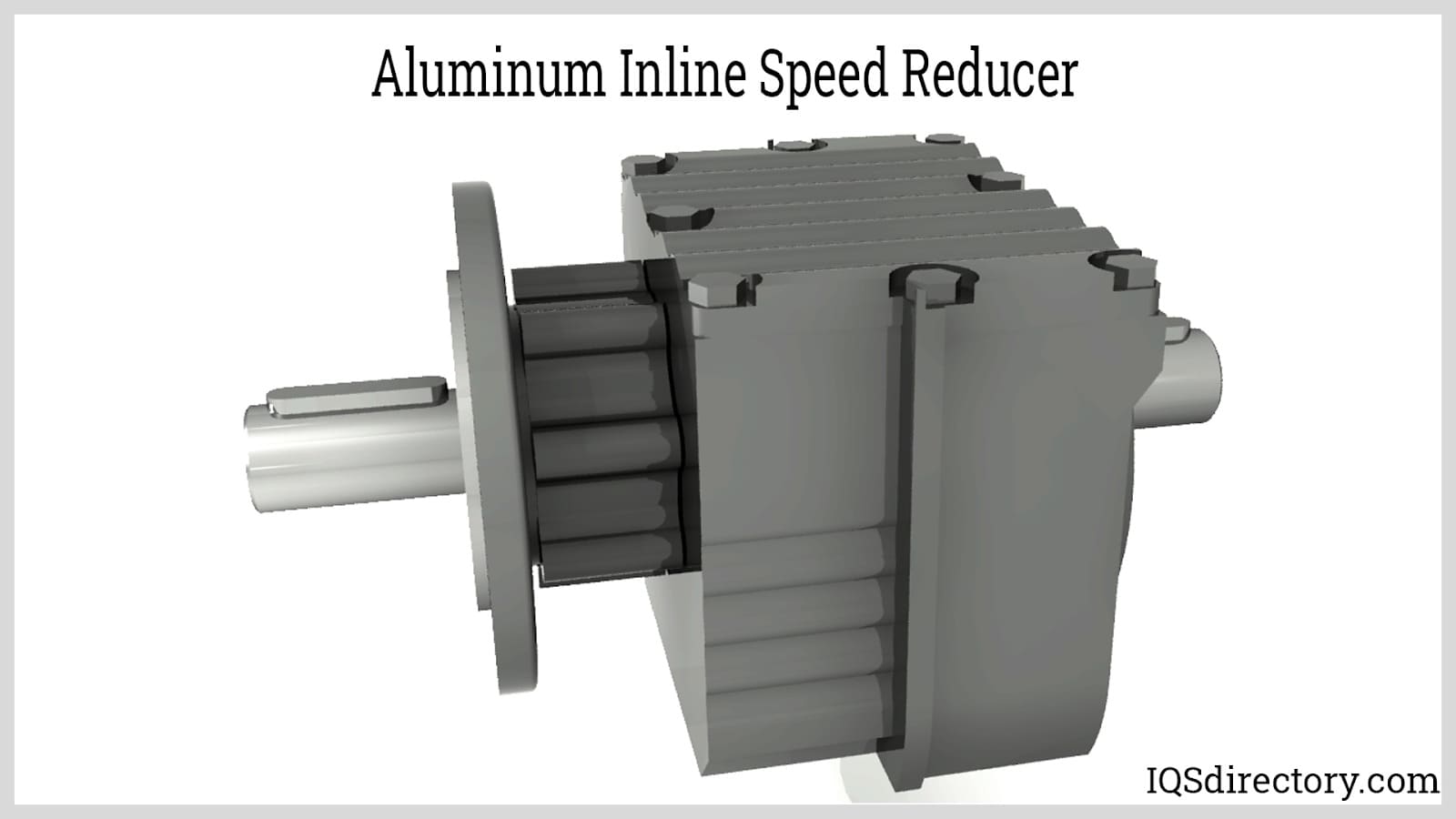 A speed reducer sits between the motor and the driven machine to lower output speed and increase available torque.
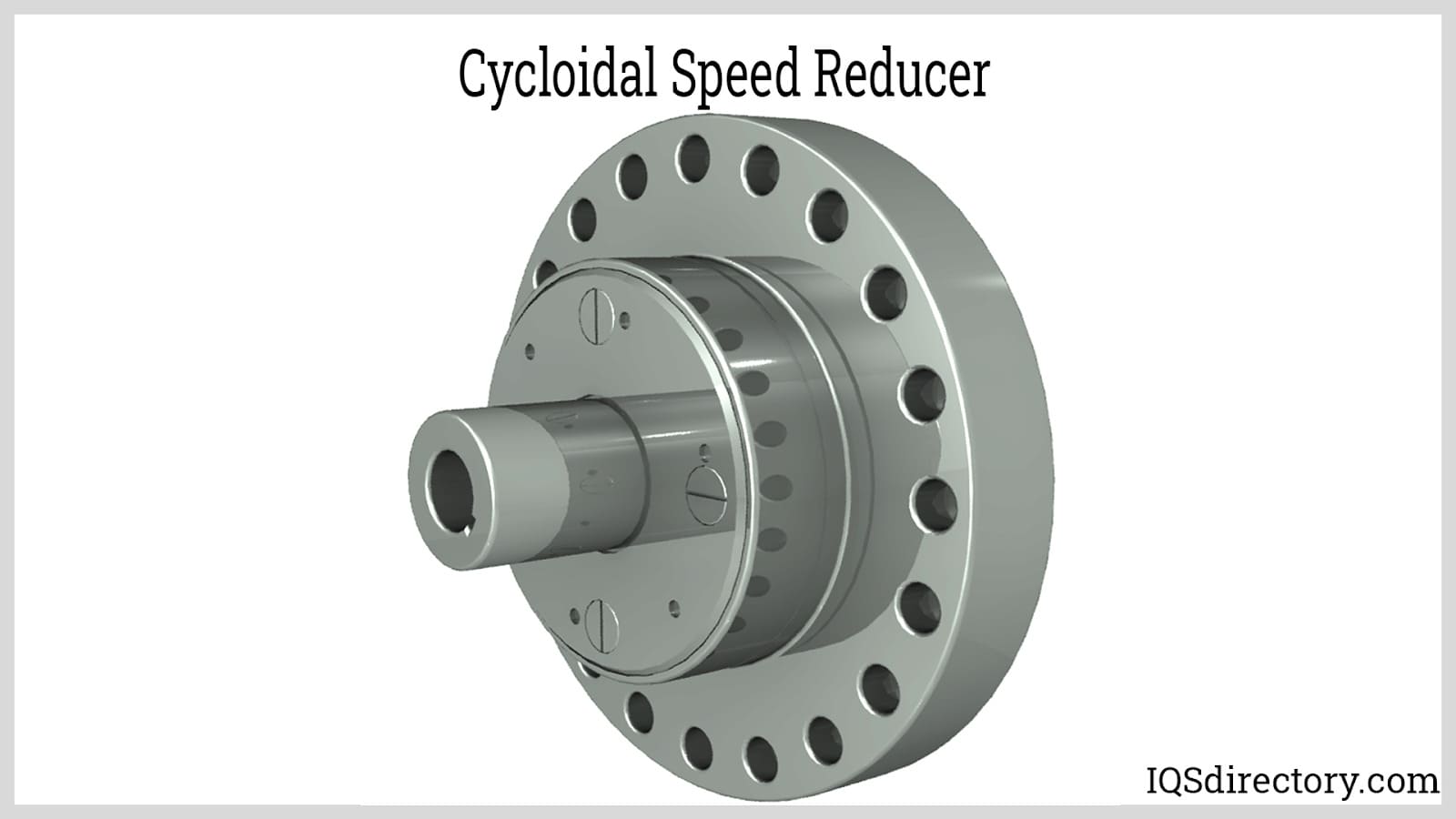 Cycloidal speed reducers provide high reduction ratios in a compact package with low backlash and strong shock-load resistance.
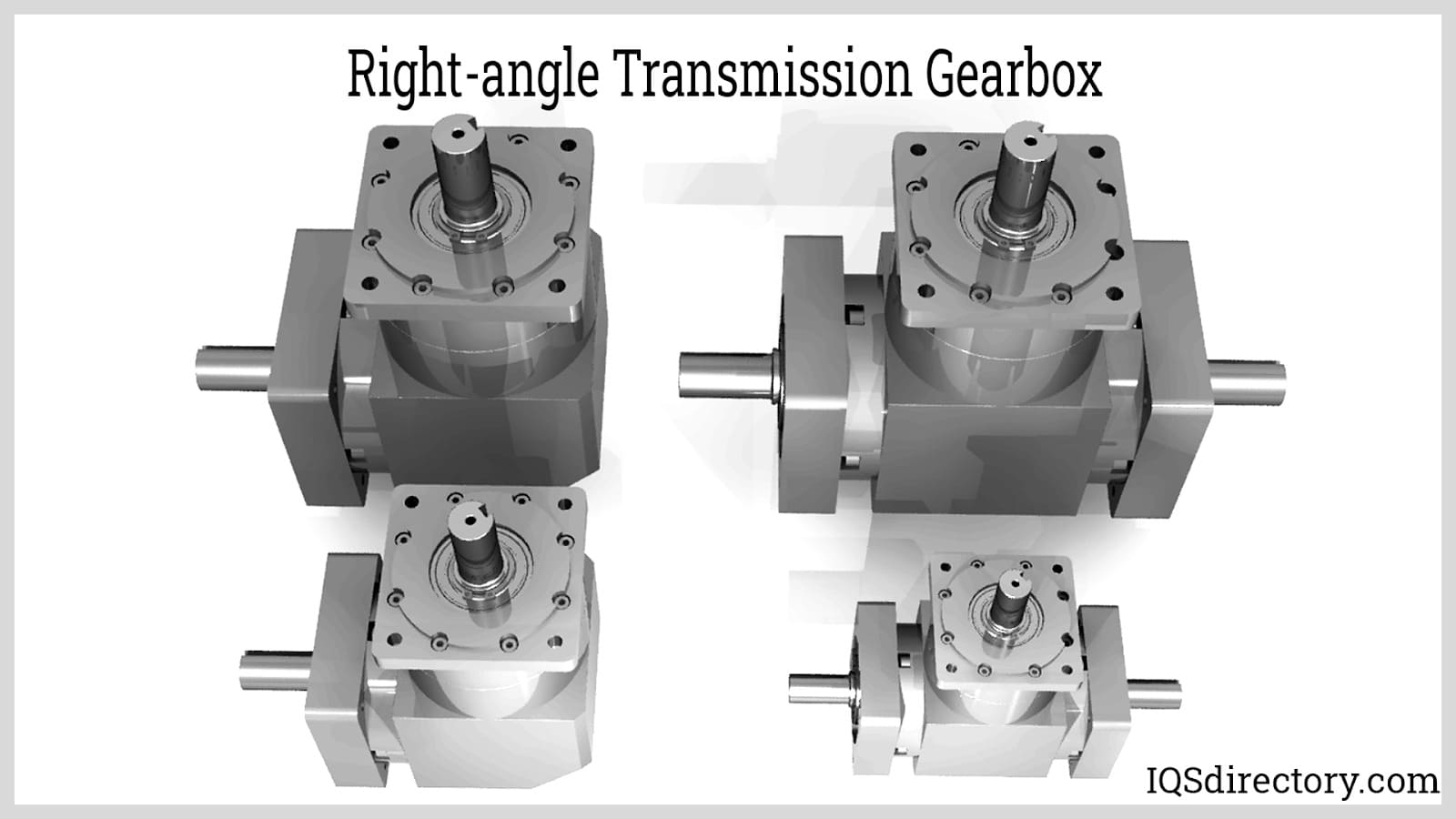 Right-angle gearboxes transmit shaft power through a 90° drive arrangement, often using worm or bevel gearing.
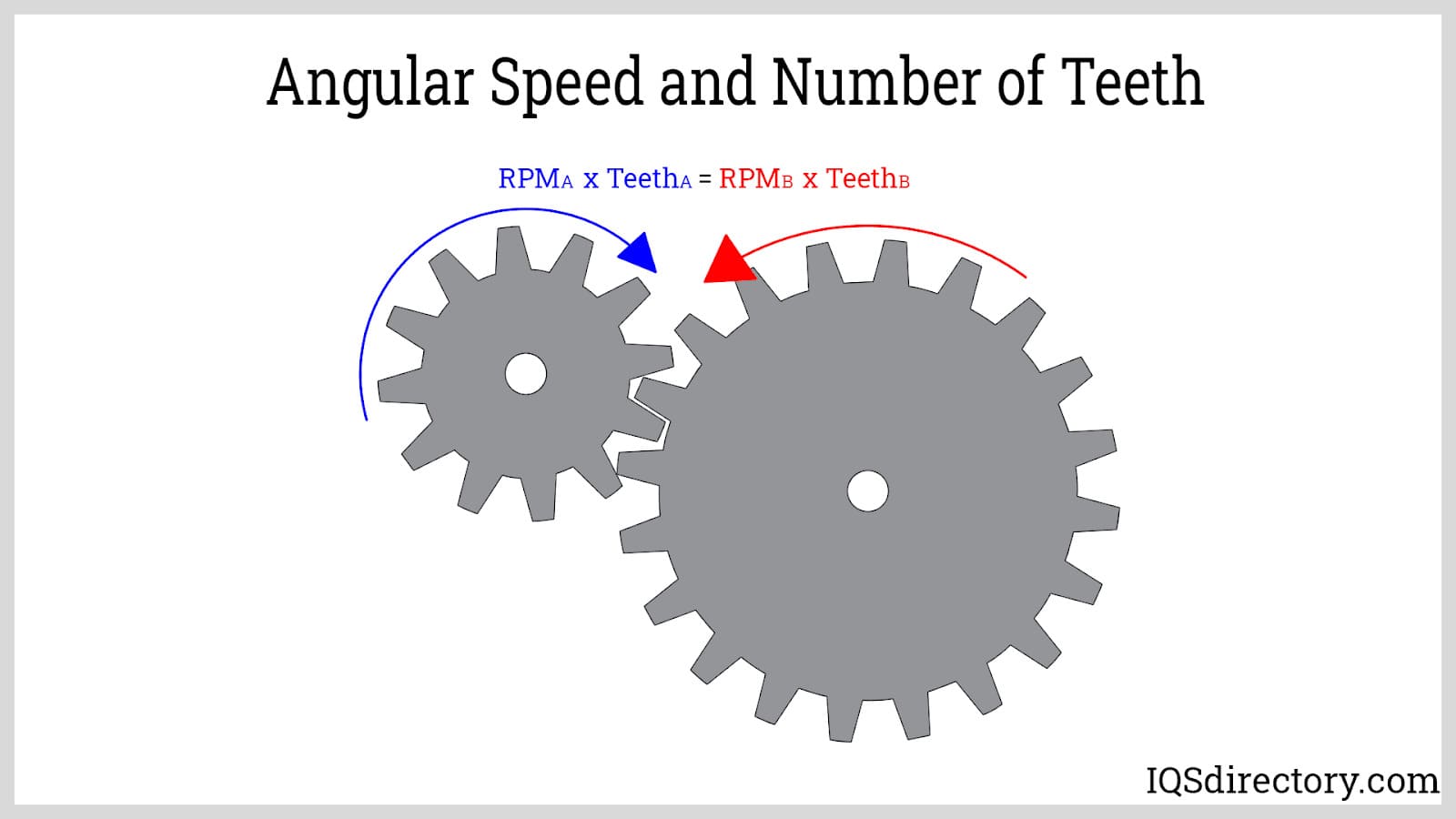 Gear drives can increase or decrease driven-shaft speed by changing pitch diameter or tooth count between meshing gears.
 Worm gear drives use a screw-and-wheel arrangement to create compact right-angle speed reduction.
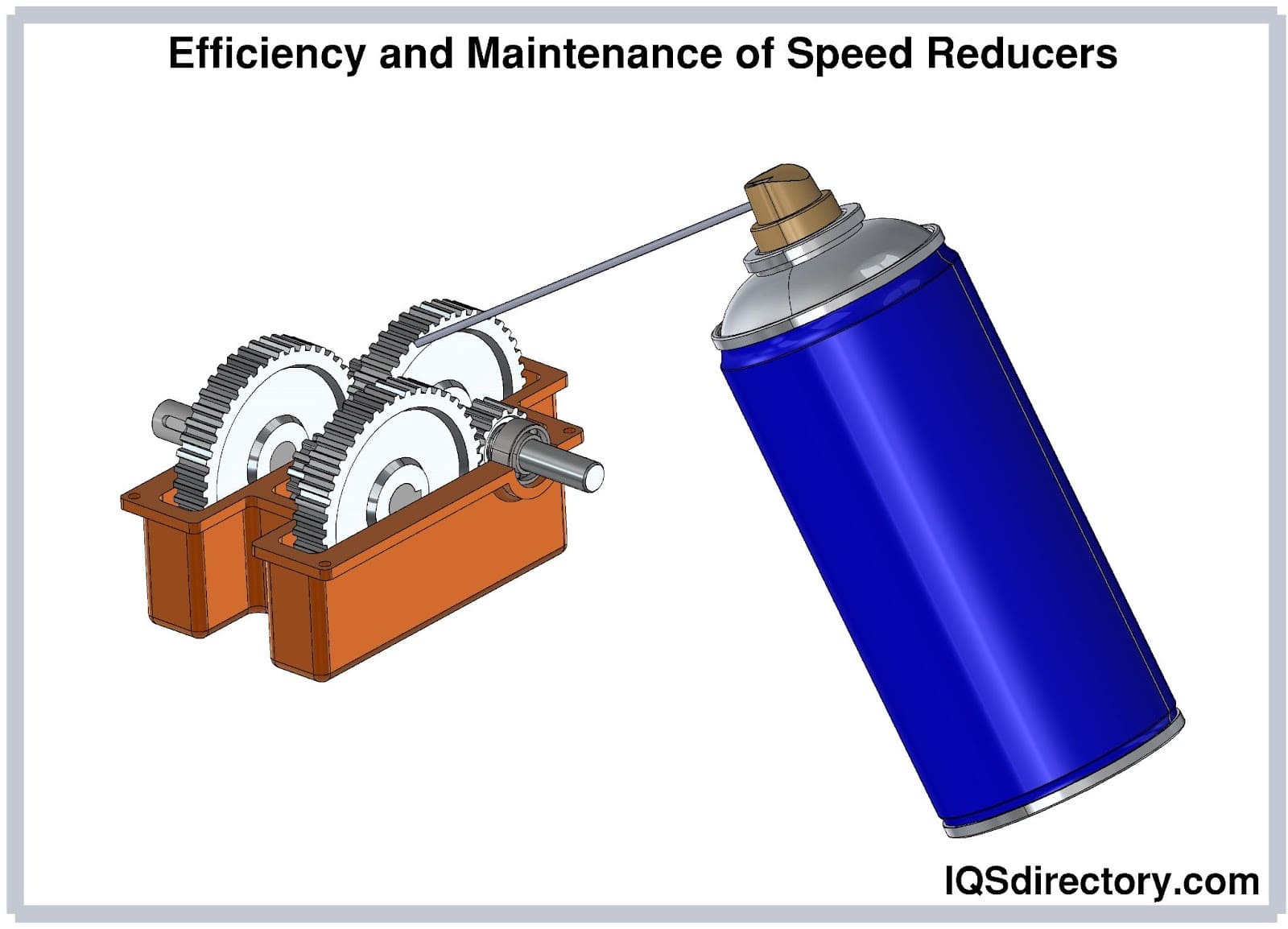 Routine maintenance and proper lubrication help speed reducers run cooler, wear more evenly, and operate more efficiently.
Speed Reducer Types
The term "speed reducer" covers several related power transmission products, including gearboxes, gear drives, gear reducers, and gear motors. Because the terminology overlaps across industries, buyers often sort them by mounting style, shaft orientation, ratio range, and gear geometry when comparing options.
Primary Types of Speed Reducers
Inline Gear Reducer
An inline gear reducer places the input and output shafts on the same axis, making it a common choice where space and drive layout favor a straight-through configuration. Depending on ratio, torque, and backlash needs, inline units may use spur, helical, planetary, or cycloidal gearing.
Parallel Gearbox
A parallel shaft gearbox uses separate input and output shafts that remain parallel to one another. This style is widely used when designers need flexible mounting, efficient power transfer, and strong performance in conveyors, material handling equipment, and industrial process lines.
Right Angle Gear Box
This layout places the input shaft at a right angle to the output shaft and typically uses worm or bevel gearing to create the required reduction. Some designs also use hybrid arrangements for better efficiency. Because of their compact footprint and high ratio capability, many buyers know this style as a worm gear reducer, worm gearbox, or worm speed reducer. Right-angle designs are often selected when space is limited and low-horsepower equipment needs compact torque multiplication.
Shaft Mounted Speed Reducer
A shaft-mounted speed reducer mounts directly on the driven shaft, which can reduce the need for separate foundations, couplings, and alignment hardware. That compact arrangement can simplify installation and lower overall system complexity in conveyor and bulk handling applications.
Additional Variations of Speed Reducers
Variable Speed Reducer
Variable speed reducers control the rotational speed of AC or DC motors using mechanical, electromechanical, hydraulic, or electronic methods. They are often selected when a process needs adjustable output speed, finer control, and better operating efficiency across changing load conditions.
Gear Reducer (Reducer Gear)
Gear reducers are designed to lower output speed, increase torque, and help equipment absorb shock loads without requiring an oversized motor package. In many industrial settings, the term is used broadly for reducer gearboxes that change speed and torque to fit the application.
Gearbox Speed Reducer
A gearbox speed reducer lowers motor speed and raises usable torque at the driven shaft. When mounted directly to a motor as a compact assembly, it is often referred to as a gear head or gearmotor-style drive package.
Gear Motor Unit
A gear motor unit combines a speed reducer with a standard electric motor to create a compact drive assembly. Depending on the design, the reducer may connect through a direct coupler or a belt arrangement that transfers input speed to the gearbox.
Helical Gear Reducer
Helical gear reducers use angled teeth to create smoother tooth engagement, quieter operation, and improved load sharing. They are often chosen for continuous-duty industrial applications where noise reduction and stable performance matter.
Cyclo Reducer
A cyclo reducer uses rolling elements and an eccentric motion system to slow the input shaft and create high reduction ratios in a compact footprint. This design is often valued for shock resistance, low backlash, and dependable positioning performance.
Planetary Gearbox
Planetary gearboxes use a sun gear, multiple planet gears, and a ring gear to deliver compact high-torque speed reduction. Their balanced load sharing makes them popular where designers want strong torque density, compact size, and consistent transmission efficiency.
Cycloidal Speed Reducer
Cycloidal speed reducers operate with epicycloid and hypocycloid motion rather than a standard involute tooth form. They are often used where high ratios, compact packaging, and controlled backlash are part of the buying decision.
Spur Gear
Spur gears are the most straightforward gear form, with teeth cut parallel to the shaft axis. They are efficient and cost-effective for many basic speed reduction duties, especially where noise is less of a concern than simplicity and value.
Gear Reducer
Gear reducers change speed, torque, or shaft direction through a defined gear ratio. In practice, they allow a constant-speed motor to drive equipment at a lower usable output speed while increasing available torque at the load.
Reduction Gears
Reduction gears lower the speed of a rotating input by pairing gears of different sizes to create a target ratio. Gearboxes and other reducer assemblies rely on those gear relationships to produce controlled output speed and torque.
Worm Gear Speed Reducers
Worm gear speed reducers are a right-angle option often used in low-horsepower applications where compact size, high ratio capability, and good shock absorption are priorities. They are common in conveyors, lifts, gates, and other systems that need compact right-angle power transmission.
Speed Reducer Applications
Across industrial machinery, speed reducers manage output speed, raise torque, and help designers build more compact drive trains. Gear reducers are frequently chosen when equipment must handle shock loads, control motion precisely, and fit into a practical machine footprint.
Common speed reducer applications include material handling, automation, transportation, aerospace, food processing, construction, mining, oil and gas, and textile production. You will often find them in conveyors, compressors, mixers, pumps, generators, printing equipment, and robotics where controlled speed and steady torque delivery are required.
Speed Reducer Installation
When connecting a speed reducer to an input shaft, installers should check shaft alignment, coupling fit, pulley or sprocket size, and the radial load applied to the bearings. Good installation practice reduces vibration, protects internal gears, and supports longer service life.
Shaft bearings are built to carry radial load, but overload can damage the internal gear train, seals, and bearings. A common installation check is to divide transmitted torque by pulley or sprocket radius to estimate overhung load and confirm the reducer remains within design limits.
Standards and Specifications of Speed Reducers
When specifying a speed reducer, buyers should review applicable ISO and AGMA guidance along with the manufacturer’s own ratings for torque, service factor, duty cycle, and thermal performance. Matching the reducer to the application, environment, and compliance requirements helps support dependable operation.
Choosing the Right Speed Reducer Manufacturer
A dependable speed reducer starts with a manufacturer that understands your application, service factor, and delivery requirements. To help with supplier research, our directory points buyers toward qualified manufacturers and suppliers through the compressors. Company profiles, locations, technical details, videos, and reviews can help narrow the field before you request a quote.
Request quotes and technical input from several manufacturers so you can compare pricing, lead times, customization options, support, and overall service. A supplier that communicates clearly and understands your operating conditions is more likely to deliver a reducer that performs well over the long term.
Proper Care for Speed Reducers
Speed reducers handle repeated torque loads, heat, and mechanical stress, so routine care has a direct effect on service life. A practical maintenance plan includes load monitoring, oil checks, lubricant changes, inspection for leaks, and attention to unusual noise, vibration, or heat buildup.
New Application
When placing a speed reducer into a new application, avoid overloading the unit during break-in. Many operators run the reducer with fresh oil under normal handbook conditions for the first two weeks, then drain and replace the oil so any loosened particles are removed from the system.
Preventive Maintenance
Preventive maintenance helps reduce sludge buildup, oxidation, acid formation, and wear inside the gearbox. Following a consistent lubrication and oil change schedule, and shortening intervals for heavy-duty service, can improve reliability and reduce the chance of premature component damage.
Reducer Lubrication
Poor lubrication is one of the most common causes of gearbox damage. The right lubricant reduces friction, helps carry away heat, and maintains a protective film between gear surfaces, bearings, and other moving parts. Oil selection should match operating temperature, load, and the reducer manufacturer’s guidance.
Reducer Oiling
Maintaining the correct oil level helps a speed reducer manage heat and protect internal gears and bearings. Too little oil can accelerate wear and failure, while too much can churn air into the lubricant, raise temperature, and reduce operating stability. Check the level only after the reducer has cooled.
Accessories for Speed Reducers
Accessories can help improve speed reducer performance, monitoring, and durability. Depending on the application, buyers may consider gear position displays, oil pumps, oil coolers, slip yokes, bell housings, and other add-ons that support lubrication, compatibility, and smoother torque transmission.
Speed Reducer Terms
-
Actuator
An actuator is a device that converts available energy into controlled rotary or linear mechanical motion.
Axial Movement
Axial movement, often called endplay, describes motion along the axis of a motor or gear shaft and is commonly measured in thousandths of an inch.
Backlash
Backlash is the amount of free movement at the output when the input is stationary, often seen as play between mating gear teeth.
Cam
A cam is a rotating component that converts circular motion into a controlled linear or oscillating motion.
Efficiency
Efficiency describes how much input power a speed reducer transfers to useful output power after mechanical losses are considered.
Endshield
An endshield houses the bearing that supports the rotor and helps protect the internal parts of a motor; it may also be called an endbell, endplate, or end bracket.
Gear Ratio
Gear ratio is the numerical relationship between input speed and output speed in a speed reducer or gearmotor assembly.
Horsepower
Horsepower is a unit of power equal to 33,000 foot-pounds per minute, 550 foot-pounds per second, or 746 watts.
Hysteresis
Hysteresis describes the difference in system response when the same input is applied repeatedly, often due to mechanical lag or repeatability limits.
Input Horsepower
Input horsepower is the amount of motor power a speed reducer can accept at its input shaft.
Lost Motion
Lost motion is movement that is not fully transmitted through the system because of backlash, hysteresis, or torsional flexibility.
Mechanical Rating
Mechanical rating is the maximum power or load a speed reducer can handle before overload or mechanical damage becomes likely.
Mounting Position
Mounting position refers to the installed orientation of a speed reducer’s input and output shafts, which can affect lubrication, fit, and overall performance.
Output Horsepower
Output horsepower is the usable power delivered at the output shaft after efficiency losses are taken into account.
Output Shaft
The output shaft is the reducer component that connects to driven equipment and transmits torque and power to the load.
Thermal Rating
Thermal rating measures the continuous power a speed reducer can transmit while managing the heat it generates during operation.