Solenoid Valves
Solenoid valves are electromechanical flow control devices used to start, stop, direct, meter, or isolate the movement of liquids and gases. Often called control valves, they respond to an electrical signal that energizes a coil and moves an internal plunger or diaphragm, allowing fast, repeatable, and automated flow regulation in industrial, commercial, laboratory, and process applications.
Pressure ratings for solenoid valves are commonly expressed in pounds per square inch (psi) or bar, with psi remaining the standard reference point for many U.S. manufacturers, engineers, and buyers. When comparing valves, users often evaluate pressure range, port size, operating voltage, media compatibility, response time, and duty cycle to find the right match for water, air, gas, oil, refrigerant, steam, or chemical service.
Solenoid Valves FAQs
What is a solenoid valve and how does it work?
A solenoid valve is an electrically actuated valve that controls the flow of fluids or gases. When current energizes the solenoid coil, a magnetic field lifts or shifts a plunger, piston, or diaphragm to open, close, or redirect flow. This design allows precise, automated fluid control in systems that require quick response, repeatability, and remote operation.
What are the main advantages of using solenoid valves?
Solenoid valves offer fast switching, compact construction, dependable shutoff, and low routine upkeep because they have relatively few moving parts. They are easy to integrate into automated equipment, support remote operation, and work well in pneumatic, hydraulic, water, gas, and process control systems where consistent valve response matters.
What materials are solenoid valves made from?
Solenoid valves are produced in metals such as stainless steel, brass, bronze, and aluminum, as well as corrosion-resistant plastics like PTFE, PVC, and CPVC. Seal materials may include Viton, EPDM, NBR, or similar elastomers depending on temperature range, chemical exposure, and media compatibility. Material selection is guided by pressure, temperature, fluid type, and operating environment.
What is the difference between direct-acting and pilot-operated solenoid valves?
Direct-acting solenoid valves open or close the flow path with the plunger itself, making them useful for low-flow service and systems starting at zero pressure. Pilot-operated solenoid valves use system pressure and a diaphragm or piston to assist valve movement, which makes them a common choice for higher-flow and higher-pressure applications.
Where are solenoid valves commonly used?
Solenoid valves are widely used in HVAC equipment, refrigeration systems, compressed air lines, irrigation controls, wash systems, water treatment equipment, automotive assemblies, medical devices, food processing equipment, and industrial automation. They are valued anywhere accurate on-off control or directional flow control is needed for liquid or gas service.
How should solenoid valves be installed for best performance?
Install solenoid valves in a clean, dry, and ventilated location whenever possible, and always align the valve with the flow arrow on the body. Confirm voltage, pressure range, media compatibility, and piping orientation before startup. Using strainers, proper filtration, and professional installation practices can help reduce overheating, debris buildup, and premature wear.
What maintenance do solenoid valves require?
Routine maintenance usually includes cleaning internal parts, checking coil condition, inspecting seals and seats, and confirming that the valve is operating within rated pressure and temperature limits. Preventing contamination, freezing, scale, and incompatible media exposure helps extend service life. Many valves can be refreshed with rebuild kits instead of full replacement.
The History of Solenoid Valves
The solenoid control valve entered commercial use in the early twentieth century, with one of the first manufactured models introduced in 1910. As factories, utilities, transportation systems, and process industries grew more automated, demand increased for valves that could deliver faster switching, dependable shutoff, and easier electrical control than many manually operated alternatives.
By the 1950s, designers were incorporating plastic-molded valve bodies and improved sealing materials into selected solenoid valve lines. Those changes boosted corrosion resistance, widened chemical compatibility, and helped manufacturers serve water treatment, laboratory, food processing, agricultural, and light industrial markets with more application-specific products.
The 1970s brought broader use of automatic shutoff valves and more refined control strategies for fluid systems. Compared with manual shutoff devices, these electrically actuated valves improved response time, process repeatability, and safety in applications where operators needed quick control of water, oil, air, steam, gas, refrigerant, or mixed process media.
Standardization efforts that accelerated during the 1990s helped unify many design and performance expectations across the global valve market. Greater consistency in enclosure ratings, materials, dimensions, and electrical specifications simplified sourcing, maintenance planning, replacement selection, and cross-border equipment integration for OEMs, distributors, and end users.
Today, solenoid valve development continues to focus on durability, energy efficiency, miniaturization, and cleaner material choices. Designers are refining coils, reducing power draw, improving sealing compounds, and expanding options for hazardous environments, high-cycle service, and sustainability-minded manufacturing without giving up performance or dependable process control.
Advantages of Solenoid Valves
Solenoid valves offer a strong performance advantage in many fluid control systems because they combine compact size with quick actuation and dependable on-off response. Since they typically use fewer moving parts than many mechanical alternatives, they can reduce wear points, support consistent cycling, and help lower routine service demands in automated equipment.
Their ability to operate remotely through solenoid coil activation makes them a practical option in hazardous, hard-to-reach, or tightly enclosed locations where manual operation is inefficient. Solenoid valves also integrate well with hydraulic and pneumatic controls, PLC-based automation, timed sequences, and sensor-driven process systems.
Fast switching, compact footprints, broad material choices, and dependable long-term operation have made solenoid valves a go-to solution for flow control, shutoff, dispensing, venting, and directional control. Buyers often choose them when they need repeatable performance, simple electrical integration, and a valve platform that can scale from light-duty service to demanding industrial use.
Design of Solenoid Valves
Manufacturing Process
Solenoid valve manufacturing relies on accurate, repeatable production methods such as coil winding, CNC machining, injection molding, stamping, grinding, and laser welding. Once individual components are produced, they are assembled and tested to verify sealing performance, electrical response, dimensional accuracy, and flow control consistency.
At the center of every solenoid valve are two main elements: the solenoid assembly and the valve body. Supporting parts may include a spring, inlet and outlet ports, an orifice, a seat, seals, a plunger, a ferromagnetic core, and depending on design, a diaphragm or pilot passage that helps manage pressure-assisted actuation.
To meet different site conditions, solenoid valves are offered with multiple enclosure and coil housing options. ANSI and NEMA ratings help define suitability for indoor, outdoor, washdown, dusty, wet, or hazardous locations. Higher enclosure ratings generally reflect better resistance to water ingress, dirt, corrosion, or explosive atmospheres, which is a major factor when selecting valves for plants, utilities, and outdoor installations.
Material Selection
Material choice depends on the medium being controlled, operating temperature, system pressure, and environmental exposure. Manufacturers evaluate whether the valve will contact potable water, hot oil, compressed air, corrosive chemicals, solvents, steam, refrigerants, or inert gases before choosing body materials, seal compounds, internal metal finishes, and coil protection.
Plastic solenoid valves may be made from PTFE, PVC, CPVC, polypropylene, or similar engineered polymers to provide strong chemical resistance and lightweight performance. Metal solenoid valves are often built from stainless steel, bronze, aluminum, or brass. Seal options such as Viton can improve resistance to heat, chemicals, and demanding service cycles.
Design Considerations
Every solenoid valve is engineered around a target application, so variables such as port size, normally open or normally closed position, direct or pilot operation, electrical rating, seal material, pressure range, flow coefficient, and body construction all affect performance. Buyers frequently ask which solenoid valve is best for water, air, gas, refrigerant, or chemical service, and the answer usually depends on these design details.
- Brass solenoid valves are a common choice for water, light oil, and inert gas service, offering a practical balance of cost, machinability, and durability for many commercial and industrial systems.
- PTFE solenoid valves provide strong resistance to aggressive chemicals and harsh gases, making them useful where standard metal valve bodies may not offer the same long-term compatibility.
- Stainless steel solenoid valves are widely used in chemical processing and demanding washdown environments because they offer strong corrosion resistance, abrasion resistance, and cleanability.
- Miniature solenoid valves suit compact systems such as medical instruments, biotech equipment, analyzers, and portable devices where tight installation space and precise dosing both matter.
- High-pressure solenoid valves are engineered for demanding service in heavy equipment, process lines, and other systems where dependable shutoff and controlled flow are needed under elevated pressure.
Customization Options
Manufacturers can tailor solenoid valves to meet application-specific needs involving pressure, flow path, and installation limitations. While the standard 2-way solenoid valve remains common for basic on-off control, 3-way and more specialized configurations are often selected for diverting, mixing, exhausting, or more advanced control tasks.
Voltage options can extend beyond standard 12-volt DC and may include 3V, 6V, 24V, AC voltages, or application-specific coil packages. Other customization choices may involve body material, enclosure type, spring return, seal compound, pressure tolerance, mounting arrangement, response time, and media-specific internal design.
For specialized service, manufacturers may modify a valve to improve cycle life, sealing performance, corrosion resistance, or integration with a broader control system. Whether the goal is compact medical equipment, food-grade water service, washdown processing, or high-pressure pneumatic duty, customization helps align the valve with the realities of the application.
Solenoid Valve Images, Diagrams and Visual Concepts
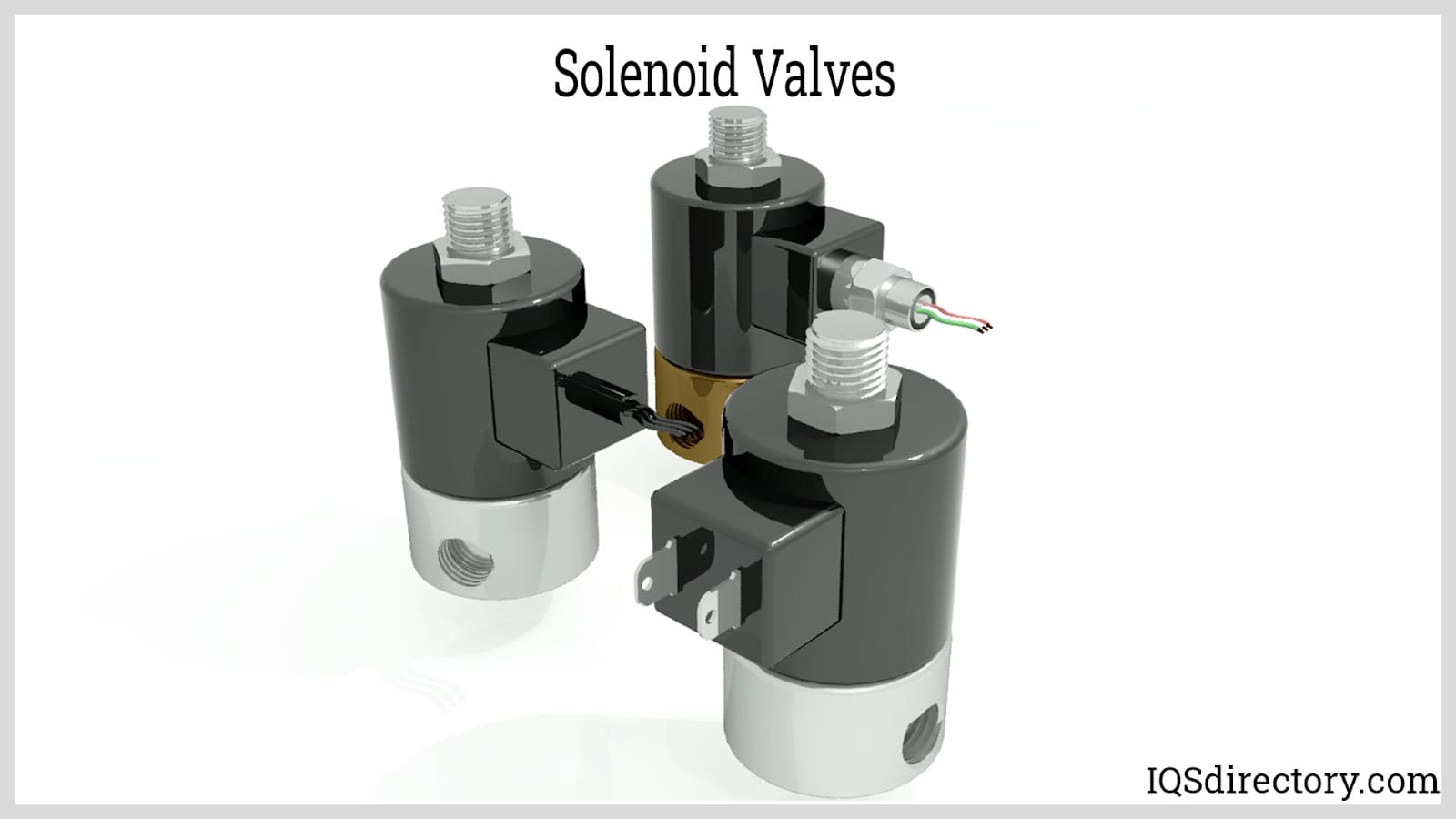
Solenoid valve used to regulate the flow of liquid or gas in an automated fluid control system.

The parts of a solenoid valve are commonly grouped into two major sections: the solenoid assembly and the valve body with its internal flow components.
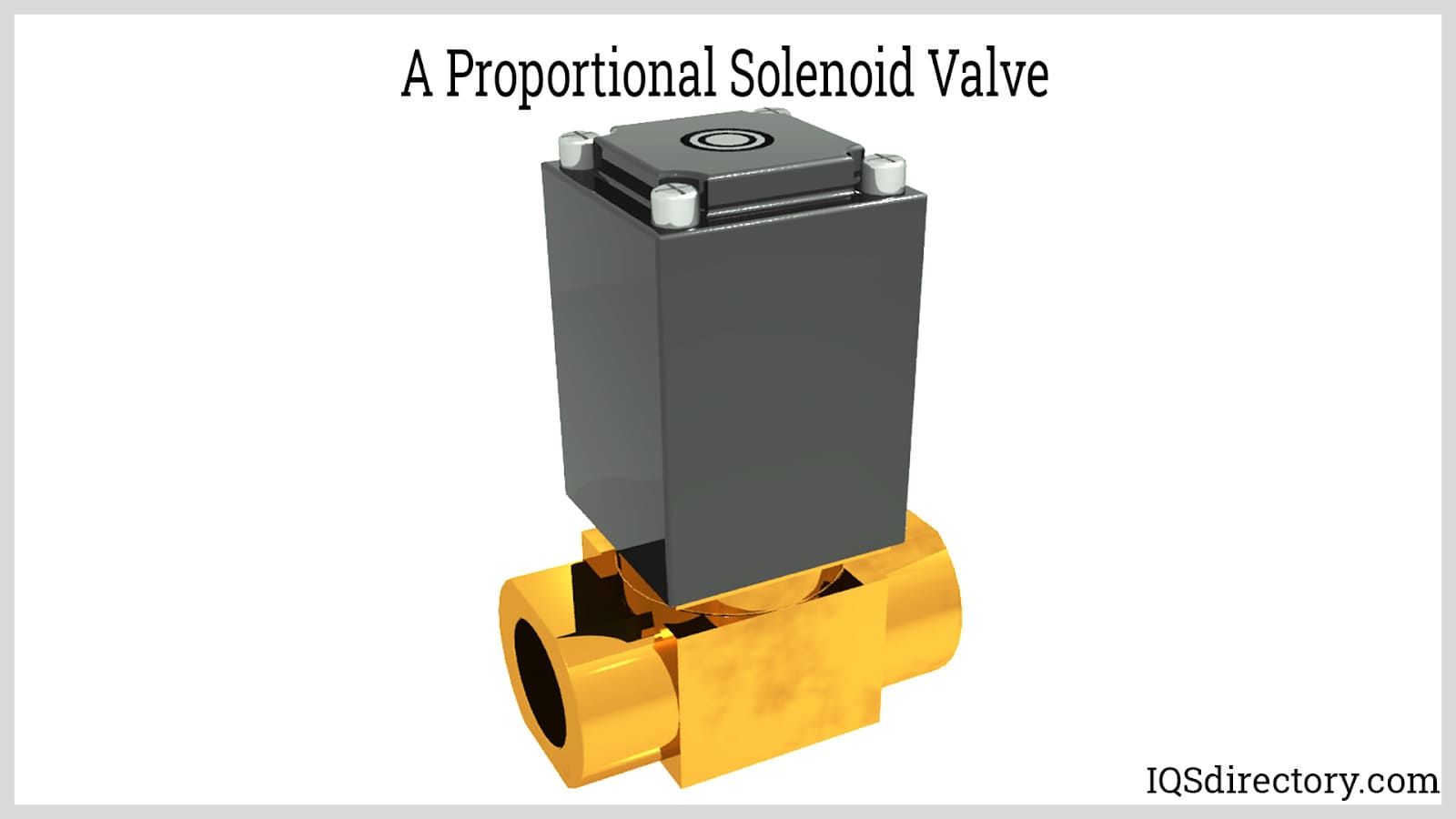
A proportional solenoid valve is designed to provide continuous variation in flow or pressure in response to an electrical input signal.
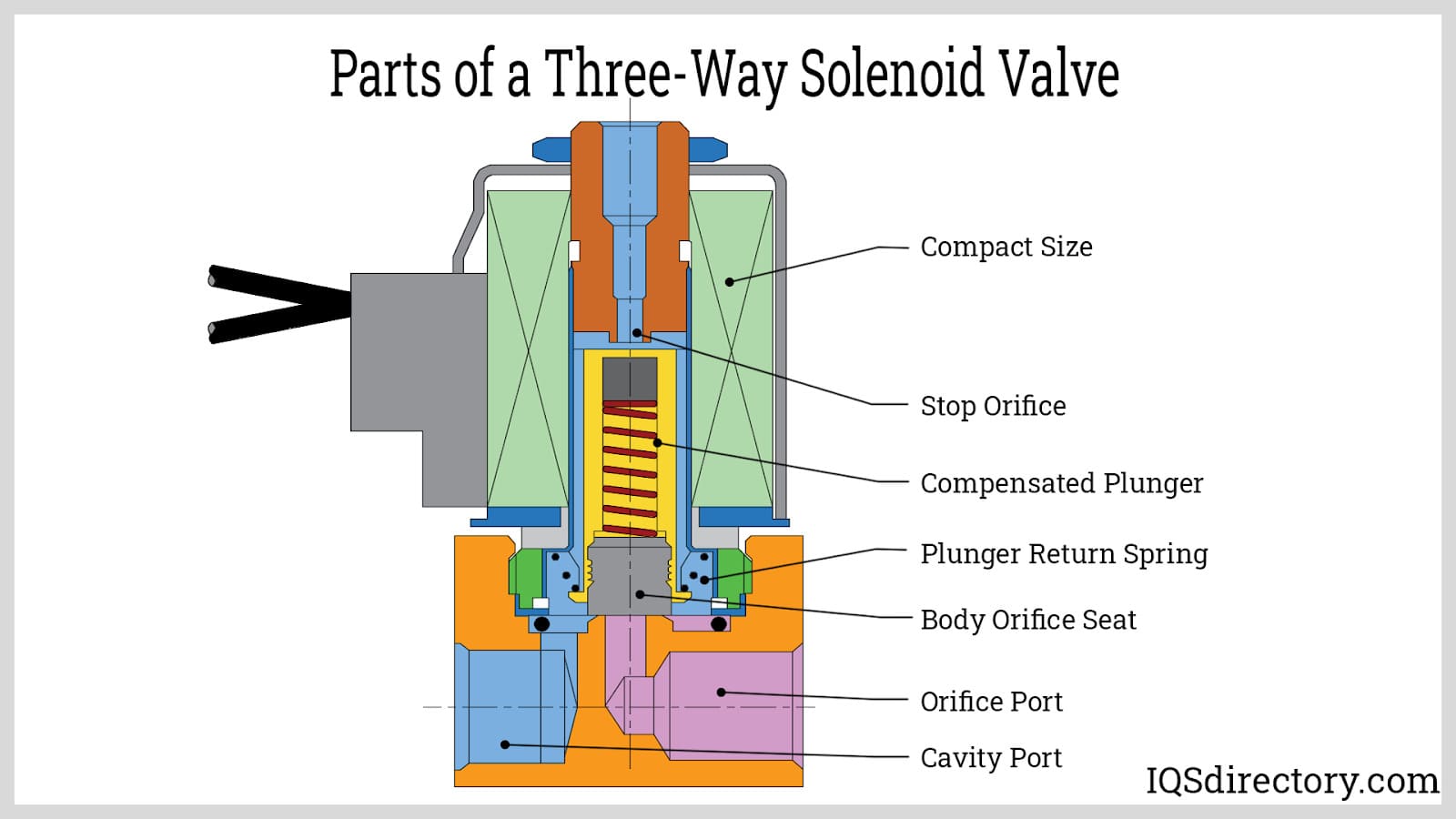
A three-way solenoid valve allows three separate connections, supporting directional control, venting, or diverting depending on system design.
FM Approvals is known for third-party testing and certification related to safety, performance, and property loss prevention products used in many industrial environments.
Solenoid Valve Types
3-Way Solenoid Valves
Designed for hydraulic and pneumatic applications, 3-way solenoid valves use three ports to pressurize, exhaust, or divert media and are often selected for directional control tasks.
12 Volt Solenoid Valves
A standard choice in many direct current systems, these valves are widely used where compact electrical control and dependable response are needed.
Air Valves
Air valves regulate the controlled release, shutoff, or routing of compressed air in pneumatic systems and other airflow applications.
Gas Solenoid Valves
Used for controlled gas flow, these valves help manage gaseous media with repeatable shutoff and measured response in industrial and commercial systems.
Hydraulic Solenoid Valves
These valves use fluid pressure to control hydraulic circuits and direct excess flow through return lines, reservoirs, or actuators depending on system needs.
Miniature Solenoid Valves
Compact and precise, miniature solenoid valves fit into small spaces and support accurate dispensing, dosing, or measurement in medical, analytical, and portable equipment.
Direct Operated
Featuring a plunger-sealed orifice, direct operated valves handle relatively small flow rates and can function from zero pressure up to their rated maximum. They are available in multiple port arrangements and in normally closed or normally open formats.
Indirect Operated
These normally closed valves depend on differential pressure to operate and are often chosen for one-way flow applications such as irrigation systems, wash equipment, and utility service lines.
Semi-Direct Operated Solenoid Valve
Blending direct and indirect actuation, these valves can operate from zero pressure while also supporting higher-flow service in systems that require a broader operating window.
Purge Valve
Used in vehicle EVAP systems, purge valves help prevent fuel vapors from escaping into the atmosphere by directing vapor flow in a controlled manner for efficient engine operation.
Actuated Ball Valve
Primarily used to start or stop flow rather than throttle it, actuated ball valves rely on a rotating ball mechanism and are often selected for higher-flow applications or systems that benefit from manual override capability.
Poppet Valve
Also called mushroom valves, poppet valves regulate the timing and quantity of air or gas flow by sealing an opening with a shaped plug or disk.
Plastic Solenoid Valves
Plastic solenoid valves resist corrosion and many chemicals, making them a smart option for aggressive media, water treatment, and selected laboratory or process environments.
Pneumatic Solenoid Valves
Used in HVAC systems, industrial automation, air tools, and process equipment, pneumatic solenoid valves regulate compressed air and gas flow while venting through an exhaust path when required.
High Pressure Solenoid Valves
Built for demanding service, these valves control liquid or gas flow in systems where pressure levels are too high for many standard valve designs.
Proportional Solenoid Valves
These valves deliver controlled, linear flow response to an electrical input signal and are selected where accuracy, repeatability, and smooth modulation are priorities.
Rotary Solenoids Valves
These designs convert linear electromagnetic force into rotary motion, enabling direct rotational movement in compact control assemblies.
Solenoid Air Valve Controls
Electrically actuated air valve controls provide accurate airflow regulation for pneumatic circuits, automation cells, and motion control systems.
Solenoid Water Valves
Typically pilot-operated and normally closed, these valves manage water flow in commercial, residential, irrigation, and process systems using durable materials such as brass, carbon steel, or stainless steel.
Stainless Steel Solenoid Valves
Stainless steel solenoid valves resist corrosion and wear, which makes them well suited for chemical processing, washdown lines, analytical systems, and applications involving aggressive media.
Solenoid Valve Applications
Solenoid valves play a major role in controlling the flow of fluids and gases across a wide range of industries. They are used for shutoff, dosing, mixing, venting, releasing, isolating, and distributing media with a level of speed and repeatability that suits both simple equipment and advanced automated process lines.
They are widely used in HVAC equipment, refrigeration, automotive systems, hydraulics, pneumatics, water handling, process control, and household appliances because they help improve efficiency, support remote control, and reduce variation in daily operation. When buyers research solenoid valve uses, these end markets are often where the technology proves its value most clearly.
Refrigeration
In air conditioning and refrigeration systems, solenoid valves regulate refrigerant flow to heat exchangers, evaporators, and related components. Proper valve performance supports energy efficiency, steady cooling performance, and dependable cycling, while a poorly matched valve can reduce overall system performance.
Pneumatic and Hydraulic Systems
Pneumatic conveyor systems use air-operated solenoid valves to manage airflow, while hydraulic systems use specialized valves to direct fluid through motors, cylinders, buffers, and control circuits. In both cases, accurate valve response helps support repeatable motion, pressure management, and dependable equipment performance.
Car Wash
In automated car washes, solenoid valves control detergent delivery, rinse cycles, and high-pressure water flow. Stainless steel and other corrosion-resistant materials are often preferred because they tolerate moisture, cleaners, and repeated cycling in a demanding wash environment.
Compressed Air Systems
Solenoid valves in compressed air systems manage air supply to actuators and may function as unloader valves or directional controls. Direct, semi-direct, and indirect designs are chosen based on required pressure differential, desired flow, and how much pressure drop the system can tolerate.
Central Heating
In residential heating systems, solenoid valves work with thermostats and pressure controls to regulate the flow of hot water or other heating media to radiators and related distribution components.
Clothes and Dish Washing
Modern washing machines and dishwashers rely on solenoid valves to control water intake, helping deliver the right volume at the right time for consistent cleaning performance and improved water use.
Agricultural Irrigation
In large-scale irrigation, solenoid valves help automate water distribution, zone control, and timing. Their ability to manage high flow rates while integrating with timers and control panels makes them valuable for efficient crop watering and broader water management strategies.
Across these industries, solenoid valves improve automated flow control, response time, energy use, and day-to-day operating consistency. That is why engineers, purchasing teams, and maintenance staff continue to rely on them for both new systems and replacement valve projects.
Features of Solenoid Valves
Solenoid valves operate through the interaction of electricity and magnetism. When electrical current passes through the coil, a magnetic field is created that moves an internal component, typically a plunger, to change the valve position. This seemingly simple action is what gives solenoid valves their speed, repeatability, and value in automated fluid handling systems.
Valve behavior also depends on whether the unit is normally closed or normally open, and whether it uses direct action or pilot assistance. These distinctions affect startup behavior, response to pressure, flow capacity, and how the valve fits into the larger control scheme.
Normally Closed (NC)
In a normally closed solenoid valve, the plunger stays seated when the coil is not energized, blocking the flow path. When power is applied, the magnetic field lifts or shifts the plunger to open the valve and allow media to pass. This is one of the most common configurations for shutoff and safety-oriented flow control.
Normally Open (NO)
A normally open solenoid valve works in the opposite manner. Flow is allowed when the valve is de-energized, and applying power closes the valve. This configuration is selected when default flow is preferred during normal system conditions.
Another important distinction is whether the valve is direct-acting or pilot-operated, since that choice influences how the valve handles startup pressure, flow demand, and control strategy.
Direct-Acting Solenoid Valves
Direct-acting solenoid valves use the plunger to open and close the orifice directly. Because they do not rely on line pressure to actuate, they are often chosen for low-flow service, vacuum conditions, or systems that begin at zero differential pressure.
Pilot-Operated Solenoid Valves
Pilot-operated solenoid valves combine a smaller electrically actuated stage with a diaphragm- or piston-assisted main valve. By using system pressure to help move the valve, they can support larger flow capacities and are common in water, air, gas, and process systems with available pressure differential.
Installing Solenoid Valves
Proper installation supports valve performance and service life. Solenoid valves should be mounted in a dry, well-ventilated location when possible, and the flow direction marked on the body should be followed closely. If the application involves sensitive media, contaminants, or unusual pressure conditions, consulting the supplier or an experienced technician can help prevent startup issues and long-term maintenance problems.
Standards and Specifications for Solenoid Valves
Choosing the right solenoid valve often means reviewing not only size, voltage, and pressure range, but also the standards that apply to the equipment and installation environment. Compliance can affect public safety, product acceptance, potable water use, hazardous-location operation, and long-term maintenance planning.
For example, plumbing and drinking water regulations may require reverse osmosis and related equipment to meet NSF 61-G requirements or other recognized potable water standards. Buyers evaluating valves for municipal, residential, or commercial water service often begin by confirming this kind of approval before comparing features.
To help reduce lead exposure in drinking water systems, pipes, fittings, fixtures, and flow control components, including selected solenoid valves, may also need to meet low-lead requirements. Reviewing certifications early can make sourcing easier and help avoid mismatched components later in the project.
Things to Consider When Purchasing Solenoid Valves
Beyond basic sizing, pressure range, and wattage, several purchasing factors influence long-term valve value. Buyers often compare availability, certifications, ease of installation, support quality, material compatibility, enclosure ratings, and replacement part access before making a final decision.
Availability
Fast access to replacement components matters, especially in lean manufacturing, maintenance-intensive facilities, and production lines where downtime is expensive. A valve that is easy to source can reduce disruption when repairs or upgrades are needed.
Certification
Confirm that the manufacturer can provide the approvals and documentation required for the application. Reliable suppliers can explain material choices, pressure ratings, enclosure standards, and safety certifications clearly and without guesswork.
Installation
System integration can become more involved when pressure switches, control logic, or port configurations vary from one equipment design to another. Reviewing electrical requirements, mounting orientation, and valve function during selection can help avoid surprises during installation.
Support System
Supplier support can be just as important as the valve itself. Strong technical assistance helps with troubleshooting, replacement selection, custom configurations, and application matching when a buyer is comparing multiple valve styles or solving a recurring maintenance issue.
Look for a supplier that can answer questions about 2-way, 4-way, or 12-volt solenoid valves, pressure specifications, materials, sealing options, and application fit. The more clearly a supplier can match product features to your media, environment, and control scheme, the smoother the buying process usually becomes.
Proper Maintenance for Solenoid Valves
Routine maintenance can extend service life and reduce performance problems. Excess noise, inconsistent switching, slow response, overheating, or leakage often signal the need for inspection, cleaning, or component replacement.
For optimal performance:
Avoid using incompatible fluids that could accelerate wear, swelling, or corrosion inside the valve.
Prevent internal freezing and contamination so moving parts and seals can operate as intended.
Keep the valve within recommended pressure and temperature ranges to reduce unnecessary stress on the coil, seals, and internal assemblies.
Solenoid Valve Accessories
Accessories can improve installation and performance. Common add-ons include connectors, manifolds, mounting hardware, filtration components, manual overrides, position indication devices, and electrical control accessories that make the valve easier to integrate into a larger system.
Solenoid Valve Terms
Analog Position Sensor
A position sensor that produces a varying voltage output based on the valve’s position or state.
Bubble-Tight Sealing
A sealing condition in which no air leakage occurs between the valve’s sealed internal ports.
Closed State
The condition in which the valve pinches, blocks, or otherwise stops media flow.
Coil Voltage
The voltage required to energize the coil and allow the solenoid valve to operate as designed.
Continuous Duty
The ability of a solenoid valve to stay energized at a steady power level throughout its intended operating period.
Current Drain
The current, measured in amperes, that flows through the coil when the valve is energized.
Cycle
A complete opening and closing sequence of the valve.
Cycle Rate
The number of times a valve can open and close within a specified time period.
Duty Cycle
The proportion of time the valve remains powered relative to its total operating time.
Flow Control
A feature that allows flow through the valve to be regulated or restricted.
Flux Plate
A magnetic steel plate that transmits magnetic flux from the enclosure to the sleeve and helps the solenoid operate efficiently.
Frequency Response
The change in output under steady-state conditions caused by a sinusoidal input signal.
Gain
The relationship between input and output, reflecting the device’s sensitivity or response level.
Hysteresis
The difference in response that appears when a system approaches the same input value from opposite directions.
Normally Closed
A valve configuration in which the valve remains closed when not energized.
Normally Open
A valve configuration in which the valve remains open when not energized.
Open Loop
A system that operates without direct feedback to measure or correct response.
Position Sensing
The use of electronic sensors to monitor valve position and provide feedback.
Pulse and Hold
A method used to improve efficiency by pulsing the valve open at higher power and then maintaining it at a lower power level to reduce heat and energy use.
Pulse Width Modulation (PWM)
A control method that uses a modulated wave signal to regulate the behavior of an analog or proportional device.
Repeatability
The ability of a device to reproduce the same result over repeated operations.
Stroke
The total distance the plunger travels during a state change.
More Solenoid Valves