Rubber Molding
Molded rubber components play a major role in countless industries, serving as high-value parts in everything from industrial machinery and medical equipment to consumer appliances and household goods. Whether it's gaskets, seals, grommets, vibration dampers, bushings, or custom-molded parts, rubber molding delivers the flexibility, resilience, and dimensional consistency required for modern manufacturing. The process involves heating raw rubber or elastomer compounds and shaping them within a mold, making it a preferred production method for complex rubber products, tight-tolerance molded components, and repeatable custom rubber parts used across OEM and replacement applications.
Rubber Molding FAQ
What is rubber molding used for in manufacturing?
Rubber molding is used to create precise components like gaskets, seals, grommets, bushings, diaphragms, and custom parts. It provides durability, flexibility, chemical resistance, and the ability to produce complex shapes needed in industries ranging from medical and food processing to automotive, aerospace, construction, and heavy equipment manufacturing.
How did vulcanization change rubber molding?
Charles Goodyear’s discovery of vulcanization in 1839 stabilized rubber by adding sulfur, making it more durable, elastic, and heat resistant. This advance made rubber far more reliable for molded parts, sealing products, and industrial components, opening the door to broader use in manufacturing, transportation, machinery, and consumer goods.
What is the difference between injection and compression molding?
Injection molding heats and injects rubber into a mold cavity for high-volume, precise parts with repeatable dimensions and efficient cycle times. Compression molding places pre-measured stock in a mold, then applies heat and pressure to form durable components, making it a dependable choice for thicker parts, simpler geometries, and many custom rubber applications.
Why is EPDM rubber commonly used in construction and automotive parts?
EPDM rubber offers excellent durability, ozone resistance, and weather resistance, making it ideal for roofing, gaskets, seals, window profiles, and hoses. Its ability to withstand heat, moisture, UV exposure, and outdoor environments supports long service life in construction, HVAC, and vehicle applications.
What advantages does liquid injection molding provide?
Liquid injection molding uses liquid silicone rubber, allowing faster production and reduced energy use compared to solid stock processes. It produces high-precision parts with minimal finishing, consistent surface quality, and dependable repeatability, making it well suited for medical devices, electronics, seals, keypads, and other applications that call for tight tolerances.
How does transfer molding differ from other rubber molding methods?
Transfer molding places rubber stock in a chamber above the mold and uses a ram to force it into cavities. This method supports even distribution, making it well suited for rubber-to-metal bonding, insert molding, and the production of intricate components that need dependable detail and material flow.
Why choose custom rubber molding for industrial applications?
Custom rubber molding allows manufacturers to design specialized parts tailored to exact size, shape, performance, and environmental demands. It supports precise fit, flexibility in material selection, and efficient production for both prototyping and larger runs in industries such as medical, aerospace, electronics, transportation, and industrial equipment.
The History of Rubber Molding
For centuries, indigenous South American cultures harnessed the sap of rubber trees to create functional household items, waterproof coverings, and simple formed goods. However, rubber remained largely a natural curiosity until the 19th century, when advances in material science, compounding, and industrial processing transformed it into a commercial powerhouse and paved the way for molded rubber products used in factories, transportation systems, and everyday equipment.
In 1823, Scottish chemist Charles Macintosh pioneered a method of bonding rubber to fabric using a coal-tar solvent, sparking early interest in rubber-based products. Yet, these initial applications had drawbacks—rubber often became sticky in warm temperatures and degraded over time. It wasn't until 1839 when American inventor Charles Goodyear discovered vulcanization, that rubber became a truly reliable material. By adding sulfur to natural rubber, Goodyear created a more stable and durable product, though it took decades before his breakthrough gained widespread adoption. The introduction of bicycle and automobile tires in the late 1800s fueled a global demand for rubber, leading to large-scale rubber plantations in tropical regions and the rise of an international rubber industry.
While rubber molding technology emerged alongside these developments, it was the innovation of injection molding that revolutionized the industry. In 1872, brothers John and Isaiah Hyatt patented the first injection molding machine, paving the way for mass production of both rubber and plastic parts. Further advancements in chemistry and engineering refined the molding process, and by the 20th century, rubber molding had become a dominant force in manufacturing.
The late 20th century saw even greater leaps in molding technology. James Watson Hendry’s development of a gas-powered injection molding process in the 1970s significantly enhanced precision and efficiency. As automation and computer-assisted production took hold, rubber molding evolved into a high-tech industry capable of delivering customized solutions for an ever-expanding range of applications. Today, manufacturers continue to push the boundaries of rubber molding, producing specialized components that meet the rigorous demands of modern engineering and industrial design.
The Advantages of Rubber Molding
Rubber molding presents distinct advantages over other manufacturing processes, especially when precision, repeatability, and part geometry matter. While it may not match the speed of rubber extrusion for continuous profiles, it excels in producing intricate, custom-designed components such as seals, gaskets, grommets, diaphragms, vibration isolators, and rubber-to-metal bonded parts. The process is highly versatile, accommodating a wide range of natural and synthetic rubber formulations to achieve target properties such as durability, elasticity, abrasion resistance, temperature resistance, weatherability, and chemical compatibility. Modern molding technology supports efficient mass production as well as prototyping, helping buyers evaluate compounds, tooling, tolerances, and long-term part performance before moving into broader production.
Businesses researching rubber molding services often compare part complexity, expected production volume, compound performance, and final application before choosing a manufacturing partner. Questions such as which molding process is best for custom rubber parts, how to choose between compression and injection molding, or which elastomer performs best in outdoor environments all shape the buying process. A strong rubber molding program answers those questions by combining material knowledge, tooling experience, and dependable process control.
The Rubber Molding Materials Process
Manufacturers use several techniques to mold natural and synthetic rubber, each catering to different production needs and material properties. These processes include:
Injection Molding
As the dominant method in commercial production, injection molding is widely used for high-volume manufacturing of rubber and plastic components. This process begins with solid rubber stock, which is heated until molten and injected into a mold cavity. For buyers comparing rubber molding processes, injection molding is often chosen when cycle time, repeatability, surface finish, and tighter dimensional control are top priorities. Automated Machinery precisely controls this operation, ensuring uniform filling under high pressure and heat. Once cooled, the molded piece solidifies and is ejected, sometimes requiring minimal finishing before final use.
Compression Molding
Compression molding is favored for producing low-tolerance rubber parts and thicker molded components. The process starts with a pre-measured rubber stock, shaped and weighed before being placed into a mold cavity. When the mold closes, high pressure forces the material to conform to the cavity’s shape. The application of controlled heat and dwell time supports proper curing, resulting in durable, high-quality parts often used for industrial products, larger seals, and applications where tooling economy is part of the decision.
Liquid Injection Molding
This technique closely mirrors traditional injection molding but utilizes liquid silicone rubber as the primary material. A metered pump system regulates the silicone’s flow, mixing it with other additives before injection. Once inside the mold, heat and pressure complete the curing process. Because the raw material is already in liquid form, production is faster, requiring less energy to convert solid stock into a moldable state. Products made through this method typically require minimal post-processing, which is one reason liquid silicone rubber molding is widely used for clean, detailed parts in healthcare, electronics, food-contact, and specialty sealing applications.
Transfer Molding
Transfer molding is particularly useful for creating rubber components bonded to metal or requiring high precision. Unlike compression molding, the rubber stock is placed in a separate chamber, or "pot," above the mold. A ram mechanism forces the material through a runner and gate system into the mold cavity under heat and pressure. This method supports more uniform distribution, allowing for intricate detailing, dependable fill patterns, and strong adhesion to metal inserts in engineered assemblies.
When evaluating these methods, manufacturers typically consider part geometry, wall thickness, insert requirements, cure time, flash tolerance, and target production volume. That comparison helps determine whether a project is better suited for injection molding, compression molding, liquid silicone molding, or transfer molding, especially when the end product must perform in heat, moisture, chemicals, vibration, or repeated compression.
Rubber Molding Images, Diagrams and Visual Concepts
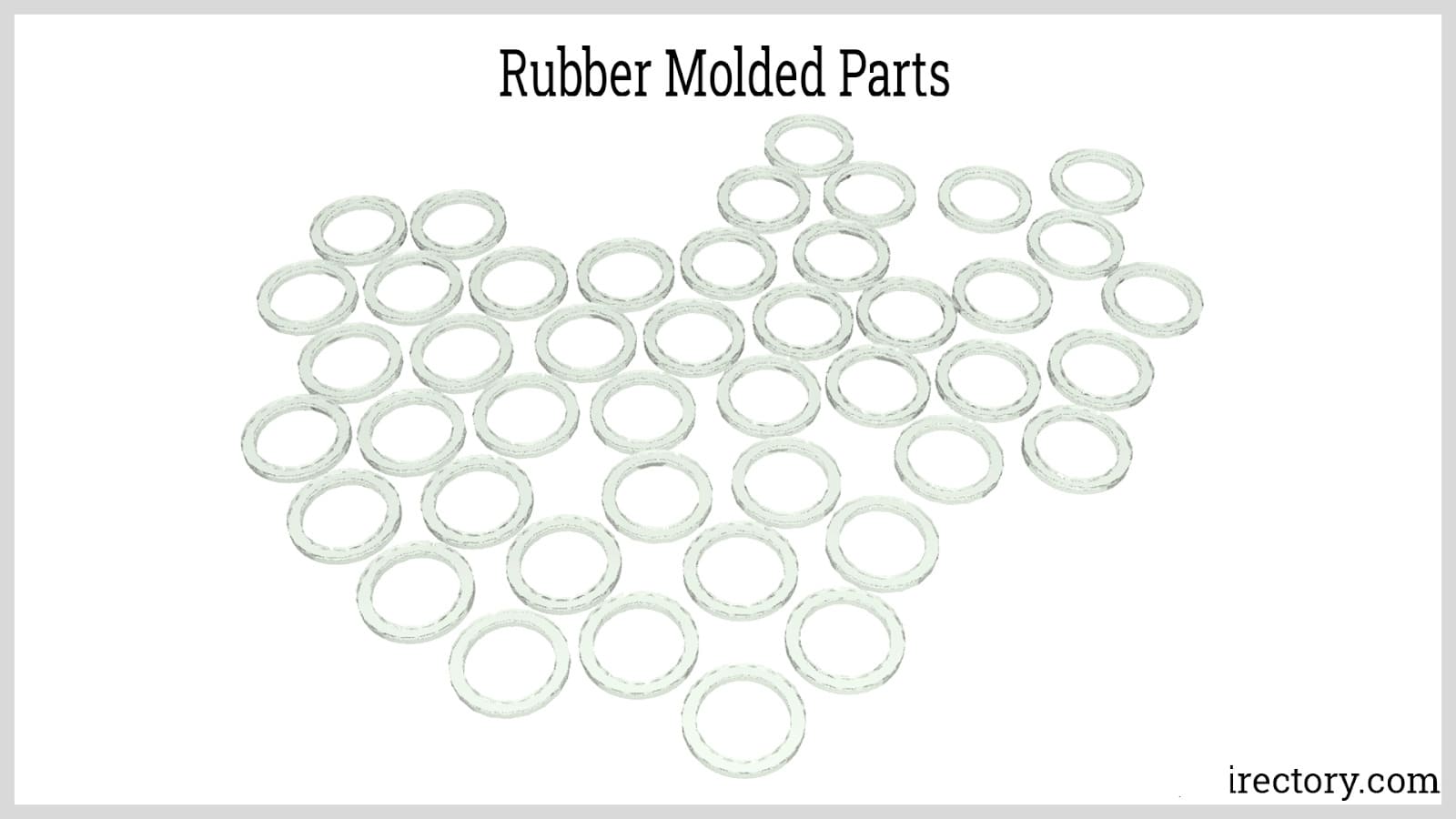
Rubber molding is the process of transforming an elastomer by transferring, compressing, or injecting raw rubber material into a metal mold cavity.
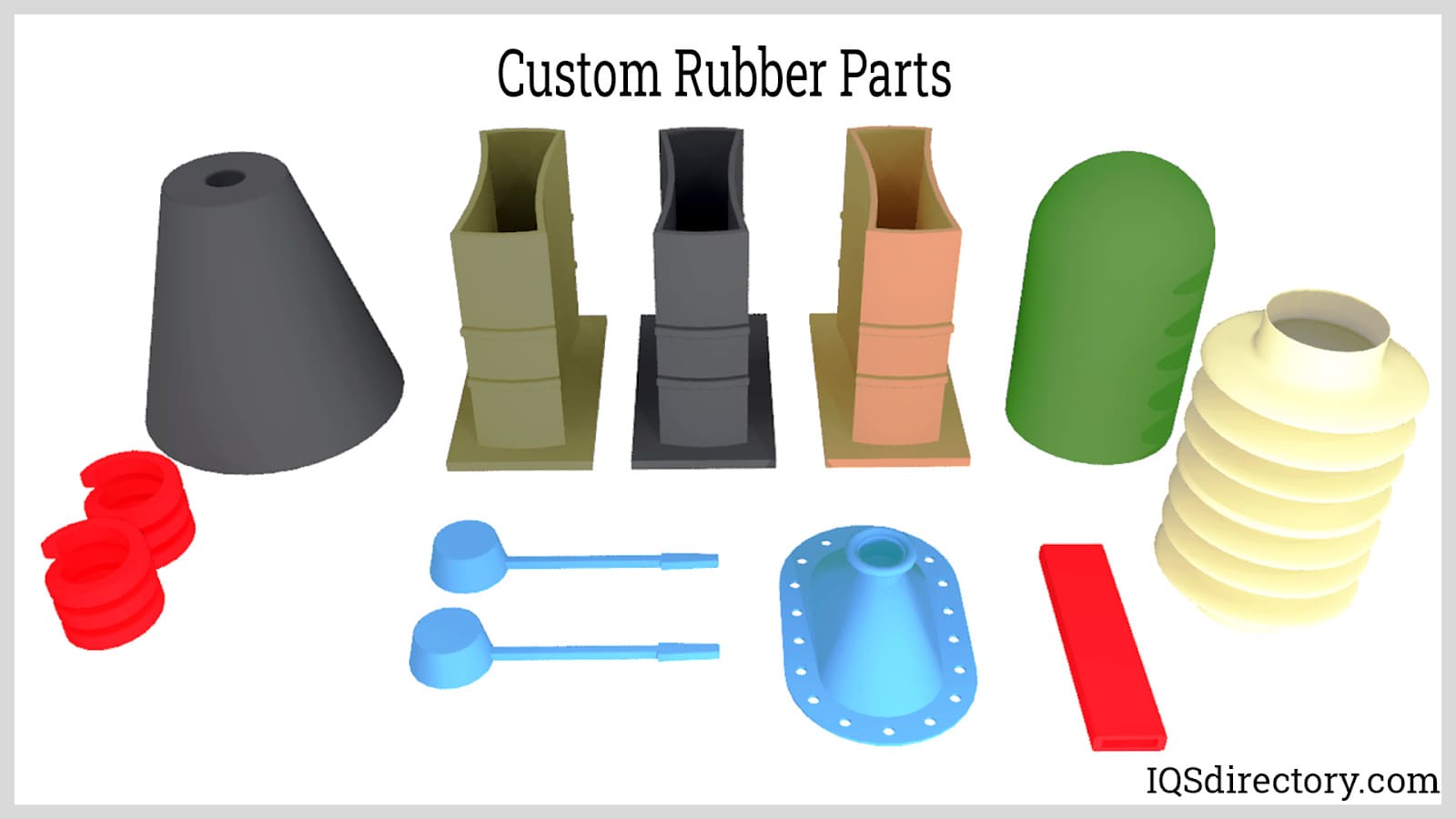
Rubber can be molded in different shapes and sizes which have a multitude of uses.
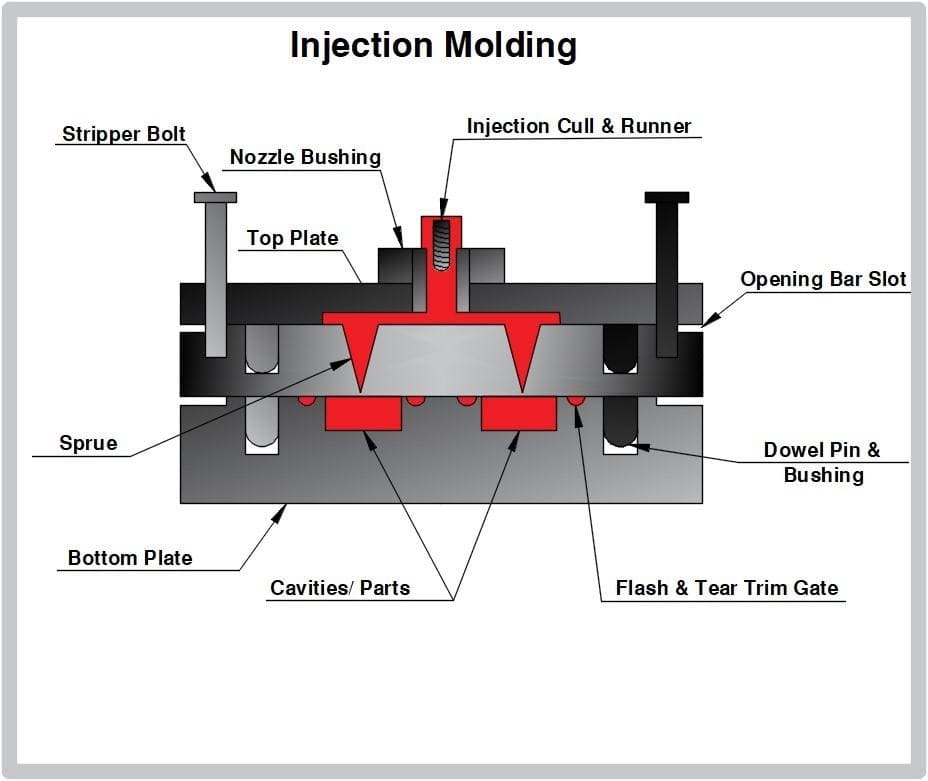
The injection molding rubber begins with raw liquid rubber that flows into a mold cavity, then is tightly clamped to form the desired shape.
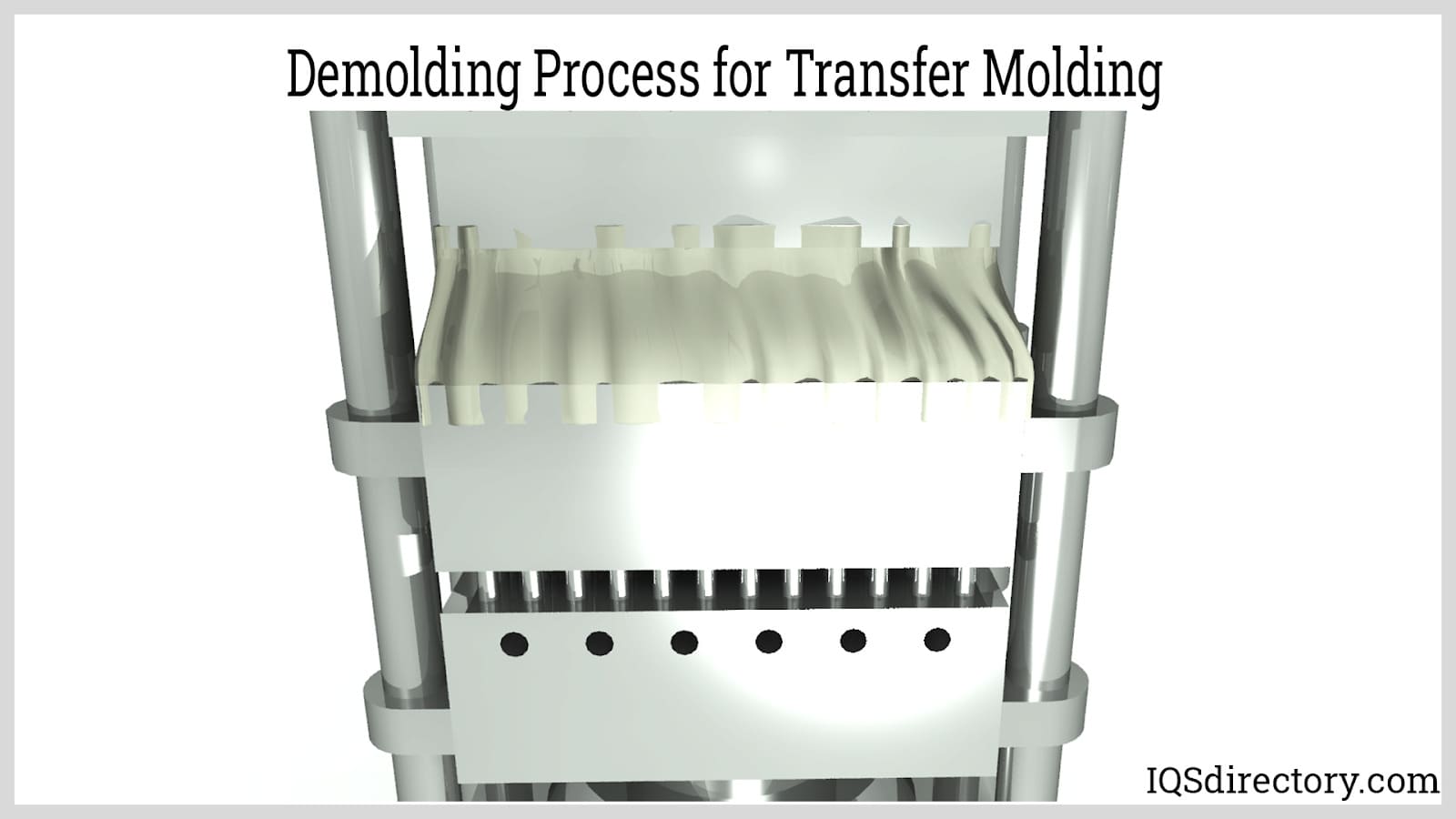
The transfer molding process feeds raw rubber into multiple mold cavities after the closure of the press.
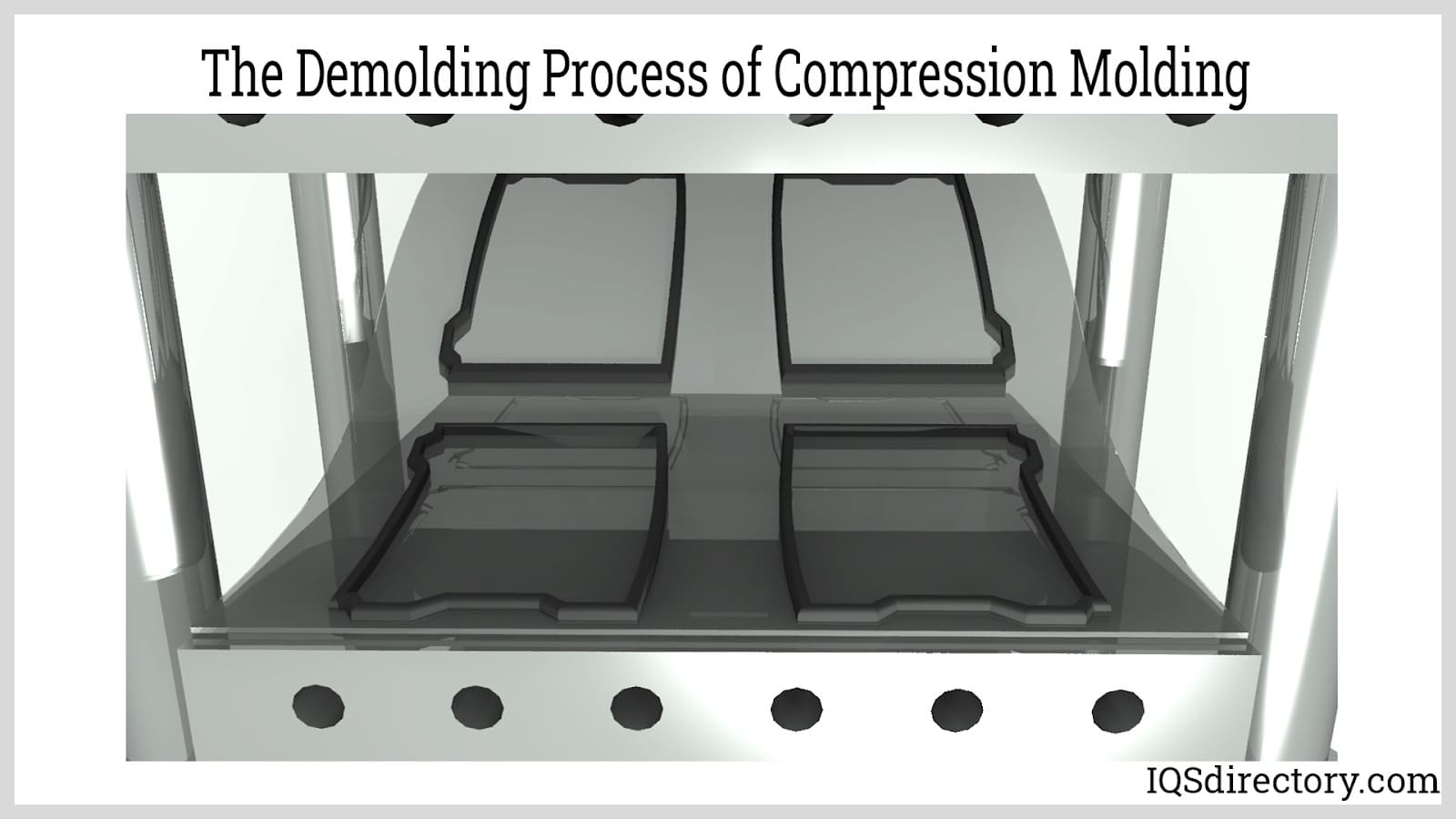
Compression molding uses heat and pressure, once unvulcanized rubber is placed in the mold cavity, the mold is closed and heated whlie pressure is applied with a hydraulic press.
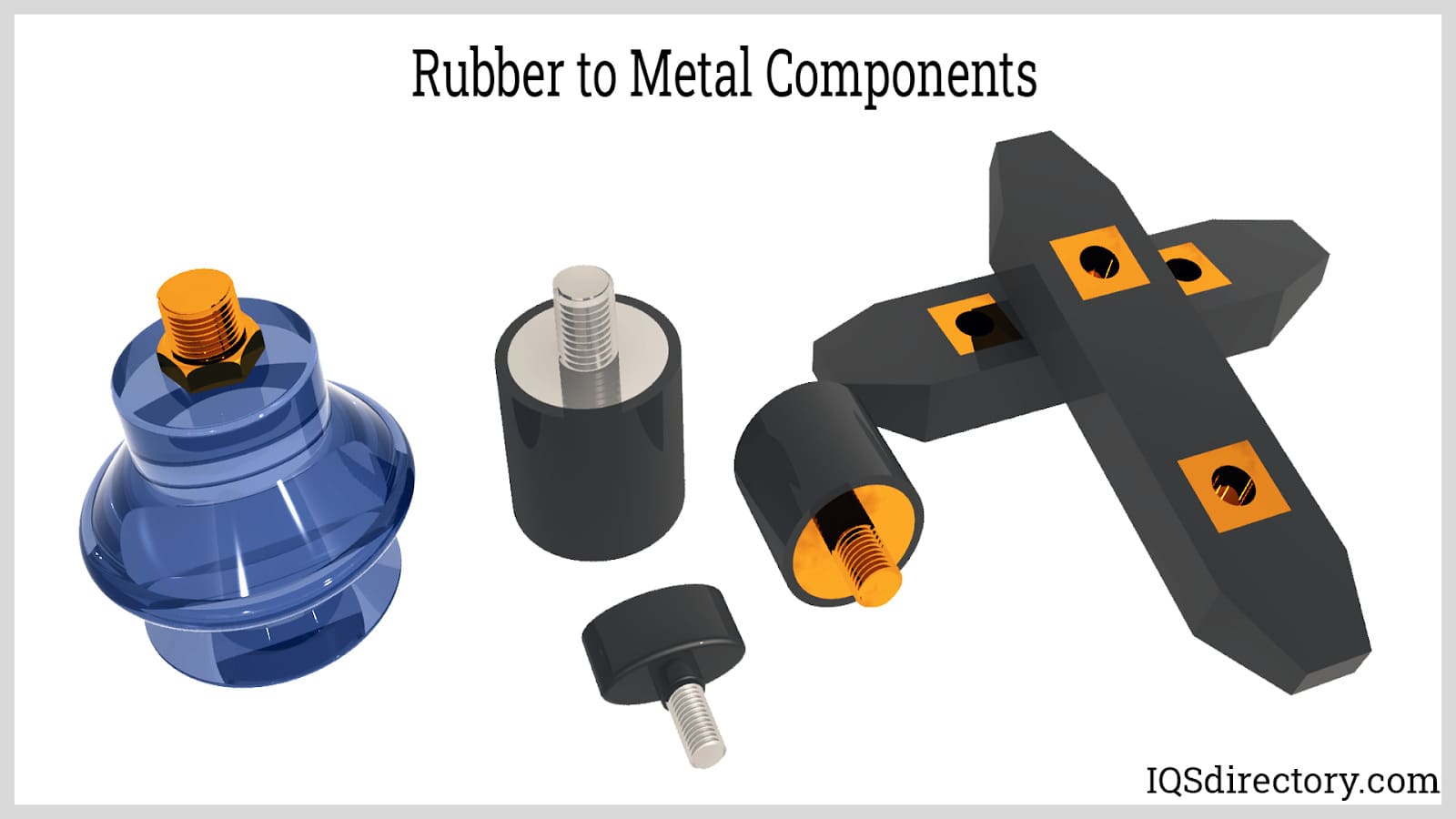
The process of rubber to metal molding to bond rubber with metal to cancel out noise and other vibrations.
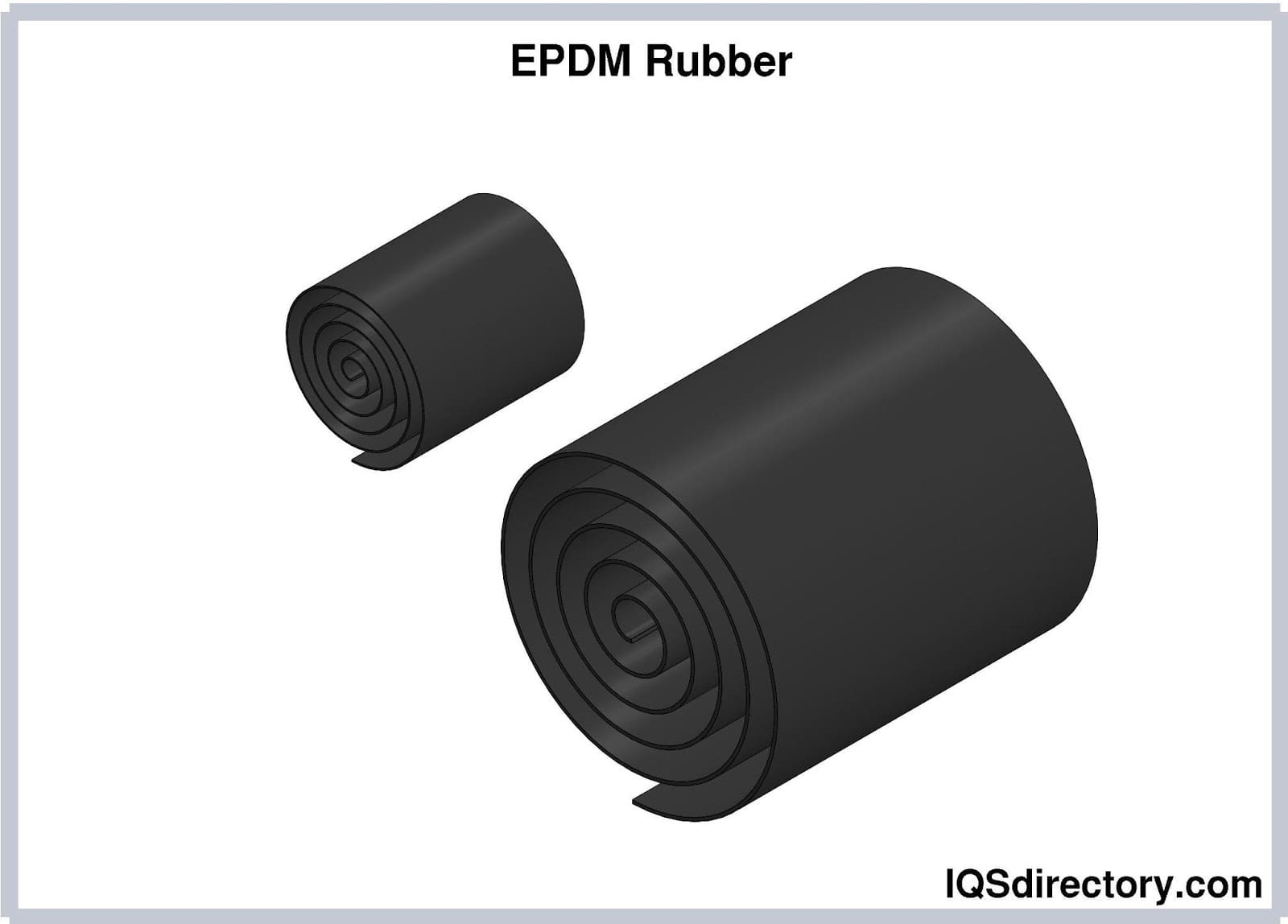
Ethylene Propylene Diene Monomer(EPDM) rubber is resistant to temperatures up to 302 °F (150 °C) and is highly durable.
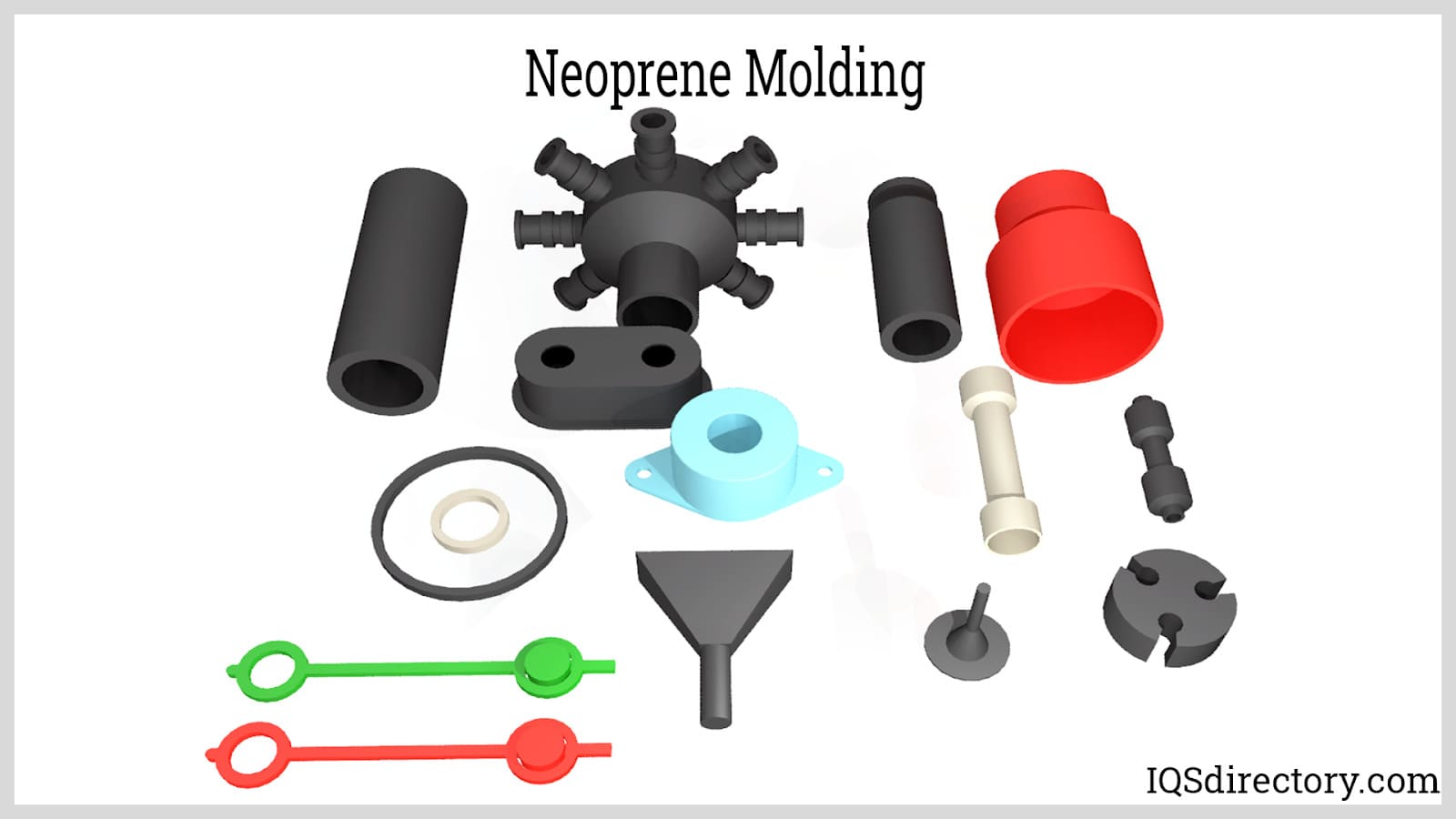
Neoprene rubber is a multipurpose material with temperature and abrasion resistant properties.
Rubber Molding Types
Blow Molding
This method involves placing a hollow tube between two halves of a mold, which then closes and seals the bottom. Air is injected into the top, expanding the material outward to form the desired shape against the mold’s walls.
Foam Rubber
A lightweight, flexible material created by incorporating a foaming agent into the rubber during manufacturing, resulting in an air-filled structure.
Liquid Silicone Rubber
A synthetic, two-component elastomer in liquid form, derived from silicone elastomers, offering excellent flexibility, durability, and heat resistance.
Rubber Baseboard
A molded rubber product designed to cover the seam where walls meet floors, providing a protective and aesthetic finish.
Rubber Diaphragm
Highly flexible seals engineered to withstand varying pressures and a range of media in industrial applications.
Rubber Grommets
Protective rubber rings inserted into metal holes to prevent electrical wires or cords from abrasions and damage.
Rubber Seals
Designed to prevent leaks at joints by providing a secure, flexible barrier.
Rubber Sheets
Flat rubber materials used across industries for gasketing, cushioning, and insulation applications.
Rubber Tubing
Hollow, flexible cylinders used for transporting liquids and gases in medical, industrial, and consumer applications.
Rubber Washers
Used primarily to support threaded fasteners, they also play a role in controlling liquid or gas flow in taps and valves.
Rubber Molders
The process of shaping rubber into functional components for diverse industrial and commercial applications.
Viton Rubber Molding
A high-performance synthetic rubber blended with fluoropolymer elastomers, offering exceptional resistance to harsh chemicals and extreme environments.
Molded Rubber Applications
Molded rubber's versatility allows manufacturers to shape complex components for demanding applications. These parts provide sealing, cushioning, vibration absorption, impact control, and noise reduction in mechanical assemblies. Advances in synthetic rubbers such as neoprene, silicone, and EPDM have expanded the range of rubber products, allowing for specialized formulations to meet industry-specific demands.
Custom rubber molding further enhances product development, offering the ability to create prototypes, unique components, and branded OEM parts. Whether producing grommets, gaskets, or intricate rubber trims, molded rubber remains a cornerstone of industries such as agriculture, transportation, defense, construction, consumer goods, and biotechnology. Its adaptability and precision ensure a steady demand for innovative rubber-based solutions across various markets.
These applications also show why molded rubber remains so widely specified in OEM assemblies and replacement parts. Engineers and purchasing teams value molded rubber components because they can combine sealing performance, shock absorption, noise control, fluid resistance, and long service life in a single part design.
A Closer Look at Rubber Molding
Rubber molding today incorporates both synthetic and natural rubber, with manufacturers relying on a variety of raw materials to meet the demands of diverse industries. Some common raw materials used in rubber molding include:
Natural Rubber Latex
Despite the rise of synthetic alternatives, some manufacturers continue to produce natural rubber latex products. Harvested from the hevea brasiliensis tree or select species of the Ficus genus, natural latex begins as a milky sap collected through careful incisions in the bark. Once gathered, the latex is combined with formic acid, triggering coagulation into a solid sheet. This uncured rubber then serves as a key raw material for natural rubber latex molding.
Rubber
Rather than using natural latex rubber in its raw state, producers typically vulcanize it before export. This process strengthens the rubber, making it more durable and easier to handle. Once vulcanized, it is transformed into a wide array of rubber products across multiple industries.
Neoprene
Developed by DuPont in the 1930s, neoprene was one of the first synthetic rubbers and remains a versatile material today. Manufacturers mold it into gaskets, liners, and household items, as well as gardening tools. However, certain chemicals—such as iodine, turpentine, and acetic acid—can degrade neoprene, limiting its use in industrial applications.
EPDM (Ethylene-Propylene-Diene Monomer)
EPDM has become a staple in construction and automotive applications. It plays a major role in roofing materials for commercial buildings and is widely used in electrical gaskets, door and window seals, weatherstripping, and engine cooling system hoses. Its durability and weather resistance make it a go-to choice for long-lasting components exposed to sun, moisture, and changing temperatures.
Silicone Rubber
A synthetic rubber made from silicon, oxygen, carbon, and hydrogen, silicone offers exceptional heat resistance, maintaining stability at temperatures up to 446°F. This makes it invaluable in molds used for metal casting. Its ability to be easily sanitized has also led to widespread adoption in medical, biotech, and food processing equipment. Available in both liquid and solid forms, silicone remains one of the most versatile rubber materials in modern manufacturing.
Material selection is one of the biggest factors in molded rubber performance. Buyers often compare natural rubber, neoprene, EPDM, silicone, fluorocarbon compounds, and other elastomers based on compression set, operating temperature, UV exposure, chemical contact, flexibility, and wear resistance. Matching the right compound to the application helps improve service life and reduce replacement frequency.
Rubber Molding Machinery
Advancements in rubber molding technology have enabled the production of complex components across numerous industries. As automation has expanded, so has the investment required for high-volume injection molding machines, which play a major role in large-scale production, process control, and consistent part quality.
Custom molding services have further democratized the market, allowing businesses of all sizes to manufacture rubber products. The choice of materials, molding techniques, and equipment varies significantly depending on the specific needs of a given production environment, ensuring that rubber molding continues to evolve alongside industry demands.
Modern rubber molding machinery also gives manufacturers more control over repeatability, pressure, cure time, and part consistency. That level of control matters when customers need molded rubber parts that must fit precisely with metal, plastic, glass, or electronic assemblies while maintaining dependable sealing and vibration control.
Why Choose Custom Rubber Molding?
Custom rubber molding allows businesses to design and manufacture specialized rubber components tailored to their exact specifications. Whether developing new products or optimizing existing ones, this process supports precision and flexibility for industries requiring unique solutions. Buyers often evaluate material hardness, environmental exposure, compression set, temperature range, chemical contact, tolerances, and tooling cost before choosing the best molding method for a given application.
One of the key benefits of rubber molding is its versatility. Injection molding, in particular, is a cost-effective approach for large production runs, making it an ideal choice for companies seeking efficiency without sacrificing quality. With advancements in molding technology, automation has further streamlined production, reducing costs and improving turnaround times. Additionally, materials like liquid silicone rubber enable the creation of high-precision parts with tight tolerances and a range of surface finishes, which is especially useful when manufacturers need consistent molded rubber parts at scale.
Industries with strict performance expectations often rely on custom molded rubber because it can be tailored to both simple and highly engineered products. From medical devices and electronics housings to industrial equipment, aerospace assemblies, and transportation systems, molded elastomer components help improve fit, function, and durability.
Industries That Benefit from Custom Rubber Molding
Custom rubber molding serves a wide range of industries, offering durable and reliable components tailored to specific applications:
- Medical – Custom devices, blood analysis machines, and surgical instrument components.
- Electronics – EMI shielding, electrical connector inserts, and high-performance seals.
- AerospaceVibration isolators, cable boots, and power supply gaskets.
- Industrial – Fluid pumps, oil and gas components, and vibration-absorbing buttons.
From simple seals to complex engineered parts, rubber molding provides an affordable and effective solution for diverse manufacturing needs. Companies researching custom molded rubber often look for a balance of tooling value, material performance, lead time, and long-term durability, and molding remains one of the strongest options for meeting those goals.
Selecting a Rubber Molding Manufacturer
Selecting the right manufacturer is one of the best ways to improve part performance, production efficiency, and overall value. IQS Directory offers a comprehensive listing of top-tier rubber molding manufacturers, many of whom specialize in specific molding processes. Using this directory can help businesses connect with the right partner for unique production requirements, whether the focus is custom tooling, compound selection, tight tolerances, short runs, or high-volume molded rubber production.
When comparing suppliers, buyers often ask about tooling support, compound recommendations, secondary finishing, prototyping, production capacity, and quality checks. Reviewing experience with similar parts, industries, and material requirements can make it easier to narrow down a rubber molding company that matches both technical and commercial goals.
Variations of Rubber Creation
While molding is a widely used process, some manufacturers opt for alternative methods such as extrusion or calendaring, depending on the intended application:
- Rubber Extrusion – This method forces rubber or plastic through a cross-sectional die to produce continuous shapes like tubing, strips, or profiles used in products such as baseboard molding and curtain rods.
Rubber Calendaring – This process involves rolling and flattening rubber material, often layering it onto textiles to create rubberized coatings, films, or composite fabrics.
Rubber Molding Terms
Abrasion Resistance
The ability of a rubber compound to resist wear and deterioration caused by mechanical friction.
Accelerated Life Test
A test designed to simulate long-term wear and breakdown in a condensed time frame by exposing rubber to extreme conditions.
Accelerator
A substance that speeds up the vulcanization process when combined with vulcanizing agents in small amounts.
Activator
A compound used in minimal quantities to enhance the effectiveness of an accelerator.
Adhesion
The tendency of rubber to bond or stick to surfaces it comes into contact with.
Aftercure
The continuation of vulcanization even after the heat or energy source has been removed.
Air Checks
Surface imperfections, such as depressions or marks, caused by trapped air during molding.
Autoclave
A pressurized steam chamber used for vulcanizing rubber products.
Backrind
A molding defect where the rubber near the parting line sinks below the surface, leaving a rough, torn edge.
Batch
The final product of a rubber mixing process.
Blank
The portion of rubber compound used to fill a mold before shaping.
Bloom
A surface discoloration caused by a liquid or solid migrating to the rubber’s exterior.
Non-Fill
A defect where rubber fails to completely fill the mold, resulting in an incomplete part.
Parting Line
The visible line on a molded rubber part where the two halves of the mold meet.
Peptizer
A substance that accelerates the softening of rubber compounds under heat or mechanical action.
Pigment
An insoluble substance added to rubber to provide color.
Plasticity
The extent to which rubber can be deformed without returning to its original shape.
Polymerization
A chemical reaction where simple molecules combine to form a more complex, durable polymer.
Reinforcing Agent
A material added to rubber to improve its resistance to stress and enhance durability.
Scorch
Premature vulcanization that occurs when rubber cures too quickly.
Spew
Excess rubber that seeps out of the mold during the molding process.
Splice
The joining of two sections of rubber to form a continuous piece.
Vulcanization
A heat and pressure-driven chemical process that strengthens rubber, enhancing its elasticity and durability.
More Rubber Molding Information