Powder Metal Parts
Powder metal parts are high-precision components produced through powder metallurgy, a metal forming method that compresses engineered metal powders into shape and then sinters them into durable finished parts. These components are used across automotive, industrial machinery, electronics, hardware, medical device, appliance, computer, lawn and garden, and power transmission applications because they combine repeatable dimensional accuracy, material efficiency, and scalable production. From gears, bushings, and bearings to structural parts, filters, and magnetic components, powder metal manufacturing supports both performance and cost control for buyers comparing long-run production options.
Powder Metal Parts FAQs
What are powder metal parts used for?
Powder metal parts are used in automotive systems, electronics, hardware, industrial machinery, appliances, and motion-control assemblies. Their strength, repeatability, and low-waste manufacturing profile make them a smart choice for gears, bearings, bushings, pulleys, filters, and structural components.
How are powder metal parts manufactured?
Powder metal parts are produced by blending metal powders, compacting the mix in a precision die, and sintering the green compact in a controlled furnace. Depending on the application, manufacturers may also use sizing, machining, impregnation, infiltration, plating, or heat treatment as finishing steps.
What advantages does powder metallurgy offer manufacturers?
Powder metallurgy reduces scrap, supports near-net-shape manufacturing, and delivers consistent parts at production scale. It is often selected when buyers need tight tolerances, repeatable mechanical properties, lower secondary machining costs, and reliable high-volume output.
What metals are commonly used in powder metallurgy?
Common materials include iron, steel, stainless steel, bronze, brass, copper, nickel alloys, titanium, and aluminum. Each option offers a different balance of wear resistance, strength, corrosion resistance, conductivity, or magnetic performance depending on the end use.
How does sintering improve metal part performance?
Sintering bonds compacted powder particles into a solid structure, improving strength, dimensional stability, and density control. It also preserves the intended shape while allowing manufacturers to manage porosity for self-lubricating bearings, filtration media, and other engineered functions.
What is the difference between sintering and metal injection molding?
Sintering in conventional powder metallurgy is often used for efficient, repeatable press-and-sinter parts, while metal injection molding is geared toward small, highly detailed shapes. MIM can produce dense and intricate components, but it generally involves more complex tooling and processing.
Why is powder metallurgy considered environmentally efficient?
Powder metallurgy can use most of the raw material introduced into the process, minimizing scrap and reducing the need for extensive machining. Its near-net-shape efficiency and high-volume repeatability make it attractive for manufacturers focused on lower waste and production consistency.
Where is powder metallurgy most widely used?
Powder metallurgy is widely used in automotive manufacturing, industrial equipment, fluid handling systems, consumer products, electrical assemblies, and power transmission applications. It performs especially well where consistent part quality and economical volume production are top priorities.
The History of Powdered Metal
The roots of powder metallurgy stretch back thousands of years, with early civilizations using powdered metals in decorative and functional objects long before industrial furnaces, controlled atmospheres, and modern tooling existed. Historic metalworkers understood that finely divided metal could be shaped and fused, but they lacked the temperature control, alloy consistency, and process repeatability that define current powder metal manufacturing. Even so, these early efforts established the basis for today’s sintered metal parts, metal powders, and engineered component production.
Powder metallurgy became far more practical after the Industrial Revolution, when advances in furnace technology, die making, metallurgy, and mass production opened the door for commercial manufacturing. Demand accelerated in the early twentieth century as electrical products, welding applications, automotive systems, and aviation components required dependable metal parts at scale. Over time, the process moved from niche use to mainstream adoption because it could deliver repeatable, high-volume parts with reduced waste, controlled porosity, and efficient material usage.
Today, the powder metal industry includes part manufacturers, metal powder producers, machinery builders, material developers, MIM specialists, isostatic pressing providers, and research organizations focused on performance, density, and process improvement. That growing ecosystem reflects the expanding role of powder metallurgy in industries that need precision parts, engineered materials, production efficiency, and flexible design options. For buyers researching how powder metal parts compare with machined, cast, or stamped components, the long history of the process points to one clear trend: it keeps evolving because it solves real manufacturing problems.
Powder metallurgy offers a strong mix of cost efficiency, repeatability, design flexibility, and production speed. Manufacturers can create near-net-shape parts with close tolerances, consistent density, and predictable mechanical properties while reducing scrap and secondary machining. The process also supports complex geometries that may be expensive to machine conventionally, making it attractive for companies evaluating part-to-part consistency, lower waste, long-run value, and reliable supply for gears, bushings, bearings, filters, and structural components.
Modern powder metallurgy gives manufacturers access to a wide range of material choices, allowing them to match part performance with application demands. Frequently used powders include iron, steel, stainless steel, copper, bronze, brass, nickel alloys, titanium, and aluminum. Material selection is often based on wear resistance, hardness, corrosion resistance, conductivity, weight, magnetic properties, or lubrication needs. For buyers asking which powdered metal is best for gears, bearings, filters, or structural parts, the answer depends on the operating environment, load profile, tolerances, and target cost.
Metal powders can be produced in different particle sizes and shapes, and those characteristics influence compaction behavior, density, surface finish, and sintering performance. Common powder production methods include chemical reduction, electrodeposition, and atomization, with other approaches used for specialized alloys and applications. As material science and process development continue to advance, manufacturers have even more options for tailoring part properties, improving quality, and supporting new powder metal part designs across demanding industrial markets.
The production of powdered metal parts involves three main steps: preparing the powdered metal mix, compressing the powder into the desired shapes, and sintering to solidify the components:
Phase One: Formulation
Manufacturers begin by designing a powder blend that matches the strength, hardness, density, wear resistance, porosity, or corrosion resistance needed for the finished part. Different metal powders, alloying additions, and process modifiers can be combined to achieve specific performance targets. This formulation stage is where powder metallurgy becomes highly adaptable, because the material system can be tuned for self-lubricating bearings, structural components, filters, magnetic parts, or custom mechanical assemblies.
Blending typically includes an organic lubricant such as zinc stearate, stearin, or stearic acid to improve compaction and support smooth ejection from the die. The lubricant coats the particles, helps the powder flow, and contributes to green strength before sintering. During later heating, the lubricant burns off or evaporates so the metal particles can bond more effectively inside the furnace.
Phase Two: Compression
Shaping is usually performed with precision dies made from hard tool materials such as carbide or steel. The prepared powder is fed into the die cavity and compacted under high pressure to form the intended geometry. Once ejected, the pressed component is known as a green part. At this stage it already resembles the finished part, which is one reason buyers often look to powder metallurgy when they want near-net-shape production and fewer downstream operations.
Phase Three: Sintering
Sintering is the furnace stage in which green parts are heated below the melting point of the base metal so adjacent particles bond into a stronger, more cohesive structure. This step improves density, dimensional stability, and mechanical performance while preserving the formed shape. Depending on the specification, parts may also undergo sizing, deburring, coining, machining, impregnation, infiltration, steam treatment, or resin sealing. Because many powder metal parts retain controlled porosity, manufacturers can engineer them for oil retention, filtration performance, sound damping, or other application-specific benefits.
Sintered metal products offer a practical balance of performance and manufacturing efficiency. Powder metallurgy uses a high percentage of the starting material, supports close-tolerance production, and can deliver complex features without relying on heavy machining. That makes it well suited for intricate parts with recesses, hubs, shoulders, bends, or projections. The process also allows manufacturers to work with a wide range of alloys and composites, giving buyers more options when selecting parts for wear resistance, strength, conductivity, magnetic response, or filtration performance.
During sintering, metal particles fuse into a durable, engineered structure inside a controlled thermal environment. Continuous belt furnaces are often used for steady, repeatable throughput, while vacuum furnaces may be selected when oxidation control, cleaner surfaces, or higher-temperature processing is preferred. For buyers comparing sintered metal parts with machined, cast, or forged alternatives, the appeal often comes down to repeatability, volume efficiency, and the ability to balance part complexity with manageable production cost.
Re-Sintering Process
After an initial sintering cycle, some parts are re-pressed and then re-sintered to refine density, hardness, and dimensional accuracy. This added processing can improve final performance for applications that demand tighter tolerances or higher mechanical strength. Manufacturers may also plate the finished part with nickel or copper to improve surface properties, or use resin impregnation to seal micro-porosity in parts that must contain fluids or resist leakage during service.
When part geometry and performance requirements become more demanding, hot isostatic pressing may be used to apply heat and pressure uniformly around the component rather than relying only on a standard re-sintering cycle. Combined with process modeling and dimensional control, this approach can improve density and strength while helping the part stay within narrow tolerances. For buyers looking at sealing performance, wear life, or dimensional repeatability, these secondary operations can play a major role in final part selection.
Sintering Process
Powdered metal parts can be manufactured using two main processes: sintering and metal injection molding. Conventional press-and-sinter powder metallurgy is often chosen for efficient production of gears, bushings, bearings, structural parts, and other repeatable components made from bronze, steel, iron, copper, or aluminum powders. The process begins with powder production through methods such as atomization, chemical reduction, electrolytic techniques, pulverization, or mechanical alloying, followed by blending, pressing, and furnace sintering.
Because the compacted part is already close to final shape before it enters the furnace, traditional sintering is often a strong fit for medium-to-high-volume applications where dimensional consistency, cost control, and dependable throughput matter. Buyers exploring powder metal part manufacturing often compare this method with machining, casting, stamping, and forging to determine which route offers the best mix of tooling investment, part complexity, material efficiency, and production scale.
Metal Injection Molding
Metal injection molding (MIM) is used to produce smaller, highly complex, dense, and high-performance parts. This process combines powder metallurgy with plastic injection molding principles by mixing metal powder with thermoplastics and lubricants, injecting the feedstock into a mold, removing the binder through debinding, and then sintering the part. MIM is widely used in automotive, medical, dental, hardware, electronics, consumer product, and industrial component manufacturing when small features and intricate geometry are a priority.
MIM can reduce assembly steps, limit material waste, and create shapes that would be difficult or expensive to machine, but it is generally better suited for smaller thin-wall parts and often involves higher tooling and processing costs than conventional powder metallurgy. For that reason, buyers frequently compare part size, wall thickness, annual volume, complexity, surface finish needs, and budget before deciding whether a press-and-sinter process or metal injection molding is the better manufacturing path.
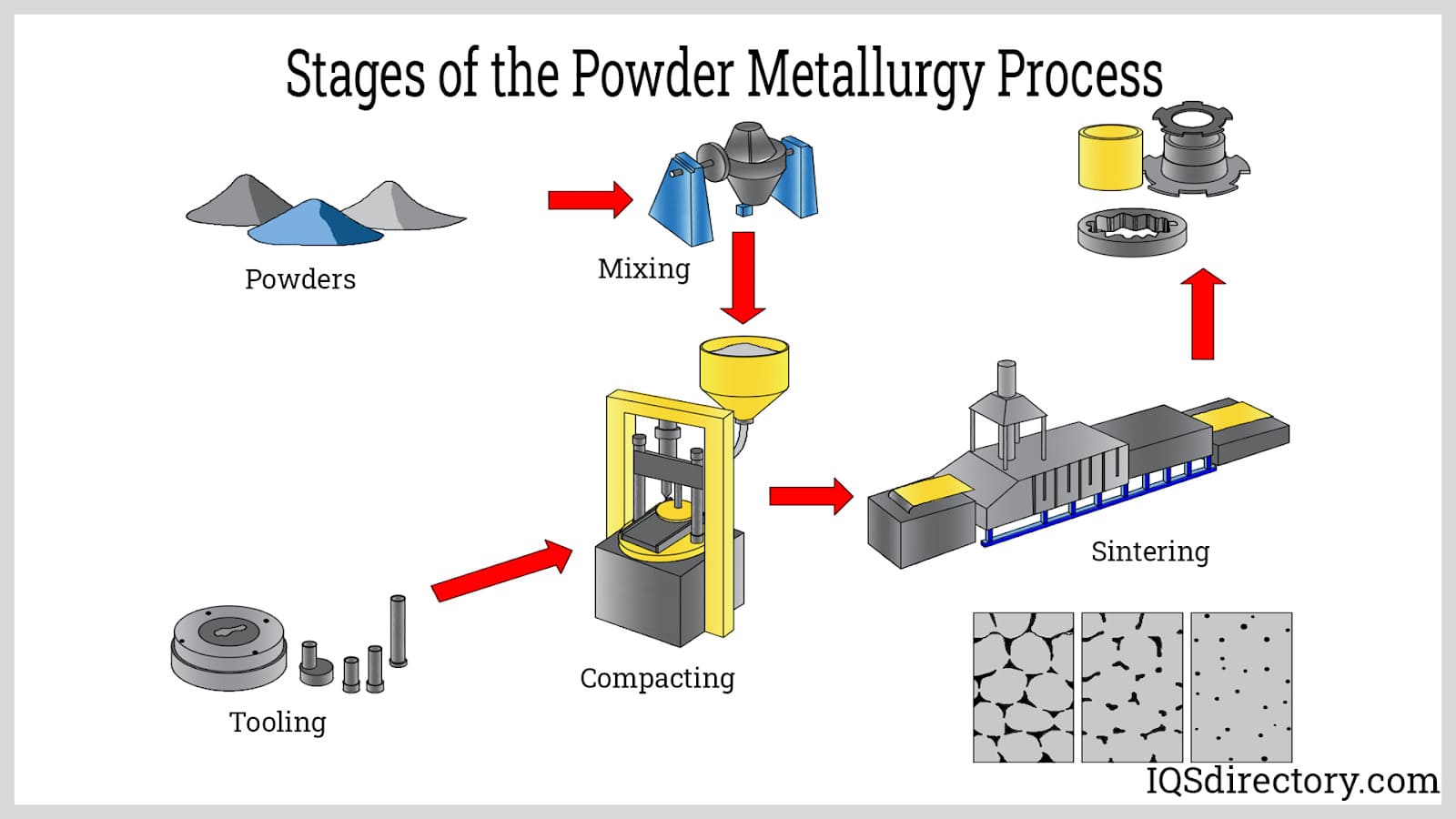 Powder metallurgy is a precision manufacturing method that forms accurate metal parts by compacting powdered metals and alloys in a die under high pressure before sintering.
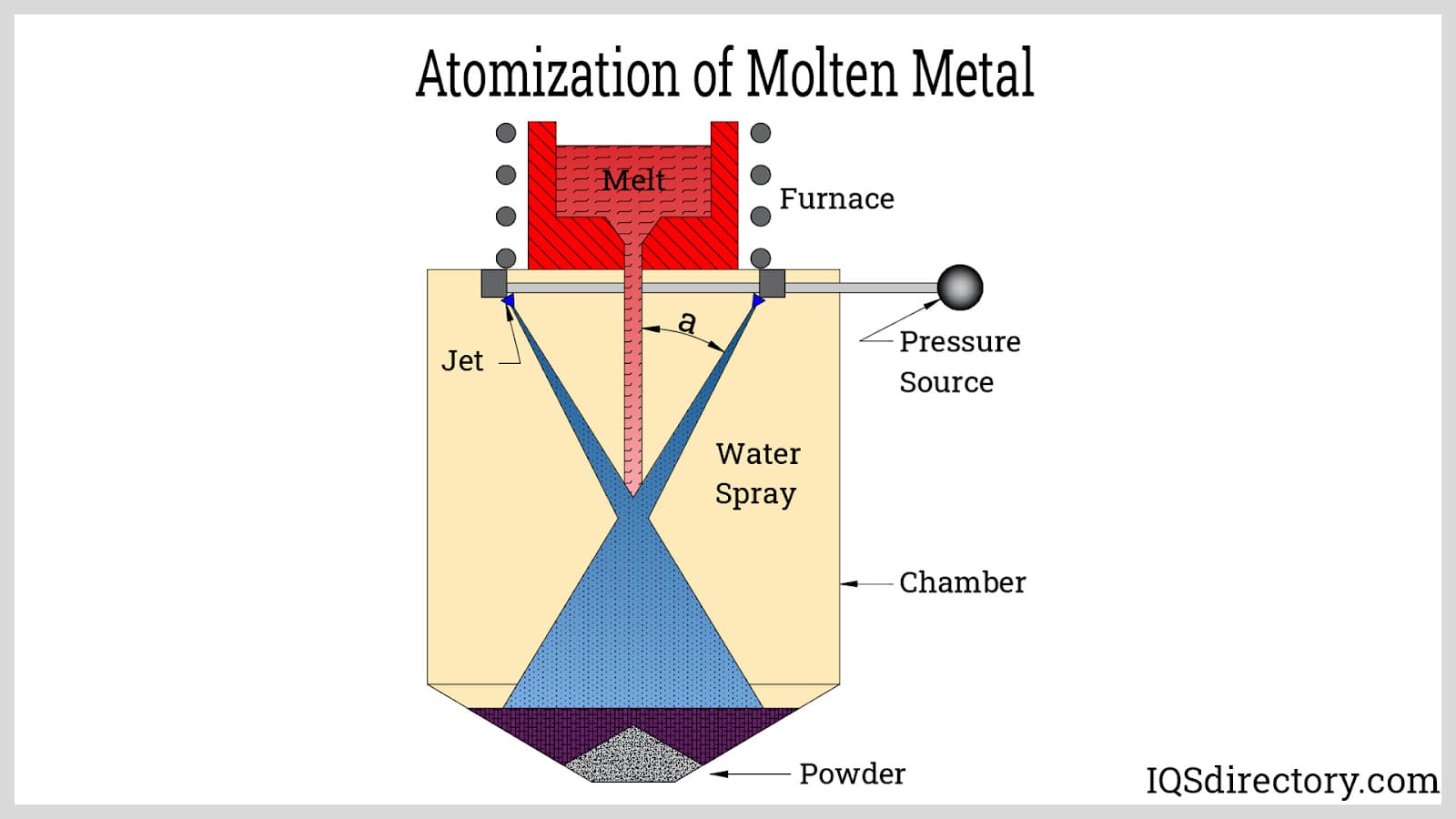 Atomization creates fine metal powder by breaking molten metal into particles with high-energy streams, supporting consistent feedstock for powder metal manufacturing.
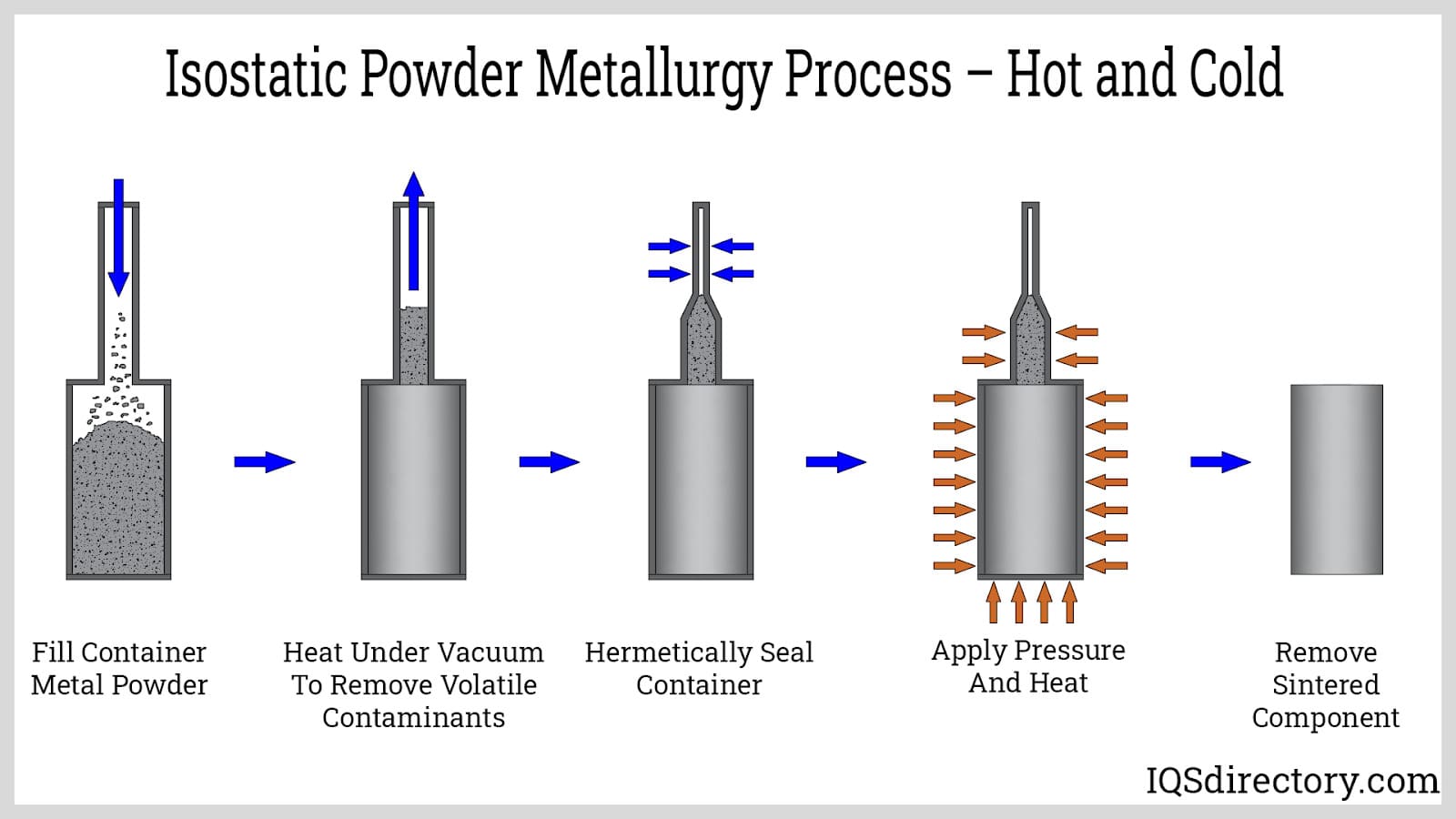 Isostatic pressing applies pressure uniformly around the workpiece, helping manufacturers achieve even compaction and dependable density control.
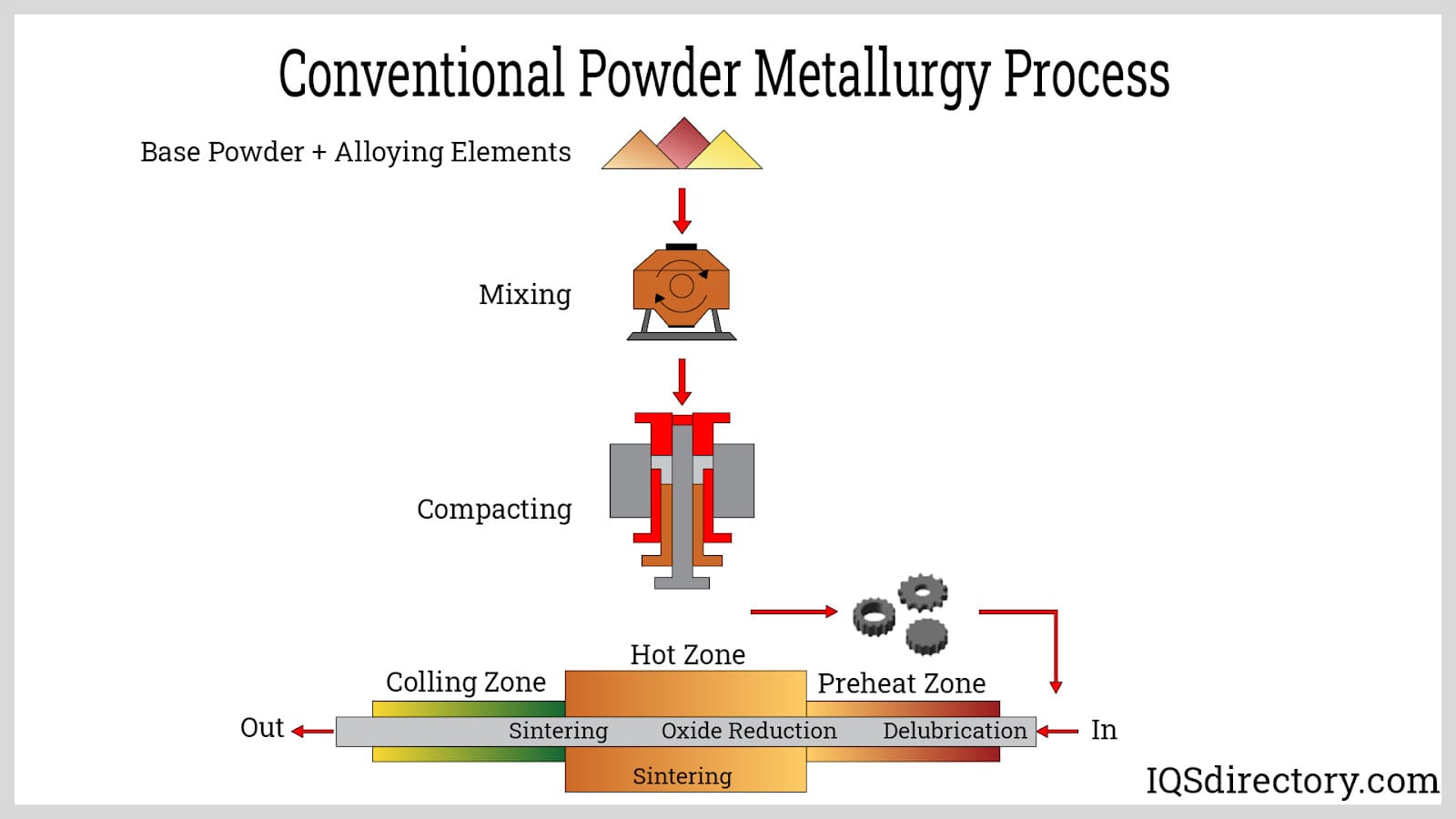 Conventional powder metallurgy moves from powder blending and compaction to sintering and finishing, producing repeatable near-net-shape parts for industrial use.
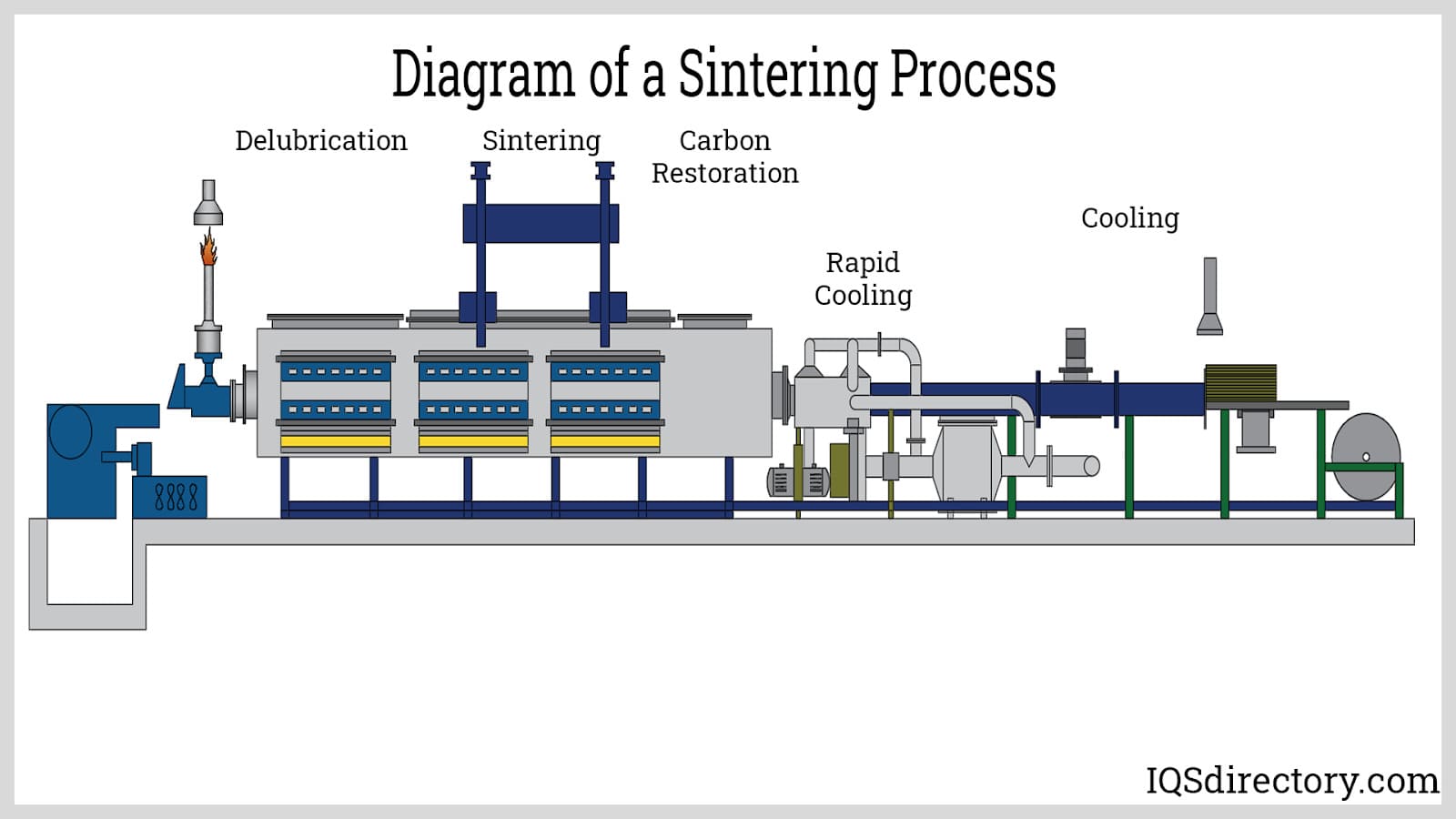 The sintering process bonds powder particles into a solid component without melting the entire mass, improving strength while maintaining part geometry.
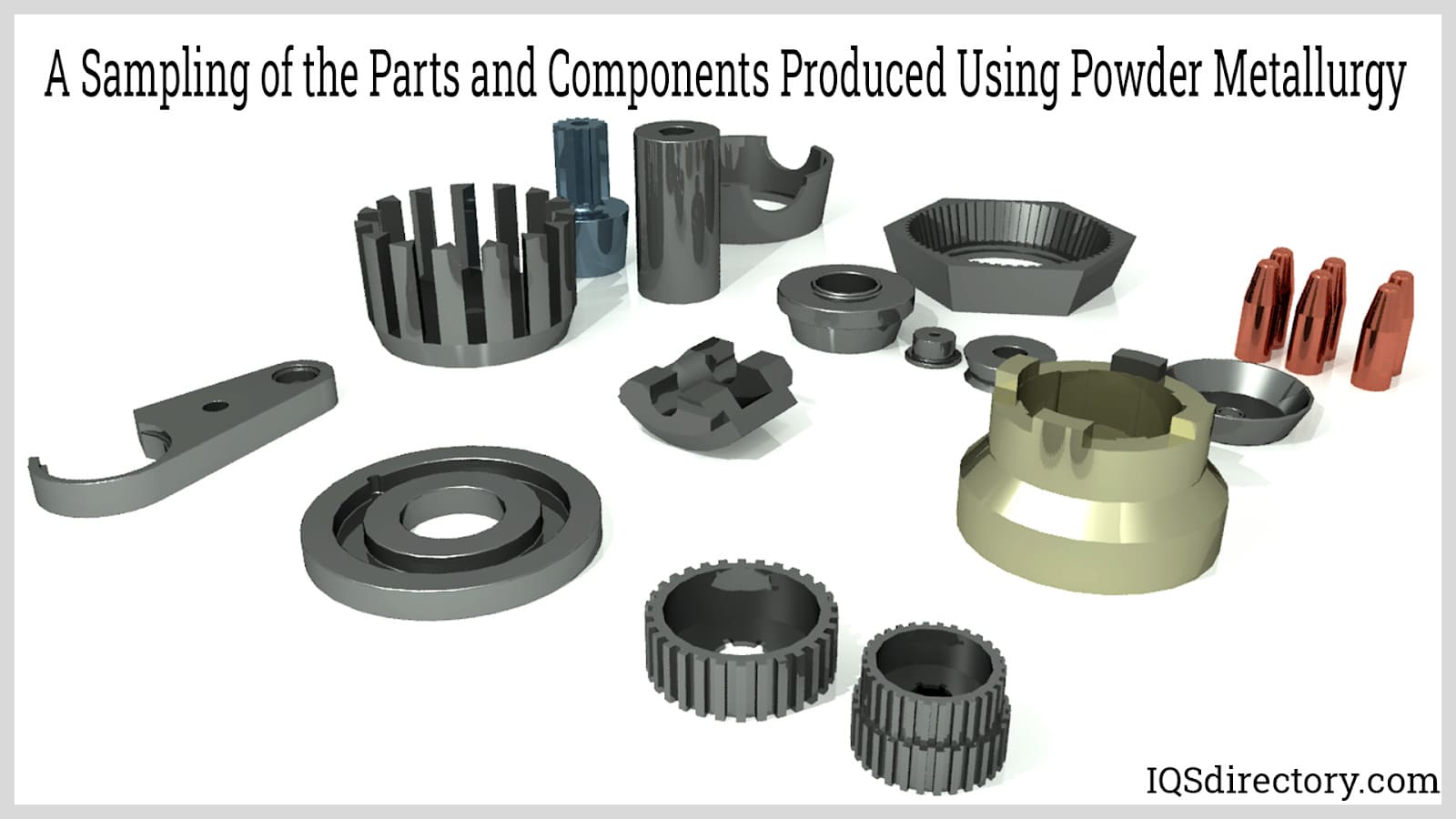 Powder metallurgy supports a wide range of components, including gears, bearings, bushings, filters, sprockets, pulleys, and structural metal parts.
Numerous metals, such as aluminum, copper, brass, iron, steel, bronze, nickel, stainless steel, and titanium, can be processed into powder form and used in powder metallurgy to create diverse components for structural, bearing, filtering, electrical, and wear-related applications.
- Aluminum Powder
- An aluminum-based powder valued for light weight, conductivity, and design flexibility. It is used where reduced mass, thermal performance, or corrosion resistance matter, and it can support both structural and specialty applications.
- Bronze Powder
- Often selected for self-lubricating bearings and bushings, bronze powder can provide favorable density, wear characteristics, and dependable mechanical performance in rotating assemblies.
- Copper Powder Parts
- Parts made from compacted and sintered copper powder offer strong electrical and thermal conductivity, making them useful in heat sinks, electrical contacts, and conductive assemblies.
- Iron Powder Parts
- Iron powder is commonly used for structural parts, filters, and bearings because it delivers a solid balance of strength, ductility, and magnetic behavior. It is often combined with additives such as graphite to tailor performance.
- Metal Injection Molding
- Also known as MIM, this high-volume process combines metal powders with molding technology to produce small, intricate custom metal parts that are close to final shape and often require minimal finishing.
- Metal Powder
- Metal powder is the foundational raw material in powder metallurgy and can be compacted into engineered forms using specialized dies, tooling, and thermal processing.
- Metal Powder Parts
- These parts are produced by compacting and heating powdered metals such as aluminum, bronze, brass, copper, nickel, steel, stainless steel, and titanium into finished or near-finished components.
- Powder Metallurgy
- A manufacturing method that uses engineered metal powders to produce shaped components with repeatable density, efficient material usage, and scalable output.
- Powdered Metal
- Powdered metal refers to metal that has been processed into fine particles through methods such as atomization, chemical precipitation, hydrogen reduction, or centrifugal disintegration for later forming into solid parts.
- Powdered Metal Bearings
- These bearings are often self-lubricating and valued for quiet operation, reduced maintenance, compact design, and consistent support of rotating shafts when oil impregnation is used.
- Powdered Metal Bushings
- Powdered metal bushings are designed to support shafts and rotating elements in engines, motors, and machines while offering good lubrication performance and dependable wear characteristics.
- Powdered Metal Gears
- Powdered metal gears transmit power, alter speed, and change motion between axes while benefiting from repeatable tooth geometry and production efficiency in volume manufacturing.
- Powdered Metal Structural Parts
- These parts are commonly used in automotive braking, fuel, engine, transmission, and exhaust systems, as well as in industrial equipment, appliances, and electronic products.
- Resin Impregnation
- A secondary operation in which resins are introduced into the pores of a sintered component to reduce leakage, improve sealing, and support performance in fluid-handling parts.
- Steel Powders
- Steel powders, including stainless and tool steel grades, are used when higher strength, wear resistance, or corrosion performance is required in structural and motion-related applications.
- Sintered Bronze Parts
- These parts are formed by heating bronze powder below its melting point so the particles bond into solid components, often for bearing and bushing applications.
- Sintered Filters
- Sintered filters use controlled porosity to provide repeatable flow, heat resistance, cleanability, and long service life in filtration and fluid control systems.
- Sintered Metal
- Sintered metal is a solid object made by pressing powdered metal into shape and then bonding the particles through controlled heating.
- Sintered Metal Parts
- Sintered metal parts are produced from compacted powders of aluminum, copper, bronze, nickel, brass, steel, stainless steel, titanium, and other alloys to create durable finished components.
- Sintered Steel Parts
- Sintered steel parts deliver a strong combination of durability, dimensional repeatability, and wear resistance for demanding mechanical and structural applications.
Powder metal technology gives manufacturers a way to produce complex, repeatable parts with less waste and fewer machining steps than many traditional processes. It is often chosen for components that need dependable geometry, scalable production, and a cost-conscious path to volume manufacturing. Because the method supports intricate forms and controlled porosity, it performs well in gears, bearings, bushings, filters, and custom net-shape components that would otherwise require more labor-intensive fabrication.
When properly compacted and sintered, powder metal parts offer precise dimensional control and application-specific performance. Metallurgists can adjust formulation and process parameters to support oil retention, sound damping, magnetic behavior, filtration, or wear resistance. That makes powder metallurgy useful not only as an alternative to extensive machining, but also as a strategic manufacturing option for buyers comparing production methods, lifecycle value, consistency, and part functionality.
Powdered metal coatings and related finishing methods are also used to improve corrosion resistance, surface behavior, and overall service life. This flexibility has helped the market grow in industries that need reliable components for harsh environments, friction-heavy uses, or specialized operating conditions. For companies researching whether powder metal parts can improve efficiency, lower scrap, or support high-volume production, the answer is often tied to how well the process aligns with the part’s geometry and performance goals.
Powder metal parts are widely used in automotive systems, structural assemblies, filtration devices, gears, pulleys, magnetic components, locking mechanisms, tools, and power transmission products. Powdered metal gears are especially well suited to sintering because they can be produced efficiently with repeatable tooth profiles and porosity characteristics that may help dampen noise. Bushings and bearings are also common, and where tighter tolerances are required, manufacturers can add sizing or coining operations after sintering.
Powder metallurgy is also used to produce diamond and tungsten carbide tools, including cutting and grinding blades for stone and industrial finishing applications. These products rely on engineered metal matrices to support wear-resistant abrasive materials. In other markets, powder metal processes are used for magnetic components and specialty assemblies that benefit from shapes difficult to achieve with other metal forming routes.
Another major application area is surface enhancement and protection. Iron, stainless steel, and other components may be finished with coatings that improve corrosion resistance, reduce friction, or extend part life in abrasive, wet, or low-temperature environments. This broad product range is one reason buyers frequently search for powder metal manufacturers when they need volume production, material efficiency, and component performance in the same project.
A major benefit of powder metal manufacturing is the ability to automate production and reduce the level of machining required after forming. Modern compaction presses, metal injection systems, sintering furnaces, blending equipment, and quality-control platforms often rely on computerized controls for repeatability and throughput. The exact machinery varies by part geometry, material, density target, and production method, but automation remains a major advantage for manufacturers serving large-volume markets.
Specialized powder metal machinery now supports applications ranging from fine jewelry and small precision parts to automotive gears, industrial hardware, surgical instruments, and fluid-control components. As equipment has improved, manufacturers have been able to increase consistency, monitor process variables more closely, and expand the range of viable powder metallurgy applications. For buyers comparing suppliers, equipment capability can directly influence lead times, tolerances, annual volume capacity, and final part quality.
The right powder metal manufacturer is the one that matches your material requirements, part geometry, tolerance expectations, secondary operation needs, and production volume. In some cases, a specialized supplier with deep experience in gears, bearings, bushings, filters, or MIM components may be a better fit than a larger general manufacturer. Evaluating tooling expertise, quality systems, furnace capability, material options, finishing services, and project support can help narrow the field and improve long-term results.
Several process variations are used to manufacture powder metal products, and the right method usually depends on shape complexity, density requirements, finishing needs, and annual volume. Along with conventional press-and-sinter production, widely discussed options include metal injection molding, powder forging, spray deposition, warm compaction, and specialized impregnation or infiltration techniques.
Metal Injection Molding, similar in concept to plastic injection molding, makes it possible to manufacture highly detailed metal parts in large quantities. Temporary binders hold the powder together during shaping and are removed later by heat or solvents before final sintering. This route is often explored when small intricate features, thin walls, and complex three-dimensional forms are part of the design brief.
Powder forging applies high pressure to compacted powder and then uses heat and forging forces to improve density and strength. Powder spraying involves directing atomized molten metal onto a substrate or preform, which can be useful for cladded surfaces and other specialty products. These process variations expand the range of powder metal solutions available to engineers, buyers, and OEMs comparing manufacturing paths for custom components.
- Acicular Powder
- Powder made up of needle-like particles, often referenced when particle shape influences flow, compaction, or sintering behavior.
- Activated Sintering
- A sintering process accelerated by factors other than temperature or time alone, such as an added constituent, thermal cycling, or a modified atmosphere.
- Air Classification
- A method that uses controlled air streams to separate powder into different particle size ranges for more precise material control.
- Atomization
- The production of metal powder by breaking molten metal into fine particles using mechanical action or fast-moving gas or liquid streams.
- Binder
- A material added to powder to increase green strength during compaction or to help particles adhere until the part reaches later processing stages.
- Blank
- An unfinished compact that has been pressed, pre-sintered, or sintered but still requires additional operations such as cutting, machining, or finishing.
- Cold Pressing
- The formation of a compact by compressing metal powder at room temperature before any furnace cycle begins.
- Comminution
- The reduction of metal into smaller particles by grinding, milling, flaking, or related mechanical methods.
- Compact
- A shaped mass formed by pressing metal powder into a die cavity prior to sintering.
- Composite Powder
- A powder system or compact made from more than one distinct material to achieve blended properties.
- Die
- A precision tool with a shaped cavity that compacts metal powder into the intended part geometry.
- Exudation
- Also called sweating, this refers to a lower-melting constituent rising to the surface of a compact during sintering.
- Green
- A term used to describe a pressed powder metal part before it has been sintered.
- Growth
- An increase in compact size that can occur during sintering depending on the material and process conditions.
- Impregnation
- A post-sintering operation in which nonmetallic materials such as oil fill the pores of a compact to improve performance.
- Infiltration
- A process in which the pores of a compact are filled with a lower-melting metal, before or after sintering, to improve density or other properties.
- Isostatic Pressing
- The compaction of metal powder by applying pressure uniformly from all directions around the workpiece.
- Lubricant
- A substance added to the powder or tooling to aid compaction, reduce friction, and improve ejection from the die.
- Molding
- Another term for shaping or pressing metal powder into a compacted form.
- Multiple Pressing
- The production of more than one compact at a time by pressing metal powder in separate cavities or dies.
- Porosity
- The percentage of open space within a powder metal part, often engineered to support lubrication, filtration, or weight control.
- Punch
- The die component that directly compresses metal powder to form a compact during pressing.
- Shrinkage
- A reduction in the size of a compact during sintering as the structure bonds and densifies.
- Warpage
- Distortion or deformation in a compact or sintered part caused by uneven processing conditions or dimensional movement.