Machine Guards
Machine guards are industrial safety barriers that separate employees from moving machinery in factories, manufacturing plants, warehouses, and processing facilities. In addition to reducing exposure to rotating parts, pinch points, chips, sparks, and airborne debris, machine guarding can also help organize traffic flow, limit vehicle access, and define safer production zones.
The need for machine guards extends across almost every class of industrial equipment. Any machine with shearing action, impact points, meshing gears, rotating shafts, reciprocating arms, cutting edges, conveyors, belts, chains, or other hazardous motion should use an appropriate safety barrier to support OSHA compliance and a safer work environment.
What type of machine guard is right for a press, conveyor, robot cell, saw, or CNC machine? Buyers usually compare hazard location, visibility, service access, material compatibility, and the need for fixed guards, interlocked guards, adjustable guards, or perimeter fencing before selecting a safeguarding solution that balances operator protection with production efficiency.
Machine Guarding FAQ
What is the main purpose of machine guards in industrial settings?
Machine guards create a physical barrier between employees and operating equipment, reducing exposure to moving parts, nip points, flying chips, sparks, and debris. They also help manage pedestrian and vehicle movement in busy manufacturing environments, making machine safety and plant organization easier to maintain.
When did machine guarding regulations first appear in the United States?
Machine guarding regulations first appeared in 1877 when Massachusetts passed a law requiring protective guards on hazardous machinery. Over time, state rules evolved into broader workplace safety expectations, and OSHA later established national machine guarding standards for industrial equipment and employee protection.
What materials are most commonly used to manufacture machine guards?
Machine guards are most often made from metal because it delivers strength, rigidity, and long service life in demanding industrial settings. When visibility is needed, manufacturers often use polycarbonate panels, and in limited applications wood may still be used where heat, chemicals, and moisture are not concerns.
What are the four main types of machine guards defined by OSHA?
OSHA commonly groups machine guards into four main categories: fixed, interlocked, adjustable, and self-adjusting. Each style is designed to protect operators from hazardous motion while still allowing practical machine operation, maintenance access, and production efficiency.
How do interlocked machine guards improve worker safety?
Interlocked machine guards improve safety by automatically stopping or disabling a machine when the guard is opened or removed. This safety function prevents access to hazardous moving parts during operation and helps ensure the equipment runs only when the barrier is closed and properly positioned.
What OSHA standards must all machine guards meet?
Machine guards must block access to hazardous components, stay securely fastened, resist impact, avoid creating new hazards, and allow safe servicing such as lubrication or maintenance. Meeting these requirements helps facilities support OSHA machine guarding compliance while keeping production practical and workers protected.
How do fixed perimeter guards enhance safety in manufacturing plants?
Fixed perimeter guards surround an entire machine or robotic work cell, helping keep employees and nearby traffic away from hazardous motion, pinch points, and automated equipment. They are especially useful in larger manufacturing systems where a wider safety zone is needed around multiple moving components.
The History of Machine Guards
Machine guarding developed as industry responded to the hazards created by faster, more powerful production equipment. Before protective barriers were common, operators worked with little separation from pulleys, gears, belts, screws, and other exposed moving parts. In the early industrial era, growing use of steam power, electric motors, and mechanized production sharply increased the severity and frequency of workplace injuries. Employees could be pulled into gears, caught in nip points, crushed by transmission components, or struck by broken material and flying debris. Textile mills were especially dangerous, and reports of amputations and disabling injuries helped draw public attention to industrial machine safety. As newspapers published more accounts of factory accidents, labor organizations and reformers pushed harder for practical safeguards that could reduce preventable injuries and make manufacturing work less hazardous.
Persistent pressure from labor groups and public concern eventually led lawmakers to adopt formal safety rules. In 1877, Massachusetts became the first state to require guards for hazardous machinery, and other industrial states gradually followed with similar laws. These early safeguards improved worker protection, but many were still basic by modern standards. They often lacked emergency stop features, better operator access, and well-planned control locations that would let a worker shut down equipment quickly during an incident.
By the 1940s, manufacturers and safety leaders saw the need for more complete machine safeguarding standards. The American Standards Association introduced the Safety Code for Mechanical Power Transmission Apparatus, which pushed industry toward more deliberate machine guard design. That code helped move guarding from a simple barrier concept to a broader machine safety approach that considered design, placement, access, and hazard exposure.
Another turning point came in 1971 with the launch of the Occupational Safety and Health Administration (OSHA), created after the Occupational Safety and Health Act of 1970. OSHA gave the United States an enforceable framework for workplace safety and machine guarding. Since then, OSHA has continued to shape requirements for safeguarding, hazard reduction, operator protection, and safer industrial operations.
Today, machine guards do more than separate workers from danger. Modern guard systems often support ergonomics, maintenance access, visibility, and production efficiency while still reducing exposure to hazardous motion. Many designs now integrate interlocks, sensors, and control-system features directly into the machine, helping simplify installation and reduce material and engineering costs. As automation, robotics, and smart manufacturing advance, machine guarding continues to evolve with them.
Advantages of Machine Guards
Machine guards deliver major benefits for safety, productivity, compliance, and day-to-day plant operations. By reducing the likelihood of contact injuries, they help limit downtime, compensation claims, equipment damage, and production interruptions. They also give operators a clearer sense of where hazards begin and where safe access is allowed, which supports smoother workflows and more confident machine use across the facility.
Beyond injury prevention, effective machine guarding can improve line consistency, simplify operator training, and reduce unplanned stoppages caused by accidental contact, debris, or unsafe traffic patterns. In facilities focused on lean manufacturing, automation, and OSHA readiness, the right guarding strategy supports safer throughput while helping maintenance teams, supervisors, and machine operators work with clearer boundaries and fewer avoidable disruptions.
Machine Guard Design
- Construction
- Machine guards are commonly built through a combination of extrusion, CNC technology and post-extrusion assembly. During assembly, components such as screws, rivets, bolts, nuts, brackets, and frame members are fastened to create a rigid, durable barrier that can perform in demanding industrial environments.
- Materials
- Machine guards can be fabricated from a range of materials, though metal remains the most common because it offers strength, rigidity, and long service life. Depending on the application, metal guards may be built from pipe, bar, panel, wire mesh or sheet metal. When clear visibility is important, manufacturers often use polycarbonate—a durable, impact-resistant plastic that offers a clear view of the process and withstands abuse better than glass in many guarding applications. Wood may still be used in limited environments where heat, moisture, and corrosive chemicals are not major concerns.
- Considerations and Customization
- Designing an effective machine guard starts with a careful review of the machine’s hazards and operating cycle. Manufacturers evaluate the point of operation, power transmission components such as cams, flywheels, belts, spindles, pulleys, and couplings, along with controls, access needs, and all moving parts that may expose workers to injury. This hazard analysis helps produce custom guards that improve safety and support OSHA compliance.
- Customization options are broad. Manufacturers can add features such as hinges for service access, along with mounting holes, removable panels, adjustable flange sizes, interlocks, and custom extruded frames sized for the machine. With the right configuration, machine guards fit the application closely, improve usability, and provide dependable protection without slowing production.
For buyers evaluating custom machine guards, design details often matter as much as the guard type itself. Frame strength, viewing panels, fastener style, removable access points, washdown resistance, and compatibility with sensors or interlocks all influence long-term performance. A well-designed system should match the machine, the production rate, and the maintenance routine instead of forcing operators to work around the safeguard.
How Machine Guards Work
Industrial machine guards protect workers and equipment through several safeguarding methods, including point guarding, point-of-operation guarding, and fixed perimeter guarding. Each approach is selected based on hazard location, operator interaction, and the way the machine runs within a production environment.
Point guarding shields exposed moving parts that could injure an operator or nearby employee. According to OSHA regulation 1910.212(a)(2), guards should be attached directly to the machine when possible, or securely mounted nearby when direct attachment is not practical. This guarding method helps block accidental contact with gears, belts, shafts, pulleys, and other hazardous components while allowing normal operation.
Point-of-operation guarding protects the area where the worker actually cuts, shapes, feeds, punches, or handles material. These guards are designed to keep hands, clothing, and tools from entering the hazard zone while the machine is running. When properly selected, point-of-operation guards lower injury risk without making the job harder to perform.
Fixed perimeter guarding creates a defined enclosure around the entire machine or automated cell. By establishing a controlled border, it helps keep employees, forklifts, and general traffic away from hazardous equipment. This safeguarding method is especially useful for larger automated systems, robotics, conveyors, and equipment with multiple moving zones.
Machine Guard Images, Diagrams and Visual Concepts
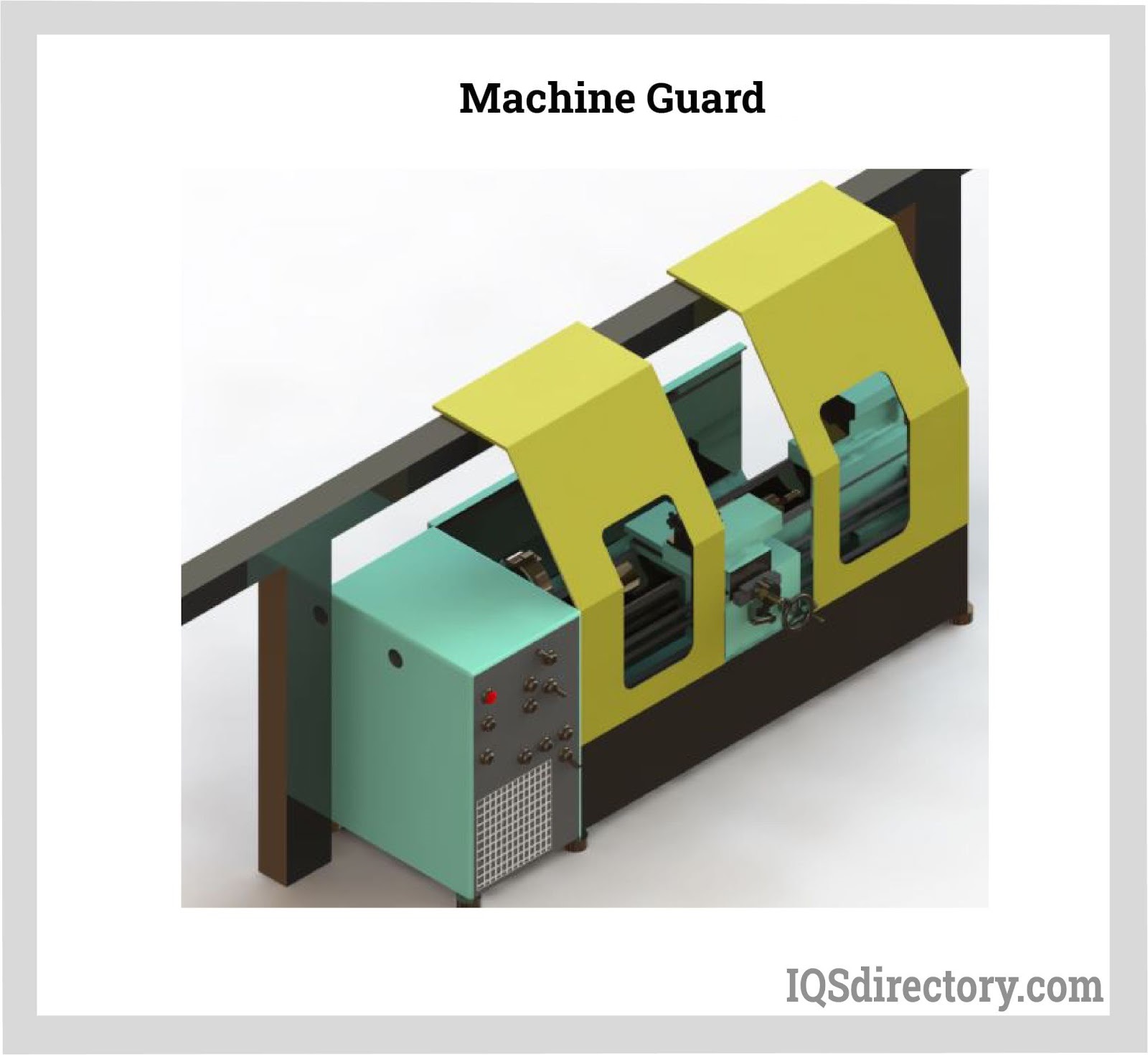 Machine guards create a safety barrier between workers and operating equipment.
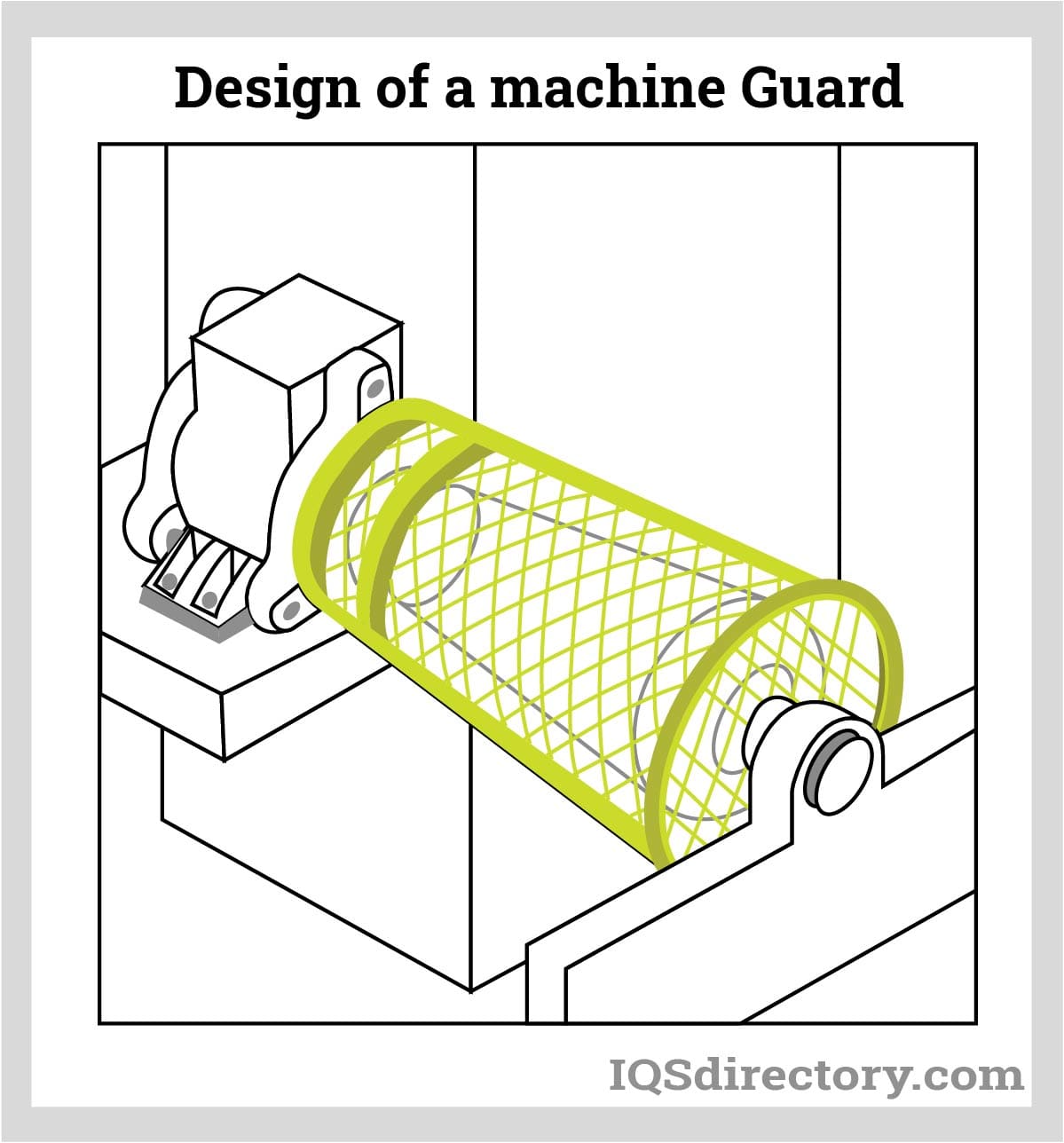 Machine guard fabrication often combines CNC machining, extrusion, and post-extrusion assembly.
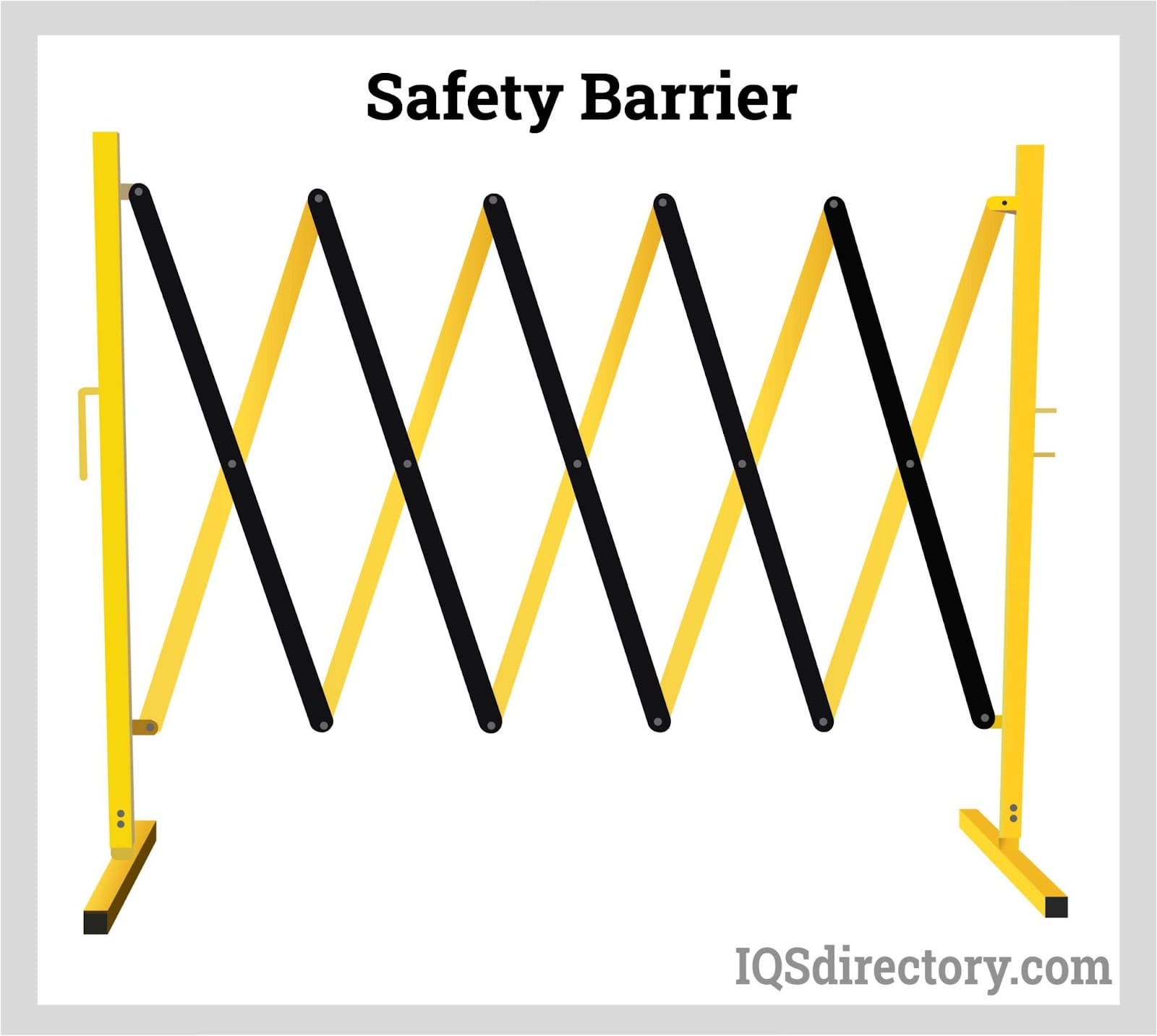 Safety barriers help separate employees and vehicle traffic from hazardous machine zones.
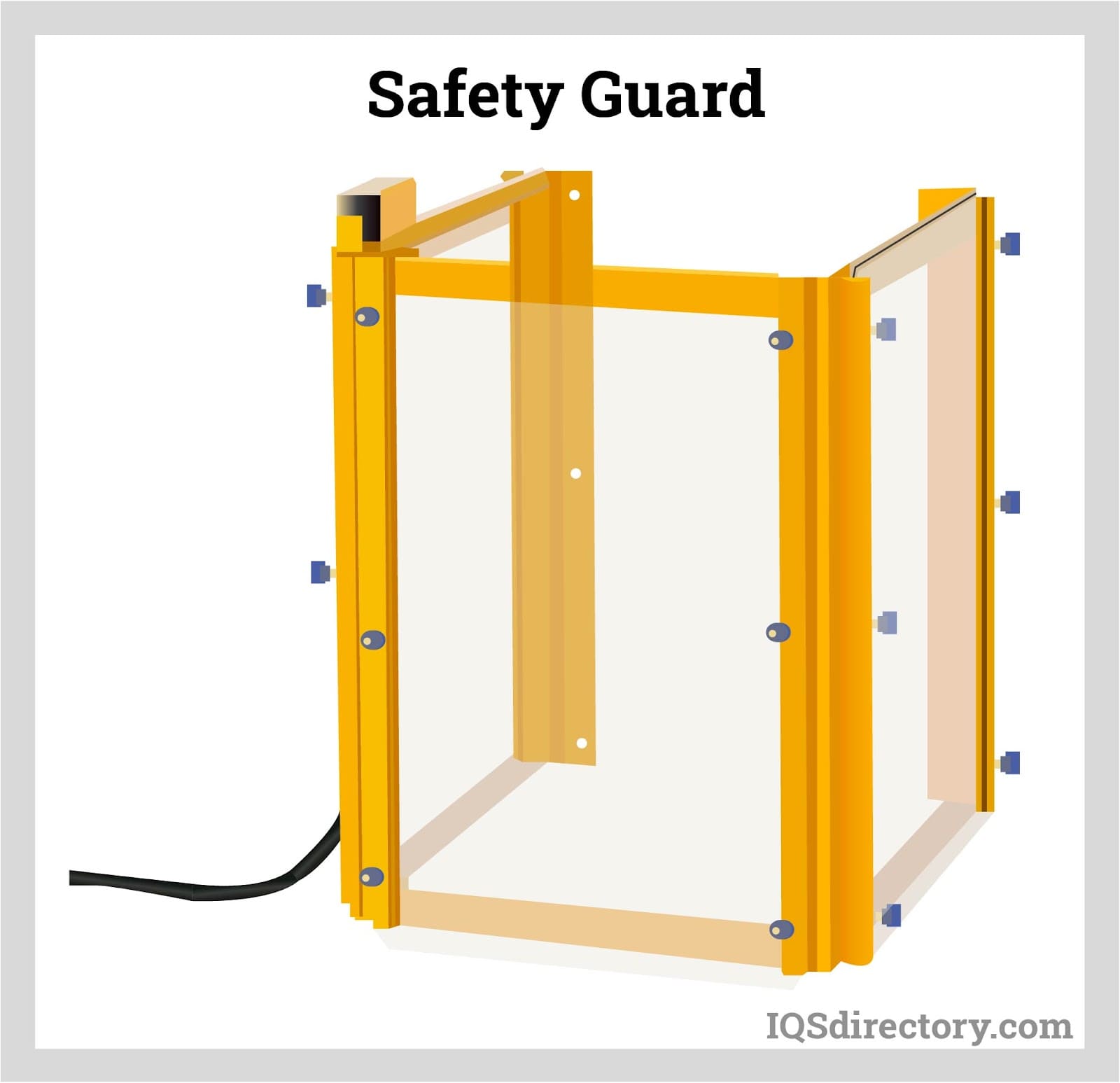 Safety guards form physical barriers around dangerous equipment and moving machine parts.
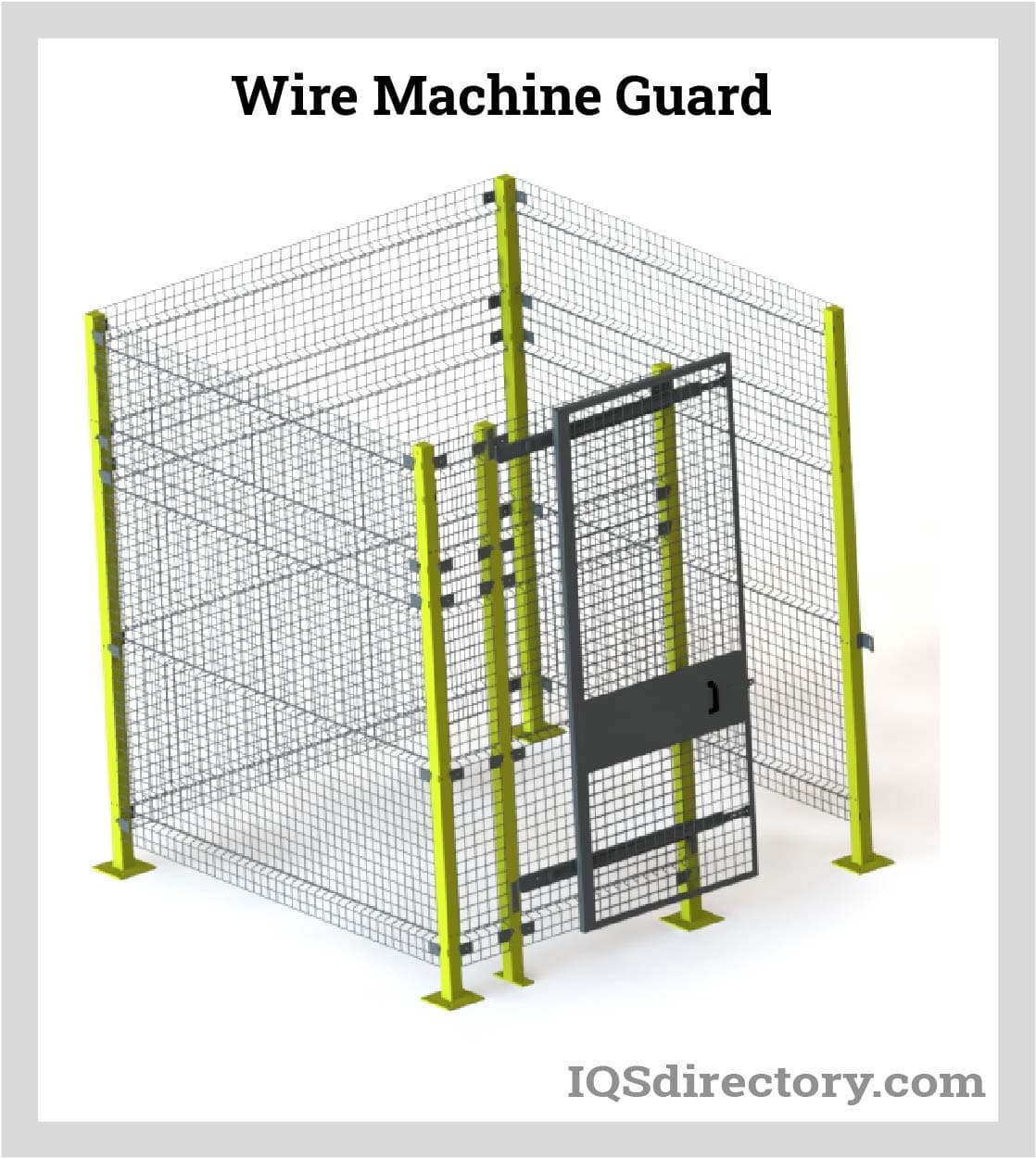 Wire guards help direct traffic and limit exposure to larger airborne debris.
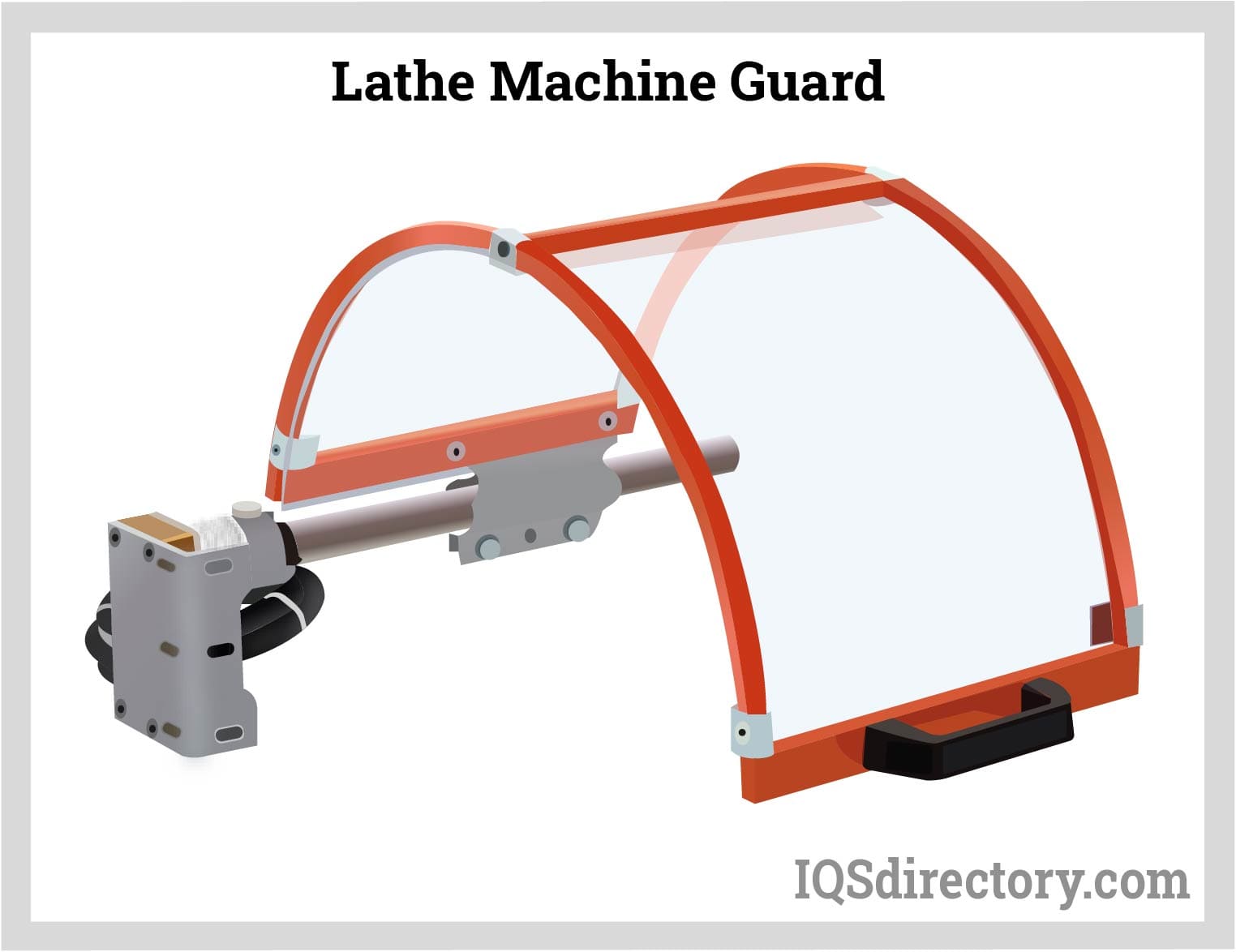 A lathe guard acts as a visor or shield at the point of operation for the machine operator.
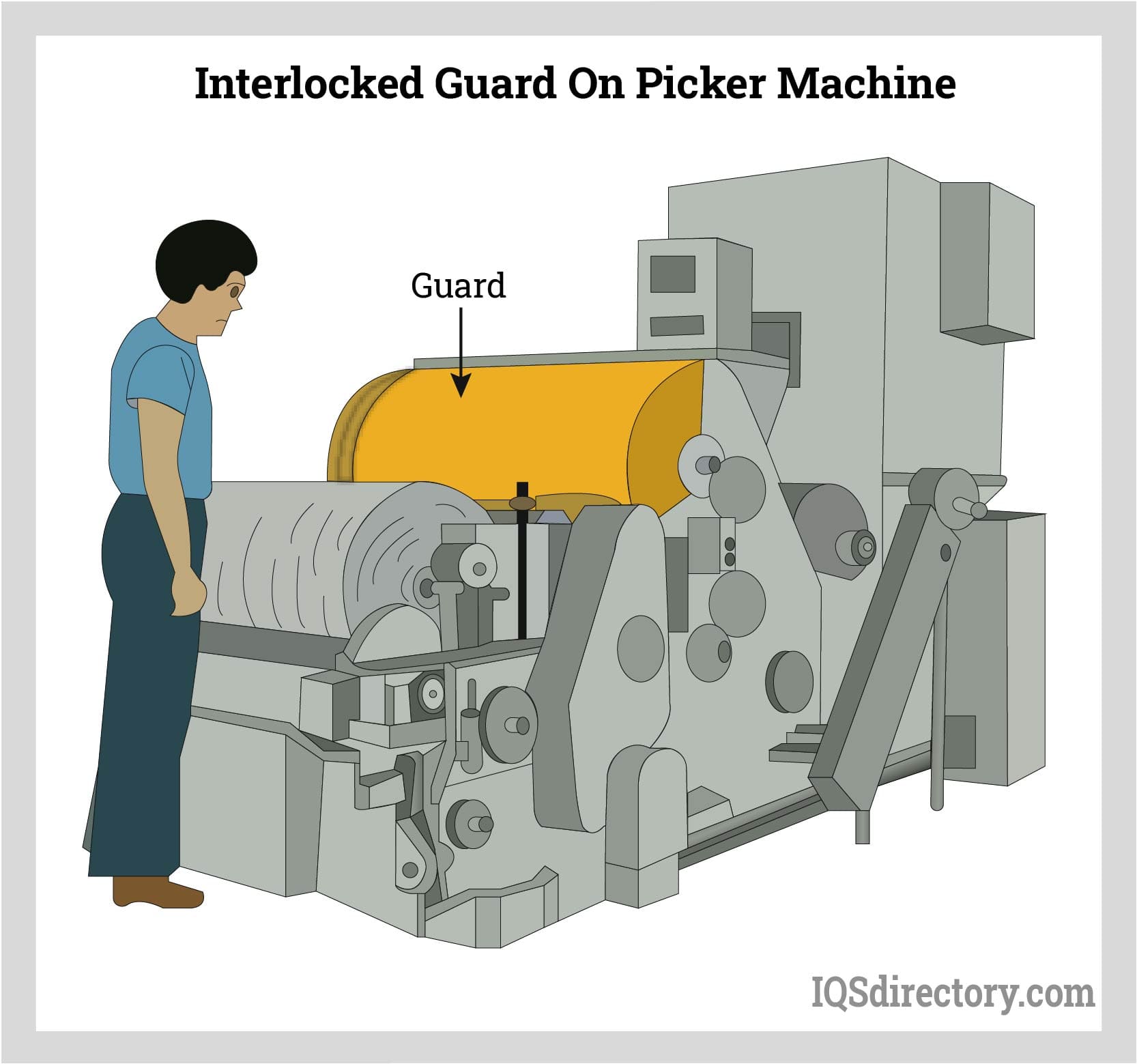 An interlocked guard can be opened or closed, and opening it automatically disengages power.
Types of Machine Guards
OSHA identifies four main types of machine guards used to protect workers while keeping industrial equipment productive: fixed guards, interlocked guards, adjustable guards, and self-adjusting guards. Beyond these core categories, facilities may also use specialty guards and safeguarding devices to match specific machines, processes, and hazard points.
- Fixed Machine Guards
- Fixed machine guards are permanent barriers built into the machine or mounted in a fixed position around the hazard. Made from sheet metal, wire mesh, bars, or plastic panels, they prevent accidental contact with moving components while offering durable, low-maintenance safeguarding. Fixed perimeter systems are commonly used where consistent separation from the hazard is needed.
- Interlocked Machine Guards
- Interlocked machine guards, often called electrical interlocks, are connected to the machine control system and manage access to hazardous zones. If the guard is opened, removed, or left out of position, the machine shuts down or is prevented from starting. This approach helps protect workers during loading, inspection, maintenance, and operation.
- Adjustable Machine Guards
- Adjustable machine guards can be manually repositioned to fit different material sizes, cutting depths, or operating setups. Their flexibility makes them useful on equipment such as band saws and other machines where the point of operation changes from job to job. Even with that flexibility, the guard still provides a barrier around exposed hazards.
- Self-Adjusting Machine Guards
- Self-adjusting guards move automatically as material is fed into the machine. Common on saws and similar cutting equipment, they shift just enough to let stock pass while still covering the exposed portion of the blade or hazard zone. This lets the machine run with ongoing protection and little manual adjustment.
- Lathe Guards and Chuck Guards
- Lathe guards and chuck guards help protect machinists from flying chips, broken tooling, coolant splash, and fragments released during turning and machining operations. They are especially valuable where rotating workpieces and exposed chucks create both entanglement and impact hazards.
- Wire Guards
- Used as a form of safety barrier, wire guards create a partition around hazardous machinery, robotic cells, and automated work zones, helping prevent unauthorized access while still allowing airflow and visibility into the process.
- Drill Press Guards and Milling Machine Guards
- These guards are designed for machines that require close operator interaction near drills, cutters, spindles, and other hazardous components. By enclosing the work area or point of operation, they help reduce accidental contact and improve visibility of the cutting process.
- Safety Light Curtains
- Unlike physical barriers, safety light curtains use infrared beams to create a sensing field around dangerous machinery. If a person or object breaks the beam, the system stops or prevents machine motion. This makes light curtains useful where material needs to pass through an opening but the hazard still must be controlled.
- Brake Monitors
- Brake monitors are non-physical safeguarding devices that continuously track the condition and stopping performance of a machine’s brake system. If wear, slowdown, or malfunction is detected, they can signal maintenance needs or stop operation before unsafe performance develops.
- In addition to traditional machine guards, many facilities use automated safety aids to add another layer of protection around hazardous equipment.
- Awareness Barriers
- Awareness barriers, like safety light curtains, warn or stop equipment when someone enters a defined danger zone without relying on a full physical enclosure. Using infrared transmitters and receivers, these systems detect a broken signal and trigger an appropriate machine response.
- Electromechanical Sensors
- Electromechanical sensors use a probe or contact bar to verify that the machine area is clear before a cycle begins. If the bar is obstructed, the machine will not start or continue, helping prevent unexpected contact with the hazard zone.
- Gate Barriers
- Gate barriers act as protective enclosures or gated access points at the point of operation. When the gate is open or unsecured, the machine cannot cycle. This helps keep workers outside the hazard area until it is safe to proceed.
- Radiofrequency Devices
- Radiofrequency devices use radio beams to monitor the hazard zone and prevent startup when an obstruction is present. By interrupting the signal, they keep the machine idle until the area is clear and safe for operation.
- Two-Hand Control Guards
- Two-hand control guards require the operator to maintain constant pressure on designated controls during the machine cycle. If hand pressure is released, the machine stops or will not continue, helping keep both hands away from the point of operation.
- Used together, machine guards and modern safeguarding devices help facilities reduce injury risk, support compliance, and keep production moving with safer machine operation.
Machine Guard Applications
A wide range of industrial equipment requires machine guards for safe operation. Machines such as presses, milling machines, automated assembly line machinery, roll form machines, saws, and feeders can expose workers to rotating parts, cutting zones, pinch points, and flying debris without proper safeguarding. Well-designed machine guards help reduce injuries such as crushed fingers, amputations, burns, eye injuries, and other serious incidents. Although many newer machines include built-in safety guarding, some applications still require facility-specific analysis to select the right point-of-operation or perimeter guard. Robotics, in particular, often calls for specialized machine guarding that accounts for automated movement, repeat cycles, and restricted safety zones.
Common applications include power transmission equipment, stamping presses, drill presses, lathes, mills, conveyors, packaging lines, palletizers, robotic welding cells, and material handling systems. When companies ask how to improve machine safety around automated equipment, they are often looking for guarding that preserves visibility, supports lockout and service procedures, and reduces access to pinch points, rotating shafts, cutting zones, and ejection hazards.
Finding the Right Machine Guard Manufacturer
Worker protection and OSHA compliance matter for any facility that uses industrial machinery. To make sure each system receives the right level of safeguarding, buyers should work with an experienced machine guard manufacturer or supplier. The right partner can help evaluate hazards, recommend guard types, confirm material choices, and support a safer, more compliant installation.
IQS Directory helps buyers compare machine guard manufacturers by location, company type, capabilities, and certifications. That makes it easier to research suppliers, review options, and narrow the field based on application needs. The Request for Quote tool can also simplify sourcing by letting users contact multiple manufacturers at once and compare solutions more efficiently.
When comparing suppliers, many buyers look beyond basic fabrication and ask whether the manufacturer can assist with hazard review, custom guard design, interlock integration, polycarbonate panel options, modular perimeter systems, and installation support. That evaluation process helps narrow down whether a provider is better suited for a single machine retrofit, a plant-wide safeguarding upgrade, or a larger automation project involving robotic cells and conveyor guarding.
Accessories for Machine Guards
Machine guard systems often use accessories that improve visibility, control, and day-to-day functionality. Common examples include motor controls, machine lamps, safety tape, belt covers, brackets, and mounting fittings. When selected carefully, these accessories support safer operation, cleaner installation, and more reliable use of guarded machinery.
Accessories should be selected with the same care as the primary guard. Lighting, control stations, status indicators, mounting hardware, replacement panels, and access components can affect visibility, response time, cleaning, and operator convenience. In many cases, the best machine guard system is not just a barrier but a complete safeguarding package that supports routine operation, inspection, and maintenance.
Standards and Proper Care for Machine Guards:
Because industrial machinery can expose workers to severe hazards, machine guards are regulated by OSHA in the United States. In Europe, similar expectations are addressed through the Machinery Directive and related machine safety requirements. These standards help manufacturers and end users maintain safer guarding practices, documentation, and equipment operation.
All machine guards, regardless of application, should satisfy the following five OSHA requirements:
First, guards must prevent contact with dangerous machine components. A proper barrier should keep operators and nearby employees away from moving parts, cutting areas, and other hazardous zones during normal production.
Second, guards must remain securely fastened. If a machine guard cannot be attached directly to the equipment, it should be anchored to a nearby wall, floor, frame, or other stable structure so it stays in position during operation.
Third, guards should have enough strength and impact resistance to stay in place and protect workers from broken tooling, falling objects, chips, sparks, and flying debris. They should also avoid creating new hazards such as sharp edges or pinch points.
Fourth, guards should support efficient production rather than interfere with it. Good machine safeguarding allows operators to see what they need to see, complete routine tasks, and work safely without unnecessary obstruction.
Fifth, guards should allow safe lubrication, inspection, and maintenance access. Since many machines require routine service, practical guard designs make upkeep easier without exposing workers to hazardous motion.
Machine Guard Terms
- Belts
- Moving machine components that transmit motion and power, including transmission belts, flat belts, V-belts, and round belts. These parts transfer energy between driven components and often require guarding because of entanglement and nip-point hazards.
- Brake
- A mechanism that stops and holds the crankshaft on a mechanical press after the clutch is disengaged. Proper brake performance supports controlled stopping and safer press operation.
- Danger Zone
- The area of a machine where active motion, cutting, pressing, forming, or material handling creates a hazard for the operator. This zone typically requires guarding or another safeguarding method.
- Device
- A safeguarding attachment on a press that either stops the machine when a worker’s hands approach the point of operation or prevents access to the hazard zone. Such devices help reduce contact injuries during press work.
- Enclosures
- Mounted protective barriers that block access to moving machine parts or hazardous work cells. Enclosures help keep employees at a safer distance while equipment is operating.
- Guard
- A physical barrier that restricts access to dangerous machine components, helping prevent body parts, clothing, or foreign objects from entering the point of operation.
- Hand Feeding Tool
- A handheld tool used to place, position, or remove material at the point of operation without direct hand exposure. It helps reduce the need for hands to enter a hazardous machine area.
- Mill
- A machine with two horizontal metal rolls turning in opposite directions to shape, form, or process material as it passes between them. Mills often require guarding around rolls, drives, and pinch points.
- Nip Points
- Hazardous areas formed where rotating machine parts meet or move closely together. If clothing, material, hair, or body parts are caught in these points, severe injury can result.
- Point of Operation
- The section of a machine where the actual work takes place, such as cutting, shaping, punching, bending, forming, or assembling. Because the operator often works near this zone, it requires strong safeguarding.
- Power Transmission Apparatus
- A group of mechanical components that transfer energy from the power source to the working parts of the machine. This apparatus may include cams, gears, pulleys, connecting rods, belts, flywheels, chains, cranks, and spindles, all of which may require guarding.
- Press
- A mechanically powered machine used to shear, punch, form, stamp, or assemble material with cutting or shaping dies attached to slides. Presses commonly need dedicated point-of-operation safeguarding.
- Press Safety
- The area of manufacturing safety focused on protecting workers around industrial presses. It includes machine guards, sensing devices, controls, procedures, and operator practices that reduce the chance of injury.