Load Cells
Load cells are precision force measurement devices used to quantify compression, tension, and shear in real time. As electromechanical transducers, they convert applied mechanical force into electrical output that can be displayed, recorded, transmitted, and analyzed. Buyers researching load cells often compare accuracy, capacity, environmental protection, output type, and mounting style because each factor affects long-term weighing performance.
From medical devices and laboratory balances to structural testing, process control, and heavy industrial weighing, load cells support dependable measurement wherever force data matters. Their ability to deliver repeatable readings helps improve product quality, process efficiency, equipment protection, and system visibility across automated and manually monitored operations.
Load cell measurements are commonly expressed in newtons (N), kilonewtons (kN), or meganewtons (MN), depending on the force range involved. Standardized units make it easier to compare load ratings, evaluate instrumentation, and specify the right force sensor for testing, batching, material handling, tank weighing, truck scales, and other precision weighing applications.
Load Cells FAQ
What does a load cell measure?
A load cell measures mechanical force, including compression, tension, and shear, by converting it into an electrical signal. This makes it useful for weighing systems, force testing, stress analysis, and process monitoring where reliable, repeatable measurement is needed.
How accurate are load cells?
Load cells are known for high accuracy, and many models deliver readings within tight tolerances when correctly installed and calibrated. Actual performance depends on design, capacity, environment, mounting conditions, and signal conditioning, which is why application matching matters during selection.
What are the main types of load cells?
Common load cell types include hydraulic, compression, tension, shear beam, strain gauge, single-point, pancake, and multi-axis models. Each design is built for a particular load direction, space envelope, and application, whether the goal is industrial weighing, materials testing, hopper measurement, or laboratory force analysis.
What materials are used in load cell construction?
Load cells are commonly made from stainless steel, alloy steel, aluminum, or tool steel. Material choice affects corrosion resistance, stiffness, fatigue life, washdown suitability, and long-term durability, so it should match the operating environment as well as the required capacity and sensitivity.
Where are load cells used?
Load cells are used in manufacturing, construction, transportation, food processing, pharmaceuticals, agriculture, aerospace, and research environments. They support weighing, batching, filling, structural testing, overload monitoring, and process control where precise force measurement improves consistency and operational confidence.
How should load cells be installed?
Proper installation starts with correct alignment, a stable mounting surface, and load introduction that matches the sensor design. Following manufacturer instructions helps protect accuracy, reduce off-axis loading, and support dependable long-term performance.
What certifications should quality load cells have?
Quality load cells may be built to meet ISO-based quality systems and industry-specific requirements tied to electronics, aerospace, environmental compliance, or customer validation programs. Buyers should verify the standards that apply to their industry, documentation needs, and installation environment before ordering.
The History of Load Cells
Modern load cells rely on the combined use of strain gauges and the Wheatstone bridge circuit to translate very small mechanical deformation into measurable electrical output. This arrangement allows accurate force sensing across a broad range of capacities, from compact precision instruments to high-capacity industrial transducers.
Before the advent of strain gauge technology, industrial weighing applications relied on mechanical lever scales. As technology progressed, hydraulic and pneumatic force sensors became the next evolution in force measurement. While the Wheatstone bridge equation had been established in the mid-1800s, it wasn’t until the mid-20th century that it was successfully combined with strain gauge technology to create the first effective load cells. The breakthrough came in the 1940s with the development of the first bonded resistance wire strain gauge, a pivotal moment that set the stage for future advancements.
As electronics, machining, and sensor manufacturing advanced, load cells became practical for widespread industrial and commercial use. Today they are integrated with digital indicators, PLCs, data acquisition systems, and automated controls, making them a go-to solution for weighing, testing, and live process feedback.
Advantages of Load Cells
A major advantage of load cells is measurement accuracy across a wide operating range. When properly selected and calibrated, they provide consistent readings for low-force measurement, production weighing, structural testing, and heavy-load monitoring, helping operators make better decisions with dependable data.
Load cells also offer repeatability and measurement stability. In well-designed systems they produce linear, responsive output that supports batching, checkweighing, dosing, force testing, and closed-loop automation, even where cycle times are fast and process variation needs close control.
Modern load cells are engineered for long service life, especially when matched to the right environment and protected from overload, shock, moisture, and side loading. With few moving parts and rugged construction, they help reduce maintenance demands while supporting reliable machine and scale performance.
Design of Load Cells
Production Process
Load cell instruments are built to measure mass or force by applying proven sensing principles such as strain, fluid pressure, piezoelectric response, elasticity, and electronic signal conversion. Their design focuses on producing accurate, repeatable output under the real operating conditions found in weighing, testing, and monitoring systems.
At the center of most load cells are a sensing element and an electrical circuit. The sensing element is often a strain gauge that reacts to minute deformation and converts that change into an electrical signal, while the circuit conditions and transmits the output for display, control, or data logging.
Load cells can be configured for analog voltage, analog current, frequency-based output, switch signals, alarms, and digital serial communication. Output style matters when integrating a force sensor with an indicator, transmitter, PLC, data acquisition system, or automated production line.
Materials
Load cell construction uses metals selected for strength, machinability, corrosion resistance, fatigue performance, and environmental suitability. Stainless steel is often chosen for washdown and corrosive settings, aluminum for lighter-duty precision use, and alloy or tool steel for demanding structural applications.
Each construction material brings different advantages in strength, weight, conductivity, thermal behavior, and resistance to wear or corrosion. Selecting the right body material helps maintain measurement integrity, protect service life, and align the load cell with the application's operating temperature, exposure level, and cleaning requirements.
Design Considerations
The number and placement of strain gauges influence sensitivity, compensation, and the ability to capture small changes in force. Higher-performance designs are often optimized to improve resolution, reduce error sources, and support more stable readings across the intended load range.
When determining load cell capacity, manufacturers evaluate the maximum applied force, expected overload conditions, reaction speed, frequency response, and the effect of placing the transducer in the force path. These design inputs help ensure the selected sensor can perform without sacrificing accuracy or durability.
- The maximum force value the load cell must handle.
- The dynamic properties of the system, such as frequency response and reaction time.
- The impact of placing the transducer within the force path, ensuring minimal interference with measurement accuracy.
- The maximum extraneous loads the load cell may encounter, ensuring it remains stable and functional under varying conditions.
Proper mounting of load cells is equally important to performance and service life. Engineers review whether the sensor will sit directly in the load path or measure force indirectly, along with size constraints, mounting geometry, accuracy targets, and environmental exposure such as vibration, humidity, washdown, temperature swings, or corrosive media.
- Whether the load cell will be placed directly in the primary load path or if it will measure forces indirectly.
- Any physical constraints affecting size, orientation, and mounting configurations.
- The required level of accuracy, which dictates the design and placement of the load cell.
- Environmental factors such as temperature variations, humidity, vibrations, or exposure to corrosive elements, all of which can influence performance and may require specialized protection or materials.
Customization
Load cells are available in many sizes, shapes, and configurations so they can be adapted to different industries and machine designs. Customization may involve dimensions, capacity, sealing, cable options, output type, connectors, mounting hardware, or calibration format to better fit the application.
Features of Load Cells
A load cell works when the sensing element changes shape in response to an applied load. The resulting deformation is detected by the strain gauge or sensor technology, translated into electrical output, and then processed into a readable measurement for operators, controls, or data systems.
Measurement accuracy is guided by the Wheatstone bridge circuit and proper excitation voltage. Once energized, the circuit detects a small differential voltage proportional to the applied load, and that signal is amplified, conditioned, and displayed for real-time monitoring or recorded for traceability and analysis.
Load cell systems may be analog or digital. Digital load cells are often favored for faster signal processing, improved resolution, and easier system integration, while both analog and digital platforms can support alarms, automated shutdowns, and process corrections when abnormal force conditions are detected.
Compared with many traditional force measurement methods, load cells offer strong accuracy, repeatability, and responsiveness. That combination makes them well suited for production weighing, laboratory testing, structural monitoring, automated control, and quality assurance programs that depend on dependable force data.
Load Cells Images, Diagrams and Visual Concepts
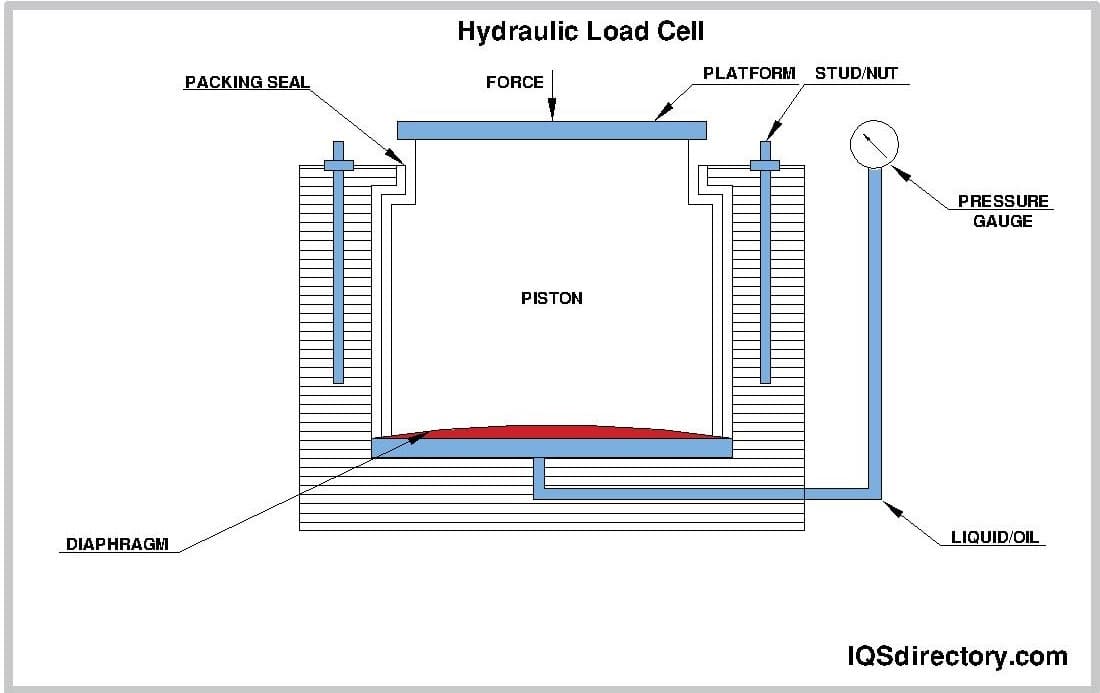
A hydraulic load cell measures force by tracking pressure changes within a confined fluid system.
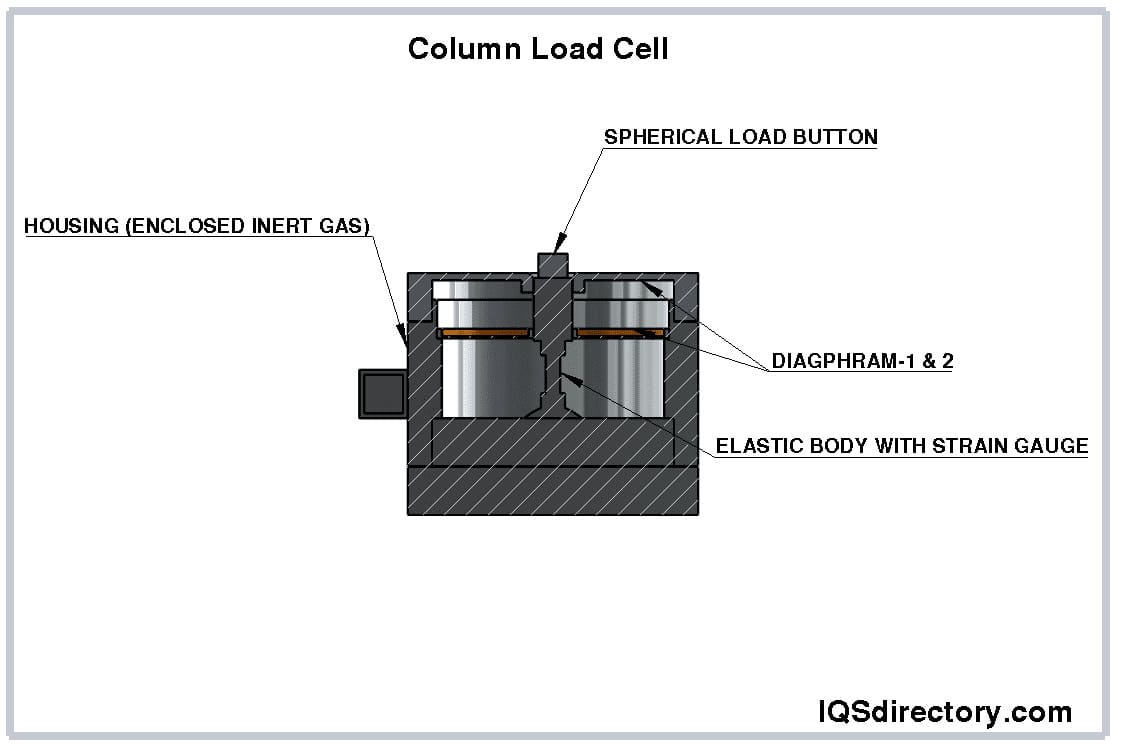
Column load cells are designed for compression measurement and are often used where higher load ratings are required.
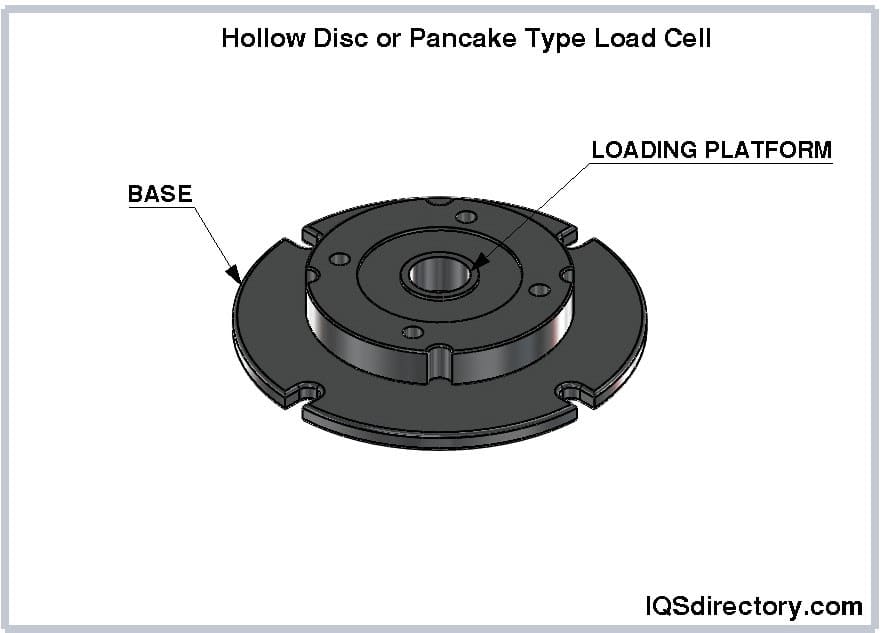
A pancake load cell can measure both tension and compression, making it useful for materials testing, component fatigue testing, and axial force measurement.
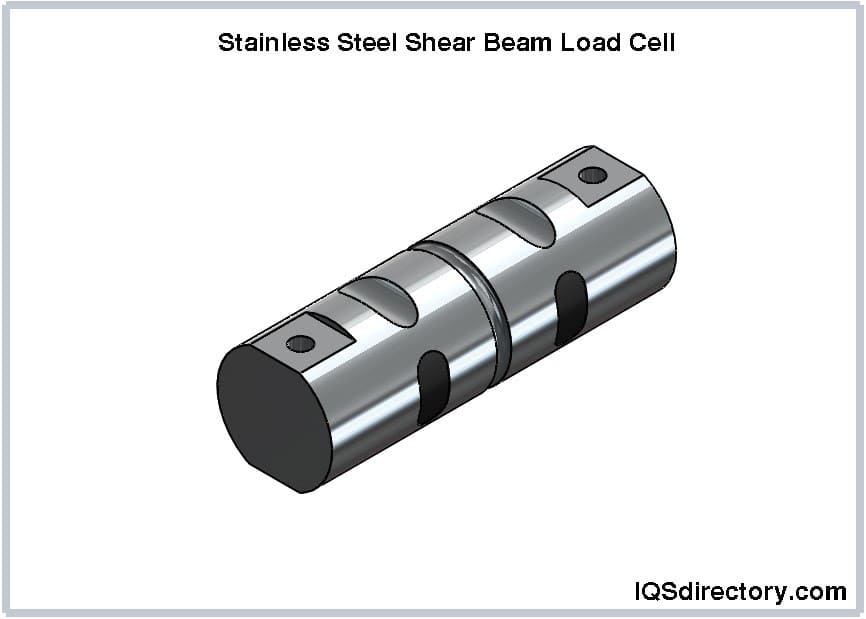
Beam load cells, also called bending load cells, are widely used for industrial weighing applications.
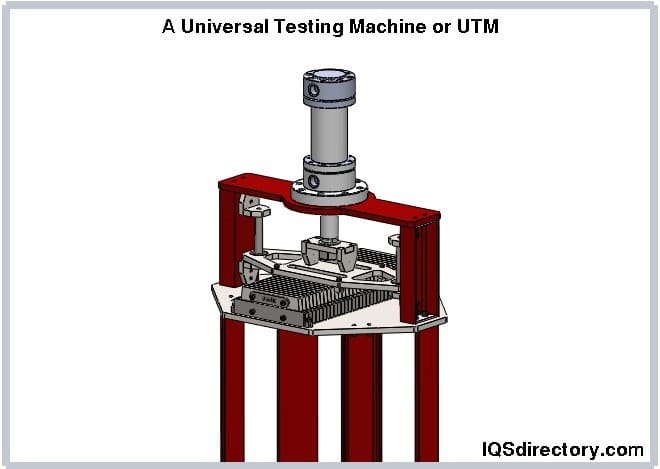
This equipment uses a load cell to evaluate tensile strength and other material performance characteristics.
Types of Load Cells
Load cells are often grouped by the type of force they measure, including compression, tension, shear, and multi-axis loading. Understanding the available designs helps buyers compare capacity, mounting style, output, and application fit before selecting a sensor.
Hydraulic Load Cell
Hydraulic load cells measure weight by detecting pressure changes in an internal fluid. They are widely used in tank, bin, and hopper weighing applications where rugged construction and dependable performance are valued.
Canister Load Cells
Canister load cells support compact, cost-conscious weighing systems across a broad capacity range. Their high strength and space-saving profile make them a strong fit for tanks, hoppers, silos, and vehicle weighing setups.
Compression Load Cell
Compression load cells measure straight-line pushing force along a single axis. Their compact footprint and long-term stability make them a popular choice for industrial scales, presses, and applications where space is limited.
Tension Load Cell
Tension load cells measure pulling force along a single axis. They are often used in hanging scales, lifting systems, cable testing, and suspended load monitoring where accurate tensile force measurement is required.
Strain Gauge Load Cell
Strain gauge load cells are among the most widely used force sensors and can cover capacities from small laboratory loads to very large industrial ranges. They are valued for repeatability, flexible design options, and compatibility with digital indicators and control systems.
Force Sensor
Force sensors, also called force gauges in some contexts, use transducer technology to measure push-pull forces and related mechanical inputs. They are used in testing, automation, assembly verification, and product development where controlled force feedback is useful.
Pressure Sensor
Pressure sensors are transducers used to monitor applied pressure, force, and strain in gases, liquids, and altitude-sensitive systems. Many are selected for dynamic environments where fast response and repeatable signal output are important.
Piezoelectric Crystal Force Transducer
Piezoelectric crystal force transducers measure force by generating electric charge in response to stress on crystalline materials. They are often chosen for dynamic measurement, high-speed events, and specialized test environments.
Miniature Load Cell
Miniature load cells deliver accurate force measurement in compact spaces such as medical devices, laboratory fixtures, robotics, electronics assembly, and small-scale industrial equipment.
Donut Load Cell
Donut load cells, also known as thru-hole load cells, measure compressive force while allowing bolts, shafts, or structural members to pass through the center. They are common in oil and gas, fastening, and inline force measurement applications.
Shear Beam Load Cell (S-Beam Load Cell)
Shear beam load cells use a beam element that deforms under applied force. They are common in floor scales, tank and silo weighing, pallet scales, and vehicle weighing systems because they combine durability with practical installation options.
Low Capacity Transducer
Low-capacity transducers are used in medical testing equipment, wind tunnel sensors, counting scales, and residential weighing devices. They are suited to light-load applications that still demand precision and repeatability.
Mid Capacity Transducer
Mid-capacity transducers measure loads typically found in industrial scales, truck scales, platform scales, and bolt-force systems. They bridge the gap between compact laboratory sensors and very high-capacity industrial load cells.
Micro Load Cells
Micro load cells are compact resistive sensors built for fine measurement in delicate applications. They are often selected where space is tight and even small changes in force must be captured clearly.
Multi-Axis Load Cell
Multi-axis load cells measure forces and moments in multiple directions at the same time. They are useful in robotics, aerospace testing, biomechanics, and R&D environments where cross-talk control and multi-direction data matter.
High Capacity Transducer
High-capacity transducers are built for very heavy loads and demanding field conditions. They are selected for applications such as structural monitoring, large industrial scales, heavy manufacturing, and transport weighing where ruggedness and high load ratings are required.
Specialty Transducer
Specialty transducers are engineered for unusual environments such as underwater service, aerospace use, or other demanding settings involving temperature extremes, sealing requirements, or custom force profiles.
Pin Load Cell
Pin load cells use strain gauges embedded within a load-measuring pin. They are commonly used in anchors, shackles, sheaves, bearing blocks, pivots, and marine or offshore systems where a sealed stainless configuration is preferred.
Pancake Load Cells
Pancake load cells support both tension and compression measurement and are widely used in materials testing, fatigue testing, and axial force measurement where compact form and accurate readings are desired.
Dynamometer Load Cell
A dynamometer load cell combines load sensing with dynamometer function to measure force, torque, or power-related performance. These units are often used in engine and driveline testing where precision output supports evaluation and validation.
Single Point Load Cell
Single-point load cells use one sensing element and are common in retail scales, bench scales, packaging systems, and other direct weighing applications that require a compact, accurate sensor.
Applications of Load Cells
Load cells, also called load transducers, measure physical force and convert it into readable electrical output for weighing, testing, monitoring, and control. That ability makes them valuable in operations where users need accurate measurement, live process data, and traceable records.
Different load cell designs are used for mechanical testing, continuous monitoring, batching, filling, and industrial scale systems. Their role in automation, sensors, and machine control continues to grow as manufacturers seek more dependable process data and tighter quality control.
Industries in which load cells are used include:
Food Processing
In food processing, load cells support accurate ingredient measurement, batching, filling, and packaging control. Better force data helps improve recipe consistency, reduce giveaway, and support sanitary, repeatable production.
Industrial Warehousing
In industrial warehousing, load cells help verify pallet weight, support inventory control, and improve shipping accuracy. Reliable weighing data can also help reduce overload risk and improve workflow planning.
Building and Construction
In building and construction, load cells are used for structural testing, tension monitoring, compression analysis, and material validation. They help engineers evaluate beams, supports, and assemblies before and during service.
Transportation
In transportation, railcars, trucks, and freight handling systems use load cells for accurate weighing, safer loading, and regulatory compliance. This supports efficient logistics and helps operators avoid underloading or overloading.
Research Laboratory and Pharmaceutical Production
In research laboratories and pharmaceutical production, load cells support precision weighing, calibration, fatigue testing, formulation control, and validation work where dependable force measurement is tied to process quality.
Beyond these sectors, load cells are found in security systems, electrical utilities, agriculture, aerospace, marine systems, medical devices, and automated manufacturing cells. Their flexibility makes them useful anywhere force, weight, or structural load needs to be monitored.
Load Cell Installation
Each load cell design requires careful handling during installation to achieve dependable performance and service life. Installation quality directly affects accuracy, repeatability, and the sensor's ability to resist overload, misalignment, and environmental stress.
Standards and Specifications for Load Cells
No matter the industry, buyers should verify that a load cell supplier can document quality systems, calibration practices, and product testing. Matching specifications to the application helps improve performance, reduce replacement risk, and support smoother commissioning.
Before a load cell is put into service, insulation resistance testing and related validation steps help confirm electrical safety and operating readiness. These checks reduce the chance of signal problems, short circuits, or unstable readings in the field.
For products used in the European Union, RoHS documentation may be requested to confirm material compliance. Depending on the application, additional customer, aerospace, defense, laboratory, or industry-specific requirements may also apply.
Things to Consider When Choosing Load Cells
Modern weighing systems can resolve very small measurement differences, but overall performance still depends on correct sensor choice, installation, and operating practice. A high-resolution display cannot compensate for a poorly matched load cell or unstable weighing environment.
Several factors can influence scale accuracy, either intentionally or unintentionally. Understanding those variables helps users protect measurement quality, choose the right force sensor, and maintain more consistent results over time.
Correctness of Load Cell
A scale's performance depends heavily on the quality and suitability of its load cell. Choosing the right sensor design, capacity, sealing level, and mounting arrangement helps reduce error and improves long-term measurement confidence.
Load Application Process
Load application has a direct effect on accuracy. Force should be introduced as intended by the design, with proper alignment, stable positioning, and attention to off-center loading, shock loading, and overload conditions.
Weighing Environment
Environmental conditions can strongly influence weighing results. Wind, vibration, temperature variation, moisture, dust, and pressure changes may all affect output, which is why many applications benefit from protective enclosures, compensation features, or more stable installation locations.
Installation and Use of Weight Controller
Improper installation is a common source of inaccurate readings and poor material assessment. Correct wiring, mounting, leveling, and controller setup help the system capture cleaner data and reduce avoidable troubleshooting later on.
For the best results, choose a load cell that fits the application's capacity range, environment, accuracy target, and integration needs. Working with an experienced manufacturer or supplier can simplify selection when multiple sensor styles could work.
Proper Care for Load Cells
Load cells are sensitive instruments and should be handled in ways that protect accuracy and service life. Good maintenance practices help prevent damage from electrical surges, moisture, contamination, overloading, impact, and improper cleaning.
- To avoid high voltage surges, always use a stable and regulated power supply. Electrical fluctuations can interfere with measurement accuracy or cause permanent damage to the load cell’s internal components.
- Never remove or tamper with sensor covers. These protective enclosures safeguard the delicate internal components from dust, debris, and accidental impact. Any unauthorized adjustments can compromise performance and void warranties.
- Monitor the temperature environment to ensure it remains within the load cell’s specified operating range. Excessive heat or extreme temperature fluctuations can alter sensor readings and reduce the reliability of measurements over time.
- Handle load cell cables with care—avoid pinching, kinking, yanking, or overbending them. Damaged cables can disrupt signal transmission and lead to inaccurate readings or complete sensor failure. Ensuring proper cable management will extend the load cell’s operational lifespan and maintain consistent performance.
Accessories for Load Cells
While load cells do not need many accessories, a few supporting components can improve performance and installation quality. Common examples include mounting bases, load buttons, hardware kits, junction boxes, and signal conditioning accessories.
Load cell bases provide a secure mounting surface and help stabilize the sensor during use. A solid base reduces unwanted movement, supports alignment, and improves the consistency of weighing results.
Load cell buttons help distribute force more evenly when slight misalignment is possible. By improving load introduction, they can support better accuracy and reduce localized stress on the load cell body.
Load Cell Terms
Axial Load
The force applied along the length of or parallel to the primary axis, sharing a common axis with it.
Calibration
The process of comparing a load cell's output against standard test loads to ensure accuracy.
Creep
The gradual change in a load cell’s output over time while under a constant load, assuming environmental conditions and other variables remain unchanged.
Dead Volume
The internal volume within the pressure port of force sensors or transducers at room temperature and barometric pressure.
Deflection
The change in length along the primary axis of a load cell between no-load and rated-load conditions.
Diaphragm
The membrane component of force sensors that deforms under pressure-induced displacement.
Drift
An unintentional and unexpected change in a load cell’s output while under a constant load.
Driveline Shaft
A steel tube with a universal joint at each end, transferring torque from the output of the transfer case to the axle in load cell applications.
Eccentric Load
A force applied parallel to the primary axis of a load cell but without a common axis, potentially causing inaccurate readings.
Electrical Excitation
The current or voltage supplied to the input terminals of a transducer to generate a measurable output.
Flush Diaphragm
A sensing device positioned at the very end of a transducer, with no pressure port, ensuring direct force measurement.
Full Scale
The maximum measurable load that a specific load cell is designed to handle for a given application or test.
Full Scale Output
The numerical difference between the lowest output and the rated capacity of a load cell.
Hysteresis
The largest difference in load cell output for the same applied load, measured once when increasing the load from zero and again when decreasing the load from rated capacity.
Input Impedance
The resistance measured across the excitation terminals of a transducer at room temperature, with no applied load and open-circuited output terminals.
Load
The force, weight, or torque exerted on a transducer, load cell, or force sensor.
Load Cell
A device designed to measure force, typically featuring a rounded top surface where the load is applied.
Measured Media
The physical property or condition that a load cell measures, such as force, acceleration, mass, or torque.
Piezoresistance
The change in electrical resistance due to applied strain on a load cell’s diaphragm.
Primary Axis
The geometric centerline along which a load cell is specifically designed to bear a load.
Pull Plate
An attachment to a load cell that ensures tension or compression forces are applied directly along its centerline through a threaded center hole.
Safe Overage
The maximum pressure or load a transducer, load cell, or force sensor can withstand without causing permanent damage or affecting performance specifications.
Shear
A force that acts parallel to opposing stresses within a load cell, tending to divide an object along a given plane.
Strain Measurement
The ratio of the change in length of a structure when force is applied compared to its original length, providing insight into material deformation and stress distribution.
Torque Sensor
A device that measures the rotary movement of a force or a system of forces causing rotation within an engine or mechanical system. Torque sensors gauge the torque transferred along the drive-line axis at the point where the sensor is positioned, ensuring accurate monitoring of rotational force in automotive, aerospace, and industrial applications.
Zero Balance
The output signal of a load cell at rated excitation with no load applied. This value is typically expressed as a percentage of the rated output and serves as a reference point for calibration and accuracy verification.
More Load Cells
Load Cell Manufacturers