Linear Slides
Linear slides are precision motion devices designed to facilitate smooth, repeatable travel along linear planes in a wide range of automated machinery, production equipment, and positioning systems. These mechanisms enable controlled pushing, pulling, lifting, indexing, and positioning, making them widely used in industrial automation, machine tools, robotics, packaging systems, laboratory instruments, aerospace assemblies, and electronic manufacturing environments. The name "linear slide" or "linear motion slide" derives from the fundamental motion they provide—uninterrupted, guided linear movement with a high degree of accuracy, stability, and efficiency. Buyers often look for linear slides when they need dependable travel over a fixed path, low-friction motion, reliable load support, and better repeatability than improvised guide systems can deliver. Whether the goal is to improve machine performance, reduce wear, support a heavy payload, or achieve finer positioning control, linear slides remain a trusted answer across many sectors.
- Used for precision positioning, guided travel, and repeatable motion in automation systems and machine assemblies.
- Available in configurations suited for light-duty equipment, high-load industrial machinery, compact instruments, and custom motion platforms.
- Common selection factors include load capacity, travel length, speed, rigidity, operating environment, lubrication needs, and mounting style.
- Frequently chosen when engineers compare linear guide systems, rail assemblies, carriage designs, and low-maintenance motion control components.
Linear Slides FAQ
What are linear slides used for in industrial applications?
Linear slides enable precise, low-friction motion along a single axis in machinery. They are commonly used in automation cells, CNC equipment, packaging lines, inspection systems, aerospace assemblies, and material handling equipment where controlled movement, repeatability, and dependable positioning support better performance and longer service life.
What are the main advantages of using linear slides?
Linear slides operate with minimal friction, enabling smooth movement even under heavy loads. They help reduce drive force requirements, support accurate travel, use relatively little energy, and often need only modest maintenance, making them a strong fit for production environments that value uptime and consistent motion.
How do linear slide materials affect performance?
Material selection influences durability, stiffness, corrosion resistance, and load handling. Cast iron supports heavy loads and dampens vibration, stainless steel performs well in wet or washdown settings, and aluminum provides a lighter-weight option for applications that need good strength without excessive mass.
What types of linear slides are available?
Common types include ball bearing slides, roller slides, plain slides, dovetail slides, and telescopic slides. Each design offers different benefits in rigidity, travel smoothness, speed capability, contamination resistance, and load support, so the right choice depends on the machine and operating environment.
How can I find a reliable linear slide supplier?
Start by defining your load, speed, accuracy, mounting, and environmental requirements. Then compare manufacturers through reputable industrial directories, reviewing available materials, customization options, support, and production capabilities so you can narrow the field to suppliers that match your application.
What maintenance is required for linear slides?
Linear slides usually benefit from periodic lubrication, alignment checks, and inspection for wear or contamination. Replacing worn bearings, monitoring preload, and using seals, covers, or wipers to keep out dust and debris can extend service life and help maintain smooth, dependable motion.
What factors affect linear slide accuracy?
Accuracy depends on design geometry, preload, bearing style, rail straightness, mounting quality, and operating conditions. Proper preload can reduce deflection and improve rigidity, while correct installation and contamination control help preserve consistent motion in applications that demand tight positioning tolerance.
The History of Linear Slides
The origins of linear slides can be traced back to at least 40 BC, when wooden rolling bearings were discovered in the wreckage of a Roman ship. Historical evidence, however, suggests that the underlying principles are even older, appearing in Egyptian hieroglyphs and tomb drawings that show early load-moving systems built around sliding and rolling contact. These ancient depictions illustrate the first recognizable versions of linear guidance, including tree trunks placed beneath sleds, sledges with liquid-lubricated runners resembling plain bearings, and primitive bearing arrangements used in hand drills. While these systems were simple by modern standards, they reveal a long-standing engineering goal: move weight in a straight path with less friction, less effort, and more control. That same objective still drives the design of linear motion components today.
During the Renaissance, Leonardo da Vinci incorporated ball bearing designs into his conceptual sketches, including those for his helicopter. Later in the same broad era, Agostino Ramelli, an Italian engineer, produced some of the first detailed drawings of roller and thrust bearings. In the 1600s, Galileo refined Ramelli’s concept by proposing the containment of rollers or balls within an enclosure to reduce friction and improve guided travel. Although the idea was not adopted at scale right away, it influenced later mechanical thinking and opened the door to more reliable bearing arrangements. By the following century, John Harrison applied caged-roller slide principles in his H3 marine timekeeper, demonstrating how controlled motion and reduced friction could improve precision in demanding instruments. This progression from concept sketches to practical devices shows how linear slide technology evolved alongside the broader history of measurement, machinery, and transportation.
The Industrial Revolution marked a major turning point in linear slide development because manufacturers needed machine elements that could handle higher speeds, heavier loads, and more repeatable operation. One early advancement was a ball-bearing system featuring a ball running along a grooved axle assembly, patented by Philip Vaughan in 1794. Further progress during this period included the invention of radial-style ball slides in 1869, tapered roller bearings in 1898, and a more refined method for grinding and milling precisely sized bearing balls in 1883. These developments improved consistency and helped make bearings more practical for large-scale manufacturing. Throughout the 19th century, linear slides and related bearing systems supported better wheel and axle assemblies, more accurate watchmaking, and improved machinery in mills and workshops. As fabrication methods became more precise, motion control components became more dependable, laying the groundwork for the modern linear guide, rail, and carriage systems used across industry today.
In the 20th century, linear slide technology advanced even further as production demands became more specialized and accuracy expectations increased. In 1907, Sven Wingquist developed the self-aligning linear ball bearing, followed by Erich Franke’s invention of the wire race bearing in 1934. Bud Wisecarver introduced v-groove bearing guide wheels in 1968 and later secured a patent for them in 1972. By the early 1980s, Robert Schroeder of Pacific Bearings helped move the industry forward with the introduction of bi-material plain bearings that combined a metal shell with a low-friction Teflon-based layer bonded by a thin adhesive. Each of these milestones reflects a steady shift toward better load handling, smoother travel, lower wear, and more adaptable motion systems that could be integrated into increasingly advanced machines.
Today, linear slides play an even larger role because modern manufacturing, robotics, medical devices, semiconductor processing, and aerospace systems all depend on precise guided motion. Their applications span a wide spectrum, from high-speed slides in dental drills and compact inspection equipment to aerospace slides used in advanced exploration systems such as the Mars Rover. Flexure slides also support optical alignment systems and fine-motion assemblies where backlash and vibration must be tightly controlled. As engineers continue asking how to achieve smoother travel, tighter repeatability, and longer service intervals, linear motion technology keeps evolving through improved materials, better sealing, integrated drives, and smarter design. The long history of linear slides is, in many ways, the history of machine refinement itself: reduce resistance, guide motion more accurately, and make systems perform better over time.
Advantages of Linear Slides
Linear slides offer numerous advantages in motion control applications, especially where smooth travel, repeatable positioning, and dependable support are required. They operate with minimal friction, enabling controlled movement while simultaneously handling substantial loads that may range from delicate instrument components to machine assemblies weighing thousands of pounds. This efficiency creates another benefit: even heavy loads can often be moved with relatively modest applied torque, which can lower energy demand and help reduce strain on connected drive systems. Linear slides also contribute to cleaner, more predictable movement by limiting wandering, binding, and uneven wear that often occur with less refined guidance methods. With relatively few moving parts, many slide systems can be maintained without excessive downtime, making them attractive for production environments that value reliability, serviceability, and steady throughput. For engineers comparing linear guides, bearing rails, and slide assemblies, the appeal is straightforward: better motion quality, longer operating life, and more confidence in repeat performance.
Linear Slide Designs
Manufacturers employ various fabrication techniques to produce linear slides, including shape rolling, extrusion, forging, and shape drawing. These processes help create durable, precisely engineered components suited for diverse applications, from compact commercial equipment to large industrial motion systems. Depending on the design goals, fabrication may focus on tighter tolerances, improved surface finish, better rigidity, or more economical production. Buyers researching linear slide manufacturers often compare not only the finished product but also the quality of machining, bearing integration, preload control, and material preparation because each of these factors influences the final motion performance.
A typical linear slide consists of three primary components: a stationary base, a carriage, and a linear rail fitted with bearings. The carriage, which serves as the moving platform, is securely attached to the base and moves along the rail with minimal resistance. This precise, guided motion allows for controlled linear travel while helping reduce wear on adjoining components. In practical use, this means the slide can support a tool head, workpiece, actuator platform, inspection sensor, or assembly fixture while keeping movement aligned to the desired path. For users asking what makes one linear slide system more accurate than another, the answer usually lies in how well these components are matched and how effectively the assembly manages load, alignment, and deflection.
Rails, also referred to as support rails, come in different designs depending on the application. In many cases, they feature a flat surface, while other configurations use a round, polished rod for particularly smooth travel. In more specialized applications, the rail may have a more complex geometry tailored to very specific performance requirements such as higher rigidity, compact installation space, contamination resistance, or multi-directional load support. When buyers search for the best linear rail for heavy loads, high-speed travel, or compact motion systems, they are often evaluating these geometry differences as much as the bearing type itself.
When selecting materials for linear slides, manufacturers prioritize durability, stiffness, wear resistance, and suitability for the operating environment. Cast iron is a popular choice because it can withstand substantial wear and heavy loads while also helping damp vibration. Stainless steel is another common option, particularly for environments where humidity, washdown exposure, or corrosion is a concern, as it offers strong resistance to oxidation and surface degradation. Aluminum, valued for its lightweight yet sturdy properties, maintains structural integrity even under stress and is often selected for applications where reducing system mass improves performance. Material choice can influence not only service life but also speed capability, mounting flexibility, environmental resistance, and the overall feel of the motion system in use.
Designing an effective linear slide system involves considering multiple factors, including load weight, operating speed, duty cycle, travel distance, frequency of use, mounting orientation, and environmental conditions. These considerations influence material selection and overall configuration, directly affecting lifespan, smoothness, and performance. For example, in environments prone to dust, chips, moisture, or chemical exposure, manufacturers may choose enclosed bearing housings, seals, protective covers, or shields that keep contaminants away from sensitive contact surfaces without interrupting motion. In precision equipment, designers may place more emphasis on repeatability, preload, and rigidity; in production machinery, they may focus on durability, maintenance intervals, and uptime. Questions such as how much load the slide must carry, how fast it needs to move, and whether the system must operate in a dirty or corrosive environment all shape the final design.
Another key design consideration is the method of motion control. Some linear slides rely on inertia or gravity to facilitate movement, while others incorporate linear motors, belts, lead screws, ball screws, or related drive components for more exact control. Motor-driven slides offer enhanced motion accuracy, allowing the carriage to move at carefully regulated speeds and stop positions. These systems operate using a drive mechanism powered by either AC or DC electricity, and in some cases, fuel-driven power sources. For applications that demand coordinated automation, slides may also be paired with sensors, controllers, and feedback systems that support repeatable indexing, synchronized travel, and more refined positioning. This is one reason linear slides are so often chosen for automation projects, assembly stations, and precision machine design.
Because linear slide designs vary widely, custom configurations are readily available from suppliers. Customization options include adjustments to base length, rail width, saddle length, flange type, mounting pattern, load capacity, friction level, resistive elements, shaft style, and compliance with specific industry standards. Some buyers need compact slides for tight enclosures, while others require heavy-duty linear guide systems for large machines, long strokes, or high-cycle production. Suppliers may also tailor lubrication approaches, sealing options, corrosion-resistant finishes, and bearing materials to suit the application. These tailored solutions help ensure that linear slides match the real operating demands of the machine rather than forcing the application to adapt to a generic product. When engineers ask how to choose a linear slide, they are usually balancing accuracy, environment, speed, payload, available space, maintenance expectations, and total operating value. A well-matched slide system supports better motion, better equipment performance, and a more dependable result over the long run.
Linear Slides Images, Diagrams and Visual Concepts
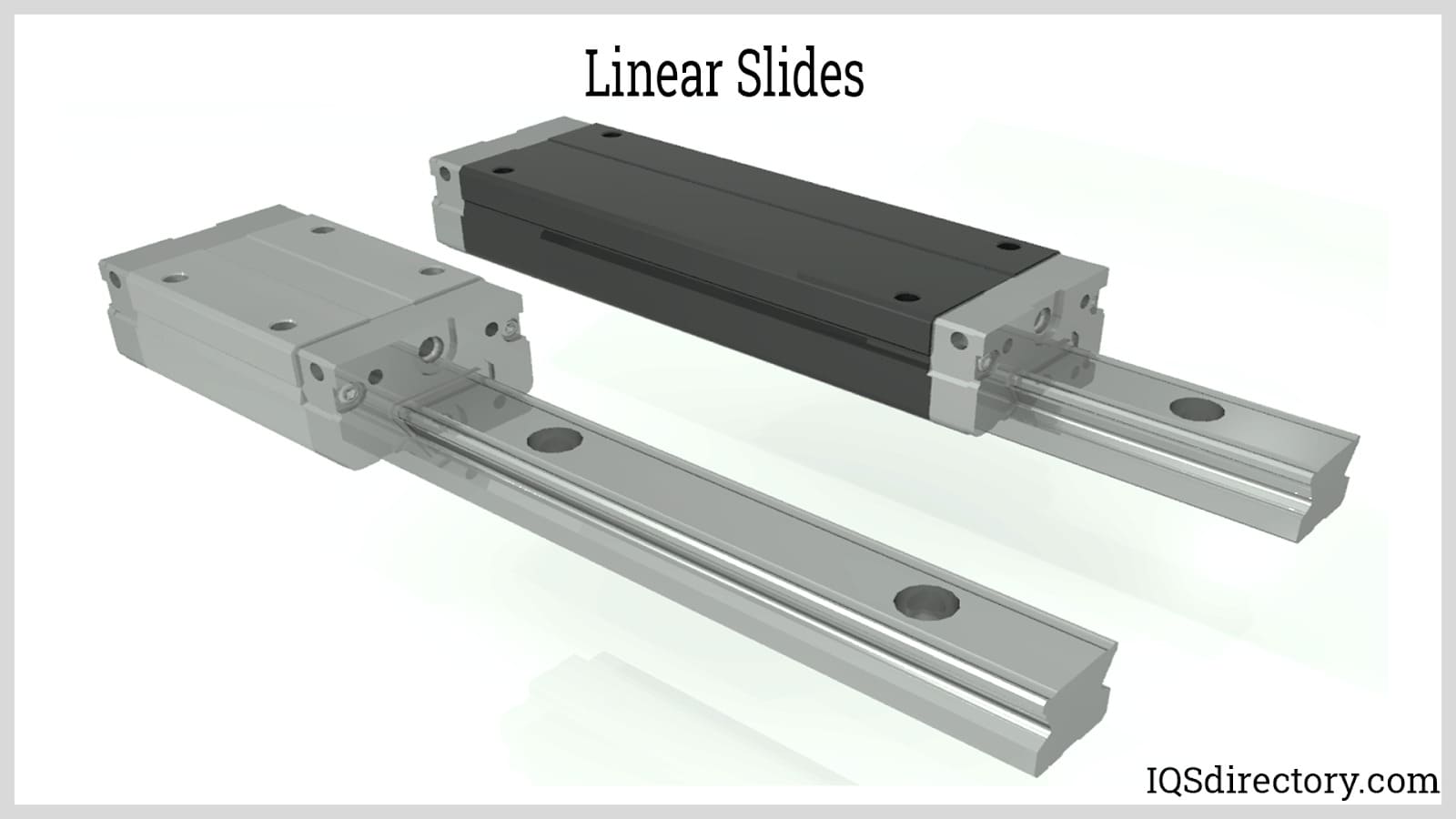 Linear slides are types of bearings that allow smooth, guided, low-friction motion on a single axis for positioning, transport, and repeatable machine travel.
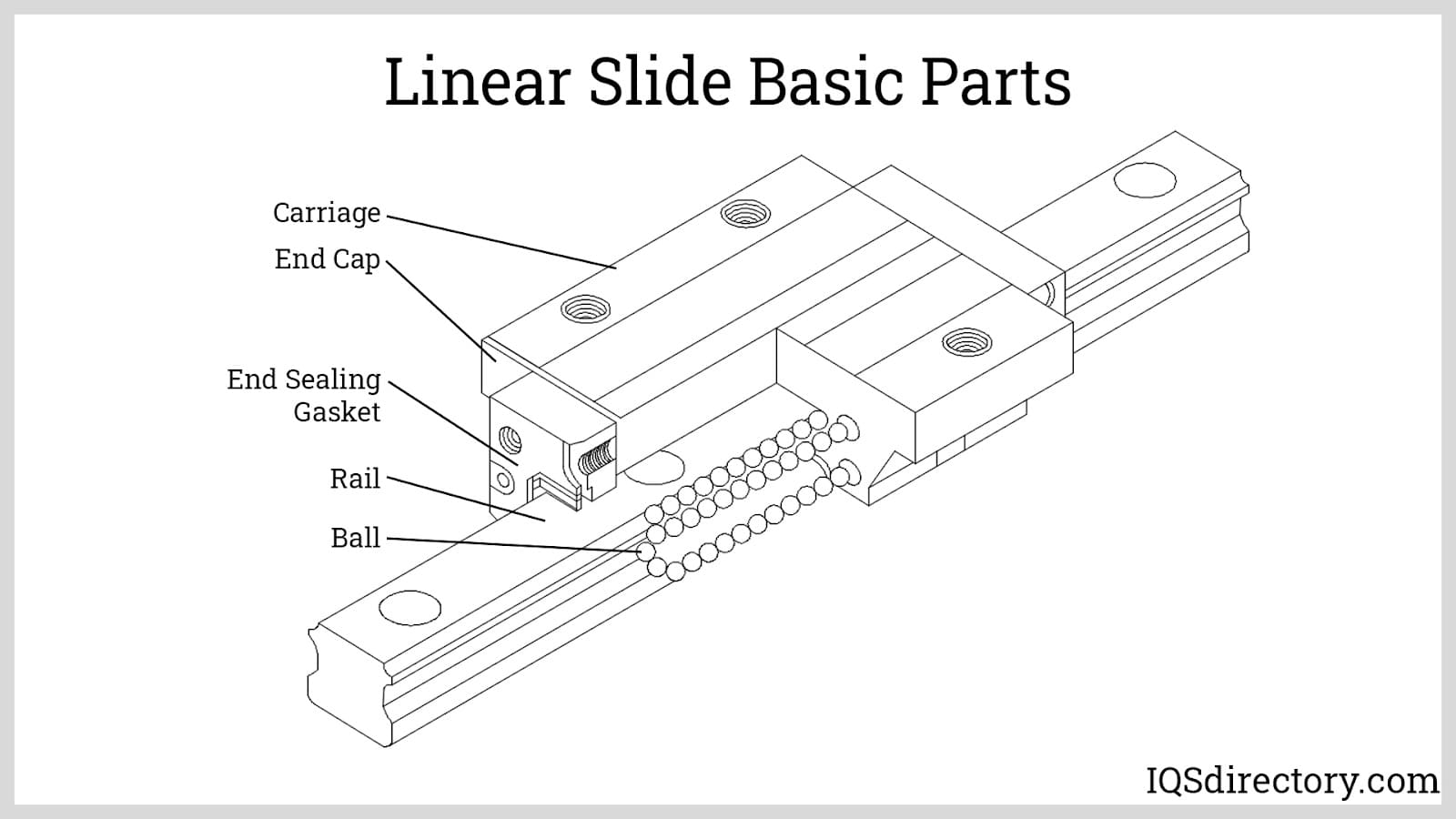 The basic parts of a linear slide include the rail, carriage, bearing interface, and mounting structure that work together to support controlled linear movement.
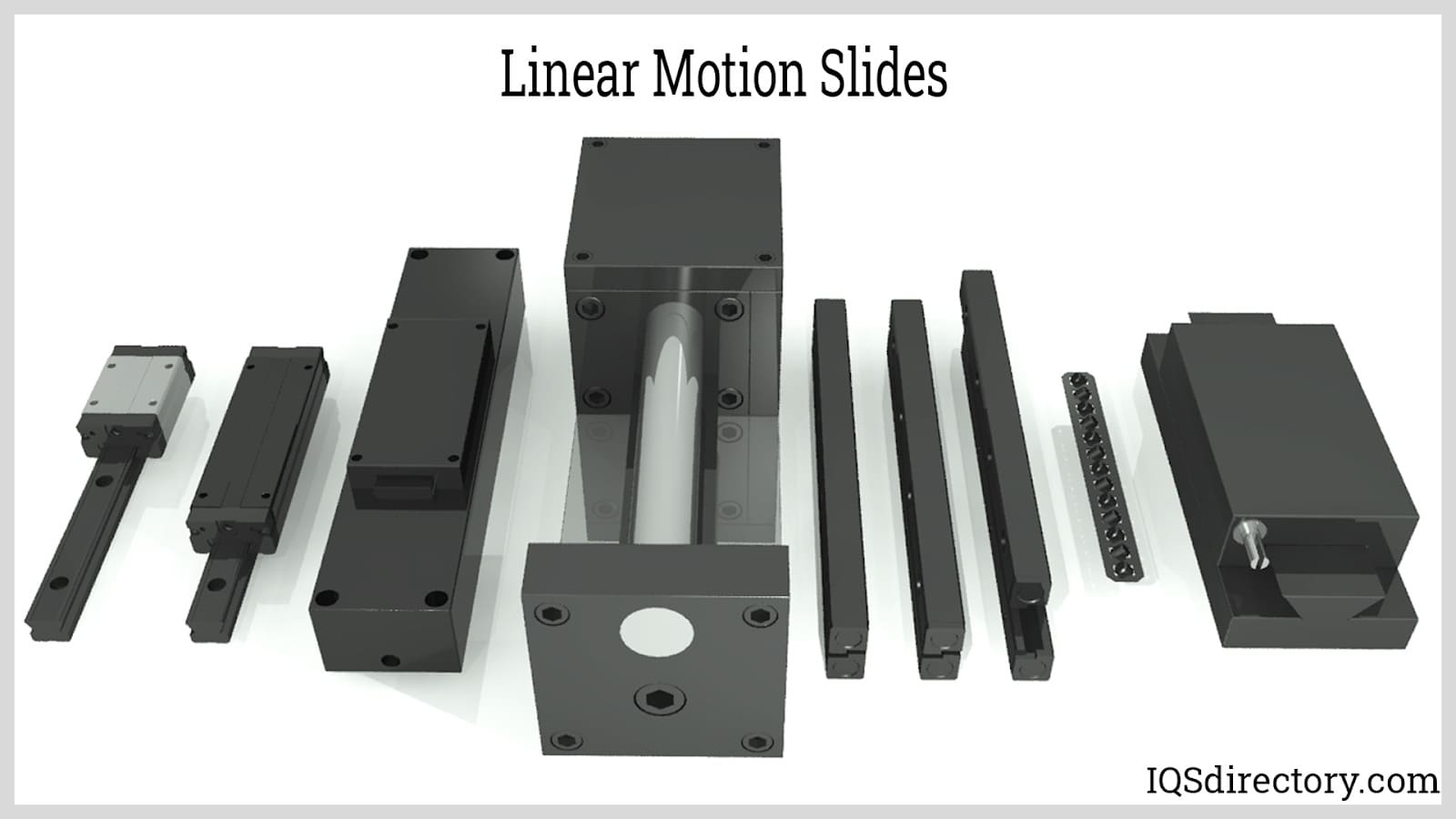 The different types of linear slides include bearing-based, roller-based, plain, telescopic, and application-specific guided motion systems.
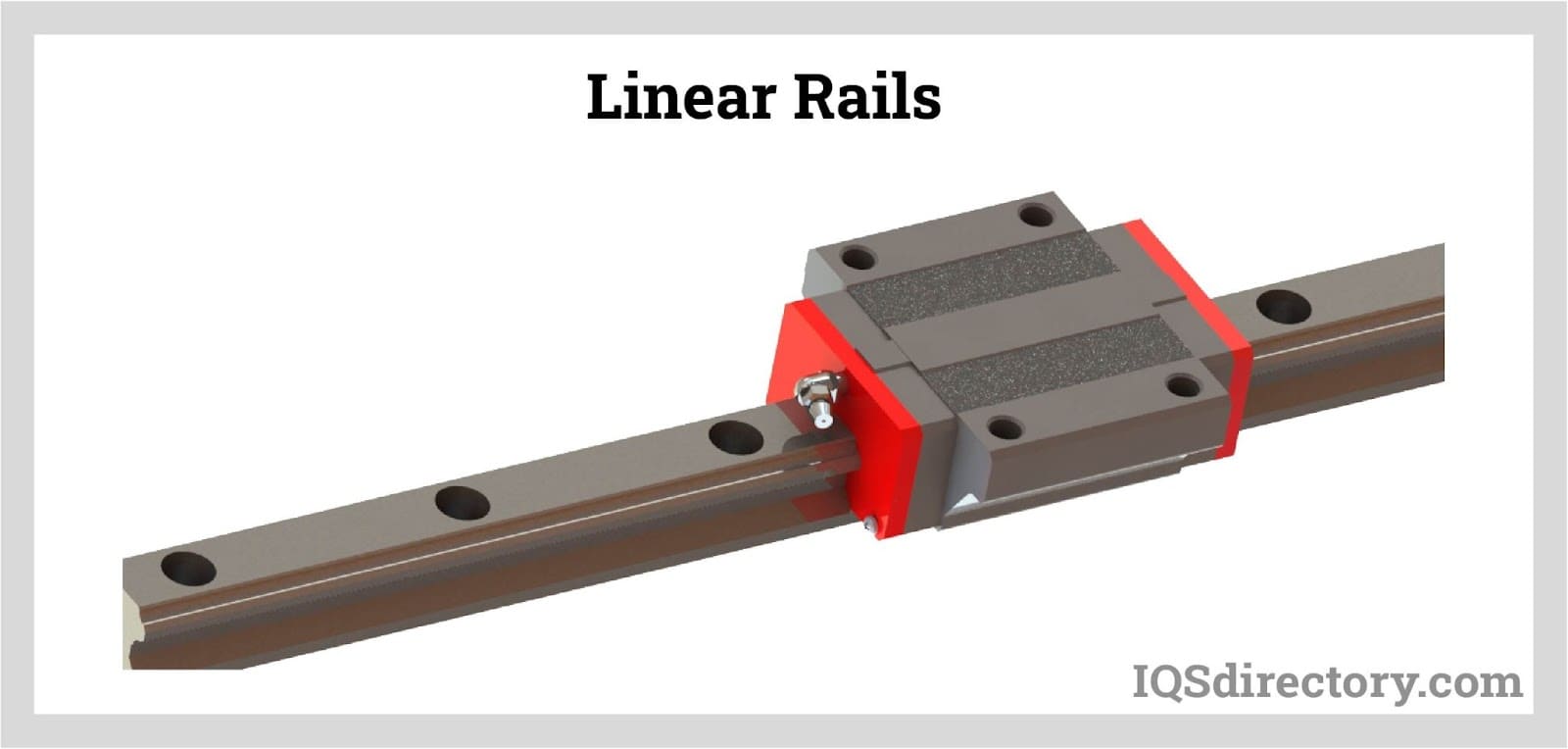 Linear rails move items through a production process with precision, stability, and little friction, helping improve repeatability and throughput.
 Some linear slides employ plain surface bearings that rely on a low coefficient of friction and proper lubrication to maintain smooth travel.
Types of Linear Slides
There are many different types of linear slides, each designed to meet specific application needs. While they all share the same basic purpose of guiding accurate linear travel, their design, load capacity, rigidity, lubrication method, contamination resistance, and mounting style can vary widely. That variation matters when engineers, buyers, and maintenance teams compare linear motion products for automation equipment, machine tools, packaging machinery, clean environments, or high-load production systems. Choosing among the available designs usually comes down to how much weight must be moved, how far it must travel, how fast it must move, and how precisely the system must repeat that movement over time.
- Rolling Element Slide
- Rolling element slides consist of a sleeve-like outer ring with multiple rows of balls assembled in a set of cages. Early designs featured solid metal cages, while modern variations often use stamped or engineered compositions. These slides support smooth motion with low running resistance, good rigidity, and dependable service life, making them a popular choice where users want guided motion, lower friction, and a straightforward maintenance profile.
- Ball Slide Bearing
- Also known as ball bearing slides, these rolling element slides are designed for smooth and accurate movement along a single-axis linear path. The linear base integrates its own lubrication system, which can help control operating speed, reduce wear, and improve positioning consistency. Ball slide bearings are frequently selected when users want efficient motion, relatively quiet travel, and repeatable performance in both light-duty and more demanding industrial settings.
- Roller Slide
- A type of rolling element slide, roller slides function as non-motorized bearings and are often referred to as crossed roller slides because of their crisscrossed movement pattern. These slides are built to support heavier loads while maintaining stable motion, which is why they appear in medical technology, telecommunications, construction equipment, automation systems, vacuum environments, and cleanroom operations. Their geometry helps provide strong load support and accurate guidance in applications that demand more stiffness than simpler slide systems can offer.
- Plain Slide
- Plain slides share similarities with roller slides but do not use ball bearings, which changes their friction profile and limits some industrial uses. They are generally less rigid than rolling element slides, but they can operate effectively on steel, stainless steel, and aluminum shafts. Often made from metal or engineered plastic, plain slides are valued for simplicity, compact design, and low-maintenance service where very high precision is not the main requirement.
- Bushing
- Bushings are among the simplest types of linear slides, consisting of thin-walled cylinders produced through processes such as injection molding. Typically made from polymers and paired with lubricants, they support smooth motion at a relatively low cost. Some versions feature bronze cylinders infused with oil, allowing them to rotate and slide around a polished rod while maintaining dependable performance in compact mechanical assemblies.
- Linear Guide
- Designed to carry and support heavier loads, linear guides incorporate recirculating ball bearings mounted within a rectangular pad or slide unit. Some linear motion guides feature multiple rails so loads can move faster and more reliably while maintaining alignment. These systems are commonly chosen for automated equipment, machining centers, and industrial assemblies that need a compact, accurate, high-performance guidance solution.
- Linear Guide Rails
- The linear guide rail serves as the fixed track to which the bearing unit is attached. Its length and position determine the total range of motion for the linear slide. Depending on the application, guide rails can range from compact lengths for short travel to several feet long for extended movement in production machinery, transfer systems, and positioning platforms.
- Linear Slide Rails
- A specialized bearing mechanism designed for unidirectional movement, linear slide rails can operate manually or with motorized assistance, depending on the application. They are used when designers need guided travel along a fixed path and want to balance load support, travel smoothness, installation space, and operating cost.
- Ball Spline
- An advanced type of linear slide, the ball spline incorporates a cylinder that functions as the sliding unit. The cylinder typically contains three to five circuits that recirculate the balls, supporting controlled and efficient movement. Some manufacturers develop low-maintenance ball splines, slides, and cylinders to help lower design, assembly, and lifecycle costs while still delivering accurate motion.
- V Rail
- Long-length rails are sometimes designed with a "V" shape to improve space usage and manage debris more effectively. This geometry can reduce dust accumulation and lessen the need for protective bellows or covers while still supporting efficient motion, making V rail systems attractive for certain industrial and material handling environments.
- Advanced Linear Slide
- Precision linear motion systems, including positioning stages, XY tables, linear stages, and machine slides are categorized as advanced linear slides. These highly engineered solutions provide multi-axis precision movement, support faster process times, and help automated systems maintain accurate positioning across complex motion paths.
- Machine Slide
- Machine slides use precision components positioned in front of the attached carriage to brush or wipe debris off the railing before the carriage passes over it. This self-cleaning feature helps reduce wear, preserve smooth movement, and improve transport consistency in environments where chips, dust, or fine contaminants could otherwise affect performance.
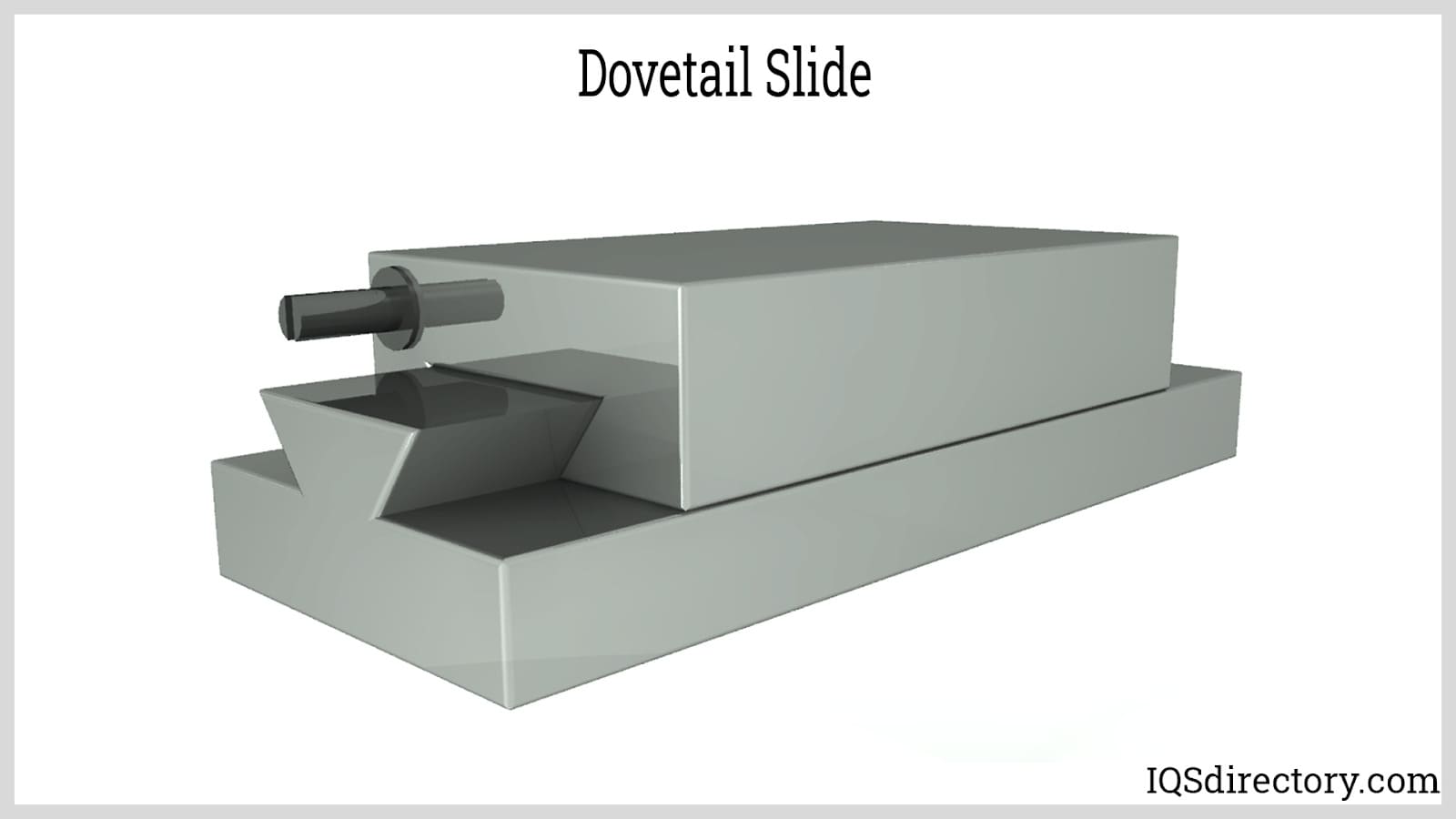
- Dovetail Slide
- While some linear slides require additional lubrication, dovetail slides are typically designed for smooth, low-friction movement with relatively simple upkeep. Because they are often used in precision-oriented equipment, good maintenance practices still matter for preserving alignment, minimizing wear, and extending the service life of the slide assembly.
- Round Rail Bearing System
- One of two major bearing system styles, round rail bearings allow for torsional misalignment while providing low friction and moderate load capacity. These bearings create smooth movement through point contact between the inner and outer race, making them useful where installation flexibility and general-purpose guidance are more important than maximum rigidity.
- Profile Rail Bearing System
- A more advanced alternative to round rail bearings, profile rail systems offer higher accuracy, greater rigidity, and improved load capacity. Their compact design makes them a strong fit for applications requiring dependable precision and efficient use of space, including CNC equipment, automation cells, and high-repeatability production machinery.
- Ball Screw
- A linear actuator that converts rotational motion into linear movement, the ball screw reduces friction and supports efficient thrust transmission. Because it operates with close tolerances, it is often used in equipment that demands repeatable motion, accurate positioning, and consistent performance under load.
- Lead Screw
- Similar to the ball screw, the lead screw also functions as a linear actuator but operates differently. Instead of using ball bearings to reduce friction, lead screws rely on deep helical threads and a mating nut. They are self-locking, which can eliminate the need for a separate braking system, and they are often chosen for vertical applications or designs where controlled holding force is useful.
- Drawer Slide
- As the name suggests, drawer slides enable drawers to open and close smoothly. These non-motorized linear bearings operate manually and are commonly found in cabinetry, office furniture, industrial workstations, storage units, and other applications where guided extension and retraction improve usability.
- Pillow Slide Block
- Mounted on a rotating linear shaft, pillow slide blocks provide load support while allowing smooth, low-friction motion. Typically made from iron or comparable durable materials, they help guide, constrain, or reduce friction in both rotary and linear applications, depending on the surrounding machine design.
- Linear Rails
- A fundamental component of linear slide systems, linear rails serve as smooth, flat bases that support and guide the movement of linear bearings. Rail quality, straightness, surface finish, and mounting accuracy can all affect how well the overall slide system performs.
- Linear Positioners
- Consisting of a drive system attached to a fixed base, linear positioners operate using extended springs that pull the slide top toward the screw end. When the screw is turned clockwise, the slide moves forward; when turned counterclockwise, spring pressure allows it to retract, producing smooth, controlled motion suited for adjustment, alignment, and repeatable placement tasks.
- Precision Slides
- Designed for accuracy, precision slides consist of a carrier, base, and fitted ways that work in conjunction with gib screws to support smooth, exact movement. These slides help feed and retract parts, tools, and fixtures in high-accuracy applications where controlled travel and repeatability have a direct effect on finished results.
- Roller Tables
- Among the quieter types of bearing tables, roller tables operate with low noise while maintaining smooth and efficient linear motion. They are often used where stable product movement and dependable handling are more important than compactness.
- Rotary Stages
- Unlike linear slides, rotary stages enable controlled rotational movement around a central axis. These mechanisms adjust roll, pitch, and yaw for fine positioning, making them useful companion systems in equipment that combines linear and angular motion control.
- Standard Slides
- Standard slides integrate roller or ball guides, allowing complete systems to be engineered with less assembly time and fewer custom adjustments. They are often selected for general industrial use where proven performance and installation simplicity are valued.
- Telescopic Slides
- Telescopic slides consist of concentric components that allow compact retraction and extension, making them well-suited for applications requiring space-saving, adjustable movement. They are widely used when designers need long extension from a relatively short closed length.
Applications of Linear Slides
Linear slides, also referred to as linear motion bearings, are core components in machinery and mechanical systems because they support controlled, friction-reduced movement along a defined path. Designed to provide guided travel while maintaining precision, they help machine assemblies move more smoothly, more accurately, and more predictably than unsupported sliding contact alone. That makes them useful in systems where product quality, repeatability, cycle time, and equipment life all depend on reliable motion control.
These motion-bearing elements support smooth and reliable travel by managing friction, alignment, and load distribution. Their ability to maintain stability and consistency makes them highly useful across industrial operations that depend on repeatable feed rates, accurate positioning, or steady material transfer. Whether the application involves a fast-moving actuator, a precise inspection stage, or a heavy-duty load platform, the right linear slide helps the system move with better control.
Linear slides are integral to many precision-driven applications, including clean room operating systems, robotic welding and assembly, and precision eyeglass assembly. They also support automatic packaging equipment and play a major role in CNC machining processes such as drilling, grinding, tool positioning, and workpiece transfer. In each of these environments, guided linear motion helps improve repeatability, reduce process variation, and support better finished results.
Beyond these specialized applications, linear slides are used across healthcare, medical technology, aerospace, semiconductor manufacturing, chemical processing, textiles, printing, commercial manufacturing, food production, laboratory automation, optical alignment, and electronics assembly. Their versatility allows them to improve efficiency, positioning control, and repeat performance in environments where motion quality has a direct effect on throughput, safety, and accuracy. This broad application range is one reason buyers often compare linear rails, guides, stages, and slide assemblies when planning equipment upgrades or new machine builds.
Different Types of Loads
The load-bearing capacity of linear slides depends on the application, the geometry of the system, and the forces applied during operation. These loads may include vertical loads, moment loads, dynamic equivalent loads, and horizontal loads. Additional forces such as pitch, roll, and yaw can also affect slide performance by changing how the carriage contacts the rail and how the bearings distribute stress. In many real-world applications, several of these forces act at the same time, influencing both the direction and angle of movement. Understanding the full load picture helps engineers choose the correct rail size, carriage design, preload, and bearing style for long-term service and stable motion.
- Linear Slides Accuracy
- The accuracy of a linear slide refers to its variation in height and length, both of which affect its ability to maintain smooth and precise movement. Higher-accuracy systems are often needed for machining, inspection, semiconductor work, and automated assembly, while less demanding uses may tolerate wider variation. In cases where absolute precision is not required, profile rail bearing systems can provide consistent guidance while still accommodating moderate design and installation variation.
- Bearing Preload
- To reduce deflection and improve stability, bearing preload can be applied to both round and profile rail bearings. This process reduces internal clearance by creating an interference fit between the inner and outer race, fine-tuning the rolling elements for increased rigidity, stronger support under load, and more predictable travel.
- Linear slides are available in various precision levels tailored to specific applications. Low-precision slides, such as sleds, carts, and drawer mechanisms, work well where fine accuracy is not a top concern. Medium-precision slides, including saw guides and door guides, provide a balance of stability and performance for applications requiring more controlled travel. Higher-precision systems are commonly used in automation, CNC equipment, and measuring devices where tighter tolerances and repeatable motion matter more. By selecting the right preload and precision level, manufacturers can better match linear slides to the demands of their intended use.
Proper Care for Linear Slides
Linear slides are designed to be low-maintenance, but they are still subject to wear over time, especially at the contact points where the load transfers into the linear rails and bearing surfaces. The rate of wear depends on the type of slide, the weight being carried, the duty cycle, alignment quality, lubrication practices, and the operating environment. For example, linear ball bearings can wear differently than roller slides because of their contact geometry and loading behavior. Applying the proper lubricant helps reduce friction, limit heat buildup, and extend component life. In addition, periodic inspection, cleaning, alignment checks, and replacement of worn bearings can help maintain the best possible performance from the linear rail system. In dusty or dirty environments, seals, wipers, and protective covers can also help preserve smooth travel and reduce maintenance frequency.
Things to Consider When Purchasing Linear Slides
To acquire a precisely engineered linear slide, it helps to work with a trusted and experienced contract manufacturer or supplier. Ensuring that your slide is matched for reliable performance involves evaluating not just the product itself but also how well it fits your machine, process, and operating environment. Buyers often compare load handling, travel smoothness, accuracy, service life, maintenance demands, mounting flexibility, and total value before choosing a rail or slide assembly. The following guidelines can help you move through the selection process with a clearer understanding of what to ask and what to compare.
- Determine Your Requirements
- Before initiating your search for a linear slide supplier, establish a clear understanding of your needs. Start by compiling a comprehensive list of factors related to your application. This should include the required load capacity, stroke length, travel speed, frequency of use, overall size of the machine, and the environmental conditions in which the slide will operate. Also consider the level of rigidity, repeatability, mounting style, and wear resistance your application demands, since these details often determine whether a standard slide, profile rail system, round rail system, or custom motion assembly will be the better fit.
- Having a well-documented set of specifications becomes a valuable reference when communicating with potential suppliers. It lets you provide a clear product description or, at minimum, a set of operating parameters that suppliers can use to recommend the most suitable options. Being prepared also helps streamline discussions about rails, carriages, preload, lubrication, materials, seals, and accessory choices, reducing guesswork and increasing the chance that the selected linear slide will meet your performance expectations once installed.
- Use an Online Directory
- Once your requirements are clearly defined, the next step is to find a dependable supplier. While conducting a Google search is one option, it can also produce an overwhelming amount of mixed information. Some listings may not reflect current product availability, and some manufacturers may lack the application support or quality history you want to see before moving forward. That is why many buyers also compare search results with curated online directories and supplier listings before reaching out.
- To simplify this process, consider using an online directory. These directories have already filtered many of the weaker options, allowing you to focus on manufacturers more likely to meet industrial quality expectations. At the top of this page, you can find a curated list of recommended manufacturers, which may help shorten the time required to identify possible suppliers.
- To identify the best supplier for your needs, browse company websites, compare their range of products and services, and review how well their offerings align with your application. Narrow down your options and contact a few suppliers to discuss your requirements in more detail. Pay attention not only to the products they offer, but also to how well they respond to questions about load ratings, installation, lead time, customization, maintenance, and technical support. Strong customer service can make the procurement process much smoother and may also help during installation, troubleshooting, and future replacement planning.
Linear Slide Accessories
Accessories play an important role in maintaining the efficiency, service life, and motion quality of your linear guideway system. One common accessory is a wiper, which helps clear the rail of debris before the slide unit moves across it. By removing dust, chips, and contaminants from the path of travel, the wiper helps protect bearing surfaces and reduce the chance of rough operation or premature wear.
Seals are another important accessory, serving to protect the rail from dust and dirt accumulation. Unlike standard wipers that primarily remove particulates, seals also help prevent excess lubricants from building up on the rail, helping maintain smoother motion and a cleaner operating surface. Additional accessories you may consider include lubricants, clamps, roller tables, mounts, stopper bolts, linear locks, height-adjusting blocks, block stopper plates, and slide guide mounting hole caps. Each of these components can contribute to efficiency, safety, alignment, and longer-term durability. Choosing the right accessories for the operating environment can improve load stability, simplify maintenance, and help the overall linear slide system perform more consistently over time.
Linear Slides Terms
- Actuator
- A mechanism that controls or moves an object indirectly rather than by hand, often converting one form of energy into controlled mechanical motion.
- Auxiliary Carrier
- An optional carrier for linear slides that increases support area and can help improve load capacity or stability.
- Axial Loading
- A load that applies force along a shaft or another type of axis, affecting how the system carries and transmits motion.
- Base Mount
- A method of attaching linear slides, either by fastening directly to "T" slot nuts located in the slide base or by using the base mounting system supplied with the unit.
- Bearing
- A device that facilitates smooth, low-friction motion between two loaded surfaces that move relative to one another.
- Breakaway
- The minimum amount of force or pressure required to start movement in a device, such as a cable, cylinder, or rotary actuator, through a full stroke.
- Carrier
- A component affixed to the linear slide, usually incorporating a bearing system, that supports and transports the load along the rail or guide.
- Center of Gravity (COG)
- The point at which an object's weight is most concentrated. When supported at this point, the object remains balanced and in equilibrium.
- Coefficient of Friction
- A value that measures the resistance encountered when one object slides across another, affecting how much force is needed for movement.
- Dead Length
- The portion of a linear slide or band cylinder required for mechanisms and mounting. The sum of the dead length and stroke length determines the total overall length of the slide or cylinder assembly.
- Deflection
- The degree of bending or deformation that occurs under a specific weight load or force condition.
- Gib
- A wedge-shaped component made of metal or wood that holds structural parts in place and may also provide a bearing surface or adjustment function.
- Inertia
- The resistance an object exhibits against changes in velocity. A linear slide system with high inertia generally requires greater torque or drive force to start and stop movement.
- Leadscrew
- A mechanism that converts rotary motion into linear motion, often used to drive slides, stages, and positioning assemblies.
- Proximity Sensor
- A sensing device that detects the end of a stroke or a target position on a linear slide and sends a signal to a controller or monitoring system.
- Rotary Actuator
- An actuator that generates rotational movement, often used in systems that combine rotary and linear positioning.
- Rotor
- The shaft within a rotary actuator that rotates along its own axis to transmit motion.
- Shock Absorber
- A component integrated with linear slides to slow heavy loads moving at higher speeds, reducing impact forces and helping protect the system from damage.
- Stroke Length
- The total distance the carrier and its load travel along the linear slide from one end of motion to the other.
- Tenon
- A finger-shaped projection designed to fit into a corresponding slot or hole for alignment or secure placement.
- Torque
- A force that induces rotation by applying twisting motion, often used to describe the input needed to drive a mechanism.
More Linear Slides Information