Level Switches
Level switches, also known as level control switches, are devices used to monitor material levels within storage tanks, hoppers, silos, reservoirs, and conveying systems. These process control instruments create an electrical switching response when a preset high, low, or point level is reached, giving operators a dependable way to manage liquid, powder, slurry, and granular material levels. In day-to-day industrial use, level switches help prevent overflow, protect pumps from running dry, support automated filling and emptying cycles, and improve visibility into what is happening inside a vessel. While level switches can sometimes serve a dual purpose—both indicating and controlling levels—some are strictly dedicated to measurement or alert functions. Devices that strictly measure without controlling are typically referred to as level sensors or level indicators , which differ from switches in that they do not initiate a control response. If you are comparing options, a good starting point is to ask whether you need simple point level detection, continuous level monitoring, non-contact sensing, sanitary construction, or heavy-duty performance for harsh industrial environments.
Level Switches FAQs
What is a level switch used for?
A level switch detects and controls material levels in tanks or conveying systems. It triggers an electrical response when a preset level is reached, helping operators monitor liquids, powders, or granules during storage or processing.
How do level switches differ from level sensors?
Level switches both indicate and control material levels by triggering a response when limits are reached, while level sensors only measure or display the level without initiating any control function.
What industries commonly use level switches?
Level switches are widely used in pharmaceuticals, food and beverage production, HVAC systems, industrial manufacturing, and municipal water treatment, where precise material or liquid level control is essential for safety and efficiency.
What materials are level switches made from?
Manufacturers use stainless steel, brass, and durable plastics such as polypropylene and polysulfone. These materials resist corrosion and are suitable for environments like electroplating, food processing, and petroleum-based applications.
What are the main types of level switches?
Common types include float, displacer, optical, capacitance, ultrasonic, and paddle switches. They may be mechanical or non-mechanical, depending on whether they make direct contact with the material being monitored.
How do ultrasonic level switches work?
Ultrasonic level switches use high-frequency sound waves to measure distance between the transducer and the liquid or solid surface. The time it takes for the sound to return determines the material’s level without physical contact.
What are the benefits of using level switches in industrial systems?
Level switches are durable, simple to maintain, and adaptable. With few moving parts, they provide long-term reliability, improve process safety, and can be customized for specific system requirements or regional industrial operations.
The History of Level Switches
The development of level switches is closely linked to the evolution of fluid dynamics—the study of fluids in motion and the forces acting upon them. This field has roots reaching back to antiquity, with its earliest known written exploration credited to Archimedes of ancient Greece. In his work On Floating Bodies (circa 250 BC), Archimedes formulated the principle that a body submerged in a fluid experiences an upward buoyant force equal to the weight of the displaced fluid. He also noted that, at equilibrium, each particle within a fluid is subjected to equal pressure from all directions. These ideas formed the scientific groundwork behind many mechanical and hydrostatic level control concepts still recognized in industrial engineering.
Notably, early advances in level control technology were pioneered by Islamicate engineers and scientists. In the 9th century, the Banu Musa brothers described a float valve and float chamber, foundational components of modern level control systems. Centuries later, prominent thinkers such as Abu Rayhan Biruni and Al-Khazini brought further clarity to fluid mechanics. Biruni determined how to measure the weight of objects in air and in displaced water, documenting differences in density between liquids such as saline and freshwater. His work illuminated the relationship between an object’s specific gravity and the volume of fluid it displaced. Al-Khazini, building on these foundations, introduced the hydrostatic balance, which he outlined in his 1121 treatise The Book of the Balance of Wisdom. Together, these breakthroughs laid the intellectual foundation for later float, pressure, and displacer-based level switching technologies.
The 19th century marked a turning point, as inventors began securing patents for early level switch designs. One example featured a magnetic float that, when affected by changes in liquid level, triggered the movement of a needle to indicate status. As industrial machinery advanced through the 20th century, level switches followed suit, evolving into more accurate, compact, and dependable devices. Modern switches now offer a wide range of capabilities, from sanitary food-grade assemblies and high-temperature displacer units to non-contact ultrasonic and optical models for corrosive or delicate media. Today’s buyers often look for the same qualities that drove this evolution in the first place: better safety, reliable switching performance, longer service life, and easier integration with automated process control systems.
Applications of Level Switches
Level switches are used across a broad range of industries because they support safe, repeatable material handling and process control. In pharmaceutical production, they help measure bulk quantities of ingredients with accuracy, improving batch consistency and reducing waste. The food and beverage industry relies on level switches to track liquids, powders, syrups, oils, and dry ingredients throughout mixing, storage, packaging, and clean-in-place operations. In HVAC system design, these switches help regulate and monitor oil and refrigerant levels in heating and cooling systems—boiler systems, in particular, often incorporate chambered level switches for dependable fluid control. In industrial manufacturing, they play a major role in safely managing hazardous chemicals, coolants, lubricants, coatings, and process fluids. Municipal and industrial water treatment facilities also depend on level switches to monitor wastewater levels, control pump stations, and maintain regulatory compliance. Bulk solids operations use paddle, vibrating, and tilt switches to manage grain, plastic pellets, cement, minerals, and other free-flowing materials in silos and bins. When users search for a level switch for tanks, a level switch for powder handling, or a liquid level switch for industrial process equipment, these are exactly the kinds of operating environments they are usually trying to solve.
Advantages of Level Switches
One of the biggest advantages of a level switch is its straightforward purpose: it tells a system when a material has reached a defined point and can immediately trigger an alarm, a pump, a shutoff, or another control action. Many models operate with few or no mechanical moving parts, which can improve durability and reduce maintenance demands. Their relative simplicity also makes them easier to install, troubleshoot, and integrate with existing controls. Beyond reliability and safety, level switches are highly adaptable. Suppliers can tailor sensing technology, switch point, mounting style, wetted materials, pressure rating, and electrical output to suit a specific application. For buyers, that means it is often possible to choose a switch optimized for corrosive chemicals, sanitary processing, abrasive solids, high-pressure tanks, sealed vessels, or outdoor service rather than settling for a one-size-fits-all solution.
Level Switch Design
-
Materials Used in Level Switches
Level switch manufacturers typically construct their products using durable materials like stainless steel, brass, and a variety of plastics. Among the most commonly used plastics are polypropylene and polysulfone, which come in different colors and are particularly well-suited for acidic environments such as electroplating and metal cleaning. These plastics are also appropriate for low-temperature food processing and for general applications in commercial or consumer appliances. Brass, on the other hand, is compatible with petroleum-based liquids and is often found in vehicle storage tanks, generators, hydraulic systems, and equipment used for lubrication, recovery, fuel refining, and processing. Material selection matters because the wrong wetted material can shorten service life, compromise sanitary performance, or cause compatibility problems when dealing with solvents, caustics, high heat, or abrasive media.
Considerations and Customization in Level Switches
Level switch construction generally involves a switching mechanism, a tube, and connection points. However, manufacturers tailor their designs based on several factors, including the target application, the type of material being measured, the size and shape of the container, the operating pressure and temperature, and the desired switching logic. Level switches can be designed with varying complexity and triggered by different operational cues such as buoyancy, temperature, vibration, dielectric change, or pressure. Additional features that may be included in a switch design are thermal, vibrating, or optical sensors. These enhancements can be fine-tuned to detect specific substances or conditions related to viscosity, density, opacity, thermal conductivity, foam, turbulence, or buildup. Suppliers frequently develop custom solutions to meet the demands of particular industries or processes, especially when standard off-the-shelf models do not match the installation or compliance requirements.
Switch Features and Configurations
Level switches are available in a wide array of configurations. In the simplest liquid level designs, a float or buoy responds to the rise or fall of the material it is monitoring. As the float rises with the material level, it eventually activates an electrical circuit, sending a signal to a connected control system, PLC, alarm, or indicator. This principle applies to many solid-level switch designs as well. Depending on the installation, switches may be mounted vertically, horizontally, from the top, from the side, or through a chamber for easier maintenance.
For granular solids, spinning rotary switches are often used. These consist of paddles or blades rotating around an axis and placed at specific heights inside a container. When the rotating motion is interrupted by solid material, the system registers the obstruction as an indication that the material has reached the height of the switch. This makes rotary paddle designs popular for bins and silos containing powders, pellets, grains, and other bulk solids that need point level detection without complicated instrumentation.
More advanced level switches use technologies such as ultrasonic wave transmission and reflection, infrared beam projection, radio wave signaling, or vibrating fork detection. Selecting the right switch type for a given application is important for achieving accurate and reliable material level measurement. Buyers often compare response time, maintenance needs, process connection, enclosure rating, switch output, and media compatibility before making a final decision.
Level Switch Images, Diagrams and Visual Concepts
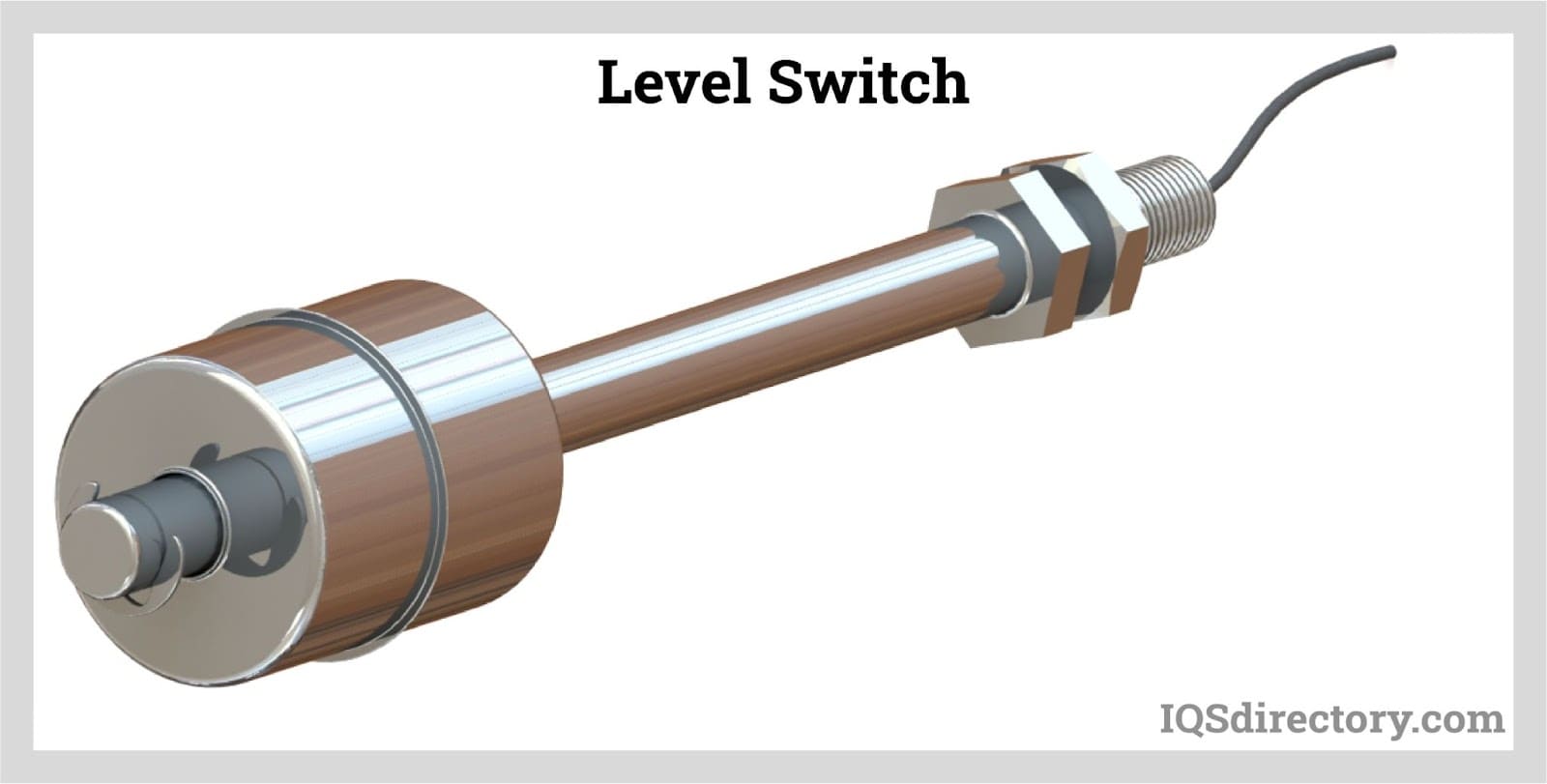 Level switch, an electrical or mechanical method for measuring the level of a liquid, powder, or granule material by activating an alarm if the material level passes a certain height or depth.
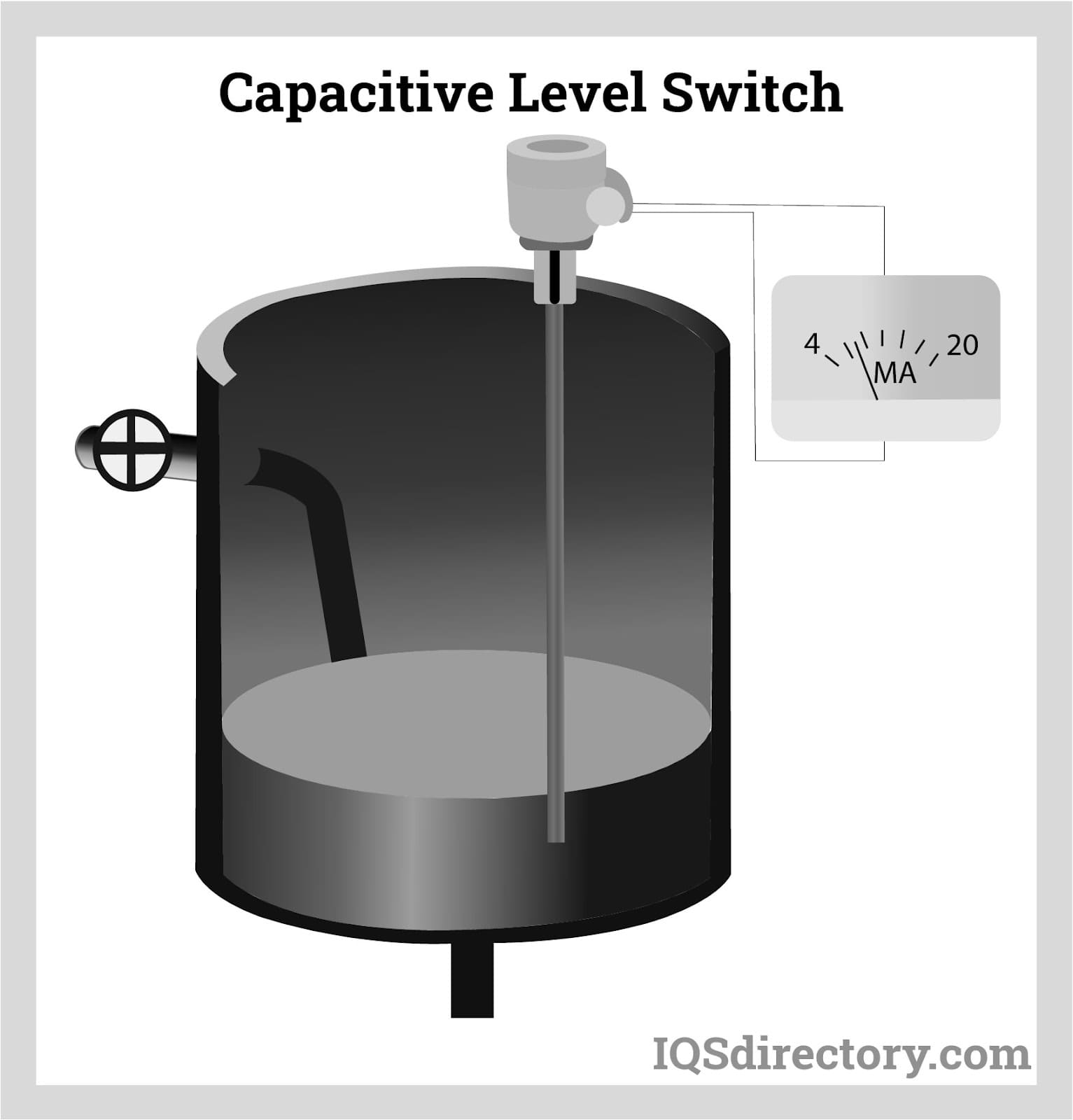 Capacitive level switches are designed for measuring corrosive liquids, high temperatures, and liquid levels in sealed containers.
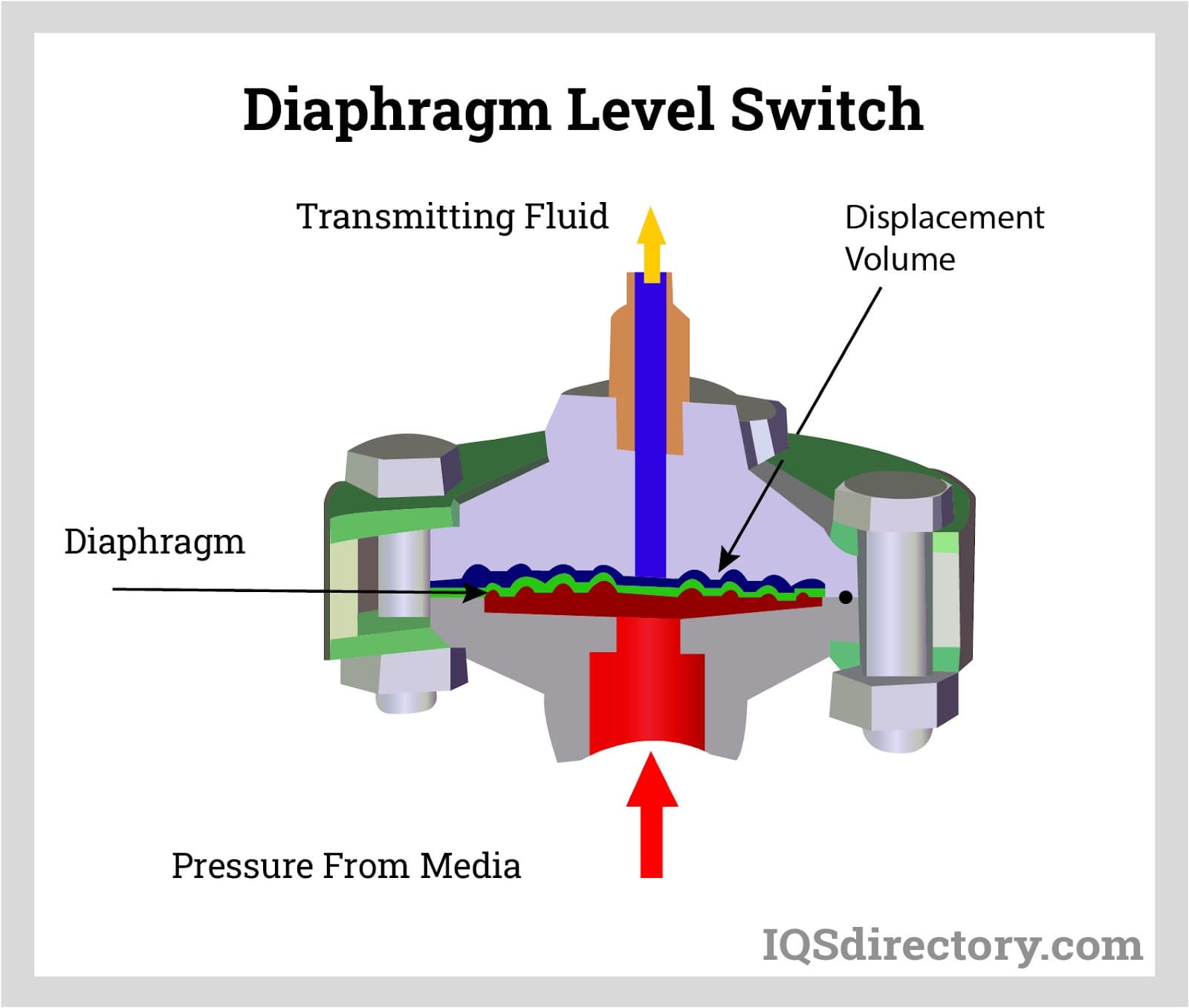 Diaphragm level switch measures pressure changes caused by the increase or decrease of the air pressure.
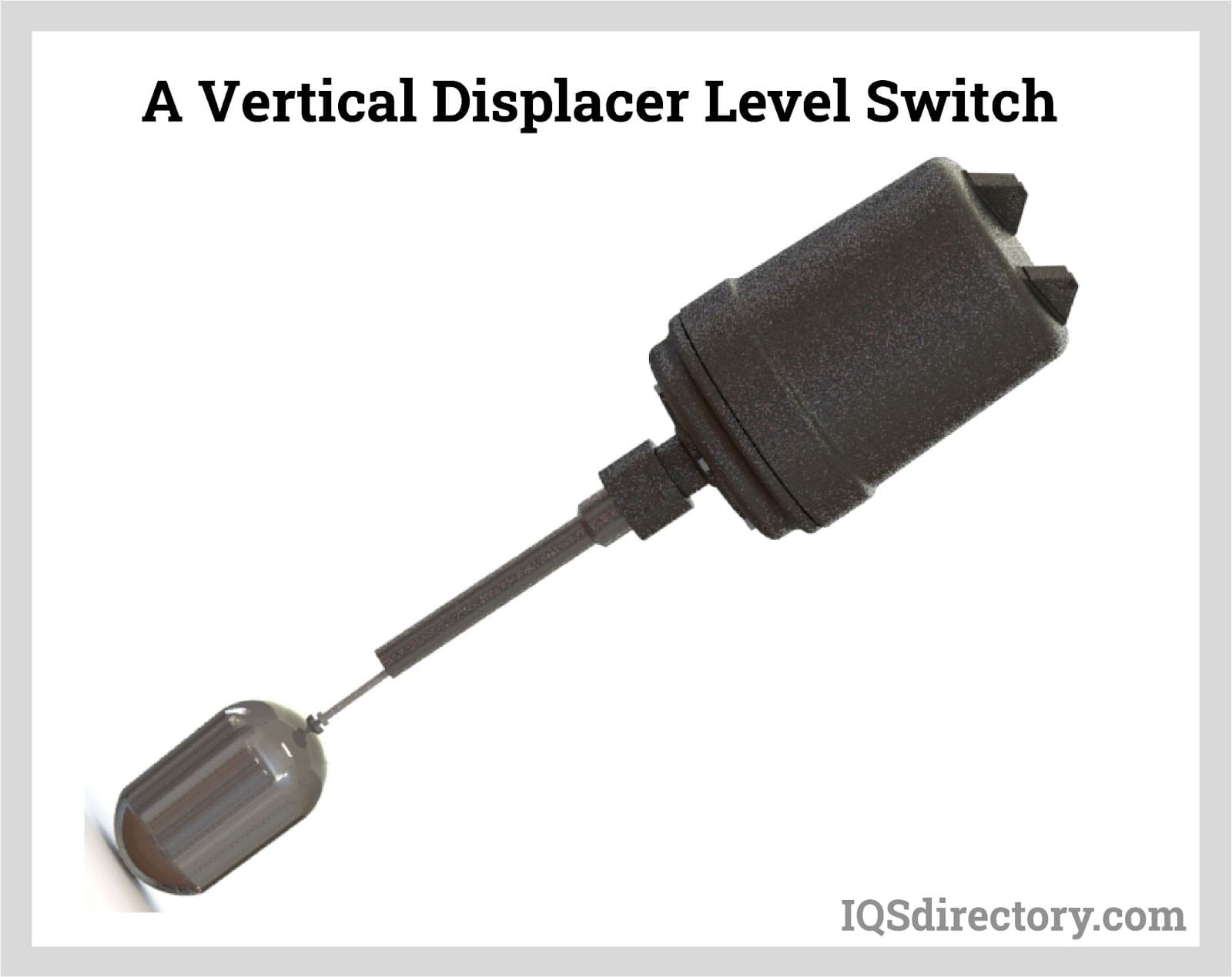 Displacer level switches are designed to work under high temperatures and pressure.
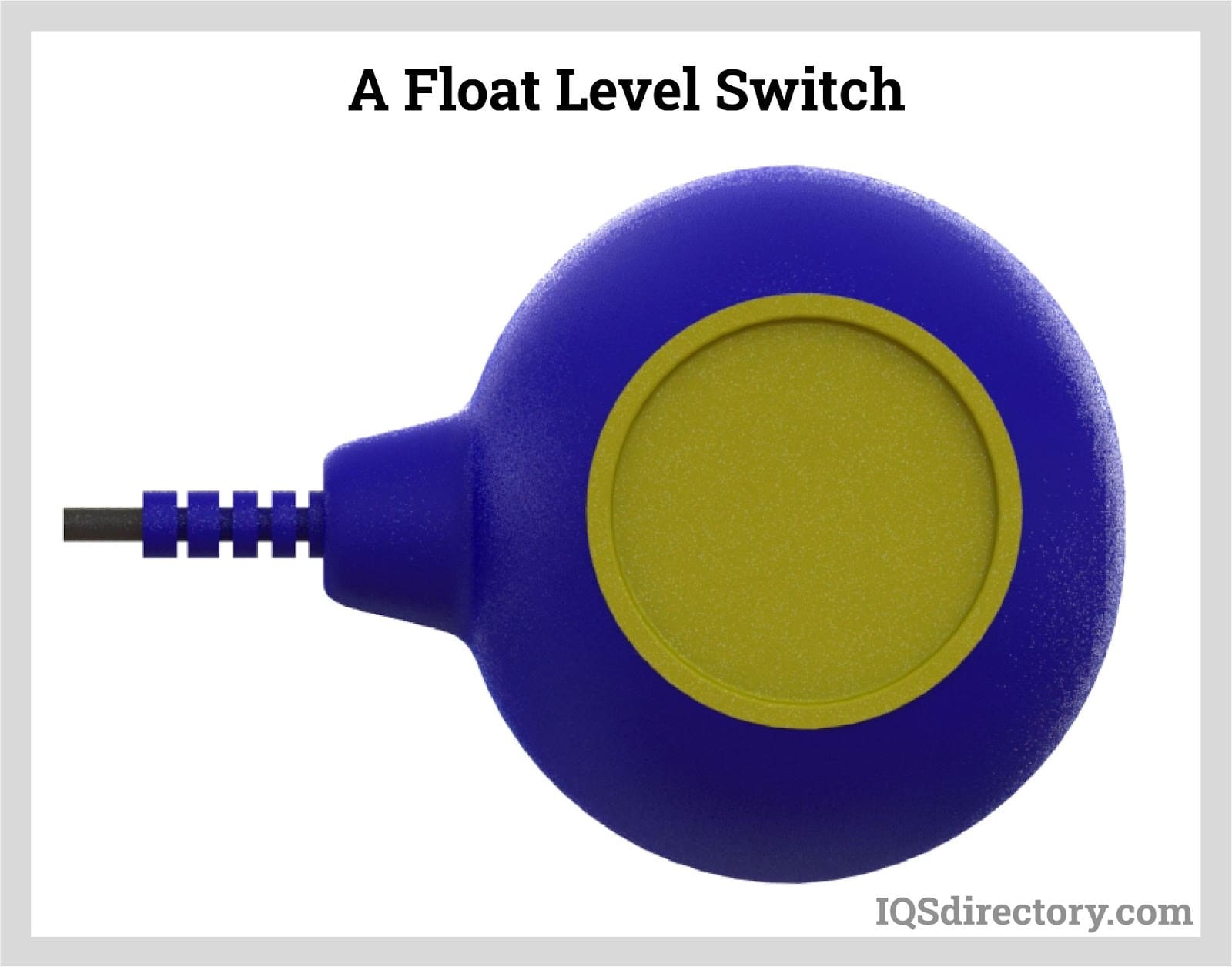 Float level switch, a mechanical switch that floats on the surface of a media.
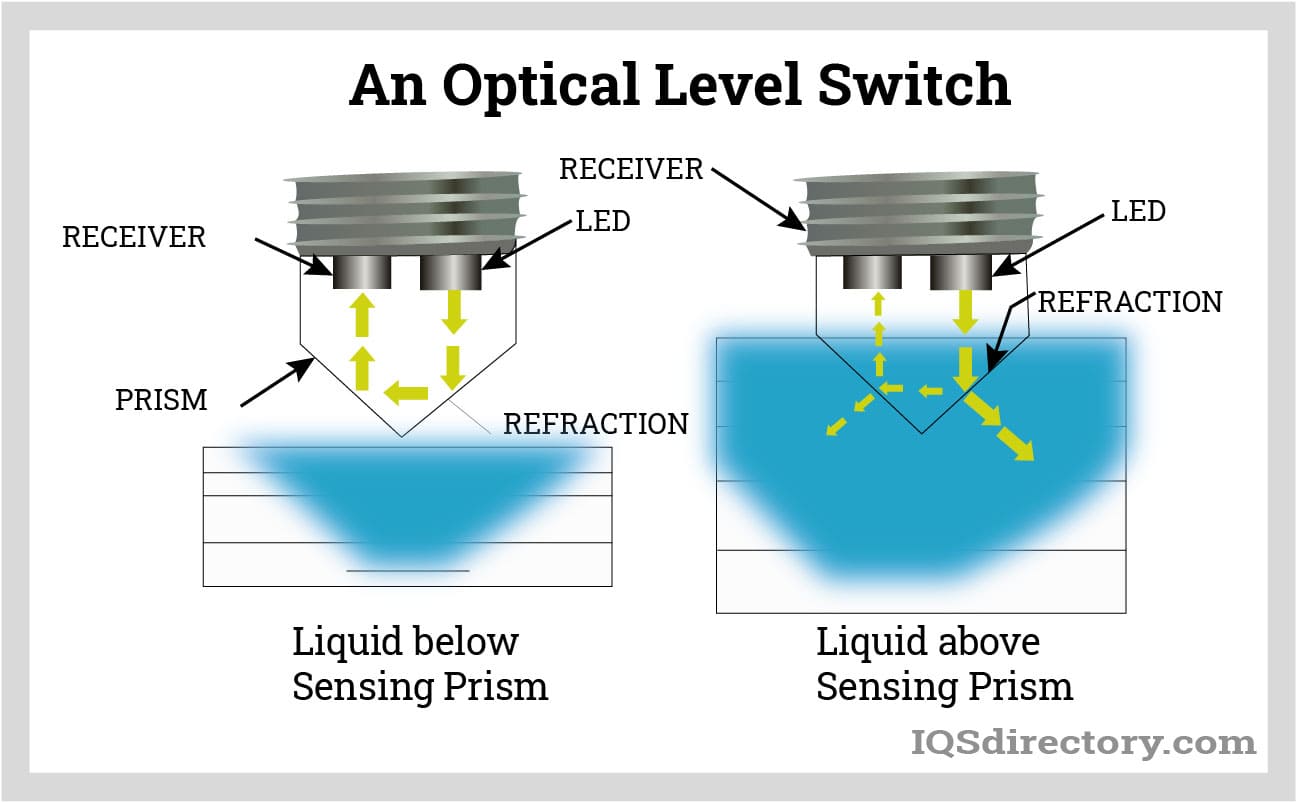 Optical level switches uses a level sensor and light receiver to sense the changes in the liquid level.
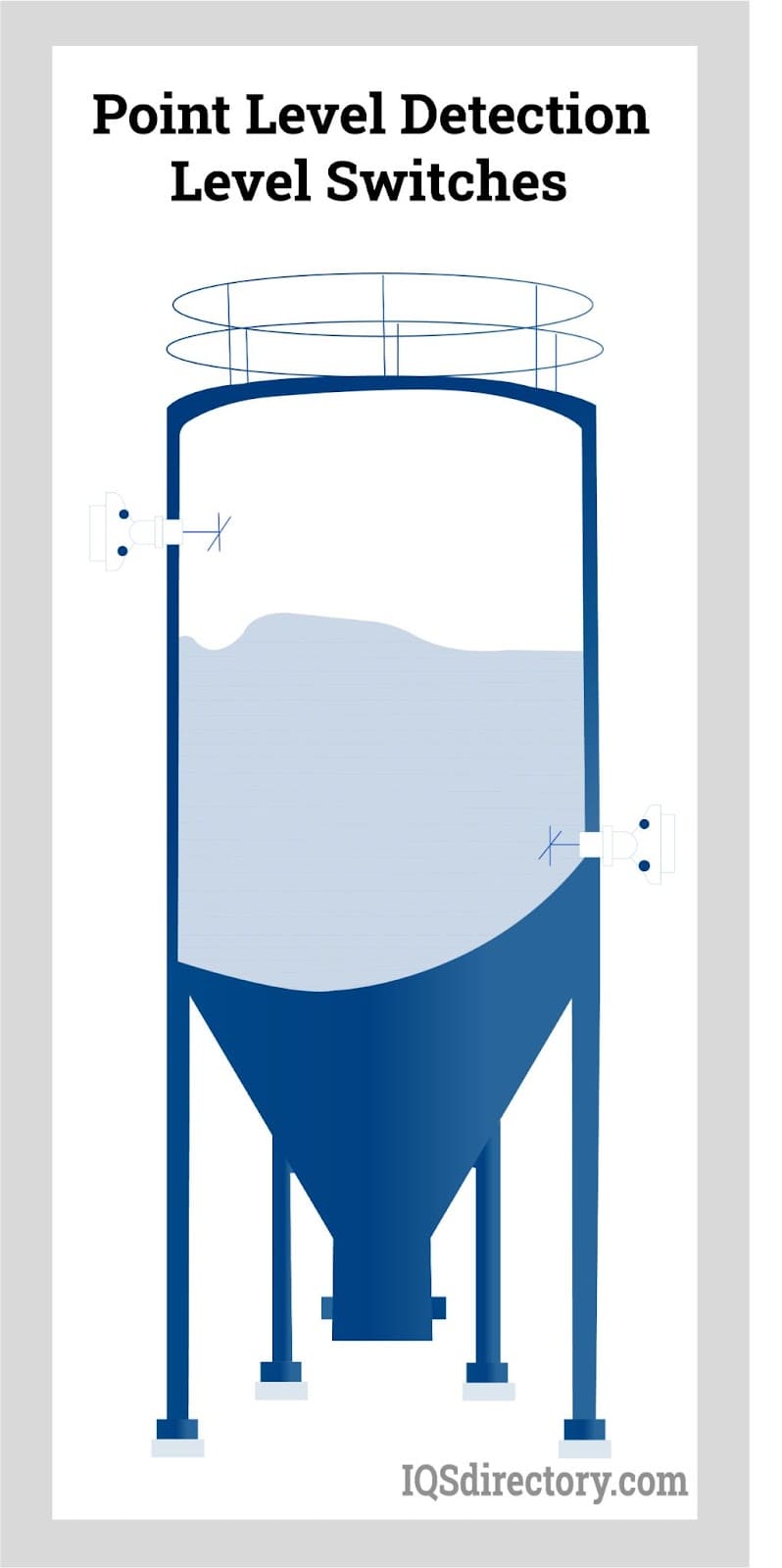 Point level detection switiches are programmed with a predefined level and is activated when the level is reached.
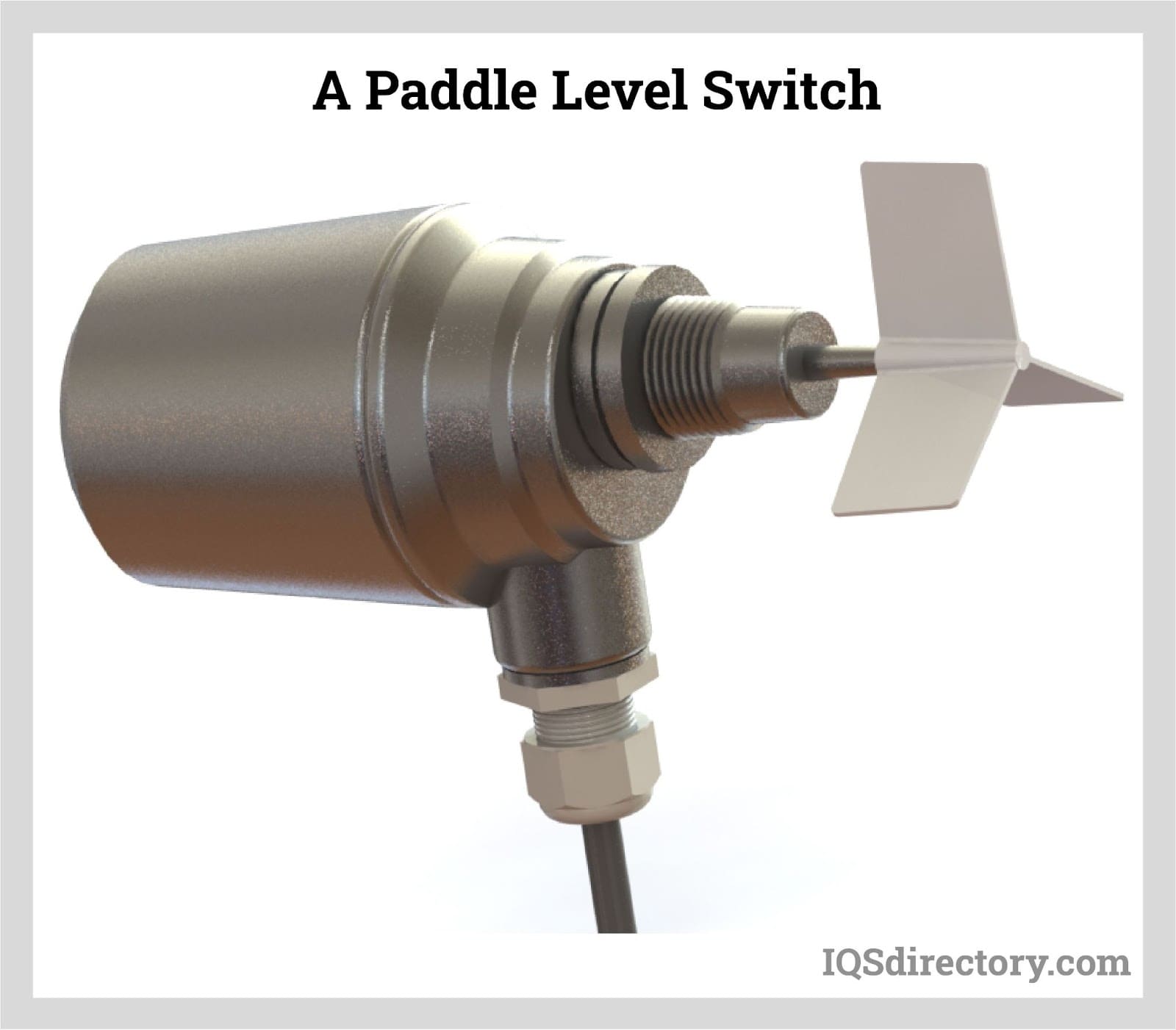 Paddle level switch have an electric motor that slowly rotates a metal paddle when the material reaches a certain level.
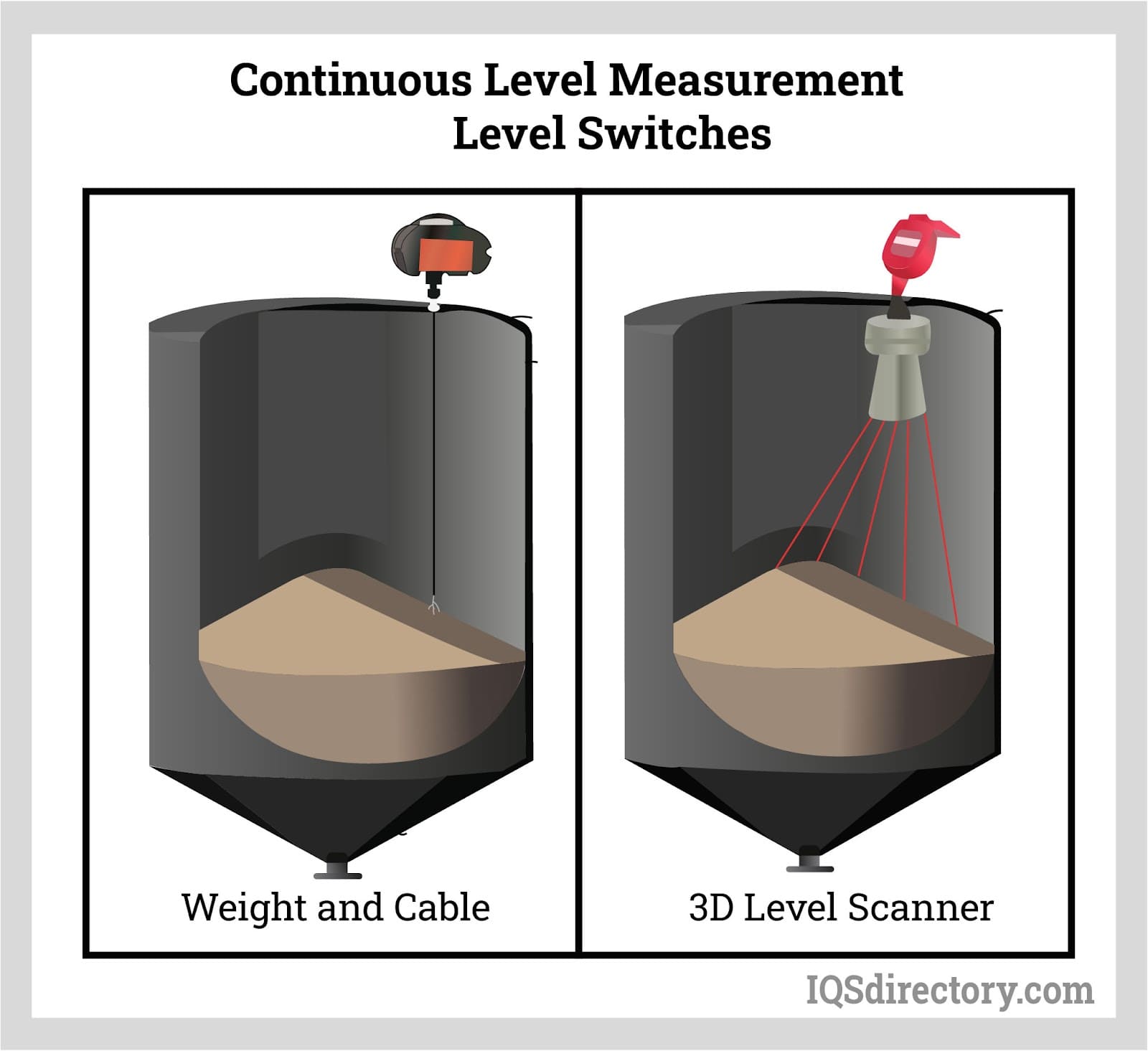 Continuous level measurement level switches have two different methods for installation being horizontal and vertical.
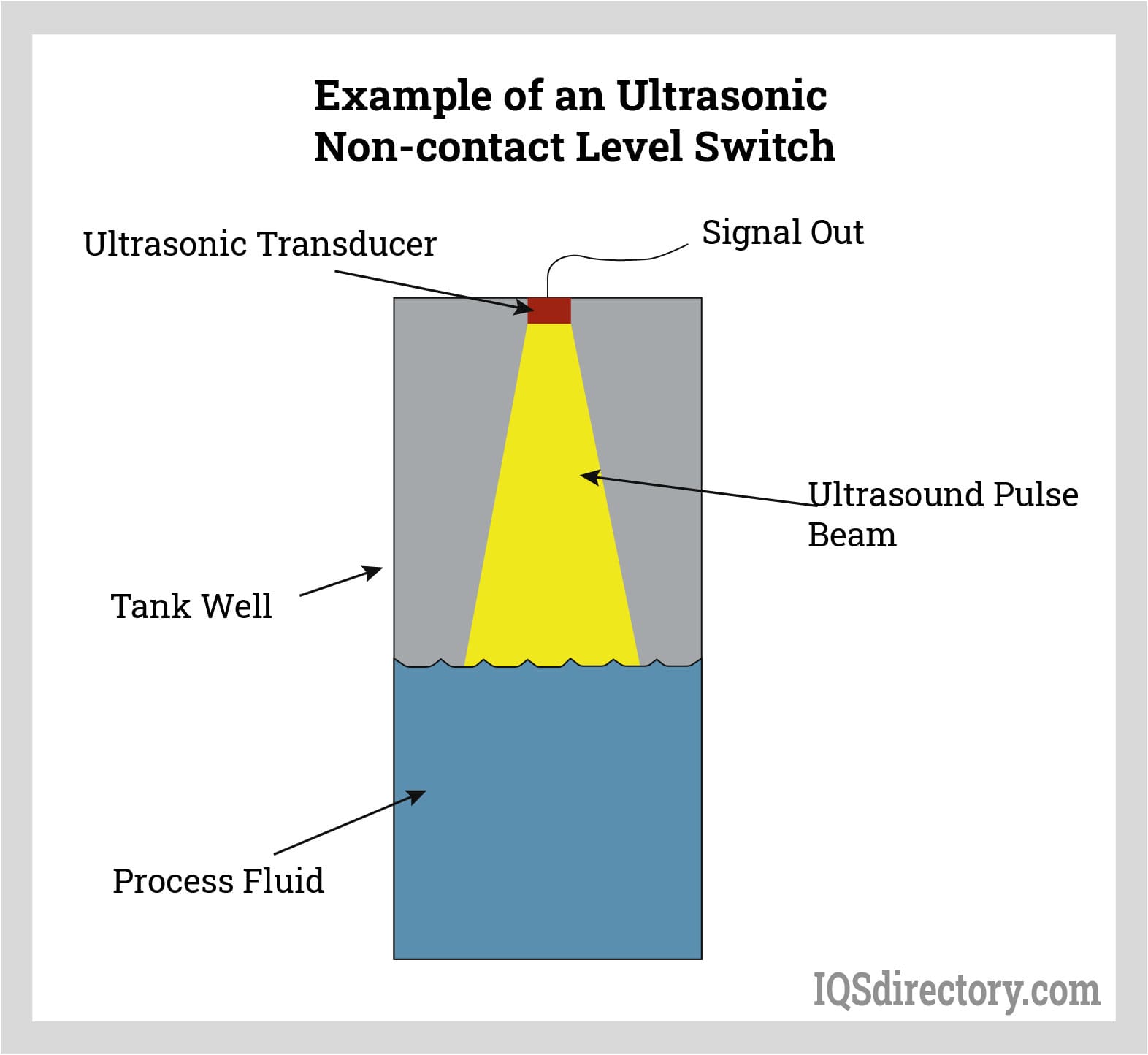 Non-contact level switches measure the time it takes for waves to travel from the transducer to the media.
Level Switch Types
While there are many devices categorized as level switches, certain varieties are more prevalent in industrial applications because they solve common process control problems with dependable switching performance. Among the most widely used are capacitance level sensors, chambered level switches, displacer level switches, float level switches, optical level switches, vibrating switches, and ultrasonic level sensors. Comparing these options usually comes down to media type, mounting constraints, sanitation needs, pressure or temperature range, and whether direct contact with the material is acceptable.
Mechanical Level Switches
These switches directly contact the material they monitor and are suitable for both solid and liquid applications. They are known for rugged construction, straightforward operation, and adaptability to industrial settings. Their operation often involves buoyancy and may utilize floats, displacers, springs, attraction sleeves, chambers, or magnetic fields that trigger a switching response. Common examples include float level switches, displacer level switches, and rotary tank level indicators. They are often selected when plant personnel want a familiar, field-proven design that is easy to inspect and service.
Non-mechanical Level Switches
Unlike mechanical types, these switches detect material levels without direct contact or with minimal intrusion. Popular examples include capacitance level sensors, ultrasonic sensors, vibrating forks, and optical switches. These designs are often preferred when the media is corrosive, sticky, delicate, pressurized, sanitary-sensitive, or otherwise difficult to measure with moving parts.
Capacitive Level Sensors
These sensors detect material presence by collecting or channeling electrical charge. They are used to monitor levels of aqueous and organic liquids, solids, and slurries, particularly when detecting contact at a defined level. Capacitive designs are valued for versatility and can often be adjusted to account for different dielectric properties.
Chambered Level Switches
Enclosed in protective casings, these switches may be sealed or flanged for airtight performance. Used mainly for monitoring material levels in containers, they also play a role in regulating flow into or out of these enclosures. Chambered assemblies can simplify maintenance because the switch can often be serviced without opening the primary vessel.
Displacer Level Switch Devices
These measure buoyant force changes on a weight, or displacer, that is heavier than the liquid it monitors. As the level changes, the displacer’s position shifts a spring-loaded attraction sleeve in or out of a magnetic field, triggering the switch. They are frequently chosen for demanding applications involving high pressure, elevated temperatures, or specific liquid densities.
Electric Level Switches
Operate by opening or closing electrical contacts to indicate the presence or absence of a liquid. These are widely used in automated systems where a simple on/off status is enough to activate control equipment.
Electromechanical Level Switches
Combine electrical and mechanical components for monitoring and control, often used in systems requiring more complex feedback or actuation. They bridge traditional mechanical sensing with modern electrical control.
Float Level Switches
Use buoyant mechanisms such as rods or floats that rise with liquid levels. When they reach a designated point, they activate connected devices like pumps, alarms, or indicators. Variants include mercury float switches and bobber-style designs with magnetic sensors. Their simplicity makes them a popular choice for sump systems, storage tanks, coolant reservoirs, and other liquid handling applications.
Float Sensors
These provide liquid level detection only, with no switching action, and are generally used for measurement alone. They are often paired with displays or controls elsewhere in the system.
Hydrostatic Level Switches
Rely on static pressure from a liquid to determine level changes, making them ideal for applications involving consistent pressure environments or closed vessels where direct visual confirmation is limited.
Level Control Switches
Specifically designed to maintain material levels within a set range, preventing overflow, depletion, pump cavitation, and other operating problems that can interrupt production.
Level Indicators
These devices give readouts of the material quantity within a container, offering real-time monitoring for operators who need a visible display in addition to control functions.
Level Sensors
Used to measure levels of various substances including liquids, powders, slurries, and granules, often in conjunction with control equipment. They can supply continuous data, while switches typically focus on one or more trip points.
Liquid Level Switches
Monitor the volume of liquid in a vessel. Ultra-low level switches are available to detect even trace amounts of fluid, which is useful when dealing with expensive, hazardous, or limited liquids where every drop matters.
Microwave Level Switches
Comprised of a transmitter and a receiver, these switches send microwave pulses back and forth. An interruption in the beam signals material presence and activates the switch. They are useful where dust, vapor, or buildup can challenge other sensing methods.
Multi-Point Switches
Designed with the ability to register multiple actuation levels, these are ideal for applications with several control points within a single tank or container, such as fill, refill, and high-level alarm positions.
Optical Level Switches
Compact and cost-effective, these switches use infrared LEDs to detect translucent liquids. Light reflections change when a liquid is present, altering the switch response. Their small size makes them especially useful in compact equipment and OEM assemblies.
Pneumatic Level Switches
Triggered by air pressure via internal valves or amplifiers, often used in hazardous environments where electrical components are limited or where air logic is already part of the control system.
Pressure Sensors
Detect changes in pressure exerted by liquids, often used to infer material levels within closed containers, deep tanks, or pressurized systems.
Proximity Switches
Operate without physical contact, relying on a sensing field to detect nearby material. When an object enters this field, the switch is activated. They are useful when wear reduction and low mechanical interaction are priorities.
Thermal Level Switches
Use temperature sensors to detect heat variations caused by the presence of a fluid. Some can differentiate between air and liquid based on thermal conductivity differences, making them useful for leak detection and low-level protection.
Tilt Switches
Trigger a response when tilted to a specified angle. These are especially useful in mobile equipment, uneven installations, or bulk solid level detection where a simple actuation method is preferred.
Two-Stage Level Switches
Equipped with a secondary fail-safe trigger, these switches deactivate pumps or sound alarms when liquid surpasses the primary limit, helping prevent overflow, flooding, and damage to downstream equipment.
Ultrasonic Level Sensors
Use high-frequency sound waves to detect the level of a material without contact. They are well-suited for applications involving delicate, aggressive, or hard-to-reach substances and are often chosen for sealed tanks or hygienic process areas.
Vibrating Level Switches
Utilize reed, probe, or tuning fork sensors driven by vibration. A change in the vibration pattern caused by surrounding material is used to signal level presence or change. These switches are widely used for powders, bulk solids, liquids, and slurries because they can offer reliable point level detection with low maintenance.
Level Switch Standards and Specifications
Level switch standard requirements vary based on the specific industry and application. For instance, in food processing, switches must comply with FDA-related sanitary expectations so materials and surfaces are suitable for contact with consumables. In military applications, they may need to meet Mil-Spec certification. In chemical processing or hazardous areas, buyers may also evaluate enclosure ratings, washdown resistance, explosion-proof requirements, or other performance standards tied to the operating environment. To determine the exact certifications your switches need, it is best to consult with regulatory authorities and industry experts familiar with your process, installation method, and compliance obligations before purchasing equipment.
Switch Purchase Considerations
If you're searching for level switches, it's wise to partner with an experienced manufacturer—like those featured on this page. The right supplier can help you identify level switches and sensors that match your technical requirements, installation space, operating conditions, and budget. Start by defining the media you need to measure, the switch point you need to detect, and whether the application calls for contact or non-contact sensing. Then review vessel size, pressure, temperature, electrical output, mounting orientation, compliance needs, and maintenance expectations. Take a moment to explore the offerings of the manufacturers listed here. Choose three or four that seem like a good fit and reach out to start a detailed conversation. Ask practical questions such as: Which level switch technology is best for my liquid or bulk solid? Will buildup, foam, turbulence, or density changes affect performance? How quickly can replacement parts ship? Once you have gathered the necessary answers, select the manufacturer that aligns best with your goals and move forward with more confidence.
Accessories for Level Switches
Common level switch accessories include alarms, remote gauges, float balls, float rods, pressure switch mounting brackets, counter flanges, shut-off valves, and similar components. Depending on the system, users may also specify cable assemblies, junction boxes, relay interfaces, chambers, guards, or mounting hardware that simplify installation and improve long-term serviceability.
Level Switch Terms
-
Aperture
The distance between adjacent parallel wires, typically measured in millimeters. In process equipment, opening size can influence flow, screening, and material behavior.
Buoyancy
The upward force exerted on an object by the fluid in which it is partially or fully submerged. This principle is central to float and displacer switch operation.
Mercury Switch
A sealed glass tube containing a small amount of liquid mercury and two separate electrodes; when tilted to a certain angle, the mercury pools to complete the circuit and allow current to flow. The circuit breaks when returned to the original position.
Opacity
The degree to which a material blocks the passage of light; the opposite of transparency. This property can influence optical sensing performance.
Polypropylene or Polypropene (PP)
A tough thermoplastic polymer known for its exceptional resistance to many chemical solvents, acids, and bases. It is commonly chosen for corrosive liquid applications.
Polysulfone or PSU
A high-performance thermoplastic polymer recognized for strength, rigidity, and clarity, and for maintaining those properties between -100°C and 150°C. It is often selected where a durable engineering plastic is needed.
Sluice
A gated channel for controlling water levels and flow, often used in waterways, wastewater facilities, and mineral recovery during mining. Level control equipment may be used alongside sluice systems to manage process flow.
Viscosity
The measure of a fluid’s resistance to flow; in simpler terms, its thickness. Viscosity can affect how quickly some switches respond and whether buildup becomes a factor.