Investment Casting
Investment casting is a highly versatile metal casting process used to produce a broad range of lightweight and high-performance industrial components. The name “investment casting” comes from the ceramic slurry that coats a wax pattern to form a durable shell mold. Manufacturers value this precision casting method for tight tolerances, repeatable part geometry, and dependable quality. It is also widely known as the “lost-wax process,” “lost wax casting,” or simply "wax casting" due to the way the wax model is melted away, or “lost,” during production.
Beyond industrial applications, lost wax casting and precision investment casting can also refer to a method used to reproduce metal sculptures. In a manufacturing environment, however, the process is focused on producing machine parts, engineered components, and complex metal parts with repeatable accuracy. That connection to sculptural casting helps explain the process, but industrial investment casting is designed around production efficiency, metallurgical control, and dimensional consistency.
Manufacturers rely on investment casting when they need highly detailed, dimensionally precise parts with smooth surface finishes and reduced secondary machining. The process supports a diverse range of alloys and specifications, making it a preferred manufacturing method across numerous industries. Investment cast components are widely used in aerospace, automotive, chemical processing, defense, food processing, electrical equipment, railroad, mechanical systems, marine, electronics, textile machinery, energy, and general engineering applications, demonstrating the process’s adaptability, repeatability, and long-term production value.
Investment Casting FAQs
What is investment casting used for in manufacturing?
Investment casting is used to produce lightweight, dimensionally accurate metal components with tight tolerances and fine detail. It supports a wide range of ferrous and non-ferrous alloys and is well suited for aerospace, automotive, defense, food processing, medical, and industrial equipment applications where part consistency, surface finish, and complex geometry matter.
Why is investment casting also called the lost-wax process?
Investment casting is known as the lost-wax process because the wax pattern used to create the ceramic mold is melted and removed before molten metal is poured into the cavity. This approach allows manufacturers to create parts with smooth finishes, accurate detail, thin sections, and complex internal or external geometry.
What materials are commonly used in investment casting?
Common materials include stainless steel, carbon steel, alloy steel, aluminum, brass, bronze, copper, and titanium. Both ferrous and non-ferrous alloys are selected based on strength, corrosion resistance, heat resistance, conductivity, weight targets, and the performance demands of the finished part.
What are the main advantages of investment casting?
Investment casting offers high precision, excellent surface finish, minimal material waste, and reduced machining. It supports complex part designs, near-net-shape manufacturing, and repeatable quality while helping companies control production cost, streamline finishing, and reduce scrap.
How does investment casting differ from sand casting?
Investment casting uses a ceramic mold built around a wax pattern and is ideal for smaller, more intricate parts up to around 695 pounds. Sand casting uses sand and clay molds suited for larger components up to about 2,200 pounds, but it generally delivers a rougher surface finish and less detailed geometry.
What industries commonly use investment casting?
Industries such as aerospace, automotive, chemical processing, defense, marine, food processing, medical equipment, and industrial machinery rely on investment casting to produce metal parts that require accuracy, strength, repeatable tolerances, and complex geometries.
What factors should be considered when designing for investment casting?
Designers should evaluate flexibility, surface finish, tensile strength, part weight, wall thickness, tolerances, and production volume. These factors influence material selection, tooling strategy, mold design, and the overall efficiency, quality, and cost profile of the finished cast component.
The History of Investment Casting
Investment casting is one of the oldest known metalworking processes, with origins dating back more than 5,000 years. One of the earliest written descriptions appeared around 1100 A.D. in the work of a monk known as Theophilus Presbyter, though the process had already been practiced for centuries by that point. Archaeological findings link early castings to the tomb of King Tut and to artifacts from civilizations including Harappa, Mesopotamia, the Aztec and Mayan cultures of Mexico, and the Benin civilization of Africa.
In its earliest forms, investment casting relied on natural honeycomb or beeswax for wax patterns, while clay served as the molding material. Operators manually worked bellows to stoke furnaces and melt metals. Today, the process has advanced significantly, incorporating a variety of pure and synthetic waxes for pattern creation, and utilizing refractory materials and specialized alloys to produce durable molds. Modern cast foundries have replaced traditional handheld bellows, allowing for greater precision and efficiency.
The transition to modern investment casting began in the late 1800s, when dentists started using the process to craft crowns and fillings. During World War II, investment casting became a widely adopted industrial manufacturing method. Engineers adapted the process for high-performance alloys, making precision net-shape and near-net-shape production practical for military, aerospace, and later commercial applications.
Now a cornerstone of modern manufacturing, investment casting continues to evolve, offering impressive precision, alloy flexibility, and design freedom across a wide range of industries.
Advantages of Investment Casting
The investment casting process offers a wide array of advantages, making it a preferred method for producing high-quality industrial components. Its benefits include cost efficiency, minimal material waste, dependable repeatability, environmental responsibility, and the ability to manufacture highly detailed parts with strong surface quality and reduced finishing requirements.
- Low Production Costs
- Investment casting can reduce production costs compared to alternative methods such as fabrication or heavy machining. By requiring less labor, minimizing raw material waste, and producing near-net-shape parts, it lowers total manufacturing input while maintaining efficiency. The process can also reduce or eliminate extra welding, assembly, or finishing work, which helps control lead times and overall cost per part.
- Low Wastage and Fewer Time Delays
- Unlike machining, which often generates significant material waste, investment casting minimizes excess material usage. Lower scrap rates help reduce production costs and improve material utilization. Machining can also be time-intensive, especially for complex geometries, while investment casting can streamline production by bringing parts much closer to final dimensions before any finishing operation begins.
- High Reliability
- Investment casting, along with specialized approaches such as brass investment casting and aluminum investment casting, is one of the most dependable manufacturing methods for producing high-precision machine parts. Process control at each stage helps manufacturers maintain dimensional consistency, repeatable metallurgy, and reliable quality from prototype through production runs.
- Environment Procurement
- Investment casting is an environmentally responsible manufacturing method. The process uses materials efficiently, can support reuse within pattern production, and significantly reduces material waste compared to subtractive processes. That sustainability advantage makes investment casting an attractive option for companies looking to reduce scrap, conserve resources, and improve manufacturing efficiency.
- Complexity, Details, and Quality
- Investment casting enables the creation of lightweight, highly complex parts with intricate details that many other manufacturing methods struggle to achieve. It offers strong design flexibility, a broad selection of metal alloys, and superior surface finishes. Because each investment cast part is formed as a single, solid piece, it lacks seams, joints, or flash lines, which can improve durability, simplify assembly, and support cleaner finished geometry.
- Investment casting remains a widely used process in industrial manufacturing, combining efficiency, precision, and sustainability to produce high-quality components across a wide range of applications.
Design of Investment Casting
Investment casting begins with the creation of parts from either an original wax model or wax replicas of a master pattern. The first approach, known as the direct method, involves building the casting from the original wax model itself. The second, called the indirect method, uses a duplicate wax replica made from a master pattern. The following sections outline the stages of investment casting, from pattern development through shell building, burnout, pouring, and finishing.
- Creating the Master Pattern
- The investment casting process begins with the development of a master pattern designed to match the specifications of the intended component. Engineers may spend considerable time refining the master pattern so it aligns with dimensional targets, shrink allowances, and functional design requirements. The pattern is often developed from drawings or digital models before it is translated into physical form for tooling and wax production.
- Creating the Mold
- Once the master pattern is complete, a mold is created from its dimensions. Depending on the component's requirements and material properties, the mold may be temporary or permanent. Wax, clay, or plastic are common choices for mold materials, though in some cases, molten metal alloys such as steel or alloy steel can be used to form a highly durable and precise mold. Additionally, materials like rubber and frozen mercury are sometimes employed, further expanding the range of possibilities for mold fabrication.
- Producing and Assembling the Pattern
- To create the wax pattern, molten wax is injected or poured into the mold and allowed to solidify until it forms a hard, uniform pattern. Manufacturers can produce multiple identical wax patterns, enabling a cluster of patterns to be assembled when needed. These patterns are attached to a central channel known as a sprue, forming an assembly commonly referred to as a tree. This setup allows multiple investment cast parts to be processed at once, improving efficiency, repeatability, and throughput.
- Applying the Investment Materials
- The term "investment" refers to the ceramic mold that encases the wax pattern. This mold is built through a repeated process of coating, stuccoing, and hardening the wax pattern cluster until the desired shell thickness is achieved. Each layer adds strength and thermal resistance, and the full shell-building cycle may take several days. The final result is a durable ceramic shell capable of withstanding burnout and molten metal during casting.
- Dewaxing Staging
- Once the ceramic mold is fully formed and hardened, the dewaxing stage begins. This step removes the wax pattern from inside the mold. If the mold was made using wax, the process is relatively straightforward, involving heating the mold in an oven to melt and drain the wax. However, for molds formed from metal melts, the removal process requires specialized tools and precise handling to extract the material without damaging the mold.
Features of Investment Casting
Investment casting is based on a straightforward but highly effective concept: forming a mold around a wax pattern that is then melted away, leaving a hollow shell ready to be filled with molten metal.
The process begins with the wax model, which is attached to a sprue. Hundreds of wax patterns may be affixed to the same sprue, creating a "tree" that allows multiple parts to be cast simultaneously. Once the assembly is complete, it is repeatedly dipped into a ceramic slurry and coated with a coarse material such as sand. The ceramic layers build up to form a thick investment, which is then placed into an oven where temperatures reach over 1000°F. The wax inside the mold melts and drips out, leaving behind a hollow shell that maintains its precise shape.
At this stage, the molten metal is heated to the required temperature and poured into the ceramic shell. The liquid metal travels along the pathways left by the sprue, filling every cavity and impression left by the original wax pattern. Once the metal cools and solidifies, the ceramic shell is broken away, and the cast parts are separated from the sprue. At this point, the investment cast components may undergo additional machining and finishing, though they require far less post-processing than other casting methods.
Investment casting is a carefully controlled process, with manufacturers employing fans and blowers to remove airborne dust, including silica particles that could be hazardous if inhaled. To ensure the highest quality, vacuums are often used to extract air bubbles from the investment slurry, preventing imperfections in the final cast. Advanced ovens and furnaces maintain precise temperature control during burnout, while specialized heating equipment ensures that alloys are melted to their optimal pouring temperature.
Modern advancements in materials science and engineering have further enhanced the investment casting process, allowing manufacturers to fine-tune the chemical composition of both the mold and the final cast product. By carefully selecting materials, they can control specific properties such as durability, magnetism, and weight capacity while avoiding unwanted characteristics. This scientific approach ensures that each investment cast part meets exact performance requirements.
Investment casting has withstood the test of time, proving its value across thousands of years. Even in the modern age, it remains a cost-effective, efficient, and environmentally responsible method for producing precision metal components. By minimizing waste, reducing machining needs, and offering strong design flexibility, investment casting continues to be a preferred choice in industrial manufacturing.
Investment Castings Images, Diagrams and Visual Concepts
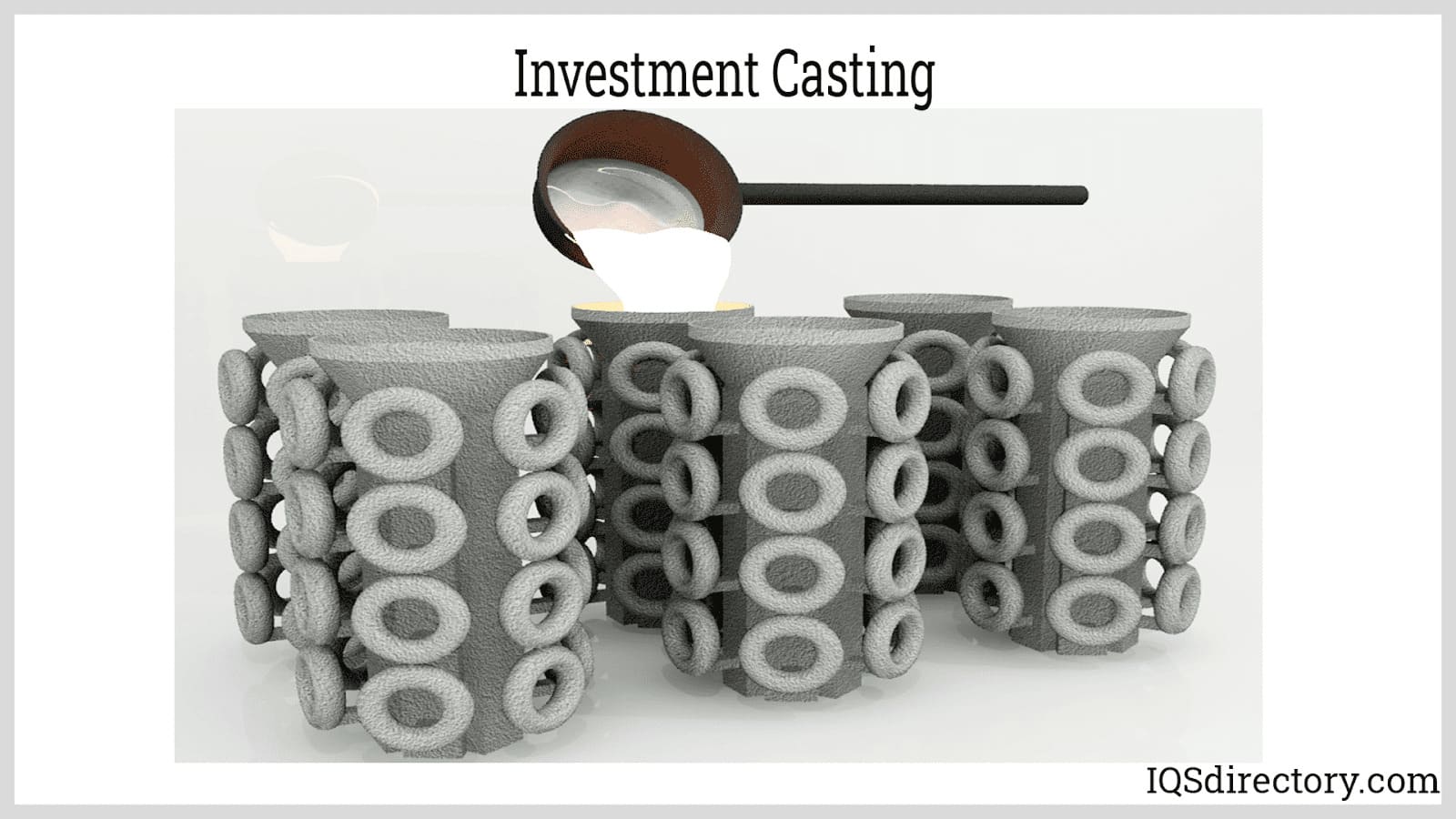 Using a ceramic shell built over a wax pattern which can produce parts with uniformity and even surfaces.
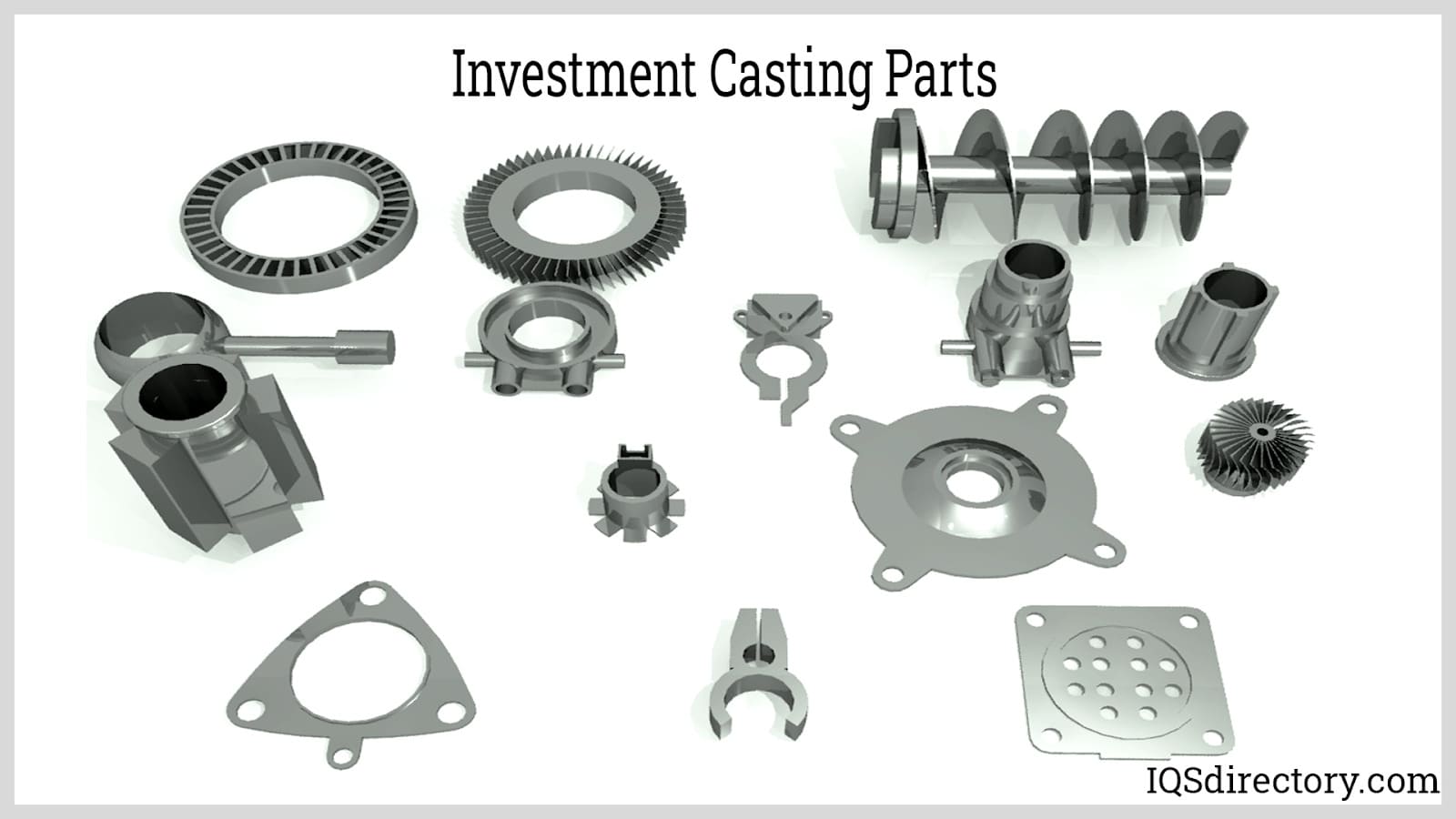 Examples of parts made with investment casting.
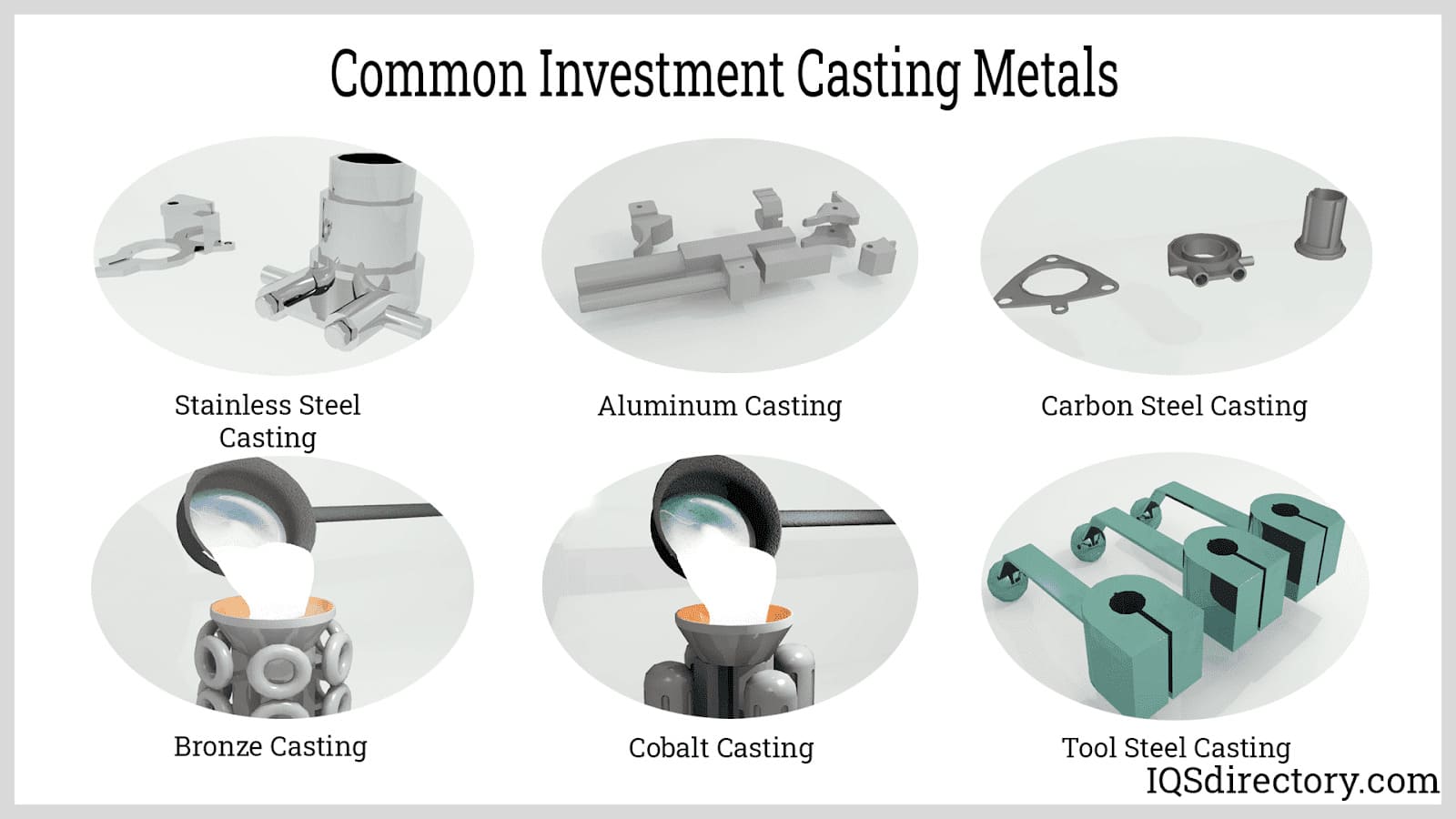 The common metals used in the casting process.
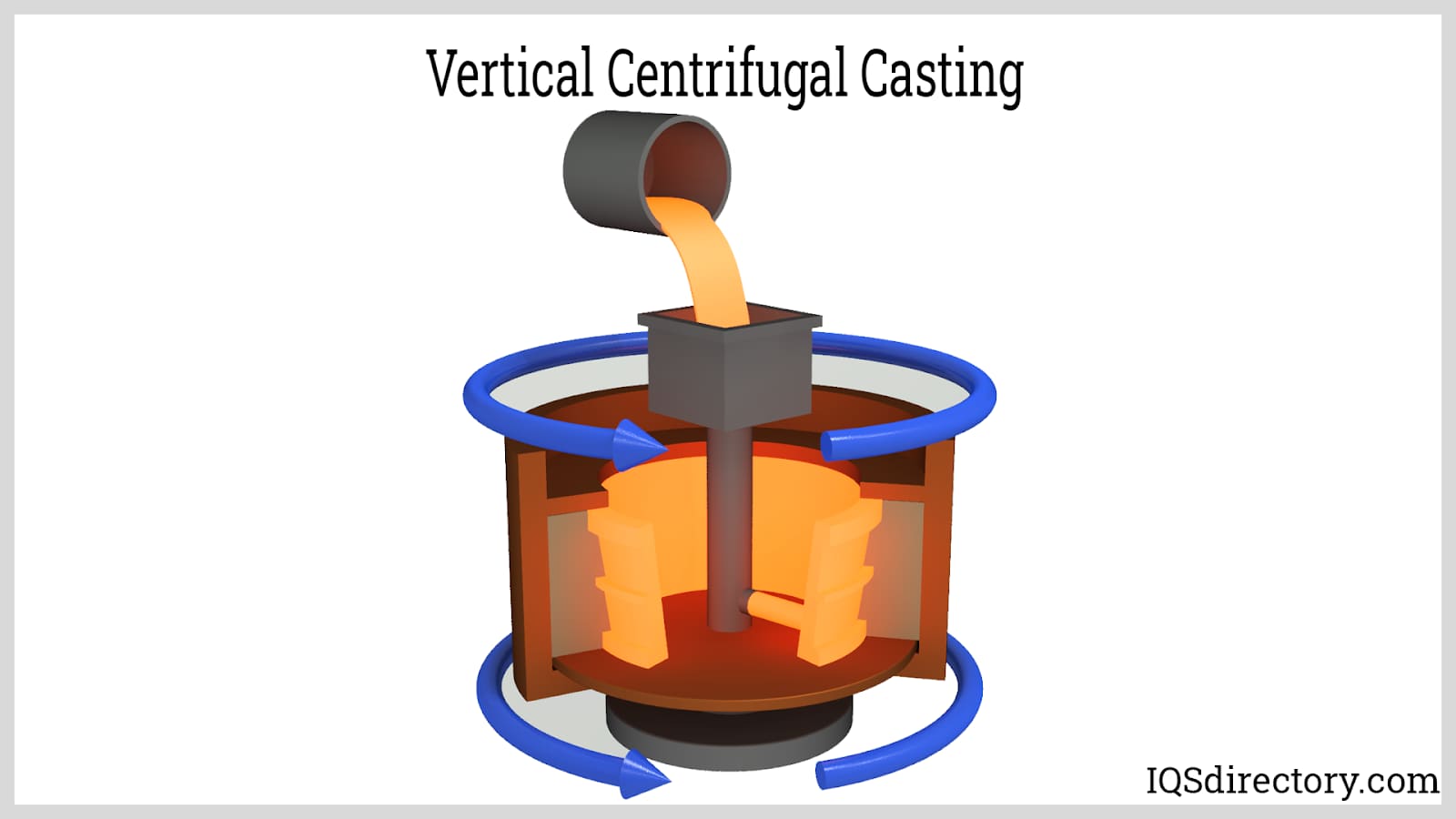 The equipment is placed vertically and spun at a vertical axis, the molten material is poured into at the top of the casting equipment.
 The equipment is set horizontal and spun at a horizontal axis while end is sealed, with a pour basin at the opposite end.
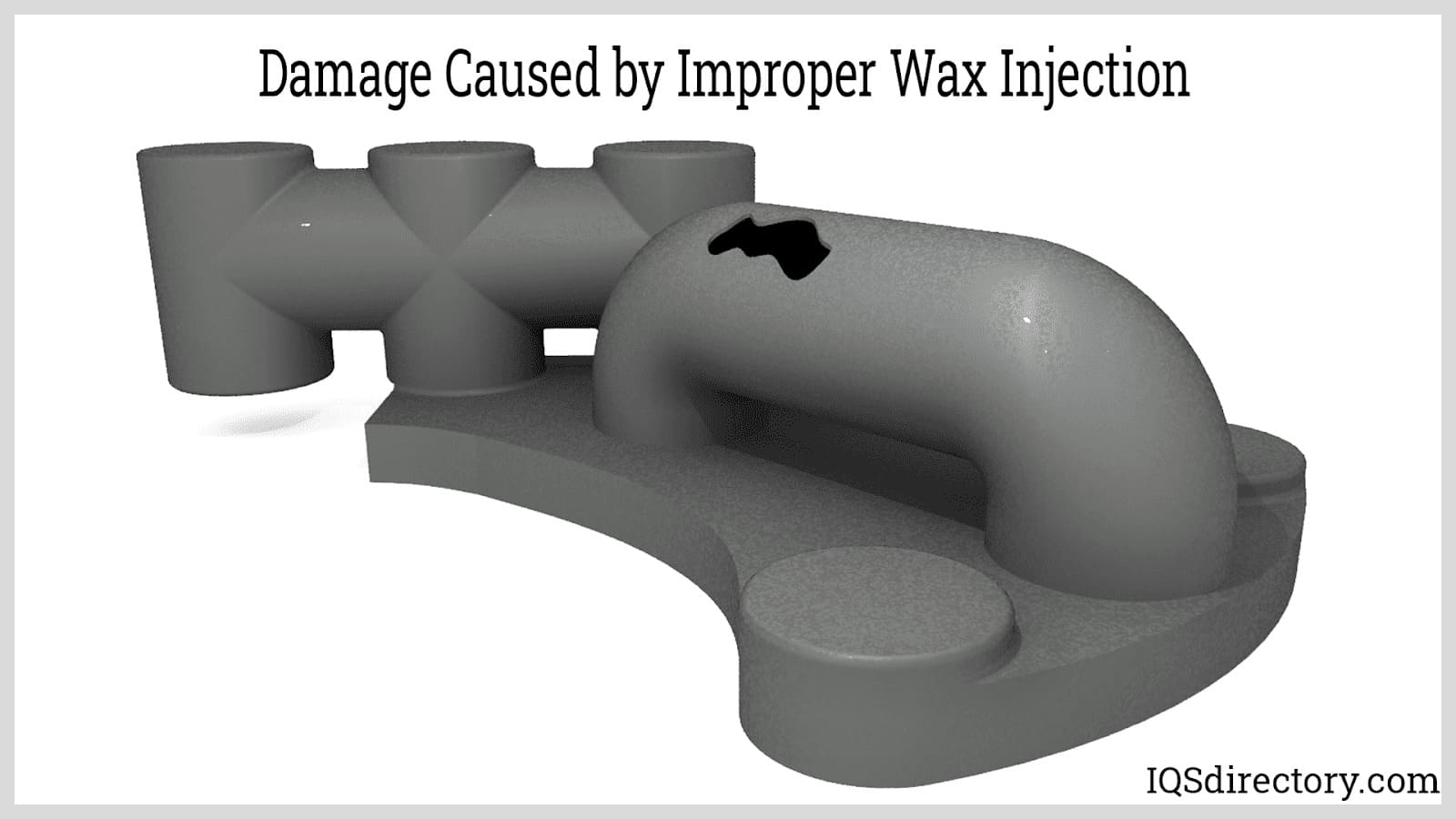 Improperly using the the wax mold could result in damage to the product being molded.
Investment Castings Types
- Aluminum Investment Casting
- Aluminum investment casting produces industrial components through the precise replication of wax models using molten aluminum. The resulting parts exhibit exceptional dimensional accuracy, smooth surface finishes, and intricate details, all without the presence of flash or parting lines. Aluminum and its alloys are among the most widely used metals in investment casting due to their lightweight properties, corrosion resistance, and versatility across multiple industries.
- Brass Investment Casting
- Brass investment casting follows the same manufacturing principle, utilizing molten brass to replicate wax patterns and create finely detailed, seamless components. This process ensures high precision and lightweight parts with a smooth finish, making it ideal for applications requiring aesthetic appeal, conductivity, and durability.
- Centrifugal Casting
- Centrifugal casting is a specialized technique used to produce parts with thin walls and uniform density. This process is particularly effective for manufacturing cylindrical components or stock parts in standard sizes, which may later be machined into final products. By using centrifugal force to distribute molten metal within a mold, manufacturers achieve excellent structural integrity and consistent material properties.
- Copper Investment Casting
- Copper investment casting utilizes liquid copper to create strong, lightweight components with fine surface finishes and intricate detailing. Due to copper’s excellent electrical and thermal conductivity, its investment cast parts are widely used in industries such as plumbing, electrical systems, machine tools, mixing equipment, lock manufacturing, and jewelry production.
- Ferrous Investment Castings
- Ferrous investment casting refers to the production of components made from iron-containing metals, including 300- and 400-series stainless steels, carbon and alloy steels, as well as cobalt and tool steels. These castings are known for strength, durability, and wear resistance, making them highly suitable for demanding industrial applications.
- Investment Casting Process
- Investment casting, also known as precision casting or lost-wax casting, is a highly accurate manufacturing method that enables the production of complex parts. The process involves creating a wax model, coating it with a ceramic shell, melting away the wax, and then pouring molten metal into the resulting cavity. The final product is a highly detailed, dimensionally precise component that requires minimal machining.
- Investment Casting Products
- Investment casting produces a vast array of metal parts in nearly any castable material, including carbon steel, stainless steel, aluminum, copper, titanium, and brass. Since the wax model is an exact replica of the final product, investment cast components achieve tight tolerances and superior surface finishes, making them ideal for aerospace, automotive, medical, and industrial applications.
- Lost Wax Casting
- Lost-wax casting is a traditional process that involves crafting a wax model, coating it with a refractory material to create a mold, melting away the wax, and then pouring molten metal into the hollow mold. Once the metal cools and solidifies, the outer ceramic shell is removed, revealing the final cast component with precise detailing and a smooth finish.
- Non-Ferrous Investment Castings
- Non-ferrous investment castings are those made from metals that do not contain iron, such as aluminum and copper-based alloys. These castings are known for their lightweight properties, corrosion resistance, and ease of fabrication, making them suitable for industries requiring non-magnetic and non-rusting components.
- Precision Investment Casting
- Precision investment casting refers to the high-accuracy, low-tolerance casting method that allows manufacturers to produce intricate metal components with consistent quality. This process is widely used in industries that demand precision, such as aerospace, medical, and automotive manufacturing, where complex geometries and near-net-shape parts are required.
- Stainless Steel Investment Casting
- Stainless steel investment casting is a specialized process in which molten stainless steel is poured into a mold created from a wax pattern. These parts feature smooth finishes that require minimal machining and are free of flash or parting lines since they are cast as single, solid pieces. Stainless steel investment castings are highly durable and resistant to corrosion, making them ideal for applications requiring sanitary conditions or exposure to harsh environments, such as chemical processing, medical equipment, and food handling.
- Steel Investment Castings
- Steel investment casting is a type of ferrous casting in which components are manufactured using stainless and carbon alloy steels. This method produces highly complex or small parts that are difficult to machine using conventional methods. Because steel investment casting eliminates the need for welding, assembly, and finishing work, it is a cost-effective and efficient manufacturing solution for industries requiring high-strength components.
- Titanium Investment Casting
- Titanium investment casting is a precise manufacturing process that replicates wax models using molten titanium. The resulting parts feature smooth finishes and require little post-processing. Investment casting is particularly effective for producing highly intricate titanium components without seams or joints. Due to its strong strength-to-weight ratio, titanium is widely used in aerospace, defense, power generation, marine, transportation, and medical applications, where lightweight yet high-performance parts are often required.
- Wax Casting
- Wax casting, also known as the lost-wax process, involves creating a wax pattern to form a ceramic mold, which is then filled with molten metal. Because the wax pattern produces a smooth mold interior, the final cast part requires little additional machining. This method is particularly advantageous for producing intricate designs and detailed components that other manufacturing processes struggle to achieve.
Standards and Specifications of Investment Castings
The standards your manufacturer should follow when producing investment cast parts depend on your application, industry, and region. For example, a component for a military application may need to meet Mil-Spec requirements, while other products may need to align with FDA, ADA, OSHA, EPA, or customer-specific standards. Discuss your performance requirements, compliance targets, and documentation needs with your supplier early in the sourcing process. For dependable investment cast parts, many buyers also look for manufacturers that follow ISO quality standards and maintain traceable process controls.
Things to Consider When Choosing Investment Casting
- Questions to Consider With Investment Casting
- If you're evaluating whether investment casting is the right fit for your project, consider the following questions before requesting quotes, comparing foundries, or finalizing your part design:
- Does your part require exceptional precision, intricate detail, or a smooth as-cast surface? If so, investment casting is often a strong option.
- Do you need to achieve close dimensional accuracy? If precision is a top requirement, investment casting is well-suited for the job.
- Are you searching for an alternative to machining that delivers high quality with lower tooling costs and less waste? Investment casting can be a cost-effective and efficient solution.
- What is your application's weight requirement? Investment casting works best for components up to approximately 695 pounds.
- If your project exceeds this weight limit, alternative casting methods such as sand casting may be a better fit. Buyers comparing investment casting vs. sand casting often review part size, surface finish, tooling cost, machining requirements, and target production volume before choosing a process. Sand casting accommodates much larger castings—up to 2,204.62 pounds (1,000 kilograms). Instead of wax patterns, sand casting uses a mold made by compressing a mixture of sand and clay. The mold is divided into two halves, which are assembled and filled with molten metal. Once the metal cools and solidifies, the mold is opened, the cast part is removed, and any residual sand and clay are cleaned off.
- Considering Design Factors
- After choosing investment casting, design factors become the next major consideration. These factors include:
- Required flexibility – How much variation does your part require, and will the design need future revisions or multiple configurations?
- Surface finish – What level of finish quality is needed, and how much post-cast machining or polishing can your process tolerate?
- Tensile strength – How much force must the part withstand?
- Weight requirements – What are the material and load constraints?
- Production volume – How many parts will be manufactured in a given time frame?
- Each of these elements influences the material selection, mold design, and final production efficiency.
- Considering a Manufacturer
- Choosing the right investment casting manufacturer is just as important as selecting the process itself. With many manufacturers offering investment casting services, finding the right partner can be challenging. Look for a manufacturer that is committed to quality, customer service, and achieving the best results for your project.
Proper Care for Investment Castings
Caring for investment cast parts depends on the specific material and application. While general recommendations include storing cast components in a dry, controlled environment and avoiding loads that exceed design specifications, detailed maintenance guidelines should be obtained from the manufacturer. Understanding proper handling and maintenance practices helps extend the lifespan of investment cast parts and ensures optimal performance.
Casting Accessories
Modern investment casting is supported by advanced equipment that allows manufacturers to produce identical components with high precision. Some of the key accessories used in the process include:
3D printers – Used for rapid prototyping and creating wax patterns.
Mold frames – Provide structural support for molds during casting.
Molding rubber – Helps create flexible molds for pattern replication.
Measuring cylinders and bowls – Ensure accurate mixing of casting materials.
Crucibles and tongs – Assist in handling molten metal safely.
Easy rings – Used to secure and stabilize wax patterns in molds.
Each of these tools plays a role in streamlining the casting process and maintaining consistency in production.
Investment Casting Terms
- Alloy
- A compound consisting of two or more metals or a combination of metal and a nonmetal.
- "As Cast" Condition
- A casting that has not been heat-treated after removal from the mold.
- Burnout
- The removal of excess wax and moisture from a mold before metal is poured.
- Casting
- The process of shaping metal by pouring it into a mold and allowing it to harden.
- Cavity
- The hollow space within a mold where molten metal is poured to form the final shape.
- Centrifugal Casting
- A method in which molten metal is introduced into a rotating mold to enhance detail and uniformity.
- Ceramic Mold Process
- A technique where a mold is created from a pattern using ceramic materials.
- Ceramic Shell Process
- A method in which a wax pattern is coated multiple times in ceramic slurry and stucco to form a hardened shell.
- Cocoon Process
- A technique used to apply protective plastic coatings to metal.
- Cold Shut
- A surface defect caused by the incomplete fusion of molten metal streams.
- Concentricity
- The condition where two or more shapes share a common axis.
- Core
- A form inserted into a mold to create internal features within a casting.
- Dirty Casting
- A casting that contains unwanted non-metallic substances.
- Ferrous
- A term used to describe metals containing iron.
- Forging
- A process that reshapes metal using heat and pressure.
- Gates
- Openings in a gating system that direct molten metal into a mold cavity.
- Gating System
- A network that controls the flow of molten metal into a mold.
- Inclusions
- Foreign particles trapped in a casting during solidification.
- Injection Molding
- A process that injects molten material into a mold under pressure.
- Lost Wax Process
- A historical method of investment casting that involves replacing wax patterns with molten metal.
- Misrun
- An incomplete casting due to improper metal flow.
- Mold
- A container used to shape liquid substances into solid forms.
- Molten
- A solid that has been heated to a liquid state.
- Non-Ferrous
- Metals that do not contain iron, such as aluminum and copper-based alloys.
- Pattern
- A wax model used to create a mold for investment casting.
- Pattern Oversize Factor
- The additional size built into a pattern to compensate for metal shrinkage.
- Plaster Mold Casting
- A process in which plaster is used to form molds for casting.
- Permanent Mold Casting
- A technique where reusable metal molds are used for casting.
- Pouring Cup
- A component of the gating system that directs molten metal into a mold.
- Riser
- A cavity in the mold designed to store excess molten metal.
- Runners
- Channels that direct molten metal from the sprue to the mold cavity.
- Sand Casting
- A process where molten metal is poured into sand molds to create large cast parts.
- Shell Casting
- A method where sand and plastic are applied to a hot metal pattern to form a mold.
- Shrinkage
- The reduction in metal volume as it cools and solidifies.
- Shrinkage Allowance
- The additional material included in a pattern to compensate for metal contraction.
- Slurry
- A thick liquid mixture used to coat wax patterns and form ceramic molds.
- Solid Mold Process
- A method where a wax pattern is encased in a steel flask and filled with liquid plaster to create a mold.
- Sprue
- A channel that directs molten metal into the mold cavity.
- Straightness
- A measure of deviation from the intended axis.
- Vents
- Small openings in a mold that allow air to escape during casting.