Industrial Ovens
Industrial ovens are high-performance thermal processing systems engineered to apply controlled heat to products, components, and raw materials during manufacturing. They are used to change physical properties, remove moisture, accelerate chemical reactions, and improve surface finishes. Depending on the process, an industrial oven may be used for drying, baking, dehydrating, curing, annealing, heat treating, or preheating. These systems also support production steps involving adhesives, gelling, fusing, heat setting, heat shrinking, sintering, melting, laminating, thermal bonding, and other process heating applications that demand repeatable temperature control and consistent throughput.
These ovens serve a broad range of manufacturing and processing needs, including powder coating, drying, baking, curing, sterilizing, and materials conditioning. Industrial ovens are built to operate across a wide temperature spectrum, from low-temperature finishing and moisture removal to high-temperature process heating. Some are compact cabinet units suited to smaller operations, while others are walk-in ovens or conveyorized systems designed for large production volumes. Buyers often search for answers to questions like: What type of industrial oven do I need? How much airflow is required? What temperature range fits my process? The right answer depends on material type, batch size, dwell time, line speed, and the level of temperature uniformity needed.
The wide variety of industrial oven designs makes them suitable for food production, electronics assembly, metal fabrication, pharmaceutical processing, aerospace manufacturing, and plastics forming. Large multi-shelf ovens can process many products at once, while portable or bench-mounted units handle smaller, specialized jobs. Despite those differences, every industrial oven shares the same purpose: delivering dependable, uniform heat where process consistency matters most. drying ovens remove moisture and solvents, while curing ovens drive chemical cross-linking between coatings and substrates. Food production ovens are often much larger than household ovens and are built for repeatable commercial output, sanitation, and higher production efficiency.
Heat is used at some stage in almost every industrial production environment, and industrial ovens provide that thermal energy in a controlled, insulated chamber. Whether the goal is moisture removal, coating cure, product stabilization, or material transformation, these machines help manufacturers improve product quality, reduce process variation, and keep operations moving efficiently. For companies comparing process equipment, industrial ovens are often evaluated by chamber size, heat source, airflow pattern, recovery time, controls, energy use, safety features, and long-term reliability.
Industrial Ovens FAQ
What are industrial ovens used for?
Industrial ovens are used for controlled heating processes such as drying, curing, baking, annealing, preheating, sterilizing, and heat treating. They help manufacturers remove moisture, activate coatings and adhesives, stabilize materials, and maintain consistent product quality across high-volume and precision production environments.
How do industrial ovens differ from furnaces?
Industrial ovens typically provide uniform, moderate to high heat for controlled process applications such as curing, drying, and baking, often using circulated air. Furnaces generally operate at much higher temperatures and introduce heat more directly, making them better suited for metal melting, forging, and other extreme-temperature thermal operations.
What industries rely on industrial ovens?
Industrial ovens are widely used in aerospace, automotive, electronics, pharmaceuticals, food processing, plastics, laboratories, composites, and metalworking. They support applications such as powder coating, resin curing, sterilization, drying, sintering, bonding, and product testing.
What types of industrial ovens are available?
Common industrial oven types include batch ovens, conveyor ovens, curing ovens, drying ovens, infrared ovens, laboratory ovens, bench ovens, and tunnel ovens. Each is selected based on production volume, temperature range, dwell time, product size, and the level of temperature uniformity the process requires.
How do electric and gas-fired industrial ovens compare?
Electric industrial ovens are known for precise temperature control, clean operation, and simpler maintenance. Gas-fired ovens can offer lower operating costs in larger, continuous applications and may provide faster heat-up in some setups. The best choice depends on energy costs, required temperature range, process sensitivity, and plant utilities.
What factors are important when installing an industrial oven?
Important installation factors include ventilation, floor level, clearance for expansion, utility connections, exhaust handling, safety controls, and compliance with local codes. Proper installation by trained professionals helps maintain temperature performance, operator safety, and equipment life.
Why is airflow important in industrial ovens?
Airflow is what supports temperature uniformity inside many industrial ovens. Well-designed airflow reduces hot spots and cold zones, improves heat transfer, and helps products dry, cure, or bake evenly. In many applications, airflow design has a direct effect on cycle time, finish quality, and production repeatability.
What safety measures are required for operating industrial ovens?
Safe industrial oven operation includes proper ventilation, operator training, protective equipment, regular cleaning, inspection of burners and fans, working exhaust systems, and adherence to the manufacturer’s operating procedures. Routine maintenance and safety checks help reduce overheating, emissions issues, and unplanned downtime.
Benefits of Using Industrial Ovens
Industrial ovens are valued because they combine temperature control, airflow management, and durable construction in one process-ready system. In many manufacturing environments, the biggest benefit is consistency. Uniform heat distribution helps reduce product variation, improves finish quality, and supports repeatable cycle times. For buyers comparing process equipment, that means fewer rejects, more dependable throughput, and a better match between production goals and thermal processing requirements.
Another major advantage is precise temperature management. Many industrial processes depend on controlled ramp-up, soak, and cool-down phases. If heat is uneven, coatings may fail to cure correctly, moisture may remain trapped inside parts, and materials may distort or underperform. Industrial ovens help solve those issues by maintaining stable chamber temperatures and controlled airflow patterns that support better process reliability.
Manufacturing ovens can also improve operational efficiency. Electric models are often selected for straightforward installation, clean operation, and accurate controls, while gas-fired systems may appeal to facilities running large volumes or longer cycles. In both cases, the goal is the same: deliver heat where it is needed, avoid wasted energy, and keep the production schedule moving. Well-designed industrial ovens can shorten cycle times, improve recovery after door openings, and support better overall line performance.
Durability matters as well. Many industrial ovens are fabricated with stainless steel or other heavy-duty materials designed for extended service in demanding environments. That rugged construction helps support long operating hours, dependable chamber performance, and easier maintenance over time. For companies evaluating total cost of ownership, durability, serviceability, and process consistency are often just as important as purchase price.
Industrial Oven Applications
Industrial ovens are used across a wide range of industries because so many products require controlled heat during manufacturing. In electronics, these ovens are used for epoxy degassing, bonding, drying, and other precision thermal processes. In food and beverage operations, they can be used for baking, dehydration, sanitizing, and product preparation before packaging, helping meet hygiene, consistency, and throughput requirements.
Beyond those sectors, industrial ovens are widely used in pharmaceutical and medical environments for sterilization, incubation, sample preparation, and controlled heating procedures. Research laboratories and development facilities use them for temperature testing, process validation, and product development. In the plastics industry, industrial ovens support melting, aging, forming, and stabilization processes that affect product durability and dimensional consistency. In the aerospace and automotive sectors, thermal processing is used for coatings, composites, bonded assemblies, and part conditioning. The steel industry also relies on controlled heating for preheating, stress relieving, and other heat-intensive operations.
For processes that exceed roughly 2000°F, an industrial furnace is often the better solution. Industrial ovens excel at controlled, uniform process heating, while furnaces are better suited for more extreme direct-heat applications. Understanding that difference helps buyers choose equipment that fits their exact temperature and process demands.
History of Ovens
The history of ovens spans thousands of years and reflects the steady evolution of controlled heating. Early ovens were simple pits used for roasting and boiling, but over time they became more sophisticated as people learned to capture, direct, and retain heat more efficiently. Ancient hearths later gave rise to kilns and enclosed baking structures, marking an early shift toward more predictable thermal processing.
As fuel sources changed, oven design changed with them. Wood and coal were followed by gas and electricity, each stage improving convenience, consistency, and control. Iron ovens and gas stoves introduced more efficient heating, while later innovations improved safety, uniformity, and ease of use. These advances laid the groundwork for today’s industrial ovens, which are purpose-built for highly specific commercial and manufacturing applications.
Modern industrial ovens represent the manufacturing version of that long development path. Instead of simply cooking food, they are now designed to cure coatings, stabilize parts, heat treat materials, remove moisture, and support automated production lines. Advanced controls, better insulation, improved airflow engineering, and specialized chamber designs have turned industrial ovens into a central piece of process equipment in many sectors.
How Industrial Ovens Work
Industrial ovens are designed to create a controlled thermal environment inside an insulated chamber. Heat is generated from a selected source, transferred into the chamber, and circulated around the product to achieve the desired process result. Depending on the application, an oven may be built for batch processing or continuous throughput, and it may include separate heating, soaking, or cooling zones to improve process control.
Electrically fired ovens are popular because they offer accurate controls, quick response, low emissions, and dependable temperature performance. Gas-fired ovens can be configured as direct-fired or indirect-fired systems and are often chosen for larger or more energy-intensive applications. Hot water ovens rely on radiator-style heat emission and are typically used in lower-temperature environments where gradual heating is acceptable. The best heat source depends on process sensitivity, operating budget, plant utilities, and desired production rate.
Many industrial ovens use convection to distribute heat evenly. In a convection design, heated air is circulated through the chamber so the product is exposed to more uniform temperatures. This improves heat transfer, shortens cycle variation, and helps support even drying, curing, or baking. When operators load raw materials into the chamber, the oven controls are adjusted to match the required process parameters, including temperature, dwell time, and in some cases humidity or exhaust rate.
Airflow design plays a major role in performance. Fans can draw air through heated coils and recirculate it through plenums or ducts along the chamber walls, reducing hot spots and helping keep the process within tolerance. For buyers comparing industrial oven designs, airflow pattern, temperature uniformity, recovery time, and control precision are often the features that determine how well an oven fits the intended application.
Components of the Industrial Oven
Industrial ovens are made up of coordinated mechanical, thermal, and control components that work together to deliver stable process heat. While the configuration varies by application, every oven relies on parts that generate heat, move air, manage exhaust, and protect operators and equipment.
The motor powers key functions such as fan rotation and, in some systems, burner-related movement. Exhaust and recirculation fans are particularly important because they control airflow inside the oven chamber. Consistent airflow helps maintain temperature uniformity, minimizes hot spots, and supports predictable thermal treatment from one production run to the next.
The duct distribution network directs heated air, handles venting, and manages exhaust gases. Good duct design improves circulation and makes it easier to maintain even chamber conditions. Safety-related controls such as flame controllers, purge timers, over-temperature protection, and combustion safeguards help support reliable burner operation and reduce the risk of unsafe conditions.
Burners or heating elements provide the thermal energy at the heart of the oven. Direct-fired burners heat the chamber directly and can support higher-temperature operation, while radiant tube systems transfer heat through an enclosed tube to help reduce direct flame exposure. In electric models, sheathed elements provide clean, responsive heating. When buyers compare components, they often focus on maintenance access, safety controls, airflow integration, and how evenly each design can process product loads.
Use and Installation of Industrial Ovens
Proper installation is a major part of industrial oven performance. The oven should be placed in a location protected from excessive vibration, impact, and unnecessary heat exposure. Adequate floor support and clearance are needed, especially because heated metal cabinets can expand during operation. Leveling with shims helps maintain structural stability and can improve door alignment, chamber sealing, and overall operating consistency.
Ventilation is also a major consideration. Many industrial ovens generate vapors, solvents, fumes, or moisture that must be safely exhausted. A well-ventilated installation area helps maintain operator safety and supports stable oven performance. Buyers often ask how much exhaust or makeup air is needed, and the answer depends on the heat source, process material, and the amount of vapor or combustion byproduct the system must handle.
The heat source affects installation requirements as well. Electric, gas, and hot water ovens each have different utility needs, controls, and safety considerations. Following manufacturer instructions and local code requirements helps the oven perform as designed and reduces the chance of future operating problems. Good installation planning also makes maintenance easier and can reduce downtime over the life of the system.
Industrial oven installation and startup should be handled by qualified personnel with the technical training to verify utility connections, controls, airflow, and safe operating conditions. Once installed, operators should understand heating cycles, safety procedures, and maintenance expectations. That combination of proper setup and informed operation helps the equipment perform more reliably and supports better long-term production results.
Design and Customization of Industrial Ovens
Industrial oven design can be standardized or customized depending on the process. Standard models are often a practical choice for common drying, curing, or baking applications, while custom industrial ovens are built to match unique product sizes, line layouts, temperature demands, or airflow requirements. Customization can improve chamber efficiency, loading method, conveyor integration, controls, and overall thermal performance.
The first design question is always process intent. Will the oven be used for food production, resin cure, component drying, composite processing, powder coating, or heat treating? From there, manufacturers evaluate temperature range, product load, required uniformity, batch versus continuous operation, and preferred power source. Buyers comparing standard and custom ovens should also consider footprint, loading ergonomics, controls, future expansion, and how the oven will fit into the broader production workflow.
Other Necessary Components for Industrial Ovens
Although industrial ovens are self-contained process units, they depend on support components for safe and efficient operation. In addition to electricity, gas, or water service, many installations require piping, venting, exhaust handling, structural support, and chamber leveling accessories. These supporting parts help maintain safe airflow, stable alignment, and more dependable long-term operation.
Exhaust systems, emission-handling components, fire protection devices, and alarm systems all contribute to safer performance. Depending on the process, some installations may also require waste handling or incineration support to manage byproducts. Integrating these components correctly helps the oven operate more cleanly, more safely, and with better compliance in demanding industrial settings.
Safety and Compliance Standards for Industrial Ovens
Industrial ovens often run for long periods and may be exposed to residue, coatings, vapors, dust, or product debris. That makes routine cleaning and maintenance a normal part of safe operation. Safety compliance is not just about preventing failure; it also helps preserve temperature performance, reduce contamination, and support more dependable production over time.
Operators should wear the proper protective equipment, avoid direct exposure to heat and fumes, and confirm that exhaust and safety systems are functioning as intended. Wet spills, trapped residue, and poorly sealed chambers can all interfere with safe performance. Before startup, doors, seals, controls, and chamber conditions should be checked so the oven can maintain the process environment it was designed to deliver.
Several key safety measures must be followed to ensure industrial oven operation remains both safe and efficient:
- Review the installation and operating manual thoroughly so startup, shutdown, and maintenance procedures are clearly understood.
- Install ducts and surrounding equipment in noncombustible or appropriately protected areas to reduce fire risk.
- Do not leave an oven operating without proper monitoring, especially during new processes or extended production cycles.
- Verify that safety devices such as alarms, extinguishers, over-temperature limits, and exhaust systems are in place and working.
- Perform routine inspections to spot wear, airflow changes, seal issues, or control problems before they affect production.
- Lubricate and maintain moving parts on schedule so fans, motors, and related components continue to operate smoothly.
Choosing an Industrial Oven Supplier
Choosing the right industrial oven supplier is about more than finding a machine with the right dimensions. A strong supplier helps match the oven to the exact process, production volume, available floor space, heat source, and performance target. Buyers often compare suppliers by asking: Can this oven meet my temperature uniformity needs? Does the design fit my product load? Will it integrate well with my process line? A good supplier should be able to answer those questions clearly.
It is also smart to verify operating standards, maintenance requirements, and compliance details before purchase. A reputable supplier should offer a practical balance of performance, operating economy, service accessibility, and product durability. Whether the application involves batch curing, conveyor drying, powder coating, or thermal testing, the supplier should be able to explain how the equipment is built to support the intended process.
After-sales support is another factor that deserves close attention. Slow troubleshooting, hard-to-source parts, or limited technical guidance can turn a good oven into a production headache. Many buyers prefer suppliers that offer factory acceptance testing, startup assistance, installation support, operator training, and ongoing maintenance service. That kind of support can reduce downtime and help the oven perform more reliably over the long term.
Industrial Oven Images and Illustrations
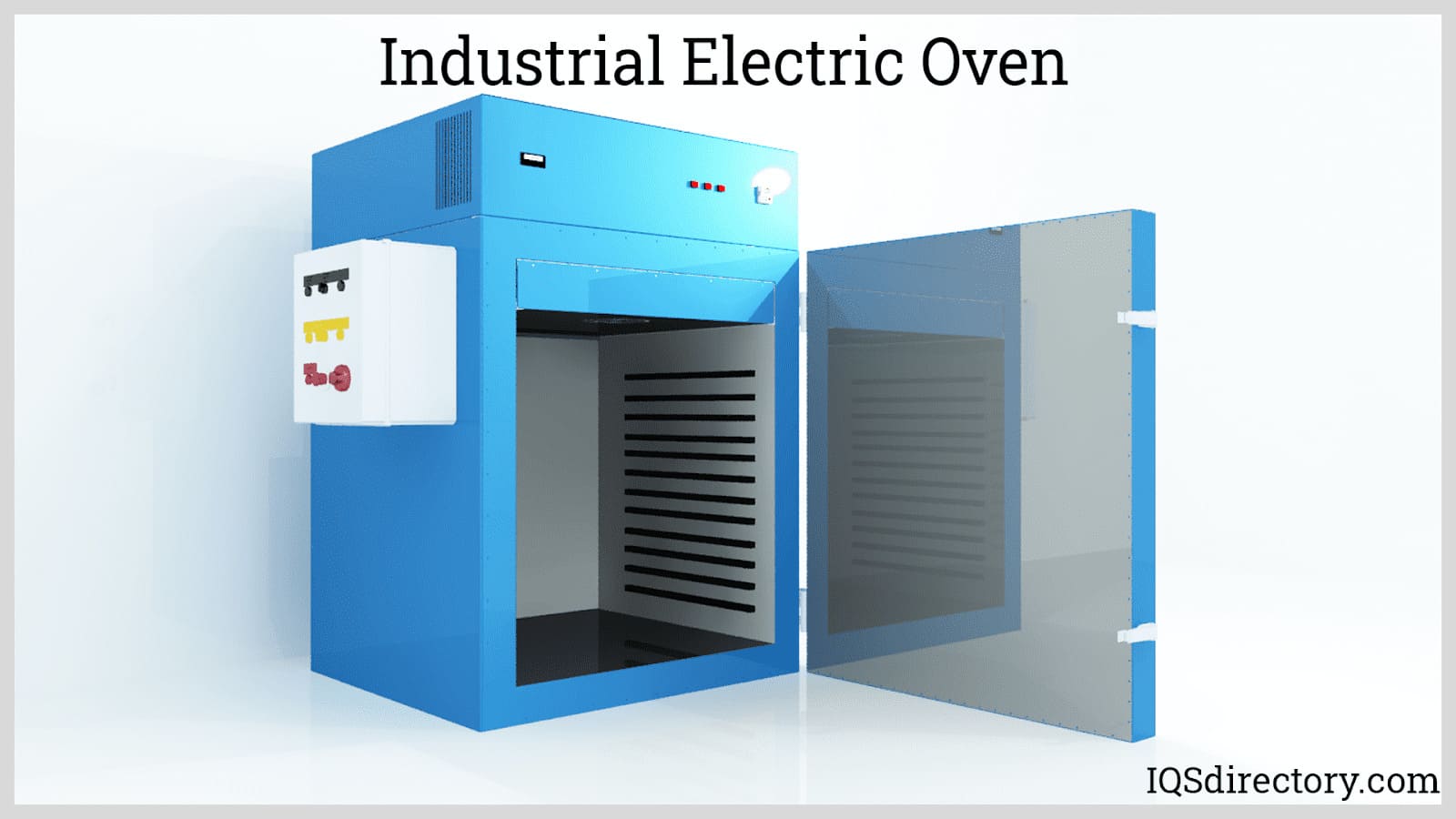 An electrical industrial oven is powered by incoloy sheathed heating elements which allows for the oven to be less expensive and not produce pollutants or emissions.
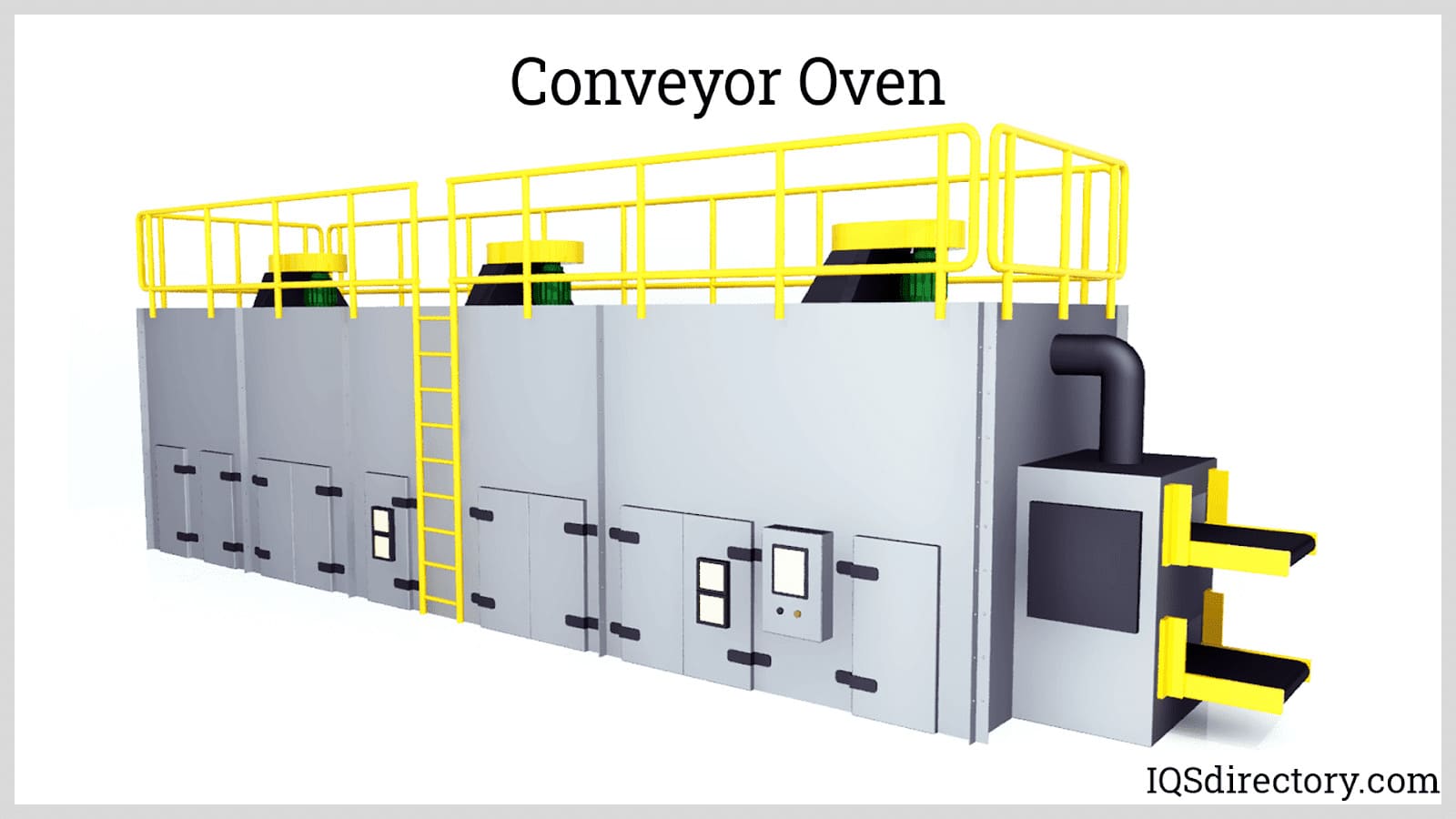 Continuous ovens are primarily used for mass production, while having the abilities to dry, cure, anneal, relieve stress, bonding, tempering, preheating, and forming.
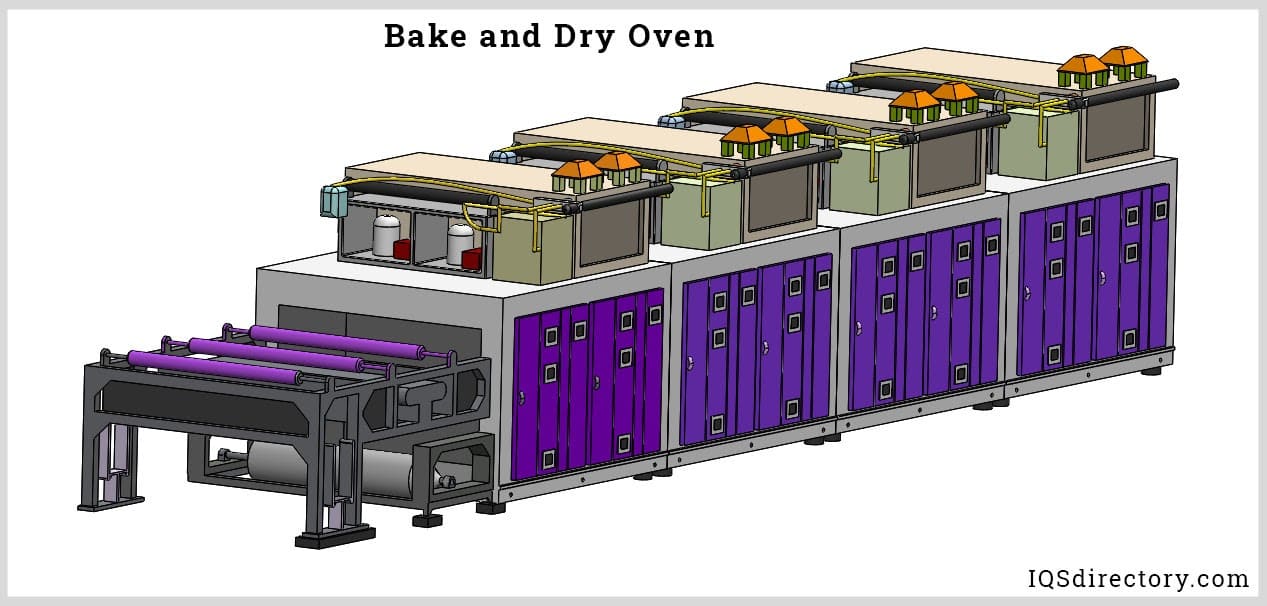 Releases moisture, volatile compounds, or trapped gases from coatings on the finished product.
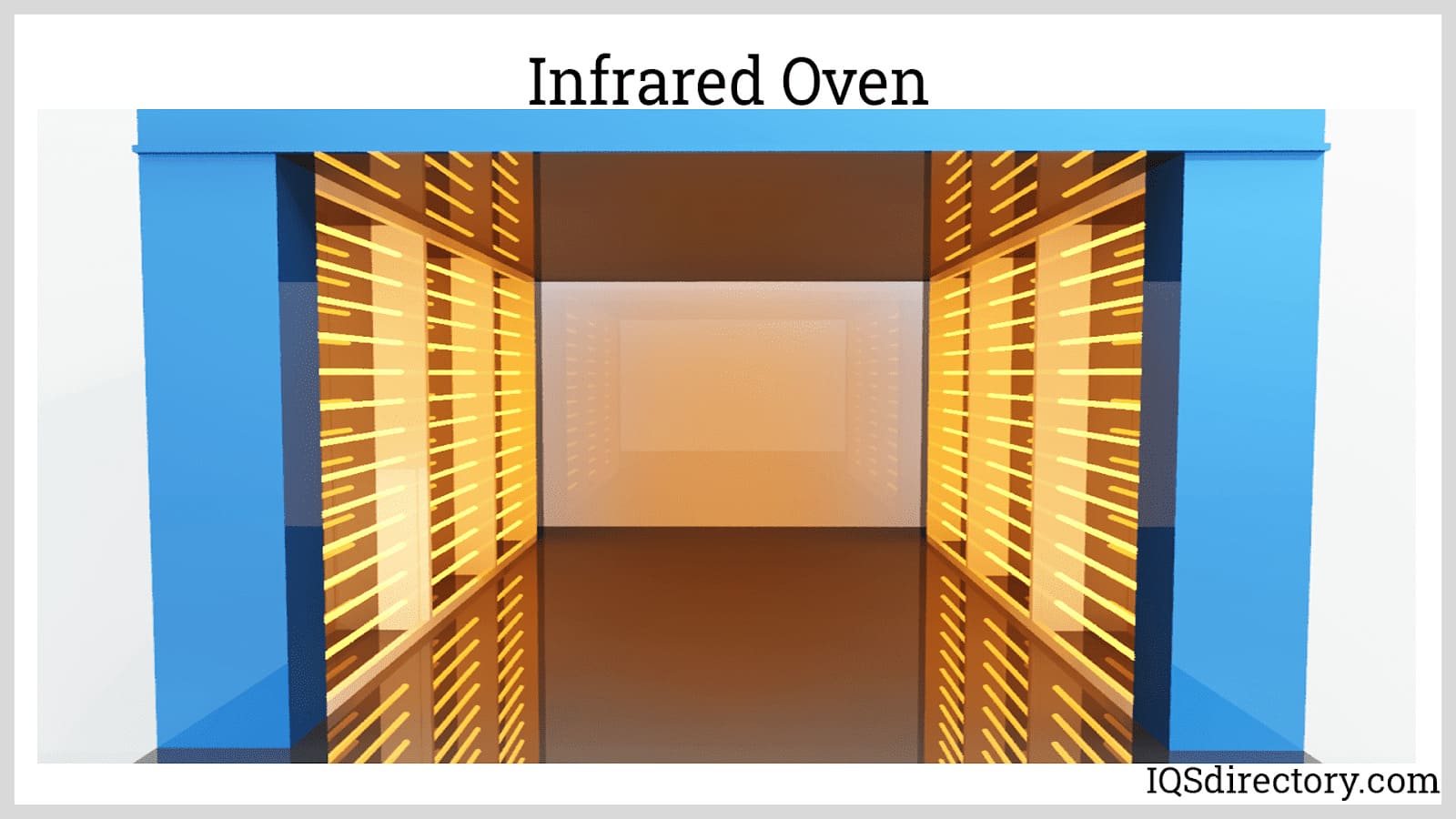 Uses high intensity lighting to maximize production while minimizing the energy usage.
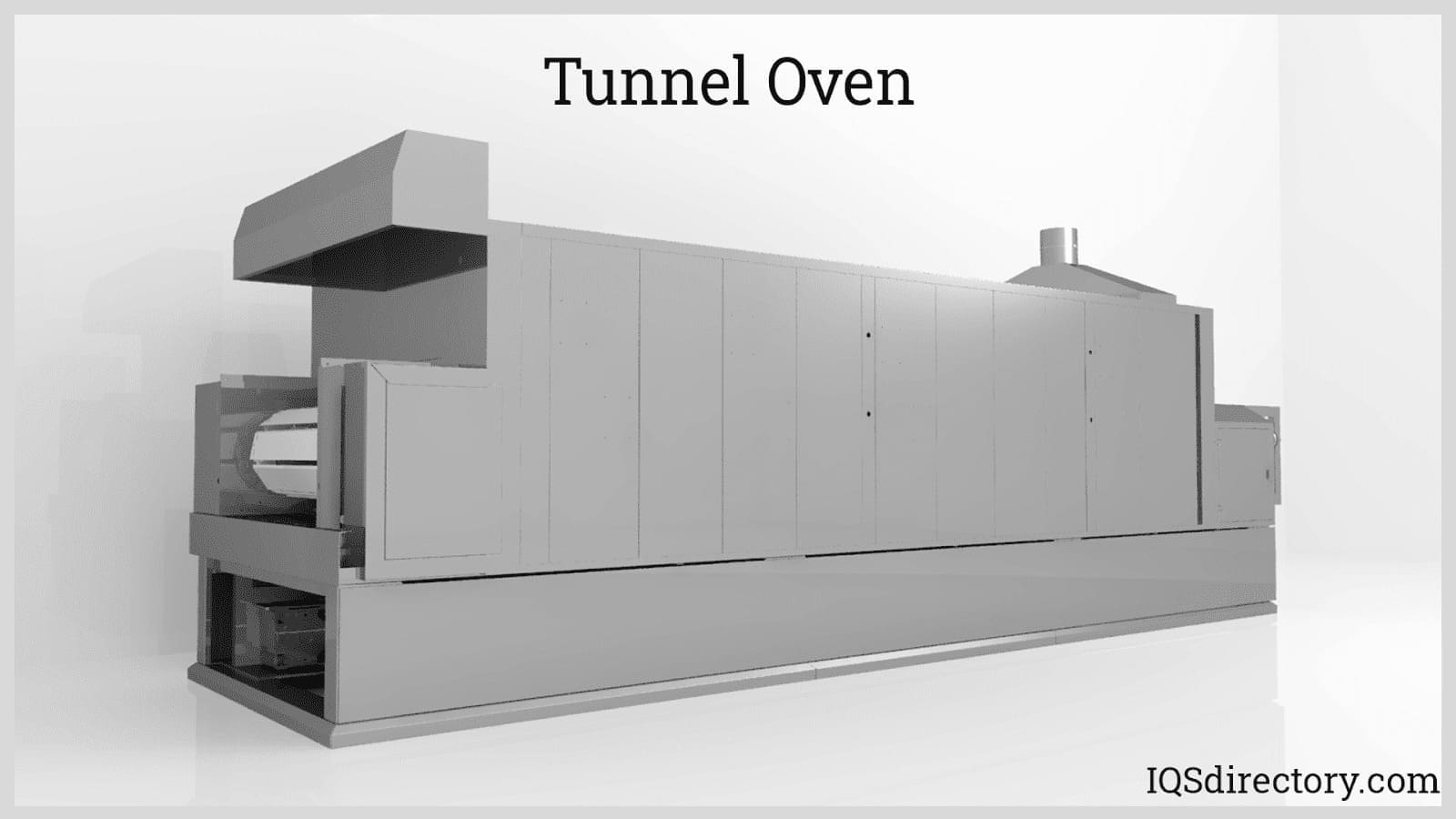 Tunnel ovens are open-ended chambers with a metal belt and a baking platform.
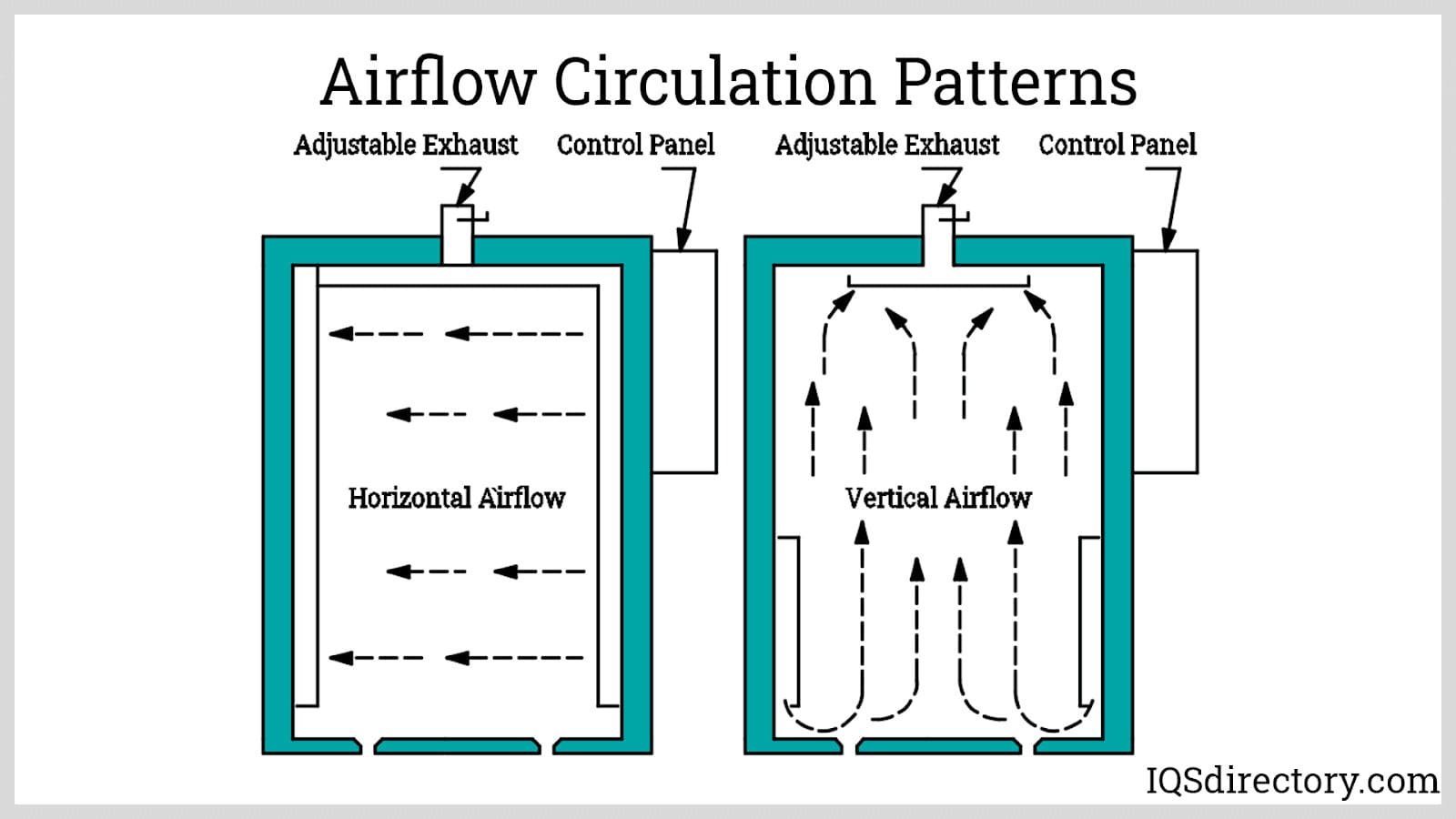 The air circulation patterns which can affect uniformity, pattern, and impingement.
Industrial Oven Types
- Baking Ovens
- Designed for food products and heat-sensitive materials, baking ovens provide controlled, repeatable heat for uniform baking and finishing. They are commonly built with easy-to-clean interiors and are selected when product consistency, surface quality, and repeatable cycle times matter.
- Batch Ovens
- Also known as cabinet or walk-in ovens, batch ovens are used for drying, curing, annealing, aging, and other thermal processes performed one load at a time. They offer flexibility for varied product sizes and production schedules and are often used when materials are loaded on racks, carts, or shelves.
- Bench Ovens
- Compact bench ovens are typically used for low-volume process heating, testing, sample preparation, and other smaller applications that still require dependable temperature control and uniformity.
- Commercial Ovens
- Commercial ovens bridge the gap between foodservice and industrial use, handling baking, drying, heating, and curing processes in operations that need dependable output, easy operation, and practical cleaning access.
- Continuous Ovens
- Continuous ovens are built for steady, high-volume throughput. With dedicated heating and sometimes cooling zones, they allow products to move through the process without repeated stop-and-start loading, making them well suited for mass production lines.
- Convection Ovens
- Convection ovens use circulated heated air to maintain more uniform chamber temperatures. They are widely used because good airflow improves heat transfer and helps products dry, cure, or bake more evenly.
- Conveyor Ovens
- Conveyor ovens move products through the heated chamber on a belt or similar transport system. They are preferred for high-volume operations that require repeatable dwell time, streamlined throughput, and uniform thermal treatment across many parts.
- Curing Ovens
- Curing ovens are used when heat must trigger or complete a chemical or physical change. They are common in powder coating, paint finishing, composite processing, adhesive activation, rubber hardening, and other applications where the finish or material must fully set.
- Drying Ovens
- Drying ovens are built to remove moisture, solvents, or trapped gases from products and raw materials. They commonly move through heat-up, soak, and cool-down phases and are used in sterilization, testing, lab work, coating preparation, and moisture-sensitive manufacturing processes.
- Electric Ovens
- Electric ovens use electrical heating elements to deliver precise, controllable process heat. They are often selected for clean operation, accurate temperature control, and suitability for applications where uniformity matters.
- Heat Treating Ovens
- Heat treating ovens are used to change the physical or chemical properties of metals, glass, and other materials. Through controlled heating and cooling cycles, these ovens help improve hardness, strength, ductility, or toughness.
- Infrared Ovens
- Infrared ovens transfer heat through electromagnetic radiation rather than relying mainly on heated air. This can support faster, efficient heating in applications where direct energy transfer is beneficial.
- Laboratory Ovens
- Laboratory ovens are used for research, testing, sample conditioning, drying, and controlled heating in scientific and technical environments where process accuracy and repeatability are especially important.
- Ovens
- The term ovens can refer broadly to enclosed heating systems used for baking, drying, curing, or thermal processing. In industrial settings, ovens are selected according to chamber size, process temperature, airflow design, and production requirements.
- Powder Coating Ovens
- Powder coating ovens are designed to melt and cure powder-coated finishes after application. They are widely used in finishing lines where coating adhesion, surface durability, and even cure are major quality requirements.
- Walk-In Ovens
- Walk-in ovens provide large chamber capacity for oversized parts, carts, racks, or high-volume batch loading. They are commonly used when production requires flexibility in product size and easy operator access to the chamber interior.
Industrial Oven Terms
- Annealing
- A controlled heating and cooling process used to soften metals or other materials, relieve internal stress, and improve machinability or ductility.
- Baking
- The application of heat to cook, cure, dry, or finish a material or product inside an oven chamber.>
- Batch Processing
- A production method in which materials are loaded, processed, and removed one discrete load at a time rather than moving continuously through the system.
- Conduction
- The transfer of heat through direct contact between materials or surfaces.>
- Convection
- The movement of heat by circulating air or fluid, commonly used in industrial ovens to improve temperature uniformity.>
- Curing
- A heat-driven process that causes a coating, adhesive, resin, rubber, or composite material to harden, set, or chemically cross-link.>
- Drying
- The removal of solvents, such as moisture, from an object using controlled heat in an industrial oven.
- Emittance
- A material’s ability to release radiant energy from its surface, affecting heat retention and transfer efficiency.
- Heat Transfer
- The movement of thermal energy between materials or within a product, always flowing from a warmer region toward a cooler one.
- Heat Treatment
- A controlled heating and cooling method used to change the physical or mechanical properties of metals and alloys.
- Heatsetting
- A process that uses heat to stabilize a material’s shape, texture, or dimensional properties, often in fibers, films, or formed products.
- Postheating
- The application of heat after a primary manufacturing step such as welding, brazing, or soldering to improve performance or reduce residual stress.
- Powder Coating
- A dry finishing process in which charged powder is applied to a part and then heated in an industrial oven until it melts, flows, and forms a durable coating.
- Preheating
- The controlled application of heat before a manufacturing process begins, helping materials reach a more even starting temperature.
- Process Heating
- The use of controlled industrial heat to change, dry, cure, stabilize, or otherwise process a material or product.
- Quenching
- A rapid cooling step used after heating, often to harden a metal or lock in desired material properties.
- Radiation
- The transfer of heat energy through electromagnetic waves without requiring direct contact.
- Radio Frequency
- A heating method that uses electromagnetic energy to generate internal heat in certain materials for specialized processing applications.
- Sintering
- A thermal process that bonds powdered particles into a stronger solid mass without fully melting the material.
- Stress Relieving
- A controlled heating cycle used to reduce internal stresses left behind by machining, forming, welding, or earlier heat treatment steps.
- Tempering
- A reheating process applied after hardening to reduce brittleness while keeping useful strength and hardness.
- Thermal Bonding
- The use of heat to join fibers, films, fabrics, or components by softening and bonding their contact surfaces together.
More Industrial Ovens Information
Oven Manufacturers