Hydraulic Valves
Hydraulic valves regulate, route, meter, and shut off the flow of pressurized fluid within systems built around pipes, hoses, cylinders, pumps, manifolds, and actuators. By controlling hydraulic fluid movement, these valves transform stored fluid power into usable mechanical force for lifting, clamping, steering, braking, holding, and positioning equipment in demanding industrial environments. In a typical closed-loop hydraulic circuit, fluid travels from a reservoir through a pump and valve network, delivers force where needed, and then returns for reuse. If you are comparing valve types, reviewing pressure control, or learning how hydraulic power transmission works, understanding the valve is the best place to start because it governs system response, safety, and efficiency.
Hydraulic Valves FAQ
What does a hydraulic valve do in a fluid system?
A hydraulic valve controls the start, stop, direction, pressure, and flow rate of hydraulic fluid in a closed-loop system, allowing pumps, cylinders, motors, and actuators to produce controlled mechanical motion in industrial, mobile, and heavy-duty equipment.
How does Pascal’s Law apply to hydraulic valves?
Pascal’s Law explains that pressure applied to a confined fluid is transmitted equally in all directions. Hydraulic valves rely on that principle to manage pressure, distribute force, and help hydraulic systems multiply output force with controlled accuracy.
What materials are hydraulic valves made from?
Hydraulic valves are commonly manufactured from iron, brass, carbon steel, or stainless steel because these materials offer strength, wear resistance, and corrosion protection. For lighter-duty or specialty applications, engineered plastics and other nonmetallic components may also be used.
How do solenoid-operated hydraulic valves work?
Solenoid-operated hydraulic valves use electrical current to energize a coil, create a magnetic field, and move an internal plunger or spool. That motion opens, closes, or redirects fluid passages for fast, repeatable, and remote-controlled hydraulic flow management.
What is hydraulic force multiplication?
Hydraulic force multiplication happens when pressurized fluid acts on pistons with different surface areas. A larger output piston can generate much greater force from a smaller input force, which is why hydraulic systems are widely used for lifting and load handling.
Where are hydraulic valves used in industry?
Hydraulic valves are used in construction equipment, agricultural machinery, industrial presses, automotive brake systems, material handling equipment, rescue tools, robotics, machine tools, and many other systems that require controlled force, motion, and pressure regulation.
What safety precautions should be taken when working with hydraulic systems?
Use gloves and eye protection, watch operating temperatures, relieve pressure before service, clean leaks quickly, and handle hydraulic fluids responsibly. Hydraulic systems should be inspected and maintained by trained technicians to reduce the risk of leaks, fire, component damage, and injury.
A Brief History of Hydraulic Development
-
Ancient Hydraulics
The science behind hydraulic valves reaches back thousands of years. In Ancient Greece, Aristotle described the continuous nature of water, while Archimedes advanced the understanding of displacement, buoyancy, and the relationship between pressure and fluid behavior. Much later, Leonardo da Vinci studied flow patterns, created mathematical descriptions of water movement, and even designed early control concepts for regulating water delivered to a wheel. These early observations did not yet produce modern hydraulic valves, but they established the physical principles that would later guide fluid power design, flow control, and pressure management.
Those ideas led to hydrostatics, the study of fluids at rest, and hydrodynamics, the study of fluids in motion. In 1648, Blaise Pascal formalized a principle that still sits at the center of hydraulic engineering: pressure applied to a confined fluid is transmitted equally in every direction. Today, Pascal’s Law explains why hydraulic systems can lift, clamp, press, or steer with such impressive mechanical advantage. It also explains why valve design, seal integrity, and accurate pressure control matter so much in every hydraulic circuit.
In 1795, Joseph Bramah patented the hydraulic press, demonstrating how confined fluid could deliver enormous working force. Additional progress came from Robert Boyle, Sir Isaac Newton, Daniel Bernoulli, and Leonhard Euler, whose work expanded the understanding of pressure, flow velocity, and energy transfer. Together, these contributions moved hydraulics from scientific theory toward practical engineering, paving the way for hydraulic control valves, fluid power systems, and the wide range of industrial valve technologies now used in manufacturing, transportation, construction, and automation.
Hydraulics in the 1900s
By 1907, Harvey Williams and Reynolds Janney had developed early axial piston devices that could function as both pumps and motors. These designs demanded better lubrication than water could provide, which accelerated the move toward oil-based hydraulic systems. Oil hydraulics soon became dominant in many industrial settings because they supported higher pressures, improved lubrication, and more dependable valve and pump performance. As systems grew more advanced, hydraulic valves became more specialized as well, with separate designs for directional control, flow regulation, pressure relief, pilot operation, and automatic safety response.
Hydraulic history also includes hard lessons in safety. After a devastating 1956 mining accident in Belgium linked to a ruptured hydraulic oil line and a severed electrical cable, regulations pushed certain industries toward water-based hydraulics where fire risk had to be reduced. That shift reinforced a lasting truth for hydraulic valve selection: the right fluid, valve material, seal design, and operating environment all matter. Today, both water-based and oil-based hydraulic systems are used, and engineers choose between them based on pressure requirements, safety goals, maintenance demands, and the working conditions of the application.
Making a Hydraulic Valve
Most hydraulic valves are built from iron, brass, steel, or stainless steel because those materials provide the strength, dimensional stability, wear resistance, and corrosion protection needed in pressurized fluid systems. In lighter-duty assemblies or specialized designs, plastics and other engineered materials may also be used. The valve seat and outer body are commonly produced through casting, die forging, or precision machining, depending on tolerance requirements, fluid compatibility, pressure rating, and service life expectations. Internal parts such as spools, discs, springs, seals, and plungers are finished to tight tolerances so the valve can meter flow accurately and minimize leakage. To actuate the valve, manufacturers may integrate a lever, handwheel, pilot control, pneumatic assist, or electrical operator, allowing the valve to match manual, semi-automatic, or automated hydraulic systems.
How Hydraulic Valves Work
-
Hydraulic Valve Stations
Hydraulic valves generally work by opening, restricting, diverting, or closing fluid passages inside a hydraulic circuit. In their simplest form, they can be thought of as open or closed, but in real hydraulic systems many valves also meter flow, balance pressure, dampen shock, and guide fluid to different work ports. A basic example uses two equal pistons in connected cylinders filled with hydraulic fluid. When force is applied to one piston, the other rises because the fluid is effectively incompressible and transmits pressure through the connected line. As long as the line remains full, clean, and largely free of air, the force applied at one end is transferred with impressive efficiency to the other.
Hydraulic Power Transmission and Master-Slave Systems
This is why hydraulic power transmission works so well in systems that need controlled force over distance. Power can be divided through manifolds, pilot lines, and secondary cylinders governed by a master cylinder or upstream control valve. An automotive brake system is a familiar example: one pedal input can send pressure through multiple lines to activate four brakes at nearly the same time. In industrial systems, the same principle allows one hydraulic power unit to supply several cylinders, motors, or valve sections while still maintaining coordinated movement and dependable load control.
Pistons and Hydraulic Force Multiplication
The pressure and force available at the output side of a hydraulic system can be increased or reduced by changing piston area. That relationship is the basis of hydraulic multiplication and one reason hydraulic valves are so valuable in lifting, clamping, forming, braking, and positioning operations. For example, a two-inch piston can move fluid to a much larger piston with greater surface area; the larger piston travels a shorter distance, but it can produce much higher force. This tradeoff between travel and output force lets engineers size cylinders, pumps, and valves for the exact demands of the application, whether the goal is speed, holding power, or controlled linear motion.
Flow Rate Management and Valve Functions
Different hydraulic valves are designed for different jobs inside the circuit. Some shut off flow when unsafe pressure levels are reached. Others throttle flow to maintain actuator speed, sequence movement between functions, or communicate with neighboring valves to balance performance across the system. These functions help reduce shock loads, avoid damaging pressure spikes, and keep hydraulic equipment stable under variable demand. In automated or electrically controlled systems, solenoid-operated valves use current to create a magnetic field that moves an internal plunger or spool, making it possible to control hydraulic flow remotely and repeatedly with high precision.
Check valves allow fluid to enter through an inlet and leave through an outlet while blocking reverse flow that could damage equipment or release a load unexpectedly. Directional control valves shift internal passages so fluid can be routed to different ports, cylinders, or hydraulic motors. Control valves regulate pressure and flow volume to keep circuits operating smoothly, while relief valves protect against overpressure by diverting excess fluid into a return path or auxiliary passage.
Overall Function of Hydraulic Valves
At the system level, hydraulic valves do far more than simply open and close. They manage force transmission, regulate pressure, determine actuator speed, support load holding, help with energy efficiency, and protect pumps, hoses, seals, and cylinders from avoidable damage. For anyone asking how hydraulic valves improve machine performance, the answer is simple: they are the control point that turns raw hydraulic power into safe, repeatable, and productive motion.
Hydraulic Valves Images, Diagrams and Visual Concepts
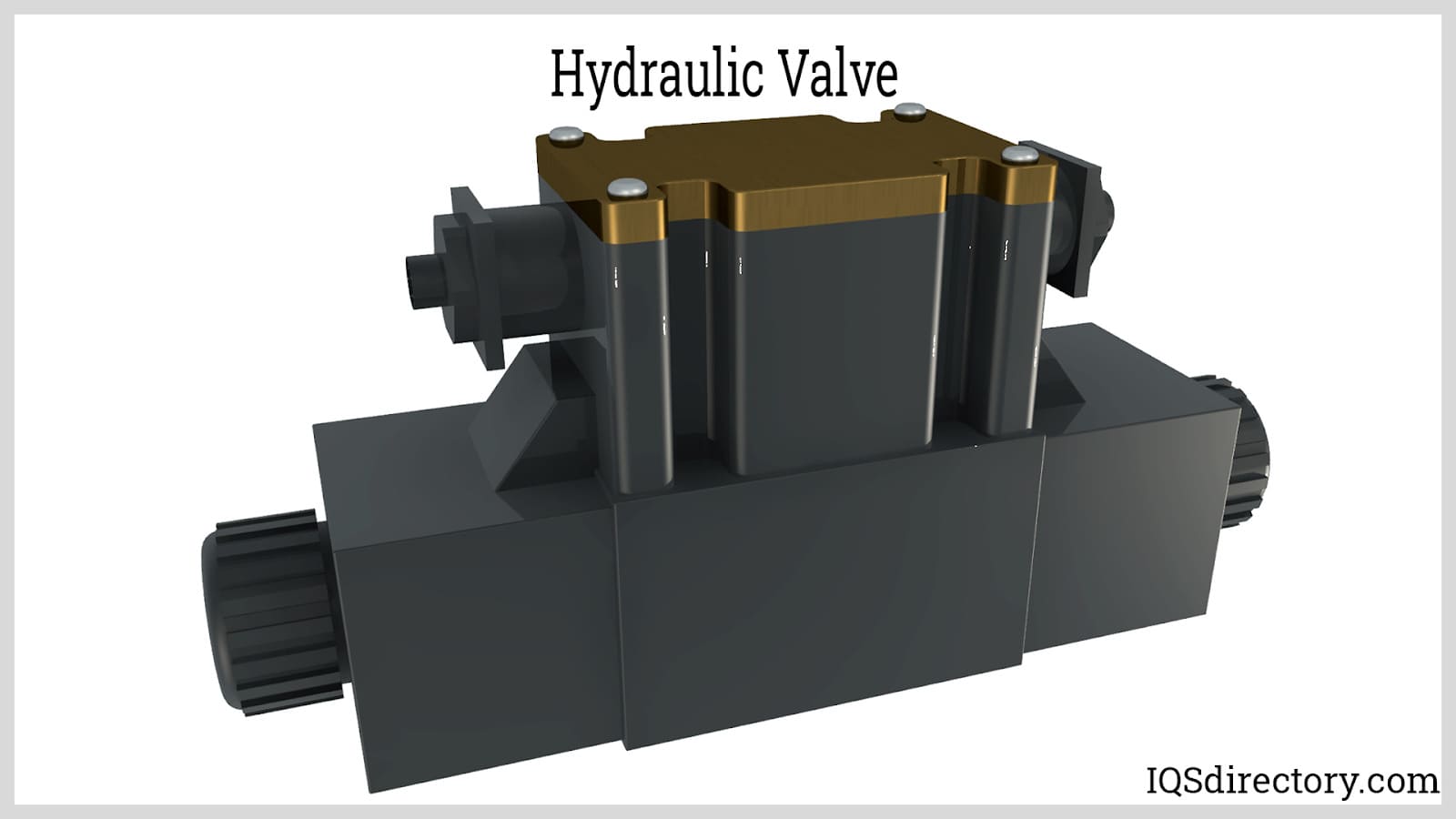 A hydraulic valve, a mechanical device that regulates, meters, and directs the movement of hydraulic fluid through a pressurized system.
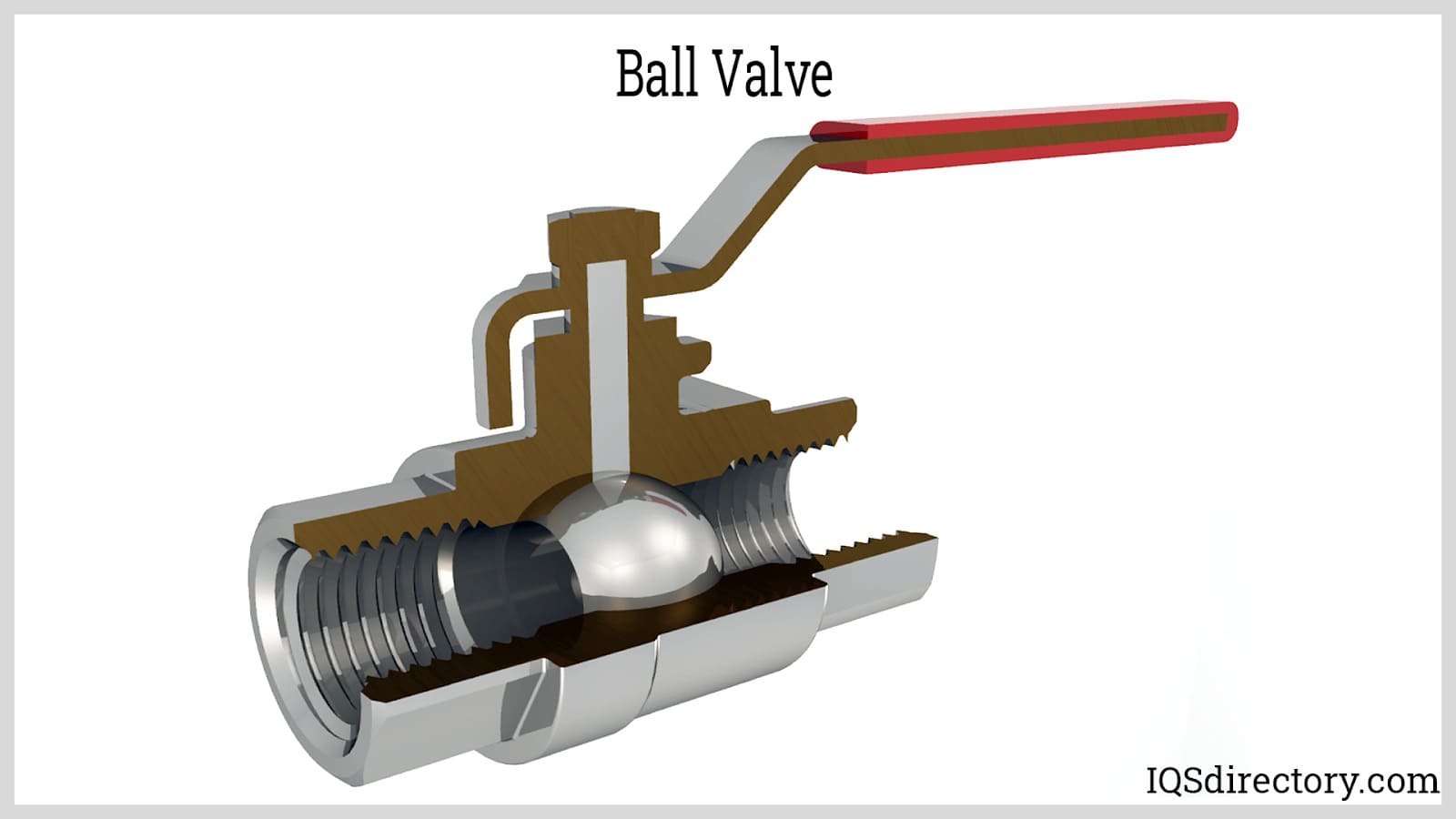 Ball valves are quarter-turn shutoff valves used to allow, block, and control hydraulic fluid flow in applications that need dependable sealing.
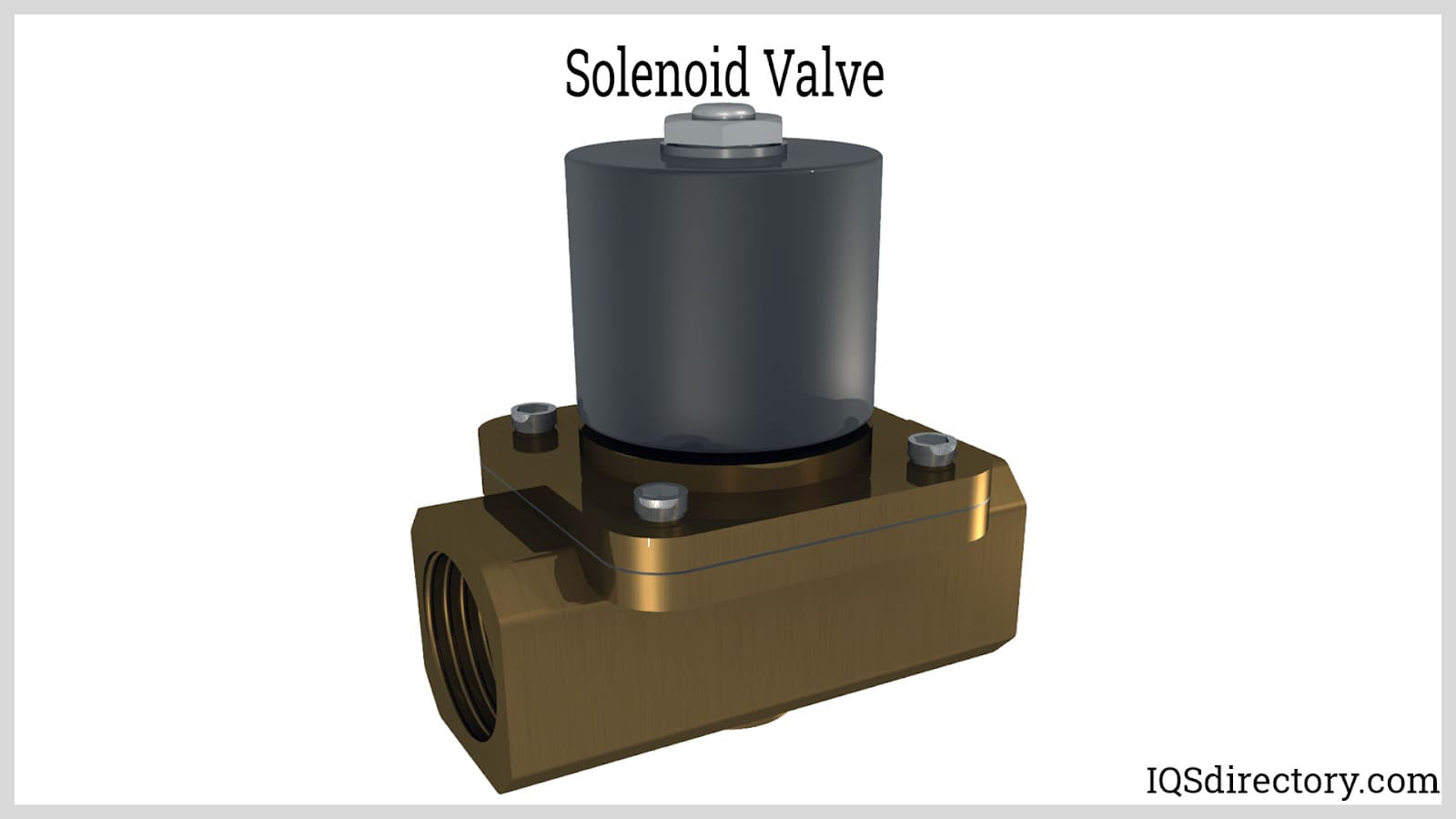 Solenoid-controlled directional valves are used in hydraulic systems to open, close, or redirect fluid flow through electrically actuated control.
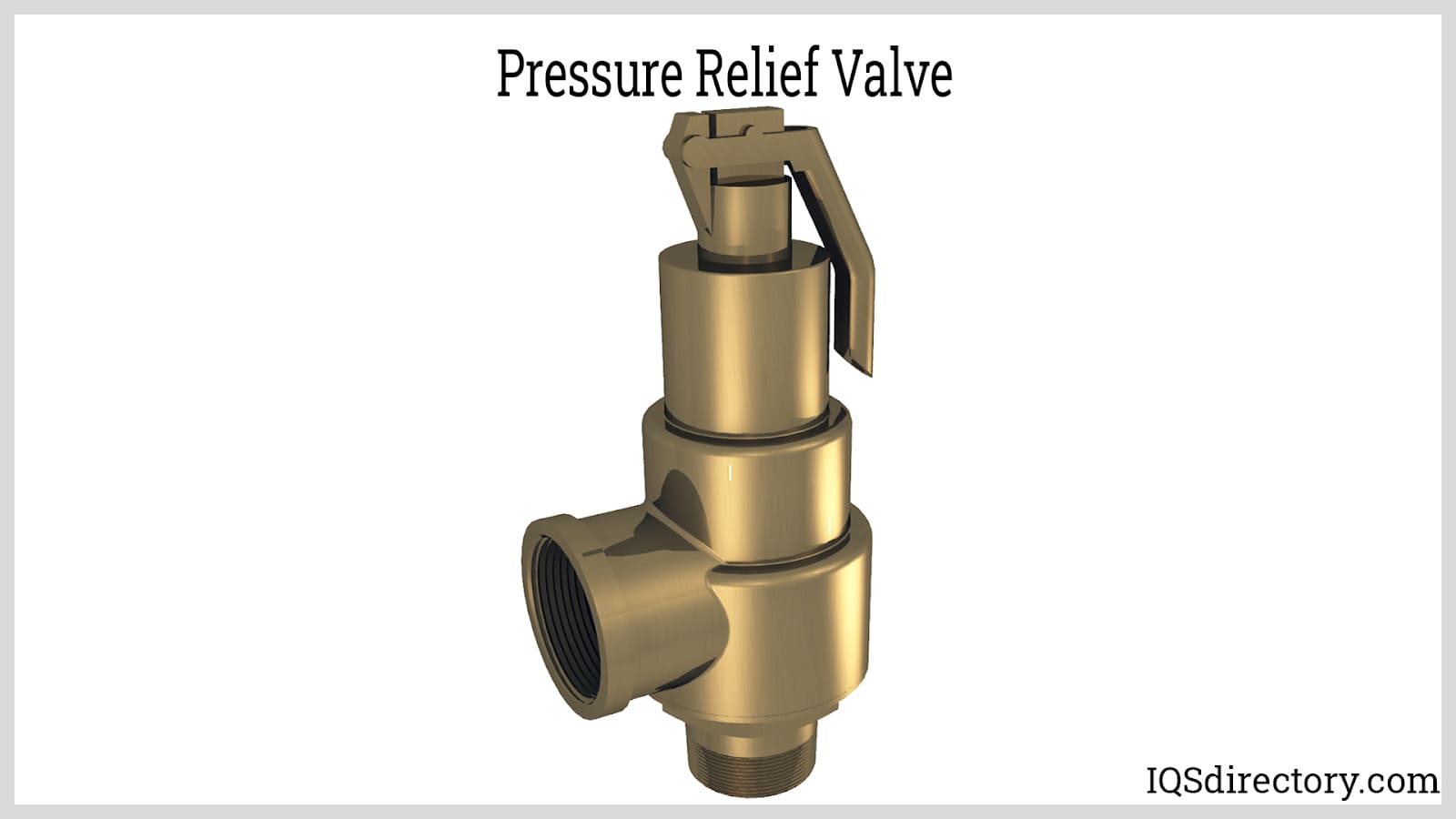 Pressure-control valves regulate hydraulic system pressure and help prevent the circuit from rising above a selected operating limit.
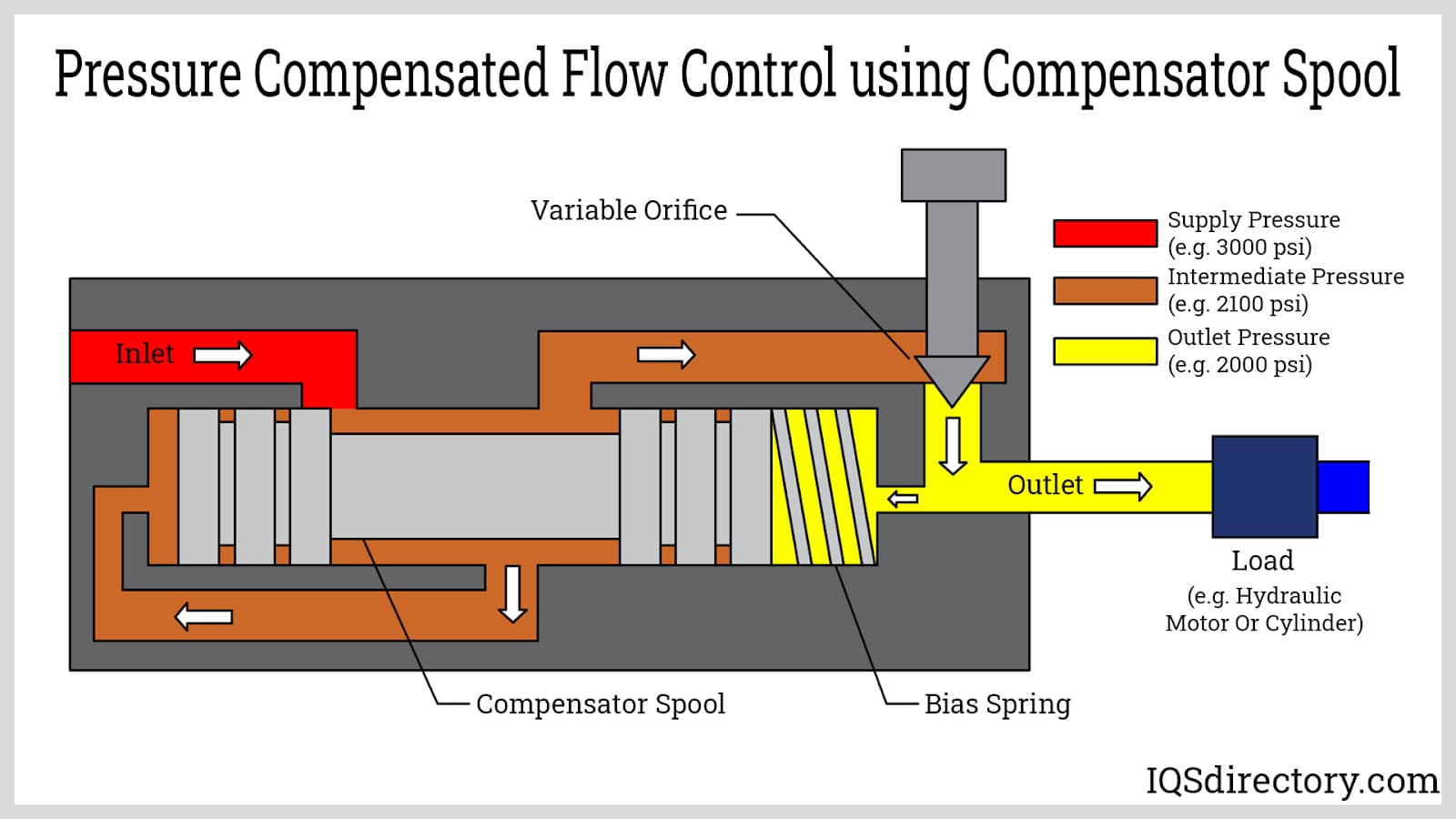 Pressure-compensated flow control valves are designed to maintain a stable volumetric flow rate even when pressure conditions change across the valve.
Types of Hydraulic Valves
Ball Valves
Parts that control fluid flow and pressure using a spherical sealing element. They are often selected for high-pressure service, compact shutoff, low leakage, and fast quarter-turn actuation.
Control Valves
Devices that manage the flow and pressure of hydraulic fluid. Types include check, cartridge, directional, relief, safety, shut-off, and solenoid valves, each available in multiple configurations, flow capacities, and pressure ratings for different hydraulic circuits.
Conventional Safety Relief (CSRV)
A spring-loaded pressure relief valve whose behavior changes with backpressure. These valves are used where overpressure protection must be built into the hydraulic design.
Directional Control Valves
Valves that send hydraulic fluid to specific paths within a system. They are widely used in farm machinery, mobile equipment, presses, and hydraulic tools that need controlled forward and reverse motion.
Electric Hydraulic Valve
Valves that respond to electrical signals, allowing automated control of hydraulic flow, pressure, sequence, and machine function from remote or programmable systems.
Float Valves
Mechanically operated by a float, these valves open or close automatically as liquid level changes, making them useful where level-based control is required.
Gate Valves
Linear-motion valves that use a gate or flat closure element to provide shutoff with minimal pressure drop when fully open.
Globe Valves
Multi-turn valves with a closing element that moves perpendicular to the seat, making them well suited for throttling, metering, and controlled flow adjustment.
Hydraulic Valves
The general name for components that control hydraulic fluid direction, pressure, and flow. Common valve parts include the body, bonnet, seat, stem, and sealing element.
Manifold Devices
Components that organize and control fluid flow between sections of a hydraulic system, allowing monitoring, distribution, and redirection between pumps, valves, and actuators.
Needle Valves
Valves with narrow ports and threaded plungers designed for fine adjustment of low flow rates, calibration work, and instrumentation-related control.
Pressure Safety Valves (PSV)
Valves that open or close based on inlet pressure and are used specifically to protect equipment and operators from unsafe pressure conditions.
Pressure Relief Valves (PRV)
Valves that reopen once system pressure returns to the desired range, preventing harmful overpressure while allowing the hydraulic circuit to resume normal operation.
Spool Valve
Also called a directional control valve, this design shifts hydraulic flow paths to direct power. The spool position determines whether force is applied in a push, pull, extend, retract, or neutral state.
Proportional Valve (P Valve)
A regulator that adjusts output pressure or flow in proportion to an input signal, often used where smoother control is needed in braking, steering, or industrial motion systems.
Solenoid Valve (S Valve)
An electromechanical valve operated by a magnetic field created when current energizes a coil, enabling direct or pilot-operated fluid control.
Hydraulic Cartridge Valves
Threaded inserts, also called logic or 2/2 valves, used in manifolds to regulate pressure, direction, or flow rate while saving space in compact hydraulic assemblies.
Check Valves
Two-port directional valves that allow flow in one direction only and close under backpressure to prevent reverse movement or fluid return.
Relief Valves
Safety-focused valves designed to discharge or reroute fluid when pressure rises above a safe operating level, often returning fluid to a reservoir.
Position Valves
Also known as 3-way valves, these units combine two valve functions in one body and are often used to pilot or coordinate other hydraulic valves.
Safety Relief Valves (SRV)
A relief valve style known for rapid response, with operation that scales with pressure rise to help guard the system from damaging overload conditions.
Uses for Hydraulic Valves
Hydraulic valves are widely used in automotive systems, where they help actuate brakes, manage clutch and transmission functions, support steering response, and assist lubrication or climate-related circuits. Hydraulic cylinders in car jacks convert fluid pressure into lifting force, while rescue tools such as the Jaws of Life depend on hydraulic piston rods and valve-controlled pressure to cut, spread, push, or pull apart vehicle structures during emergency response work.
In heavy equipment, hydraulic valves manage high operating pressures and deliver precise control over dump truck beds, excavator arms, grader blades, track drives, conveyors, scissor lifts, injection molding machinery, and plastics manufacturing equipment. Buyers comparing hydraulic valve options often look at working pressure, flow capacity, response time, contamination tolerance, mounting style, and compatibility with the existing pump, manifold, and actuator layout.
Hydraulic control valves are equally valuable in high-precision systems. They guide crane booms lifting rail equipment, support industrial automation cells, and can even be adapted for miniature systems used in advanced medical tools. From amusement rides and drawbridges to machine tools and robotics, hydraulic valves make it possible to produce controlled motion with both high force and fine repeatability. When engineers ask what hydraulic valves are used for, the answer spans nearly every industry that depends on force, motion control, and dependable fluid power.
Hydraulics In Motion
One of the clearest everyday examples of hydraulic machinery is the log splitter. A four-stroke gas engine drives an oil pump, the pump sends hydraulic fluid through a spool valve, and the valve directs that pressurized fluid into a hydraulic ram. As the operator moves the control lever, the spool valve routes oil to one side of the cylinder, extending the ram and forcing a wedge into the log. This simple sequence shows how a hydraulic valve converts stored fluid energy into controlled linear motion while also allowing the operator to start, stop, and reverse the work cycle.
The gear pump is one of the most common pumps used in hydraulic systems because it is a positive displacement design that moves fluid in a steady stream. Inside the housing, two intermeshed gears rotate and create suction on the inlet side. One gear is driven by a motor while the other acts as an idler, and together they move hydraulic fluid from the inlet to the outlet with limited internal leakage. Clean fluid, proper viscosity, and tight tolerances all contribute to dependable pump and valve performance.
The hydraulic ram in the log splitter functions as a piston rod driven by pressurized fluid. As pressure builds behind the piston, the ram advances and the wedge splits the wood. When the operator releases or reverses the control lever, the spool valve redirects fluid back through the circuit and the ram retracts, readying the machine for the next cycle. A reservoir and filter help keep the hydraulic oil clean so the valve, pump, and cylinder can continue operating efficiently over time.
In larger hydraulic systems, many pumps, rams, accumulators, sensors, and valves work together to perform demanding tasks such as lifting, digging, clamping, hauling, pressing, or positioning loads. The same hydraulic principles can also be scaled down for high-precision tools used in microsurgery or ophthalmic procedures. In advanced multi-axis equipment, valves may be governed by computer control systems so the machine can deliver accurate, repeatable motion with very little operator effort.
Hydraulic Maintenance and Safety
Wear gloves and safety glasses. Hydraulic fluids can irritate skin and eyes, and even a tiny pinhole leak can inject fluid into the skin under very high pressure. That kind of injury requires immediate medical attention, which is why pressurized systems should always be treated with respect.
Monitor system temperatures. Many hydraulic fluids are flammable, and overheating can shorten seal life, reduce lubrication quality, and increase the chance of failure in pumps, hoses, and valves.
Clean up spills immediately. Hydraulic fluid is an effective lubricant, which also means it can make walking surfaces dangerously slippery. Fast cleanup reduces slip hazards and keeps contaminants from spreading through the work area.
Be mindful of environmental impact. Conventional hydraulic oils are not environmentally friendly, so fluid selection, storage, cleanup, and disposal should follow good environmental practices and any applicable site requirements.
Trust qualified professionals. Skilled technicians can verify safe operation, identify leaks or wear early, check pressure settings, and help prevent downtime, component damage, and expensive repairs in hydraulic power systems.
Hydraulic Valve Terms
-
Accumulator
A container that stores pressurized fluid and helps absorb shock, smooth pulsation, or provide supplemental hydraulic energy.
Backpressure
The pressure acting on the downstream side of a valve, seat, or relief device outlet.
Bonnet
A removable external valve component that allows assembly, inspection, and maintenance access; often considered part of the body assembly.
Bleed
A small, controlled release of fluid from a pressurized hydraulic system.
Cavitation
The formation of vapor cavities in a liquid when pressure drops below the fluid’s vapor pressure, often damaging pumps and valves.
Cracking Pressure
The pressure at which a valve first begins to open and permit flow before reaching full set pressure.
Cylinder
A device that converts hydraulic energy into linear mechanical motion and force.
Differential Set Pressure
The difference between the set pressure and a constant superimposed backpressure.
Disc
The sealing element, often an O-ring, wedge, or shaped surface, that closes the valve against the seat.
Full Flow
A condition in which the maximum intended volume of fluid is allowed to pass through the flow path.
Flow Rate
The volume, mass, or weight of fluid moving through a hydraulic system in a given period of time.
Gear Boxes
Mechanical devices used to reduce the manual effort required to operate larger valves.
Hydraulic Actuator
A device attached to a valve stem or control member that uses hydraulic power to open, close, or reposition the valve.
Hydraulics
The science and engineering discipline concerned with the behavior, control, and practical use of fluids under pressure.
Meter
An instrument used to measure fluid pressure, flow, or volume in a hydraulic system.
Overpressure
The amount by which system pressure rises above the valve’s intended set pressure during discharge or upset conditions.
Pre-Charge
The residual or preset pressure present in a hydraulic actuator or accumulator before hydraulic fluid is introduced.
Reduced Bore
A term indicating that the valve’s internal diameter is smaller than the diameter of the connected pipeline or passage.
Seal
A component that prevents fluid leakage and blocks contamination from entering the hydraulic system.
Seat
The fixed sealing surface against which the valve disc or closure member presses to stop flow.
Set Pressure
The inlet pressure at which a valve is designed to open, hold, or regulate fluid flow.
Solenoid
A coil of wire that produces a magnetic field when energized and is commonly used to actuate hydraulic valves.
Superimposed Backpressure
The static pressure at the outlet of a relief device caused by the discharge system before the device opens; it may be constant or variable.
Static Water Pressure
The measured water pressure in a system when no flow is taking place.
Viscosity
A measure of a fluid’s resistance to flow, determined by its internal friction under defined temperature and operating conditions.