Hydraulic Cylinders
Hydraulic cylinders are actuation devices that transform the hydraulic energy of pressurized fluids into the mechanical energy required to control the movement of machine linkages and attachments. This transformation results in linear force and motion. Hydraulic cylinders play a critical role in the broader field of hydraulics—a specialized area of power transmission that captures the energy of moving liquids under pressure and converts it into mechanical output. Power transmission, in general, involves the application of technology to convert energy into practical, usable forms. Hydraulics, as a subset of power transmission, belongs to the broader category of fluid power, which relies on the movement of fluids—both gases and liquids—to generate energy.
In practical terms, hydraulic cylinders are the straight-line workhorses of hydraulic systems. They are used whenever equipment must push, pull, lift, clamp, tilt, steer, or position heavy loads with controlled linear motion. Buyers researching hydraulic cylinders often compare bore size, stroke length, pressure rating, rod diameter, mounting style, and seal material because these details directly influence force output, speed, service life, and compatibility with the surrounding hydraulic system.
Hydraulic Cylinders FAQ
What is the main function of a hydraulic cylinder?
A hydraulic cylinder converts pressurized hydraulic energy into mechanical energy, producing linear force and motion to move or lift loads in machinery and equipment.
How do hydraulic cylinders work in a hydraulic system?
Hydraulic cylinders operate within sealed systems where pressurized fluid acts on a piston to create motion. The piston rod extends or retracts depending on which side the fluid enters, converting fluid power into mechanical force.
What are the main parts of a hydraulic cylinder?
Key components include the barrel, piston, piston rod, cylinder head, cap, ports, and seals. Together, these elements maintain pressure, direct fluid flow, and transmit linear motion efficiently.
What is the difference between single-acting and double-acting cylinders?
A single-acting cylinder uses hydraulic pressure in one direction and relies on gravity or springs to retract. A double-acting cylinder applies pressure to both sides of the piston, controlling movement in both directions.
Which industries commonly use hydraulic cylinders?
Hydraulic cylinders are widely used in construction, agriculture, manufacturing, aerospace, and transportation. They power equipment like excavators, forklifts, cranes, and material handlers across industrial facilities nationwide.
What materials are used to make hydraulic cylinders?
Cylinders are made from durable metals such as steel, stainless steel, aluminum, and bronze. Seals may use materials like nitrile rubber or viton to resist heat, pressure, and fluid corrosion in heavy-duty applications.
How can maintenance improve hydraulic cylinder performance?
Regular inspection, proper mounting, and correct surface finishing of rods prevent leaks and wear. Scheduled servicing ensures longer equipment life, stable pressure, and reduced downtime in industrial systems.
What are common accessories used with hydraulic cylinders?
Common accessories include clevis mounts for pivoting motion, flanges for secure installation, and trunnions for flexible positioning. These components enhance motion range and mounting stability in hydraulic setups.
History of Hydraulic Power and Cylinders
The history of hydraulic cylinders is closely intertwined with the broader evolution of hydraulic power itself. Hydraulics, in its earliest form, dates back to ancient times when the movement of water was harnessed to perform mechanical tasks. One of the simplest uses was directing flowing water to turn wheels. The Romans effectively used this principle to operate mills for producing flour, processing timber, and other essential goods.
Modern hydraulics began to take shape in 1648 when French scientist Blaise Pascal discovered that pressure within a confined fluid remains constant and acts equally in all directions. This foundational concept—now known as Pascal’s Law—laid the groundwork for future developments but remained theoretical for some time. In 1738, Daniel Bernoulli expanded upon Pascal’s ideas by exploring how fluids behave under different flow conditions and elevations, eventually using this understanding to improve pumps and milling systems. The first major practical leap came in 1795, when Englishman Joseph Bramah patented a hydraulic press driven by fluid power. In 1840, William Armstrong advanced hydraulic technology further with innovations like a hydraulically powered crane, offering more efficient alternatives to traditional watermills. Together, Bramah and Armstrong are widely regarded as the pioneers of modern hydraulics.
Hydraulic cylinders were integral to both Bramah’s and Armstrong’s innovations. Bramah’s success hinged on his ability to control the movement of a press plate using fluid transferred between a small and large cylinder, exploiting the force-multiplying effects of differing surface areas. Armstrong’s crane utilized a specialized type of cylinder called a “jigger,” designed for lifting heavy loads with fluid power. As the field of hydraulics has evolved, hydraulic cylinders have advanced in tandem—refining aspects such as materials, internal structure, and mounting configurations to meet the growing demands of industrial and mobile applications.
That long history helps explain why hydraulic cylinders remain such a common answer for high-force linear motion. As equipment became larger, faster, and more specialized, cylinder designs evolved to handle higher pressures, longer strokes, tighter tolerances, and more demanding environments. Today, modern hydraulic cylinders are used not only for brute force, but also for controlled positioning, synchronized movement, and application-specific motion in machines across nearly every major industrial sector.
Advantages of Hydraulic Systems and Cylinders
The use of hydraulic systems provides several key advantages within the broader field of power transmission. Many of these benefits are outlined in greater detail in our article on Hydraulic Pumps.
Hydraulic cylinders in particular offer strong linear force from a relatively compact assembly. They make it possible to lift or push heavy loads, hold position under pressure, and perform motion tasks that would otherwise require larger mechanical linkages or more complex drive arrangements. In many applications, the appeal comes from their combination of force density, controllability, and the ability to fit into equipment that needs direct, repeatable straight-line movement.
How Hydraulic Power Works
The core principle of hydraulics is rooted in the incompressibility of liquids, which distinguishes them from gases. This property, combined with Pascal’s Principle, allows force applied at one point in a confined liquid to be transmitted efficiently to another point within the same system—enabling the operation of various mechanical devices. A more detailed exploration of the principles behind hydraulic power is available in our article on Hydraulic Pumps.
Because the fluid transmits force so effectively, a hydraulic system can direct pressure to the exact actuator that needs to move. In the case of hydraulic cylinders, that means pressure becomes straight-line pushing or pulling action at the piston rod. This simple relationship between pressure, area, and force is why hydraulic cylinders are so often selected for heavy lifting, pressing, clamping, steering, tilting, and other linear work functions.
How Hydraulic Cylinders Work
As previously noted, Pascal’s Law applies specifically to confined liquids. Therefore, for a liquid to function hydraulically, it must operate within a sealed or enclosed system. Such a system is known as a hydraulic power pack or hydraulic power unit. Typically, these units include a reservoir to store unused hydraulic fluid, a pump that supplies fluid to the system, various types of tubing to transport the fluid, and actuators that convert the energy of hydraulic fluid flow into usable mechanical force.
Hydraulic cylinders represent one of the primary forms of hydraulic actuators. The other main type is the hydraulic motor. The essential difference between the two lies in the type of motion they generate—hydraulic cylinders produce linear mechanical motion, whereas hydraulic motors generate rotary mechanical motion.
While the entire hydraulic power unit is designed to harness the energy of pressurized fluid, it is within the cylinder that the actual conversion of hydraulic energy into mechanical motion takes place. A typical hydraulic cylinder includes a gear system and two valves positioned around a piston. One side features an intake check valve, while the opposite end houses a discharge check valve. Depending on the application, systems may include a single piston or gear cog, or several working in tandem.
To operate, a hydraulic system requires tubing and a pressure vessel (or hydraulic pump) to move and store the fluid. When pressurized fluid is introduced into the system, it pushes against the piston, activating the connected rod. As the pump withdraws the piston, it creates a vacuum that draws fluid from the reservoir through the intake valve into the cylinder. Once the piston returns to its starting position and the intake valve closes, the fluid becomes pressurized. This pumping action continues—at variable speeds—until the pressure is high enough to force fluid through the discharge valve, generating the mechanical energy needed to power attached machinery or move a load.
The direction of motion depends on which side of the piston the pressurized fluid enters. Fluid applied above the piston causes the rod to retract, while fluid applied below it causes the rod to extend. By carefully controlling the volume and pressure of fluid introduced to each side, operators can regulate the piston’s movement and, in turn, the motion of the connected load.
In real-world equipment, the hydraulic cylinder must be evaluated as part of the full hydraulic circuit. Cylinder speed depends on fluid flow. Cylinder force depends on pressure and piston area. Cylinder life depends on rod finish, seal condition, mounting alignment, and fluid cleanliness. That is why selecting the correct cylinder is as much about system matching as it is about the cylinder body itself.
Parts of a Hydraulic Cylinder
A hydraulic cylinder (suppliers of which can be found on IQS Directory) contains some of the most essential mechanical components within a hydraulic system. Although their role in converting hydraulic energy into mechanical motion is critical, basic hydraulic cylinders remain relatively simple in design. The main components of a hydraulic cylinder include the following:
- The primary structure is the barrel, which can be round, rectangular, or oval in shape. This barrel forms the main body of the cylinder and houses all internal components.
- At one end of the barrel is the cylinder cap, which seals off the non-moving end. The opposite end features the cylinder head, which also closes off the barrel but includes a sealed opening that allows the piston rod to move in and out. In double-acting cylinders, a cylinder head is present at both ends, and there is no end cap.
- Inside the barrel, the piston face functions as a metal disc precisely fitted to the barrel’s inner diameter. It divides the cylinder into two separate chambers and plays a crucial role in creating linear motion through the pressure of hydraulic fluid. All cylinder body types rely on hydraulic pistons (such as those available from suppliers on IQS Directory) to perform lifting, tilting, turning, steering, pressing, pulling, and pushing operations. Due to the intensity of these tasks, pistons are constructed from highly durable materials.
- The piston is connected to the piston rod, which extends from within the barrel through the cylinder head and attaches to the machinery that requires movement. The rod’s motion is what drives the mechanical output of the system.
- Each chamber within the barrel includes a port through which high-pressure hydraulic fluid enters and through which spent fluid is returned to the reservoir.
- To maintain efficiency and prevent loss of pressure, seals are placed around the piston, cylinder head, and valves. These seals ensure fluid remains confined to its designated compartments and prevent leakage that could otherwise reduce the cylinder’s functionality.
Together, these components determine how well a hydraulic cylinder handles pressure, friction, contamination, and repeated cycling. Buyers often pay close attention to barrel construction, rod coating, seal package, and port arrangement because those details influence serviceability, leakage resistance, and suitability for mobile equipment, industrial presses, washdown environments, or other demanding operating conditions.
Hydraulic Cylinder Images, Diagrams and Visual Concepts
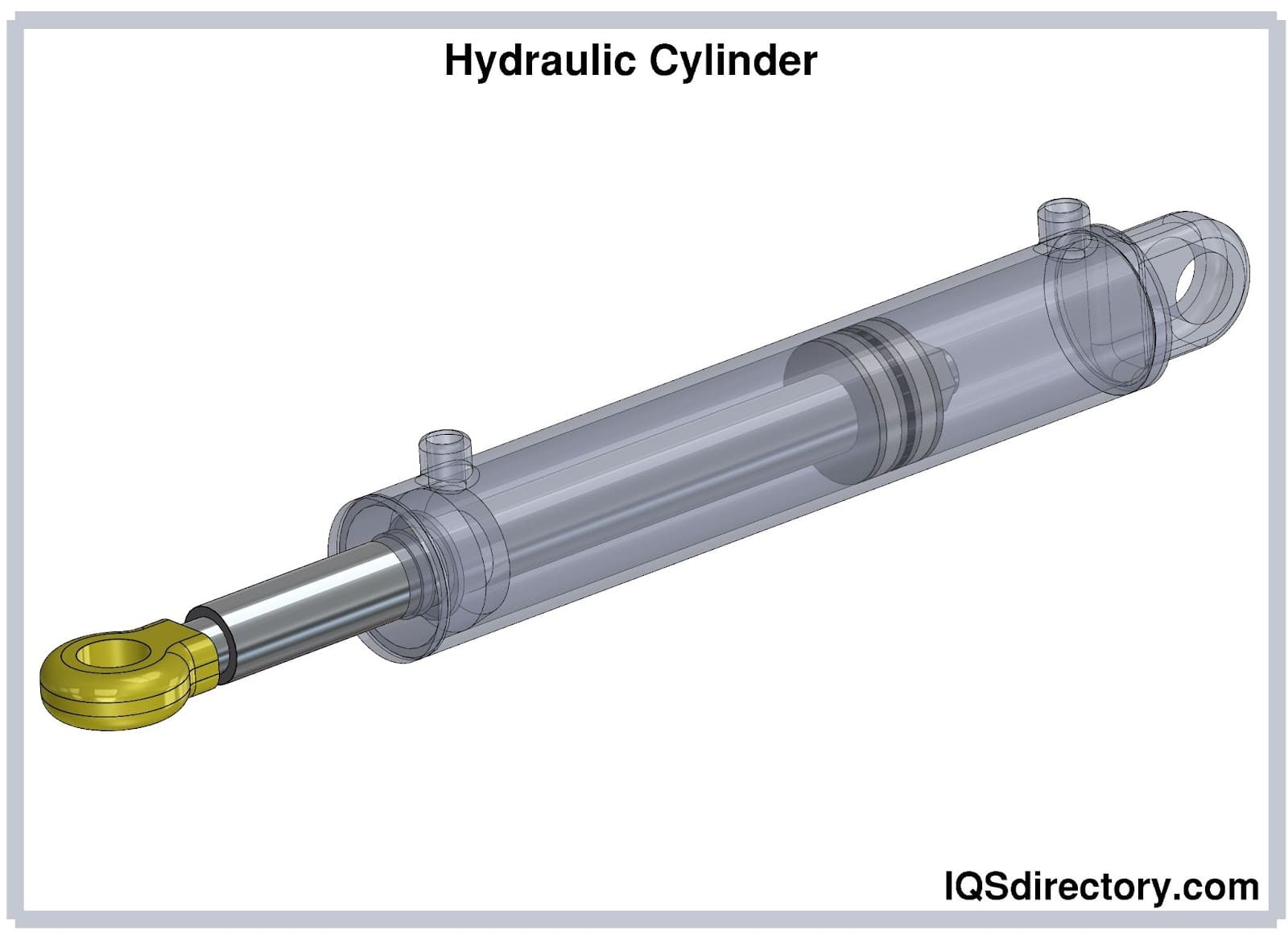 Hydraulic cylinder, a tube that produces linear actuation utilizing hydraulic pressure.
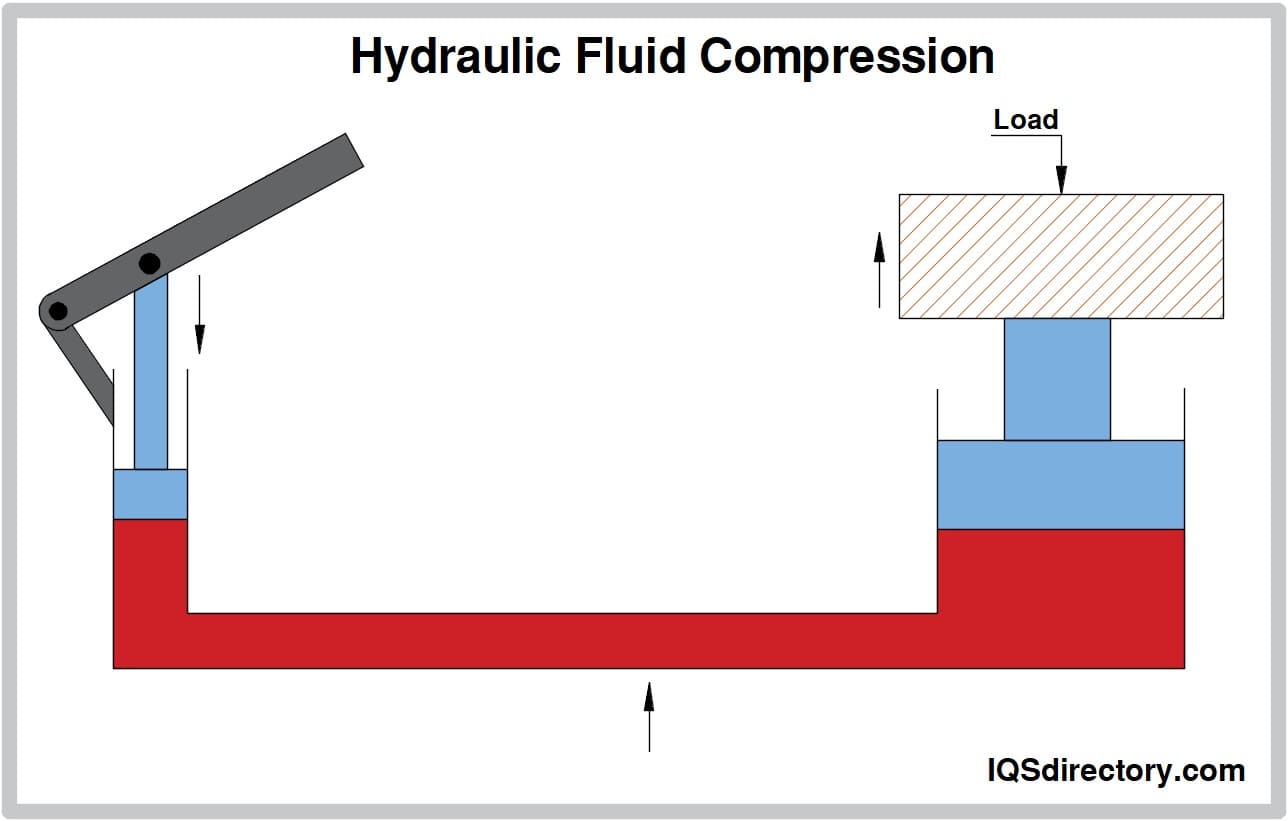 Hydraulic fluids pressure changes and transmits without loss of the fluid and the container walls.
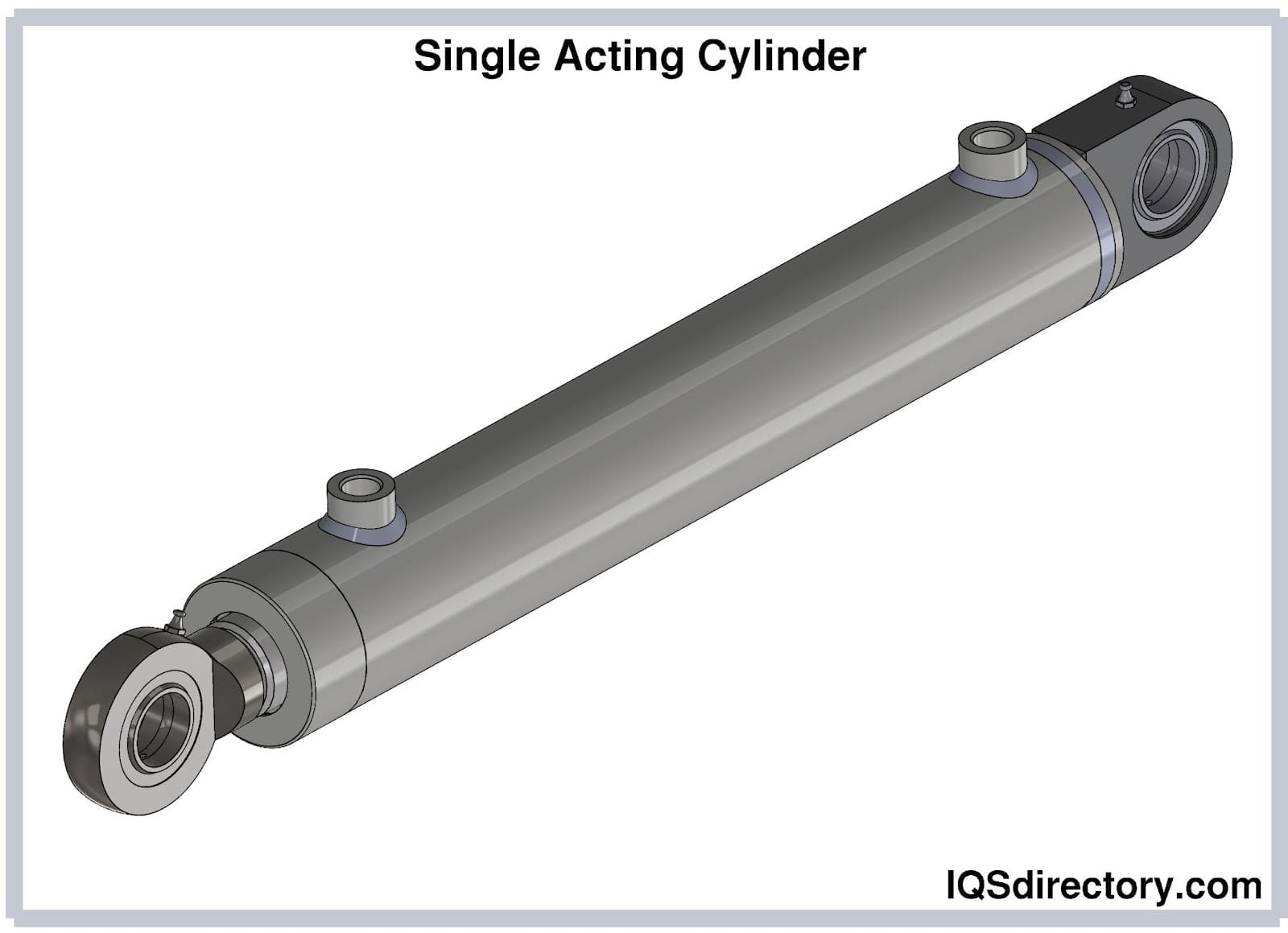 Single acting cylinder, has one chamber which receives pressurized hydraulic fluid depending on the intended use of the cylinder.
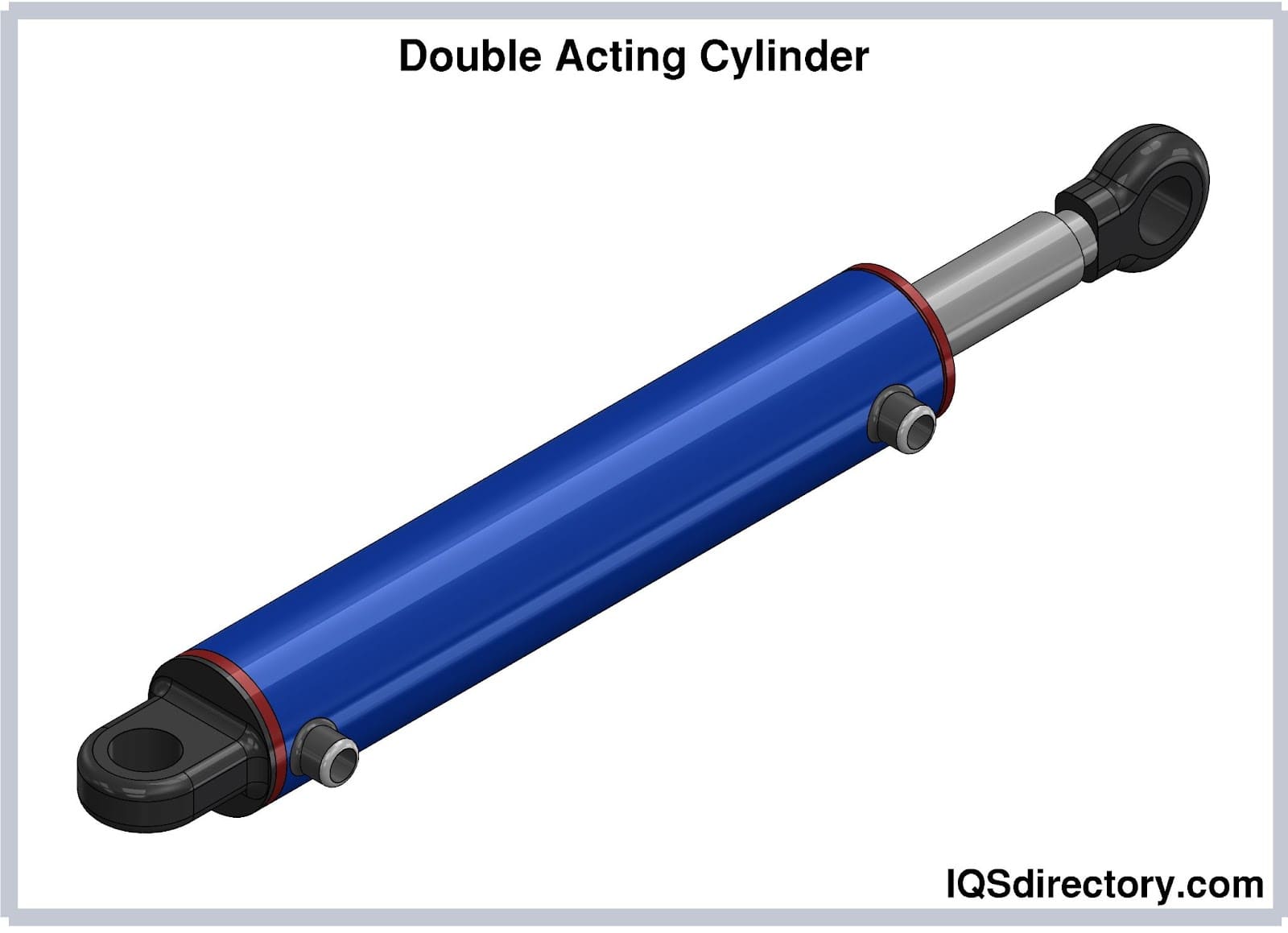 Double acting cylinder, both chambers can be pressurized one contains the cylinder rod will have little surface in contact with the hydraulic fluid
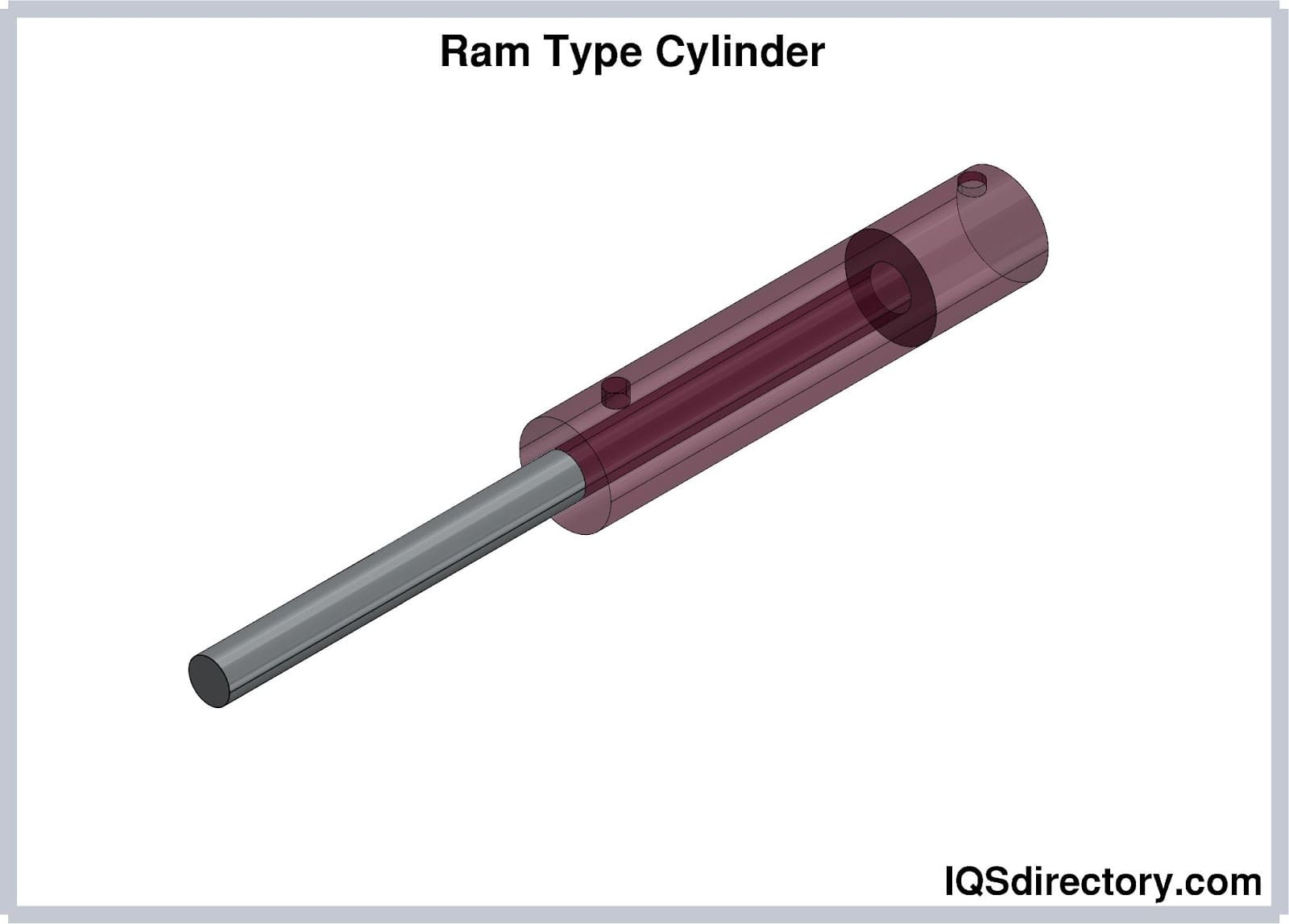 Hydraulic ram cylinders are single-acting hydraulic cylinders with no pistons but have large rods.
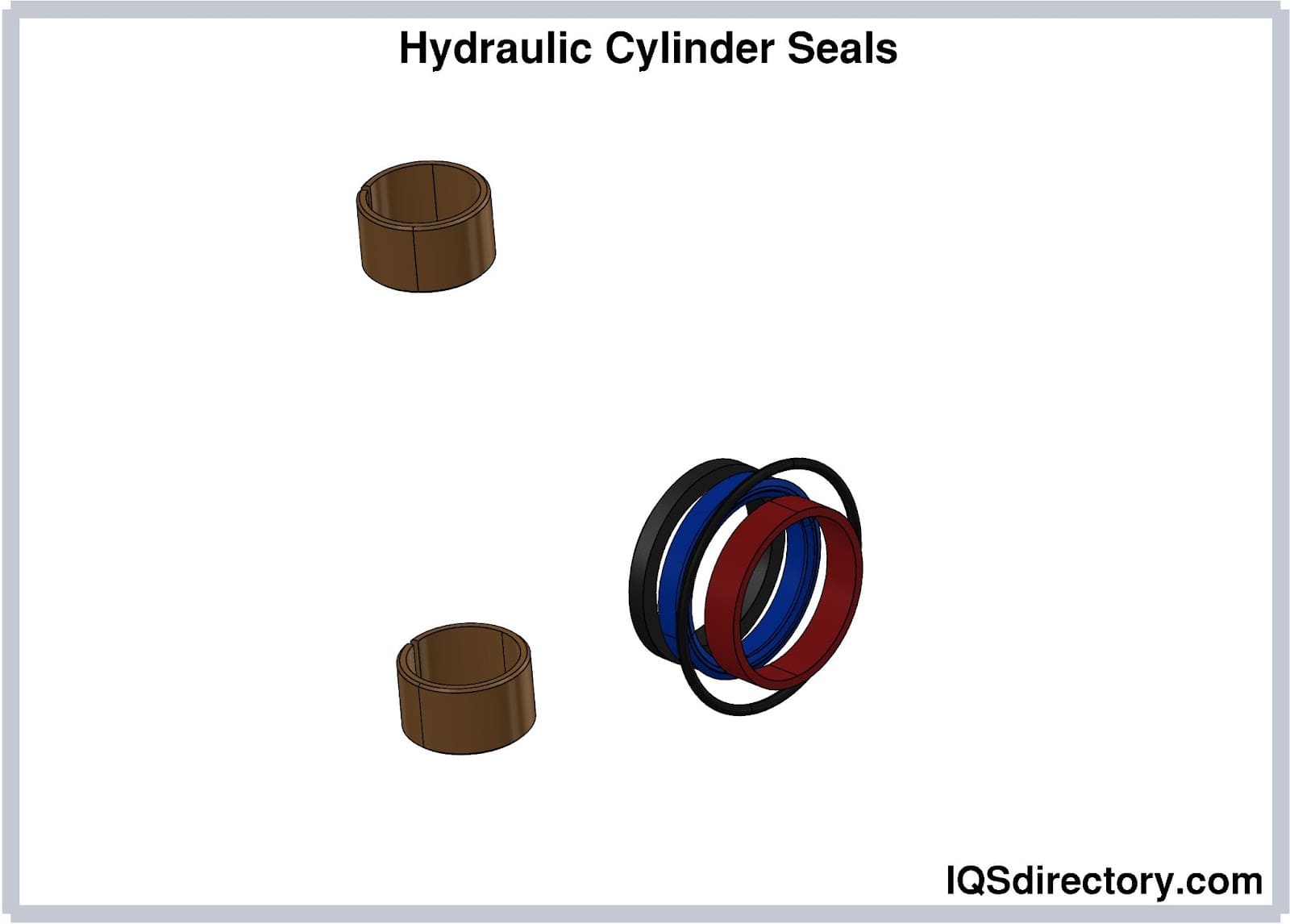 Seals are fabricated from a wide variety of different materials, considering their intended use in the cylinder and type of cylinder.
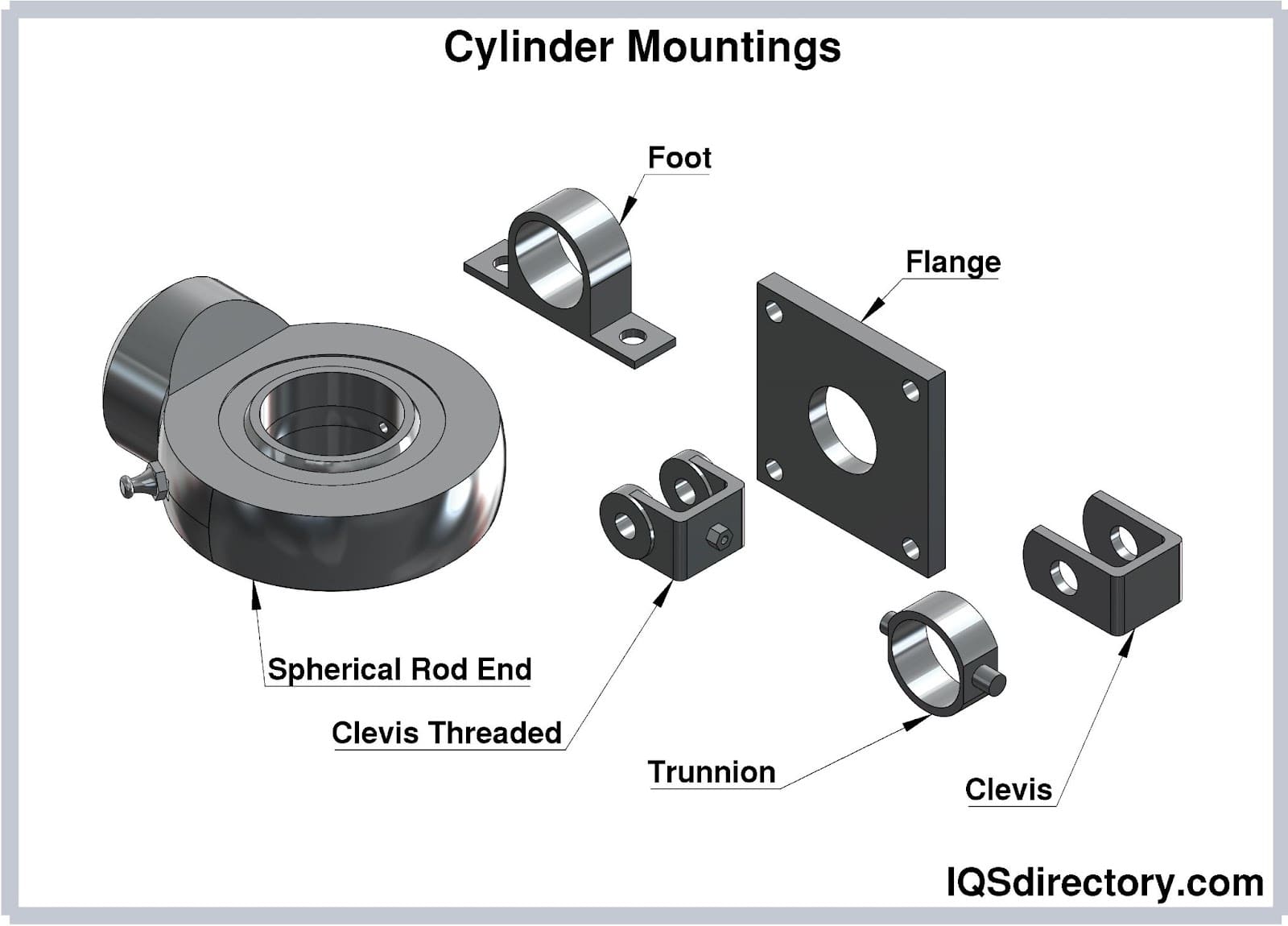 Cylinder mountings are generally grouped into three categories: center line mounting, foot mounting, and pivot mountings.
Types of Hydraulic Cylinders
- Double Acting Hydraulic Cylinders
- Utilize hydraulic pressure to extend and retract the rod in both directions, enabling forceful and controlled motion throughout the full stroke.
- Heavy Duty Hydraulic Cylinders
- Engineered for high pressure, high flow conditions and rugged environments, these cylinders excel in demanding industrial and mobile applications.
- High Pressure Hydraulic Cylinders
- Feature compact, lightweight designs that reduce equipment bulk while delivering powerful force over short to medium strokes, ideal for material testing and transformation tasks.
- Hydraulic Cylinder Manufacturers
- Produce devices that convert hydraulic fluid power into mechanical motion for a wide range of equipment and machinery.
- Hydraulic Pistons
- Short, cylindrical discs that move within the barrel to divide internal space into pressurizable compartments, driving linear motion.
- Hydraulic Rams
- Large-diameter output pistons used to deliver high force, often in single-acting systems.
- Hydraulic Cylinders
- Convert the energy of pressurized hydraulic fluid into mechanical power. "Hydrolic" is a common misspelling of hydraulic.
- Large Bore Cylinders
- Designed for applications requiring substantial force in both extension and retraction, often used in heavy-duty industrial settings.
- Mobile Hydraulic Cylinders
- Found in snowplows, construction equipment, personnel lifts, and material handlers, providing portable, high-performance linear motion.
- Replacement Cylinders
- Built to modern standards and installed in older equipment, these cylinders upgrade performance with current hydraulic technology.
- Single-Acting Cylinders
- Use hydraulic pressure to move the rod in only one direction, typically relying on gravity or a return spring to retract.
- Small Hydraulic Cylinders
- Provide precise linear motion with strokes as short as a fraction of an inch, ideal for applications requiring fine control.
- Stainless Steel Hydraulic Cylinders
- Built to resist corrosion and withstand hygienic cleaning procedures, these cylinders are ideal for food, pharmaceutical, and marine environments.
- Stepped Cylinders
- Two-stage cylinders that deliver an initial rapid extension followed by a more forceful working stroke.
- Telescopic Hydraulic Cylinders
- Contain multiple nested stages to achieve long strokes from a compact retracted length, maximizing space efficiency.
- Thread Cap Cylinders
- Feature threaded head glands secured with o-rings for added seal protection and easy maintenance.
- Tie Rod Hydraulic Cylinders
- Reinforced with one or more steel rods running along the exterior to provide added structural integrity and handle high loads.
- Welded Hydraulic Cylinders
- Constructed with a seamless welded body for enhanced strength and reliability in demanding applications, without the use of bolted joints or multiple housing parts.
This variety allows buyers to select a hydraulic cylinder that matches both the motion profile and the working environment. Some applications call for short-stroke precision, while others need long extension, very high force, or compact retracted length. The right type is usually determined by a combination of load direction, installation space, pressure requirements, cycle frequency, and the type of machine or structure the cylinder must serve.
Applications of Hydraulic Cylinders
Hydraulic systems are widely used across a broad spectrum of industries, including construction, agriculture, manufacturing, transportation (such as automotive and aerospace), and marine environments. Their applications are vast and varied—hydraulic power is what drives lifts, material handling equipment, snowplows, braking systems, power steering, excavators, bulldozers, backhoes, cranes, elevators, forklifts, jacks, dump trucks, spacecraft, ships, airplanes, and even sophisticated robotic arms.
Hydraulic cylinders, in particular, are highly adaptable components that find use in numerous sectors. Industries such as agriculture, construction, oil and gas, manufacturing, military, machining, automotive, aviation, robotics, aerospace, and waste management all rely on hydraulic cylinders to boost productivity and expand mechanical capability. These systems amplify input force significantly, making it possible to accomplish tasks that would otherwise require far greater effort or larger equipment.
As industry demands continue to evolve, hydraulic cylinders and the machines they support must keep pace—delivering ever greater precision, durability, and performance across increasingly complex applications.
This broad application range is one reason hydraulic cylinders are often searched by buyers with very different goals. One user may need a replacement cylinder for mobile equipment, while another may be sourcing custom cylinders for manufacturing automation, material handling, or lifting systems. Even across these different use cases, the same buying questions tend to appear: how much force is needed, how far must the rod travel, how often will it cycle, and what environment will it face?
Things to Consider When Purchasing Hydraulic Cylinders
While hydraulic power transmission offers exceptional versatility across a wide range of professional applications, it should not be relied upon as a standalone solution. Each type of power transmission—whether electrical, mechanical, or fluid-based—has distinct strengths and is most effective when used as part of a comprehensive, integrated system. To ensure optimal results, it’s essential to work with trustworthy and experienced hydraulic manufacturers or suppliers who can help you develop and implement a cohesive hydraulic strategy tailored to your operational goals.
When it comes to hydraulic cylinders, durability is critical. Every component must be constructed from materials capable of withstanding the heat, pressure, and friction generated during use.
Seals, for example, are typically produced through stamping or extrusion and may be made from nitrile rubber, viton, polypropylene, brass, or stainless steel, depending on the demands of the application.
Pistons are generally fabricated from metals such as brass, steel, stainless steel, aluminum, cast iron, or bronze.
Piston rods and cylinder barrels are also made from these materials, though they are manufactured differently. Rods are often cold rolled and finished with hard chrome plating to resist corrosion and wear. The interior surface of the cylinder barrel must be extremely smooth—microscopically polished—to ensure efficient piston movement and to minimize energy loss through friction.
Compatibility between all cylinder components and the hydraulic fluid is also essential. Most systems use fluids composed of mineral oil, water, ethers, or blends of these. However, choosing the right hydraulic cylinder for a specific application involves more than selecting appropriate materials or manufacturing methods. It also requires consideration of system specifications such as maximum operating pressure, stroke length, bore size, and rod diameter. Since the output force generated by pressurized fluid can vary significantly, it’s crucial to fully understand the requirements of your system before selecting the most suitable cylinder.
In purchasing terms, hydraulic cylinder selection usually comes down to matching force, stroke, pressure, speed, mounting, and environment to the real application. Buyers may also compare retracted length, side-load risk, seal package, rod finish, corrosion exposure, cycle rate, and whether the cylinder will be repairing older equipment or becoming part of a new hydraulic design. The more precisely those conditions are defined, the easier it becomes to choose a cylinder that performs well and lasts longer in service.
Maintenance for Hydraulic Cylinders
Hydraulic cylinders, like air cylinders, serve as essential energy sources for a wide range of pumps and motors across industrial machinery. When your operations rely on hydraulics, the cost of maintaining or repairing these systems can quickly become a major concern. Repair and replacement not only strain production schedules but also drive up the final cost of manufacturing, which in turn affects your product’s market price. To remain competitive and keep your maximum retail price aligned with consumer expectations, controlling maintenance and replacement expenses is essential.
- Maintenance Because of Design
- Industry studies reveal that roughly one in ten industrial machines fail to perform at optimal levels due to design-related issues. To maximize your equipment’s efficiency and lifespan, it’s crucial to select machines—and their hydraulic cylinders—based on precise production and capacity requirements. The power source must be properly matched to the application to ensure long-term performance and minimal wear.
- Scheduled maintenance is key to reducing costs over time. Regular inspections and timely servicing help prevent unnecessary breakdowns and extend machinery life. However, even the most rigorous maintenance schedule must be paired with proper handling. The following considerations can help reduce expenses during maintenance and improve equipment longevity.
- Check for Twisted Rods
- Rod twisting in hydraulic cylinders is often the result of substandard material quality or improper design. It may also stem from incorrect rod diameters or flawed cylinder installation. Twisted or bent rods cause imbalance during load handling, which can lead to further issues like seal damage, fluid leaks, and unplanned equipment shutdowns. Always confirm that rods and cylinders are mounted correctly according to the specifications provided by your hydraulic cylinder supplier.
- Check the Quality of the Rod
- Beyond material strength, the surface finish of the rod plays a crucial role in its performance. A properly finished rod ensures smooth interaction with the load and minimizes wear on seals and bearings. The surface finishing should neither be overly polished nor excessively rough, and it must suit the requirements of the specific application. In some cases, using specialized coatings or alternative finishes can significantly enhance rod durability and service life.
- The wear area, or bearing surface, must be properly sized and positioned to support the applied load. If this area is undersized or misaligned, it can distort the seals and degrade the overall performance of the hydraulic cylinder. To avoid this, make sure the bearing support is adequate and the load is evenly distributed during operation.
Routine hydraulic cylinder maintenance also depends on fluid cleanliness, seal condition, alignment, and prompt attention to leaks or abnormal rod wear. Problems that begin as small sealing or mounting issues can grow into larger cylinder failures if they are left unresolved. For many operators, preventive care is less expensive than unplanned repair, especially when the cylinder is tied to a larger machine that cannot keep running without it.
Care for Hydraulic Cylinders
Although hydraulic systems are generally simpler in design than electrical or mechanical systems, they are still highly sophisticated and must be operated with care. Hydraulic cylinders, in particular, should only be used for their intended purpose—namely, linear pushing or pulling operations. Applying them in applications that involve significant bending forces or lateral pressure is not recommended. While certain accessories, such as clevis mounts, can enable more complex or non-linear motion, best practices dictate that such use should be limited and only applied when necessary.
As previously noted, hydraulic cylinders must be built from strong, wear-resistant materials to withstand the intense stress they experience in service. Yet, even highly durable options like stainless steel hydraulic cylinders can eventually suffer from wear or corrosion over time. That’s why replacement cylinders are essential—not only for repairs but also as upgrades. These replacement or re-engineered cylinders extend the life of hydraulic systems and can enhance the performance of older machinery by integrating newer designs or improved materials.
Care also means respecting the cylinder’s load path. A hydraulic cylinder is designed to transmit force along its axis, and performance often suffers when side loading, poor alignment, or unsuitable mounting puts stress on the rod and seals. Using the right accessories and mounting approach can reduce these issues and help the cylinder move more smoothly under real operating conditions.
Accessories of Hydraulic Cylinders
Several accessories are commonly used alongside hydraulic cylinders to enhance their functionality and integration into broader systems. Flanges, which are metal rims or collars, help reinforce the structural position of a cylinder, ensuring secure mounting and improved stability. Trunnions, on the other hand, are cylindrical protrusions used to mount cylinders in specific orientations, allowing for pivoting movement when necessary.
Among these accessories, one of the most crucial is the clevis—a forked device attached to the end of a piston rod. While hydraulic cylinders inherently produce only linear force, the addition of a clevis allows the connected component to pivot, enabling angular motion. This greatly expands the range of motion and versatility of the hydraulic cylinder, making it suitable for more complex applications that require limited directional flexibility.
Accessories like these often have a direct effect on cylinder service life and motion quality. The correct mounting hardware can reduce stress concentrations, improve alignment, and allow the cylinder to work through the motion path it was designed to handle. For buyers comparing options, accessories are not just add-ons. They are often part of the overall cylinder solution.
Hydraulic Cylinder Terms
- Accumulator
- A pressure vessel used to store hydraulic fluid under pressure. Accumulators include a mechanism to regulate or limit internal pressure, maintaining system stability and readiness.
- Bleeder
- Also known as a bleed valve, this device removes trapped air or pressurized fluid from a hydraulic system, helping maintain smooth operation and prevent cavitation.
- Bore
- The internal diameter of a hydraulic cylinder's barrel. It defines the area where the piston moves and directly influences the cylinder’s force output.
- Cap
- An end component that completely encloses one side of the hydraulic cylinder, sealing off the bore and helping maintain internal pressure.
- Closure
- A general term referring to any cover, cap, or plug that seals a fluid passage within a hydraulic cylinder.
- Depth Control Cylinder
- A mechanism—mechanical or hydraulic—that limits the stroke length of a hydraulic cylinder to maintain consistent depth or movement range.
- Flow Control
- A valve or device that regulates the rate at which fluid flows through a hydraulic system, affecting the speed of cylinder extension or retraction.
- Gland
- A recess or cavity within a hydraulic cylinder where seals or packings are installed to prevent fluid leakage along the piston rod.
- Head
- An end closure opposite the cap that accommodates the piston rod. It seals the cylinder while allowing controlled linear motion of the rod.
- O-Ring
- A circular elastomeric seal, usually installed in a groove, used to prevent fluid leakage in hydraulic cylinders.
- Piston
- A solid, cylindrical component inside the cylinder bore that divides the chamber and transmits hydraulic pressure to the piston rod for linear motion.
- Psi (Pounds Per Square Inch)
- A unit of pressure measurement used to express the force exerted by hydraulic fluid within the cylinder.
- Pump
- A mechanical device that converts mechanical energy into hydraulic energy by moving fluid into the system, powering the cylinder.
- Ram
- A large piston component responsible for output force in high-power applications. Rams are typically single-acting and push in one direction.
- Regenerative Circuit
- A configuration that recycles fluid from the rod side back to the piston side, increasing extension speed of the cylinder. Often built into directional control valves.
- Rephasing Cylinder
- A specialized cylinder design that enables multiple cylinders to operate in sync by automatically equalizing stroke positions at the end of each cycle.
- Rod
- The linear shaft connected to the piston, transmitting force from the piston to the attached load outside the cylinder.
- Spool
- A cylindrical valve element that moves within a housing to direct hydraulic fluid flow within the control valve or cylinder.
- Stroke
- The maximum distance a piston rod travels from full retraction to full extension inside the cylinder.
- Stuffing Box
- A compact chamber filled with sealing elements that surrounds the piston rod, preventing fluid leakage during movement.