Heat Exchanger
Heat exchangers are thermal transfer devices built from conductive materials and engineered to move heat from one medium to another. In most industrial and commercial systems, they transfer thermal energy between liquids, gases, steam, or process fluids while keeping those media separate. Depending on the design, the fluids may exchange heat through a wall, across plates, or through direct contact, allowing heat exchangers to support controlled cooling, process heating, temperature stabilization, energy recovery, and fluid conditioning.
Heat exchangers play a major role in heating system design, power generation, air-conditioning systems, chemical processing, manufacturing, food and beverage production, HVAC performance, refrigeration, and waste heat recovery. The same heat transfer principles used in these systems also guide the design of boilers, condensers, evaporators, radiators, chillers, and other equipment that manage indoor comfort or industrial process temperatures. Whether a buyer is evaluating thermal efficiency, corrosion resistance, pressure capability, cleanability, or long-term operating cost, the right heat exchanger can improve reliability, energy use, and process consistency.
Heat Exchangers FAQ
What is a heat exchanger and how does it work?
A heat exchanger transfers heat between two fluids without mixing them. Using thermally conductive walls, tubes, or plates, it moves thermal energy from the hotter fluid to the cooler one so industrial equipment, HVAC systems, and process lines can maintain target temperatures with better operating efficiency.
What are the main types of heat exchanger flow configurations?
The main flow configurations include counterflow, cocurrent flow, crossflow, and hybrid designs. Counterflow systems, where fluids travel in opposite directions, usually offer the strongest thermal performance because they maintain a larger temperature differential across the full length of the exchanger.
What is the difference between recuperative and regenerative heat exchangers?
Recuperative exchangers keep fluids in separate channels divided by a wall, while regenerative exchangers use a shared matrix that alternately stores and releases heat. Recuperative designs are more common in industrial service because they simplify sanitation, reduce mixing risk, and fit many process heating and cooling duties.
Where are shell and tube heat exchangers used?
Shell and tube heat exchangers are used in power generation, HVAC, petrochemical processing, oil cooling, marine systems, and heavy manufacturing. Their tube bundle design supports high temperatures, elevated pressures, and demanding fluids, making them a dependable choice for industrial thermal management.
How are plate heat exchangers different from tubular models?
Plate heat exchangers use thin metal plates to separate fluids and create a large heat transfer area in a compact footprint. Tubular models rely on cylindrical tubes, so they are typically better suited for higher pressures, rugged operating environments, and applications with heavier fouling or solids.
How is fouling prevented in heat exchanger systems?
Fouling can be reduced through water treatment, filtration, chemical additives, routine cleaning, and design choices that limit buildup on heat transfer surfaces. Monitoring performance over time also helps teams catch scale, sediment, and biofilm early before thermal efficiency drops too far.
What should be considered when selecting a heat exchanger manufacturer?
Buyers should review a manufacturer’s experience, material options, engineering support, production quality, lead times, and delivery capability. A strong supplier can match exchanger design, pressure rating, corrosion resistance, serviceability, and long-term operating value to the demands of the application.
History of Heat Exchangers
The earliest practical forms of heat transfer can be traced to heated stones used to warm shelters during early human history. The rocks absorbed energy from a fire and then released that heat indoors, offering a simple but effective way to improve comfort. The Romans later refined home heating with hypocaust systems, which created a space beneath the floor so warm air could circulate and raise room temperature through heated masonry and concrete materials that retained and released thermal energy over time.
In Korea, the Ondol system used hot air and smoke from wood fires routed through channels beneath the floor, creating another early example of controlled heat distribution. In the 1700s, Jean Simon Bonnemain developed a heated water system for incubating eggs, while in the 1800s Marquis de Chabannes designed a heat exchanger for greenhouse grape cultivation. By 1829, the Price brothers advanced steam heating in England, helping move heat exchange technology toward modern industrial and commercial use. From those early systems to today’s shell and tube, plate, regenerative, and air-cooled designs, the goal has remained the same: transfer heat efficiently, safely, and economically.
Heat Exchangers Images, Diagrams and Visual Concepts
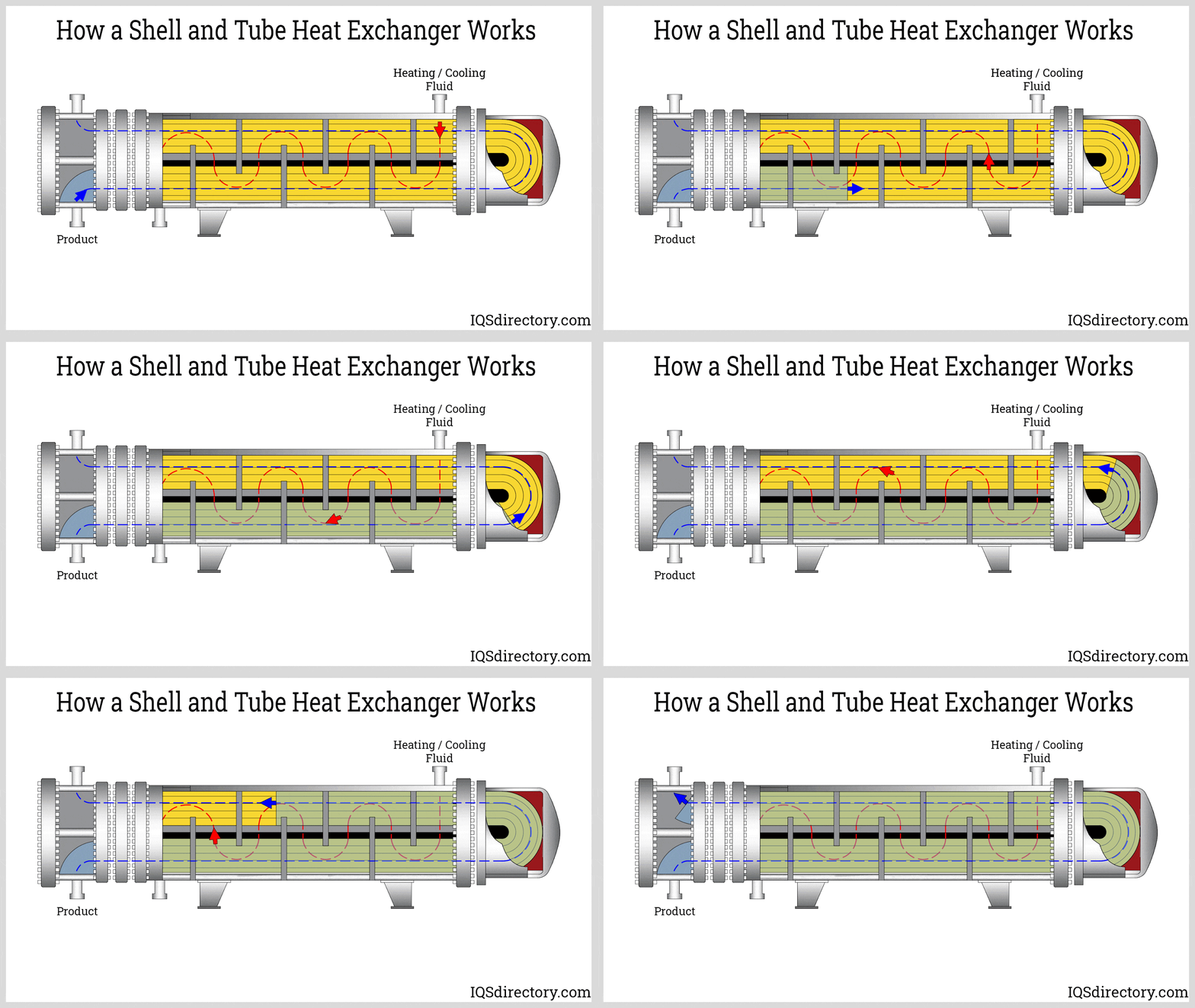 Heat exchangers transfer thermal energy between fluids separated by a conductive wall, helping industrial systems control process temperatures while preventing unwanted mixing of the media.
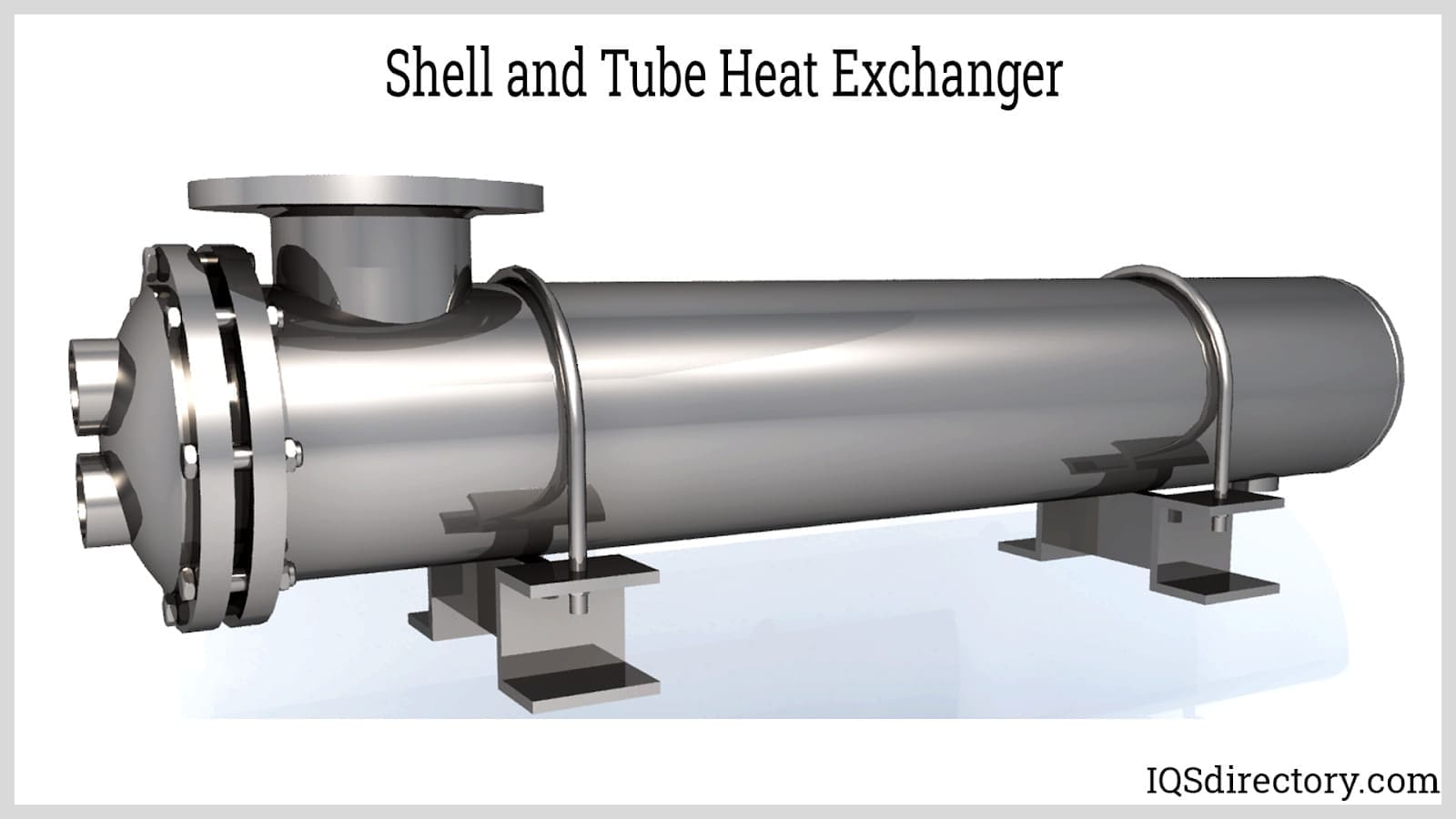 Shell and tube heat exchangers use a cylindrical shell and an internal bundle of tubes to support efficient heat transfer, pressure handling, and dependable performance in industrial service.
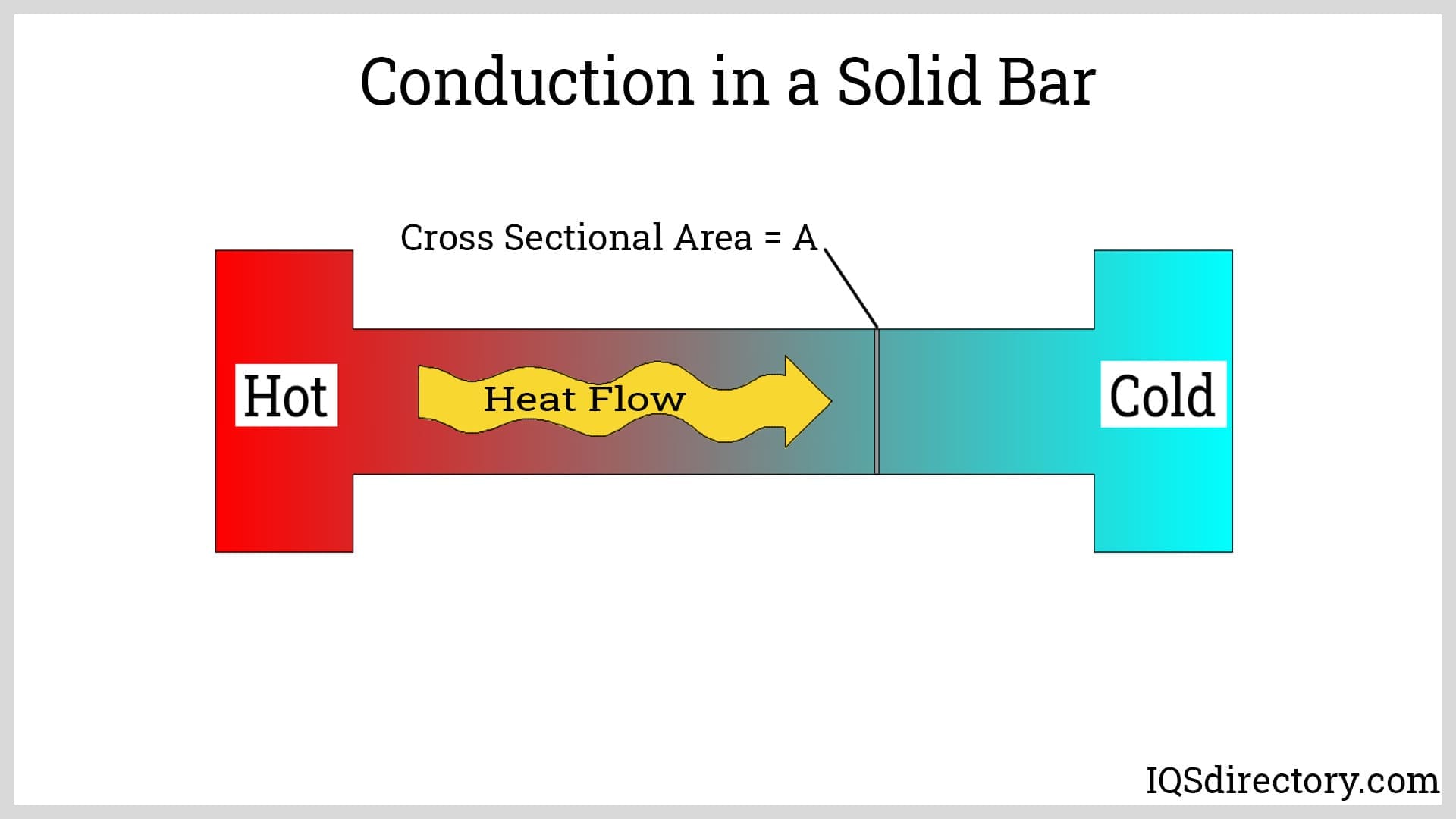 Conduction moves heat through direct molecular interaction, carrying energy from warmer regions toward cooler regions and supporting the thermal transfer process inside exchanger walls and components.
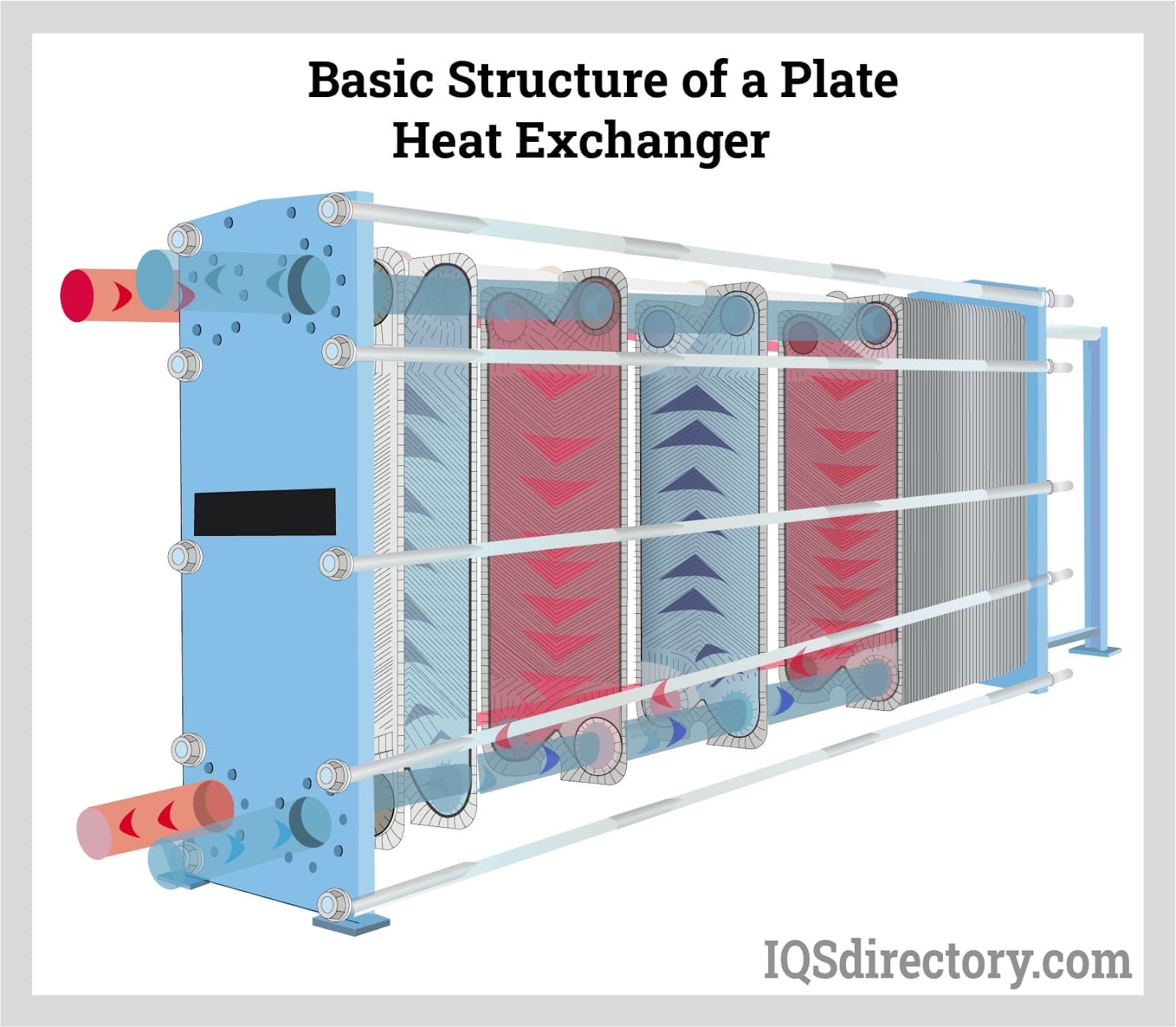 Plate heat exchangers use a compact stack of thin metal plates to create a large surface area for fast, efficient heat transfer between two process streams.
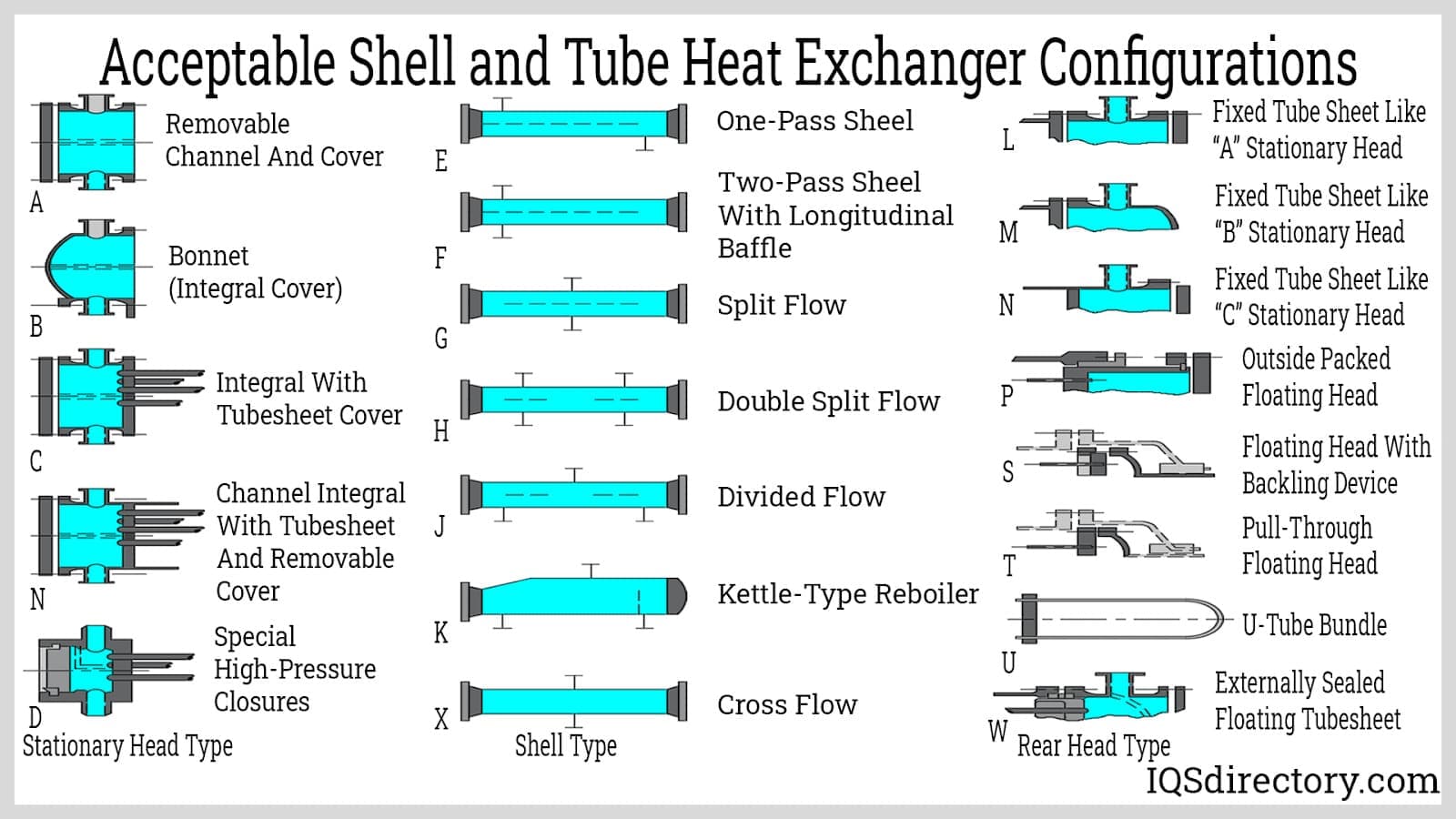 Shell and tube heat exchanger configurations vary by cover, channel, head, and flow path, allowing engineers to match the exchanger design to pressure, maintenance, and process demands.
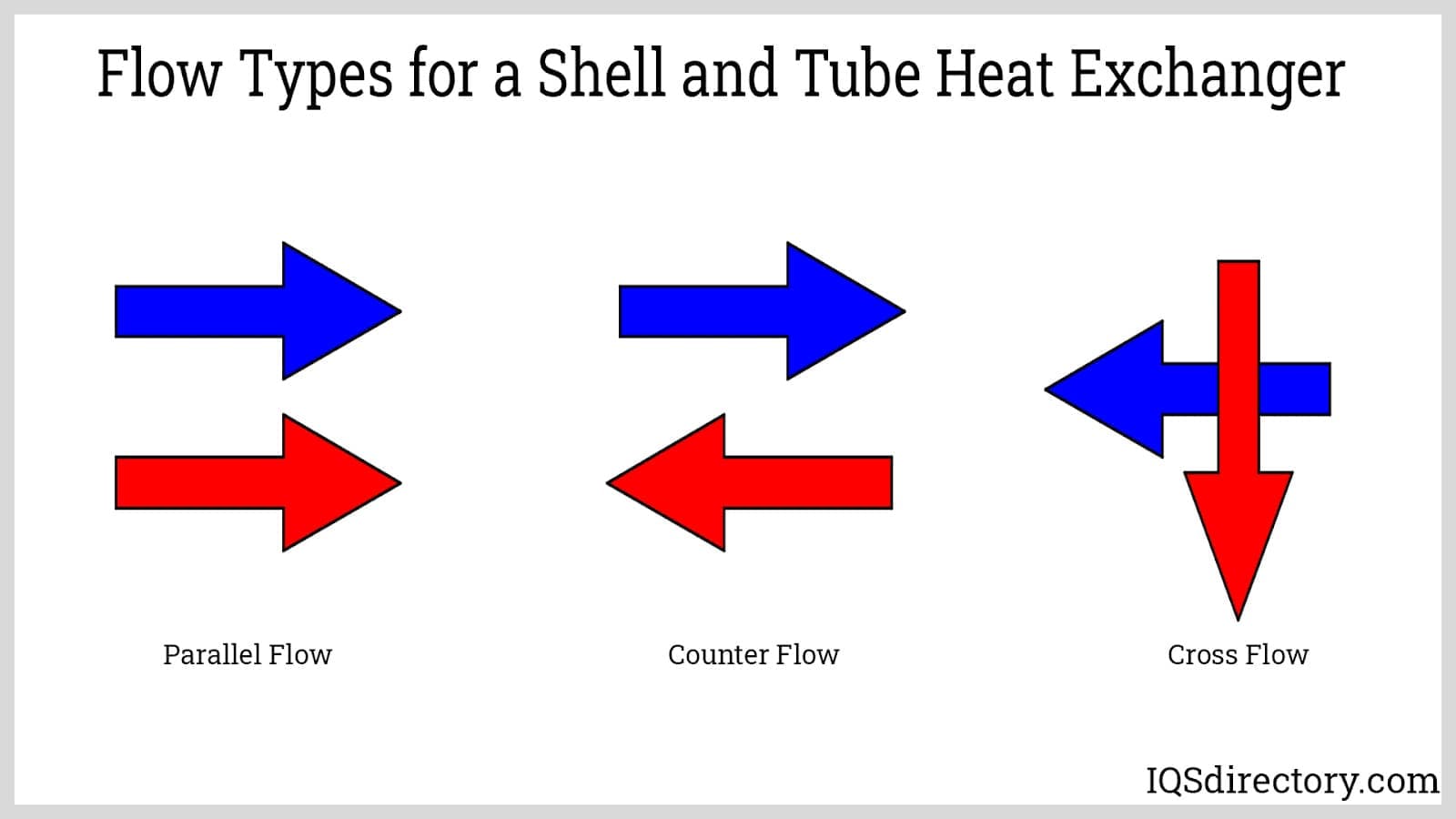 Heat exchanger flow can be arranged as parallel, counterflow, crossflow, or multi-pass to influence temperature approach, pressure drop, efficiency, and overall system performance.
Types of Heat Exchangers
To understand how heat exchangers work in real applications, it helps to look at the two broad classification methods used by engineers and buyers: flow configuration and equipment construction. These categories shape how effectively a unit transfers heat, how easy it is to clean, what pressure and temperature it can withstand, and which industries it best serves.
Heat Exchanger Classification by Flow Configuration
The four main types of flow configurations include:
- Counterflow
- Cocurrent Flow
- Crossflow
- Hybrid
- Counterflow
- This configuration places two fluids in parallel paths moving in opposite directions. Because the temperature difference remains strong across more of the exchanger, counterflow designs generally deliver the best heat transfer efficiency and are commonly preferred for demanding industrial duty. To find manufacturers who specialize in this type of heat exchanger, you can check out IQS Directory's list of manufacturers.
- Concurrent Flow
- In this design, both fluids move in the same direction. Although overall thermal efficiency is usually lower than counterflow, concurrent flow can provide more uniform wall temperatures and may be useful where material stress or temperature gradients must be carefully managed.
- Crossflow
- Crossflow places the fluids at right angles to each other and offers performance between counterflow and concurrent flow. It is often used in air-cooled heat exchangers, radiators, and HVAC equipment where one stream is a gas and compact airflow management matters.
- Hybrids
- Hybrid models combine counterflow or concurrent flow with multi-pass arrangements and other engineered routing strategies. They are common in industrial applications where space, pressure drop, heat recovery goals, or fluid properties call for a more customized exchanger design.
Heat Exchanger Classification by Construction
Classification according to design results into two main groups namely:
- Recuperative Heat Exchangers
- Regenerative Heat Exchangers
- Recuperative Heat Exchangers
- These exchangers feature separate, continuous flow paths for the working fluids, and heat moves across a wall that keeps the media apart. Recuperative designs are widely used because they support sanitary processing, corrosion control, and predictable thermal performance across a broad range of industrial systems. They can be divided into several categories, including:
- The Indirect contact exchangers
- The Direct Contact Exchangers
- The Specials
- The Indirect Heat Exchangers
- In this category of heat exchangers, the steam or fluids are separated by a wall which is usually made of metal. They basically include:
- The Tubular Heat Exchangers
- Tubular exchangers are widely used because they tolerate pressure and temperature variation well, are mechanically durable, and can be built in many sizes. They are a familiar choice for industrial cooling water, steam service, oil cooling, condensers, and process heating systems.
- The Shell and Tube Heat Exchangers
- These units contain multiple tubes inside a cylindrical shell so one fluid flows through the tubes while another moves across the outside of the bundle. Shell and tube exchangers are used in single-phase and two-phase service and are valued for strength, service life, and application flexibility. Their main parts include the front end, rear end, tube bundle, and shell. Many are manufactured from stainless steel, copper alloys, titanium, or other materials chosen for corrosion resistance, heat transfer rate, and operating pressure.
- Furnaces
- Furnaces use burners or electric heaters to generate heat, and that heat can then be transferred to a process medium, air stream, or product within a wider thermal system.
- The Tube in Plate
- Their application is mainly in heat recovery and air conditioning. Plates act as the support and also provide more surface area through fins or extensions that improve heat transfer efficiency.
- Electrically Heated System
- These systems use electrically heated tubes or pipes to deliver controlled heat to a fluid stream, making them useful where precise temperature management and clean operation are priorities.
- Air Cooled System
- Air-cooled systems use fans and finned tube bundles to remove heat from process fluids when cooling water is limited, expensive, or unavailable.
- Air-to-Air Heat Exchangers
- These exchangers transfer energy between incoming and outgoing air streams, helping improve ventilation efficiency, indoor air quality, and building energy recovery in commercial and industrial HVAC systems.
- Brazed Plate Heat Exchangers
- In brazed plate exchangers, the plates are permanently joined to create a compact, leak-resistant unit that works well in refrigeration, hydronic heating, and many closed-loop systems.
- Flat Plate Heat Exchangers
- These models transfer heat through flat or corrugated plates that create a broad surface area and promote efficient heat exchange in a compact package.
- Gasketed Plate Heat Exchangers
- The most common. Elastomer gaskets are fitted between the plates to contain pressure, route the media, and allow the exchanger to be opened for inspection, cleaning, or reconfiguration.
- Heat Pipes
- Heat pipes contain a working fluid and wick material. The fluid absorbs heat, evaporates, travels through the pipe, and then condenses at the cooler end, releasing thermal energy in a highly efficient passive transfer cycle.
- Marine Heat Exchangers
- Marine heat exchangers are designed for boats, shipboard engines, and onboard cooling systems, where corrosion resistance, compact installation, and dependable operation matter.
- Oil Coolers
- These heat exchangers are designed to remove heat from lubricating oil or hydraulic oil, helping maintain viscosity, protect components, and extend equipment life in mobile and industrial systems.
- Agitated Vessels
- These units are widely used for heating viscous fluids. They combine a vessel, internal tubes or jackets, and an agitator such as a helical ribbon impeller or propeller so heat is distributed more evenly through the product.
- Water to Air Heat Exchangers
- These devices transfer thermal energy from heated or cooled water into an air stream and are often used in comfort heating, equipment rooms, grow spaces, and process air systems.
- Water to Water Heat Exchangers
- These exchangers move heat from one liquid circuit to another without bringing the two liquids into direct contact, supporting closed-loop heating, domestic hot water, and process isolation.
- Welded Plate Heat Exchangers
- These plate units are fully welded and require no gaskets. They are often manufactured from stainless steel or other corrosion-resistant alloys for demanding chemical and thermal applications.
- Carbon Block Exchangers
- Carbon block exchangers are useful for heating or cooling corrosive fluids. They consist of machined carbon blocks with drilled passages that allow flow while resisting chemical attack in specialized applications.
- Plate Heat Exchangers
- Plate heat exchangers separate fluids with plates that provide a large heat transfer area, often enhanced by embossing or fin features. They may be bolted, brazed, or welded together. Because of their compact footprint, high surface area-to-volume ratio, and strong thermal efficiency, they are common in food processing, sanitary systems, cryogenic service, chemical manufacturing, and many facilities looking to reduce energy use while keeping maintenance manageable.
- They include:
- Plate and Frame Heat Exchangers
- These units are easy to open for cleaning and maintenance, using elastomer gaskets to seal the plates while allowing service access and capacity changes.
- Plate-Fin Heat Exchangers
- Plate-fin exchangers are frequently used in gas liquefaction and cryogenic duty because they can manage multiple fluid streams in a compact, high-performance core.
- Lamella Heat Exchangers
- These exchangers resemble shell and tube models and use bundled tubes with flow between the gaps. They are common in pulp, paper, and related process industries that require dependable transfer across larger surfaces.
- Spiral Plate Exchangers
- Spiral plate exchangers are formed by winding parallel plates into a coil. Their channel geometry makes them well suited for viscous products, fouling fluids, slurries, and streams containing particles or fibers.
- Steam Coils
- Steam coils use steam flowing through a coil to deliver heat to air or another medium. Because steam is widely available in many plants, this exchanger style remains a practical option for make-up air, process heating, and building systems.
- Coil Heat Exchangers
- Coil heat exchangers increase or decrease the temperature of fluids and may support liquid-to-liquid, liquid-to-gas, or gas-to-gas duty. Like many exchanger types, they are designed so the process fluid and the heating or cooling medium remain physically separated.
- Direct Contact
- Direct-contact exchangers do not use a solid heat transfer surface. Instead, the media interact directly, which means the fluids must be immiscible or one fluid must undergo a phase change during the exchange process.
- An example is the cooling system used in power generation. Cooling water is sprayed from above onto packing while air flows upward through the structure. This design can perform well, but the water supply must be continuously replenished because evaporation is significant.
- Specials Air Heat Exchangers
- Consists of two air heat exchangers that are:
- The Wet Surface Exchanger
- These exchangers use water to cool the air while a fan moves air through the bundle. The assembly is enclosed so moisture is controlled and surrounding areas are protected.
- Scraped Surface Exchangers
- Used in food, pharmaceutical, and viscous product processing, scraped surface exchangers use rotating blades or scrapers to remove buildup and keep the heat transfer surface active.
- The Regenerative Heat Exchangers
- In regenerative exchangers, a matrix absorbs heat from a hot stream and then releases that stored heat to a cooler stream. This approach is commonly used in gas heat recovery and high-temperature industrial applications.
- They are commonly used in gas heat recovery at power stations. They are further classified into two namely:
- Static
- Dynamic
- Because regenerative heat exchangers may allow some cross-contamination between streams of different temperatures, they are often selected only where that tradeoff is acceptable for the process.
- Static Regenerators
- Static regenerators have no moving parts other than valves. Hot gas heats the matrix, then the flow is switched so cooler gas can recover that stored energy.
- Dynamic Regenerator
- Dynamic regenerators include rotating elements that allow hot and cold gases to move through different portions of the same matrix, supporting continuous heat recovery.
Maintenance for Heat Exchangers
- Plate and frame exchangers can be maintained by periodically disassembling and cleaning them, which helps restore performance and maintain good heat transfer across the plate surfaces.
- It's important to monitor the heat transfer coefficient, pressure drop, and approach temperature, because these values often reveal fouling, scaling, or other performance losses before they become more costly.
- Tube exchangers can be cleaned using bullet cleaning, mechanical brushing, chemical descaling, or high-pressure water jets, depending on the exchanger construction and the type of deposits inside the tubes.
- To minimize fouling in heat exchanger systems, facilities may use water treatment, chemical additives, filtration, scheduled inspection, and water-borne oscillation technology to reduce scale, sediment, corrosion, and biofouling over time.
Things to Consider When Choosing a Heat Exchanger
- Heat Exchanger Manufacturers
- Before settling for a particular manufacturer, it's important to consider the below factors:
- How long has the manufacturer been in business?
- Do they have a good business reputation?
- What materials do they use in the manufacture of the heat exchangers?
- Do they have a good distribution network?
- Are they in a position to deliver your order promptly and with top quality assurance?
- By asking these questions, buyers can better compare manufacturers on engineering support, material quality, fabrication standards, lead times, replacement part availability, and the ability to match the exchanger to the intended process conditions.
- Mechanical Considerations
- When designing heat exchangers, any model operating above atmospheric pressure must comply with the ASME code (American Society of Mechanical Engineers). That code helps establish requirements for pressure vessels, structural integrity, fabrication, and safe operation. Buyers should also consider allowable pressure drop, thermal expansion, vibration, fluid compatibility, cleanability, maintenance access, and the expected operating environment before finalizing a design.
Heat Exchanger Terms
- 1, 2, 4 Pass
- This describes how many times a fluid passes through the tube bundle. Any number greater than one indicates a multi-pass exchanger, which can increase turbulence and improve thermal performance in the right design.
- Baffle Plate
- A baffle plate supports the tubes and redirects shell-side flow across the bundle, which improves turbulence, heat transfer, and fluid distribution.
- Baffle Spacing
- This is the distance between baffle plates in the tube bundle, and it affects pressure drop, vibration control, and exchanger effectiveness.
- Bonnet
- A bonnet is a channel-like component used on straight tube exchangers without a removable cover. It is installed at the ends of the exchanger and helps direct tube-side flow.
- Bonnet Assembly
- A bonnet assembly manages the circulation of tube-side liquid and may house inlet and outlet nozzles as well as pass ribs.
- Box Linear Style
- A box linear style aligns the exchanger tubes parallel to one another from inlet manifold to outlet manifold for straightforward flow routing.
- Bundle Assembly
- The bundle assembly includes the tubes, tube sheets, baffles, spacers, and tie rods that make up a removable tube bundle.
- Cap Screw
- A cap screw is a threaded fastener used to secure the bonnet to the exchanger core in certain constructions.
- Channel
- A channel is the front-end component with a removable cover through which the tube-side fluid enters and exits. It often includes a dividing wall to separate inlet and outlet paths.
- Channel Assembly
- This assembly is similar to a bonnet assembly but includes a removable cover, making the tube ends easier to inspect and service.
- Collector
- The collector is the component into which the exchanger tubes drain or discharge flow.
- Core Assembly
- The core assembly is the shell and tube portion of a fixed tube sheet exchanger.
- Coupling
- Couplings connect plant piping to the heat exchanger and may be selected based on pressure class, service conditions, and installation needs.
- Cover/Cover Assembly
- These covers seal exchanger openings and can be removed to clean or inspect the tube side without disconnecting all piping.
- Cradle Assembly
- A cradle assembly supports the exchanger body and secures it to its mounting surface. Cradles may be fixed or movable to accommodate thermal expansion.
- Design Pressure
- Design pressure is the calculated pressure used to size exchanger components for the most severe expected operating conditions.
- Dome
- A dome is a nozzle connection with a larger opening that helps reduce inlet velocity and protect tubes from erosion.
- End Plate
- An end plate is a welded cover commonly used on bonnet assemblies.
- End Zone
- The end zone is the first baffle space between the tube sheet and the first baffle plate and helps position the bundle relative to the shell-side nozzles.
- Ferrule
- A ferrule is a small copper or stainless steel tube piece crimped onto a tie tube to hold the baffles in place.
- Fixed Tube Sheet
- A fixed tube sheet is permanently attached to the exchanger shell assembly and anchors the tube ends in place.
- Floating Tube Sheet
- A floating tube sheet is located at one end of a removable bundle and is free to move as the bundle expands and contracts with temperature change.
- Gasket
- A gasket is a sealing element placed between exchanger components to prevent leakage and maintain pressure integrity.
- Heat Transfer Equipment
- Heat transfer equipment includes devices that move thermal energy from one medium to another. Each type offers different strengths depending on cleanliness requirements, pressure, temperature range, and available installation space.
- Impingement Plate
- An impingement plate is a protective plate or bar assembly placed near the shell-side nozzle to disrupt high-velocity flow and reduce erosion of the tubes.
- In and Out End
- This is the side of the exchanger containing the tube-side inlet and outlet connections, commonly seen on multi-pass units.
- Lantern Ring
- A lantern ring is a metal or nylon ring used in some packed joint exchangers to hold packing rings in position.
- Operating Pressure
- Operating pressure is the pressure under which the exchanger normally runs during service.
- Packed End
- The packed end is the exchanger end that contains the packed joint and packing rings.
- Pass Lane
- A pass lane is an intentional space in the tube layout where no tubes are installed, allowing pass ribs to align and separate flow paths.
- Pass Rib
- A pass rib is a separator plate inside a bonnet or channel that directs tube-side flow and creates the multi-pass arrangement.
- Protector Rod
- A protector rod helps shield tubes, tube sheets, and bonnets from corrosion by serving as a sacrificial anode.
- Range Temperature
- Range temperature is the temperature change experienced by one fluid as it flows through the exchanger.
- Removable Bundle
- A removable bundle exchanger allows the tube bundle to be pulled from the shell for easier cleaning, inspection, retubing, and maintenance.
- Reversing End
- The reversing end is the end of a multi-pass exchanger where the tube-side fluid changes direction, often including small vent and drain connections.
- Shell
- The shell is the outer casing of the exchanger that houses the tube bundle and forms the flow passage for one of the fluids.
- Shell Assembly
- The shell assembly is the housing into which the tube bundle fits and includes the shell-side connections.
- Shell Head
- A shell head is a formed plate welded to the shell or bonnet pipe and may be flanged, dished, elliptical, or hemispherical depending on the design.
- Shell Side
- The shell side is the portion of the exchanger where the fluid flows around the outside of the tubes.
- Spacer
- A spacer holds the baffle plate in position and helps maintain the intended internal bundle geometry.
- Stacking
- Stacking refers to connecting two or more heat exchangers side by side or vertically with interconnecting piping to meet capacity needs.
- Stationary Tube Sheet
- The stationary tube sheet is fixed in place between the bonnet and shell flanges at one end of a removable bundle exchanger.
- Stuffing Box Flange
- This flange is used at a packed joint where the packing ring is compressed into place by the lantern ring or lantern gland.
- Support Foot
- A support foot is bolted to the exchanger to provide additional structural support and stable mounting.
- Test Pressure
- Test pressure is the pressure used during leak and integrity testing of exchanger joints and components.
- Tie Rods
- Tie rods are bars placed between tube sheets to hold the baffles in position and support the tube bundle structure.
- Tie Tube
- A tie tube serves the same function as a tie rod in smaller-diameter exchangers, helping maintain bundle alignment.
- Tube
- A tube is the flow channel inside the exchanger through which one of the fluids passes. Multiple tubes arranged in parallel create a large heat transfer surface within the shell.
- Tube Layout
- Tube layout describes the arrangement of tubes and tie rods inside the exchanger and affects flow, cleanability, and thermal performance.
- Tube Sheet
- A tube sheet holds the tubes in place and creates the seal that separates tube-side and shell-side fluids.
- Tube Side
- The tube side is the flow path inside the tubes and is one of the two main fluid circuits within a shell and tube heat exchanger.