Friction Materials
Friction is the force that resists relative motion when two surfaces meet. In engineering, that resistance is managed to control movement, hold position, transfer torque, or bring equipment to a safe stop.
Friction materials are purpose-built compounds used in brakes, clutches, and motion-control systems. They are formulated to deliver predictable stopping power, stable engagement, wear resistance, and dependable performance under load, heat, and repeated cycling. Buyers often evaluate them by coefficient of friction, fade resistance, compressibility, noise behavior, dust output, and service life.
Friction Materials FAQs
What are friction materials used for?
Friction materials create controlled resistance between mating surfaces so machines can slow, stop, hold, or transfer power. They are widely used in brake pads, brake linings, clutch facings, and industrial motion-control assemblies. Many buyers search for them by application, such as heavy-duty brake materials, industrial clutch facings, or high-temperature friction compounds.
What are the main types of friction?
The main types are static friction, kinetic friction, and rolling friction. Each affects how surfaces start moving, slide under load, or maintain traction in wheels, rollers, and other rotating components.
What materials are used to make friction materials?
Friction materials may be organic, ceramic, semi-metallic, metallic, or hybrid. Common ingredients include fibers, resins, fillers, ceramics, and metal content selected for heat handling, noise control, wear rate, and coefficient of friction.
Why was asbestos replaced in friction materials?
Asbestos was phased out because exposure created serious health risks. Modern friction compounds use safer alternatives such as aramid fibers, ceramics, mineral fillers, and engineered binders that support durability and thermal stability.
How should friction materials be maintained or replaced?
Inspect friction materials for thinning, glazing, noise, vibration, chatter, or fade. Replace worn components in matched sets and address leaks, overheating, or rotor and drum damage before they shorten service life.
What standards apply to friction materials in the U.S.?
In the United States, buyers often look for products aligned with EPA requirements and industry guidance from SAE International and FMSI. RoHS alignment may also matter when export markets or customer specifications are involved.
Where are friction materials commonly used in industry?
They are common in automotive brakes, clutch systems, mining equipment, off-highway machinery, aerospace assemblies, construction equipment, and other systems that need controlled motion, torque transfer, and repeatable stopping performance.
The History of Friction Materials
People have studied friction for centuries because it can either hinder movement or make controlled motion possible. Early thinkers explored why surfaces resist motion and how that behavior could be reduced or used productively in tools, transport, and machines. That long history matters because modern brake and clutch design still builds on the same basic goal: turning contact between surfaces into useful control.
Later researchers described dry friction, separated static from kinetic behavior, and expanded the study of rolling and fluid-related resistance. Those developments shaped the engineering models still used to select brake, clutch, and wear materials for modern equipment. As manufacturing improved, friction design moved from simple trial and error toward measured testing, repeatable formulas, and application-specific material blends.
As transportation advanced, engineers refined brake lining and related friction components to improve control, safety, and durability. Early asbestos-based products gave way to safer engineered compounds built for heat management, wear resistance, and more predictable braking behavior.
Today, friction material manufacturing is a specialized field driven by performance testing, material science, and application-specific design. New blends using ceramics and other advanced ingredients continue to improve noise control, friction stability, and service life.
Friction Material Design
Designers target a consistent coefficient of friction, thermal stability, compressibility, fade resistance, recovery, and manageable wear. Surface texture, binder chemistry, fiber content, and metallic or ceramic additives are adjusted to match torque, duty cycle, speed, pressure, and temperature. In many applications, the right formula must also balance noise reduction, rotor friendliness, dust control, and smooth engagement.
Material selection also depends on the kind of friction a system must generate. Choosing the right compound means matching the application to static, kinetic, or rolling friction while accounting for contact pressure, environment, and expected service conditions.
Static Friction
Static friction holds two surfaces in place until enough force is applied to start movement. It matters in holding, positioning, parking, and load-control applications where slip must be limited.
Kinetic Friction
Kinetic friction occurs when one surface slides across another. It is a major factor in braking, clutch engagement, and other systems where moving parts must be slowed in a controlled way.
Rolling Friction
Rolling friction affects wheels, rollers, and ball-based motion. Traction, surface condition, and compound choice influence whether a system grips effectively or slips under load, speed, moisture, or debris.
By engineering materials around these friction modes and real operating demands, manufacturers can deliver more reliable stopping, smoother engagement, and longer component life.
Materials Used for Friction Materials
Friction materials can be made from organic blends, ceramics, fibers, metals, and fillers. Organic formulas may include fiberglass, mineral content, aramid fibers, and resin systems chosen for smoother engagement, quieter operation, and balanced wear. Ceramic-rich compounds are often used where heat stability, low noise, and cleaner operation are priorities.
For higher loads and temperatures, manufacturers may use sintered metals, steel-based compounds, and semi-metallic blends that include copper, brass, and steel fibers. These materials offer strong heat tolerance, torque capacity, and durability in demanding service. Selection depends on how the equipment is used, whether the system sees repeated high-energy stops, and how much noise or rotor wear the application can tolerate.
Friction Material Images, Diagrams and Visual Concepts
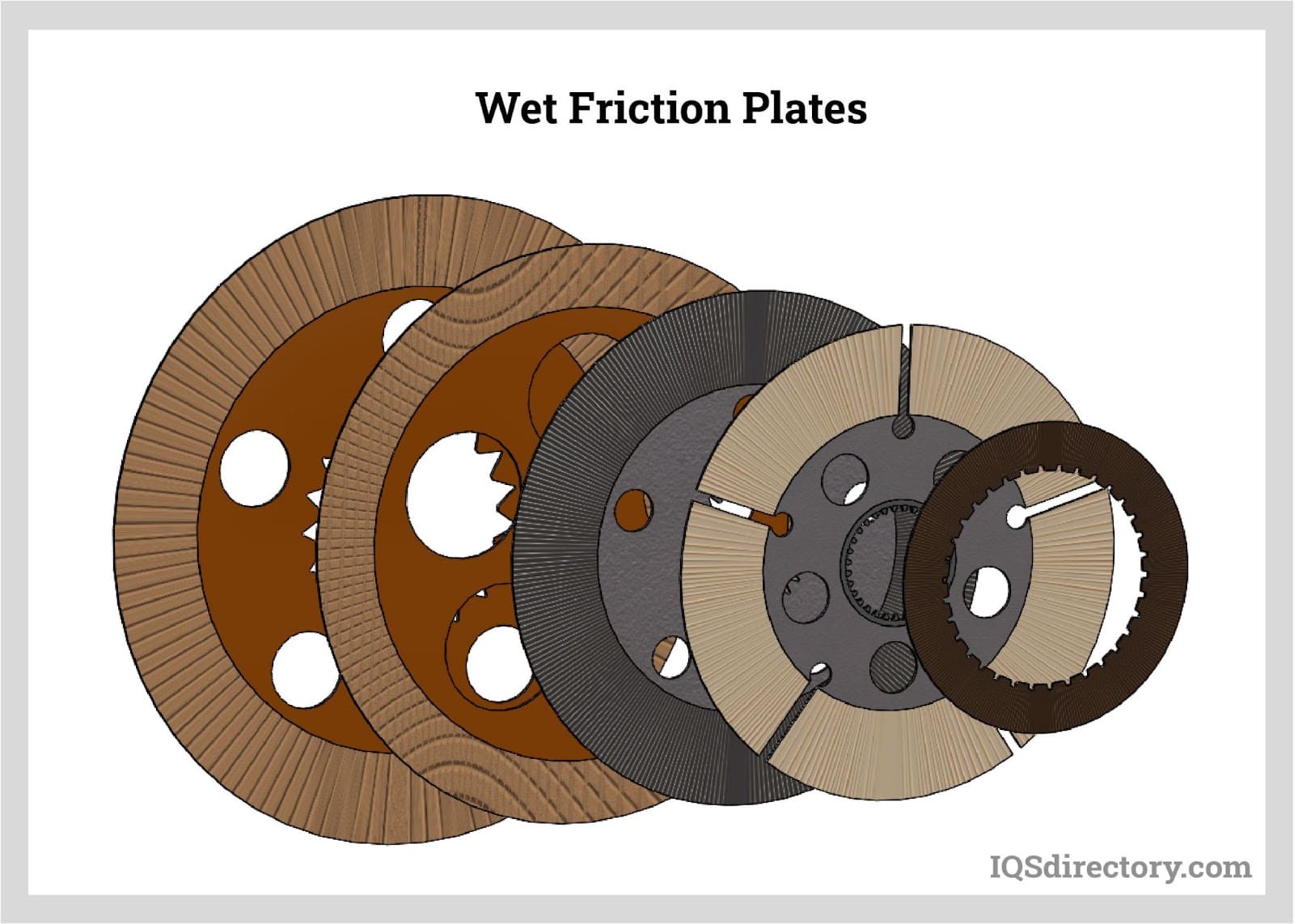 Friction materials create controlled resistance between solid surfaces to slow, stop, or regulate motion.
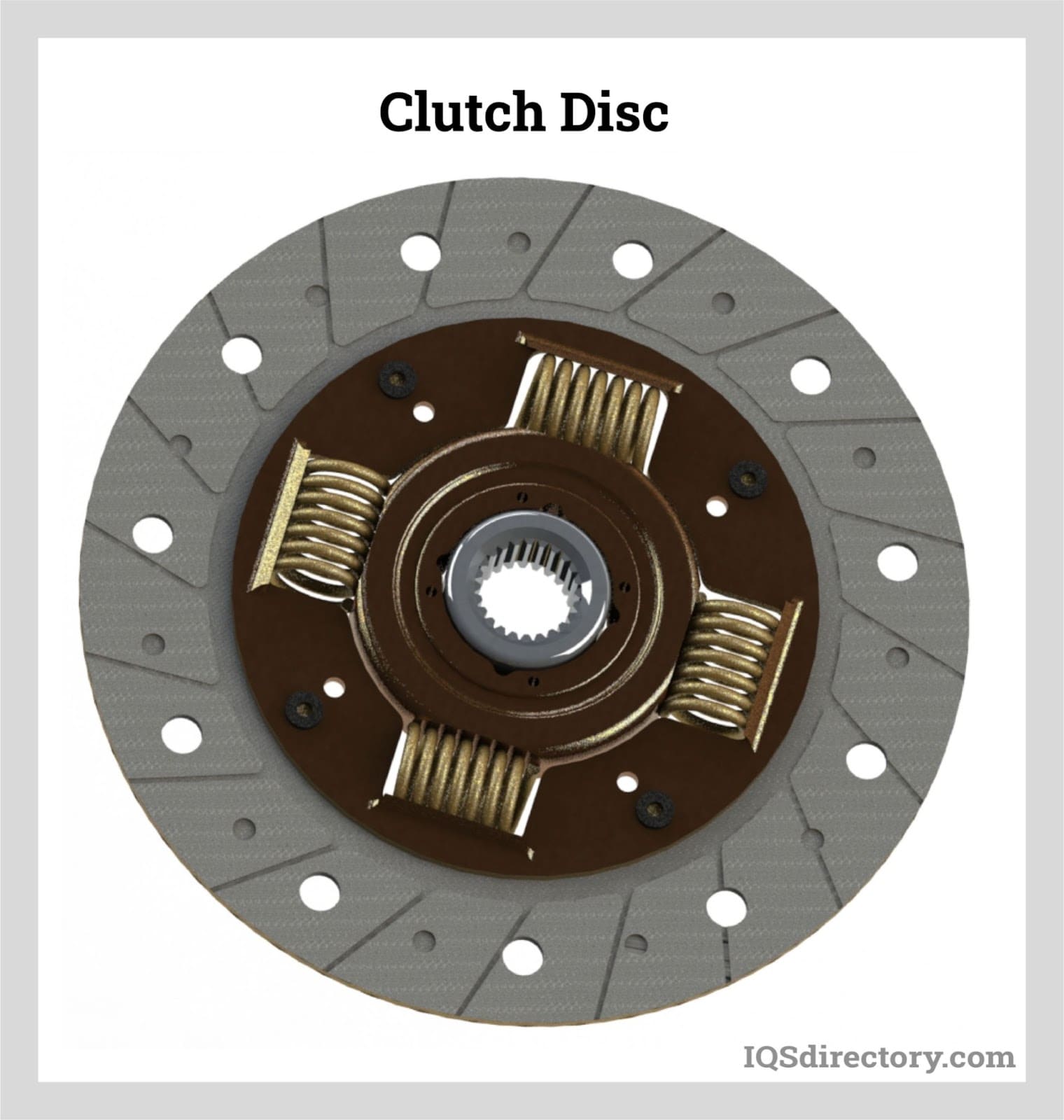 Clutch disc assembly showing the friction lining that engages engine power with the transmission during shifting.
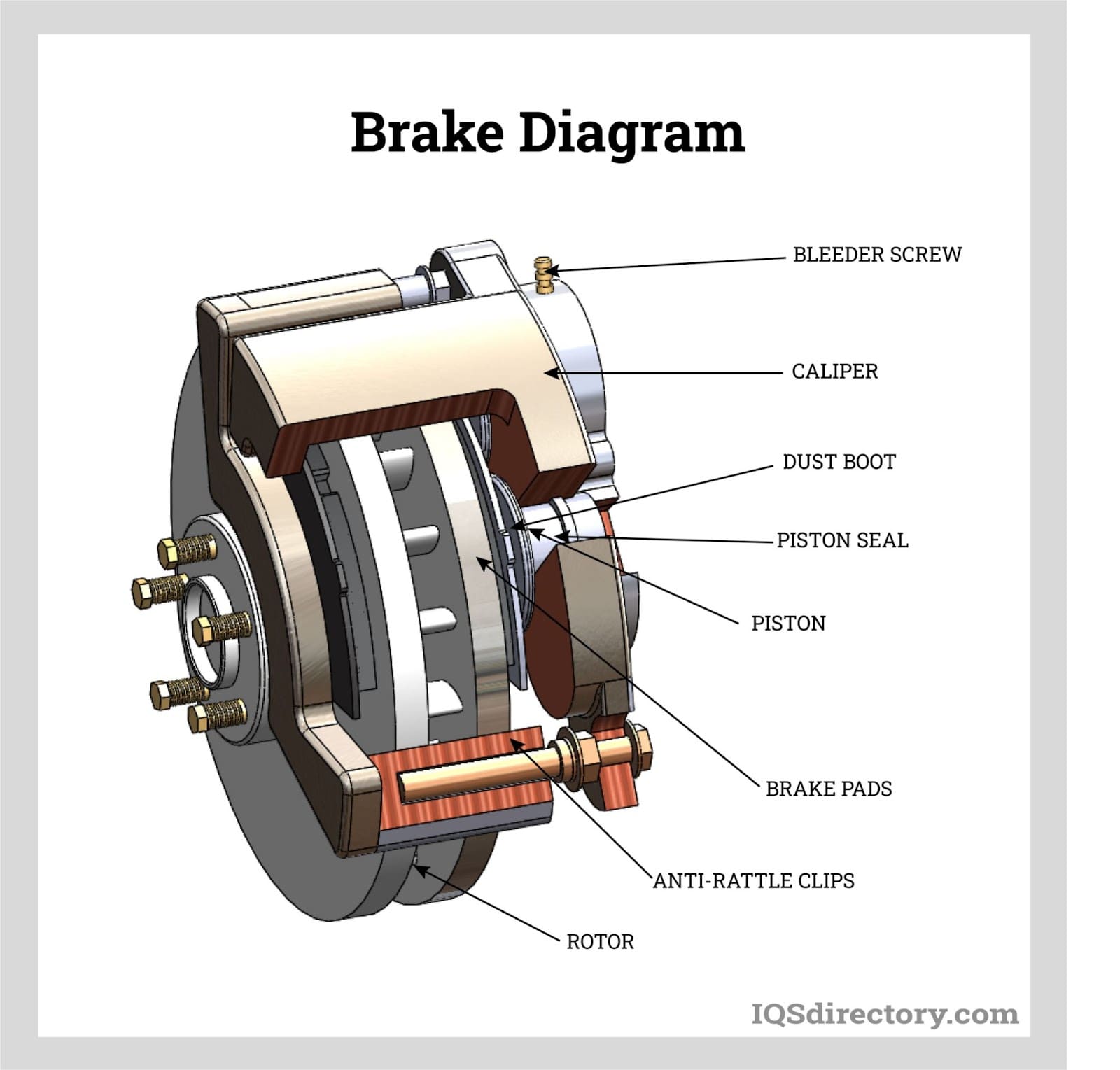 Disc brake diagram showing how pads clamp the rotor to create stopping force.
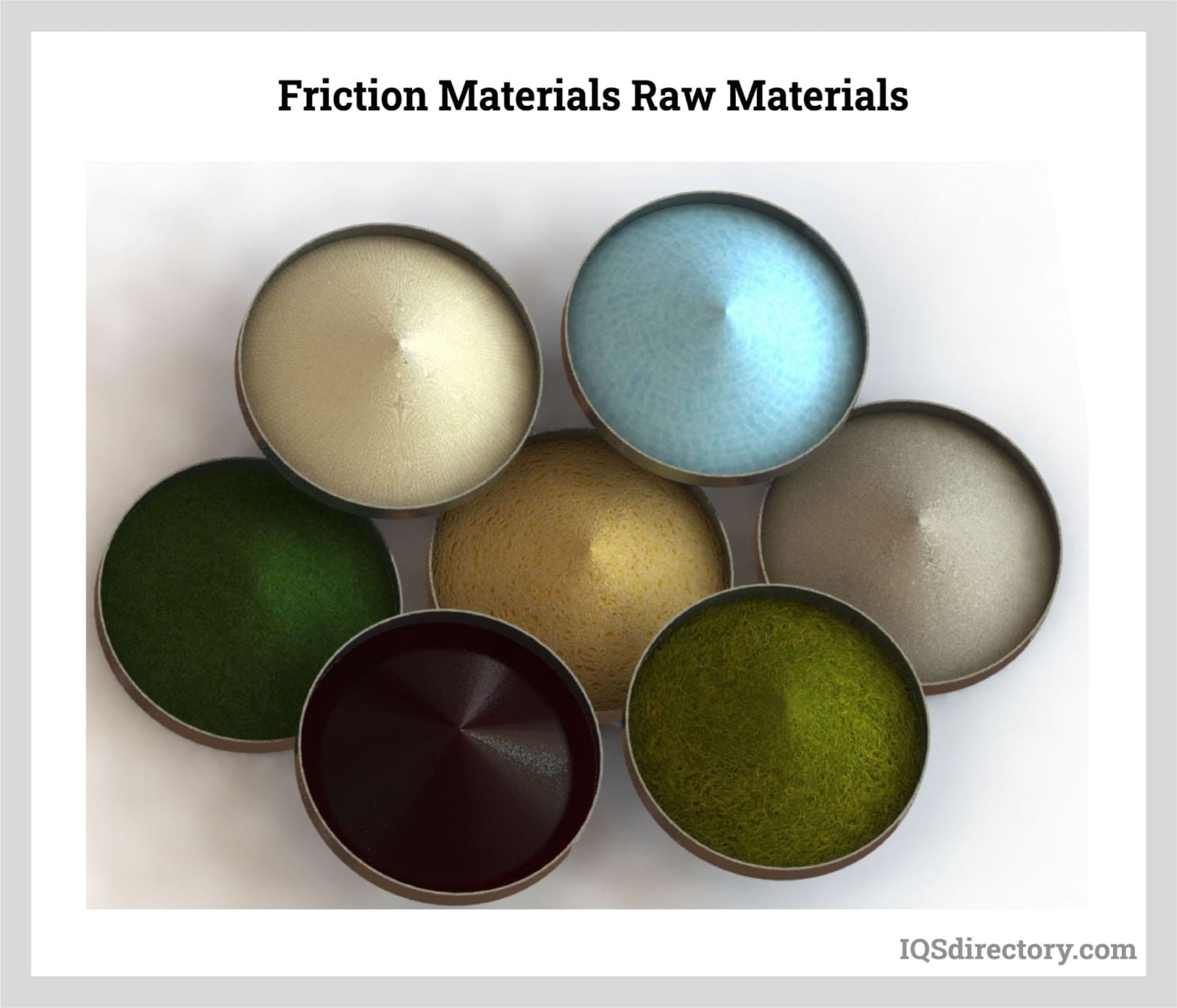 Raw material categories used in friction compounds, including organic, metallic, and inorganic inputs.
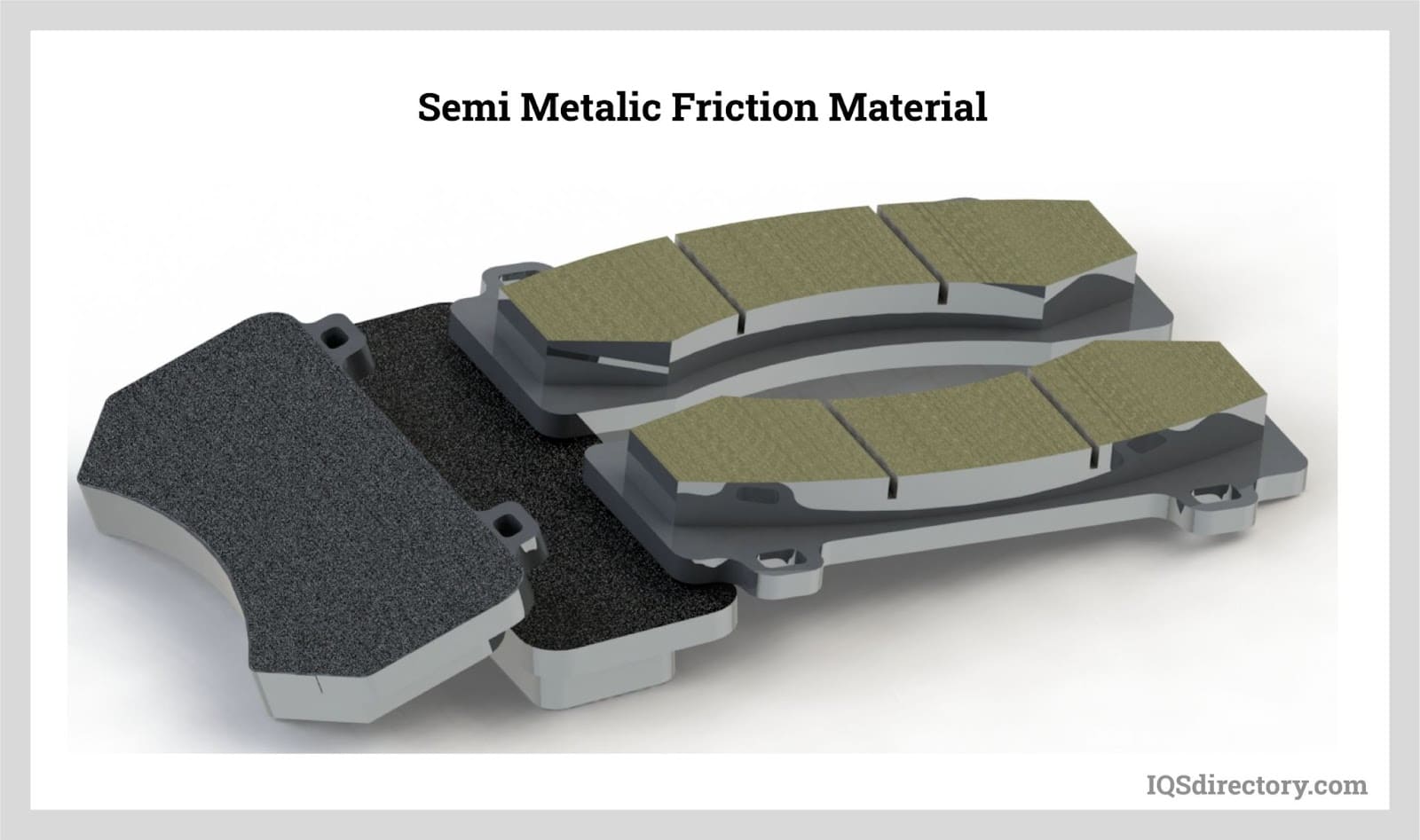 Semi-metallic friction material made with sintered metals and synthetic fibers for long wear life.
Friction Material Types
-
Friction Disc
Also called a friction plate, this component uses a metal core and bonded friction lining to create braking or torque-transfer resistance. It is selected for durability, heat handling, and stable contact under repeated use.
Clutch Disc
A clutch disc links engine output to the transmission input shaft and allows power to be applied or interrupted during shifting. Material choice affects engagement feel, heat resistance, torque transfer, and wear.
Clutch Facing
Clutch facings are designed for smooth engagement, steady grab, and controlled release. They are chosen when designers want lower noise, good drivability, and reliable friction behavior over repeated cycles.
Brake Pad
Also known in some systems as brake bands, brake pads press against a disc to slow motion through friction. Options range from low-dust formulations to ceramic brake pads for higher heat tolerance, quieter braking, and stable performance.
Brake Lining
Brake lining is a heat-tolerant friction layer used in drum and disc braking applications. It must maintain friction output while managing wear, temperature swings, and repeated stop cycles.
Friction Shoe / Brake Shoe
Brake shoes are curved components lined with friction material for drum and related braking systems. They convert kinetic energy to heat and are used where durable, repeatable stopping is needed.
Friction Clutch Set
Clutch sets combine pressure and friction components to support dependable power transfer, gear changes, and torque management in vehicles and industrial drives.
Friction Column
Also called friction blocks, these parts are used in hoists, cranes, mining equipment, and oilfield machinery where controlled holding force and motion regulation are required.
Applications for Friction Materials
Friction materials support machinery by creating controlled resistance in braking, clutching, holding, and power-transmission systems. They are used anywhere equipment must slow safely, manage torque, or maintain traction under load. That makes them valuable not only in transportation, but also in cranes, conveyors, machine tools, agricultural equipment, and process machinery.
Common products include brake pads, clutch sets, brake linings, clutch facings, brake shoes, friction discs, and clutch discs. Each product is tailored to its pressure range, temperature window, and operating duty. Buyers comparing options often look at wear rate, recovery after heat buildup, and how the material performs in dry, wet, dusty, or stop-and-go conditions.
These materials serve automotive, rail, aerospace, mining, oil and gas, construction, forestry, manufacturing, and defense applications where uptime, safety, and wear life all matter. They are also specified in specialty equipment that depends on controlled holding force, repeatable torque transfer, or dependable braking in severe environments.
Features of Friction Materials
How friction materials behave depends on the application, operating speed, pressure, heat, contamination risk, and surface design. The same base chemistry may perform differently in passenger vehicles, industrial drives, or heavy equipment.
In braking systems, friction material is forced against a rotating surface to convert motion into controllable resistance. That action slows wheels, shafts, drums, or discs while also generating heat that the system must dissipate.
Conventional brakes convert kinetic energy into heat, while regenerative systems recover part of that energy as electricity. Even where regenerative braking is used, friction materials still handle stopping support, low-speed braking, and backup braking performance. That is why friction compounds remain relevant in both internal-combustion and electrified platforms.
Standards and Specifications for Friction Materials
RoHS-compliant friction materials can be useful when buyers need lower hazardous-substance content, export compatibility, or cleaner material documentation. For many purchasing teams, compliance data is part of supplier screening and quality review. Documentation, lot traceability, and material disclosures can matter just as much as the friction rating itself.
U.S. buyers should also review EPA-related requirements and ask suppliers about SAE and FMSI alignment, validation testing, traceability, and material consistency. Those details help compare products beyond price alone. A strong supplier should be able to explain test data, recommended use cases, and any limits tied to heat, speed, moisture, or surface compatibility.
Things to Consider When Purchasing Friction Materials
-
Material Considerations
Before buying, ask how the compound handles fade, moisture, wear, noise, dust, temperature spikes, and engagement smoothness. The best material is the one that fits the real duty cycle, not simply the one with the highest friction level. It is also smart to ask whether the product is built for intermittent stops, continuous slip, heavy loads, or frequent start-stop operation.
Manufacturer Considerations
A strong supplier should be able to discuss application data, friction ranges, wear behavior, testing methods, lead times, and custom options. Buyers often compare several manufacturers to find the best match for performance targets, budget, and delivery needs. Ask how the supplier supports troubleshooting, material substitutions, and repeat order consistency.
Proper Care for Friction Materials
Friction materials operate in high-cycle environments, so regular inspection helps catch wear before it turns into downtime, poor braking, or damaged mating parts.
As linings and pads wear down, backing plates, rivets, rotors, and drums can be damaged. Early signs such as squeal, vibration, scoring, or longer stopping distance should prompt inspection and replacement planning. Preventive maintenance helps protect mating parts, reduce downtime, and keep braking response more consistent across the full service interval.
Contamination from oil, grease, or {a0} can reduce friction output and create chatter or vibration. Fix the leak source first, then replace affected components in matched sets so braking stays balanced and predictable. Uneven thickness, glazing, or soaked linings can quickly undermine both wear life and stopping behavior.
Routine care also includes checking heat damage, glazing, uneven wear, and hardware condition. Maintenance schedules should match actual service demands, load patterns, and environmental exposure. Fleets and industrial operators often inspect friction components more often where dust, water, or heavy cycling accelerate wear.
A worn friction surface can damage adjoining components and raise repair costs. Prompt replacement helps protect discs, drums, hubs, and related hardware while keeping performance more consistent. Replacing consumable friction parts at the right interval is usually far less expensive than repairing the parts they contact.
Contamination from leaked brake fluid or lubricant should never be ignored. Once the source is repaired, replace the compromised parts together and confirm the system is clean, aligned, and operating evenly. That approach helps reduce chatter, pull, noise, and uneven braking from side to side.
Friction Materials Terms
-
Balance
Even distribution of braking force between front and rear braking systems.
Bleeding
Removing trapped air or degraded fluid from a hydraulic brake system.
Brake Drum
Round housing that works with brake shoes in drum-brake assemblies.
Brake Lining
Heat-tolerant friction layer that contacts a drum or disc to slow motion.
Brake Pad
Friction block bonded to a backing plate for disc-brake systems.
Brake Materials
General term for compounds engineered to deliver braking force, wear life, and heat control.
Burnish
Bedding-in process that stabilizes the contact pattern between parts.
Caliper
Assembly that positions the pads and clamps them against a rotor.
Clutch
Mechanism that engages or disengages rotating shafts to manage power flow.
Clutch Materials
Heat-resistant compounds used in clutch discs and related engagement components.
Coefficient of Friction
Measured ratio describing how strongly two surfaces resist sliding.
Disc Brake
Brake system using a rotor, caliper, and pads to create stopping force.
Drum
Circular braking surface used with shoes in drum-brake systems.
Dynamometer
Test equipment used to measure brake or clutch performance.
Fade
Temporary drop in braking output caused by excessive heat buildup.
Groove Patterns
Channels that help vent heat, moisture, dust, and gases.
Master Cylinder
Hydraulic component that generates pressure for brake actuation.
Recovery
Return of braking performance after fade or overheating.
Rotor
Disc-shaped braking surface clamped by pads in a disc brake.
Shoe
Curved component lined with friction material for drum-brake contact.
Squeal
High-pitched brake noise that often signals wear or vibration.