Fractional Horsepower Motors
A fractional horsepower motor (FHP motor) is a compact electric motor whose output is measured as a fraction of one horsepower. In most cases, these small electric motors deliver less than 746 watts and are selected for compact equipment that needs dependable torque, controllable RPM, quiet operation, and efficient use of space. They are typically mounted on frames, and while there is no strict minimum-size definition, most are larger than pocket-sized micro motors. Nearly all fractional horsepower motors are rated below one horsepower, although frame sizes 42, 48, and 56 are still commonly grouped in the FHP category even when the listed output rises above that mark. For buyers comparing small AC motors, DC motors, OEM replacement motors, or general-purpose electric motors, the phrase fractional horsepower motor usually points to this broad class of compact drive solutions.
Fractional horsepower motors are used across residential, commercial, and industrial applications because they fit equipment where compact size, repeatable speed, and practical torque all matter. They generally fall into two categories. Standard fractional horsepower motors, producing more than 1/20 horsepower, are found in appliances and machinery such as kitchen tools, grocery store conveyors, fans, pumps, blowers, and vacuum cleaners. Units producing 1/20 horsepower or less are commonly called sub-fractional horsepower motors, micro motors, or miniature motors, and they are often chosen for compact consumer products such as electric toothbrushes, toys, office devices, and portable equipment. This broad operating range is one reason the category shows up so often in searches for replacement motors, appliance motors, HVAC motors, and light-duty drive motors.
In some contexts, the phrase “fractional horsepower motor” is also used loosely for small internal combustion engines, but in most industrial, commercial, and purchasing discussions it refers to an electric motor with less than one horsepower output.
Fractional Horsepower Motors FAQ
What defines a fractional horsepower motor?
A fractional horsepower motor is an electric motor rated below one horsepower, or under 746 watts. These compact motors are widely used where equipment designers need dependable output, modest size, and practical speed and torque in residential, commercial, or industrial systems.
Where are fractional horsepower motors commonly used?
Fractional horsepower motors are commonly used in fans, blowers, pumps, HVAC equipment, conveyors, kitchen appliances, medical devices, automotive accessories, office machines, and portable tools. They are a go-to option when a compact motor must deliver reliable motion without the size or output of an integral horsepower motor.
How do AC and DC fractional horsepower motors differ?
AC fractional horsepower motors run on alternating current and are often induction or synchronous designs, while DC fractional horsepower motors run on direct current and are often selected for controllable speed or portable power setups. Both convert electrical energy into mechanical motion, but the best choice depends on the available power source, control requirements, and duty cycle.
What are the key factors when replacing a fractional horsepower motor?
When replacing a fractional horsepower motor, match the original nameplate data as closely as possible, including voltage, phase, frequency, horsepower, RPM, frame size, shaft details, mounting style, enclosure type, rotation direction, and thermal protection. Reviewing those specifications helps support safe installation and consistent performance.
Why are permanent magnet motors more efficient than induction motors?
Permanent magnet motors use magnets in the rotor to reduce slip and support high torque density, which can improve energy efficiency and low-speed performance compared with similarly sized induction motors. They are often chosen when compact size, responsiveness, and efficient operation are high priorities.
What are common bearing types in fractional horsepower motors?
Common bearing types include sleeve bearings for standard-duty operation, ball bearings for higher radial or axial loads, and needle bearings for high-speed applications. The correct bearing depends on load, speed, mounting position, and expected service life.
What standards apply to fractional horsepower motors in the U.S.?
In the U.S., fractional horsepower motors commonly follow NEMA frame size conventions for dimensional consistency. Depending on the application, they may also need to meet electrical, interference, or equipment-specific requirements tied to the market they serve.
The History of Fractional Horsepower Motors
The earliest commercially significant example of a fractional horsepower motor is often linked to Nikola Tesla’s 1888 U.S. patent work on the induction motor. Even so, small electric motors did not become broadly adopted until electrification spread more widely in the early 20th century. Around 1915, as utility service expanded through major cities and manufacturing centers, the market for compact appliance motors, fan motors, and light machine motors began to accelerate. By 1920, more than half a million fractional horsepower motors were already in operation across the United States, showing how quickly the category moved from laboratory innovation to everyday industrial and household use.
As these motors gained popularity, they helped reshape powered woodworking, light manufacturing, and equipment design. Machines such as band saws, circular saws, and drill presses became smaller, more affordable, and far more portable. This shift lowered the cost of producing furniture, fixtures, and wooden structures while also making machine-driven production practical for smaller shops. Fractional horsepower motors also supported the spread of faster, more efficient production lines. Assembly lines could operate with fewer manual steps, and compact motor-driven machines became easier to install, maintain, and scale in workshops and factories.
Following World War II, demand for fractional horsepower motors rose sharply as electrically powered devices became more common in homes, offices, vehicles, and commercial buildings. That growth continued with the expansion of HVAC systems, consumer appliances, business machines, and automated industrial equipment. Today, fractional horsepower motors are found in a remarkably broad mix of products, from automobiles and home appliances to compact machinery, packaging systems, and material handling equipment. Their long market history is one reason buyers still search for FHP motors by frame size, voltage, RPM, enclosure, and replacement application.
Fractional Horsepower Motors Images, Diagrams and Visual Concepts
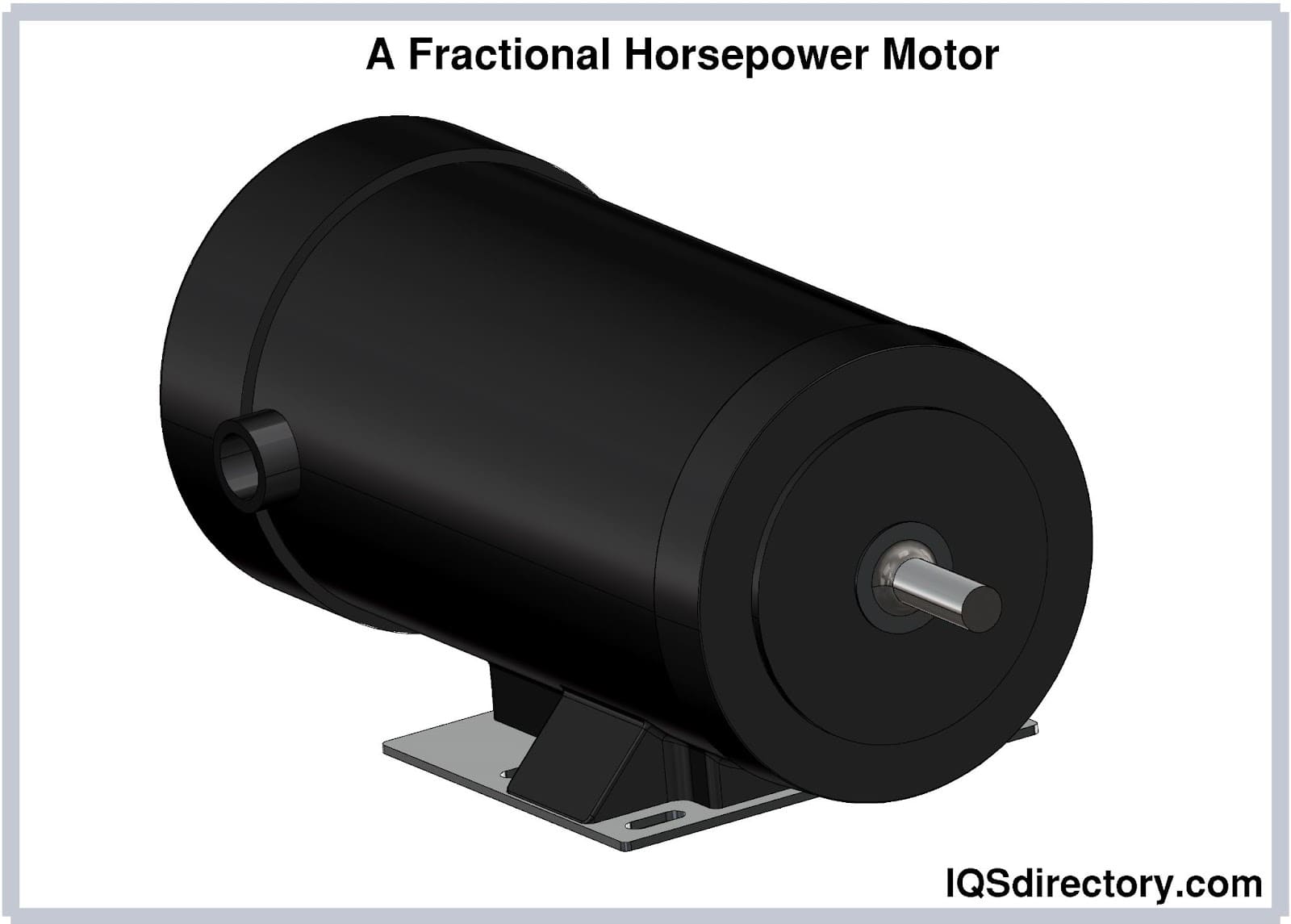 A fractional horsepower motor is an AC or DC current motor that produces less than one horsepower at an output rating of 746 watts or less.
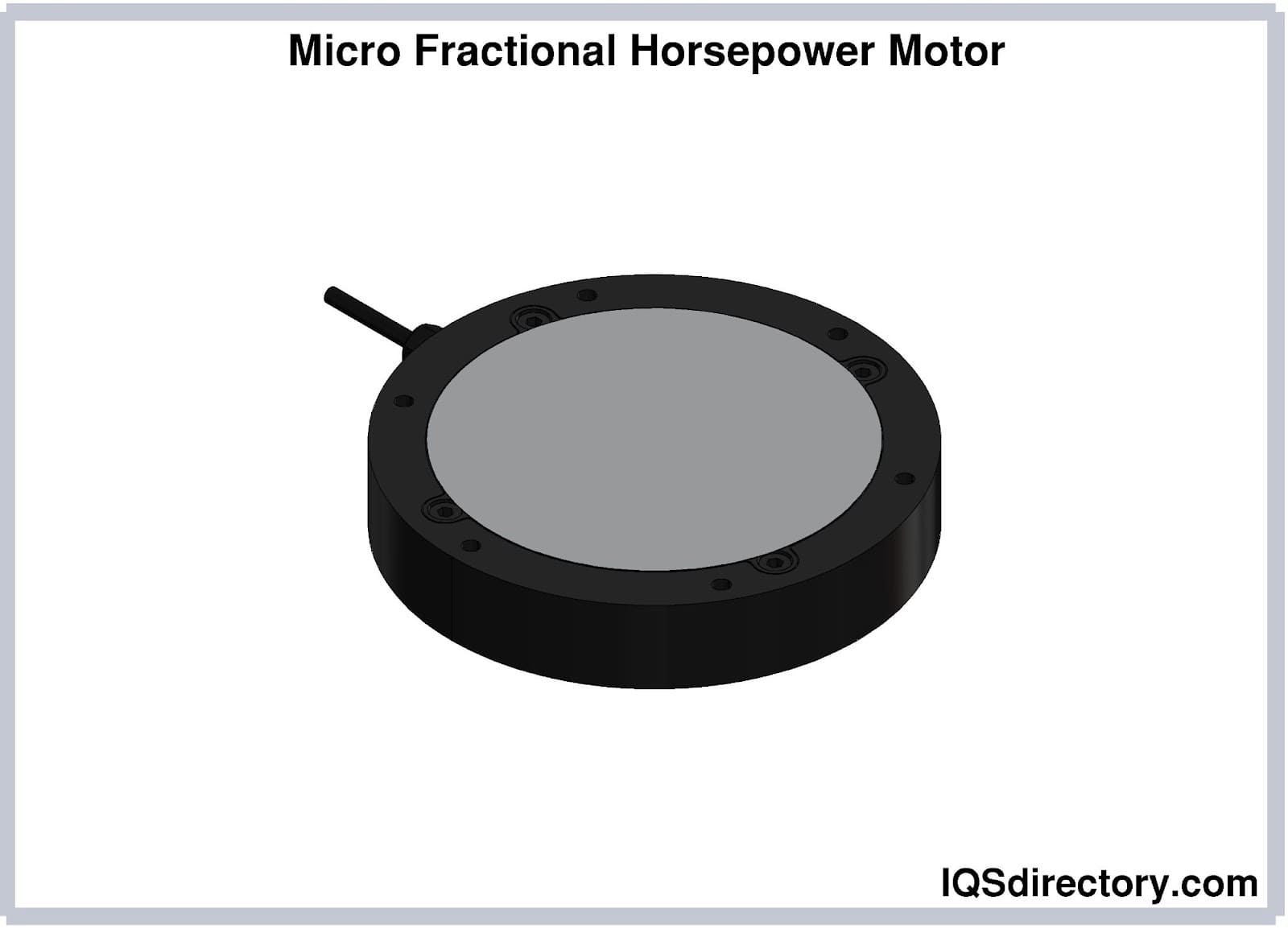 Fractional horsepower motors have an output power of 746 watts or less with a size of less than 104 mm2.
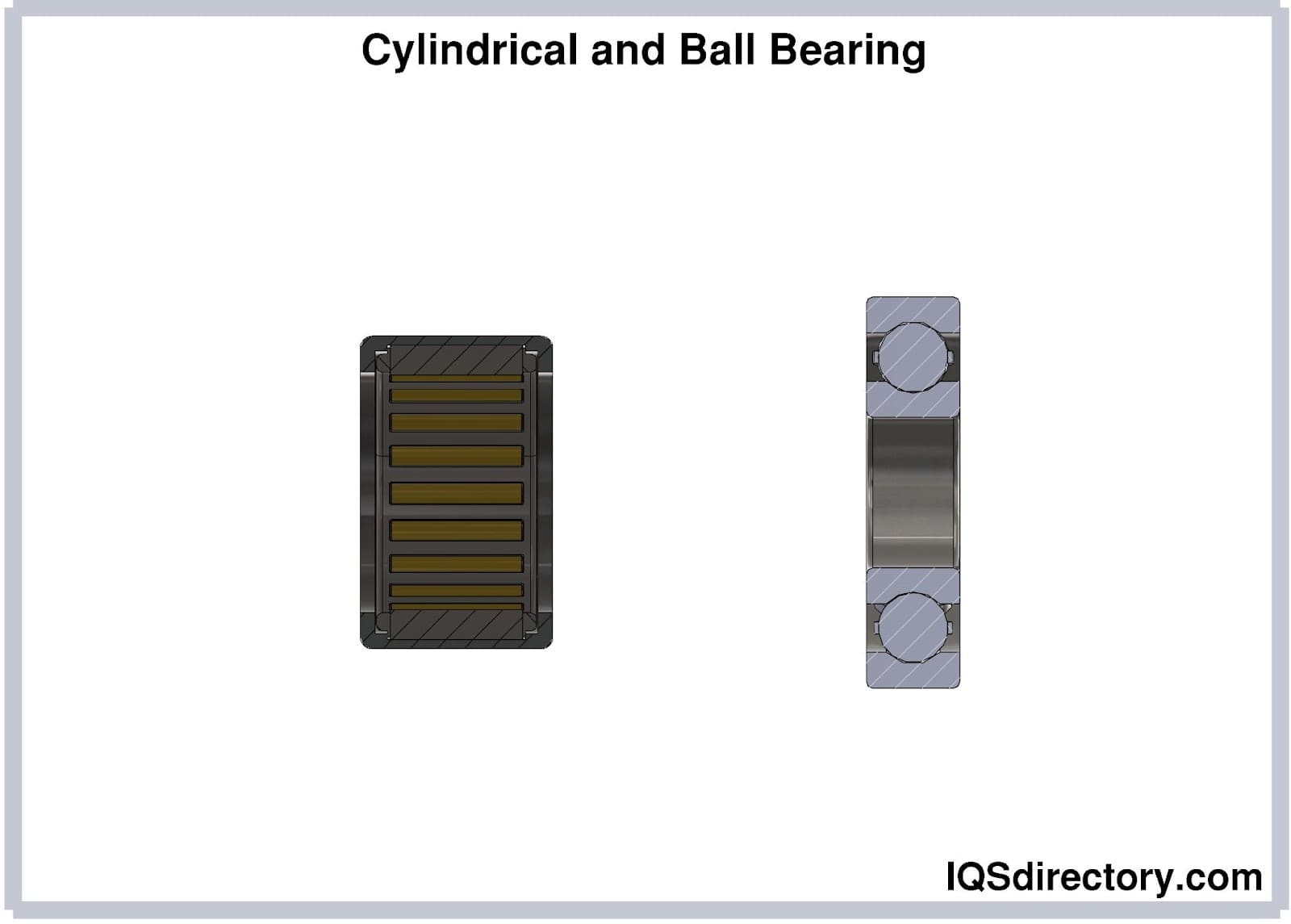 Bearings are a key part of electric motors because they help reduce friction, support the shaft, and limit wear over time.
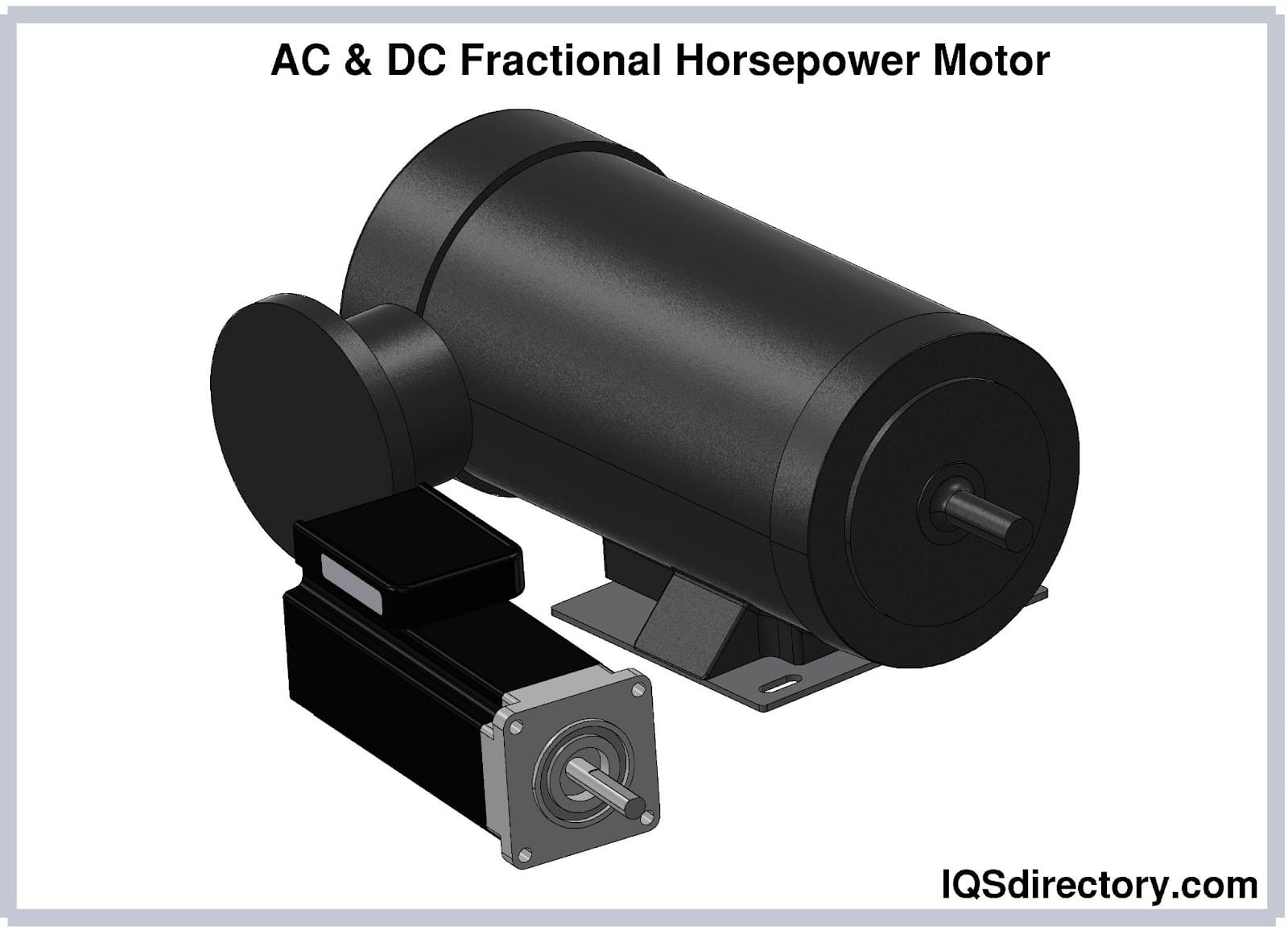 The power supply for fractional horsepower motors can be AC or DC, with AC being single or three phase.
Types of Fractional Horsepower Motors
There are numerous types of fractional horsepower motors, and each is designed around a different combination of speed, torque, control method, enclosure, and application environment. Even so, most electric motors share a core set of components: a rotor, coil, field magnet, axle, and enclosure. Many also include a stator, which may be integrated into the housing. In general, the rotor is the moving element and the stator remains stationary. Some motors rely on internal brushes to direct current at the proper moment, while brushless DC motors eliminate those brushes and instead depend on external electronic controls. Understanding these differences helps buyers compare general-purpose motors, gearmotors, miniature motors, and variable-speed motor options with more confidence.
Field magnets are central to how all electric motors operate. Some motors use permanent magnets, while others—known as induction motors—rely entirely on electromagnets. When current flows through the coil, the resulting magnetic field attracts or repels internal components and produces rotational force. That force acts on the rotor and is transferred through the shaft to the driven load. This basic operating principle applies across many small AC motors and DC motors, even though their starting methods, speed control, and performance curves may differ.
½ HP Motor
Fractional horsepower motors rated at ½ HP produce approximately 373 watts of output and are commonly used for light-duty to medium-duty applications that need more torque than very small appliance motors can provide. Buyers often compare this size for blowers, belt-driven equipment, pumps, shop tools, and HVAC assemblies.
¼ HP Motors
These motors also fall within the fractional horsepower category, delivering less than one horsepower—or under 746 watts—when converting electrical energy into mechanical power. A 1/4 HP motor is a common choice when buyers want a balance of compact size, modest power draw, and enough output for fans, small pumps, conveyors, and general-purpose machinery.
AC Motors (Alternating Current)
These can be induction or synchronous motors, operating with a current that alternates direction. AC fractional horsepower motors are often used where line power is readily available and where buyers want durable, low-maintenance performance for blowers, fans, condensers, pumps, or shop equipment.
DC Motors (Direct Current)
DC motors operate with a unidirectional flow of current and are often selected for variable speed performance, compact packaging, and straightforward control in portable equipment or battery-powered systems. Like AC motors, they convert electric power into motion, but their control profile often makes them attractive for precise adjustment.
Electric Motors
A general term describing any device that converts electrical energy into mechanical movement through magnetic interaction.
FHP Motors
An abbreviation for fractional horsepower motors—typically enclosed in a frame and defined by their output of less than one horsepower.
Gearmotors
These are motors combined with gearheads, which reduce output speed to a target RPM while increasing torque. Gearmotors are often selected when an application needs strong starting force, slower shaft speed, or more controllable motion without moving up to a larger motor frame.
Induction Motors
Induction motors work by modulating current in the stator coil to generate a rotating magnetic field that exerts force on the rotor. The field typically rotates at a speed slightly below synchronous speed. While three-phase induction motors dominate many industrial environments, single-phase induction motors are especially common in fractional horsepower applications because they are affordable, durable, and practical for fans, blowers, and general-purpose equipment.
Integral-Horsepower Shunt Motors
These motors are used in applications where constant speed is required across varying loads. They deliver consistent performance under full to no load conditions.
Miniature Motors
Also known as micro motors or small motors, these are compact fractional horsepower motors designed to meet both power output and physical size constraints. They are often chosen for handheld products, compact automation devices, and tightly packaged equipment where installation space is limited.
Multi-Speed Motors
Available in two, three, or four-speed models, these motors are wired in ways that allow users to change operating speed by adjusting connections at the starter.
NEMA Motors
Motors designed to meet standards set by the National Electrical Manufacturers Association (NEMA), ensuring compatibility and consistency across industrial applications.
Permanent Magnet Motors
These motors feature permanent magnets embedded in the rotor. The magnetic field aligns closely with the rotating field of the stator, reducing slip and improving torque efficiency. Permanent magnet motors can be more efficient and more responsive than similarly sized induction motors and can deliver strong torque across a wide speed range, including lower speeds. They are often selected for compact, high-performance applications, though they may cost more because of the magnetic materials used in their construction.
Reversible Motors
Both AC and DC motors can be reversible. DC motors typically reverse direction by switching the polarity of the magnetic field. For AC motors, reversing is achieved either by altering the phase connections in a three-phase setup or by switching lead wires in single-phase models.
Small Electric Motors
Motors that generate less than one horsepower of power output fall into this category, making them a staple in countless low-power applications.
Small Motors
These motors use only a fraction of one horsepower—defined as 745.7 watts—to operate, placing them firmly within the fractional horsepower category.
Synchronous Motors
Synchronous motors maintain a constant speed from startup through full load. They are often used when precise speed stability matters, since rotor speed matches the rotating magnetic field speed. This makes them a strong fit for timing-sensitive equipment and applications that benefit from steady operating RPM.
Universal Electric Motors
These versatile motors can operate on both AC and DC power sources, making them ideal for devices where flexibility is required.
Universal Motors
Similar to universal electric motors, these operate interchangeably on alternating or direct current and are often found in portable power tools and household appliances.
Variable Speed Motors
These motors offer adjustable rotational speeds and are commonly used in HVAC systems and other applications that require adaptable performance. They are especially attractive when buyers want better process control, softer starts, or the ability to tune motor output to changing load conditions.
Variable Torque Motors
A subset of multi-speed motors, these are designed for systems where both speed and torque requirements vary with operating demand, such as pumps and blowers. They can help equipment run more efficiently by matching output more closely to the task at hand.
Uses of Fractional Horsepower Motors
Fractional horsepower motors are used across industrial settings and everyday consumer products because they bring together compact size, practical power, and broad design flexibility. Their versatility allows them to serve an unusually wide range of sectors, extending from agriculture and food processing to HVAC systems, medical equipment, office machinery, and light automation. These compact motors support thousands of applications, including cooling fans, electric drills, meat slicers, electric shavers, gear-driven assemblies, and small conveyor systems. For readers asking, “What are fractional horsepower motors used for?” the short answer is that they appear anywhere a machine needs controlled rotary motion without the bulk of a larger motor.
The global automotive industry alone accounts for a large share of all fractional horsepower motors sold. While these motors are typically used in secondary systems rather than main propulsion, they support many everyday vehicle functions such as engine starters, door openers, air conditioning units, seat adjustment systems, wipers, and small actuator-driven accessories. Their compact footprint makes them well suited to modern vehicle packaging where space, reliability, and repeatable performance all matter.
A sizable share of fractional horsepower motors is also employed in household appliances. They appear in devices like microwave turntables, blenders, mixers, refrigerators, washing machines, dryers, and automated garage door systems. In these settings, buyers value consistent starting performance, compact installation, and dependable long-term operation for routine day-to-day use.
In addition, large numbers of these motors are built into electric tools, office equipment, medical devices, vending systems, and heating and cooling units. Manufacturers also rely on fractional horsepower motors for material handling, packaging, mixing, dosing, and other process applications where small motors must run reliably across repeated cycles. This range of end uses is why the category remains highly visible in searches for appliance motors, HVAC replacement motors, compact industrial motors, and light-duty OEM motor assemblies.
Choosing a Fractional Horsepower Motor
With few exceptions, fractional horsepower motors that share the same core specifications are interchangeable. If a motor from one manufacturer is removed, a similar motor from another manufacturer can often be installed in its place without changing the machine’s operating characteristics. That said, buyers should avoid assuming that every small motor is a drop-in replacement. Questions such as “What size fractional horsepower motor do I need?” or “Can I replace this motor with another brand?” are best answered by checking the original nameplate and the application requirements side by side.
Replacing a Motor
When replacing a fractional horsepower motor, the new motor should match the original specifications as closely as possible. The most reliable way to do that is by copying the nameplate data from the old, damaged, or worn-out motor. If the previous motor failed without a clear cause, it is wise to review whether it was truly suited to the application, ambient conditions, duty cycle, and load profile. An undersized or poorly protected motor may need to be replaced with a more appropriate motor type rather than an exact repeat. Special or custom motors, often marked as such, should usually be replaced with exact duplicates to preserve function, fit, and safe operation.
While there is a wide variety of fractional horsepower motors on the market, most general-purpose motors can be evaluated by examining a few key dimensions: power supply, motor type, power characteristics, enclosure, bearings, direction of rotation, mount, and thermal protection. Buyers also commonly compare RPM, frame size, shaft diameter, frequency, and enclosure style when searching for a replacement motor. Each of these factors should be reviewed carefully before a new motor is selected.
Power Supply
Fractional horsepower motors may run on alternating current (AC) or direct current (DC). AC motors are commonly either single-phase or three-phase. Although single-phase motors are most common in fractional horsepower applications, a three-phase motor cannot operate on a single-phase supply. Regional power standards also vary: motors designed for the U.S. market typically require 60 Hz, while those intended for European or Asian markets usually operate at 50 Hz. Voltage compatibility matters for both AC and DC motors and must align with the available power source, control hardware, and application environment.
Motors with continuously variable speed require controllers to regulate the electrical current. These controllers must be matched not only to the motor type but also to the available power supply. They may work by powering different poles of the motor, altering power levels, or modulating AC frequency. Motors such as stepper or servo models come with their own timing and control requirements, all of which should be met to support proper operation, smooth startup, and repeatable speed control.
Power Characteristics
Motors are defined by three primary characteristics: horsepower, torque, and speed. Horsepower represents the rate of work over time, torque describes the angular force a motor can exert, and speed measures the rate of rotation. These variables are interrelated, and gearing can trade speed for torque or torque for speed. When buyers compare a 1/4 HP motor with a 1/2 HP motor, they are often really comparing available torque, shaft speed, startup behavior, and duty cycle. The selected motor should be sized for the workload without being dramatically oversized, since too much motor can add cost and raise energy use without improving the application.
Motor Class
The internal construction of fractional horsepower motors varies widely. Some include brushes, while others are brushless. Some require large capacitors for startup, while others build torque more gradually as they accelerate. Motor classes differ in reversibility, speed variability, and winding configuration. Certain motors have multiple windings for startup and running conditions, while others operate with just one. In most cases, the right choice comes down to matching startup current, running behavior, and torque requirements to the application.
Motor Enclosure
Enclosures must be appropriately sized and compatible with the equipment they power. They also protect the motor from dust, moisture, debris, and other environmental conditions. For marine or corrosive environments, such as chemical processing plants, fully sealed enclosures may be preferred. For outdoor use, drip-proof housings can offer practical protection from weather exposure while still supporting cooling.
Bearings
The choice of bearing depends on how the motor will be used. Sleeve bearings are common for standard applications, while ball bearings are preferred when the motor must handle heavier axial loads. Needle bearings are often chosen for higher-speed applications. If a motor is mounted vertically, the bearings should be rated for vertical operation so the assembly can maintain stability and service life.
Motor Rotation
The motor’s direction of rotation must fit the application. Some motors can reverse direction by switching power leads or polarity, but not all are built for reversible service. Most motors indicate direction on the end opposite the output shaft, using CW (clockwise) or CCW (counterclockwise) markings. Pump motors may reverse these notations, so nameplate details and manufacturer guidance should be checked carefully.
Motor Mount
Mounting compatibility matters. The replacement motor should include mounting features that correspond to the supports, bolt pattern, shaft height, and equipment layout already in place. Base mount, face mount, and specialty mounting arrangements can all affect whether a motor is a true drop-in replacement.
- Thermal Protection
Many fractional horsepower motors include thermal protection to reduce the risk of overheating. This feature allows a motor to shut off after reaching a specified temperature threshold. Two common switch types are automatic reset and manual reset. Automatic reset switches allow the motor to resume operation after cooling, while manual reset switches require an operator to restart the motor. Automatic reset is often suitable for lower-risk systems such as fans, while manual reset is often preferred in applications where an unexpected restart could create a hazard, such as certain power tools. The reset style should match the safety needs of the equipment.
Standards and Specifications for Fractional Horsepower Motors
A number of standards apply to fractional horsepower motors. In the United States, these motors are commonly built around frame sizes established by NEMA, the National Electrical Manufacturers Association, which helps support dimensional consistency and replacement compatibility. While many fractional horsepower motors do not fall under the same efficiency rules that govern larger motors, they still need to align with the electrical and equipment requirements of the market they serve. In many operating settings, these motors must also meet radio interference expectations, meaning they should tolerate outside interference while avoiding excessive electromagnetic disruption of nearby equipment.
Choosing a Fractional Horsepower Motor Manufacturer
Several factors should be taken into account when selecting a manufacturer to fulfill your fractional horsepower motor requirements. A dependable manufacturer should supply a high-quality product, application guidance, and support that continues well beyond the initial sale. Buyers often compare lead times, customization options, testing practices, replacement part availability, and technical help for matching voltage, frame size, enclosure, shaft design, and duty cycle. When a supplier can support both initial motor selection and future replacement needs, it becomes much easier to maintain consistent equipment performance over time.
Fractional Horsepower Motors Terms
-
Actuator
A device that produces mechanical motion by converting various forms of energy into either rotational or linear mechanical energy.
Coil (Stator or Armature)
Electrical conductors placed within the core slots and insulated from the iron core. As current flows through these conductors, they generate and transmit the motor’s magnetic field.
Commutator
A cylindrical component mounted on the armature shaft, composed of copper segments arranged around the shaft. It serves as the contact surface for the motor brushes.
Constant H.P.
A term used for motors that operate at variable speeds but maintain the same horsepower output regardless of those speed changes.
Core
The section of both the stator and rotor, typically made from cylindrical laminated electrical steel, which forms the magnetic circuit of the motor.
Cycles Per Second (HERTZ)
A measurement representing one complete reversal of alternating current within one second.
Duty Cycle
The ratio of a motor’s operating time to its rest time, determined by the motor's ability to manage its normal operating temperature.
Efficiency
A comparison of the motor’s mechanical output to its electrical input, indicating how effectively it converts electrical energy into mechanical energy.
Enclosures
The motor's frame or housing, which may be open or closed, designed to protect internal components and sometimes to aid in cooling.
Endshield
A structural part of the motor housing that supports the bearings and acts as a guard for internal electrical and rotating elements. Also referred to as an "end bracket" or "end bell."
Horsepower (HP)
A unit of power that represents work done over time. One horsepower equals 33,000 foot-pounds per minute or approximately 746 watts. Motors used in pumping systems often have horsepower ratings.
Jackscrew
An adjustable screw mechanism used to position and secure a motor on its base or mounting frame.
Load
The amount of resistance or demand placed on a motor by the machine or system it is driving, representing the power required to overcome that resistance.
Motor
A device that converts electrical energy into mechanical energy to drive a rotating shaft.
Rotor
The rotating part of an induction motor, made from stacked laminations, that turns inside the stator.
Shaft
The rotating element that extends from the motor through the bearings and connects to the driven machinery.
Skew
The angled arrangement of laminations on a rotor or armature. This design helps eliminate low-speed cogging effects and reduces vibration in the rotor.
Stator
In an AC induction motor, the stationary component made of laminated steel with a central opening for the rotor. It contains slots for windings that generate the rotating magnetic field.
Thermocouple
A temperature-sensing device made of two dissimilar metals joined together, which produce a voltage signal that varies with temperature.