Flow Meters
A flow meter, sometimes spelled "flowmeter," is an instrument used to measure the flow rate of liquids, gases, and, in some systems, steam as they move through a pipe or process line. Installed directly in a pipeline, a flow meter delivers real-time process data that helps operators track throughput, verify performance, control usage, and support process automation in commercial and industrial systems.
Flow meters operate through several measurement methods. Some calculate volumetric flow, others determine velocity, and others measure true mass flow for tighter process control. Many instruments infer mass flow by evaluating variables such as absolute pressure, differential pressure, density, viscosity, and temperature. This measurement data allows flow monitoring equipment to generate dependable readings for batching, blending, energy management, quality control, leak detection, and system balancing.
Flow Meters FAQs
What does a flow meter measure?
A flow meter measures how much liquid or gas moves through a pipe, tube, or channel over a given period. Depending on the meter design, the reading may be shown as volumetric flow, velocity, or mass flow. These real-time readings help operators confirm process stability, monitor consumption, document usage, and compare actual system performance against design conditions.
What are the main types of flow meters?
The main types of flow meters include differential pressure, velocity, positive displacement, mass, and open channel designs. Each type relies on a different measuring principle, such as pressure drop, rotor speed, heat transfer, magnetic induction, or direct displacement. The best choice depends on the fluid, accuracy target, pipe size, pressure range, and operating environment.
How does a mass flow meter differ from a volumetric flow meter?
Mass flow meters measure the actual mass of the material moving through the system, often in pounds or kilograms per unit of time, while volumetric flow meters measure how much space the material occupies, usually in liters, gallons, or cubic feet. This distinction matters when density changes because mass flow stays tied to the amount of material, while volumetric flow changes with temperature and pressure.
What industries commonly use flow meters?
Flow meters are widely used in automotive, petroleum, natural gas, HVAC, water treatment, food and beverage, pharmaceutical, chemical processing, and general manufacturing industries. They support production accuracy, utility monitoring, process consistency, and equipment diagnostics while helping facilities reduce waste, improve uptime, and document operating performance.
What materials are flow meters typically made from?
Flow meters are commonly manufactured from stainless steel, brass, aluminum, PVC, PVDF, nylon, and other corrosion-resistant materials selected for compatibility with the application. Material choice affects chemical resistance, pressure handling, sanitary performance, service life, and long-term measurement stability in demanding industrial environments.
How should a flow meter be installed for accurate readings?
For accurate readings, flow meters should be installed away from vibration, electrical interference, and magnetic fields when those conditions can affect the sensing method. The device must be oriented to match the intended flow direction, and many designs perform best with straight pipe runs upstream and downstream to condition the flow profile and reduce turbulence.
What factors should be considered when selecting a flow meter?
When selecting a flow meter, evaluate the fluid type, flow range, required accuracy, line size, operating pressure, temperature, viscosity, conductivity, cleanliness, and allowable pressure drop. Matching the meter to these process variables improves repeatability, extends service life, and helps the instrument deliver stable measurements across the expected operating range.
Why are flow meters important in industrial applications?
Flow meters help industrial users maintain process accuracy, control waste, verify equipment performance, and support compliance documentation. They also improve product consistency, energy management, troubleshooting, and inventory control by turning live flow conditions into measurable, actionable operating data.
Flow Meter Applications
Flow meters play a major role in process efficiency, utility tracking, and production management because they help businesses compare input, output, and consumption in real time. With accurate flow readings, operators can monitor pumps, verify machine performance, reduce overuse, identify losses, and support tighter quality control. Industries that rely on flow meters include automotive, petroleum, gas, utility services, HVAC filters, food and beverage processing, chemical manufacturing, water systems, and raw material handling.
Each flow meter type works differently and is built around a particular sensing method and application range. Some are designed for one medium, while others can measure multiple liquids or gases under changing process conditions. In general, flow measurement falls into two broad categories: mass flow and volumetric flow. Mass flow meters report the amount of material moving through the line, while volumetric flow meters report the space that material occupies, which is often useful for batching, transfer, and utility monitoring.
At their core, flow meters collect process data, convert it into usable measurements, and report those results through analog, digital, or networked outputs. That ability makes them valuable anywhere accurate flow measurement supports process control, preventive maintenance, energy savings, or product quality.
History of Flow Meters
Reinhard Woltman introduced one of the earliest manufactured flow meters in 1790 with the turbine flow meter, originally intended to calculate energy loss in open canals. Roughly two centuries ago, Michael Faraday also explored electromagnetic principles for measuring river flow in the Thames, helping establish ideas that later influenced magnetic flow meter development.
Although scientists and engineers established the measuring principles behind several modern flow meter designs long before large-scale production, commercial adoption accelerated in the twentieth century. Gustave Coriolis described inertial force in 1835, yet the Coriolis flow meter did not become commercially available until 1977. Similarly, electromagnetic flow meters entered the broader market in 1952, while ultrasonic flow meters followed in 1963, giving industry more non-intrusive and high-accuracy measuring options.
As industrial demand grew, flow meter technology advanced from mechanically simple devices to smart instruments with digital displays, diagnostics, remote monitoring, and integrated control signals. Today, many users look for flow meters that support automation, data logging, predictive maintenance, and wireless communication, and the market continues to move toward more compact designs with fewer moving parts and stronger long-term stability.
Design of Flow Meters
Most flow meters consist of three primary components: the primary device, transducer, and transmitter. These elements are typically combined into a single, integrated instrument for seamless operation. As fluid or gas moves through the line, the sensing element detects a change in velocity, pressure, temperature, frequency, or displacement, and the electronics convert that information into a readable output. This design approach supports dependable flow measurement in process control, utility metering, batching, and monitoring systems. Accuracy in output signaling is often associated with turbine, rotator wheel, plate, channel, nozzle, laminar, and pilot tube flow meter systems.
Flow meters are manufactured from materials chosen to match the fluid, process environment, and performance target. Common choices include corrosion-resistant stainless steel plate, brass, aluminum, PVC, PVDF, or nylon to ensure durability and reliable long-term measurement performance.
When designing a flow meter for a particular application, manufacturers review viscosity, fluid cleanliness, pressure, temperature, line size, installation space, and target accuracy. They also consider whether the user needs local display, remote output, alarm functions, totalization, or integration with plant controls. Reviewing these variables early helps create a flow meter system that fits the process instead of forcing the process to fit the instrument.
Types of Fluid-Based Flow Meters
Flow meters are often grouped into gas-based and fluid-based designs. Fluid-based flow meters are further categorized into differential pressure flow meters, velocity flow meters, positive displacement flow meters, mass flow meters, and open channel flow meters.
Differential Pressure Flow Meters
These flow meters operate according to the Bernoulli equation by measuring pressure differences before and after the flow passes an obstruction. They include flow nozzles, venturi flow meters, and rotameters, and they remain widely used in industrial systems because of their familiarity, wide size range, and dependable field performance.
- Orifice Plate Flow Meter System
- Measures pressure change as fluid moves from upstream to downstream through a partially restricted pipe section, making it a widely used choice for industrial flow measurement and process monitoring.
- Flow Nozzle
- Used to measure air and gas flow rates with a straightforward design, moderate cost, and dependable performance in many utility and process systems.
- Venturi Tube Gauge
- Determines liquid flow rate by evaluating pressure differences created by a change in cross-sectional area through the flow path.
- Rotameter
- Also called a variable area flow meter, this device uses a float that rises in a tapered tube as flow increases, providing a simple visual indication of flow rate.
Velocity Flow Meter
Velocity flow meters determine flow rate by measuring how fast the fluid moves at one or more points in the system. Compared with some differential pressure meters, they often provide broader rangeability and can be a practical option when users want accurate measurements with lower permanent pressure loss.
Common velocity flow meter options include pitot tube, calorimetric, turbine, vortex, ultrasonic, and electromagnetic designs. Each uses a different sensing principle, which is why users often compare media compatibility, accuracy, straight-run requirements, maintenance expectations, and output options before choosing one.
- Pitot Tube Flow Meter
- Converts kinetic energy into a readable pressure-related signal and is often used in ventilation, ductwork, and HVAC air flow measurement.
- Calorimetric Flow Meter
- Uses paired temperature sensors to provide accurate air or gas flow readings based on thermal transfer principles.
- Hydraulic Flow Meter
- Measures liquid flow in hydraulic systems for testing, troubleshooting, balancing, and preventive maintenance.
- Turbine Flow Meter
- Uses a multi-bladed rotor mounted in the flow stream. As fluid moves through the meter, rotor speed changes in proportion to flow rate.
- Electromagnetic Flow Meter
- Also called a magnetic flow meter, it applies Faraday’s law of electromagnetic induction to measure conductive liquid flow without moving internal parts.
- Vortex Flow Meter
- Measures flow by placing an obstruction in the path of the fluid and sensing the vortices created downstream.
- Ultrasonic Flow Meter
- Uses ultrasonic signals to calculate liquid or gas flow volume and is often selected for non-invasive or low-maintenance measurement.
Positive Displacement Flow Meter
Positive displacement (PD) flow meters use rotors, gears, vanes, pistons, or diaphragms to isolate and count fixed volumes of liquid. Because they directly measure discrete quantities, they are often selected for viscous fluids, oil measurement, chemical dosing, and other applications where repeatability and totalized flow data matter.
Mass Flow Meter
Mass flow meters, also called true mass flow meters, measure the amount of material moving through the system rather than only the space it occupies. They are often chosen when users need tighter process control, compensation for changing density, or dependable readings in gas applications and precision dosing systems.
- Thermal Mass Flow Meter
- Features temperature reference and active heat sensors that calculate heat loss to determine mass flow or air flow rate.
- Mass Gas Flow Meter
- Uses the Coriolis effect to measure mass flow while accounting for variables such as density, pressure, and viscosity.
Open Channel Flow Meter
Open channel flow meters measure flow in systems where liquid is exposed to the atmosphere rather than fully enclosed in a pipe. They are often used in wastewater treatment, irrigation, drainage, and environmental monitoring where level-based measurement is more practical than inline metering.
- Spring and Piston Flow Meter
- Uses an annular orifice with a tapered cone and piston to indicate flow in compact systems.
- Flow Switch
- Includes a switching component that can control flow, activate alarms, or signal changing process conditions.
- Digital Flow Meter
- Any flow meter that uses a digital display to show live readings, totalized flow, alarms, or diagnostic information.
Advantages of Flow Meters
Flow meters can improve facility efficiency by helping users monitor consumption, verify process balance, reduce waste, and document performance. Many designs require limited maintenance, offer long service life, and support simple operation. Depending on the meter type, users may also benefit from digital readouts, alarm outputs, data integration, and fewer moving components that reduce wear-related service issues.
Installation of Flow Meters
Proper installation starts with choosing a location that supports steady flow and reliable signal quality. Flow meters should not be placed where vibration, electromagnetic interference, or unstable piping conditions can distort the reading. The installer should also confirm flow direction, mounting orientation, straight-run requirements, and whether the application involves air entrainment, pulsation, or limited upstream space that may call for conditioning or special piping practices.
For application-specific installation guidance, always review the supplier’s instructions, calibration notes, and recommended piping practices for the exact meter model being used.
Proper Care for Flow Meters
Every flow meter design has operating guidelines that should be followed to protect accuracy. Gas flow meters should remain full of gas, while liquid flow meters should remain completely filled with liquid. Entrained gas in liquid service or liquid carryover in gas service can distort measurements, increase noise, and reduce repeatability. Clean media, stable operating conditions, and routine inspection all help preserve long-term performance.
Industry Standards for Flow Meters
Make sure the flow meter selected for your process aligns with applicable ISO requirements and any workplace, safety, sanitary, or regional standards tied to the installation. When personnel work close to the equipment, users should also verify whether OSHA or other regulatory considerations apply to the complete system and not just the meter alone.
Points to Consider When Selecting a Flow Meter
If you are comparing flow meters for a new system or retrofit, review the factors below to narrow the field and identify a flow gauge that matches your process, performance target, and installation conditions.
- Gas or Liquid?
- First determine whether the meter will be used for gas or liquid service. Gas and liquid applications place different demands on sealing, material compatibility, pressure rating, and environmental resistance.
- What’s Your Flow Rate?
- Understand the expected operating flow range. This helps eliminate meters that will underperform at very low flow, high flow, or rapidly changing flow conditions.
- How Accurate Does Your Output Signal Need to Be?
- Define the level of measurement accuracy and repeatability your process requires. In some applications, billing-grade or batching accuracy matters most, while in others stable repeatability is the higher priority.
- What’s Your Projected Flow Meter Environment?
- Review the maximum and minimum temperatures your system may reach so the meter body, seals, electronics, and sensing technology match the environment.
- What are the Properties of Your Fluid?
- Identify the fluid properties, including specific gravity, conductivity, vapor pressure, viscosity, particle content, opacity, and whether the fluid behaves as a Newtonian or non-Newtonian medium.
- What are Your System Measurement and Reading Requirements?
- Clarify what the system must display or record, such as instantaneous flow rate, totalized flow, alarms, analog output, or data for control integration.
- Do You Have the Information You Need to Find the Right Flow Meter?
- Collect specification sheets, questionnaires, and application checklists from the manufacturer so the proposed flow meter matches the process and installation requirements.
Choosing the Right Manufacturer
Even if you know the answers to the selection questions above, choosing the right flow meter or flow control product is easier when an experienced manufacturer or supplier helps translate process data into the right design. A knowledgeable source can recommend the proper measuring principle, materials, outputs, and installation approach for the application instead of steering you toward a generic option.
- They treat you like you matter. - A strong manufacturer takes time to understand your application, your operating limits, and the performance target you are trying to reach before recommending a meter.
- They’ll want to find a creative solution for you. - The right supplier will help tailor material selection, meter style, outputs, and configuration to fit the way your process actually runs.
- They’ll show that they care about your success, not just the sale. - A trustworthy manufacturer supports measurement accuracy, system efficiency, and long-term operating value instead of pushing a one-size-fits-all product.
Use the supplier list above to compare reputable flow meter manufacturers that can answer application questions, review system conditions, and help match the right instrument to your process goals.
Flow Meter Images, Diagrams and Visual Concepts
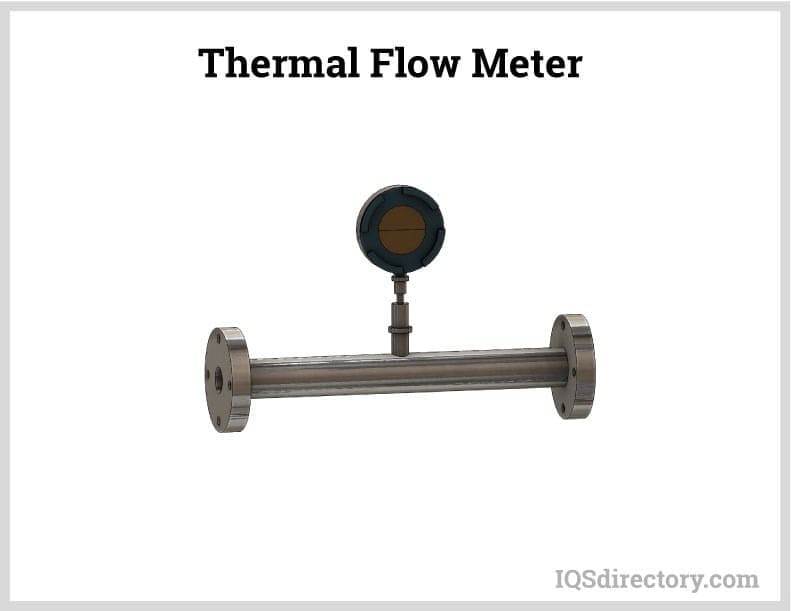 Flow meter measurement may be expressed as linear or nonlinear mass flow and volumetric flow for liquids or gases, depending on the instrument design and application.
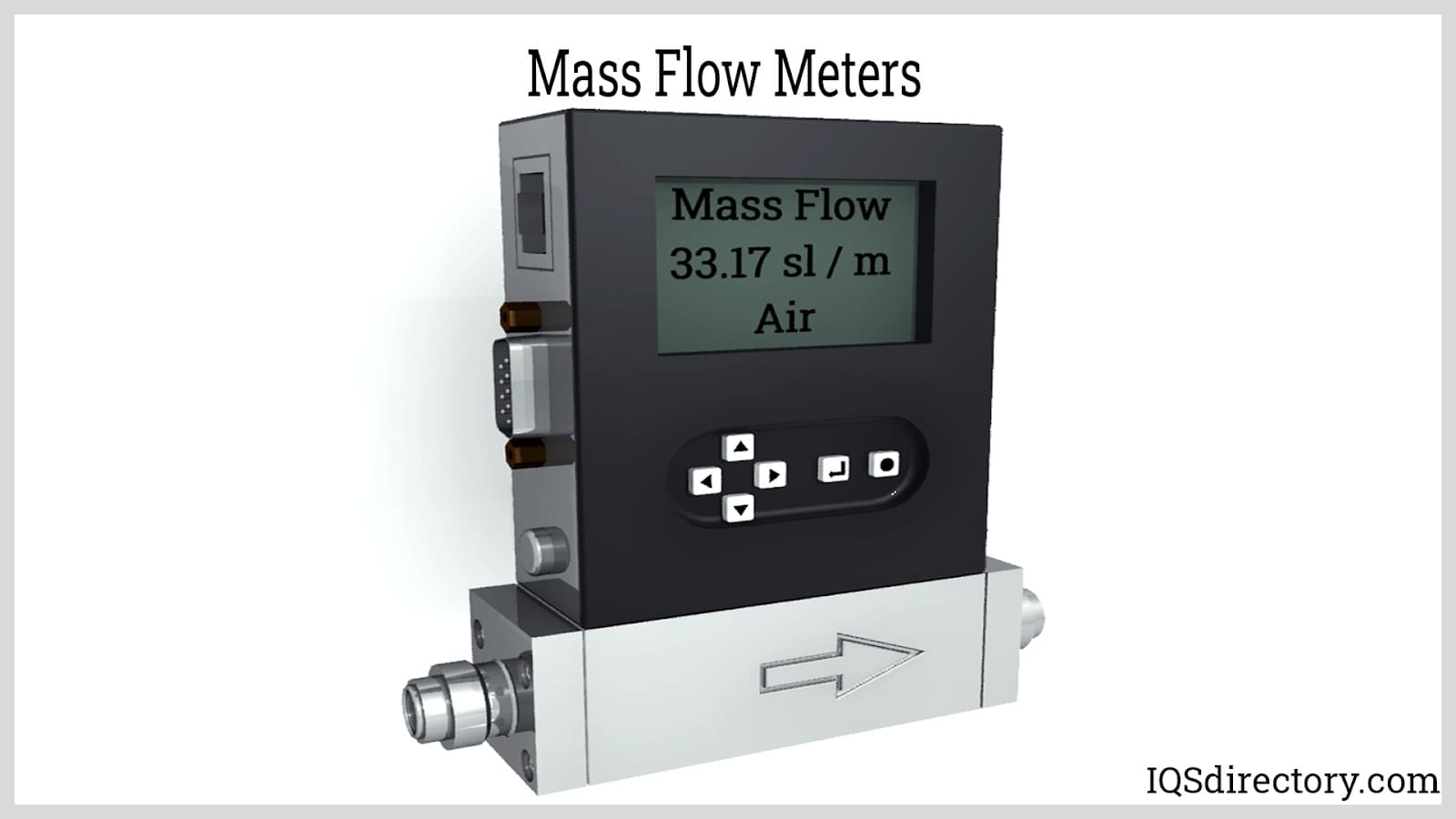 Mass flow meters often measure gas flow using thermal transfer principles, temperature sensing, and calibrated electronics to report dependable process data.
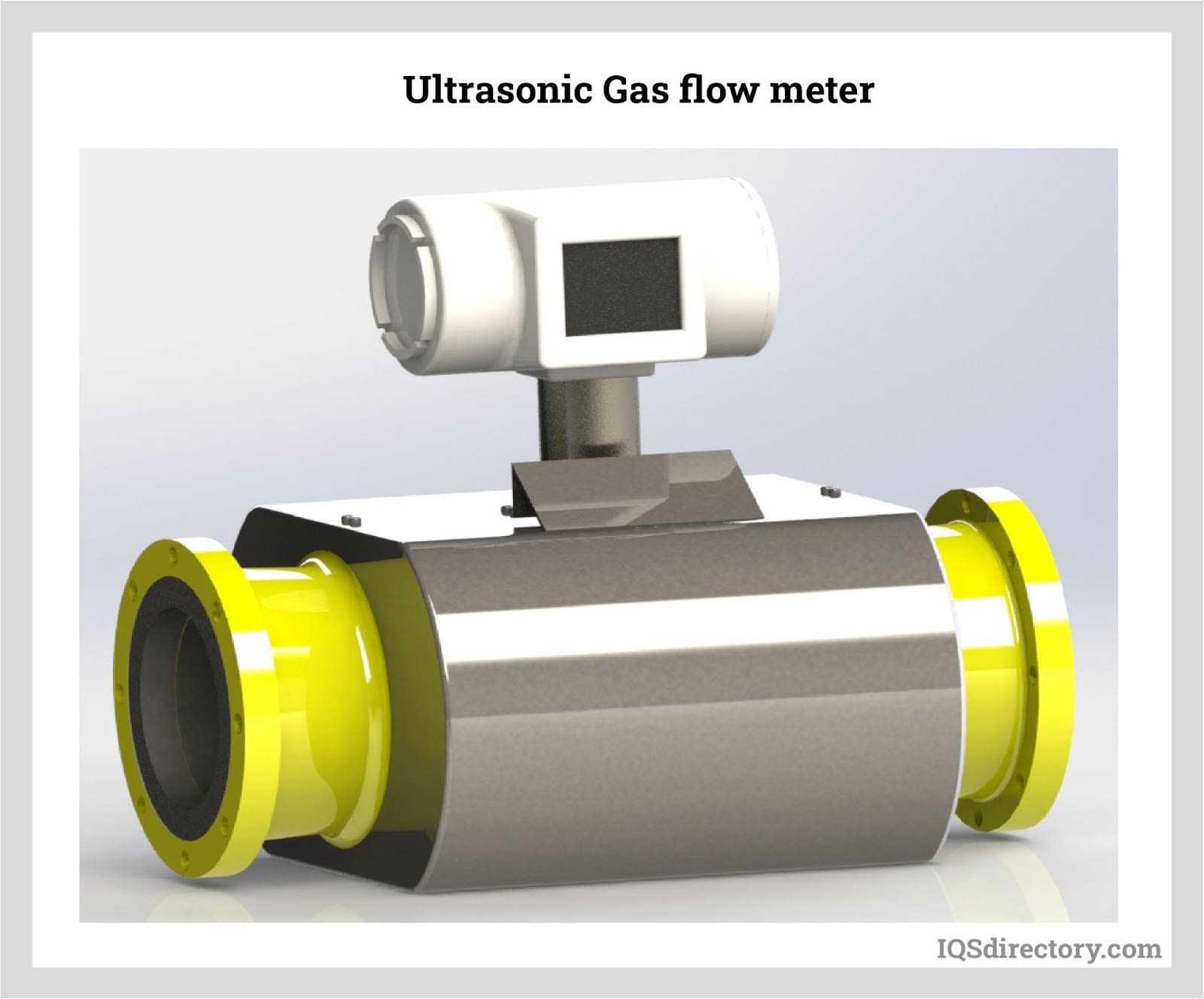 Ultrasonic flow meters calculate liquid or gas flow by transmitting ultrasonic waves across or along the pipe and interpreting changes in travel time or frequency.
 Magnetic flow meters use electrodes and an electromagnetic field to measure the velocity of conductive liquids in closed pipe systems.
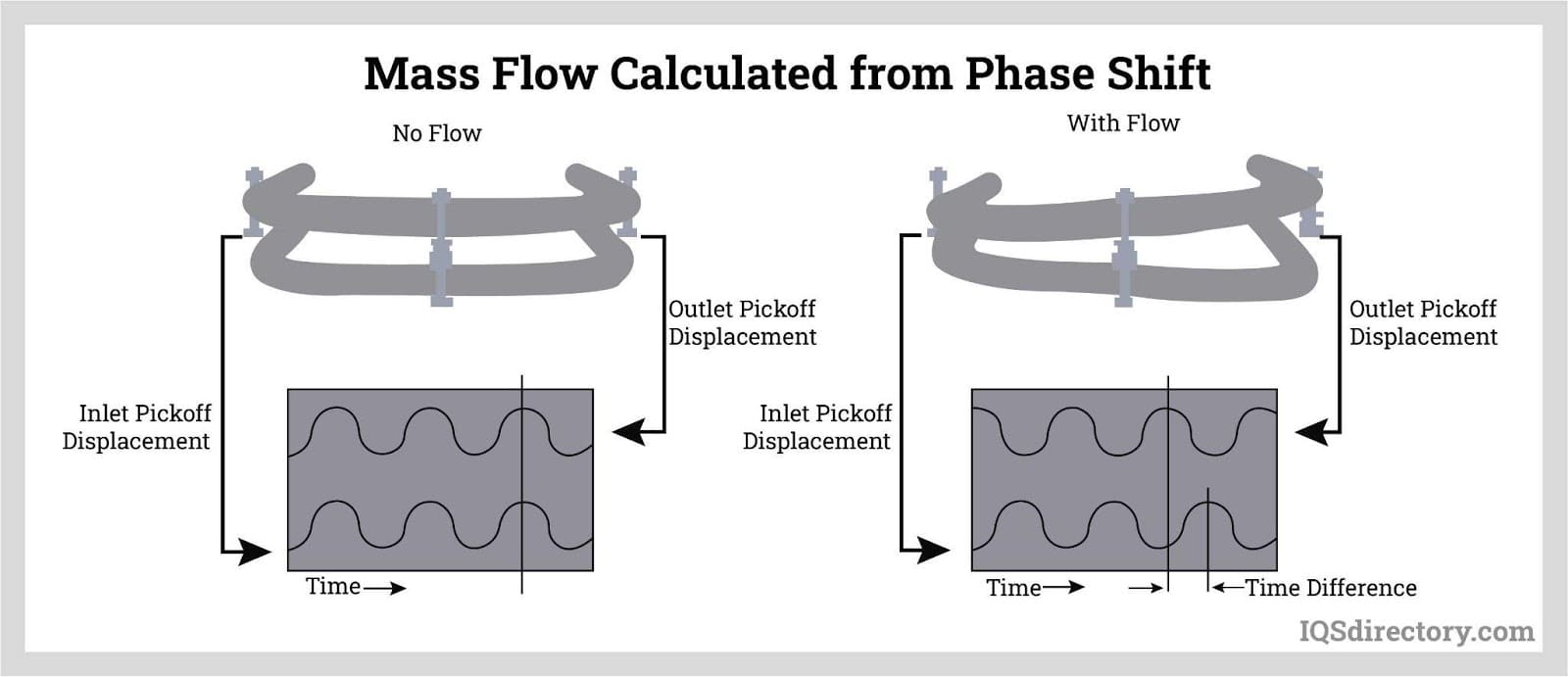 Coriolis flow meter readings change with flow rate and tube displacement, allowing the instrument to calculate mass flow with high accuracy.
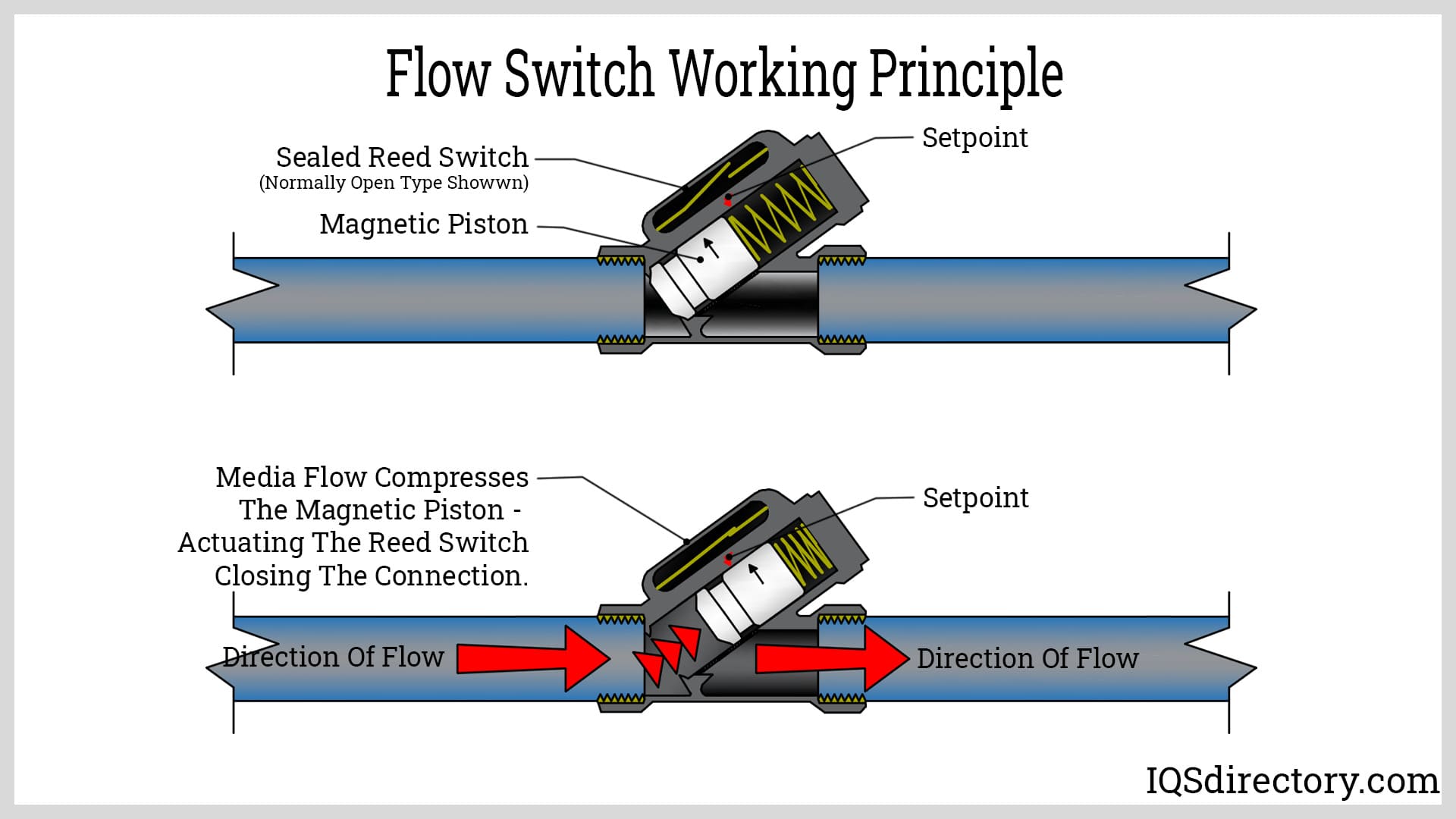 Flow switches monitor liquid flow conditions and can trigger control actions, alarms, or equipment protection functions within a system.
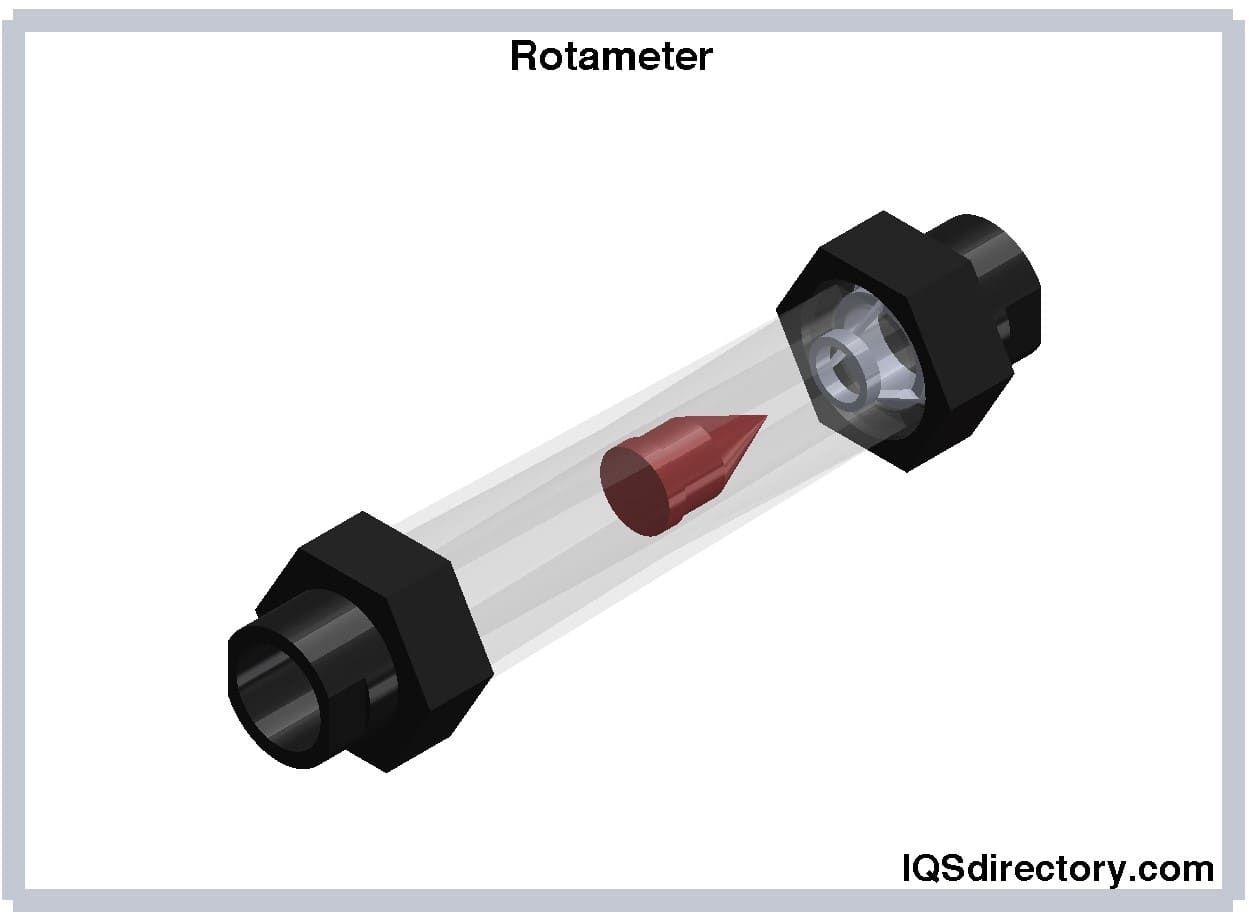 Rotameters are variable area flow meters that provide a visual flow indication as the float rises and falls within a tapered tube.
Flow Meter Types
- Air Flow Meters
- Used to measure the flow of air.
- Coriolis Flow Meters
- Measure the force of acceleration resulting from a moving object toward or away from the center of rotation.
- Differential Pressure Flow Meters
- Measure the difference in pressure to measure the flow rate.
- Electromagnetic Flow Meters
- Used to measure the flow rate of conductive liquids.
- Flow Indicators
- Provide a visual representation of flow.
- Flow Sensors
- Used to measure a flow rate.
- Flow Switches
- Control the flow in the system.
- Flow Transmitters
- Read the signal from a flow sensor and convert it into a useful output.
- Flowmeters
- Used to measure the rate of flow of a liquid or gas.
- Fuel Flow Meters
- Measure the rate of flow of fuels.
- Liquid Flow Meters
- Used to measure the flow of liquids.
- Mass Flow Meters
- Measure the mass flow rate of a fluid.
- Positive Displacement Flow Meters
- Measure the flow rate by using mechanical components to divide the fluid into specific, fixed increments.
- Ultrasonic Flow Meters
- Use sound waves to measure flow rate.
- Vortex Flow Meters
- Use vortices to measure flow rate.
Flow Meter Terms
- Absolute Pressure
- Atmospheric pressure plus gauge pressure in flow meters.
- Accumulator
- Area where fluid is under pressure and stored as a source of power within flow meters.
- Bluff Body
- An obstruction, often wedge-shaped, placed in the middle of a gaseous or liquid flow. It is designed to create a downstream vortex in vortex flow meters to measure flow rate.
- Control Point
- The temperature flow meter instruments need to perform the designated functions of flow meters.
- Coriolis Force
- The force that occurs when a mass has a velocity moving outward in a rotating plane of flow meters.
- Counter Weight
- A mass that is added to a particular substance to create a more balanced and stable apparatus for flow meters.
- Current
- The flow rate of electricity within flow meters.
- Density
- A substance’s mass per unit of volume in flow meters.
- Flow
- The travel of materials in response to a force, such as pressure within flow meters.
- Flow Nozzle
- A constriction made of a contoured plate that forms a hole in flow meters for the flow stream so a measurement can be taken.
- Flow Rate
- The velocity of flow in flow meters.
- Head-Loss
- The loss of pressure in flow meters or a flow meter system that is measured with a length parameter (such as amount).
- Hot-Tap
- Allows for flow meters to be inserted or removed without causing a complete system shutdown.
- Integrator/Totalizer
- A flow meter device that measures the total flow of fluids.
- Manometer
- Measures fluid pressure. This is a U-shaped tube containing liquid that adjusts with the pressure in the flow meter tube.
- Mass Flow Rate
- The volumetric flow rate of a liquid or gas multiplied by its density. Expressed as pounds per hour or kilograms per minute in flow meters.
- Potential Energy
- The potential of energy when a liquid is in a position or height above a flow meter place to which it might flow.
- Transducer
- The part of flow meters that senses fluid as it passes through the device.
- Transmitter
- The part of flow meters that produces usable data from the transducer of flow meters.
- Weldolet
- A connection for a metal pipe that is used as a fitting for insertion-type sensors or flow meters.