Industrial Electric Heaters
Electric heaters are devices designed to generate heat from electrical energy for industrial processing, commercial comfort heating, and specialized manufacturing applications. Their use spans plastics processing, packaging, food production, metalworking, water treatment, HVAC systems, and consumer equipment. Many heater categories share similar construction and performance traits, so naming often overlaps. For example, band heaters and strip heaters serve related process-heating functions, though band heaters are usually more flexible and compact for curved surfaces.
The wide range of industrial electric heaters includes many designs that cross categorical boundaries. Cartridge heaters, for example, may be used in process heating applications that resemble immersion service, but they are not always classified that way. Some heater names describe the job they perform, such as drum heaters, while others refer to the construction style, such as tubular heaters. Certain terms are also used interchangeably; air heaters and duct heaters both warm air in HVAC filters, yet a free-standing space heater can also be considered an air heater without being classified as a duct heater. Similarly, circulation heaters may be used to heat liquids in containment systems, while also applying to air-heating applications. Despite potential confusion in terminology, every heater type serves a vital role in industrial processes, commercial functions, or consumer products.
Electric heaters are used across many industries for localized process heating, tank heating, freeze protection, material softening, molten material hold temperatures, air handling, and precision thermal control inside machinery. Strip, band, cartridge, and air heaters are common in these roles. In extrusion processes for metal, plastic, and rubber, friction alone may not create enough heat to soften material consistently. Supplemental electric heat supports stable plasticization, better throughput, and improved product quality. Thermal energy also supports packaging, foam fabricating, metal forming, laboratory work, food processing, and water treatment. Cartridge heaters are often inserted into custom-sized holes in dies, platens, molds, and machinery to deliver dense, localized heat, while immersion and tubular heaters warm liquids, gases, and process air in commercial and industrial environments.
Electric heaters operate by converting electrical energy into thermal energy. As electrons move through a conductive medium, resistance generates heat that can be directed into air, liquids, metal tooling, or product-contact surfaces. The component responsible for this conversion is the heating element, which may be built as a coil, strip, rod, cartridge, ribbon, or tubular assembly. Some heaters rely on simple coiled metal resistors, while others use tighter engineering with ceramic insulation and compacted mineral fill for better watt density, heat transfer, and service life. In most industrial designs, the element is paired with insulation and a protective sheath—often stainless steel, aluminum, or nickel-based alloy—to improve performance and durability.
Insulation plays a central role in many electric heaters by controlling electrical isolation and directing heat where it is needed. Ceramic is one of the most common insulation materials, though mineral insulation, mica, and fiberglass are also used depending on watt density, temperature range, and environmental exposure. Some radiating heaters use ceramic cores or full ceramic-supported elements to distribute heat through fans, as seen in space heaters, or through moving air in hot-air duct systems and process air equipment.
Each electric heater must be matched to material compatibility, target temperature, voltage, wattage, mounting conditions, and duty cycle to deliver dependable performance. While non-electric heating methods such as coal, wood, gas, and hydronic systems still exist, electric heaters are often chosen for controllability, clean operation, and responsive heat input. Safety is also a major factor when selecting a heater, since different models react differently to moisture, corrosive chemicals, washdown exposure, airflow variation, and enclosure conditions. Engineers and buyers typically review operating conditions, surface load, control method, and process goals before choosing the best industrial heater for efficiency, service life, and safe operation.
Industrial Electric Heaters FAQ
How do industrial electric heaters work?
Industrial electric heaters convert electrical energy into process heat by passing current through high-resistance elements. That resistance generates thermal energy that can be transferred to air, liquids, dies, molds, tanks, pipes, ducts, and other production surfaces for controlled industrial heating.
What materials are used in electric heater elements?
Many industrial heater elements use nickel-based alloys such as nichrome or chromel because they offer strong oxidation resistance, stable electrical properties, and reliable high-temperature performance. Other element materials include silicon carbide, molybdenum disilicide, and selected iron-based alloys for demanding furnace and high-heat applications.
Where are immersion heaters commonly used?
Immersion heaters are widely used in food processing, plastics, water treatment, chemical processing, and tank heating applications. They heat large liquid volumes quickly through direct heat transfer, making them useful for reservoirs, wash tanks, process vessels, oils, water, and other industrial fluids.
What makes cartridge heaters useful in manufacturing?
Cartridge heaters deliver dense, localized heat inside molds, platens, dies, and machinery. When paired with thermocouples and temperature controllers, they are well suited for extrusion, thermoforming, packaging, hydraulic equipment, and food production lines that need accurate, repeatable heat.
Why are induction heaters growing in industrial use?
Induction heaters continue to gain use because they offer energy savings, flame-free operation, fast response, and precise process control. By generating heat through eddy currents in conductive metals, they support cleaner manufacturing, lower waste heat, and improved throughput in many industrial facilities.
What maintenance is recommended for electric heaters?
Routine maintenance often includes shutting off power, removing thermostat assemblies when applicable, clearing dust and debris, cleaning grilles, checking connections, and reassembling components carefully. Regular cleaning supports heater performance, extends service life, and helps maintain steady heat output in industrial and commercial systems.
What safety features should industrial heaters include?
Helpful safety features include automatic tip-over shutoff, overheat protection, cool-touch housings, adjustable louvers, and mobility aids such as handles or wheels. In industrial environments, buyers may also look for temperature limits, enclosure ratings, guards, and control-panel interlocks to protect workers and equipment.
How Heaters Work
Heaters function by using high-resistance wire or engineered elements to convert electrical energy into heat. The process is similar to resistors used in many electrical systems: current meets resistance, and that resistance produces heat. Early electric heaters resembled oversized light bulbs, where current passed through a thin filament that created both a visible glow and usable heat.
Most high-power incandescent bulbs are rated at about 100 watts, but they are not optimized for concentrated process heating. To build more effective heaters, manufacturers use high-resistance wires such as Chromel and nichrome to form dedicated heating elements with better thermal output and durability.
Heating elements are typically designed as coils or strips of wire, functioning much like a lamp filament but specifically engineered to generate substantial heat. These elements are commonly made from either iron-based or nickel-based materials. Nickel-based elements, such as nichrome or chromel, are alloys composed mainly of nickel and chromium. In nichrome, nickel constitutes approximately 80% of the alloy.
Nichrome is a preferred heating element material because it offers a high melting range, strong oxidation resistance, limited thermal expansion, and dependable electrical resistance. These traits make it a widely used choice in industrial heaters, household appliances, and many controlled heating applications.
Other heat-producing element styles are also used in industrial and residential equipment, depending on watt density, installation method, and operating temperature.
- Bare Nickel-Chromium Wire (NiCr) or Ribbon
- Can be used in a straight or coiled form and is commonly found in toasters and hair dryers.
- Screen Printed Metal or Ceramic Tracks Deposited in Metal Plates Insulated with Ceramic
- Frequently used in household appliances such as kettles.
- Clarod Sealed Elements
- Nickel-chromium wires encased in a ceramic binder and sealed inside a metal shell. These elements, available as straight or curved rods, are commonly used in coffeemakers, ovens, and electric stoves.
- Heat Lamps
- High-powered incandescent bulbs designed to emit infrared radiation instead of visible white light. These are often used in space heaters and food warmers.
- PTC Ceramic
- A specialized ceramic that becomes highly resistive above a specific temperature threshold. This self-regulating property allows it to function as its own thermostat, preventing overheating.
In industries requiring extreme heat, such as metal processing, furnace operation, and plastic melting, specialized materials like advanced metal alloys, silicon carbide, and molybdenum disilicide are used to withstand demanding thermal loads.
Ceramics are the most commonly used insulation material, though other options such as mineral, mica, and fiberglass insulation are available depending on the heater’s specific application. Radiating electric heaters transfer heat using ceramic cores or complete heating elements, distributing warmth through airflow facilitated by fans, as seen in space heaters, or through hot air duct systems, as in duct heaters.
The History of Electric Heaters
The earliest forms of electric heaters relied on bulbs, with credit given to Thomas Edison for inventing the light bulb in 1880. However, heaters needed to be more durable and capable of generating greater heat for various applications. This required the use of a high-resistance wire, leading to a breakthrough by Albert Leroy Marsh, who developed chromel—the first alloys specifically designed for electric heaters. Also known as nichrome, chromel was up to 300 times stronger than other alloys available at the time.
Capable of reaching temperatures above 1,400°C while maintaining corrosion resistance, chromel revolutionized electrical engineering by making electric heaters more efficient and long-lasting.
In the early 1890s, General Electric, an American company, began producing the first commercial electric heaters. These heaters featured an elongated glass bulb and were manufactured by two companies, one of which was headed by Thomas Edison.
- The UK and Heater Technology
- In 1891, Herbert John Dowsing was pioneering electric cooking methods in the UK, designing an all-electric heating unit based on the long cylindrical bulb model. Though rudimentary, this design closely resembled modern heaters. The unit featured a copper backing to enhance heat radiation into the room, making Dowsing a key figure in the development of domestic heating in the UK.
- By 1912, portable heating technology had gained traction. Charles Reginald Belling established his own company to manufacture heaters, producing early models that resembled table lamps.
- Electric-Heaters in the 1900’s
- Following World War II, radiant heating became increasingly popular. During this era, the bar heater—also known as the electric fire—was invented. These radiant heating units used bars of coiled wire that glowed orange when an electric current passed through them.
- Most early electric heaters were portable, but they posed safety risks. If knocked over, they could start fires, and their exposed heating elements could burn inquisitive fingers. Today, bar heaters are still produced but now incorporate advanced safety standards to prevent such hazards.
- By the 1960s, the growing demand for power led to the development of storage heaters. These units allowed both industrial and residential users to generate and store heat while consuming less electricity, improving efficiency and affordability.
- Advancements in heating technology now focus on integrating smart technologies to control radiant heat production. Many industrial applications utilize remote controls and digital programming, improving energy efficiency, increasing portability, and enabling heaters to meet the demands of industries that require high-temperature heating solutions.
Ways to Enhance the Efficiency of Electric Heaters
Heating appliances are a core part of industrial processing. Long before modern manufacturing, producers relied on heat to dry, soften, melt, cure, sterilize, and shape materials. Major changes in industrial heating technology accelerated after the 1970s and 1980s, when electric systems increasingly replaced coal-fired and other fuel-based methods in many operations. That shift improved controllability, reduced maintenance demands, and helped lower smoke and pollutant output inside and outside the plant.
- Induction Systems
- Industries are increasingly adopting induction heating systems due to the numerous advantages they offer. While induction heating technology first emerged in industrial applications during the 1980s, its widespread adoption has only accelerated in the past decade. The surge in popularity is attributed to intelligent control systems and the potential for substantial energy cost savings.
- Modern induction heaters operate using Eddy Current technology and conductive metals to generate the energy required for industrial processes. By integrating metal components with automated control panels, these systems ensure uniform heating while significantly reducing energy consumption. Incorporating an induction-based electric heater into a manufacturing process improves operational efficiency while cutting down on excess energy use.
- Flame & Pollutant Reduction
- Traditional heating methods using coal, wood, or petroleum inevitably contribute to pollution, releasing smog, vapor, smoke, chemicals, and harmful gases. In contrast, induction-based electric heaters eliminate these environmental concerns. These systems produce no flames, making them an attractive and eco-friendly heating solution for industrial applications.
- Easy Heat Adjustment
- Electric heating systems utilize electromagnetism to generate energy according to the specific industrial procedure. Operators can easily regulate the output temperature by adjusting the system controls, enabling precise and consistent heating tailored to process requirements.
- Process Versatility
- Induction-based electric heaters can be implemented in a wide range of industrial applications. Their adaptability allows for coil modifications to fit applications of various shapes and sizes. Additionally, a single induction heater can serve as the heating source for multiple processes, provided its capacity aligns with the application’s requirements.
- Beyond these core advantages, electric heating devices can be custom-designed to meet specific operational needs. They are portable and compact, offering flexibility without compromising strength or heating performance. Regardless of size, induction heaters provide reliable and efficient heating solutions for modern industrial applications.
Important Tips to Consider for Electric Heater Maintenance
To maintain the efficiency and cost-effectiveness of industrial heating appliances, two main factors should be addressed: proper installation and regular maintenance. Routine maintenance improves heater performance, reduces unplanned downtime, and lowers the likelihood of repeated repairs or premature replacement.
The Department of Energy advises cleaning electric heaters twice a year, and many manufacturers recommend a six-month cleaning schedule for optimal performance. However, this may not be practical for heaters that operate continuously. Instead, maintenance routines should be determined based on the frequency and intensity of use.
Regular cleaning improves the performance of process machines and enhances the longevity of facility equipment. This is particularly important for applications that require consistent temperature control. Well-maintained heaters ensure stable and efficient heat delivery for industrial processes.
Whether using an electric heater, band heater, strip heater, or pipe heater, following these maintenance steps will help keep the equipment in optimal condition. These steps can also be applied to home heating systems.
- Cut Off the Power Supply
- Before cleaning, always turn off the heater to prevent electrical hazards. Use a voltmeter to confirm that no electricity is flowing to the device and that it has been completely powered down.
- Remove the Thermostat Carefully
- If the heater includes a thermostat, it must be removed before cleaning. Exercise caution when detaching the grill, ensuring that any mounting screws or knobs are loosened properly. Incorrect removal may cause damage to the unit.
- Vacuum Clean the Heater
- Use a vacuum cleaner to remove dust and debris from the heating unit. If a vacuum is unavailable, a hair dryer can be used to blow dirt from corners and crevices. Avoid using canned air, as it may introduce flammable particles into the system. Additionally, ensure that the heater’s fans remain stationary while cleaning to prevent unintended movement.
- Gently Clean the Grill
- Wash the grill with lukewarm, soapy water to eliminate accumulated dust and dirt. Allow it to soak for approximately 10 minutes to loosen stubborn debris before final cleaning.
- Carefully Replace the Grill
- Once the grill has dried completely, reinstall it to avoid electrical damage. Reattach the thermostat, secure any screws, and tighten them properly.
- After reassembly, restore power to the heater and allow the thermostat to stabilize before switching it on. If unusual noises or irregular heating patterns occur, consult a professional electric heater repair service for further inspection.
Industrial Electric Heaters and Costs
In the design of electric heaters, whether for tankless water heaters, garage heating, or industrial process equipment, manufacturers often account for intermittent or partial-day operation to improve energy use. When matched correctly to the job, these units can provide a cost-effective process-heating solution with strong control over output.
Many modern heating units include automatic shut-off functions, staged controls, and programmable settings to reduce unnecessary energy use. Some systems also incorporate infrared sensors, smart controls, or feedback devices that help maintain target temperature while reducing overall power consumption.
Different Types of Industrial Heaters
Electric heaters are used in both industrial and domestic settings to generate controlled heat from electric current. These devices rely on electrical resistance and the principle of Joule heating, where current is converted into thermal energy as it passes through a resistive element. Many modern electric heaters use nichrome element wire, though other materials are also used for specialized duties. The market includes many heater styles, each built for specific applications, operating conditions, and heat-transfer goals.
Immersion heaters are widely used in industries such as plastic and food processing. These heating applications are designed to heat liquids stored in large containers, reservoirs, or tanks. Operating on the principles of direct heat transfer, they enable quick and high-temperature adjustments, making them ideal for processes requiring rapid heating.
For applications involving fluids with different characteristics, electric heaters provide an optimal solution. Immersion heaters efficiently handle liquids of varying properties, reducing the need for frequent maintenance or repairs. They come in several varieties, including flanged, screw-plug, circulation, and side heaters. While earlier generations of immersion heaters used petroleum as fuel, modern versions primarily rely on electricity.
Pipe heaters are specifically designed to be installed within pipes with diameters of two to three inches. These compact devices perform effectively while remaining mounted inside a pipe. Ideal for applications requiring slow and low heating, they are commonly used for processing wax, tar, and highly corrosive materials.
Unlike immersion heaters, pipe heaters do not come into direct contact with the liquid they are heating. Instead, they utilize indirect heat transfer, where an internal element carries heat to the surrounding fluid. Because the heater does not interact directly with the liquid, it requires minimal maintenance, making it a reliable choice for long-term heating applications.
Cartridge heaters are designed for heating solid materials, particularly metals. These heaters operate at extremely high temperatures, as the melting and heating points of metals are significantly elevated. Typically affixed into a mold, cartridge heaters use thermocoupling to regulate their temperature precisely.
Known for their accuracy in heating and temperature control, cartridge heaters are frequently used in motor and hydraulic oil applications, gearboxes, and water-based heating processes. They are also widely employed in food production and laboratory settings. Heat is transferred through conductive wires, ensuring efficient and controlled thermal distribution.
Duct heaters are commonly integrated into airflow ventilation systems, comfort heating systems, and various process heating applications in commercial and industrial environments. Residential ovens also utilize this technology.
Duct heater motors are classified into three main categories: tubular, open coil, and finned tubular duct heaters. Each type is designed to meet specific heating requirements, ensuring optimal performance in both residential and industrial applications.
The Design of Heating Elements
Heat-producing elements are engineered for a wide range of applications, from compact devices such as kettles and laboratory tools to large-scale industrial systems used for furnace work, molding, and metal processing.
Engineers take into account up to 30 different factors when designing these units to ensure optimal performance. When electrical energy is transmitted through a heating element to warm air or heat water, its efficiency is influenced by current (measured in amps) and voltage (measured in watts for domestic use and kilowatts for industrial applications).
The performance of a heating element is determined by several variables, including its length, diameter, material composition, and operating temperature. Different types of elements require specific design considerations. For example, in coiled wire elements, parameters such as length, stretch, and pitch are key, whereas for ribbon elements, thickness, width, weight, and surface area play a central role.
Heating elements do not function in isolation; they must be integrated into various appliances. The way an element interacts with its surrounding components, such as insulators, significantly impacts its efficiency and durability. The size and thickness of an element must align with the specific requirements of the appliance it powers. For instance, the heating element in a convection heater differs significantly from that of a soldering iron.
The expansion properties of the element material affect its stability when supported between insulators. Some materials may sag under prolonged use, leading to performance issues or mechanical failures. Engineers must carefully balance these factors to ensure that heating elements operate safely and efficiently without compromising durability or reliability.
Producing Heat in Industries
Electric heat production is used across many industries because it offers clean operation and does not generate combustion fumes at the point of use. One major advantage is the ability to apply heat exactly where it is needed, whether that means a die, mold, tank wall, pipe, air stream, or compact machine zone. In industrial settings, electric heating systems can deliver high power density per unit volume and area, which supports responsive control and efficient cycling. These units can be engineered in many sizes and shapes, making them practical for a wide range of processing lines and production cells.
Although delivering electricity to the point of use can be expensive in some facilities, the control and efficiency of electric heating often offset that cost. Designing an industrial heating system typically starts with defining the required temperature range, heat-up time, watt density, and total heat output, then selecting the most effective heat-transfer method for the process.
The most common heat transfer methods include:
- Conduction
- Convection
- Radiation
- Electric Fields
- Magnetic Fields
Industries employ different types of electric heaters depending on their specific needs. Some of the most widely used heating methods include:
- Resistance Heat Production
- Electric Arc Heat Production
- Induction Heat Production
- Dielectric Heat Production
In some applications, such as arc welding, heat is applied directly to the workpiece. In others, heat is generated by the heater and then transferred using one of the aforementioned methods. Industrial heating applications generally fall into three temperature categories:
- Low Temperature: Around 400°C, used in applications like drying and space heating.
- Medium Temperature: Around 1150°C, used for processes such as annealing and tempering.
- High Temperature: Above 1150°C, required for applications like smelting, welding, cutting, and brazing.
By selecting the appropriate heating method and temperature range, industries can reduce energy waste, support product consistency, and improve the quality of their manufacturing processes. Teams comparing options often ask: Which heater type fits the process, what wattage is needed, and how quickly must the system recover temperature between cycles?
Points to Consider When Selecting an Electric Heater for Industrial Use
When choosing an industrial heating system, it helps to compare the different heater types available and match them to the process, environment, and production goals.
Consider the following criteria when selecting an industrial heating system.
- Types of Industrial Electric Heaters
- Basically, there are four types of industrial heaters: electric, radiant, infrared, and petroleum. Out of these types, petroleum-based appliances produce the greatest level of pollutants and smoke, and the electric versions produce the lowest.
- Electric Heaters
- Electric heaters are the most commonly used in industrial, commercial, and residential settings. They are easy to install and operate, converting electrical energy into heat based on Joule’s theory of energy conversion. Most electric heaters feature a fan that circulates warm air, ensuring even distribution across the application area.
- Radiant Heaters
- Radiant heaters are ideal for applications that require simple, uniform heating. They work by radiating heat energy to any object within their range, with intensity decreasing as distance increases.
- Infrared Heaters
- Similar to radiant heaters, infrared heaters focus heat only on a designated area. They are often chosen for targeted space heating, drying, curing, and applications where direct line-of-sight heat transfer is preferred.
- Petroleum Heaters
- These heaters use fuel sources such as gas, diesel, and kerosene. While effective in generating high levels of heat, they release a significant amount of pollutants, including chemicals, smoke, and smog, making them less environmentally friendly than electric alternatives.
- Power Consumption
- Given the high energy requirements of industrial heaters, it is important to evaluate power consumption, voltage, amperage, and wattage before investing in a system. Engineers and suppliers should review process equipment requirements to confirm that the chosen heater is effective and energy efficient. Selecting a properly sized, high-efficiency heater can lower long-term operating costs.
- Safety Considerations
- Worker and facility safety must be a top priority when selecting an industrial heater. Ideal safety features include an automatic tip-over switch, an overheat protection sensor, a cool-touch exterior housing, adjustable louvers for directional airflow, and built-in mobility features such as carrying handles and wheels. These design elements enhance usability while ensuring a safe working environment.
- By carefully considering these factors, industries can select the most suitable heating system for their applications, ensuring efficiency, safety, and cost-effectiveness in their operations.
Choosing the Right Manufacturer
Many heater manufacturers produce both standard and custom heating solutions tailored to specific client requirements. Companies that offer custom heaters are often preferred because they can align watt density, sheath material, mounting style, controls, and dimensions with the exact application.
When requesting a heating system, clients outline key specifications, including power and voltage requirements, the material of the heating element, and dimensions such as length, width, and diameter. Additional considerations include the heating element’s configuration—whether coiled or straight—as well as style and performance requirements. For example, hot water heaters generally require lower power than industrial heaters, which are designed for high-intensity applications. The overall cost of the unit is determined by these specifications, with more complex designs requiring advanced materials and technology.
A reputable manufacturer works closely with clients throughout the design process so the final product matches the application, temperature target, environment, and control strategy. By incorporating customer input at each stage, from material selection to performance tuning, a manufacturer can produce a heater that meets both operating and budget expectations.
Electric Heaters Images, Diagrams and Visual Concepts
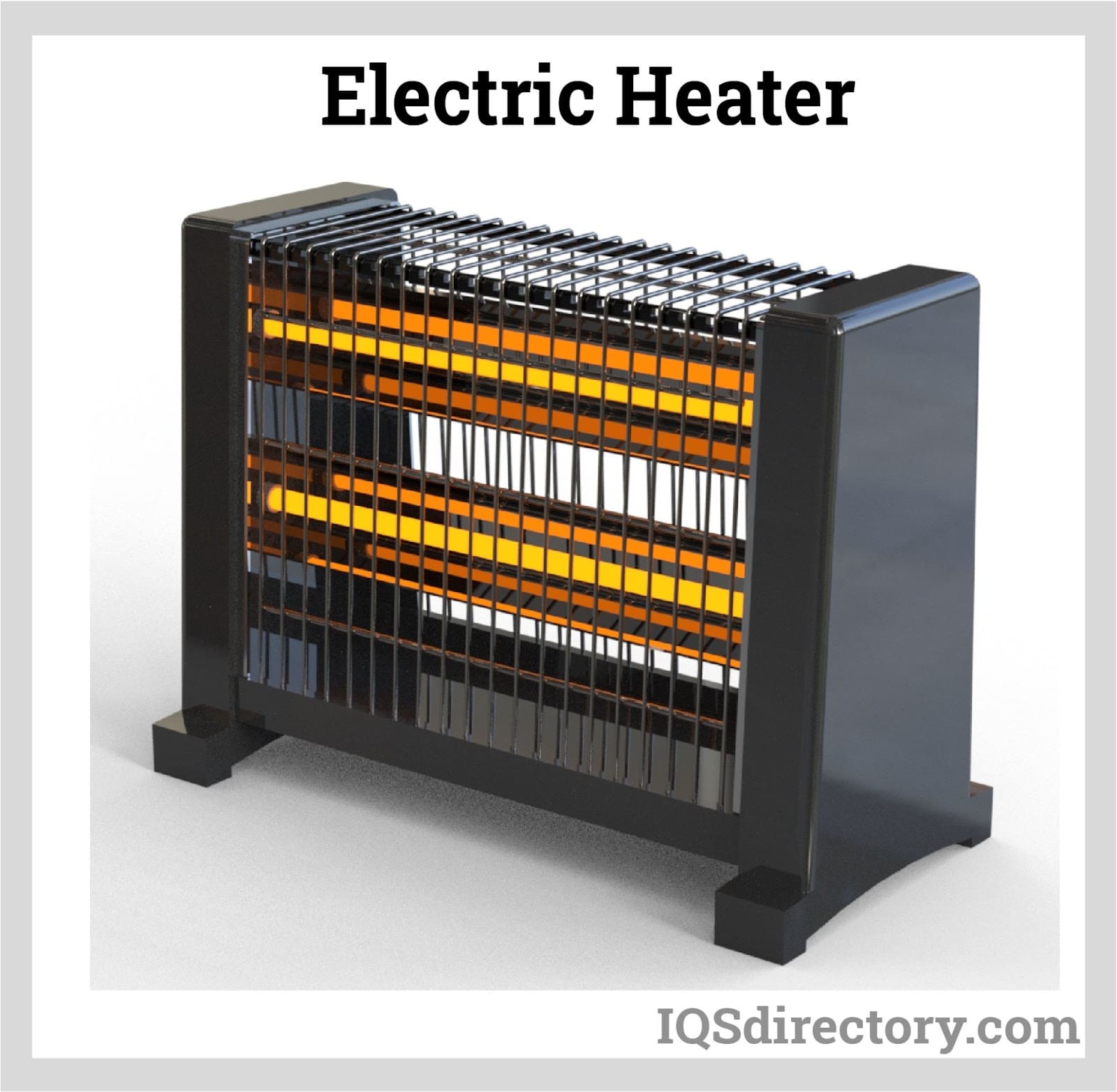 Electric heaters are made up of a heating core radiator that when an electric current enters the device the core increase in temperature.
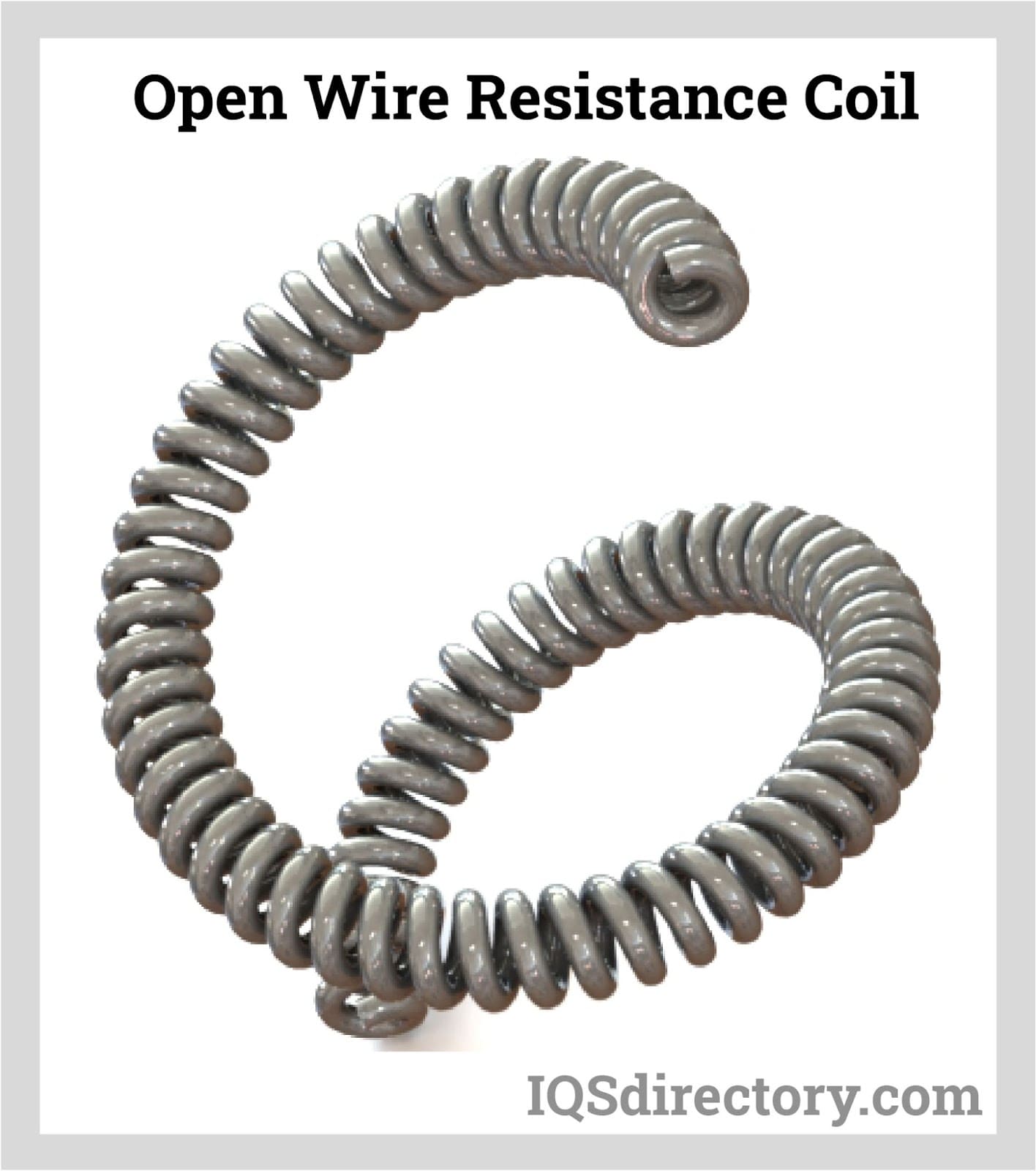 Open wire is a nickel chromium resistance wire that is placed on ceramic or mica insulation.
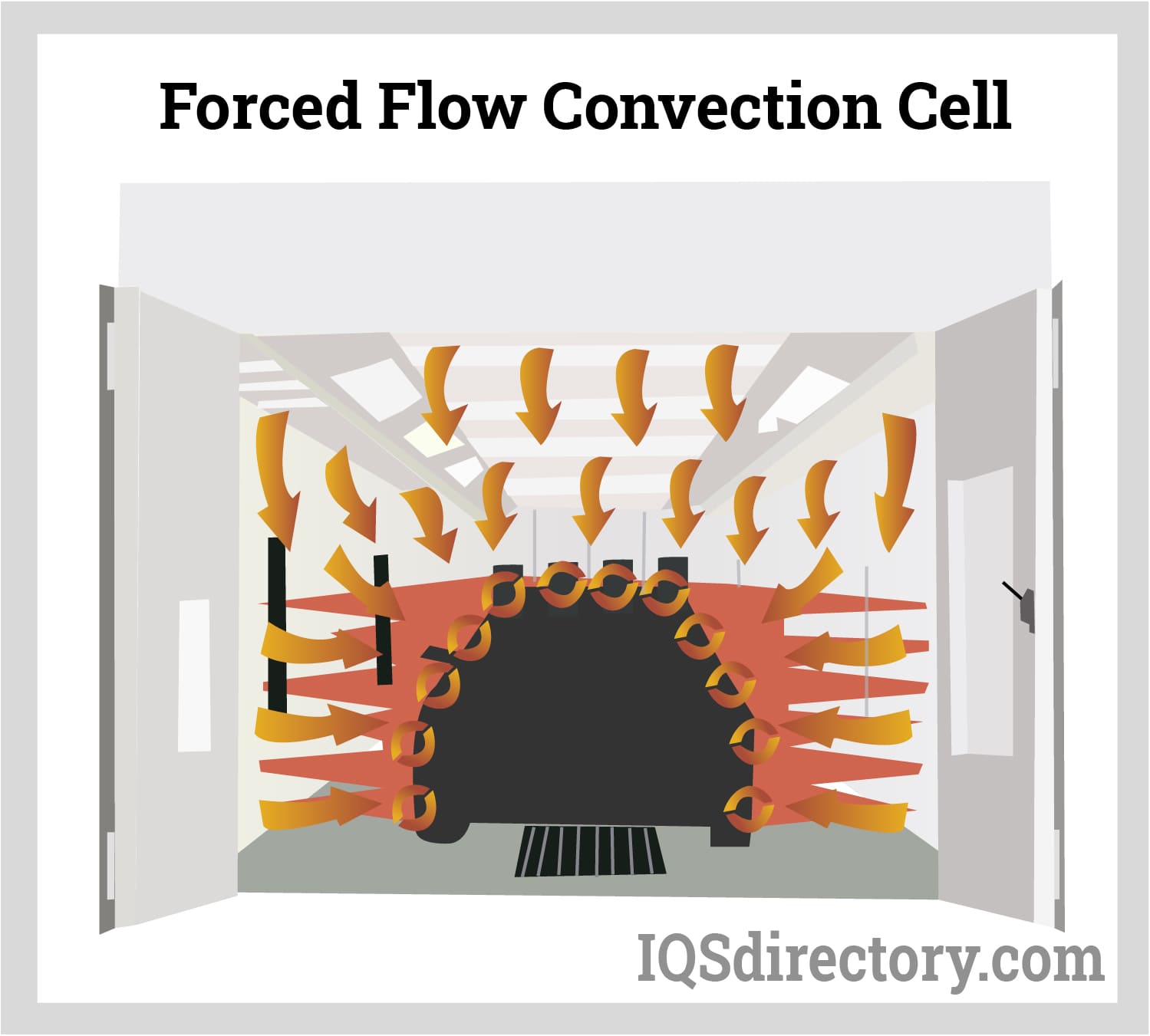 The process of heat transfer in an air heater is by convection and a method in which heat is transferred through a fluid or a medium.
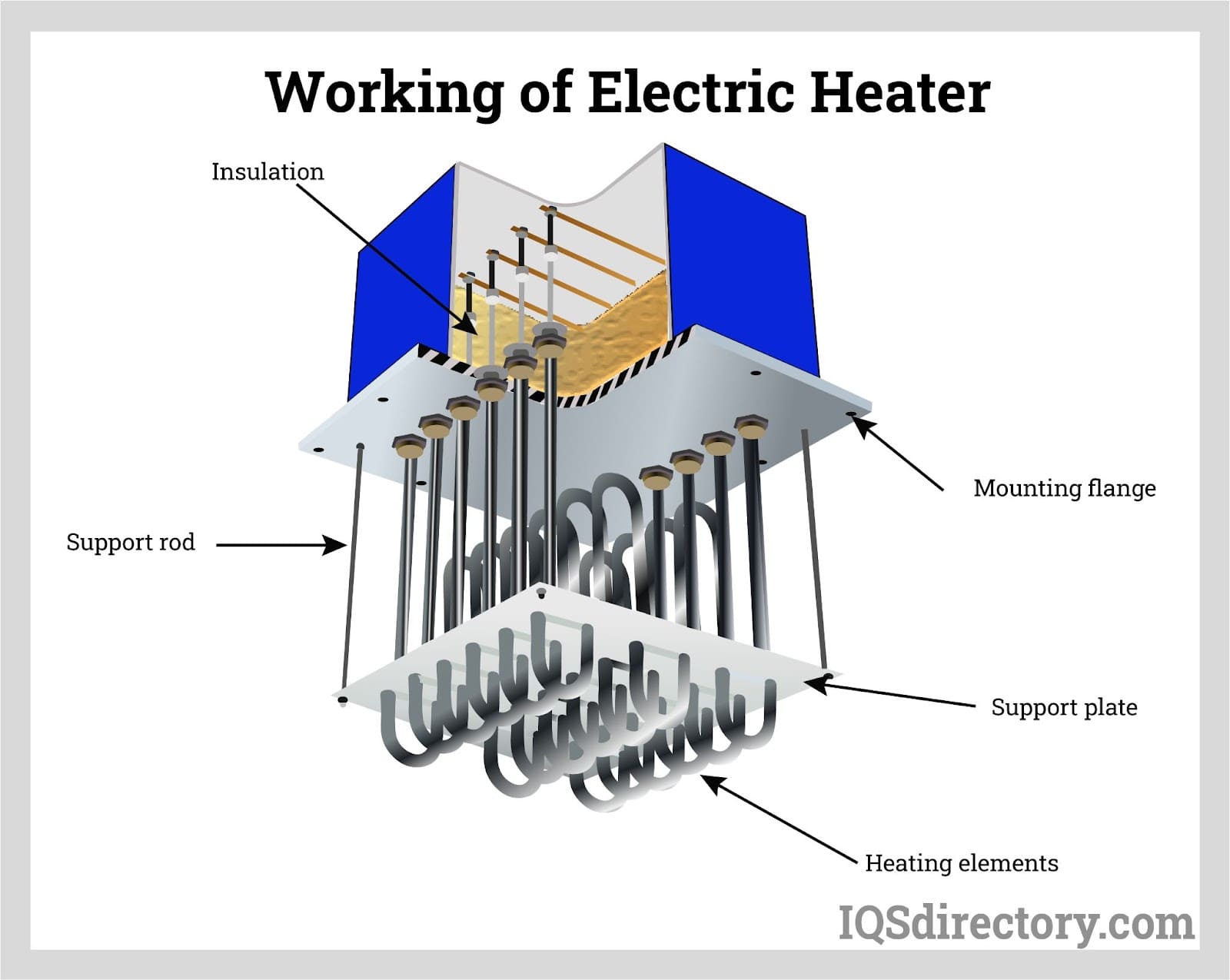 The electric heater works when an electric current passes through the resistors in the heater and give off their energy in the form of heat.
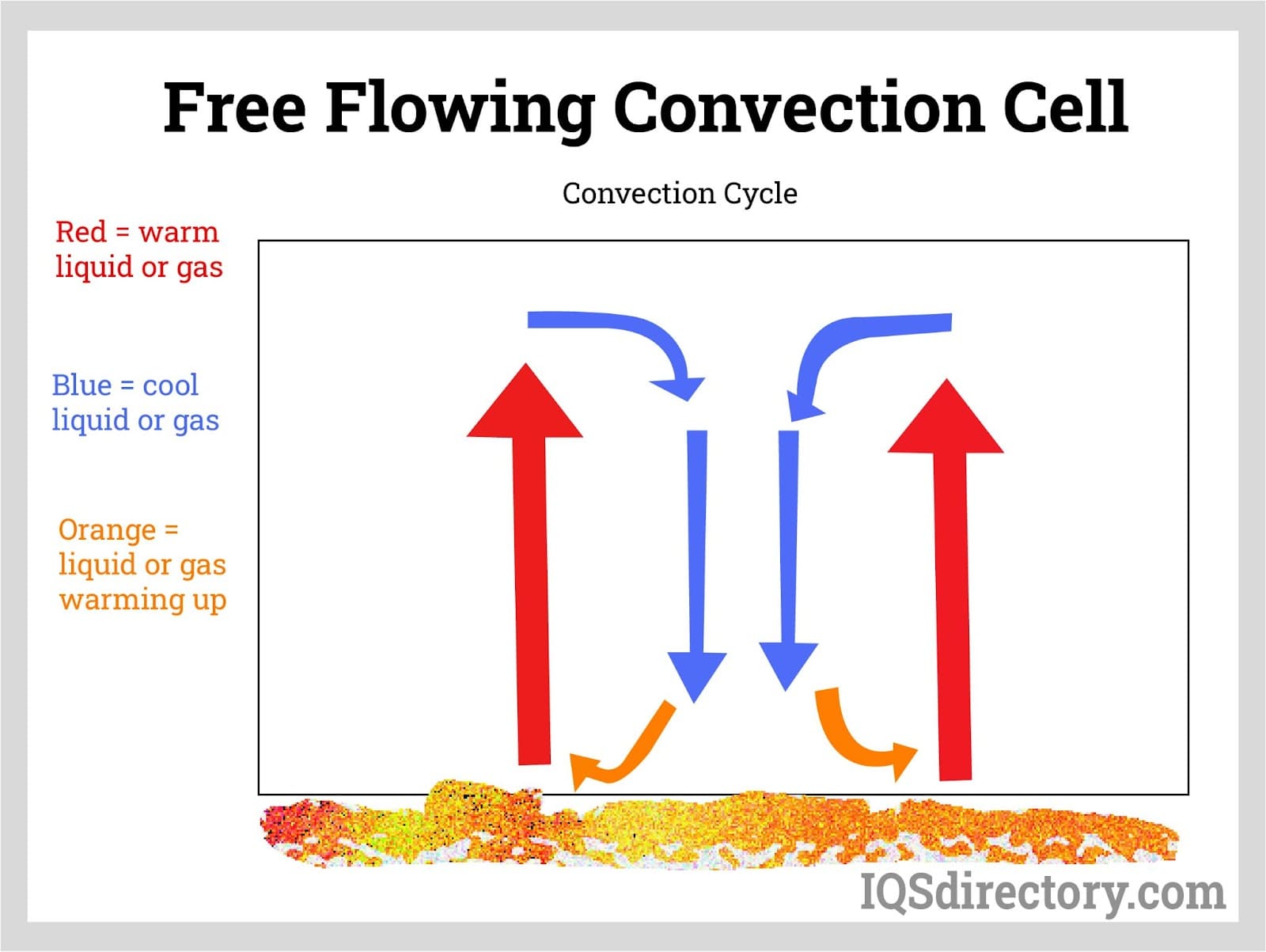 The convection cycle shows that warm air and gas rises, well cool air and gas sinks.
Industrial Electric Heaters Types
- Air Heaters
- Electric heating systems designed to warm air within an enclosed space or work alongside a fan system to distribute heat throughout a building.
- Band Heaters
- Compact electric heaters that attach to pipes, tubes, and nozzles to apply heat in localized areas.
- Cartridge Heaters
- Small, high-intensity electric heaters inserted into machinery to provide targeted heat, commonly used in extrusion and thermoforming applications.
- Ceramic Heaters
- Electric heating devices featuring heat coils or other elements insulated with ceramic materials to enhance efficiency and heat retention.
- Circulation Heaters
- Electric heaters designed to warm circulating liquids or gases within an enclosed system, ensuring consistent temperature control.
- Duct Heaters
- Electric heaters integrated into ductwork or air-handling systems to warm moving air in HVAC and process-heating applications.
- Drum Heaters
- Heaters designed to warm the contents of drums and pails so viscous materials can flow, pump, or dispense more easily.
- Finned Tubular Heaters
- Tubular heaters with attached fins that increase surface area for more efficient air heating and heat transfer.
- Flexible Heaters
- Thin, bendable heaters used on irregular surfaces, small enclosures, instrumentation, and applications that need compact, conformable heat.
- Immersion Heaters
- Heaters intended for direct contact with liquids to provide fast and efficient tank, vessel, sump, and process-fluid heating.
- Infrared Heaters
- Radiant heaters that emit infrared energy for directional heating, drying, curing, and surface-temperature control.
- Open Coil Heaters
- Heaters that use exposed resistance coils, often in duct or air systems where rapid heat transfer to moving air is needed.
- Pipe Heaters
- Heaters designed to provide heat inside or around piping systems to maintain flow, protect against freezing, or control fluid temperature.
- Silicone Heaters
- Flexible, high-temperature heaters with internal wire elements encased in silicone rubber, capable of withstanding rapid temperature fluctuations, moisture, and chemicals.
- Strip Heaters
- Compact electric heaters designed to provide controlled heat to small areas, either through direct contact with equipment or by heating air in confined spaces.
- Tubular Heaters
- Electric heating elements with a tubular shape, designed for uniform heat distribution in industrial and commercial applications.
Electric Heater Terms
- AC Current
- Short for "alternating current," referring to the periodic reversal of electrical flow direction.
- Ceramics
- Non-metallic, inorganic, and often crystalline materials used as insulators in electric heaters.
- Conduction
- The process of heat transfer where vibrating atomic particles pass energy to adjacent particles upon contact. Conduction occurs in solids, liquids, and gases.
- Convective Heat Transfer
- The movement of heat through a fluid, occurring as molecules transfer energy while in motion rather than through direct contact.
- DC Current
- Short for "direct current," referring to the unidirectional flow of electricity.
- Desalination
- The process of removing salt and other impurities from seawater to make it suitable for consumption or industrial use.
- Ducts
- Passageways that direct filtered or temperature-conditioned air throughout a space.
- Electric Current
- The flow of an electrical charge through a conductive medium.
- Electro-Polish Finishing
- A process used to refine surfaces by removing unwanted material through electrochemical treatment.
- Extrusion
- A manufacturing process where raw materials such as plastic, metal, or elastomers are forced through a die to create continuous profiles.
- Heat
- The transfer of energy between objects, resulting from atomic particle collisions.
- HVAC
- Abbreviation for Heating, Ventilation, and Air Conditioning, referring to systems that regulate indoor temperature, airflow, and air quality.
- Incoloy
- A proprietary superalloy known for its strength and high resistance to corrosion and heat.
- Insulation
- A non-conductive material used to coat electrically conductive components, enhancing heater efficiency and protecting heating elements from damage.
- Molding
- A manufacturing process where raw materials like plastic, metal, or elastomers are shaped into non-continuous forms using molds.
- NEMA Enclosures
- Protective housings built to standards set by the National Electrical Manufacturers Association, designed to safeguard electrical equipment from environmental and mechanical damage.
- Radiation
- The transmission of energy through electromagnetic waves or particles, including visible light, radio waves, and heat emitted by heating coils.
- Thermostat
- A temperature control device combining a thermometer with mechanical or electronic components to regulate heating and cooling systems.
- Watt
- A unit of measurement for electrical power, indicating the rate at which energy is consumed or generated.