Dust Collectors
A dust collector is a highly effective piece of air filtration equipment engineered to improve indoor air quality across industrial, commercial, and manufacturing environments. These systems capture airborne particulate matter—including fine dust, fumes, and contaminants—before they circulate through facilities or are released into the atmosphere. By removing harmful particulates associated with air pollution, dust collectors support cleaner operations, improved worker safety, and better compliance with environmental regulations.
Whether used in high-volume production plants or smaller workshops, modern dust collection systems are designed to manage a wide range of particle sizes, airflow volumes, and application-specific challenges. Many buyers researching industrial dust collection solutions ask: how do dust collectors improve air quality, and which system is best for my facility? The answer depends on factors such as dust type, system capacity, and regulatory requirements. By understanding how these systems function, operators can make informed decisions that enhance both productivity and safety.
Dust Collectors FAQ
What is the purpose of a dust collector in industrial facilities?
A dust collector removes airborne particles such as dust and pollutants from industrial environments, ensuring clean air is recirculated or released. This improves workplace safety, protects equipment, and helps meet OSHA and EPA air quality standards.
When did dust collectors first become widely used?
Dust collectors became necessary during the Industrial Revolution in the 19th century as factories produced large amounts of fine dust. Early innovations included S.T. Jones’ single bag filter in 1852 and Wilhelm Beth’s cloth and tubular filter systems in 1921.
What industries rely on dust collection systems?
Dust collectors are used in woodworking, metal fabrication, cement, mining, agriculture, pharmaceuticals, recycling, and chemical processing, where airborne particulates must be controlled.
What are the benefits of using a dust collector?
Dust collectors improve air clarity, reduce fire and explosion risks, protect machinery, and support long-term operational efficiency with manageable maintenance costs.
What types of dust collectors are available?
Common types include baghouse systems, cartridge collectors, cyclone separators, electrostatic precipitators, downdraft tables, pulse jets, and wet scrubbers.
How are industrial dust collectors designed and built?
Dust collectors are constructed with blowers, filtration media, ducting, and housings. Materials such as steel or stainless steel provide durability, while filters vary based on application needs.
What maintenance is required for dust collectors?
Routine maintenance includes filter cleaning, duct inspections, and airflow monitoring to maintain efficiency and system longevity.
The History of Dust Collectors
The development of dust collectors began during the Industrial Revolution, when factories produced increasing amounts of airborne dust and particulate matter. Early innovations, such as the single bag filter, introduced fundamental filtration concepts that still influence modern systems. Over time, engineers refined filtration technologies, leading to advancements like mechanical shaking filters, reverse air systems, and pulse jet cleaning methods.
As industrial operations expanded, so did the need for more efficient and reliable air filtration systems. The introduction of pulse jet dust collectors significantly improved performance by allowing continuous operation without shutting down for cleaning. These advancements helped reduce downtime, increase airflow efficiency, and improve particulate capture rates.
Today, dust collection technology continues to evolve with innovations in filter media, automation, and energy efficiency. Facilities now benefit from systems that are not only more compact and effective but also easier to maintain and integrate into modern manufacturing environments.
Benefits of Dust Collectors
- Dust collectors offer a wide range of operational advantages for industrial environments. They reduce airborne contaminants, helping maintain cleaner air and improving overall workplace conditions. By capturing combustible dust, they also help minimize the risk of fires and explosions. Improved air quality enhances visibility, reduces equipment wear, and contributes to a more productive work environment.
Many organizations evaluating dust collection systems ask: what are the long-term benefits of installing a dust collector? Beyond safety improvements, these systems help extend equipment lifespan, reduce maintenance costs, and support regulatory compliance. Over time, this translates into measurable cost savings and improved operational efficiency.
Why Use a Dust Collector
Dust collection systems are designed to capture airborne particles generated during manufacturing processes such as cutting, grinding, sanding, and material handling. Without proper filtration, these particles can accumulate in the air, posing health risks to workers and damaging sensitive equipment. A properly designed system removes contaminants at the source, ensuring cleaner air circulation throughout the facility.
In addition to improving workplace conditions, dust collectors play a key role in meeting regulatory standards. Agencies such as OSHA and the EPA establish guidelines for air quality and emissions, requiring facilities to control airborne pollutants effectively. Implementing a dust collection system helps businesses meet these requirements while maintaining efficient operations.
Industries such as mining, cement production, metal fabrication, pharmaceuticals, and agriculture rely heavily on dust collection solutions. Whether using centralized systems or portable units, these industries benefit from improved air quality and reduced environmental impact.
Dust Collector Design
Industrial dust collectors are engineered with multiple components that work together to capture and filter airborne particles. Key elements include blowers, filtration systems, ductwork, and collection hoppers. Each component must be carefully designed to ensure optimal airflow, efficiency, and durability.
The blower is a central component that drives airflow through the system. It must be precisely engineered to handle specific airflow requirements while maintaining consistent performance. Additional components, such as filter media, housings, and dust collection bins, are selected based on the type of dust and application.
Manufacturers often enhance system performance with specialized coatings, filter treatments, and customization options. For example, pre-coat materials like limestone can improve filtration efficiency and extend filter life. These design considerations help ensure that dust collectors perform reliably in demanding industrial environments.
Dust Collector Images, Diagrams and Visual Concepts
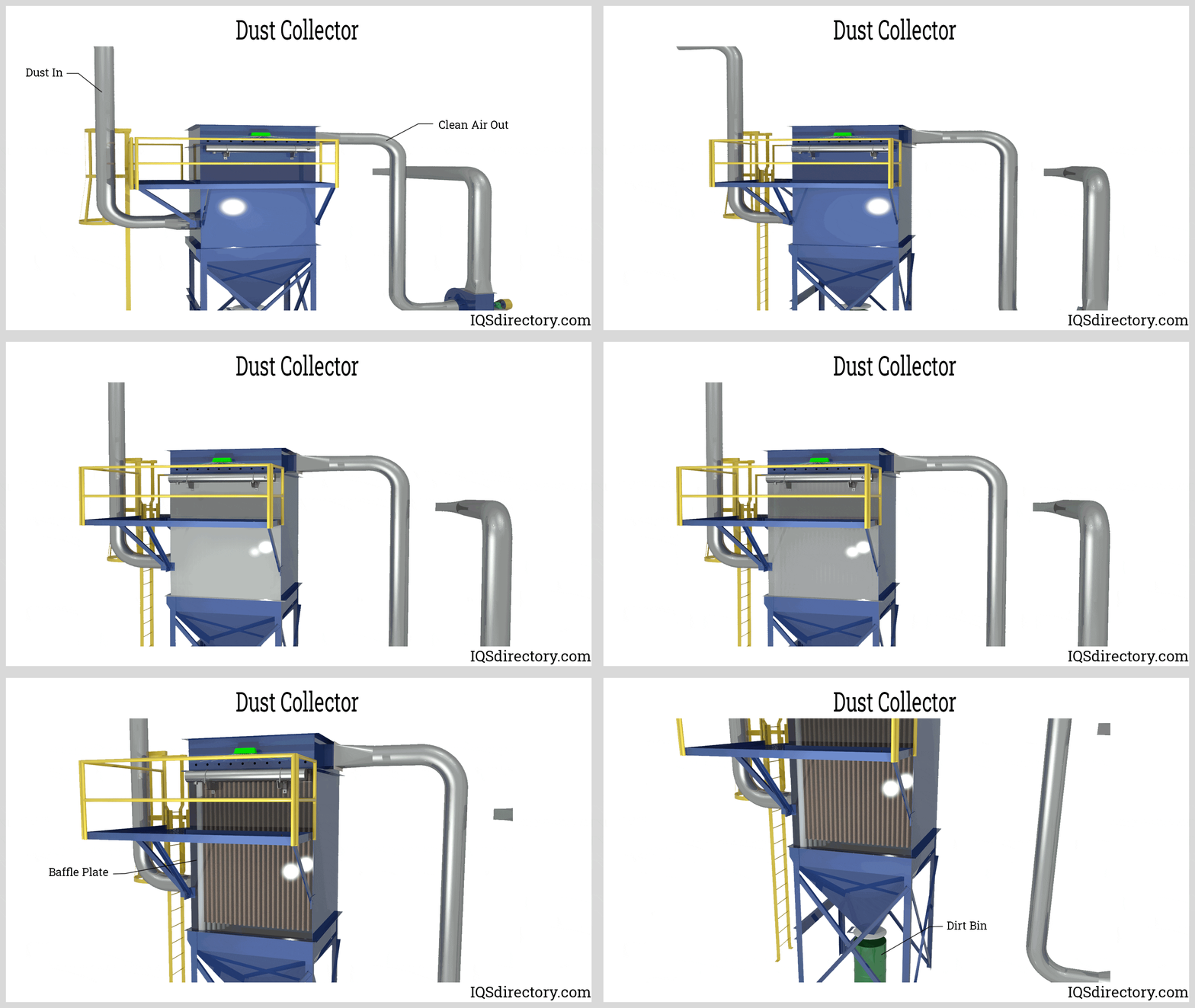 A dust collection system removes particulate contaminants from the air in industrial environments.
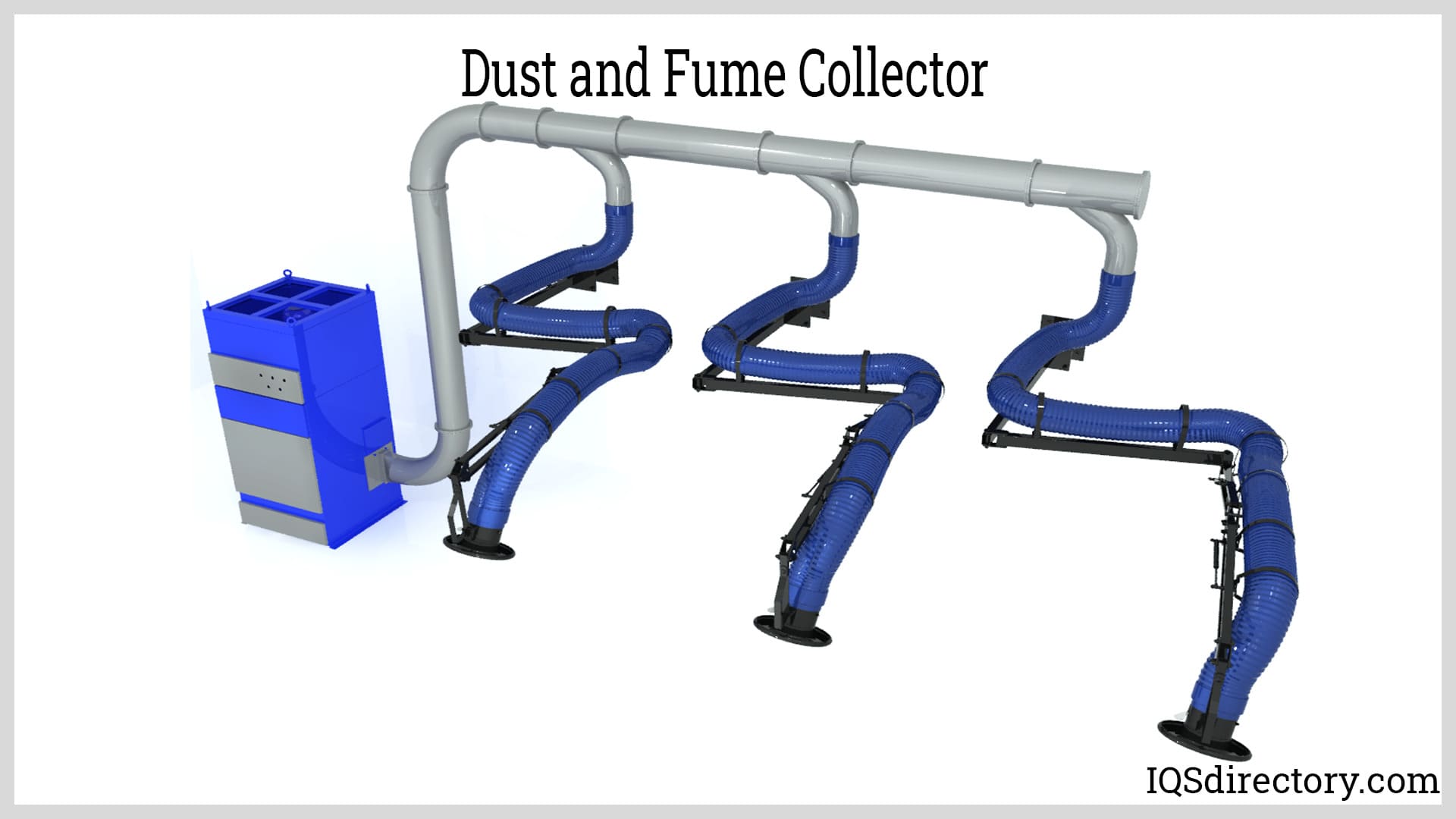 Filtered air is recirculated or released after meeting emission standards.
Dust Collector Types
- Baffle Chambers
- Use airflow disruption and gravity to separate heavier particles.
- Baghouse Type
- Capture fine dust using fabric or glass fiber filters.
- Cartridge Collectors
- Provide high filtration efficiency with compact design.
- Cyclone Dust Collectors
- Separate particles using centrifugal force.
- Electrostatic Precipitators
- Use electrical charges to capture fine particles.
- Wet Dust Collectors
- Use liquid to capture and remove airborne particulates.
When comparing dust collector types, many buyers ask: which system offers the best performance for fine dust versus heavy particulates? The answer depends on application requirements, airflow volume, and maintenance considerations. Understanding these factors helps ensure the right system is selected for long-term performance.
Installation of a Dust Collector
Installing a dust collection system requires careful planning, especially for large-scale industrial setups. Proper installation ensures optimal airflow, system efficiency, and safety. Smaller systems may require minimal setup, while larger systems often involve professional installation and specialized equipment.
Standards and Specifications of Collectors
Compliance with OSHA and EPA regulations is a key consideration when operating dust collection systems. These standards help protect workers and ensure environmental responsibility. Systems must be designed and installed to meet these guidelines while maintaining efficient performance.
Things to Consider When Purchasing a Dust Collector
- Choosing the right system involves evaluating airflow requirements, dust characteristics, and facility layout.
- Factors such as system size, usage frequency, and dust type all influence performance and efficiency.
Buyers often search for answers to questions like: how do I choose the right dust collector for my application, and what features should I prioritize? By understanding these considerations, organizations can select systems that align with their operational goals and environmental requirements.
Proper Care for Dust Collectors
Regular maintenance is necessary to keep dust collectors operating efficiently. This includes cleaning filters, inspecting ductwork, and monitoring airflow performance. Proper maintenance helps extend system life and ensures consistent air quality.
Dust Collector Accessories
Accessories such as slide gates, HEPA filters, and dust drawers can enhance system performance and usability. These components allow operators to customize their systems for specific applications, improving efficiency and overall effectiveness.
As dust collection technology continues to advance, facilities have access to more efficient, adaptable, and high-performance systems. By understanding system types, design considerations, and operational requirements, businesses can implement solutions that improve air quality, enhance safety, and support long-term productivity.