Dryers
An industrial dryer is a process system that removes moisture from raw materials, ingredients, parts, slurries, and finished products through controlled heat transfer and mass transfer. Depending on the application, drying can be achieved with heated air, vacuum, refrigeration, desiccants, infrared energy, or specialized chemical methods. Manufacturers choose batch or continuous drying based on product sensitivity, throughput targets, residence time, and the required final moisture content.
Industrial dryers support production across food processing, minerals, metal finishing, dye and pigment manufacturing, pharmaceuticals, textiles, lumber, paper converting, glass processing, explosives, fertilizers, aggregates, sand, gravel, plastic fabrication, rubber processing, and wastewater treatment. Dryer output can range from powders, pellets, flakes, crystals, and granules to formed parts, coated components, and sheet materials that must meet handling, packaging, storage, or downstream processing requirements.
In food applications, drying may be used for fruits, vegetables, grains, cereals, pet food, flour, starches, sugar products, instant potatoes, spices, and protein items such as jerky, dried sausage, and crumbled meats. The same drying principles also help processors manage shelf life, shipping weight, product stability, texture targets, and sanitation goals, which is why buyers often compare dryer type, energy use, airflow pattern, and material handling before choosing a system.
At the core of most drying operations is evaporation, where liquid moisture becomes vapor and is carried away from the product stream. In freeze-drying and similar low-temperature processes, sublimation allows ice to move directly into vapor. Understanding airflow, dew point, heat input, humidity control, and dwell time helps manufacturers match the right industrial drying method to the product, process line, and performance goals.
Industrial Dryers FAQs
What is an industrial dryer used for?
An industrial dryer is used to lower or control moisture levels in materials, ingredients, parts, coatings, and bulk solids. Manufacturers rely on industrial drying equipment in food processing, chemicals, pharmaceuticals, mining, wood products, and general manufacturing to improve product stability, support storage, prepare items for packaging, and keep downstream operations running smoothly.
How does a freeze dryer work?
A freeze dryer works by freezing the product first and then pulling a vacuum so the ice turns directly into vapor through sublimation. This low-temperature drying method helps protect flavor, structure, color, and sensitive compounds, which is why freeze dryers are common in food production, laboratory work, biotechnology, and pharmaceutical processing.
What industries commonly use rotary dryers?
Rotary dryers are widely used in mining, fertilizer production, aggregate processing, minerals handling, and other heavy industrial applications. Their rotating drum design handles variable feed sizes, supports continuous drying, and delivers dependable moisture reduction for rugged materials that need high-capacity, plant-scale processing.
What is the difference between batch and continuous dryers?
Batch dryers process one load at a time, which makes them a good fit for smaller runs, recipe changes, specialty materials, or products that need close control. Continuous dryers move material through the system without stopping, making them better suited for high-volume production lines that need steady throughput, repeatable moisture control, and consistent output.
Why are desiccant air dryers important in industrial applications?
Desiccant air dryers use moisture-absorbing media such as silica gel or activated alumina to dry compressed air to a low dew point. Dry compressed air helps limit corrosion, prevent condensation, protect pneumatic tools and controls, and improve air quality in production environments where moisture can damage equipment or affect finished product quality.
What factors should be considered when purchasing an industrial dryer?
When purchasing an industrial dryer, buyers should review material characteristics, starting and target moisture content, particle size, throughput needs, utility availability, footprint, cleanability, and whether the process should run in batch or continuous mode. It also helps to compare maintenance access, controls, operating cost, and how the dryer will integrate with conveyors, feeders, dust collection, and other line equipment.
How do infrared dryers differ from traditional drying methods?
Infrared dryers use radiant energy to heat the product surface directly instead of relying only on convective hot air. That can shorten drying or curing time and improve response speed for coatings, inks, printed materials, and other applications where fast, uniform surface drying supports line efficiency and finish quality.
The History of Dryers
The history of industrial drying begins with early food preservation. Long before modern process equipment, people learned that reducing moisture could extend storage life, protect harvests, and make food easier to move across long distances. As farming communities grew, dried foods became trade goods, and the value of reliable preservation helped push drying from a household practice toward a more organized production method.
Early drying methods were simple but effective. People buried fruit in hot sand, hung strips of meat above smoky fires, exposed produce to sun and wind, and used cold nighttime temperatures to freeze foods before removing moisture. The Greeks, Romans, Persians, Chinese, Japanese, Inca, Mongolians, Native Americans, and early settlers all developed drying traditions that matched their climate, trade routes, and available materials.
Once communities understood that dried products were lighter, more stable, and easier to transport, drying took on a larger commercial role. Traders could move preserved foods farther, store them longer, and carry a wider range of goods. That growing demand helped turn drying into a more deliberate industrial process, even though the earliest methods still depended heavily on weather, trays, and inconsistent environmental conditions.
By the turn of the 18th century, inventors began pushing drying toward mechanical preservation. French developers Masson and Chollet compressed wet vegetable pulp into cakes and passed them through a heated tunnel at 105°F to reduce moisture. The result was compact, durable food for sailors and soldiers, showing how controlled heat and process design could produce more dependable drying results than open-air methods alone.
Drying lost ground for a time when canning jars, tin cans, and refrigeration became more common in the late 18th century. Even so, new technology revived interest in advanced drying. Freeze-drying methods developed in 1906 by Jacques-Arsène d'Arsonval opened the door to moisture removal at low temperatures, and that work soon influenced laboratory preservation and vaccine development.
Industrial food production created even more demand for drying equipment. W. K. Kellogg and C. W. Post turned grain pastes into dried flakes in large ovens, helping move cereal production toward automated processing. As powdered, granulated, and shelf-stable foods gained traction, manufacturers needed larger dryers, tighter controls, better airflow, and faster equipment that could support growing volumes without sacrificing product consistency.
Industrial drying soon moved beyond food. During World War II, researchers found that freeze-dried blood, penicillin, and bone tissue could remain viable without refrigeration, which changed medical logistics in the field. At the same time, laundry and textile operations needed more efficient commercial drying equipment. By 1938, electric clothes dryers had entered the market, showing how drying technology was spreading into many areas of daily and industrial use.
As industry and technology progressed, drying methods evolved to handle an ever-growing variety of materials. Natural mats and trays were replaced by sterile stainless steel screensAs industrial production advanced, dryers evolved to handle more materials and tighter quality standards. Stainless steel trays, screens, drums, and enclosed systems replaced many older surfaces. Cleaner compressed air, improved sanitation, better heat transfer, and more controlled material handling helped drying systems serve food, lumber, ceramics, chemicals, minerals, and construction products with greater efficiency, repeatability, and process safety.
Industrial Dryers Images, Diagrams and Visual Concepts
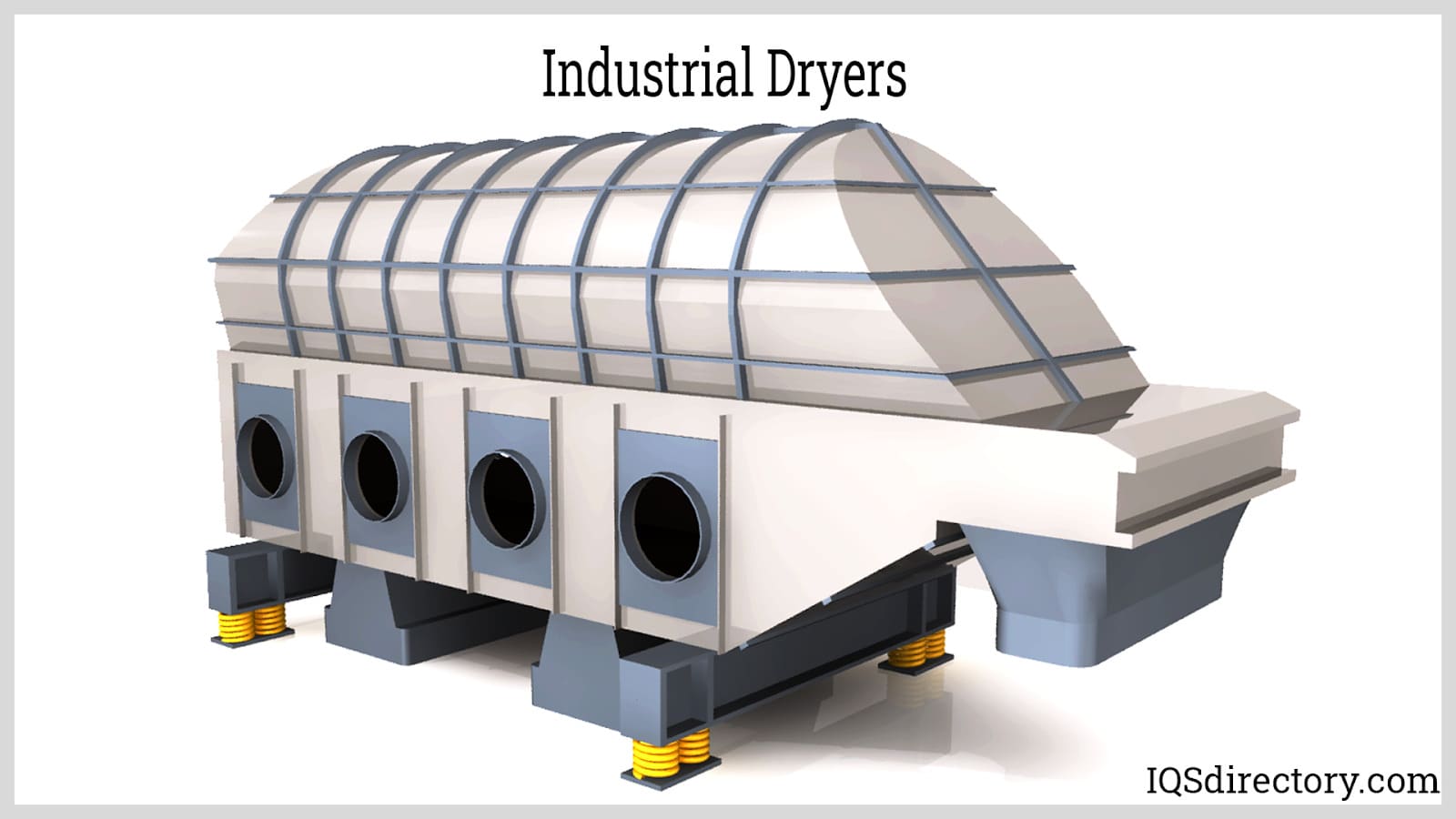 Industrial dryers are high-powered process systems designed to remove moisture from products, materials, components, food items, and mixed feed streams in controlled manufacturing environments.
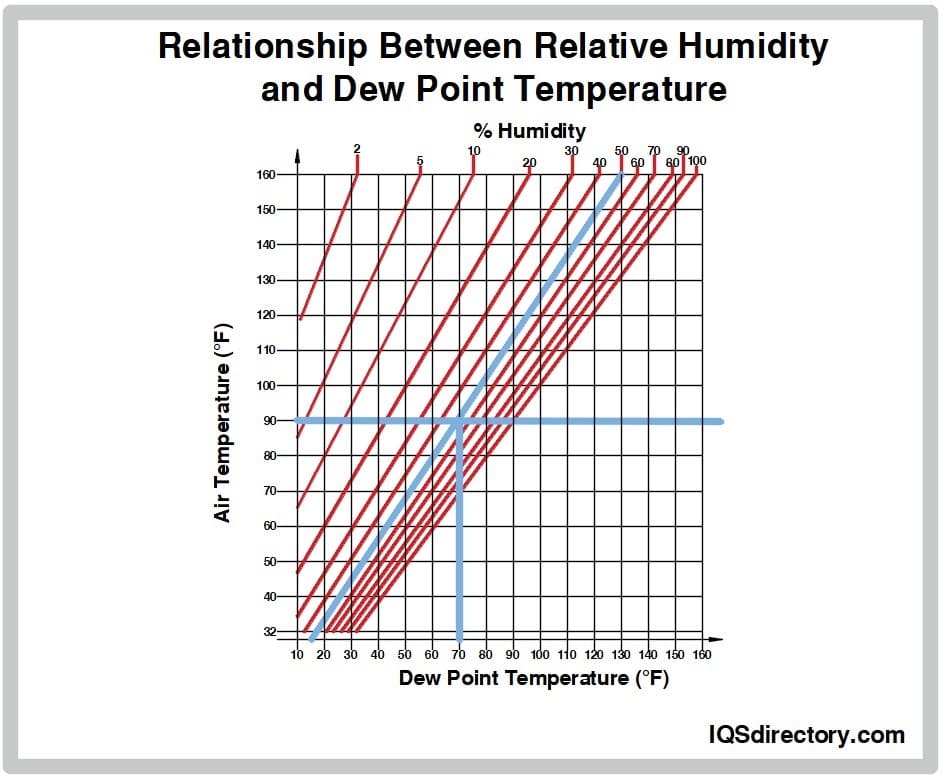 Relative humidity can change as temperature and water vapor levels shift, while dew point helps operators understand when moisture will condense inside an air or drying system.
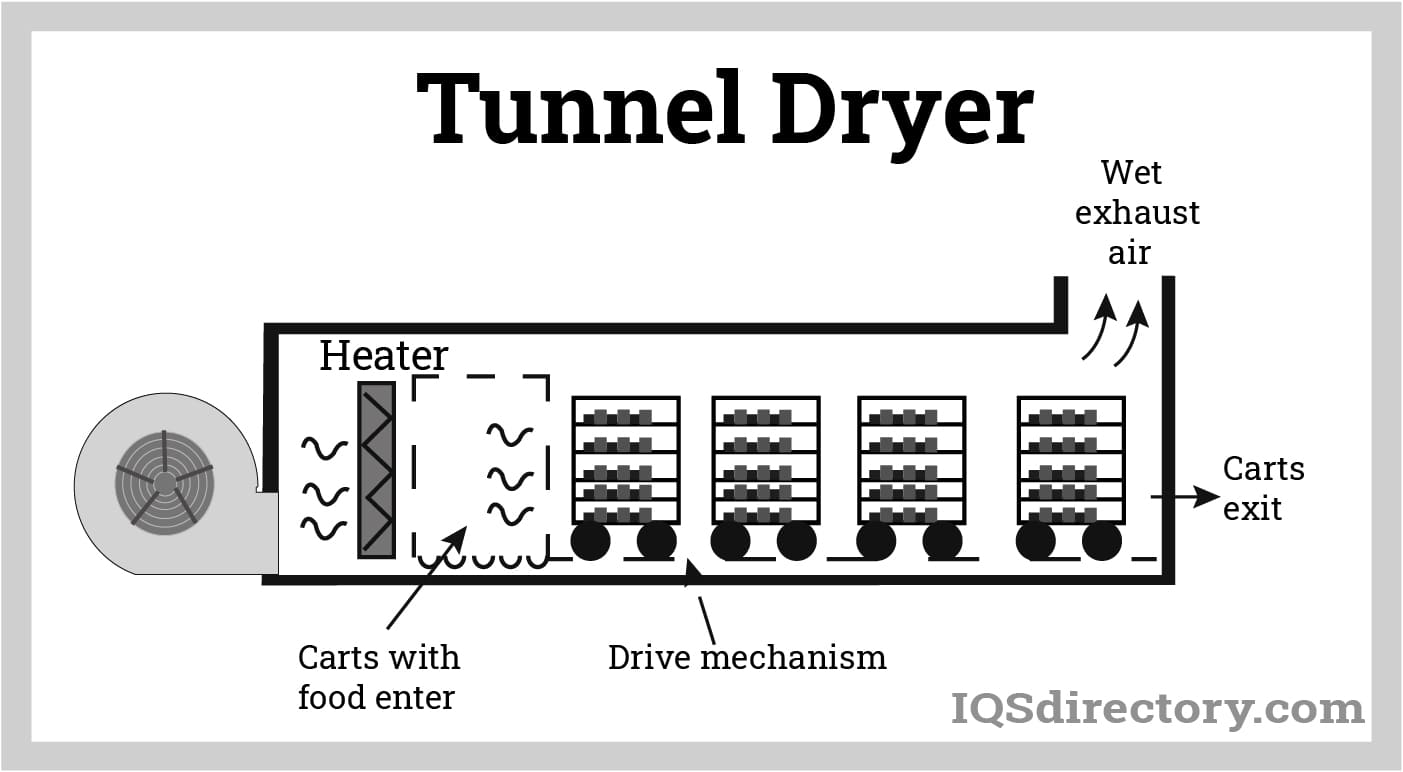 Tunnel dryers move trays of material through a heated chamber on a trolley or conveyor, making them useful for steady, repeatable batch or semi-continuous drying operations.
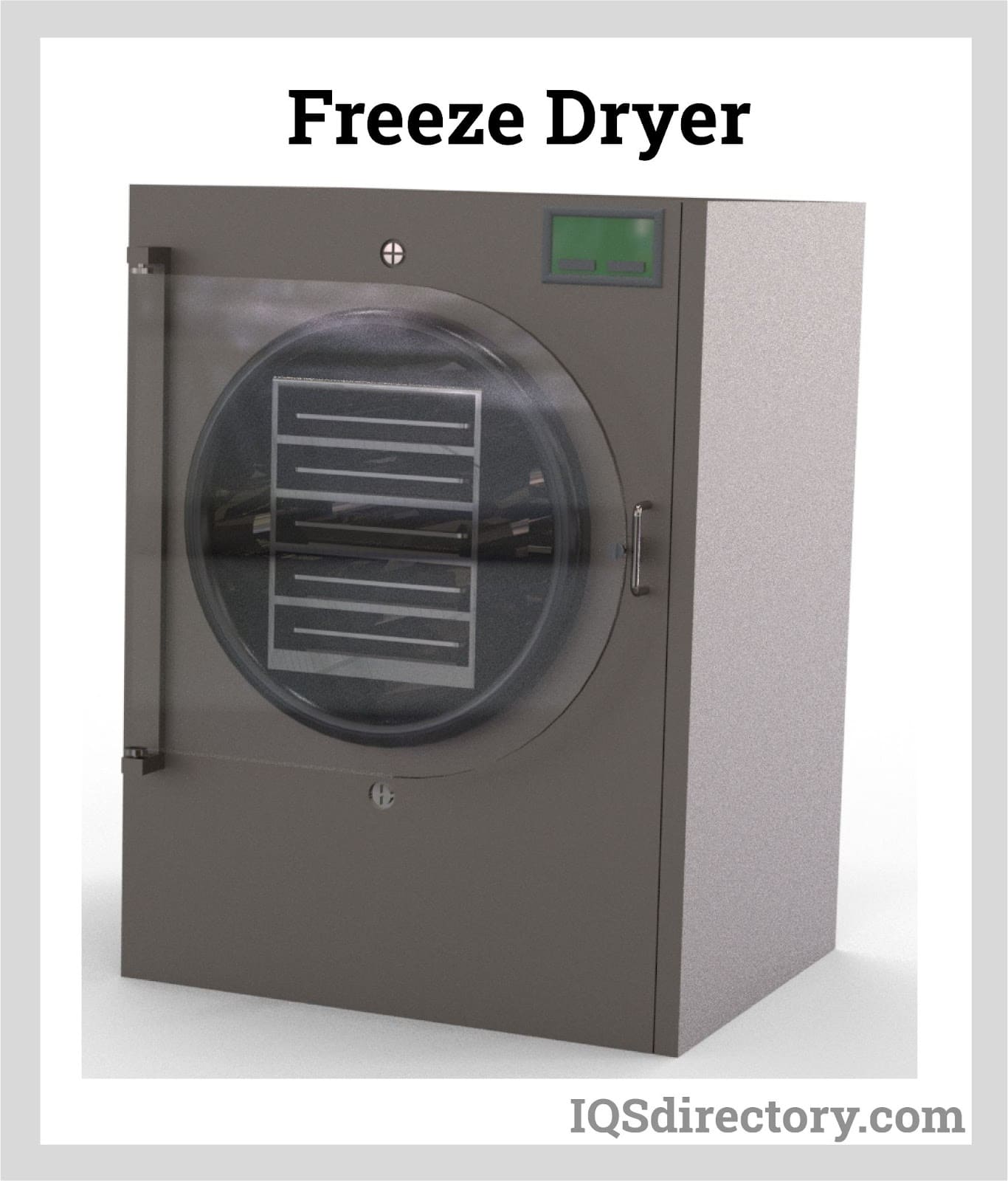 Freeze-drying starts by freezing the material and then applying vacuum conditions so moisture leaves the product through sublimation rather than conventional evaporation.
 Disc dryers use multiple heated vertical discs mounted on a shaft inside a horizontal cylinder to deliver indirect heat transfer for sludge, pastes, and other moisture-laden materials.
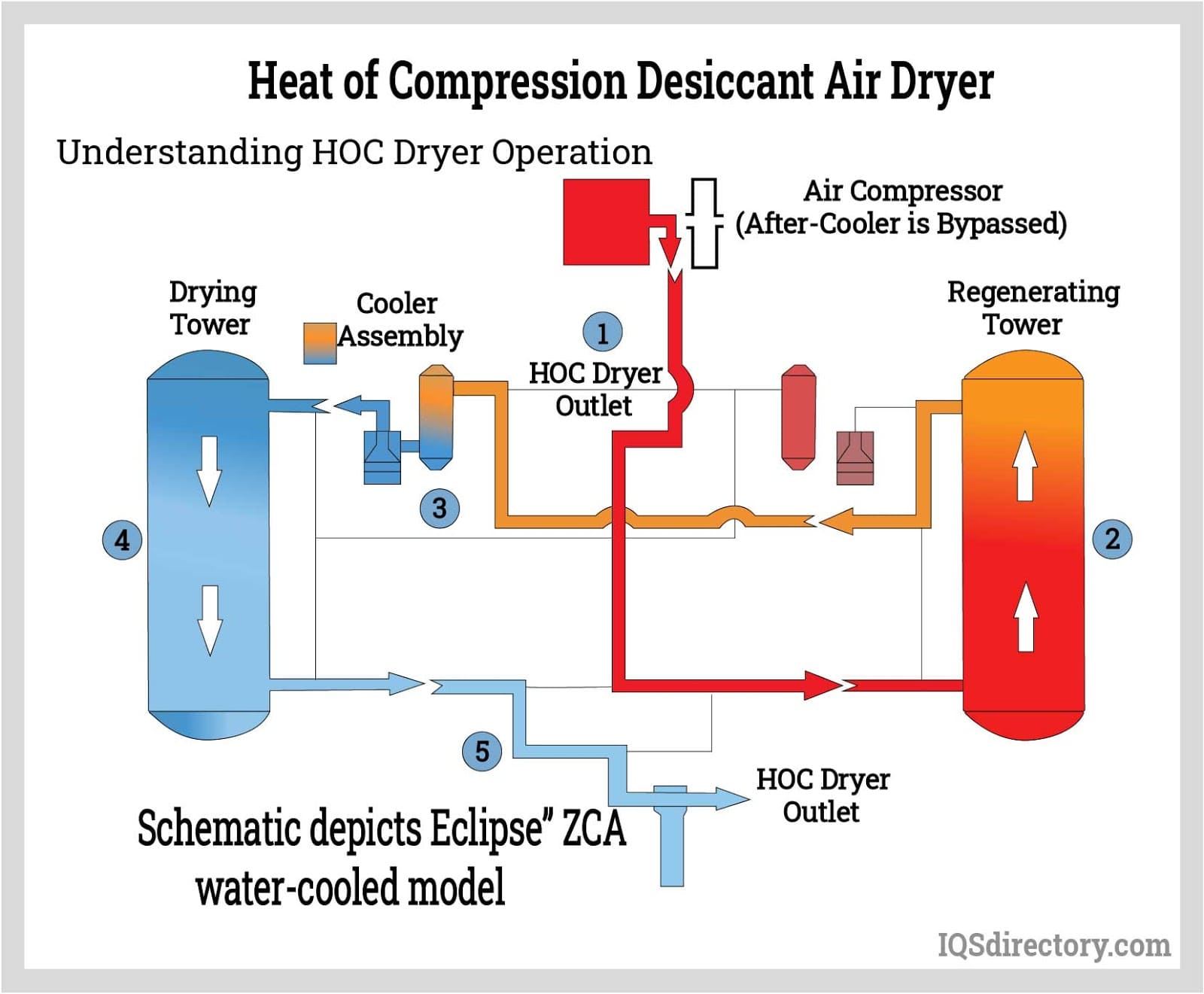 Heat-of-compression desiccant dryers reuse heat from compressor discharge air, helping improve compressed air drying efficiency in plants that need lower dew points.
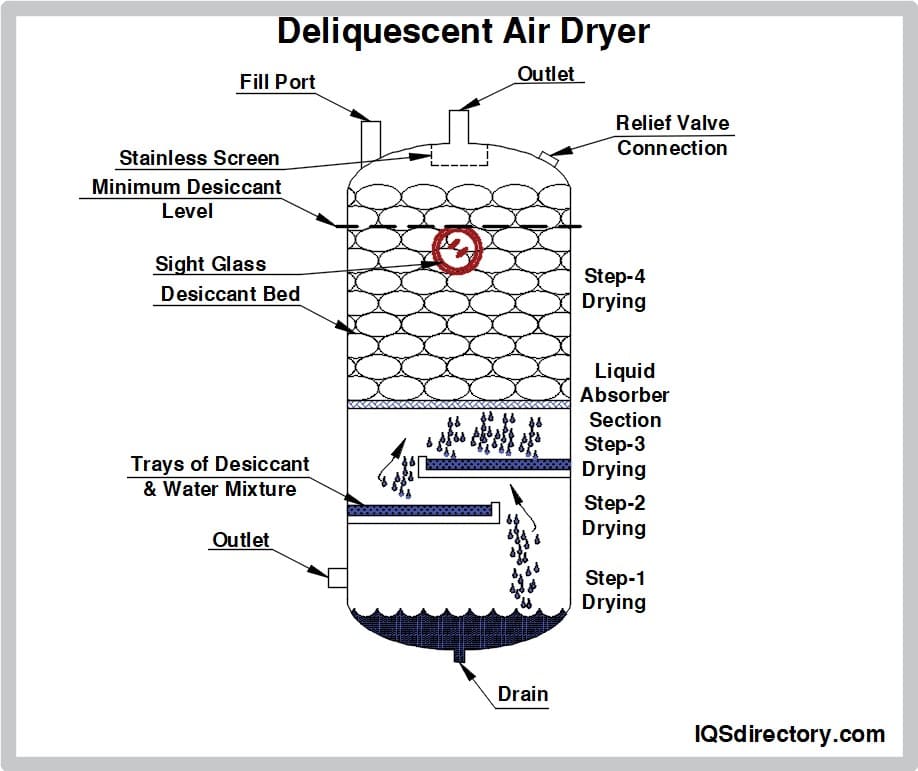 Desiccant air dryers use hygroscopic media to capture water vapor from compressed air and protect pneumatic systems, controls, and moisture-sensitive production equipment.
Types of Industrial Dryers and Their Uses
-
Fluid Bed Dryer
A fluid bed dryer passes heated air through a perforated surface so particles lift, circulate, and dry in a controlled suspended state. It is widely used for powders, granules, and other free-flowing solids in pharmaceutical, chemical, and food processing lines where uniform heat transfer, shorter drying time, and consistent product quality matter.
Rotary Dryer
Also called a drum dryer, a rotary dryer uses a rotating cylinder to tumble material through a stream of heated air or gas. It works well for aggregates, minerals, fertilizers, and other bulk solids with variable particle sizes. Buyers often choose rotary dryers for their durability, continuous operation, customization options, and dependable performance in heavy-duty processing environments.
Freeze Dryer
A freeze dryer removes moisture in stages by freezing the product, applying vacuum, and driving sublimation during primary drying before reducing residual moisture in a secondary phase. This approach helps preserve structure, nutrients, flavor, color, and sensitive compounds, making freeze-drying a preferred choice for foods, pharmaceuticals, laboratory materials, and biologic products that need long shelf life.
Air Dryer
Air dryers remove water vapor from compressed air systems and are often selected by required dew point, airflow demand, and air quality needs. Common designs include desiccant, refrigerated, deliquescent, and membrane dryers. These systems help reduce condensation, limit corrosion, protect valves and instruments, and support reliable plant operation where dry compressed air is part of the process.
Flash Dryer
Flash dryers expose material to a short burst of heated gas or radiant energy so moisture evaporates quickly with minimal residence time. They are useful for powders, fine solids, and other materials that benefit from rapid heat exchange, compact equipment footprints, and high-throughput drying in chemical, mineral, and specialty processing applications.
Cyclone Dust Collector
Often paired with flash drying, a cyclone dust collector creates a vortex that separates dried particles from the gas stream through centrifugal force. This design helps recover product, improve housekeeping, and support cleaner dryer discharge in mining, chemical processing, and other operations that handle fine particulate material.
Double Cyclone
A double cyclone adds a secondary vortex to improve particle separation while reducing wall impact on fragile materials. The design can support horizontal system layouts and is often used where producers want efficient solids recovery, better dust handling, and more controlled separation in wastewater, sawdust, refinery, or process gas applications.
Sludge Dryer
Sludge dryers lower moisture content in wastewater sludge, industrial slurry, biosolids, and related waste streams so material becomes easier to handle, transport, store, or dispose of. These systems can remove a large share of moisture after dewatering and are often chosen to reduce volume, improve process efficiency, and support more sustainable water treatment operations.
Spray Dryer
Spray dryers atomize a liquid feed or slurry into fine droplets inside a heated chamber so moisture evaporates rapidly and the dried product falls into a collector. This method is popular in food, pharmaceutical, and chemical manufacturing because it supports fast drying, powder formation, and controlled processing for heat-sensitive formulations.
Continuous Dryer
A continuous dryer is built for nonstop material flow, allowing product to move through the drying zone without repeated starts and stops. This style is a strong fit for high-volume plants that need steady throughput, repeatable moisture reduction, predictable residence time, and consistent finished product quality across long production runs.
Conveyor Dryer
Conveyor dryers move material through a drying chamber on a belt at a controlled rate, making them common in agriculture, food processing, and packaging-related operations. They are useful for fruits, vegetables, grains, snacks, and other products that benefit from gentle handling, zoned temperature control, and scalable continuous production.
Compressed Air Dryer
Compressed air dryers remove moisture and contaminants from pressurized air systems so the air delivered to tools, controls, and process equipment stays cleaner and drier. Refrigerated and desiccant models are especially common in manufacturing plants that need stable pneumatic performance and better protection against water-related system problems.
Food Dryer
Food dryers reduce moisture in fruits, vegetables, meats, grains, and prepared ingredients to improve shelf life, reduce shipping weight, and support safer storage. Depending on the product, processors may prioritize flavor retention, color preservation, texture, sanitation, and moisture uniformity when selecting food drying equipment.
Gas Dryer
Gas dryers use combustion-based heat to bring materials to a target moisture level in many industrial and processing environments. They are often chosen for applications that require strong heating capacity, continuous output, and efficient drying of large material volumes, provided the product and process can tolerate the selected heat source.
Industrial Dryer
Industrial dryers remove moisture from raw materials, intermediates, and finished goods in manufacturing settings where moisture control affects quality, handling, packaging, or further processing. The term covers a broad range of equipment designed for different products, throughput levels, energy sources, and plant requirements.
Infrared Dryer
Infrared dryers use radiant energy to heat and dry surfaces quickly, which makes them useful for inks, coatings, printing, finishing, and curing operations. Because the energy is directed at the product, these systems can deliver fast response, compact footprints, and efficient surface drying where line speed and finish quality matter.
Parts Dryer
Parts dryers remove residual moisture from machined, washed, plated, or cleaned components before inspection, coating, assembly, or packaging. Heated air, spin drying, vacuum-assisted drying, and tumbling methods are common choices when manufacturers need dry parts, cleaner surfaces, and better readiness for downstream operations.
Thermal Oxidizer
Thermal oxidizers treat process exhaust by heating and oxidizing volatile organic compounds and other airborne contaminants before discharge. In facilities with drying lines, coatings, solvents, or emissions concerns, they can play an important supporting role in air pollution control and regulatory compliance.
Vacuum Rotary Dryer
Vacuum rotary dryers are used when materials need gentle drying at lower temperatures under reduced pressure. They are common in pharmaceutical, chemical, and specialty manufacturing because vacuum conditions help protect heat-sensitive products while still delivering reliable moisture removal and controlled processing.
Things to Consider When Purchasing a Dryer
The right industrial dryer depends on the material, moisture target, production volume, sanitation needs, and the way the equipment will fit into the broader process line. Standard models can satisfy many applications, while custom dryers may be better for unusual feed characteristics, plant space limits, or product handling requirements. An experienced manufacturer can narrow the field based on your industry, application, and operating goals.
When evaluating a dryer, buyers usually compare material properties, particle size, bulk density, stickiness, heat sensitivity, allowable residence time, and whether the process should run in batches or continuously. It also helps to review utility demand, control features, footprint, cleanout access, and whether the machine meets applicable product, safety, and environmental requirements.
Many drying systems work best when paired with supporting equipment such as feeders, dust collection, classifiers, discharge handling, or conveyor systems. A knowledgeable supplier can help map the full process, identify pre- and post-drying needs, and recommend a line configuration that improves throughput, lowers operating friction, and delivers more dependable product results over time.
Support after installation also matters. A strong industrial dryer manufacturer should be able to answer process questions, provide startup and maintenance guidance, supply replacement parts, and help troubleshoot performance issues as production needs change. That kind of support can make a dryer easier to operate, maintain, and adapt over the life of the equipment.
Dryer Terms
-
Agglomeration
The process in which fine particles bond together into a larger mass because of moisture, static charge, pressure, heat, or chemical and mechanical binding.
Bag Filter
A filtration device that captures dust and airborne particulates by pulling process air through fabric filter bags or a similar porous collection medium.
Boiling Point
The temperature at which a liquid generates vapor fast enough for bubbles to form and escape, marking a phase change that affects drying behavior.
Bulk Density
The mass of a solid material per unit volume, including the space between particles, often used when sizing dryers, bins, feeders, and conveying systems.
Conductive Drying
A drying method in which heat passes through a solid surface such as a steel shell or heated plate before reaching the material being dried.
Contact Drying
A drying process in which the product gains heat by touching a heated surface or medium rather than depending only on circulating hot air.
Diffusion
The movement of moisture or vapor from an area of higher concentration to one of lower concentration, an action that helps drive drying inside materials.
Dry Gas
Gas with a low moisture content that can absorb additional vapor, often used in dryers and compressed air systems to improve moisture removal.
Evaporation
The conversion of liquid moisture into vapor, usually caused by heat and airflow, and one of the main mechanisms behind industrial drying.
Flash Point
The lowest temperature at which a material gives off enough vapor to ignite when an ignition source is present, an important safety property in drying operations.
Humidity
The amount of water vapor present in air or gas, which influences drying rate, dew point, condensation risk, and process stability.
Latent Heat
The energy required for a substance to change phase, such as when water becomes vapor, without an added rise in temperature during that change.
Manometer
An instrument used to measure pressure or pressure difference in a gas system, often applied when monitoring airflow, draft, or process conditions.
Non-Hygroscopic Material
A material that does not readily absorb moisture from the surrounding atmosphere, making it less reactive to ambient humidity during storage or processing.
Oxidation
A chemical reaction involving oxygen that can change material properties, affect product quality, or influence emissions in heated drying environments.
Quench
A rapid cooling step used to drop the temperature of a gas, vapor, or material stream, often to control reaction conditions or protect downstream equipment.
Radiation
Heat transfer by electromagnetic waves, including infrared energy, used in some dryers to warm and dry product surfaces quickly.
Sublimation
The phase change in which a solid turns directly into vapor without first becoming liquid, as seen in freeze-drying.
Throughput
The amount of material a dryer or process line can handle in a given period, usually expressed by weight or volume per hour.
Vapor
The gaseous form of a substance that is liquid or solid at lower temperatures, such as water vapor removed during drying.
Vitrification
A high-temperature process that converts inorganic material into a glass-like substance, sometimes referenced in thermal treatment and specialty process applications.