Cold Headed Parts
Cold headed parts are metal components produced through a room-temperature deformation method known as cold working or cold forming. Although people often use the terms "cold working," "cold forming," and "cold heading" in similar ways, cold heading is one specific process within the broader cold forming family. In many applications, it is used to enlarge or shape the end of wire or rod stock into a useful geometry. Understanding cold headed parts starts with understanding how cold working reshapes metal without relying on elevated forming temperatures.
Cold headed parts are favored in high-volume manufacturing because they combine fast production rates, close tolerances, efficient material use, and repeatable part quality. Manufacturers and OEM buyers often choose cold heading for precision fasteners, pins, studs, rivets, terminals, electrical contacts, and custom formed metal parts when they want dependable dimensions, stronger grain flow, less scrap, and lower per-piece costs than many machining-heavy alternatives. When engineers compare cold headed components, they often evaluate material grade, head style, shank diameter, thread requirements, plating, heat treating, secondary machining, corrosion resistance, tolerance windows, and annual volume before moving forward with a supplier or quote request.
Cold Headed Parts FAQs
What are cold headed parts?
Cold headed parts are metal components formed under mechanical pressure at room temperature instead of being shaped after the material is heated. This cold working method produces parts such as bolts, pins, rivets, screws, studs, terminals, electrical contacts, and custom fastener components with strong mechanical properties, accurate dimensions, and consistent repeatability.
How does cold working strengthen metal?
Cold working strengthens metal through work hardening. As the material is plastically deformed, dislocations build within the crystalline structure and make further movement more difficult. That increase in resistance raises hardness and tensile strength, which is one reason cold headed parts are widely used in demanding fastening and structural applications.
What industries use cold headed parts?
Cold headed parts are used in automotive, aerospace, construction, appliance, electronics, electrical, furniture, hardware, agricultural, and industrial equipment markets. They are commonly selected for fasteners, rivets, pins, studs, terminals, contacts, and made-to-print components where production efficiency, part strength, and dimensional consistency all matter.
What are the main advantages of cold working?
Cold working can improve part strength, support smoother surface finishes, reduce material waste, and hold more consistent dimensions than many alternative metal forming methods. It also supports fast output rates and lower unit costs in high-volume programs, which makes it attractive to both manufacturers and purchasing teams comparing cold formed parts with machined or cast parts.
Which materials are best for cold forming?
Cold forming works best with metals that offer enough ductility to flow under pressure, including carbon steel, stainless steel, aluminum, copper, and brass. Depending on the application, manufacturers may also cold work specialty alloys, titanium, and other metals chosen for strength, conductivity, corrosion resistance, or application-specific performance.
What challenges can occur during cold working?
Cold working can increase internal stress and reduce ductility as the metal hardens during deformation. In multi-step production, manufacturers may use annealing between operations to relieve stress and restore workability. Material selection, tooling design, lubrication, and process control also play a major role in avoiding cracking, dimensional issues, and premature tool wear.
What types of parts are made through cold heading?
Cold heading is used to produce a wide range of parts, including screws, bolts, pins, rivets, studs, terminals, contacts, shoulders, and other custom metal components. These parts are typically formed from wire or rod stock on high-speed headers with one or more forming stations, allowing manufacturers to create accurate, repeatable shapes with very little material waste.
The History of Cold Headed Parts
The roots of cold working reach back to prehistoric metalworking, when soft, ductile metals such as gold and silver were hammered into sheets for jewelry, ornamentation, and protective uses. Even though those early practices were simple, they established the idea that metal could be reshaped through force rather than melting. Later innovations moved cold working from hand-driven craftsmanship into more controlled industrial production. Leonardo da Vinci sketched one of the earliest known cold rolling mill concepts in 1480, and by 1615 the first confirmed rolling mill was in operation for tin and lead plates. Development of cold rolling for iron and steel expanded further during the Industrial Revolution as machinery, metallurgy, and manufacturing demand all advanced together.
Modern cold working and cold heading technology accelerated in the past few centuries, particularly as military, automotive, and industrial production pushed manufacturers to create stronger parts at higher volumes. Germany's ordnance industry played a notable role in advancing cold forming processes near the end of World War II. After the war, U.S. manufacturers adopted these methods more aggressively for both military and commercial use. Between 1950 and 1969, the use of cold-worked steel in the United States grew dramatically, reflecting the expanding role of high-speed forming methods in mainstream production.
Since then, automated headers, better lubricants, more durable tooling materials, improved die design, and tighter metallurgical control have expanded the range of parts that can be cold formed. What started as a practical metal shaping method is now a precise manufacturing discipline used to produce millions of cold headed fasteners, custom pins, terminals, and engineered metal components for automotive assemblies, electronics, appliances, industrial equipment, aerospace systems, and other applications where speed, repeatability, and performance all influence purchasing decisions.
Defining Cold Working
The phrase "cold working" can sound as if the material is processed at unusually low temperatures, but that is not what the term means. Cold working refers to metal shaping processes carried out without intentionally heating the material to a high forming temperature first. In most production settings, cold-worked metals are formed at or near normal room temperature, which allows the process to reshape the material while avoiding the large thermal expansion and contraction associated with hot forming methods.
Cold working is typically defined by two conditions. First, it takes place below the material’s recrystallization temperature, which is the point at which heat would allow new grains to form and alter the metal’s structure. Second, it relies on mechanical force rather than heat to drive the shape change. Depending on the part and the material, that force may come from headers, dies, punches, rollers, or other specialized forming equipment. This makes cold working distinct from hot forming, die casting, and machining processes that remove metal rather than redirecting its flow.
Manufacturers value cold working because it supports accurate dimensions, smooth surface finishes, and strong material properties across a broad range of production volumes. It is widely used in construction, automotive, aerospace, hardware, injection molding, electronics, agriculture, appliances, furniture, recreation, packaging, and other assembly-driven markets where precision metal parts must be produced efficiently. For buyers researching custom cold headed parts, the process often stands out because it offers a strong balance of performance, consistency, and cost for designs that fit the method well.
Cold heading is especially attractive when a part can be formed rather than heavily machined. Instead of cutting away large amounts of material, the process reshapes the stock so grain flow remains more continuous and scrap is reduced. This can help improve strength, stabilize tolerances, and support lower conversion costs in high-volume runs. Buyers often ask the same practical questions before choosing this route: Is cold heading a good fit for the geometry? Will secondary operations be required? Can the supplier hold the print at production volumes? Those search-style questions line up closely with how engineers and procurement teams evaluate metal component manufacturing options online.
How Cold Working Works
The visible shape changes created during cold working are the result of changes happening inside the metal at the microscopic level. To understand how cold heading works, it helps to understand both work hardening and dislocations. These concepts explain why a room-temperature forming process can reshape a metal part and, at the same time, make that part stronger and more resistant to further deformation.
Work hardening, also called strain hardening, is one of the most important effects of cold working. While cold heading is a process and work hardening is a material response, the two are closely connected. As metal is plastically deformed into a new shape, the internal structure becomes more resistant to movement. That increased resistance raises hardness and strength, which is one reason cold headed parts are commonly chosen for demanding fastening, joining, and load-bearing applications.
Cold working produces that strengthening effect through plastic deformation and the buildup of dislocations in the crystalline structure of the material. In materials science, a dislocation is a structural defect that influences how atoms move relative to one another. When enough mechanical stress is applied, atomic bonds shift and the material takes on a permanent new shape. As more dislocations accumulate, further internal movement becomes harder, so the metal resists deformation more strongly than before. That is why cold working and work hardening are so closely linked. To explore manufacturers that work with these processes and materials, visit IQS Directory’s company list.
On the shop floor, cold heading usually begins with wire or rod stock that is cut to length, transferred into dies, and struck or pressed through one or more stations. Multi-die and multi-blow machines allow the part to move through a sequence of forming steps, making more complex geometries possible while maintaining high production speed. That staged progression is one reason cold headed parts remain a strong fit for custom fasteners, high-volume precision components, electrical parts, and made-to-print metal products that need stable quality from prototype development through long-run production.
Advantages and Disadvantages Cold Working
Cold working offers a broad mix of performance and economic advantages, but like any manufacturing process it also comes with design and material limits. Understanding both sides of the process helps manufacturers, engineers, and sourcing teams make better decisions when comparing cold headed parts with machined, forged, stamped, or cast alternatives.
Cold Forming Economic Benefits
Energy Savings
Unlike hot forming processes that depend on substantial heating, cold forming reshapes the material without that extra thermal demand. This can reduce energy consumption and help hold down production costs, especially on large-volume programs where even modest savings per cycle become meaningful across long runs.
Waste Minimization
Cold heading reshapes metal instead of removing large amounts of it, so more of the original stock stays in the finished part. Compared with subtractive methods such as CNC machining, drilling, and turning, that can mean less scrap, lower chip-handling costs, and better material yield.
High Production Rates
Cold heading supports very fast cycle times. Depending on material, part design, tooling, and machine configuration, production rates can range from dozens to hundreds of pieces per minute. That speed is a major reason why the process is often chosen for fasteners, pins, studs, and other metal components used in large annual quantities.
Cost Reduction
When a part is well suited to the process, cold heading can reduce total piece cost by combining faster throughput, good material yield, and fewer secondary operations. That is why buyers frequently compare cold headed parts against machined parts during supplier selection, value engineering reviews, and cost-down initiatives.
Qualitative Benefits of Cold Forming
Increased Product Strength
Because the process relies on plastic deformation and favorable grain flow, cold formed parts often deliver strong mechanical performance. Small components such as screws, rivets, pins, and custom fasteners can be produced as solid, integrated parts rather than assembled from multiple pieces, which helps support durability in demanding service conditions.
Increased Product Consistency
Cold working supports tight dimensional control and strong part-to-part repeatability. Because the process does not rely on major temperature swings during shaping, manufacturers can often hold more stable tolerances than they can with methods involving large-scale heating and cooling.
Improved Surface Finishes
Cold forming can produce smoother finished surfaces because the process avoids the scale and oxidation commonly associated with elevated-temperature forming. That cleaner finish can reduce the amount of downstream work needed before plating, coating, or assembly.
These performance benefits also matter from a purchasing standpoint. Engineers and sourcing teams commonly search for answers to questions such as: When is cold heading better than machining? Which material is best for custom cold headed parts? How do thread rolling, plating, or heat treating affect total cost and lead time? Addressing those buyer-intent questions makes cold heading content more useful to human readers while also strengthening relevance for search engines evaluating topical depth around metal component manufacturing.
Challenges of Cold Forming
Increased Internal Stress
Cold working often raises internal stress within the material as the metal is deformed. For multi-step forming, manufacturers may alternate cold working with annealing to relieve that stress, recover ductility, and prepare the part for additional forming operations.
Reduced Metal Ductility
As plastic deformation increases, the metal becomes harder and less able to deform further without cracking. That reduced ductility is one reason material selection matters so much. Lower-carbon steels and other more formable alloys are often preferred when a design requires aggressive deformation.
Limited Range of Available Materials
Many metals can be cold worked, but the process is most practical with materials that offer a workable balance of softness, ductility, and performance. That means some alloys and hardened materials are less suitable or may require more complex process planning, lubrication, or intermediate heat treatment.
- Limited Range of Finished Products
Even with advanced multi-die equipment, cold heading generally works best on parts whose geometry suits staged deformation. Very complex shapes may need secondary machining or may be better produced through another method. When shapes become too demanding, the loss of ductility and the complexity of tooling can make the process less economical.
That is why supplier expertise matters so much in part development. An experienced cold heading manufacturer can review print details, tolerances, material behavior, tooling requirements, volume expectations, and downstream finishing needs to determine whether a part is a strong candidate for cold heading, a candidate for secondary operations, or a better fit for machining, stamping, or another forming method. For buyers trying to reduce risk before launch, that early manufacturability review can be one of the most useful parts of the sourcing process.
Materials and Products of Cold Working
Cold working is commonly applied to carbon steel, stainless steel, aluminum, copper, and brass, with steel often standing out for its balance of strength, availability, and cost. Depending on the application, manufacturers may also use titanium, iron, and specialty alloys selected for conductivity, corrosion resistance, temperature performance, or industry-specific requirements. Advances in metallurgy and process control continue to broaden the materials that can be successfully cold formed.
The products created through cold working techniques are often smaller formed metal items such as cold-headed fasteners, specialty rivets, pins, studs, and electrical contacts. These components are widely used in OEM production, maintenance applications, repair markets, and assembly operations where dimensional consistency, strength, and high-volume supply are all important. Common cold formed products include:
These components can take a wide range of functional shapes and design features depending on the application, the forming sequence, and the need for secondary operations. Common design characteristics include:
- Different types of heads (e.g., hexagon heads or round heads)
- Threads
- Steps
- Grooves
- Knurls
Manufacturers evaluate these design features carefully when deciding whether a custom part is a good fit for cold heading. Head configuration, shank size, tolerances, material selection, thread requirements, coating needs, and downstream operations all influence tooling strategy and overall cost. For many OEMs and industrial buyers, the decision is not simply whether a part can be cold formed, but whether cold forming offers the strongest mix of strength, repeatability, lead time, and price for the application.
Cold Headed Part Images, Diagrams and Visual Concepts
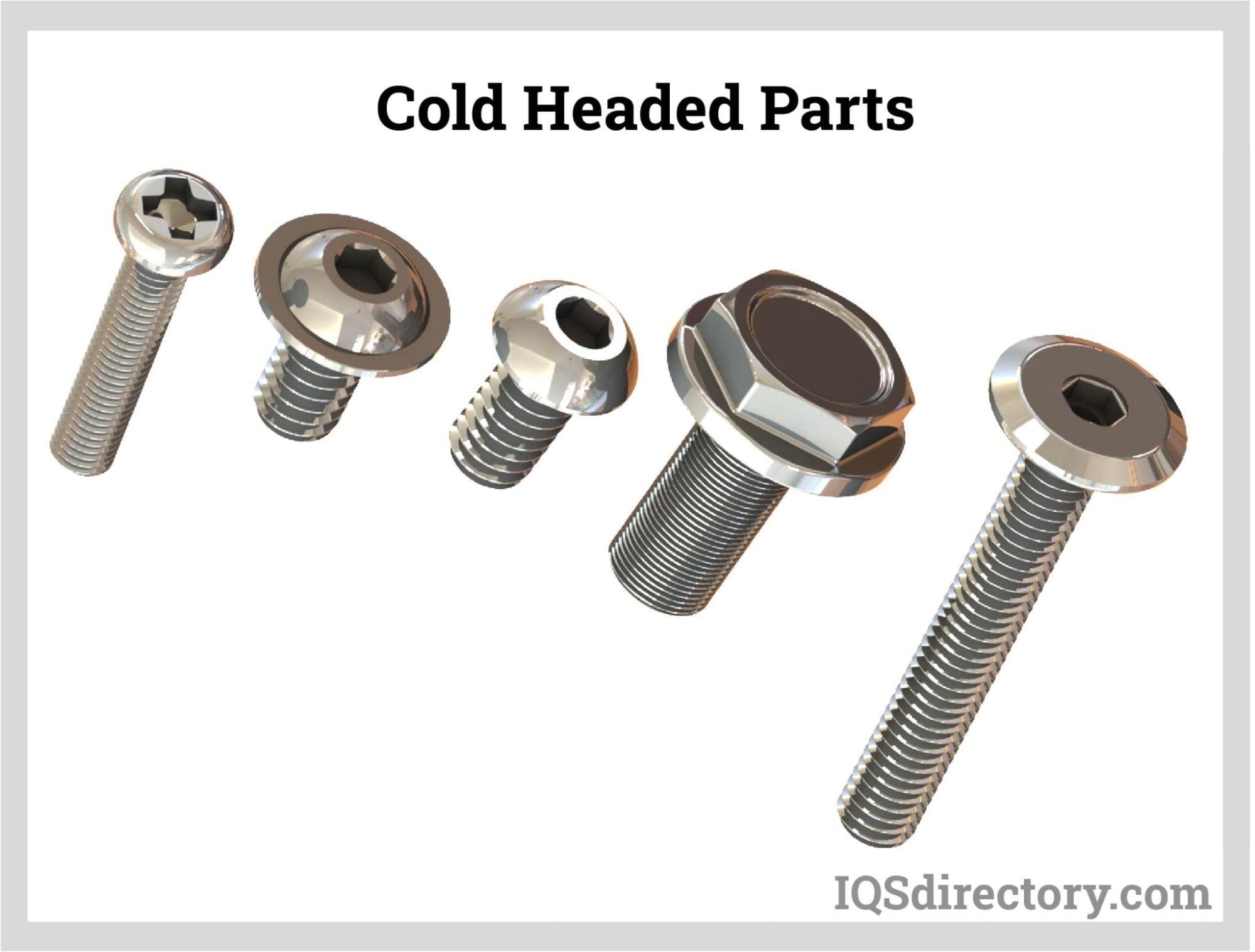 Cold heading is a high-speed process that forms a repeatable metal shape from wire or rod stock without heating the material first.
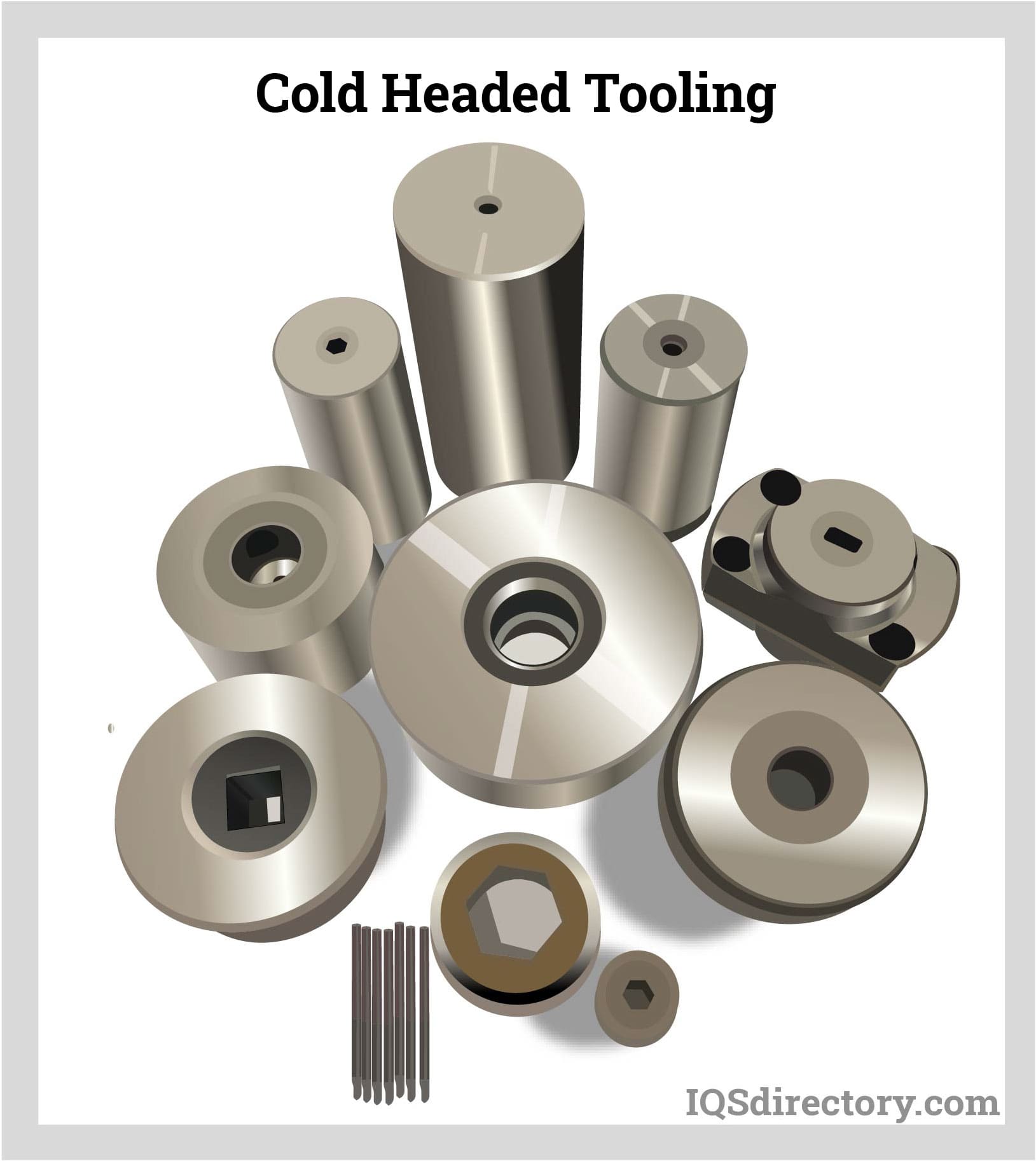 Cold heading tooling is designed to cut, measure, transfer, and form each section of stock with consistent accuracy.
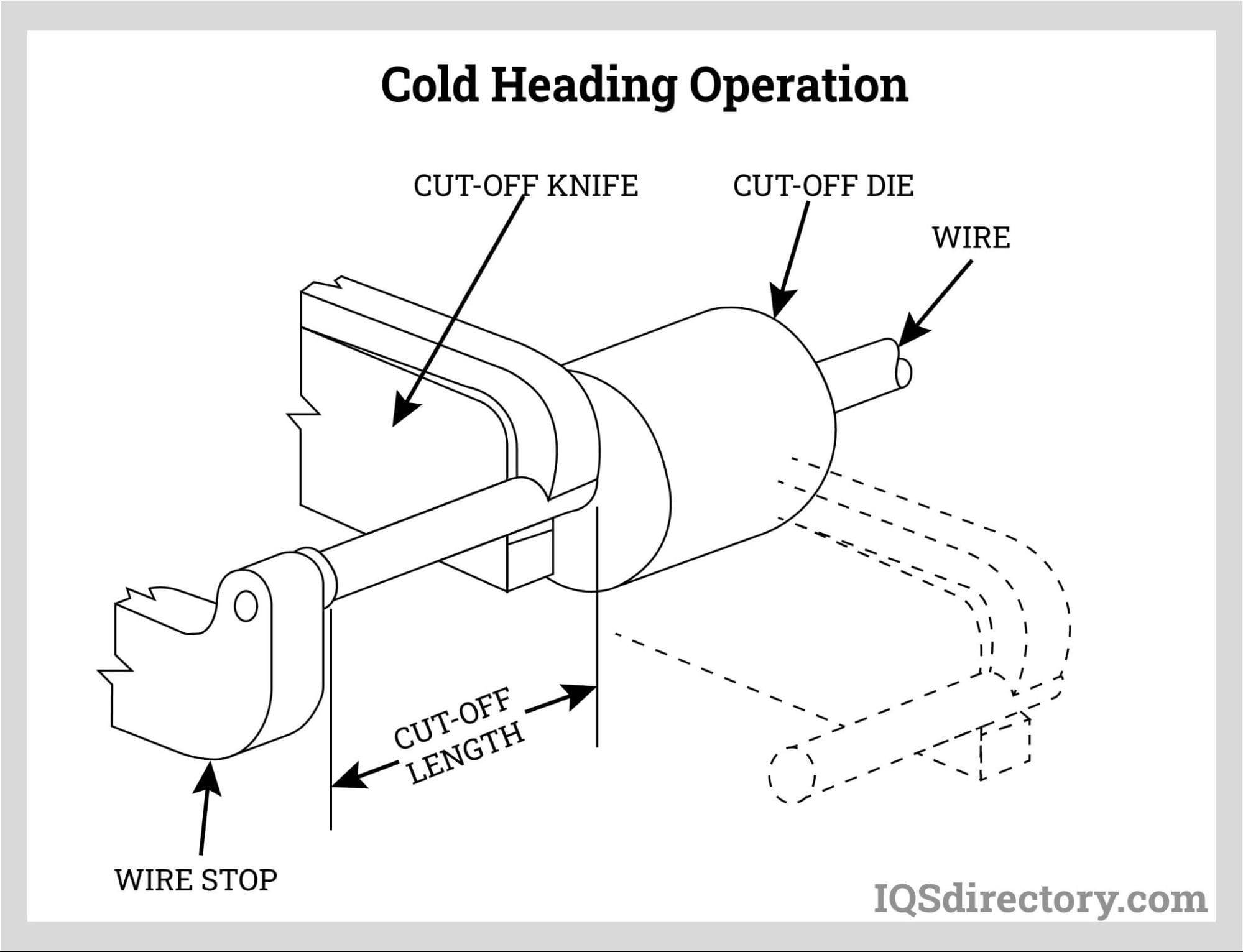 High-speed cold headers can transform simple wire into precision parts through a sequence of controlled forming steps.
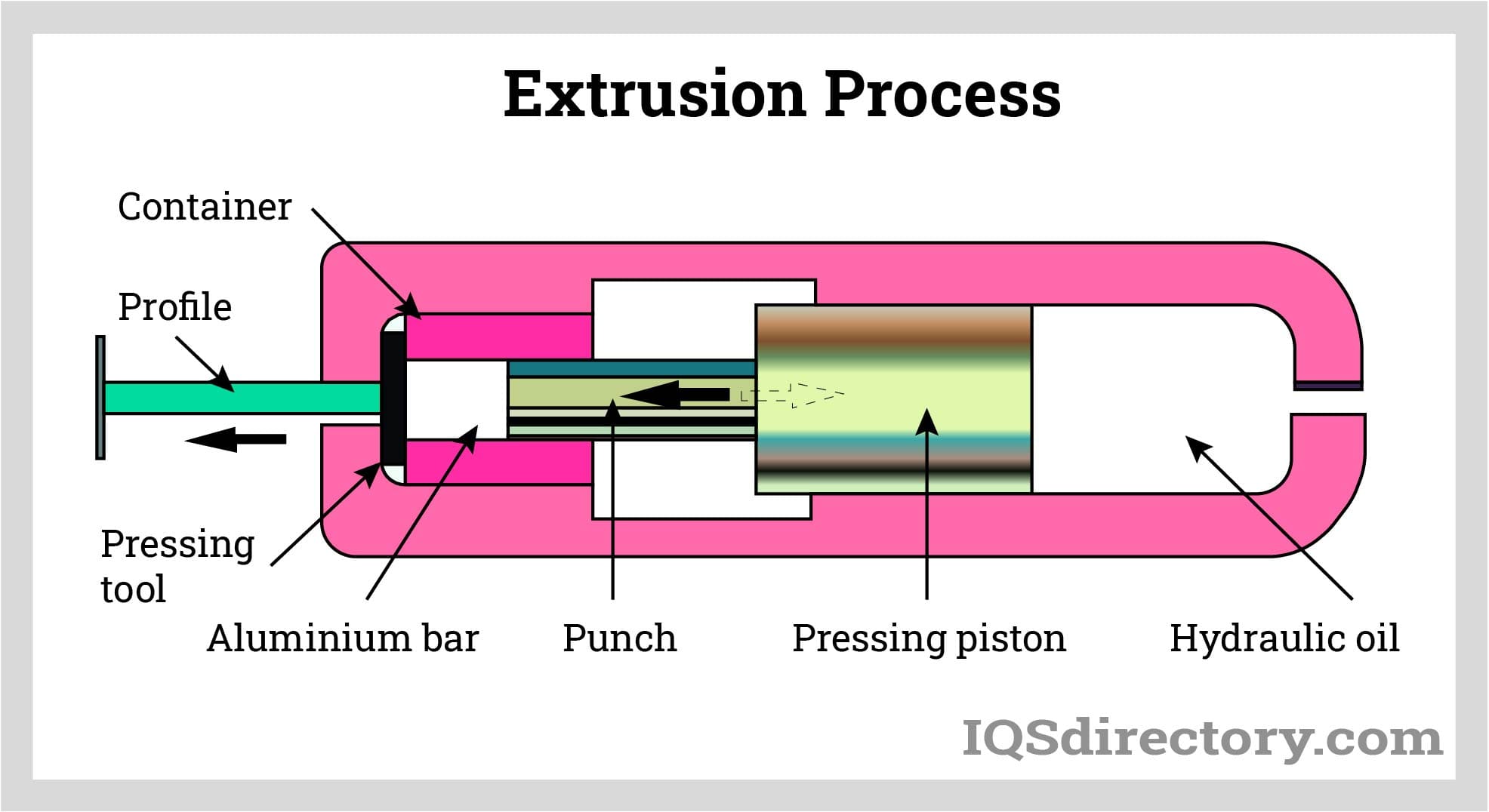 Cold heading extrusion changes part length and diameter by directing material flow through a die opening.
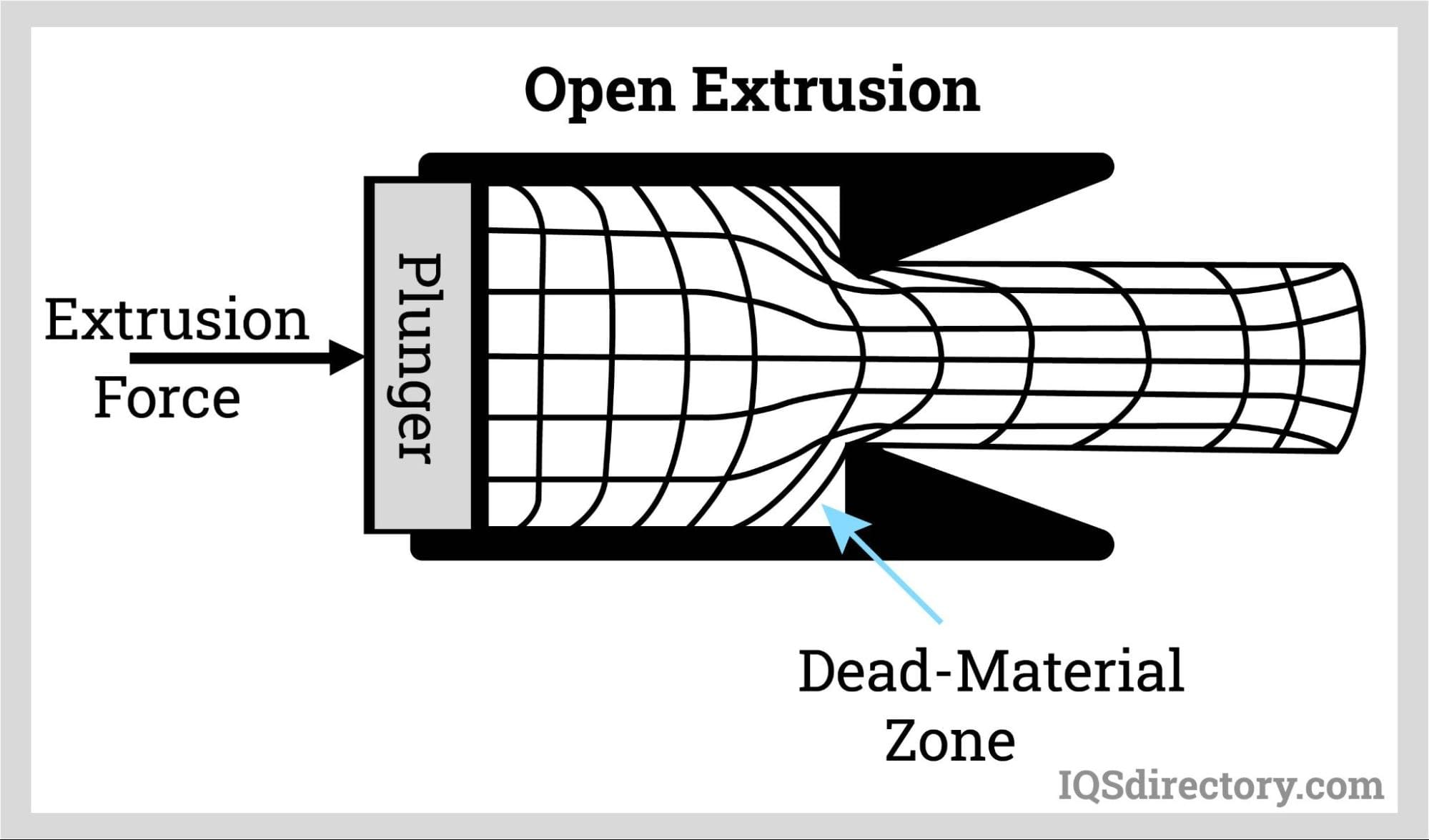 Open extrusion places the working portion of the tool near the top side of the die for a specific material flow path.
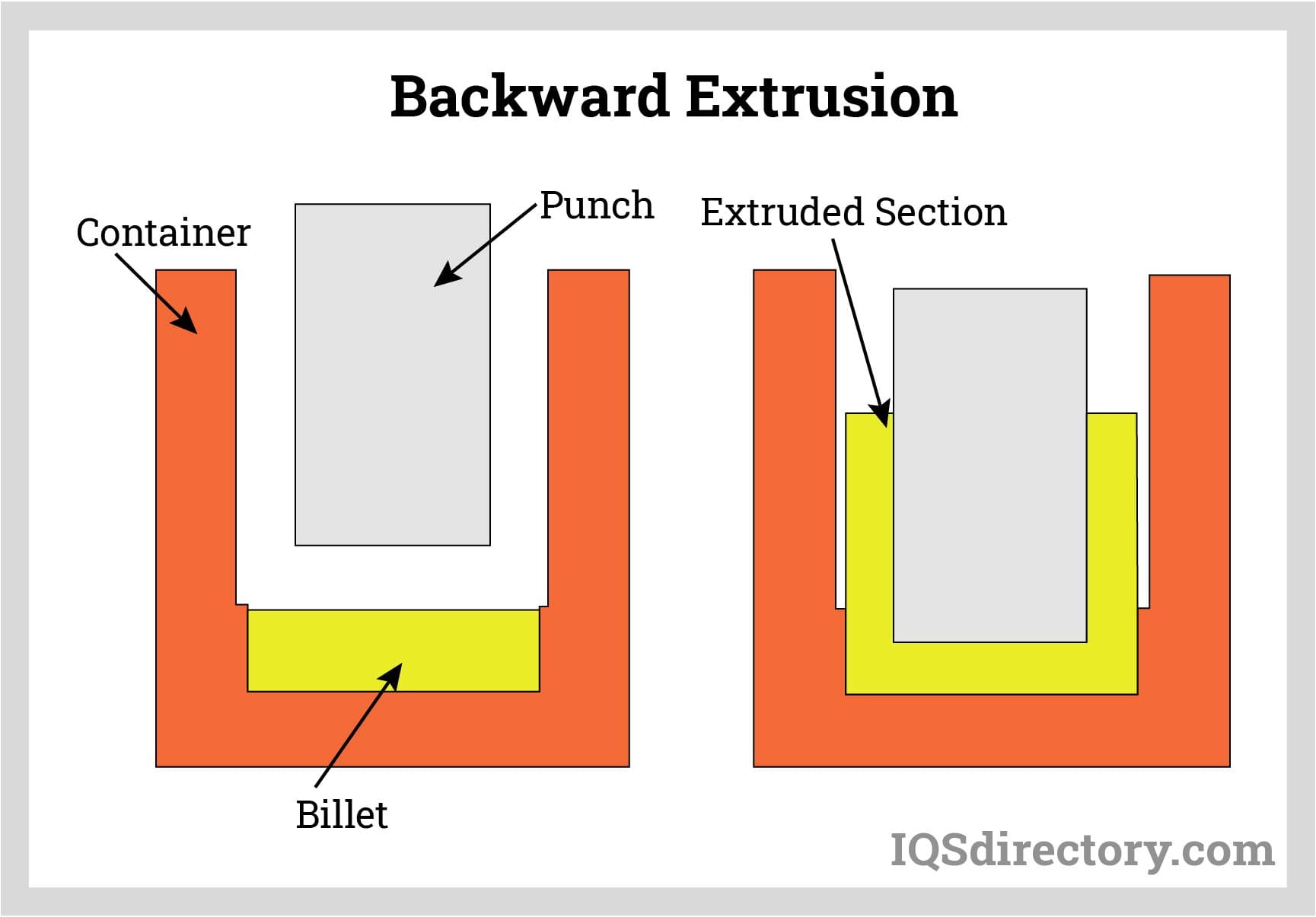 Backward extrusion uses a pin driven into the part inside the die to create hollow or recessed features.
These images help explain how cold heading equipment, die progression, tooling geometry, and extrusion methods convert wire or rod into finished parts. For readers comparing cold heading with machining, casting, or other metalworking methods, visual references make it easier to understand material flow, die action, forming stages, and the way finished shapes are built through pressure instead of metal removal. That added context supports both product research and supplier evaluation.
Custom cold headed parts may include specialized head styles, controlled shank diameters, partial threads, knurls, grooves, undercuts, slots, pierced sections, and machined features based on end-use requirements. This design flexibility helps suppliers serve both catalog fastener applications and highly engineered made-to-print programs used in automotive systems, industrial equipment, appliances, electronics, and other assemblies that depend on reliable formed metal hardware.
Types of Cold Heading Processes
The process route used to make cold headed parts depends on the material, the required geometry, tolerance targets, and the production volume. Manufacturers may use upsetting, extrusion, trimming, piercing, thread rolling, and secondary machining or finishing to reach the final configuration. Understanding these options helps buyers evaluate supplier capability and better compare the manufacturing approach behind each quoted part.
Upsetting
Upsetting is one of the best-known cold heading operations. It enlarges a section of wire or rod by forcing the material to flow outward, which is how many fastener heads, shoulders, and enlarged ends are created. This process is common in bolts, rivets, pins, and specialty hardware.
Extrusion
Extrusion changes the shape of the part by pushing material through a die opening. Forward extrusion is often used to reduce diameter and extend the length of a section, while backward extrusion can create recessed or hollow features that are useful in specialty hardware, electrical contacts, and custom formed parts.
Piercing and Trimming
Piercing creates openings or internal features, while trimming removes excess material and refines the final shape. These operations are often combined with upsetting and extrusion so manufacturers can produce more complete part geometries directly on the header before any secondary processing begins.
Thread Rolling and Secondary Operations
Many cold headed parts need additional work after the main forming stages. Thread rolling, slotting, pointing, drilling, shaving, coating, heat treating, and plating are often used to meet print requirements and end-use performance needs. When buyers compare custom cold headed parts, these secondary services often influence total cost, turnaround time, and supplier compatibility just as much as the primary heading operation itself.
How to Choose Cold Headed Parts Suppliers
Choosing a supplier for cold headed parts involves more than finding a company that can match a drawing. Buyers often review tooling experience, production capacity, inspection methods, quality certifications, material sourcing practices, in-house plating or heat treating support, lead times, and the ability to manage made-to-print requirements. When a component is destined for automotive, electrical, aerospace, or high-cycle industrial service, those factors can directly affect long-term product reliability and supply continuity.
It also helps to ask practical search-driven questions during supplier evaluation: Can this part be cold headed instead of machined? What tolerances can the supplier hold at full production volume? Which material grades are stocked regularly? Are secondary operations available in-house? Does the company support prototypes, pilot runs, and long-term production? Questions like these mirror the way engineers and procurement teams compare manufacturing partners while narrowing down qualified vendors.
Applications of Cold Headed Parts
Cold headed parts are used across a wide range of finished products and assemblies because they offer a strong combination of dimensional repeatability, mechanical performance, and manufacturing efficiency. In automotive applications, they are used in fasteners, pins, studs, clips, and specialty parts that must withstand vibration, repeated loading, and demanding assembly conditions. In electronics and electrical systems, cold headed terminals, contacts, and connector components are valued for conductivity, precise geometry, and dependable high-volume production.
Construction, appliances, HVAC systems, furniture, agricultural machinery, and recreational products also rely on cold headed parts for secure joining, wear resistance, and dependable assembly performance. In many of these sectors, buyers evaluate cold heading not only for forming speed but also for its ability to maintain stable quality over very large production volumes. That makes cold headed components a practical option for OEMs, contract manufacturers, MRO buyers, and engineers looking for durable metal hardware with strong cost efficiency.
Cold Working Glossary
-
Annealing
A heat treatment step used between or after forming operations to reduce internal stress, recover ductility, and improve workability for later processing.
Cold Heading Wire
Wire stock prepared for use in cold heading equipment. Its chemistry, diameter control, surface condition, and lubrication response can affect tooling life and finished part quality.
Dislocation
A defect in the crystalline structure of a material that influences plastic deformation and plays a major role in work hardening during cold working.
Grain Flow
The directional alignment of the metal structure created during forming. Favorable grain flow can support better strength and durability in the finished component.
Work Hardening
The increase in hardness and strength that occurs when metal is plastically deformed during cold working. This effect is one of the main reasons cold headed parts are attractive for many fastening, joining, and structural applications.