CNC Machining
CNC machining is a highly advanced manufacturing method that relies on computer numerical control systems to direct automated machinery with exceptional precision. This process uses pre-programmed software to guide tools and equipment, allowing manufacturers to produce intricate components with tight tolerances and repeatable accuracy. CNC machining supports a wide range of manufacturing processes, making it a foundational technology for industries that demand consistency, scalability, and efficient production workflows.
From rapid prototyping to full-scale production runs, CNC machining enables businesses to manufacture both simple and highly complex parts in metals, plastics, composites, and specialty materials. Whether you are exploring custom machining services, researching precision components, or comparing manufacturing processes, CNC machining delivers a balance of speed, reliability, and design flexibility that supports modern industrial demands.
CNC Machining Overview
While CNC milling is one of the most widely used processes, CNC machining includes a diverse set of operations designed to meet different production requirements. These operations include CNC cutting, CNC drilling, turning, grinding, and multi-axis machining. Many modern CNC systems integrate multiple processes into a single setup, using automated tool changers and advanced programming to streamline production and reduce downtime.
Manufacturers often begin with prototype machining to validate designs before committing to full production. This approach supports product development by identifying potential improvements early, reducing waste, and ensuring that specifications are met with precision. With precision machining, automated systems minimize variability, enabling consistent results across high-volume runs while maintaining exact tolerances.
Automation plays a major role in improving efficiency. A single operator can oversee multiple CNC machines, allowing facilities to scale output without compromising quality. However, consistent calibration, maintenance, and monitoring are necessary to maintain accuracy and ensure reliable performance. Businesses evaluating CNC machining services often consider factors such as turnaround time, material compatibility, and production capacity when selecting a provider.
Looking to compare CNC machining methods? Wondering which process delivers the best balance between cost and precision? These are common questions for engineers and procurement teams evaluating manufacturing solutions, and CNC machining consistently ranks as a preferred option due to its adaptability and repeatability.
Frequently Asked Questions About CNC Machining
What is CNC machining?
CNC machining is a manufacturing process that uses computer-controlled systems to automate the cutting, shaping, and finishing of materials into precise components with consistent accuracy.
What materials can be used in CNC machining?
CNC machining supports metals such as aluminum, steel, and titanium, as well as plastics, composites, ceramics, and specialty materials depending on machine capabilities.
How accurate is CNC machining?
CNC machining can achieve extremely tight tolerances, often within thousandths of an inch, making it suitable for industries requiring high precision and repeatability.
What industries use CNC machining?
Industries such as aerospace, automotive, medical, defense, and electronics rely on CNC machining for producing reliable, high-quality components.
Is CNC machining suitable for low-volume production?
Yes, CNC machining is ideal for both low-volume prototyping and high-volume production, offering flexibility for a wide range of manufacturing needs.
CNC Machining Images, Diagrams and Visual Concepts
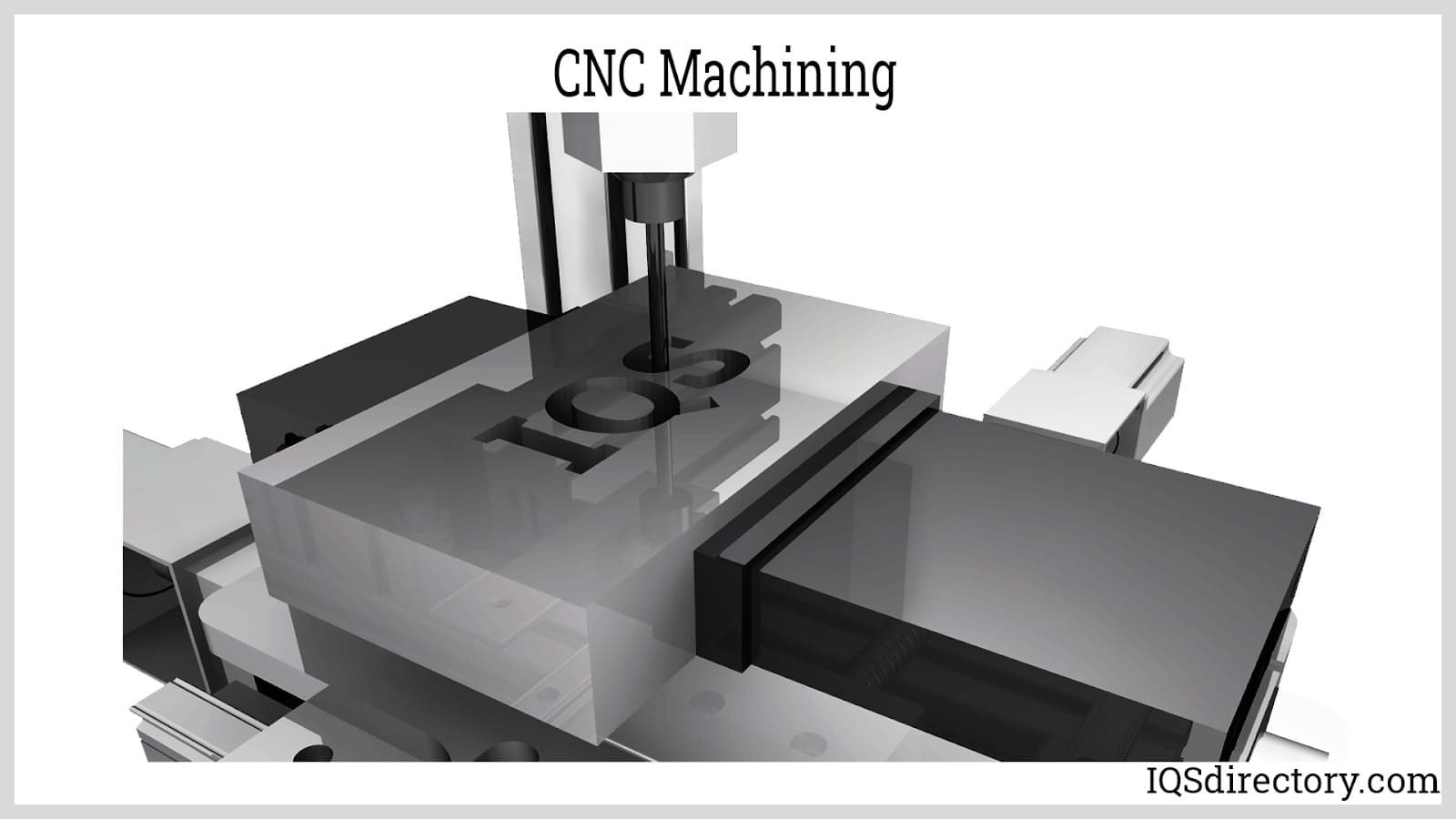 CNC machining uses multi-axis motion to produce parts with consistent precision.
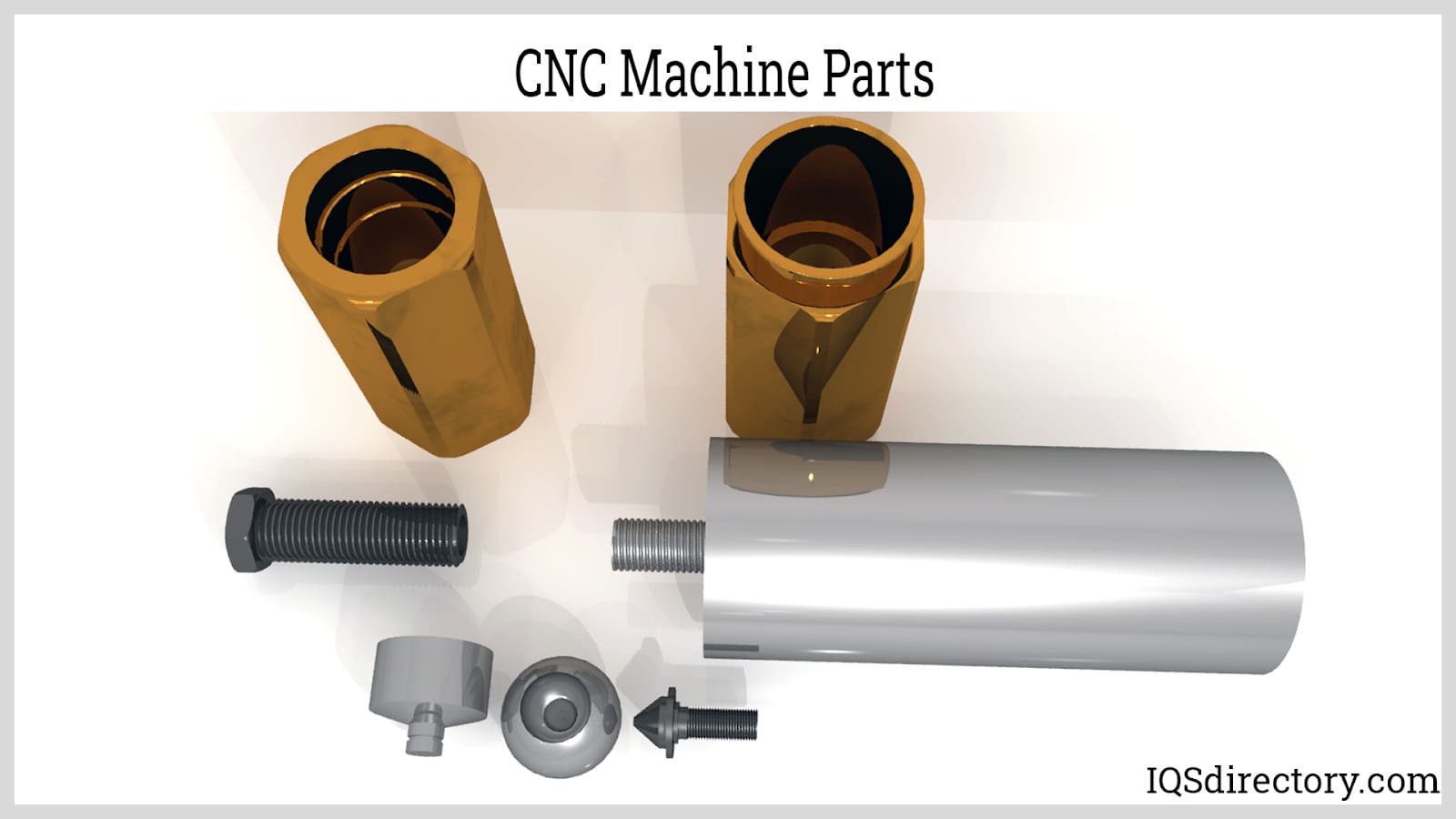 Precision components produced using CNC machining.
CNC Machining Types
-
CNC machining includes multiple specialized processes designed to meet varying production needs. CNC cutting removes excess material to form detailed geometries, while CNC drilling produces precise holes and threading. CNC grinding focuses on surface finishing and dimensional refinement, ensuring smooth and accurate results.
Advanced CNC machine shops often combine multiple processes into a single workflow, improving efficiency and reducing handling time. CNC milling, turning, and laser machining enable the creation of intricate parts with complex geometries, supporting industries that require tight tolerances and high repeatability.
Prototype machining plays a key role in product development by enabling rapid testing and refinement. By producing early-stage models, manufacturers can validate designs, reduce risk, and streamline production planning before scaling output.
Using a CNC Machine Shop
Choosing the right CNC machine shop involves evaluating capabilities such as material compatibility, production volume, machining accuracy, and available equipment. Manufacturers often compare providers based on their ability to handle specific materials, including metals, plastics, and engineered composites.
In addition to core machining processes, many shops offer secondary services such as finishing, coating, heat treatment, and assembly. These value-added services help streamline production and reduce the need for multiple vendors, improving efficiency and project coordination.
The CNC process typically begins with CAD and CAM programming, where digital designs are converted into machine-readable instructions. These instructions guide tool movement, cutting depth, and operational parameters, ensuring consistent and accurate production.
Modern CNC machining continues to evolve with advancements in automation, software integration, and multi-axis capabilities. Businesses exploring manufacturing solutions often ask: How can CNC machining reduce lead times? What factors influence machining costs? Which process best suits complex geometries? These considerations highlight the importance of selecting the right approach for each application.
CNC Machining Terms
-
CNC machining terminology includes a range of technical concepts that define machine movement, programming, and operation. Axes represent directional movement, while CAD and CAM software enable digital design and manufacturing integration.
Programming languages such as G-code translate design data into machine instructions, controlling tool paths and operational sequences. Understanding these terms helps engineers, designers, and buyers make informed decisions when selecting CNC machining services.