Check Valves
Check valves are one-way flow control devices used to move gas or liquid through a valve body while blocking reverse flow. One opening admits media and the other provides the outlet path, allowing the valve to respond automatically to line pressure, system demand, and flow velocity without manual operation. Because they are compact, dependable, and easy to integrate into piping, tubing, pump, and process systems, check valves appear in residential plumbing, irrigation, industrial processing, chemical handling, and fluid transfer applications. The design of a stainless-steel spring valve is driven by cracking pressure, the opening threshold that determines when flow begins. Manufacturers offer many sizes, body styles, and price points using materials such as plastics, stainless steel, and polypropylene. While the basic concept is straightforward, proper engineering is still required to maintain flow efficiency, reduce wear, control pressure loss, and deliver reliable backflow prevention.
Check Valves FAQs
What is the main purpose of a check valve?
A check valve allows liquids or gases to travel in one direction while automatically stopping reverse flow. It protects pumps, piping, tanks, and process equipment from back pressure, contamination, fluid loss, and system upset in residential, commercial, and industrial flow systems.
Where are check valves commonly used?
Check valves are used in home plumbing, irrigation lines, sump systems, fire protection equipment, chemical plants, wastewater operations, pump assemblies, and industrial piping networks. They help maintain directional flow, protect water quality, and support stable pressure control across many applications.
What materials are check valves made from?
Check valves are manufactured from plastics, stainless steel, brass, iron, PVC, elastomers, and other corrosion-resistant materials. The best material depends on media compatibility, operating pressure, temperature, sanitation needs, and whether the valve will be used in residential service or demanding industrial duty.
What industries rely on check valves?
Check valves are widely used in aerospace, energy, water treatment, food processing, medical equipment, chemical processing, agriculture, oil and gas, and manufacturing. These industries depend on one-way valves to support safe flow direction, equipment protection, pressure management, and backflow prevention.
How does cracking pressure affect check valve performance?
Cracking pressure is the minimum inlet pressure needed to open a check valve. Matching that value to the application helps the valve open when needed, close when flow stops, and avoid leakage, chatter, pressure drop, or poor system response caused by improper valve sizing.
What are common types of check valves?
Common check valve styles include ball, swing, lift, diaphragm, wafer, spring-loaded, silent, duckbill, and double check valves. Each design uses a different closure method to manage flow direction, reduce backflow risk, and fit particular pressure, installation, and media requirements.
Why is proper installation important for check valves?
Proper installation helps a check valve close fully, align with flow direction, and perform as intended under the expected pressure and temperature range. Correct placement reduces leaks, water hammer, contamination risk, premature wear, and avoidable maintenance in both plumbing and industrial systems.
Applications of Check Valves
Domestic Use
In rainwater harvesting and home plumbing systems, check valves help regulate water movement through supply piping, storage tanks, and discharge lines. By stopping unwanted reverse flow, they help keep collected rainwater separated from the main supply, reduce the chance of contamination, and support safer operation when a sump pump, booster pump, or backup drainage system is involved.
In agriculture, check valves are built into drip irrigation, sprinkler systems, and fertilizer injection lines to maintain even water delivery and prevent drain-back when the system shuts off. They also support residential heating and solar thermal systems by limiting unwanted convection flow, improving circulation control, and helping water and heat move where the system designer intended.
Industrial Use
Check valves are widely used in industrial piping, chemical processing, water treatment, and power generation because they help stabilize flow, protect pumps and compressors, and keep pressure within the desired range. In nuclear and thermal systems, they support cooling-water delivery and other controlled fluid transfer duties where flow rate, pressure, and shutoff response all matter to the larger operation.
Public safety and transportation systems also rely on one-way valves. Fire engines use them in high-pressure water lines to help maintain dependable discharge flow, while aerospace and aircraft systems use them in hydraulics, propulsion support, and control circuits exposed to vibration, heat, and demanding service conditions. In gas blending and specialty process lines, check valves help prevent media from flowing backward into the source, which supports cleaner operation and safer process control.
Piston pumps, diaphragm pumps, metering pumps, chromatography pumps, and boiler injector assemblies all use check valves to keep media moving in the proper direction. In these systems, inlet and outlet valves help prime equipment, maintain line integrity, reduce reverse flow, and support accurate dosing, transfer, or circulation during repeated cycling.
Different valve styles serve different process goals. Ball check valves, swing check valves, wafer check valves, and lift check valves all support downstream flow while limiting upstream contamination and back pressure. Spring-loaded designs are often selected when buyers want faster closure, reduced valve chatter, and better resistance to slamming caused by differential pressure changes.
Double check valves combine more than one closure element to increase reliability and lower the chance of backflow, cross-contamination, flooding, or damaging pressure events. Available in iron, plastic, and stainless steel constructions, they are used across water, industrial, and utility service. In medical and laboratory settings, diaphragm check valves help manage delicate liquid flow where clean handling and controlled transfer are part of system performance.
History and Evolution
Modern check valve design grew from early one-way flow devices developed to solve practical piping problems. In 1907, Frank P. Cotter introduced a simple self-sealing valve that could be added to existing systems without elaborate tooling. Later, Nikola Tesla created a one-way fluid valve concept in 1916 and patented the Tesla valve in 1920, adding another influential path in the evolution of no-return flow control.
Today, check valves are used across aerospace, automotive, agriculture, water treatment, chemical processing, energy, and manufacturing. Their development has led to more specialized geometries, quieter closure, improved elastomers, corrosion-resistant metals, and application-focused designs such as plastic diaphragm valves, miniature valves, sanitary valves, and silent check valves. Material selection and closure style now vary widely so buyers can match valve performance to media, temperature, pressure, cleanliness, and installation space.
Design and Engineering of Check Valves
Check valves are used in commercial, industrial, and residential systems to manage the flow of acids, bases, water, slurry, oxygen, fuel, oils, gases, and other media. Valve performance depends heavily on material compatibility, sealing design, operating temperature, pressure range, and flow characteristics. Choosing the right body, disc, spring, diaphragm, and seat materials helps avoid corrosion, erosion, swelling, media contamination, and early wear. Common options include PVC, brass, ductile iron, copper, polyethylene, polypropylene, aluminum, steel, stainless steel, and rubber. Plastic valves are often chosen for household and chemical service because they are lightweight and corrosion resistant, while stainless steel and iron bodies are favored when higher pressure, longer service life, or tougher operating conditions are part of the job. Buyers also compare flow coefficient, closure speed, installation orientation, and allowable temperature when selecting a valve.
PVC check valves, often referred to as relief valves, and brass check valves are frequently selected for applications that see constant cycling, moisture, and chemical exposure. Proper valve configuration helps limit wear, lower maintenance needs, and extend service life. Silicone diaphragms and similar flexible sealing materials also support precise low-pressure performance in medical, laboratory, and specialty equipment where smooth opening and dependable shutoff are valued.
Check valves are produced in many sizes, from miniature components for precision equipment to large pipeline valves several feet across. Seat diameter, closure geometry, line size, and installation layout all affect valve selection. One of the most important performance values is cracking pressure, the minimum pressure required to move the closure element off its seat and start flow. If a valve is oversized, the process stream may not supply enough force to open it reliably. If the valve is undersized, it may stay open too long, create excess pressure drop, or fail to close when flow conditions change. Good sizing supports cleaner shutoff, lower energy loss, reduced equipment stress, and better overall process control.
Some Benefits of Check Valves
Check valves regulate fluid movement in piping systems by allowing forward flow while blocking reverse flow. That simple action helps protect pumps, separators, tanks, and downstream equipment from contamination, unwanted mixing, pressure reversal, and fluid loss. In processes where water, oil, chemicals, or gases must remain separated, one-way valve performance supports cleaner operation and more dependable product handling.
Stainless steel check valves offer long service life, corrosion resistance, and dependable shutoff in oil, gas, water, and chemical applications. Their durable bodies and springs make them well suited for systems that see repeated cycling, elevated pressure, or media that would shorten the life of less resistant materials.
In stormwater and flood-control infrastructure, check valves help direct surge water and runoff into the proper drainage path without allowing contaminated water to move backward into freshwater systems. That makes them useful in municipal piping, wastewater control, drainage outfalls, and pumping stations that must handle changing flow conditions.
Pressure regulation is another major benefit. By responding to changes in system pressure, check valves help reduce backflow, stabilize line performance, and support equipment that depends on controlled media movement, including pump systems, hydraulic circuits, air lines, and pressure-managed devices such as scuba equipment and specialized process assemblies.
Check Valve Images, Diagrams and Visual Concepts
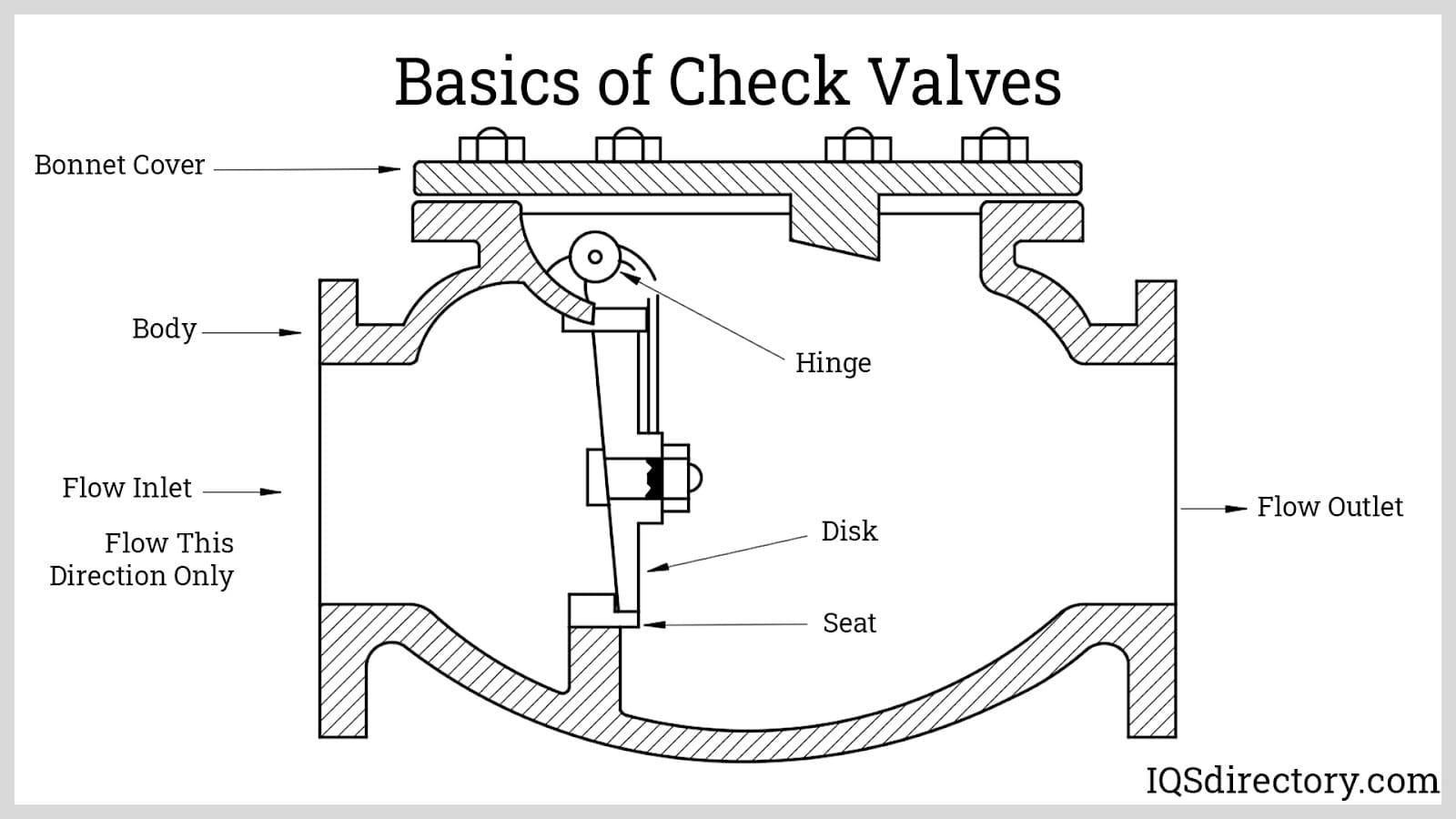
Check valves are automatic one-way safety devices that allow fluids and gasses to move forward while preventing reverse flow.
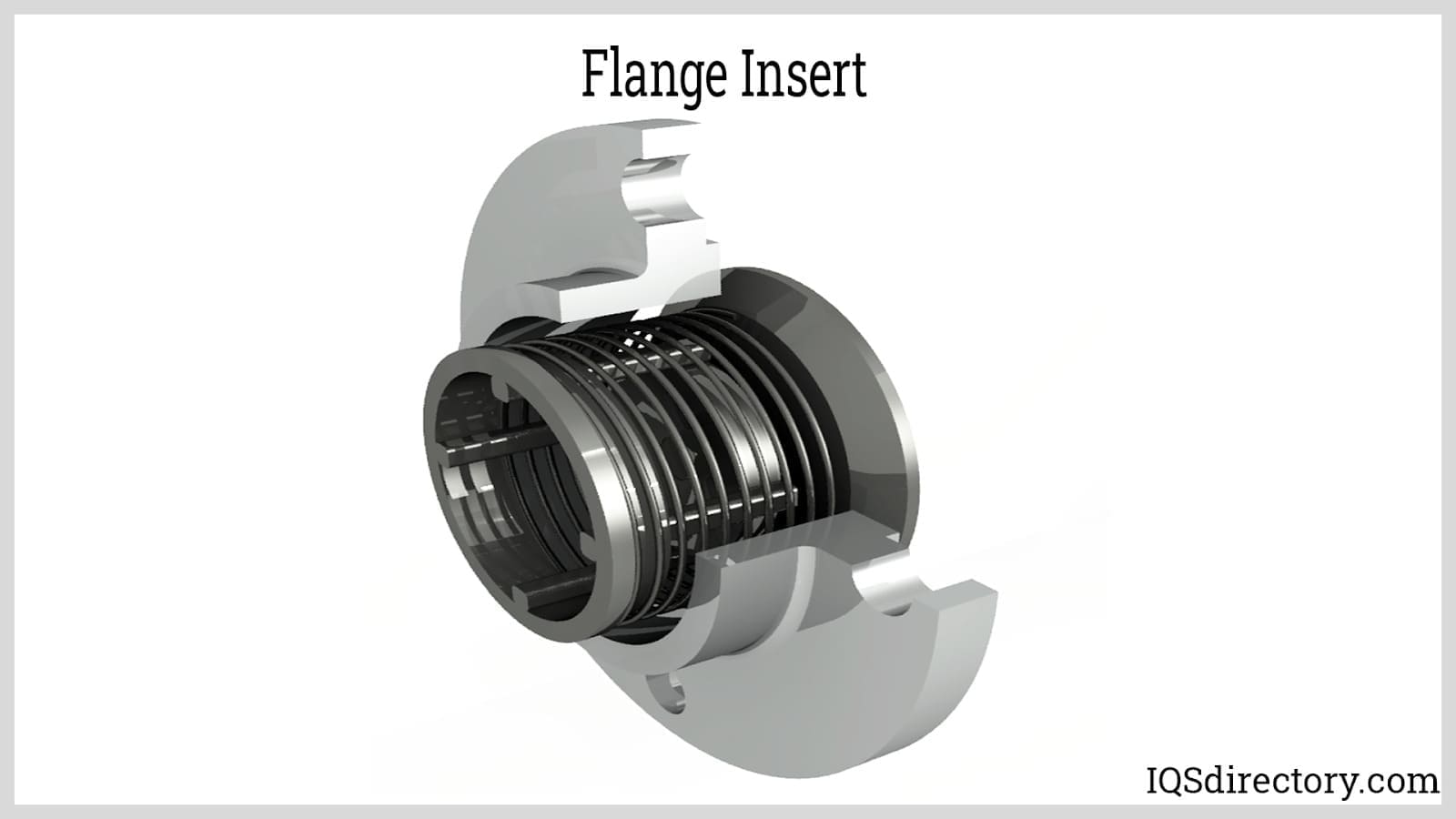
The flange insert is the end feature that helps stop the reversal of fluid flow within the valve assembly.
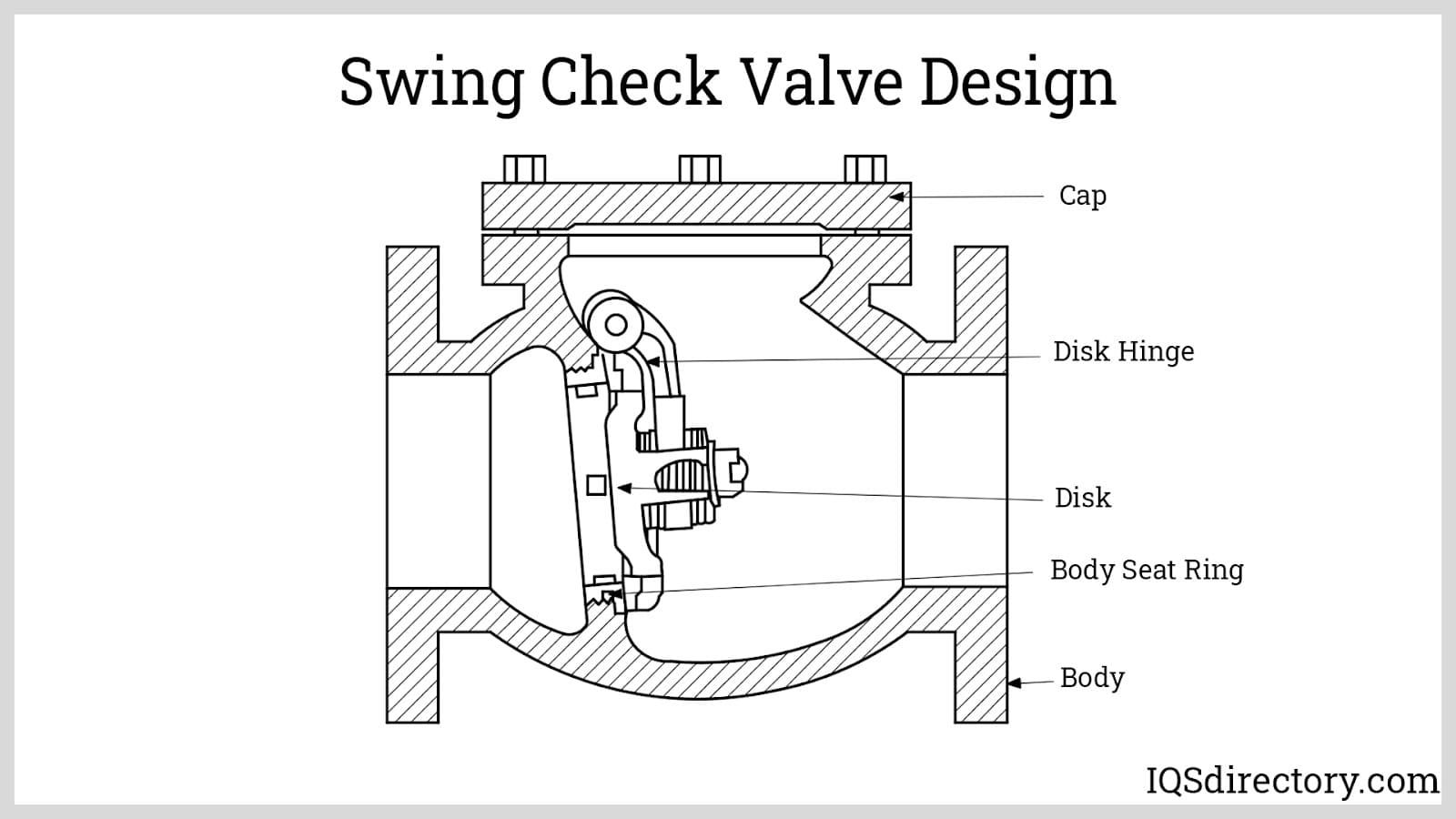
Swing check valves use an unguided disc that moves into a fully open position when forward flow pressure is applied.
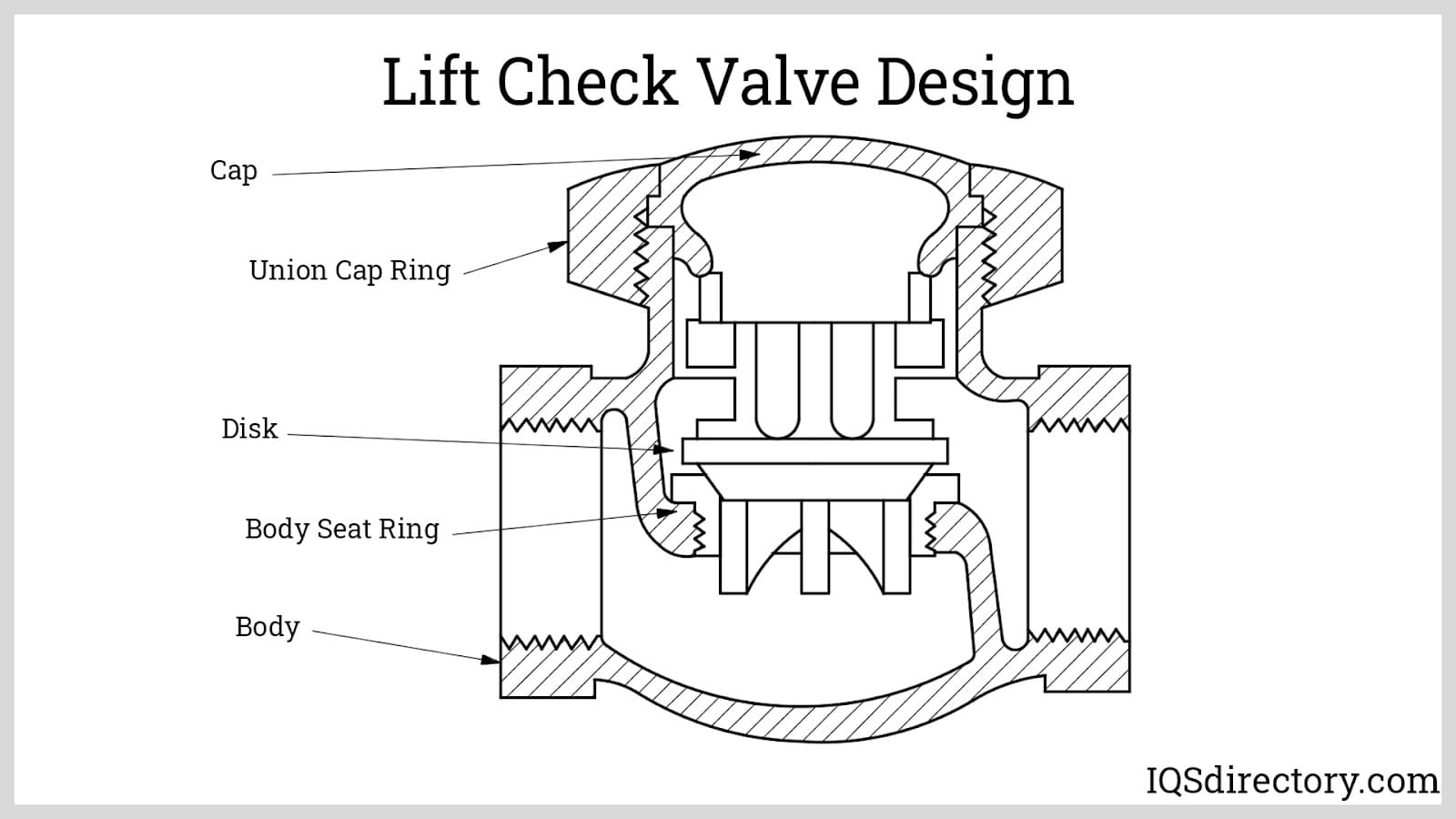
Lift check valves use a guided piston or disc that rises when inlet flow enters the valve body.
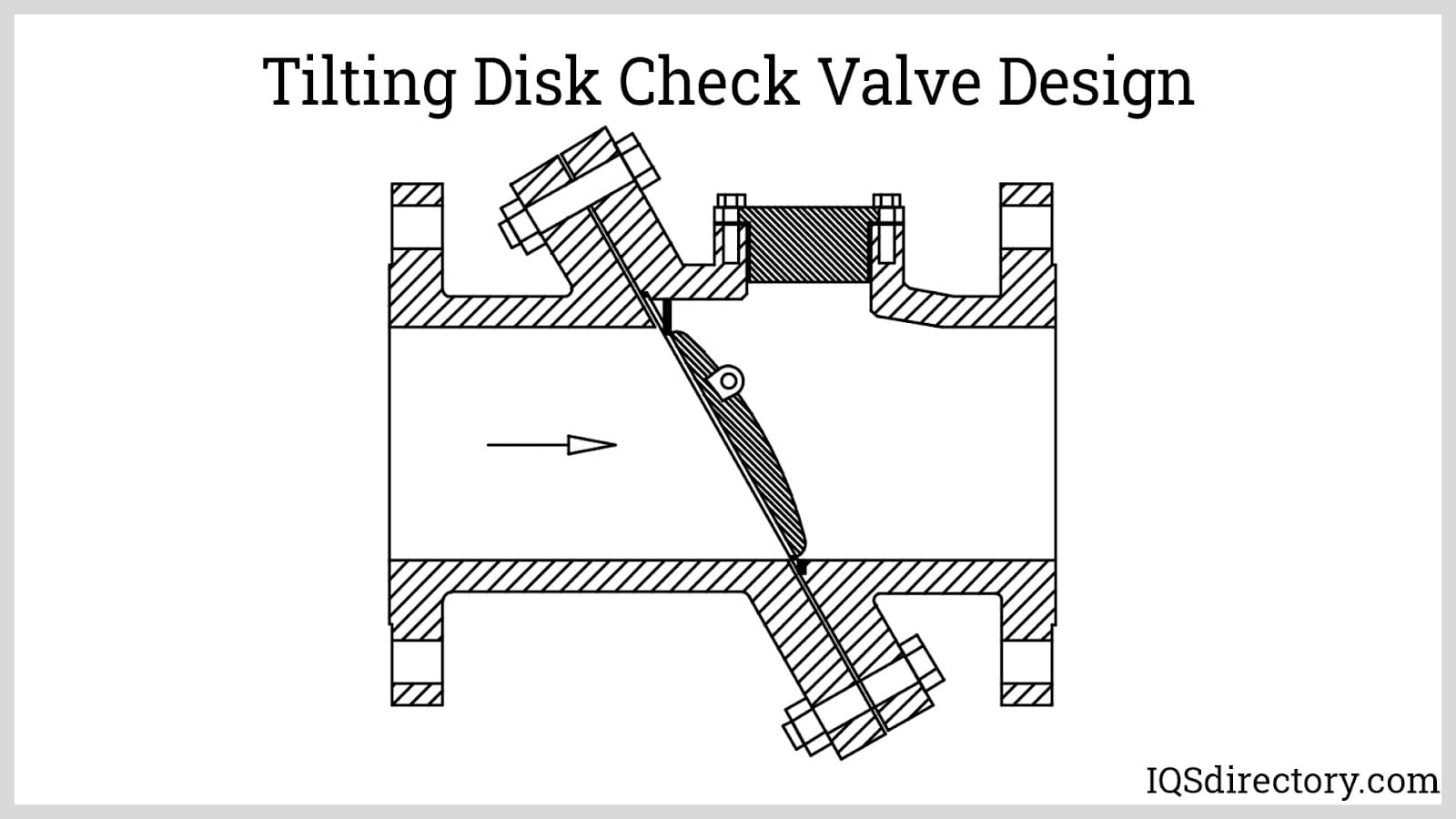
Tilting disc check valves are designed to remain open at lower flow velocities and close quickly when flow conditions change.
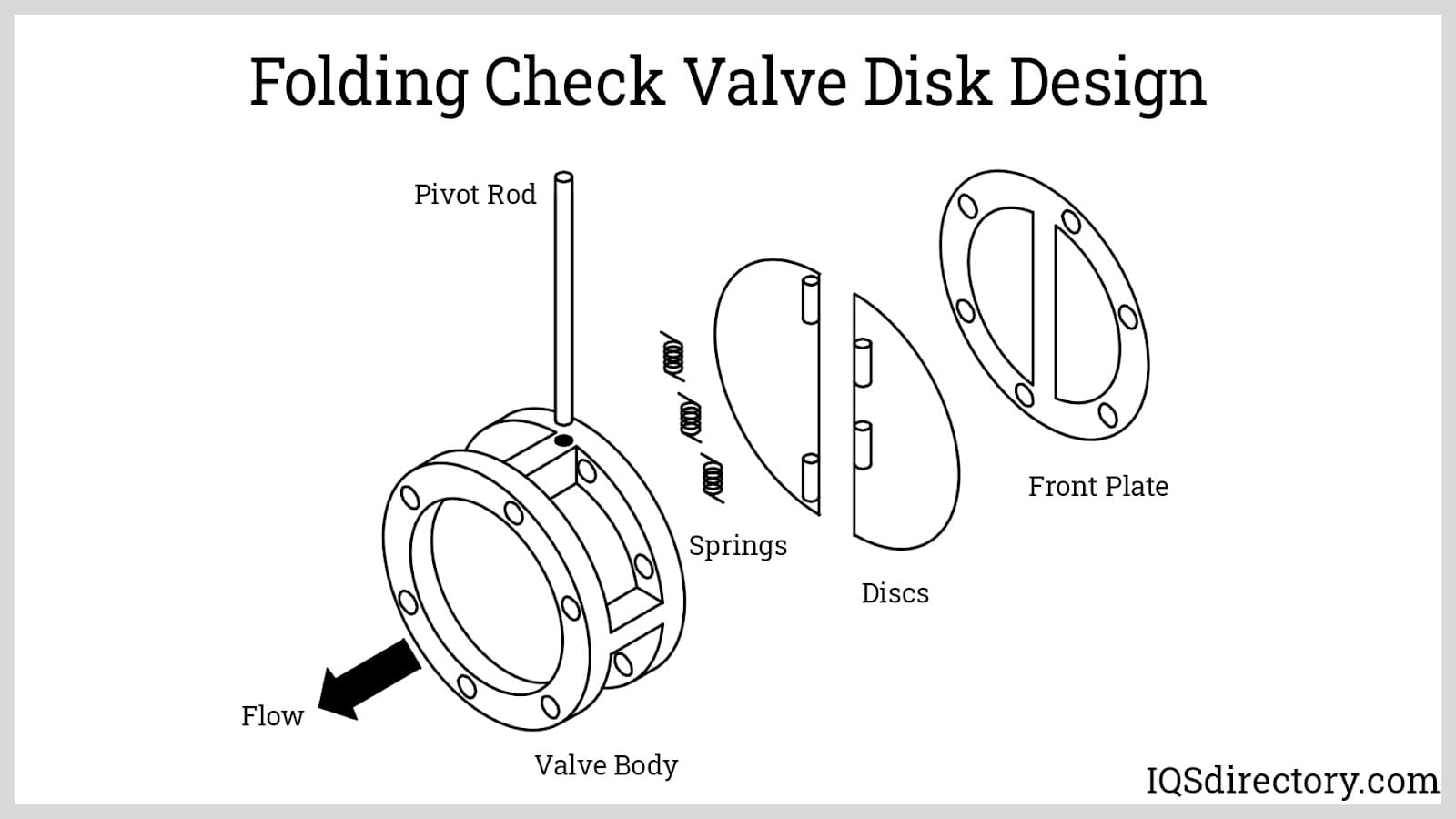
The folding disc check valve uses a split disc design that opens under forward pressure and closes to resist backflow.
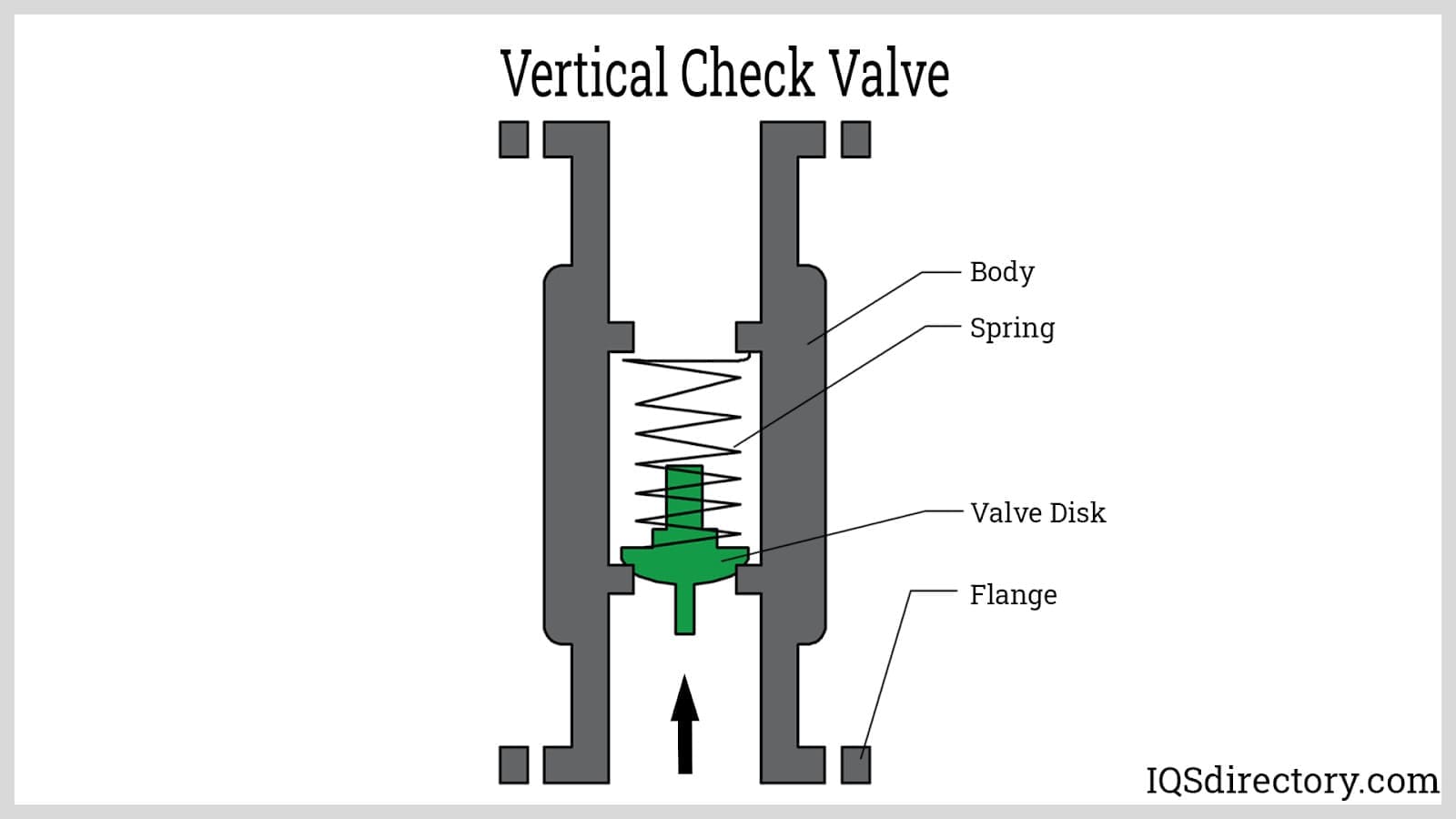
Vertical check valves hold the disc against the seat until enough pressure is applied to compress the spring and open the valve.
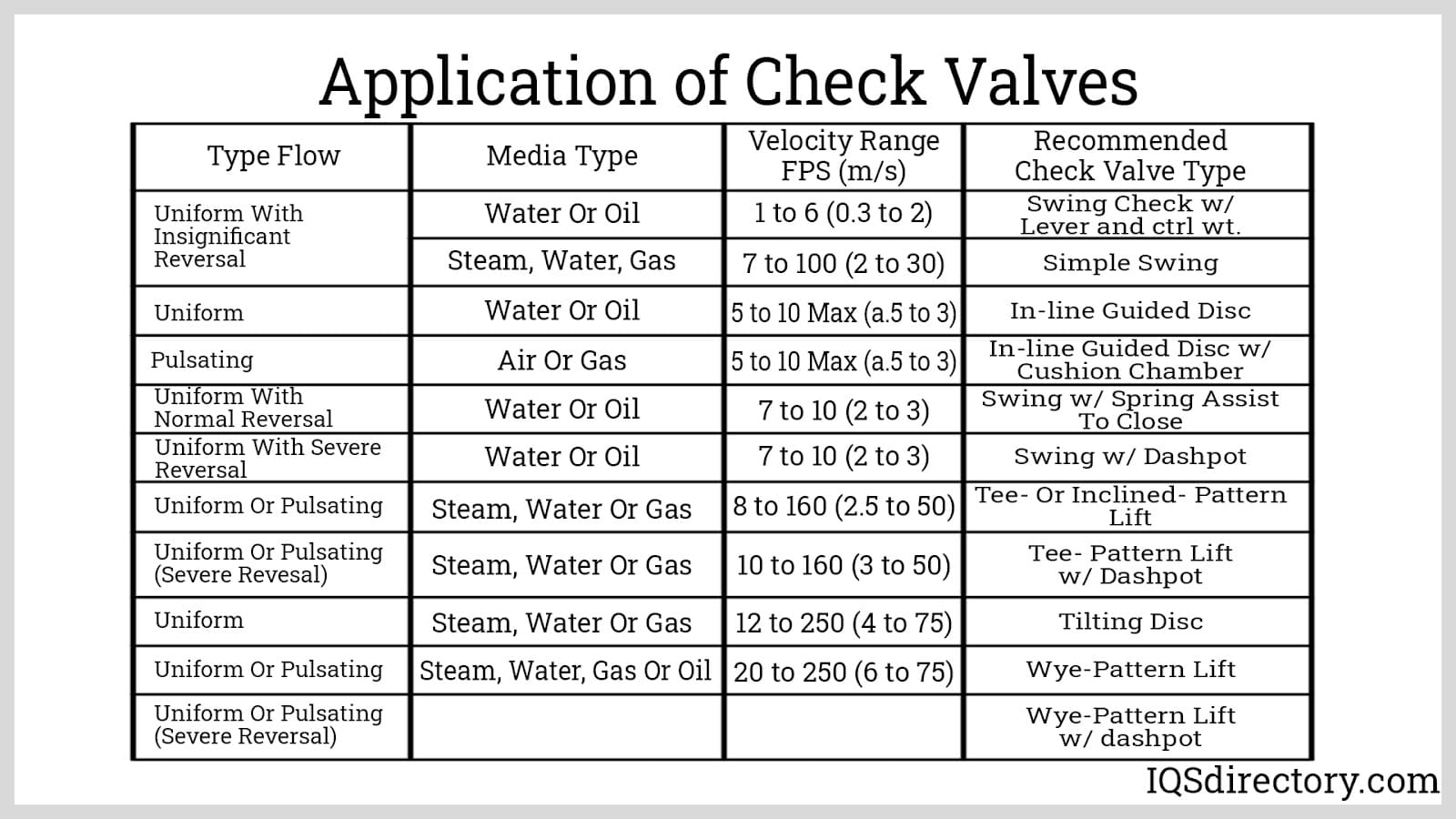
The image shows how valve type, media, and flow conditions influence the best check valve choice for an application.
Check Valve Accessories
Many check valves are paired with accessories or upgraded internals that improve durability, sealing, and hydraulic performance. These may include ductile iron bodies, center-guided silent check designs, straightening vanes that help reduce water hammer, aluminum-bronze trim, stainless steel discs, and globe-style bodies that lower pressure loss while supporting consistent fluid control.
Check Valve Installation and Care
For installation and service, many systems benefit from qualified professional support. Correct fit-up, alignment, and placement help the valve perform properly and reduce the chance of leakage, chatter, poor closure, or avoidable system wear. A well-installed valve generally delivers better service life and more dependable line protection.
Manufacturers mark check valves with directional arrows on the body or tag so installers can verify the intended flow path. Proper application depends on flow type, pressure, temperature, volume, mounting position, and psi requirements. Selecting certified components that match the system helps reduce premature equipment failure, leakage, contamination, and unplanned downtime.
Routine inspection supports longer valve life. During maintenance, operators may observe valve action through a transparent cover where applicable, confirm that the closure element moves freely, and inspect seats and seals for wear. Lubricant the O-ring with silicone grease before reassembly so the seal remains smooth and the valve closes more consistently.
Important Standards Related to Check Valves
The Drinking Water Act enacted in January 2014 was intended to reduce lead content in drinking water components and improve public health protection. Under that requirement, wetted components used in drinking water service must contain no more than 0.25% lead. For older piping systems, moving to modern valve and fitting materials such as stainless steel and plastic can help support compliance, durability, and cleaner water distribution.
Types of Check Valves
Ball Check Valve
Ball check valves use a spherical closure element to stop reverse flow. In some designs the ball is spring-loaded, while in others back pressure pushes the ball into its seat to create a seal. These valves are common in liquid service, pump discharge lines, and compact flow-control assemblies where simple shutoff and dependable seating are desired.
Brass Check Valve
Made from a copper-zinc alloy, brass check valves are popular in plumbing, water service, and general-purpose piping because they resist corrosion, handle moderate pressure well, and support dependable backflow prevention in compact installations.
Butterfly Check Valve
Butterfly check valves regulate flow in larger pipelines using a disc that remains in the flow path. Pressure changes move the disc to open or close the valve. They are available in iron body and stainless steel configurations for water, utility, and industrial process service.
Carbon Steel Check Valve
With stainless steel internal components and a durable carbon steel body, these valves are often selected for utility systems, steam service, petrochemical processing, water distribution, gas handling, and other industrial duties that require strength and dependable shutoff.
Clapper Valve
A clapper valve uses a hinged gate that opens under forward flow and closes to block reversal. It is commonly associated with firefighting and water-handling systems where one-direction flow control and simple mechanical action are useful.
Diaphragm Check Valve
Diaphragm check valves use a flexible rubber or elastomer diaphragm to create a normally closed seal. When upstream pressure exceeds downstream pressure, the diaphragm flexes open; when pressure drops, it returns to the closed position. These valves are often used where low cracking pressure and clean, smooth flow are beneficial.
Double Check Valve
Double check valves combine at least two independently operating check elements within one assembly to provide added backflow protection. They are common in liquid service applications where extra protection and system reliability are preferred.
Duckbill Valve
Named for its shape, a duckbill valve uses a flexible elastomer body that opens under forward pressure and collapses shut against reverse flow. It is valued for corrosion resistance, simple construction, and use in drainage, wastewater, and low-pressure applications.
Foot Valve
Foot valves are installed at the suction end of pump lines to help retain prime, support water movement, and prevent reverse flow back through the intake. They are common in wells, pumping systems, and water transfer service.
Hydraulic Check Valve
Hydraulic check valves are designed for hydraulic circuits and use a ball or poppet to stop reverse flow. They help maintain pressure integrity, hold loads, and keep hydraulic systems operating as intended.
Lift Check Valve
A lift check valve uses a guided disc or piston that rises from its seat when inlet pressure exceeds the opening threshold. When flow slows or reverses, gravity or downstream pressure returns the closure element to the seat to stop backflow. Lift valves are often chosen where tight shutoff and predictable guided motion are useful.
Miniature Check Valves
Miniature check valves deliver one-way flow control in compact medical devices, analytical instruments, portable equipment, and other space-limited assemblies. They use the same operating principles as larger valves but are designed for tight footprints and precise low-volume flow management.
Non-Return
Non-return valve is another name for a check valve. The term describes a device that permits forward flow and blocks reverse flow in gas or liquid systems used in industrial, commercial, and residential service.
Pilot-operated Check Valves
Pilot-operated check valves are often arranged in flanged or manifold-mounted configurations and are used to lock hydraulic cylinders or hold loads until pilot pressure releases the valve. They provide strong sealing in systems that need controlled release and load holding.
Plastic
Plastic check valves are made from processed polymers and are valued for low weight, corrosion resistance, and compatibility with many water and chemical handling applications.
Pneumatic
Pneumatic check valves regulate air or fluid flow in compressed-air systems. Some allow one-way flow only, while others are built into metered circuits that manage pressure and controlled bidirectional movement.
PVC Check Valves
PVC check valves are made from versatile thermoplastic resin and are used in water, industrial, commercial, and chemical service where corrosion resistance, lighter weight, and material adaptability are strong advantages.
Relief
Relief valves open when system pressure reaches a preset level, helping protect piping and vessels from overpressure. They are normally closed and release pressure only when needed.
Sanitary
Sanitary check valves are used where fluid purity and hygienic design matter, including medical, food processing, dairy, and clean-process applications.
Silent Check Valves
Silent check valves are designed to reduce water hammer and pressure shock by closing before reverse flow fully develops. Their smoother closure helps lower noise and mechanical stress in piping systems.
Spring
Spring check valves use a coil spring to keep the valve closed until enough forward pressure is present to open it. They are often used where quick closure and stronger resistance to reverse-flow surges are preferred.
Stainless Steel Valves
Stainless steel check valves are widely used for water, oil, fuel, and process fluids because they provide strong corrosion resistance, durable construction, and dependable performance under pressure.
Stop
A stop check valve combines one-way flow performance with a manual override that lets the operator shut off flow regardless of direction or pressure when needed.
Swing Check Valve
Swing check valves use a disc mounted on a hinge pin. The disc swings open with forward flow and swings closed to stop backflow. Because they rely on gravity and line conditions rather than a spring, they are often used in larger piping systems and general water service.
Traditional Swing Check Valves
In vertical pipe runs, traditional swing check valves can experience disc slamming because of long travel and disc inertia. Some versions use lever-and-weight accessories to soften closure. Larger models are common in wastewater and sewage handling because they can manage mixed liquid and solid flow more effectively than some other designs.
Wafer Check Valves
Wafer check valves are compact one-way valves installed between flanges to prevent backflow. They open when forward pressure reaches the required level and close in response to reverse pressure. Their thin profile makes them attractive where space savings, lighter weight, and straightforward installation are part of the buying decision.
Check Valve Terms and Definitions
Actuator
An actuator converts electrical, pneumatic, or fluid power into mechanical motion that opens, closes, or positions valve components.
Backflow
Backflow is the unintended reversal of normal fluid direction, usually caused when downstream pressure becomes greater than supply pressure.
Back Pressure
Back pressure is the resistance created by gravity, pumps, elevation, or piping restrictions that opposes the main flow stream. It is commonly measured in H₂O or PSI.
Elastomer
An elastomer is a flexible material used for diaphragms, seals, and custom valve parts. It can deform under load and return to shape when the force is removed.
Extended Bonnet
An extended bonnet creates added thermal separation to protect sealing materials when a valve handles unusually high or low temperatures.
Fluid Power
Fluid power is the use of pressurized liquids or gases to generate motion and force in hydraulic and pneumatic systems.
Penstock Valve
A penstock valve is a gate-style containment valve commonly used in wastewater plants and channels to control or isolate flow.
Pilot Valve
A pilot valve is a smaller control valve that uses low energy input to operate or release a larger valve.
Pneumatic
Pneumatic refers to devices or systems that operate using pressurized air or gas.
Pneumatic Actuator
A pneumatic actuator uses compressed air to open, close, or regulate a valve. Some custom valve systems also rely on internal springs to return the mechanism to a closed position.
Poppet
A poppet is a moving internal component that travels toward or away from its seat to control media flow.
Positioner
A positioner helps keep valve components aligned so the closure mechanism seats properly and the valve operates more consistently.
Pressure Differential
Pressure differential is the difference between inlet and outlet pressure, and it strongly influences whether a check valve opens, closes, or remains seated.
Pressure Spike
A pressure spike is a sudden increase in system pressure that can affect valve performance, sealing, noise, and component life if not managed.
PSI (Pounds Per Square Inch)
PSI is a common pressure unit used to express the force applied over one square inch of area.
Tank Valves
Tank valves are valves designed for installation at or near tanks to regulate inflow or outflow and help prevent reverse movement of stored media.
Valve Seats
Valve seats are the stationary sealing surfaces that contact the closure element and stop fluid or gas movement when the valve is closed.
More Check Valves Information