Centrifuges
A centrifuge system is engineered to separate different components of a substance through high-speed rotation, a process driven by centrifugal force. A basic example of this force can be seen in a household washing machine or dryer. As the washer spins, it uses centrifugal force to separate dirt and other particles from the clothing. In industrial processing, laboratory analysis, wastewater treatment, food production, biotechnology, and pharmaceutical manufacturing, the same principle is scaled into a precise separation method that helps isolate solids, clarify liquids, recover valuable materials, and improve product purity.
Centrifuge FAQ
What is the main function of a centrifuge?
A centrifuge separates components of a mixture by spinning it at high speeds, using centrifugal force to divide materials based on their density. This process helps purify liquids, isolate solids, recover usable product, and support clarification in medical, industrial, scientific, and laboratory applications where separation accuracy and repeatable performance matter.
How did the centrifuge evolve over time?
Centrifuges began as hand-powered milk separators in the 15th century and evolved through key innovations, including Antonin Prandtl’s 19th-century milk centrifuge and Theodor Svedberg’s ultracentrifuge in 1926, which enabled research into molecular structures, colloids, and high-speed particle analysis that shaped modern industrial and scientific separation technology.
What materials are centrifuges made from?
Most centrifuges are built from metals, metal alloys, or plastics and are powered by electric motors. The rotor, bowl, enclosure, and control components are designed to withstand strong rotational forces while separating liquids or solids efficiently, whether the unit is used in a benchtop laboratory, pilot process line, or full-scale industrial plant.
What are the main types of centrifuges used in industry?
Industrial centrifuges include basket, decanter, disk, and continuous centrifuges. Each type is specialized for processes such as dewatering, clarification, purification, sludge thickening, solids recovery, or liquid-liquid separation in manufacturing, food processing, wastewater treatment, chemical processing, and other demanding production environments.
How do decanter centrifuges work?
A decanter centrifuge rapidly separates liquids from slurry by applying centrifugal force. It accelerates sedimentation, moves denser solids outward, and allows the lighter liquid phase to be removed continuously, which is why it is widely used for dewatering, thickening, sludge handling, and high-throughput industrial or wastewater mixtures.
What safety precautions are important when operating a centrifuge?
Operators must ensure regular maintenance, calibration, correct balancing, and safe handling of byproducts. Because centrifuges spin at extremely high RPMs, improper use can cause mechanical failure, contamination, or injury, especially in industrial and laboratory environments where continuous operation, process consistency, and equipment longevity are important.
What factors should be considered when purchasing a centrifuge?
Selecting a centrifuge depends on the type of material, processing speed, throughput, viscosity, and density requirements. Buyers should match the centrifuge’s capacity and enclosure style—such as basket, tube, or decanter—to the intended application, cleaning method, duty cycle, and industry needs for product recovery, clarification quality, or solids handling.
Where are centrifuges commonly used?
Centrifuges are widely used in laboratories, manufacturing facilities, and industries like aerospace, pharmaceuticals, biotechnology, chemical processing, oil purification, and water treatment across the U.S. and beyond. They help purify, separate, analyze, clarify, or recover substances based on density differences and process requirements.
The History of Centrifuges
The earliest centrifuges were hand-powered milk separators used in the 15th century. However, the first modern centrifuge was not developed until the 19th century, when German cafe owner Antonin Prandtl improved the design to purify milk by removing its fat for customers. This updated model was showcased at the 1875 World Exhibition in Frankfurt. In 1926, Theodor Svedberg won the Nobel Prize for inventing the world’s first ultracentrifuge, capable of rotating substances at a force equivalent to 10 million times Earth's gravity. Svedberg's invention stemmed from his scientific curiosity as he sought a method to study colloids, mixtures of liquid and gas, by separating their particle densities. The following major advancements in centrifuge technology were also driven by scientific needs. In the 1950s, Gernot Zippe invented the Zippe-Type Centrifuge, now recognized as a gas centrifuge. Today, most centrifuges are operated by microprocessors, which allow for precise adjustments of force, cycle timing, and speed for laboratory, medical, and industrial separation tasks.
Centrifuge Design
Centrifuges are typically made from plastic, metal alloys, or metal, and are powered by an electric motor that drives a rotor. They can handle both liquid and solid substances, including those used in the medical field, such as blood, as well as industrial solutions, products, and fuels. Some centrifuges are also employed in the production or refinement of certain food products. The fundamental operation of a centrifuge is to create a temporary, yet extremely strong, gravitational force that separates materials based on their density. This process usually requires continuous operation, synchronized to a specific cycle of varying speeds; if the cycle is interrupted, the separation will be incomplete, potentially damaging the equipment. Buyers comparing centrifuge systems often look at rotor design, bowl geometry, enclosure strength, control systems, material compatibility, and cleaning requirements before selecting a machine.
There are many types of centrifuges designed for specific environments, including laboratory centrifuges, industrial centrifuges, and decanter centrifuges. The two main categories of centrifuges are preparative and analytical. Analytical centrifuges are primarily used for research to identify the components of a substance, while preparative centrifuges are designed to separate particles from a liquid or slurry. When people search for the best centrifuge for wastewater, oil separation, pharmaceutical processing, protein isolation, or solids recovery, they are usually comparing these categories along with throughput, speed range, and the level of process control needed.
A basket centrifuge operates by rapidly spinning an enclosed space, usually shaped like a basket, around a fixed vertical axis, creating a centrifugal force approximately 20,000 times stronger than Earth's gravity. Other centrifuge designs rotate an arm-like tool around a central axis to achieve similar gravitational separation. Typically, the denser material adheres to the wall of the enclosure, while the lighter, purified substance remains in the center. Centrifuge tubes use tubular enclosures, while chamber centrifuges utilize various sized bowls to progressively filter a substance’s components. Chamber centrifuges are particularly useful for separating large particles, such as separating minerals from dirt samples. This makes basket and chamber-style centrifuges attractive for filtration, solids capture, product drying, and batch processing where material behavior changes during the cycle.
A decanter centrifuge is employed to rapidly separate liquids from slurry and is commonly used in industrial applications, though not in medical settings. This type of centrifuge generally cannot separate particles on a microscopic level. Industrial centrifuges come in various forms and are suited for large-scale purification or extraction tasks. In applications such as sludge dewatering, wastewater treatment, chemical separation, food processing, and oil recovery, decanter centrifuges are often selected because they support continuous operation, strong throughput, and reliable solids conveyance.
Centrifuge Images, Diagrams and Visual Concepts
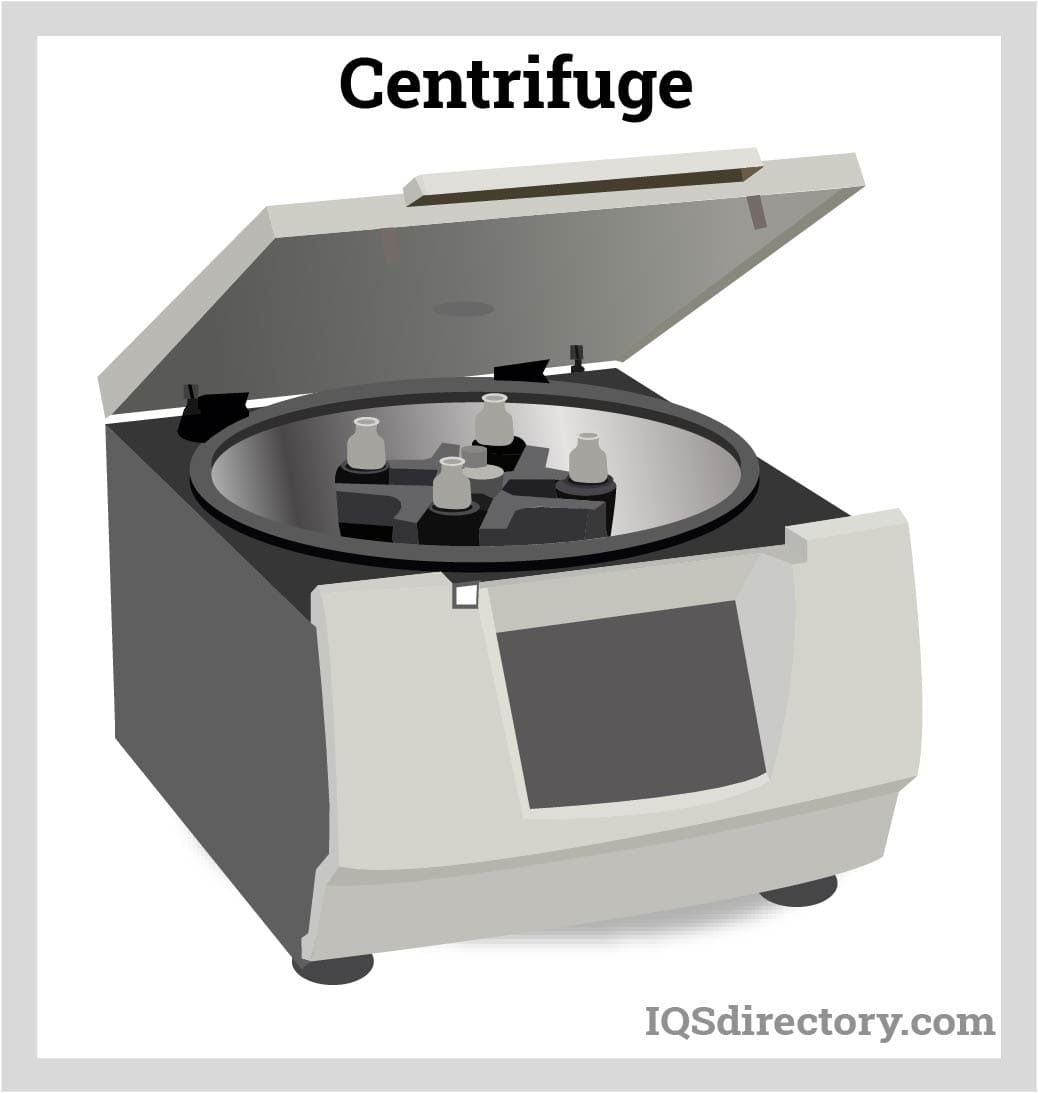 Centrifuge, a scientific device used to separate gases or liquids based on density differences, particle size, and process requirements in laboratory and industrial environments.
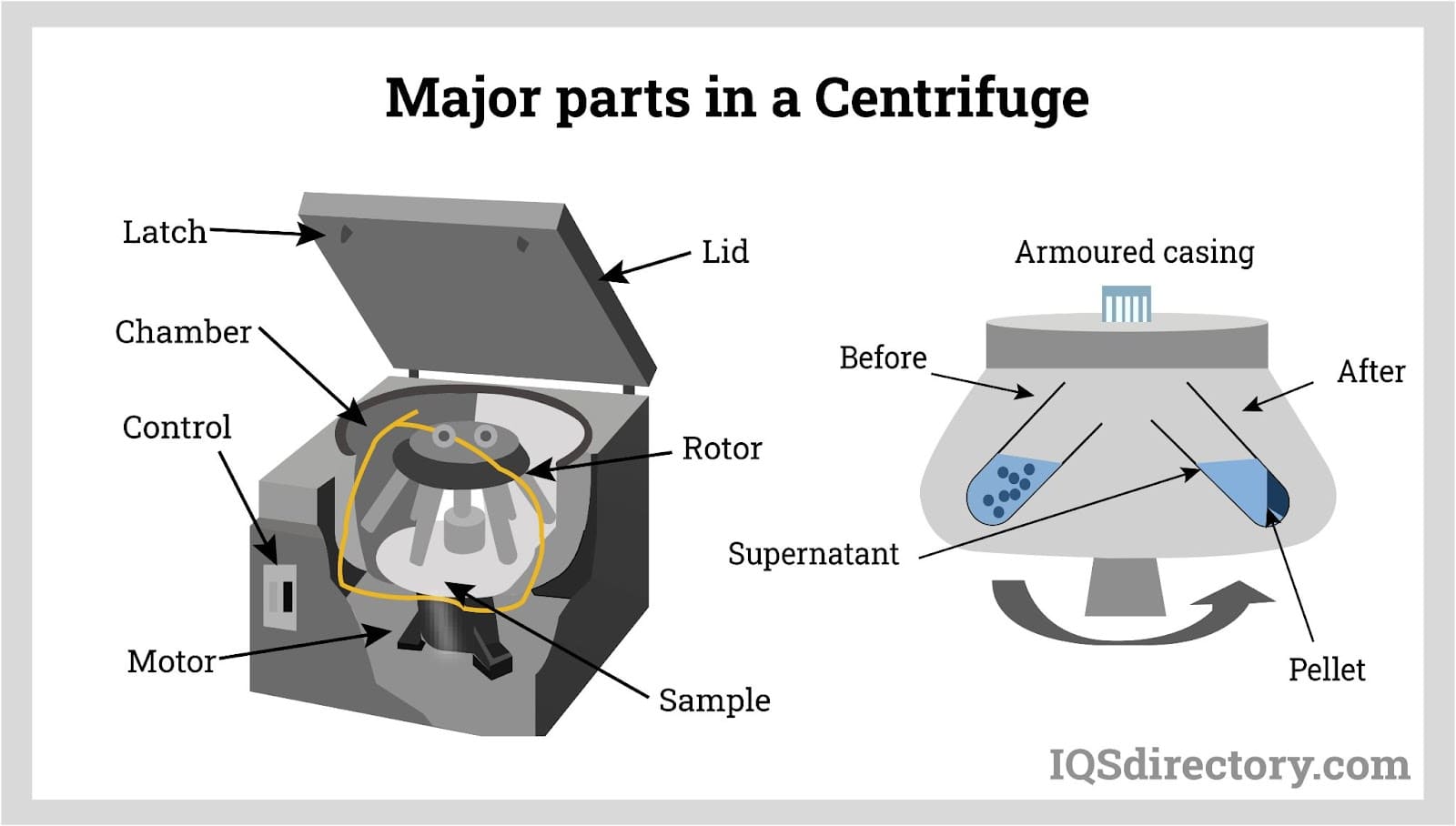 There are two basic components in all centrifuges: the rotor assembly, which generates and transfers rotational motion, and the electric motor, which converts electrical energy into mechanical energy and kinetic force.
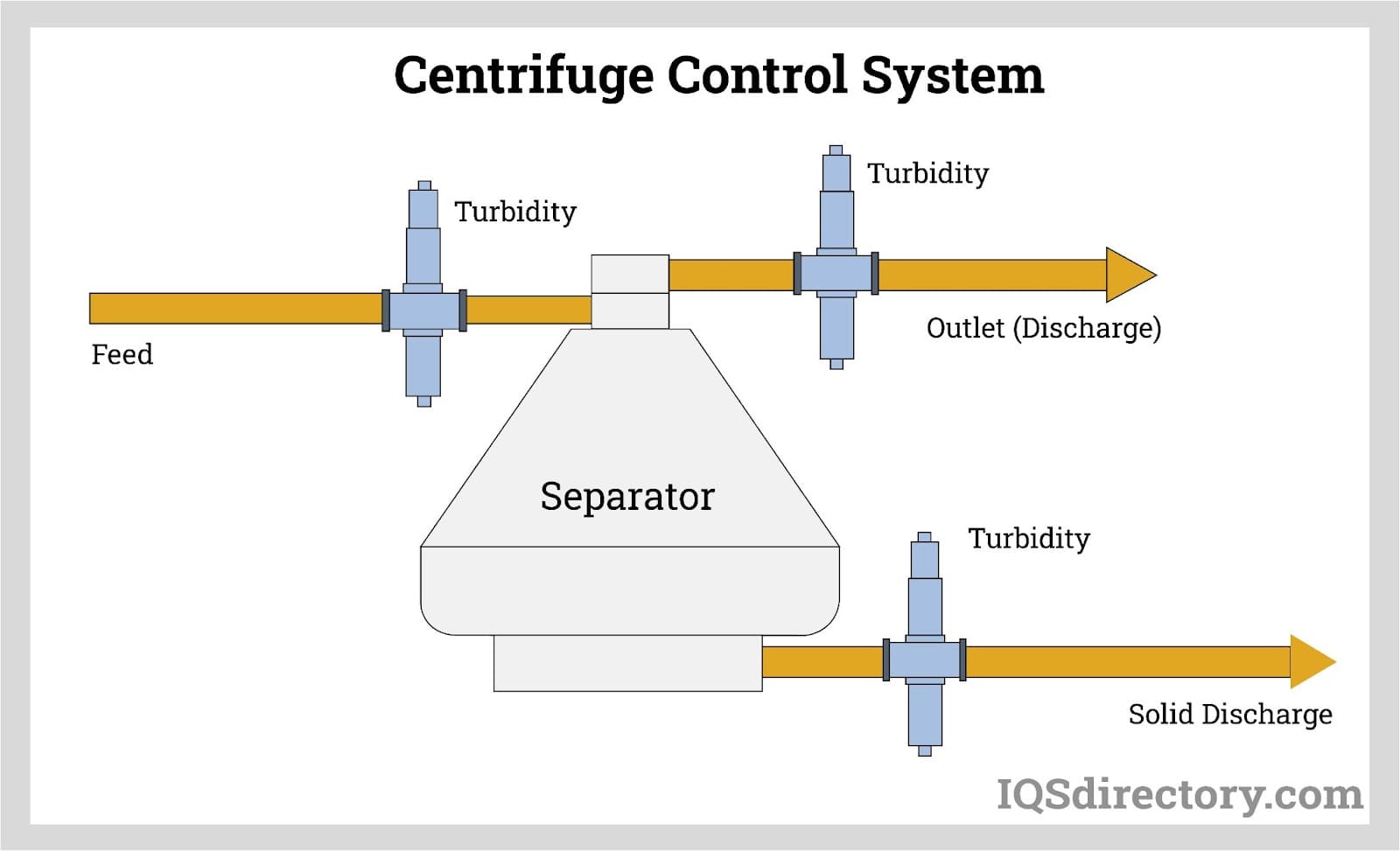 The control system uses a microcomputer with a touch panel and digital display to set rotation speed, cycle timing, and centrifugal force for more accurate process control.
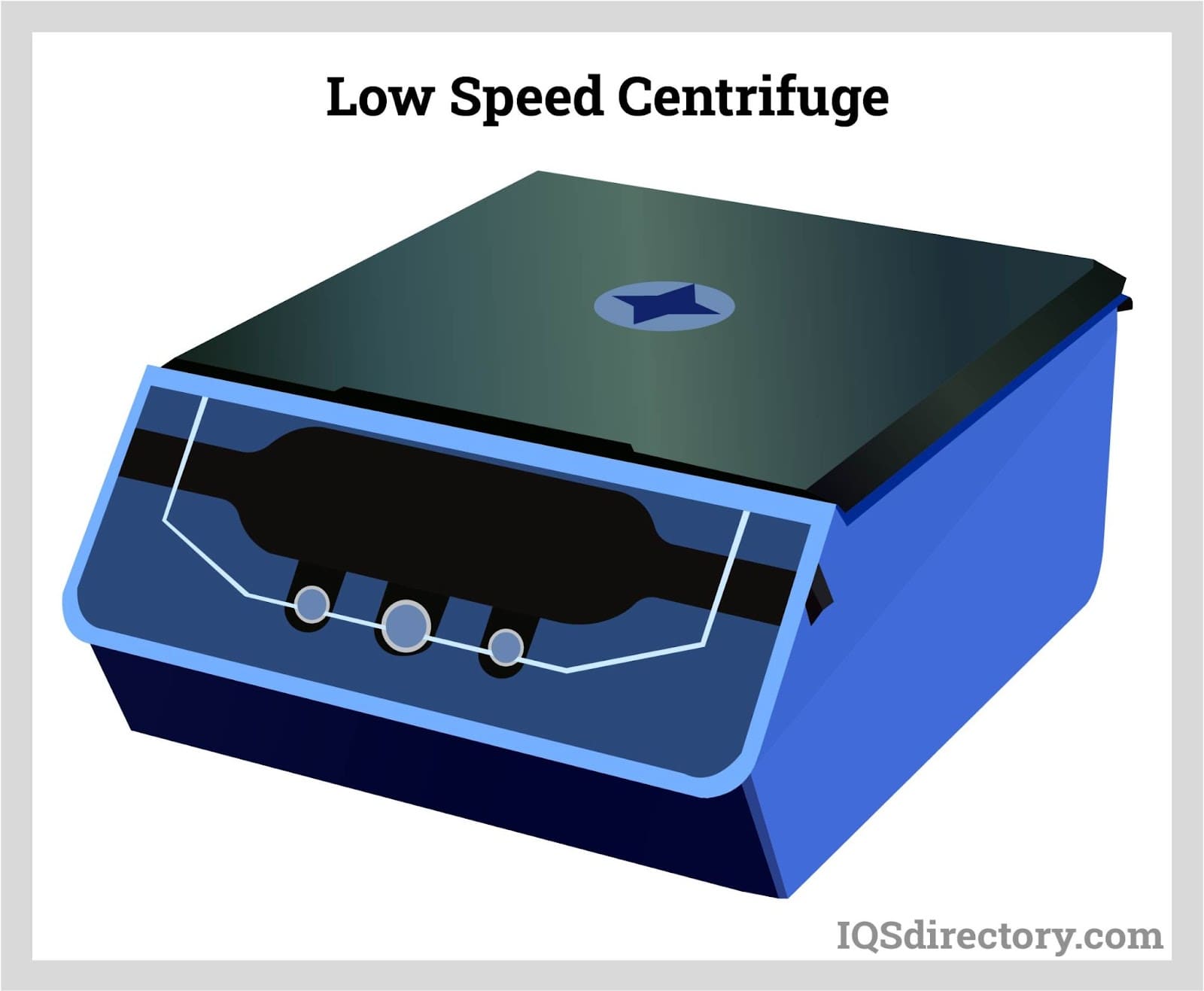 Low speed centrifuges support routine sedimentation of heavier particles and are commonly used for separation tasks in the range of roughly 4,000 RPM to 5,000 RPM.
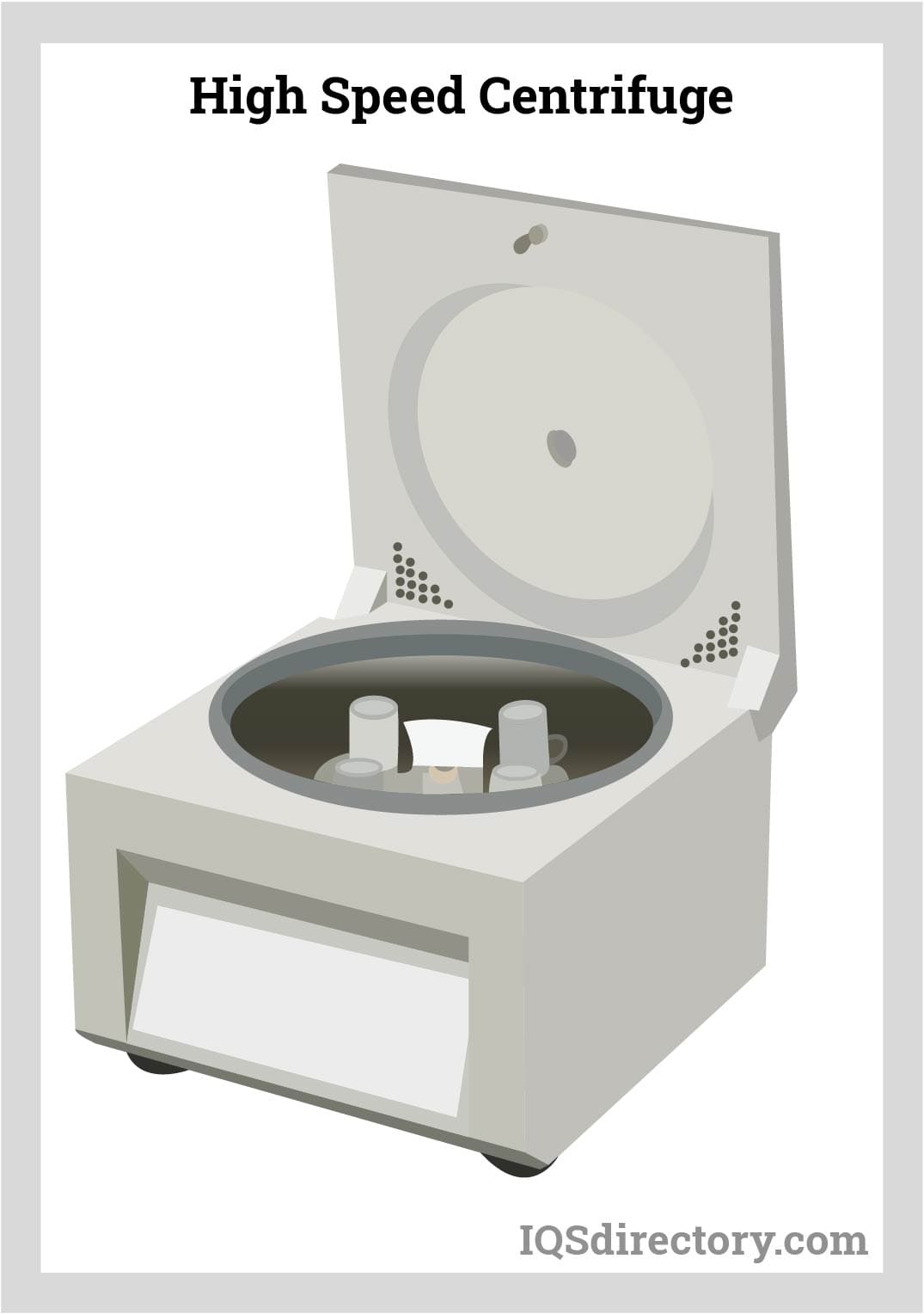 High speed centrifuges are used where faster sedimentation, higher processing intensity, and stronger separation force are needed, often operating at approximately 15,000 RPM to 20,000 RPM.
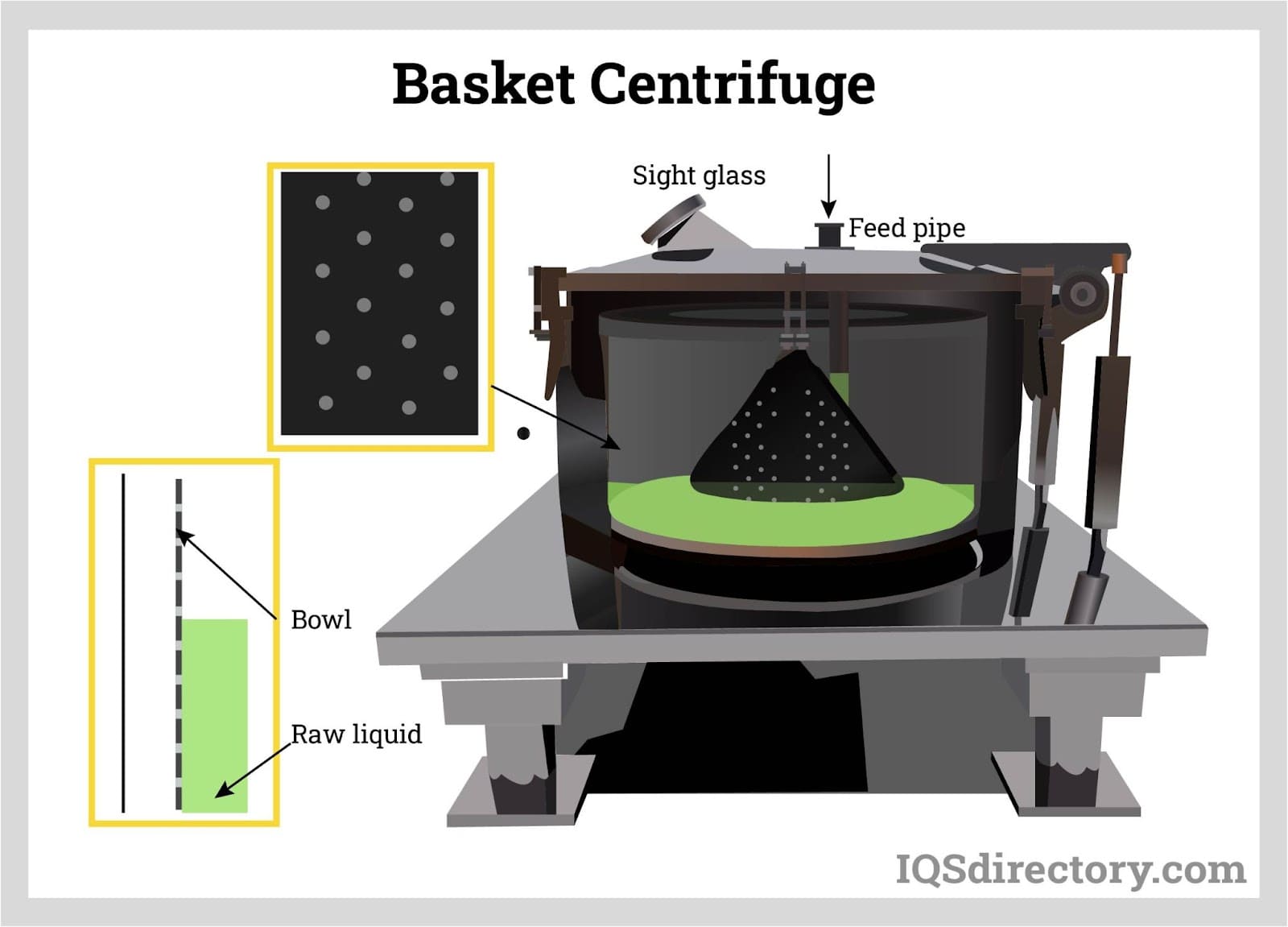 Basket centrifuge systems use centrifugal force to separate larger volumes of liquids or solids during filtration, washing, dewatering, and batch product recovery.
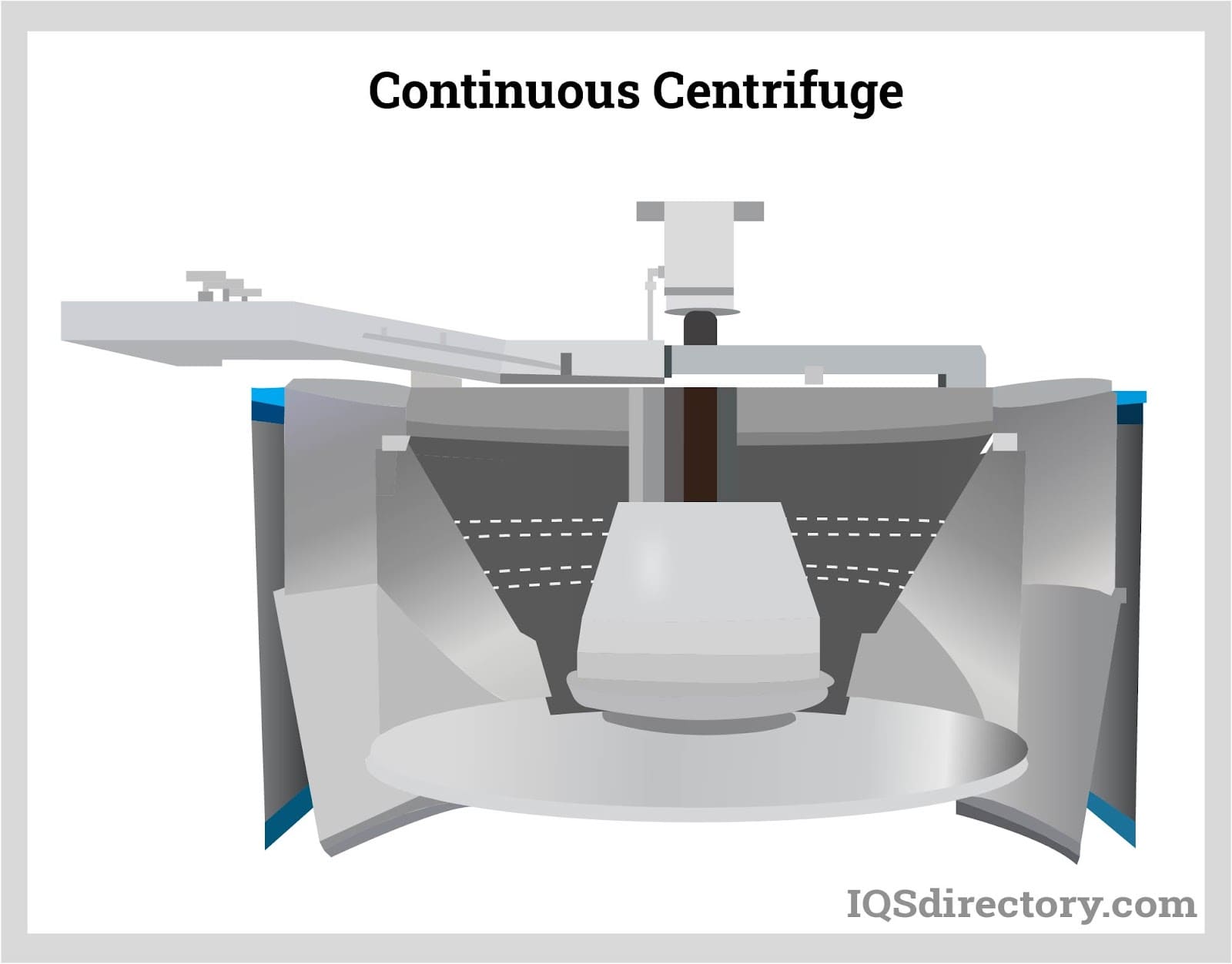 Continuous centrifuges process large volumes of material at high centrifugal force without repeatedly decanting tubes or stopping and restarting the rotor system.
Types of Centrifuges
-
Basket Centrifuges
These are basic types of filtering centrifuges that consist of a basket rotating around a vertical axis. They are often chosen for filtration, solids capture, crystal recovery, washing, and dewatering processes where batch operation and product discharge are part of the workflow.
Centrifugal Separators
These devices utilize centrifugal force to separate particles and materials in heterogeneous slurries, suspensions, and solutions. They can separate elements from liquid, solid, and gaseous mixtures and may also be used for washing, extracting, clarifying, and purifying materials in process industries that require consistent output quality.
Continuous Centrifuges
Designed to operate continuously during a separation process, continuous centrifuges typically include intake and output channels to prevent buildup and ensure proper separation. These are commonly used in water treatment plants and in other high-throughput applications where nonstop processing and reduced downtime improve plant efficiency.
Decanter Centrifuges
Decanter centrifuges utilize centrifugal force to accelerate the dewatering or thickening of slurries and suspensions in various industrial and commercial applications. They are frequently used when operators need continuous solids discharge, reliable sludge handling, and practical processing of wastewater, food byproducts, chemicals, or mineral slurries.
Disk Centrifuges
Primarily used to separate two liquid phases, disk centrifuges are also suitable for clarifying liquids with small amounts of solid material. They are often selected for fine separation jobs where compact design, rapid clarification, and smooth liquid handling are priorities.
Gas Centrifuges
Specialized centrifuges used to separate isotopes in gaseous materials and mixtures, with uranium enrichment being a notable and common application. These systems occupy a much narrower field than general industrial centrifuges and are associated with tightly controlled technical and regulatory environments.
High-Speed Centrifuge
These centrifuges offer fast acceleration and are used for rapid extraction, washing, and separation purposes. High-speed centrifuges often feature a basket enclosure and are frequently used in operations like wastewater treatment, liquid clarification, and product recovery where fast cycle times support plant productivity.
Industrial Centrifuge
Used in various forms, industrial centrifuges are designed for separating large volumes of liquid and solid materials. They are common in chemical processing, municipal treatment, manufacturing, mining, food production, and applications that demand durable construction and dependable throughput.
Laboratory Centrifuge
These centrifuges are employed in laboratory settings to separate substances of different densities or particle sizes by spinning them in a suitable container. Laboratory centrifuges handle small amounts of substances and are mainly used in biotechnology to separate fluid substances. They are often benchtop models, compact enough for small workspaces, and process between 0.2 to 2 milliliters of liquid. These centrifuges require a clean environment to function optimally and are common in sample preparation, diagnostics, and life science research.
Mini Centrifuges
Used for separating small samples in laboratory settings, mini centrifuges are often used to isolate DNA, RNA, and proteins. These are sometimes referred to as benchtop centrifuges and are valued for convenience, compact sizing, and routine sample handling.
Oil Centrifuge
Primarily designed to filter and separate contaminants suspended in oils, oil centrifuges purify hydraulic, industrial, and edible oils that carry solid, gaseous, or liquid contaminants from extraction or processing. These centrifuges operate at speeds of up to 50,000 revolutions per minute and vary in size from small models suitable for automotive engines to large-scale systems that can process thousands of gallons per hour.
Pharmaceutical Centrifuges
Used in the pharmaceutical industry for the sterile processing of drugs and separating fine chemicals, pharmaceutical centrifuges are specialized for drug processing applications where contamination control, repeatability, and smooth cleanout procedures are highly valued.
Ultracentrifuges
These high-speed centrifuges are used to determine the relative molecular masses of large molecules in high polymers and proteins. Ultracentrifuges are the fastest of the high-speed centrifuges and require regular cleaning and calibration to ensure safety. Operators should be trained in safety procedures, and a designated protected area is necessary for operation due to the high speeds involved.
Used Centrifuges
Refurbished centrifuges are designed for separating particles and isotopes, sedimentation, and suspension isolation based on mass, specific gravity, size, shape, or density. Buyers comparing used centrifuges often evaluate maintenance history, rotor condition, throughput, safety features, and compatibility with the intended process.
Uses for Centrifuges
Due to their precision, speed, and versatility, centrifuges are employed across a wide range of industries. In addition to applications already mentioned, sectors such as aerospace, seismology, and virology rely on centrifuges for groundbreaking research. One of the key benefits of centrifuges is their ability to purify substances based on density, which is important in producing certain foods, drugs, and industrial products that need specific components to meet certification standards. This capacity makes the industrial uses for centrifuges almost limitless. Chemical engineers, mixologists, and research scientists often use centrifuges for various processes. However, the power of these machines can make them difficult to acquire, especially for specialized uses. For instance, centrifuges used in isotopic research, like gas centrifuges, are often closely regulated by government agencies to prevent misuse. In day-to-day production, centrifuges may be selected to clarify liquids, remove abrasive fines, recover valuable solids, separate oils from contaminants, dewater sludge, or support product consistency in a repeatable process stream.
The main drawbacks of using centrifuges are the significant risks associated with improper maintenance and calibration. Even the slowest centrifuge operates at speeds much faster than human movement. The higher the revolutions per minute (RPM), the greater the potential for injury. Additionally, byproducts from the centrifuge process, such as industrial cakes of unwanted dense materials, must be handled and disposed of safely. In some cases, substances that have been separated can pose serious health risks due to their concentrated nature. Operators should always be aware of these hazards and have emergency plans in place to handle accidents that may arise from the operation of the equipment. Companies evaluating centrifuge systems should also consider training, service access, rotor inspection, balancing practices, sanitation needs, and the cost of maintaining reliable separation performance over time.
Things to Consider When Purchasing a Centrifuge
-
Understanding Centrifuge Components
Selecting the appropriate centrifuge for a specific task starts with understanding the materials or components that will be processed. For example, a centrifuge designed for medical applications will have very different specifications from one used to process scrap metal. The type of material will first determine the best enclosure for the centrifuge, with options such as baskets, tubes, decanters, or arm apparatuses used to hold the material during the centrifugation process. Next, the density and refinement of the substance will guide the speed at which the machine operates. For bulkier materials, a high-speed centrifuge might not be necessary. Manufacturers can provide estimated operating speeds, such as processing 5,000 pounds per hour, or specify the maximum amount of material that can be handled, such as 1 milliliter. These speeds are often measured in gravitational force (G) or revolutions per minute (RPM), along with specifications regarding the maximum viscosity and density of the substance to be processed. Buyers comparing centrifuge equipment often ask: what throughput is needed, what separation efficiency is expected, and how clean or dry does the final product need to be?
Centrifuge Specialization
Given the wide variety of centrifuges, manufacturers typically specialize in certain industries. A company focused on laboratory centrifuges will likely offer different capabilities than one that primarily creates decanter centrifuges. For industrial applications, centrifuges may need to have sludge dewatering and self-cleaning functions, or even manual cleaning options. The design and features of the centrifuge will heavily depend on the material it is intended to process. Those looking for a centrifuge manufacturer should first become familiar with the types of centrifuges most commonly used in their field and prepare specific questions for the manufacturer. This is often where process knowledge matters most, because the right machine is tied to separation goals, downtime tolerance, maintenance expectations, and the nature of the product stream.
Fortunately, centrifuge manufacturing is adaptable to custom needs and designs. From its beginnings as a tool for separating fat from milk, the centrifuge has evolved to meet a wide range of specialized applications. The ability of a company to customize their centrifuges is often a strong indicator of their success in the long term. Before reaching out to a producer, clients should have a clear understanding of the size and speed requirements of the equipment. For example, a construction contractor might need a centrifuge to separate different types of paint, which requires equipment of a different scale and sophistication than a biologist’s centrifuge for studying blood platelets. The best manufacturer will not only understand the client's industry but also know which equipment will provide the best solution. However, clients should remain open to collaboration, as the best centrifuge for their needs might require multiple iterations during the manufacturing process. In practical buying decisions, that means discussing feed characteristics, solids loading, cleaning procedures, footprint, control preferences, and the level of customization required to support long-term process efficiency.
Centrifuges Terms
-
Beach
In a bowl centrifuge, this is the part of the bowl responsible for dewatering. It has a conical shape and supports discharge of drier solids.
Bowl
The rotating area of a bowl centrifuge that separates solids for collection and helps establish the internal separation zone.
Bowl Strips
Thin strips of metal or other materials attached to the inside diameter of the bowl. They help convey settled solids out of the machine and protect the bowl's interior from wear by trapping a layer of settled solids.
Cake Slides
Refers to the dryness or wetness of the discharged solids (solids phase), typically measured as a percentage by weight.
Centrate
The liquid (light phase) separated from the heavy solids (heavy phase) during the classification or clarification process, which exits through the effluent head. Centrate is also known as "mother liquor," "effluent," or "overflow."
Centrifugal Force
The outward force on a body rotating about an axis, equal and opposite to the centripetal force. This is the force used to explain the separation effect observed in a rotating system.
Chatter Torque
The type of torque generated by settled solids that resist being conveyed.
Clarification
The process in wastewater treatment or liquid handling where solids settle out of the liquid. In centrifuge applications, this is accelerated by centrifugal action.
Conveyance Speed
The speed at which settled solids are moved along the bowl walls and removed from the bowl.
Density
A measure of mass per unit volume, typically expressed in grams per cubic centimeter or kilograms per liter. Density differences are one of the main drivers of centrifuge separation performance.
Dry Beach Area
This area of the bowl dewaters the solids and allows liquid to drain back into the pool, preventing it from being discharged with the cake solids.
Gradient Centrifugation
A method that separates particles based on their buoyant densities. A range of gradients is selected to encompass the densities of all particles to be separated.
Heel
A layer of compacted solids on the inside diameter of the bowl. This layer is not conveyed out, and the settled solids removed by the conveyor are conveyed over this heel.
Main Bearing
The central bearing on which the bowl is supported and rotates, operating frictionlessly.
Pillow Block
The central housing that holds the main bearing.
Sedimentation
The process where solids suspended in a liquid settle to the bottom of a basin or are driven outward in a centrifuge separation zone.
Separation
The process of dividing or separating a mixture of particles or liquids into individual components.
Slurry
A mixture of solid particles suspended in a liquid that is pourable and commonly processed in decanter and industrial centrifuges.
Supernatant
The liquid above the pellet or sediment in a centrifuge tube after centrifugation.
Tube Size
The length of a centrifuge tube, typically given in both inches and millimeters, and one of the practical dimensions used when matching lab equipment to sample volume.