Centrifugal Pumps
A centrifugal pump features a straightforward yet highly effective design built around a casing, suction path, discharge outlet, and an impeller mounted to a rotating shaft powered by a motor or mechanical drive. As the shaft turns, the impeller imparts velocity to the liquid, converting mechanical energy into hydraulic energy and raising pressure as the fluid moves through the casing. The liquid is then directed through the discharge valve and into the piping system. Because of this operating method, centrifugal pumps remain one of the most widely used pump types for water movement, fluid transfer, circulation, and industrial process applications.
This adaptable design allows centrifugal pumps to be installed in larger mechanical systems, production lines, municipal infrastructure, automotive cooling systems, HVAC loops, irrigation networks, and water treatment operations. Since centrifugal pumps can handle a wide variety of fluids, from clean water and light oils to chemicals and mildly corrosive liquids, their casings are commonly manufactured from durable materials such as stainless steel, cast iron, or aluminum. Many units also include a weep hole on the underside of the housing, which provides an early visual warning of mechanical seal wear. Because the seal separates the motor from the pumped media, any leakage at that point can signal the need for maintenance, seal replacement, or a full pump rebuild before larger performance issues develop.
Centrifugal pumps can experience operating interruptions when suction conditions are poor, system pressure is mismatched, or excess air enters the casing. When air pockets form inside an unprimed or partially empty pump, cavitation can occur, leading to noise, vibration, reduced flow, and surface pitting on internal components. For buyers comparing pump types, a common question is whether a centrifugal pump is the right choice for continuous-duty service, dirty water transfer, chemical processing, or high-volume circulation. The answer often depends on flow rate, head, fluid viscosity, solids content, temperature, seal material, and whether the application demands efficiency, easy maintenance, or corrosion resistance.
Frequently Asked Questions About Centrifugal Pumps
What is the basic working principle of a centrifugal pump?
A centrifugal pump uses an impeller attached to a rotating shaft to create centrifugal force. This force increases liquid pressure as it moves through the casing and out the discharge valve, converting mechanical energy into hydraulic energy for continuous fluid flow. In many fluid handling systems, this simple operating principle makes centrifugal pumps a preferred option for circulation, transfer, boosting, and general process pumping.
What causes cavitation in centrifugal pumps?
Cavitation occurs when air pockets or vapor bubbles form inside the pump casing because of poor suction conditions, excessive lift, high pressure changes, or insufficient priming. These bubbles collapse under pressure, creating pitting on the impeller and volute surfaces, reducing efficiency and shortening service life if left uncorrected.
How does an impeller affect a centrifugal pump’s performance?
The impeller’s design has a direct effect on flow rate, pressure, solids handling, and overall efficiency. Closed impellers often perform well with clean fluids, while open or semi-open impellers are frequently selected when the pumped liquid contains suspended particles, fibrous material, or higher viscosity.
What is the difference between centrifugal and positive displacement pumps?
Centrifugal pumps generate pressure by increasing fluid velocity and converting that velocity into discharge pressure, while positive displacement pumps move fluid in fixed volumes at a more constant rate. Gear, lobe, screw, and peristaltic pumps are common positive displacement designs used when accurate metering or higher viscosity handling is needed.
Why is regular priming important for centrifugal pumps?
Priming removes trapped air from the casing and suction line, allowing the pump to build suction and operate smoothly. Without proper priming, the pump can lose suction, overheat, vibrate, or suffer mechanical damage from air-bound operation and repeated cavitation.
What materials are commonly used for centrifugal pump construction?
Centrifugal pumps are commonly manufactured from stainless steel, cast iron, and aluminum because these materials offer strength, durability, and broad application flexibility. Depending on the fluid, manufacturers may also use thermoplastics, elastomers, and fluorocarbon-based seal materials to improve chemical compatibility and corrosion resistance.
Where are centrifugal pumps commonly used?
Centrifugal pumps are used in automotive systems, wastewater treatment, chemical processing, irrigation, construction dewatering, industrial manufacturing, municipal water systems, and many other applications that require dependable fluid transfer. Their versatility makes them a common solution for both light-duty and heavy-duty pumping environments.
The History of Centrifugal Pumps
The earliest conceptual version of the centrifugal pump can be traced to the Italian Renaissance, when engineer Francesco di Giorgio Martini described a mud lifting device in a treatise published in 1475. A more recognizable design with straight vanes appeared later in the 17th century through the work of Denis Papin. The technology advanced again in 1851, when John Appold introduced a curved-vane centrifugal pump that dramatically improved efficiency and earned recognition at the Great Exhibition at the Crystal Palace. That development helped move centrifugal pumping from an interesting mechanical concept into a more practical industrial solution, laying the groundwork for modern pump engineering, fluid system design, and process equipment manufacturing.
A Note on Positive Displacement Pumps
Centrifugal pumps differ from traditional positive displacement pumps because they build pressure by increasing fluid velocity as the liquid passes through the impeller and casing. Positive displacement pumps, by comparison, move a set volume of fluid through the pump during each cycle. This makes centrifugal pump selection especially attractive for higher flow applications, recirculation duties, and services where continuous, smooth movement of lower-viscosity liquids is desired. Buyers often compare these designs when evaluating pumping efficiency, suction performance, consistency of flow, and maintenance requirements.
A gear pump achieves positive displacement through meshing gears that capture and move liquid at a consistent rate. There are two primary types: internal gear pumps and external gear pumps. Internal gear pumps combine an internal gear with an external spur gear, while external gear pumps use two external gear spurs. Because gear pumps handle viscous media and controlled flow well, they are often selected for hydraulic fluid power, lubrication, and metering tasks where a centrifugal pump may not be the better fit. Understanding that distinction helps purchasers choose the right pump technology for the fluid, pressure, and process conditions they expect to face.
Design of Centrifugal Pumps
Most vehicles produced in the United States during the 20th century relied on centrifugal water pumps to circulate coolant through the engine, and that same basic concept remains relevant in many circulation systems today. In automotive, industrial, and commercial environments, pump performance can sometimes be improved by altering the impeller geometry to increase flow rate, refine hydraulic balance, or better match the pump curve to the system demands. When engineers ask how to improve centrifugal pump performance, they often focus on impeller design, motor speed, casing configuration, and how the pump interacts with the discharge piping and total dynamic head.
Centrifugal pumps commonly distinguish themselves through differences in impeller design or discharge arrangement. The curvature, depth, angle, and enclosure of the impeller vanes have a major effect on pressure generation, capacity, solids handling, and efficiency. Impellers may be open, semi-open, or closed. In a closed impeller, an attached plate or enclosure can improve performance in some clean-liquid applications, while open designs may be more forgiving when handling fluids with light debris or suspended material. Matching impeller style to the liquid being pumped is one of the most practical steps in pump specification.
The size of the discharge apparatus and the speed of the shaft also influence flow rate and pressure development. However, any design change must be evaluated carefully so it does not produce excessive head within the system. Head, often discussed alongside PSI, represents the energy required to move fluid through a piping network. If head requirements and pump selection are poorly matched, the result can be vibration, seal wear, bearing stress, heat buildup, or shortened service life. For that reason, centrifugal pump design is not only about moving liquid quickly, but about balancing pressure, efficiency, reliability, and application-specific performance.
Centrifugal Pumps Images, Diagrams and Visual Concepts
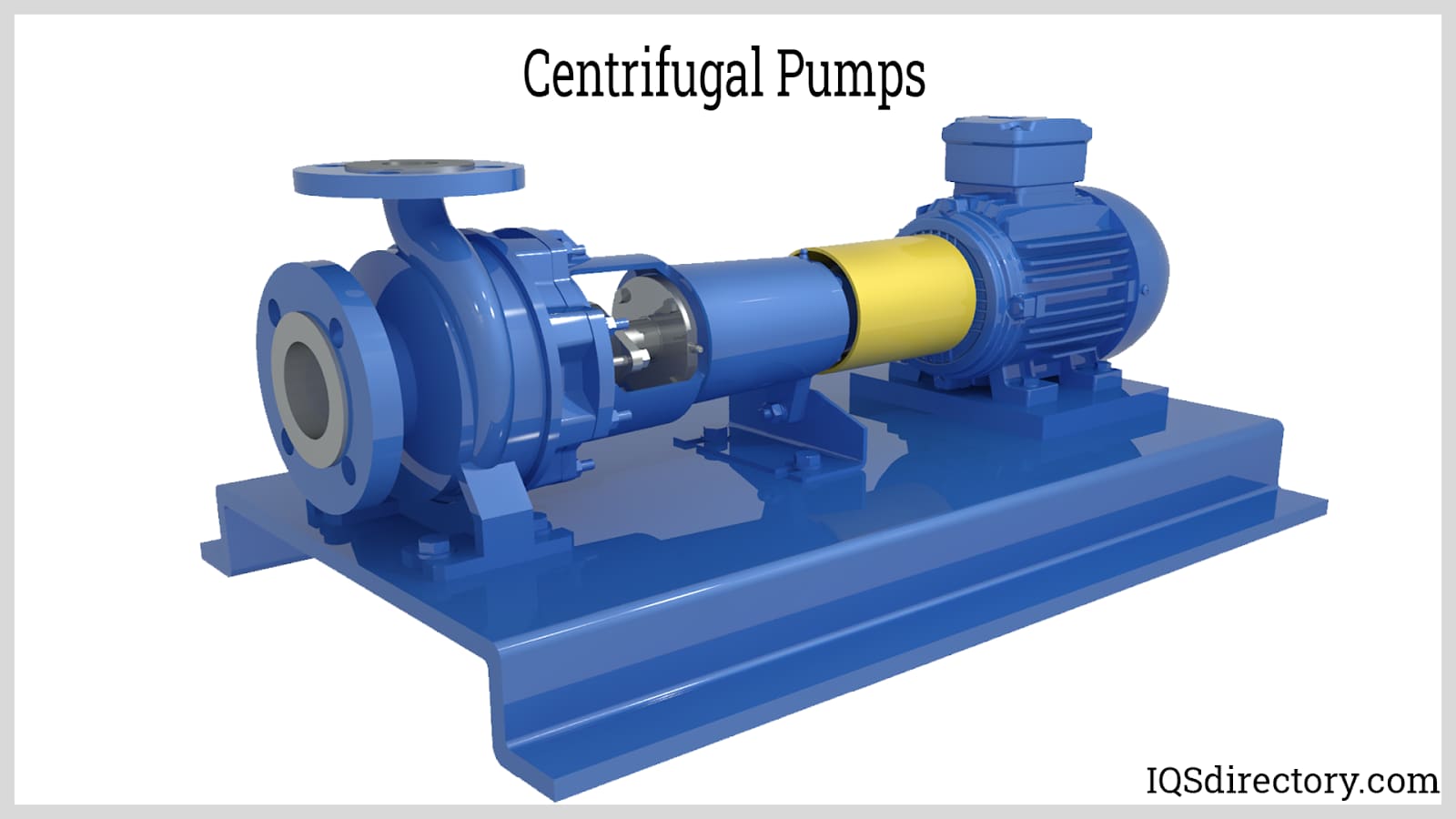 Centrifugal pump, a hydraulic machine that converts mechanical energy into hydraulic energy by applying centrifugal force to fluid for circulation, transfer, and pressure-building duties.
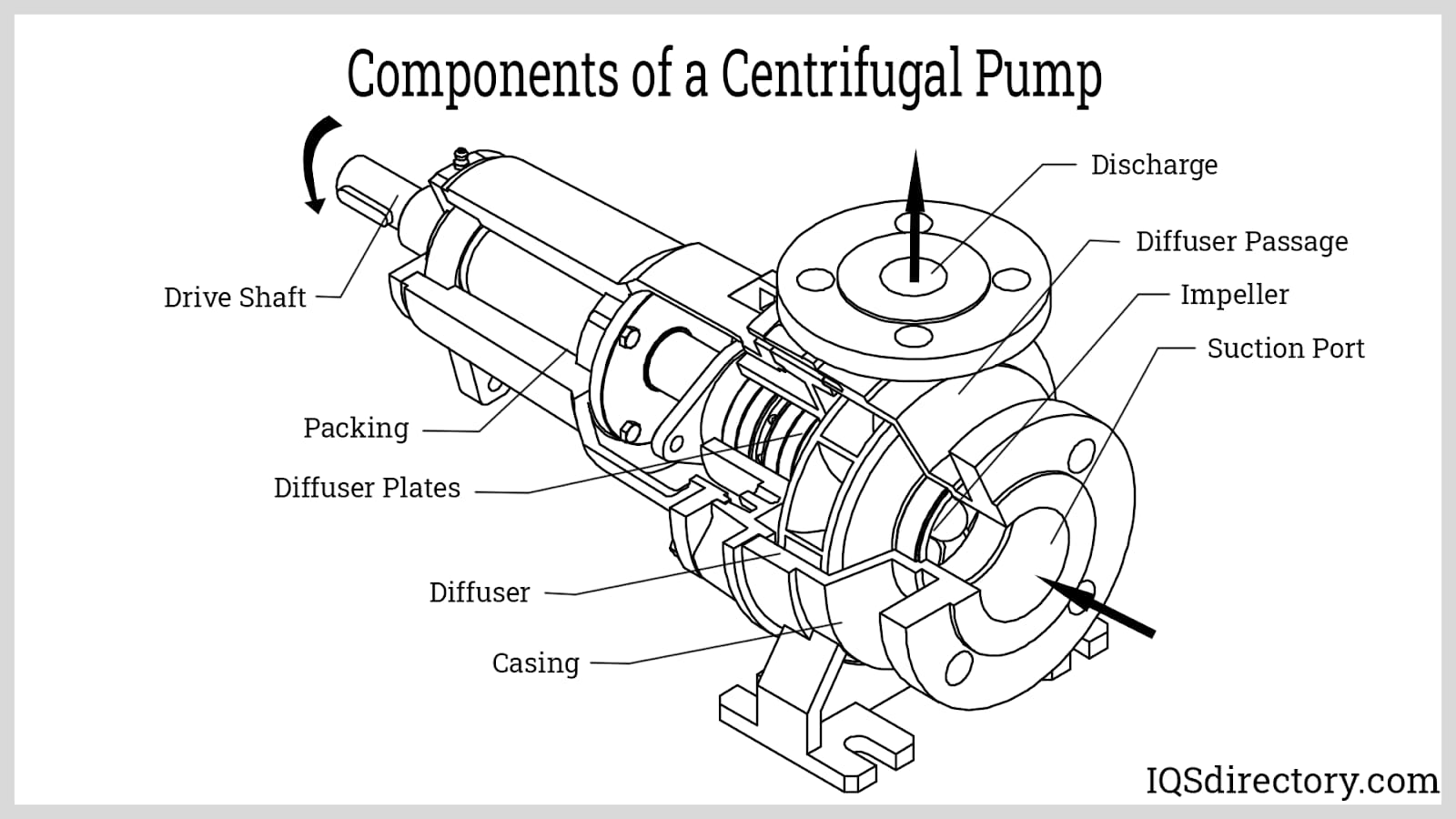 The main components of a centrifugal pump include a shaft, impeller, casing, suction pipe, and delivery pipe, all working together to support consistent fluid handling performance.
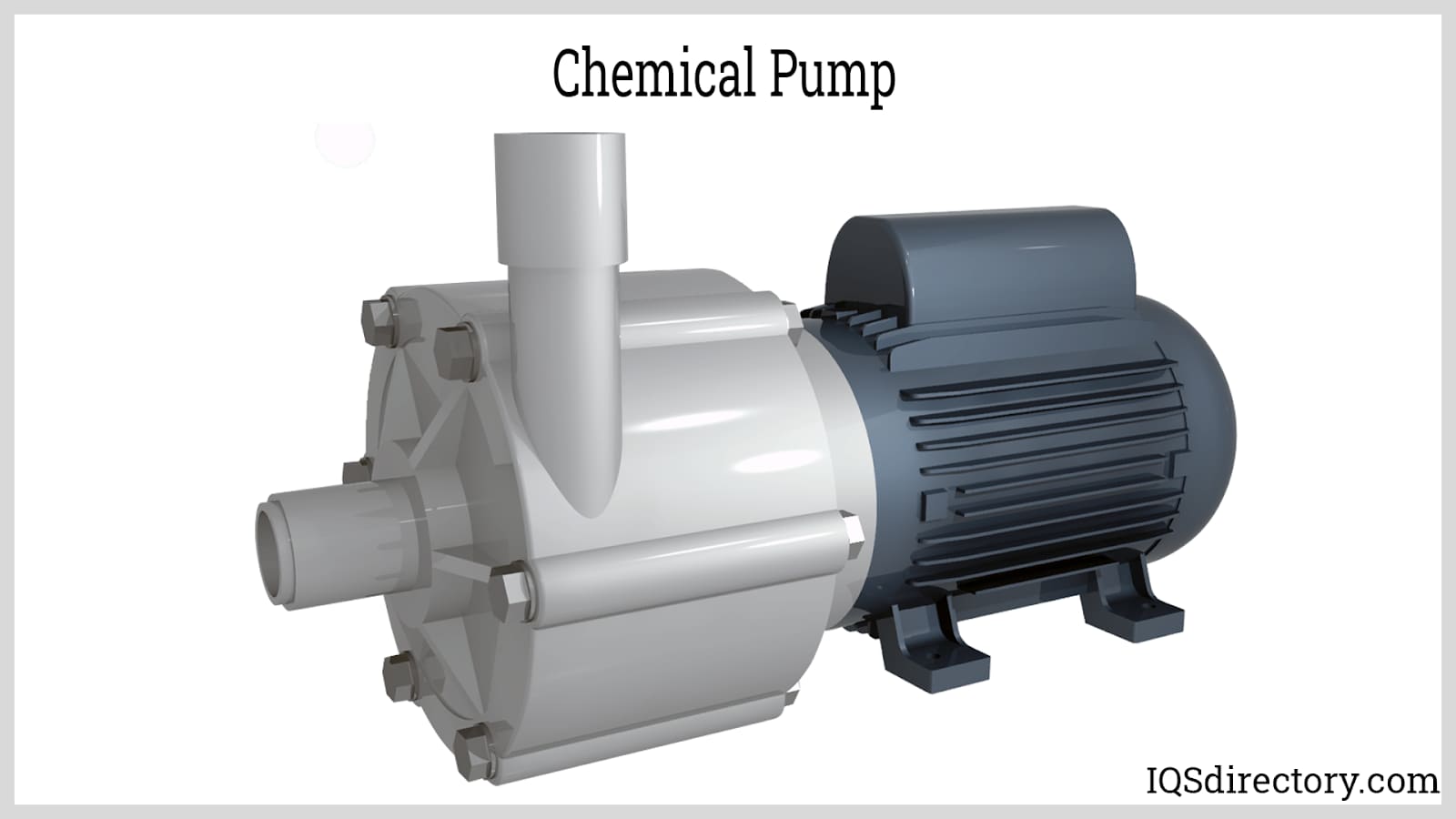 Chemical pumps are used to move chemicals and process fluids that may be corrosive, abrasive, or aggressive, making material compatibility and seal design especially important.
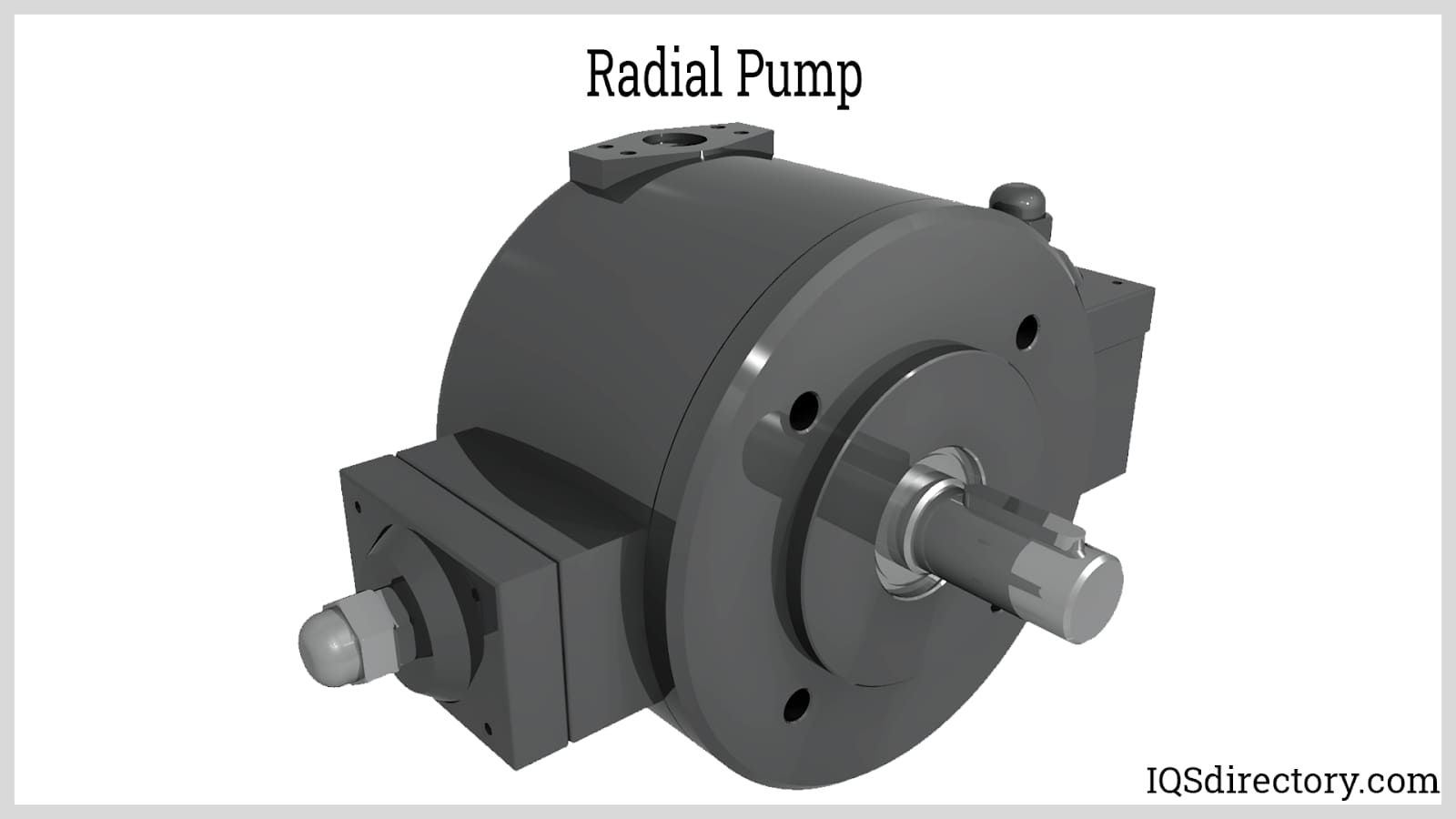 In radial centrifugal pumps, fluid exits the impeller at roughly 90 degrees to the suction direction, making them suitable for pressure-producing applications.
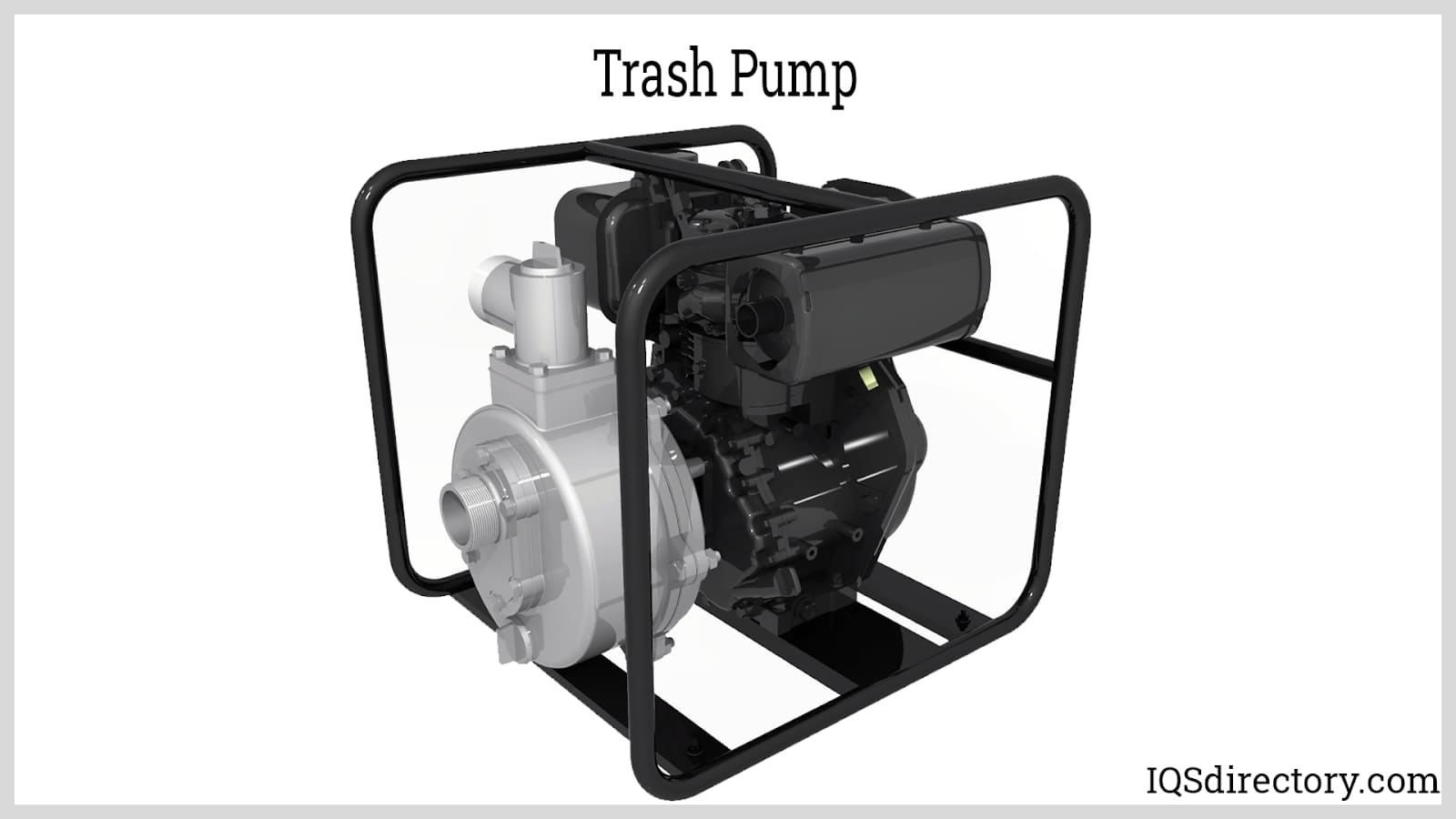 Trash pumps move large volumes of water containing soft solids and harder debris, making them popular in dewatering, wastewater, and jobsite cleanup applications.
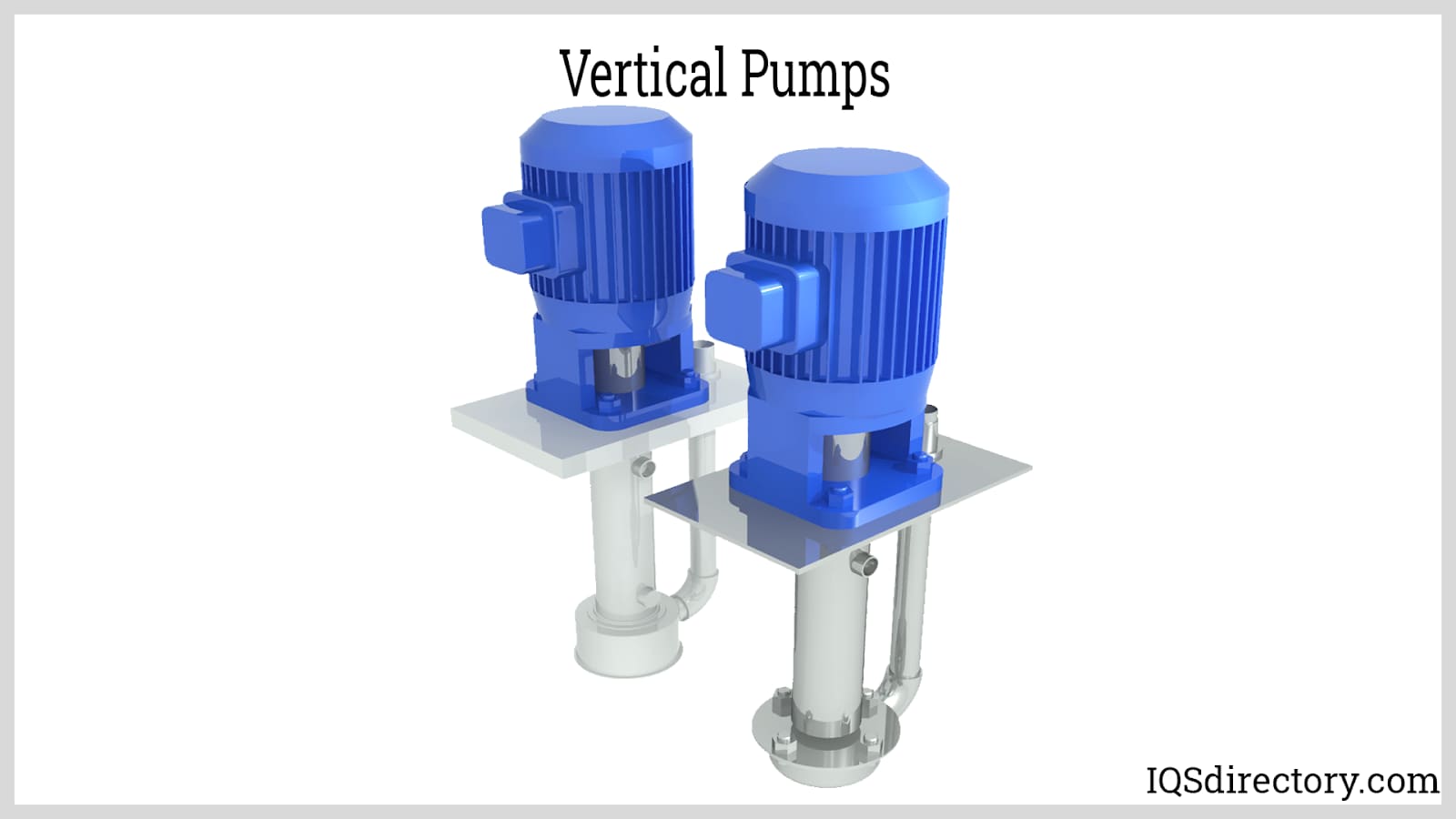 Vertical pumps are often selected when the pumping level is below the operating range of a standard volute centrifugal pump or when installation space favors a vertical layout.
Types of Centrifugal Pumps and Applications
-
Axial Flow Pumps
These pumps feature a vertical shaft connected to a perpendicular impeller, and the vanes lift liquid upward in an axial direction. A jet pump may be used to improve suction in some systems, while a submersible version operates below grade or underwater. Because axial flow designs are associated with high flow and lower head service, they are often reviewed for flood control, circulation, irrigation, and water movement applications where volume matters more than pressure.
Submersible Pumps
While most pumps operate mechanically, submersible pumps can also be driven by hydraulic motors or electricity. Their power cords are protected with waterproof coverings so they can work while fully immersed. Due to maintenance and access limitations, electric submersible pumps are often smaller and selected for sump service, flooded spaces, pits, and light dewatering. Since the pump is already surrounded by liquid, submersible centrifugal pumps are generally self-priming in practice and are less likely to trap air in the suction line.
Chemical Pumps
These pumps are designed to handle abrasive or aggressive fluids such as bleach, resin, acid, and other corrosive or hazardous liquids. They are frequently used in industrial processing, chemical handling, and plant utility systems where casing material, elastomer compatibility, and seal selection matter. Well pumps serve a different role by lifting groundwater to a higher point in a structure, often alongside pressure tanks in residential or commercial water supply systems.
Trash Pumps
Centrifugal trash pumps are intended for liquids contaminated with debris such as twigs, sand, stones, sludge, and other solids. They are widely used in wastewater treatment, sewage handling, construction dewatering, and emergency bypass operations. Large discharge openings and deep impeller vanes help these pumps pass suspended materials while maintaining strong throughput. Variants include semi-trash pumps and dewatering pumps that handle water with modest particle loads. For contractors and facilities teams asking which centrifugal pump is best for dirty water, trash pump designs are often the starting point.
Close-Coupled Pumps
These pumps are directly connected to the motor or power unit, eliminating extra gearing or shafting. That compact arrangement can simplify installation, reduce footprint, and make close-coupled centrifugal pumps attractive for skid systems, light industrial service, and packaged equipment.
Double Suction Pumps
A double suction pump is a radial flow design in which fluid enters the impeller from both sides. Because the hydraulic load is more balanced, these pumps are often chosen for high-capacity clear-liquid service in water plants, circulation systems, and large-volume transfer applications.
Mixed Flow Pumps
Featuring wide, less-restricted passageways, mixed flow pumps combine characteristics of radial and axial flow pumps. They generate pressure through both centrifugal action and vane lift, making them useful when applications require a balance between head and flow.
Multistage Pumps
These pumps consist of two or more impeller stages arranged in series so that each stage adds head to the next. Multistage centrifugal pumps are often selected for boiler feed, pressure boosting, tall-building water service, and applications where higher discharge pressure is required without sacrificing steady flow.
Radial Flow Pumps
In radial flow pumps, liquid enters the impeller eye and is forced outward along the blades at roughly a right angle to the shaft. These pumps are often favored when the system needs higher pressure development compared with purely axial designs.
Single-End Suction Pumps
A single-end suction pump introduces fluid from one side of the impeller, and the shaft does not extend into the suction passage. These pumps are commonly specified for general service and can also be selected for applications with larger solids that might challenge more restricted pump designs.
Two-Speed Centrifugal Pumps
These pumps use a two-speed motor so the shaft and impeller can operate at different RPM levels, giving the system variable capacity. They can be helpful in installations where flow demand changes during the day or between operating cycles.
Vertical Cantilever Pumps
Designed so the casing and impeller remain submerged for easier priming, these pumps keep support bearings in a dry environment. Vertical cantilever pumps are often used for sumps, pits, and chemical process areas where leakage control and access above the liquid line are helpful.
Vertical Pumps
Vertical centrifugal pumps use mechanical energy to create kinetic energy and raise pressure as liquid moves upward through a pipe. They are commonly chosen where floor space is limited, suction lift is a factor, or the application benefits from a vertical installation profile.
Vortex Pumps
These pumps use a recessed impeller inside the volute. Although less efficient than some other designs, vortex pumps are valuable for handling stringy solids, slurry-like mixtures, and difficult fluids that would clog a more conventional impeller passage.
Maintenance of a Centrifugal Pump
While a certain amount of pressure is needed for a pump to operate efficiently, excessive head pressure can upset the pump’s balance and damage internal components. In more severe situations, too much pressure may stress mounts, seals, couplings, or nearby engine parts. To reduce those risks, operators should regularly prime the pump, monitor suction conditions, and avoid trying to force too much liquid through the system too quickly. Running the pump with an overly fast motor or outside its performance curve can also lead to higher internal loads, heat generation, and accelerated wear.
Frequent cavitation can also leave lasting damage inside the pump. When trapped air or vapor bubbles collapse, the impeller blades and volute may become pitted, roughened, and less efficient. Good maintenance practices include checking for seal leakage, inspecting vibration and noise, verifying alignment, monitoring bearings, confirming adequate priming, and reviewing whether the selected centrifugal pump still matches the fluid and duty conditions. For facilities trying to reduce downtime, maintenance is often the difference between long service life and repeated repair costs.
Things to Consider Regarding Manufacturers
-
Purpose and Size of Pumps
Centrifugal pumps are manufactured in many sizes for a broad range of applications, and pump size, horsepower, and hydraulic capacity generally increase with the scale of the job. Large industrial centrifugal pumps can deliver extremely high flow rates for plant service, municipal water movement, or heavy-duty process operations, while smaller units are intended for vehicle systems, residential use, compact machinery, or light commercial transfer. A buyer comparing pump manufacturers should consider not just maximum output, but whether the performance range is properly matched to the intended duty.
Manufacturers continue exploring alternatives to traditional metal components for seals and wetted parts, including thermoplastics and fluorocarbons that can improve corrosion resistance and extend service life in aggressive environments. Stainless steel, cast iron, and aluminum remain common casing materials, but material selection should always reflect the fluid chemistry, temperature, solids content, and operating cycle.
The use of jet pumps has declined in some installations as newer pump designs provide stronger suction performance without added support equipment. Even so, depending on viscosity, suction lift, or debris load, a jet-assisted arrangement may still be useful. This is one reason pump buyers often ask manufacturers for application guidance, performance curves, and recommendations based on real operating conditions rather than catalog descriptions alone.
Pump Application
When choosing the right manufacturer, clients should clearly define the intended application. A drainage pump for a low-lying property, for example, calls for a different configuration than a water pump intended to improve automotive engine cooling or a process pump designed for chemicals. It is also important to understand the condition of the fluid, including purity, abrasiveness, temperature, and presence of suspended solids. Drainage pumps often deal with dirty water and particulate matter, while automotive and process applications may involve cleaner fluids, tighter tolerances, or more demanding seal requirements.
Batch Size of Pumps
Many manufacturers favor larger production runs because they help control overhead and keep output consistent. However, clients developing a new or modified centrifugal pump should usually begin with prototypes. Prototyping makes it easier to test performance, identify hydraulic issues, review material compatibility, and catch design problems before committing to full production. If a manufacturer does not maintain an internal prototype department, they may work with machinists, fabricators, or engineering partners to support the development stage.
Centrifugal Pumps Terms
-
Air Bound
A condition in which a centrifugal pump contains so much air that it can no longer create the vacuum or suction needed for water or process fluid to enter the pump effectively.
Atmospheric Pressure
The force exerted by the atmosphere on the Earth’s surface. Standard atmospheric pressure is 14.7 pounds per square inch, and it influences suction lift and pump operating behavior.
Capacity
The amount of liquid a pump can move, often expressed in gallons per minute (GPM) or gallons per hour (GPH), and one of the main specifications buyers review during pump selection.
Cavitation
An undesirable condition in which vapor pockets or air bubbles form and then collapse within the pump, causing pitting on the impeller and volute and often reducing efficiency and service life.
Centrifugal Force
The force that drives a substance away from the center of rotation, forming the basis of how centrifugal pumps transfer energy to fluid.
Check Valve
A valve installed in the discharge or suction line that permits flow in one direction only, helping prevent reverse flow and protecting the pumping system.
Dewatering
The removal of unwanted water from a site, pit, trench, structure, or process area, typically involving clear or dirty water that is not hazardous.
Diffuser
A stationary component, similar in function to a volute, that surrounds the impeller and helps convert velocity into pressure for improved pump performance.
Discharge Hose
The hose or piping connected to the outlet side of the pump that carries the pumped liquid away from the unit and into the next part of the system.