Ball Valves
Ball valves are quarter-turn shutoff valves used to start, stop, and isolate the flow of liquids or gases in piping systems. Their fast 90-degree handle movement delivers dependable flow control for water, oil, natural gas, chemicals, compressed air, and many other process media.
Inside the valve body, a drilled ball rotates to line up with the pipe or turn perpendicular to it. The stem connects that ball to the external handle, giving operators a simple, durable way to open, close, and visually confirm valve position.
Ball valves and ball check valves are not the same product. A standard ball valve is used for manual or automated on-off flow control, while a ball check valve is designed to stop reverse flow automatically in one-direction piping systems.
Ball Valves – Frequently Asked Questions
What is a ball valve and how does it control flow?
A ball valve uses a bored metal or plastic ball to open or block flow. Turn the handle a quarter turn and the bore aligns with the line for open flow or rotates away for rapid shutoff.
How is a ball valve different from a ball check valve?
A ball valve controls on-off flow with a drilled ball, while a ball check valve uses pressure and a solid ball to stop backflow. One is for control, the other is for one-way protection.
What industries commonly use ball valves?
Ball valves are common in plumbing, oil and gas, chemical processing, manufacturing, HVAC, water treatment, food processing, and general industrial piping because they offer compact, dependable shutoff.
What are the main advantages of using a ball valve?
Main advantages include bubble-tight sealing, low pressure drop, quarter-turn speed, long service life, easy automation, and straightforward maintenance in both utility and process lines.
What materials are ball valves made from?
Common ball valve materials include stainless steel, brass, bronze, carbon steel, cast iron, PVC, and other engineered plastics. Material choice depends on pressure, temperature, corrosion exposure, and media compatibility.
What is the difference between floating and trunnion-mounted ball valves?
A floating ball valve seals by pressing the ball against the seat, while a trunnion-mounted ball valve supports the ball from above and below for larger sizes, higher pressures, and lower operating torque.
How should ball valves be maintained?
Inspect the ball, stem, seats, seals, and packing for wear, buildup, or corrosion. Routine cycling and timely replacement of damaged components help maintain shutoff performance and reduce leakage.
What standards govern ball valve manufacturing?
Ball valves are commonly built to meet piping, pressure, testing, and safety standards such as ASME codes and federal pipeline requirements, depending on the service and industry.
Ball Valve History
The modern ball valve grew from earlier plug-style concepts and gained momentum during World War II, when aerospace engineers needed compact, reliable valves for aircraft fuel, hydraulic, and fluid systems. That wartime refinement helped shape the quarter-turn valve used across industry today.
After the war, improvements in machining, seats, seals, and metallurgy helped ball valves move into commercial plumbing, chemical plants, refineries, utilities, and factory systems. Today they are valued for dependable shutoff, easy automation, and broad compatibility with demanding process conditions.
The Benefits of Using a Ball Valve
- Reliable Tight Seal
- Ball valves are valued for tight shutoff, low leakage, and low pressure drop. They work well where operators need quick isolation, dependable sealing, and straightforward quarter-turn control.
- Cost Effectiveness
- Their compact design and broad material range keep purchase and maintenance costs manageable. Many users also value the ease of repair, automation, and long service life.
- Attractive Design
- In residential and architectural settings, brass, stainless steel, and plated finishes offer a clean appearance along with dependable function. That makes ball valves a frequent choice in visible plumbing and fixture assemblies.
Common Ball Valve Applications
Ball valves are widely used in machinery, skid systems, and industrial process lines where quick isolation and reliable cycling are required. Many automated systems pair them with actuators to deliver repeatable quarter-turn actuation, remote control, and dependable open-close performance.
In some assemblies, ball valves work with actuators, limit switches, and controls to support repeatable cycling. Engineers may choose other valve styles, such as globe valves, when throttling accuracy matters more than simple shutoff.
Ball valves are also common in commercial buildings and homes, where they control water, heating oil, fuel gas, and utility lines. They provide easy shutoff and are often evaluated alongside solenoid valves. In automated controls, ball valves remain a popular choice for simple manual isolation in plumbing, HVAC, and gas distribution systems.
Engineers can choose from many quarter-turn valve designs to match flow path, port count, media, and pressure demands. Ball valve manufacturers listed in the Industrial Quick Search Directory offer standard and specialized products for sourcing, specification review, and supplier comparison.
Ball valves serve mining, agriculture, oil and gas, construction, transportation, food processing, consumer products, pulp and paper, and chemical manufacturing. Floating, trunnion, multiport, and high-pressure designs let engineers match valve performance to the process.
The Design and Engineering of Ball Valves
Ball valves are widely specified because they provide dependable shutoff, compact installation, and fast operation in liquid and gas distribution systems. Buyers can choose from many body styles, end connections, seat materials, and alloys to fit plant, utility, OEM, and commercial requirements.
Most ball valves are designed for on-off isolation rather than fine throttling. That makes them a strong fit for service where operators need fast shutoff, repeatable cycling, and a rugged valve body without the complexity of precision control valves.
When the bore in the ball aligns with the pipeline, media flows with minimal restriction. When rotated 90 degrees, the solid side of the ball blocks the path and forms a tight seal, which is why ball valves are widely used for water, oil, gas, steam, and chemical service.
The two main internal support styles are floating and trunnion-mounted. Floating designs are common for general service, while trunnion ball valves are often selected for high-pressure, large-diameter, or higher-torque applications where added stability matters.
Ball valves may be manual, gear-operated, motorized, pneumatic, or hydraulic. Because the handle position mirrors the bore direction, operators can quickly see whether the valve is open or closed, which helps during troubleshooting and routine maintenance.
Manufacturers offer ball valves in stainless steel, brass, cast iron, and plastics such as PVC for corrosion-resistant service. Material, size, and body style should match the application. Buyers may compare compact valves for tight spaces, flanged valves for secure piping connections, and 3-way ball valves for diverting or mixing flow, along with ball check valves for backflow protection in one-direction systems. Supplier directories also highlight high-pressure models, specialty designs, and related suppliers for ball valves, including companies that also produce check valves and other flow control products.
Features of Ball Valves
Ball, seat, and body materials directly affect pressure rating, temperature range, wear resistance, and cycle life. Depending on the service, buyers may choose metal-seated, soft-seated, lined, or corrosion-resistant ball valves for abrasive, sanitary, or aggressive media.
Some specifications call for stainless steel ball valves or hard-surface finishes to improve corrosion resistance, wear performance, and service life. Manufacturers may coat internal components with nickel or chrome plating.
These coatings help reduce wear, improve corrosion resistance, and extend valve life in demanding services where repeated cycling or harsh media can damage standard surfaces.
Ball valves are available with threaded, socket weld, butt weld, compression, sanitary, and flanged end connections for use in tubing and piping systems. Buyers comparing options often review pressure class, seat material, leakage standards, testing, and traceability before purchase.
When selecting a ball valve, compare media compatibility, pressure rating, temperature range, end connection, port size, actuation method, seal material, maintenance access, and expected service life. Matching those factors to the application usually leads to better uptime and safer operation.
Ball Valves Images, Diagrams and Visual Concepts
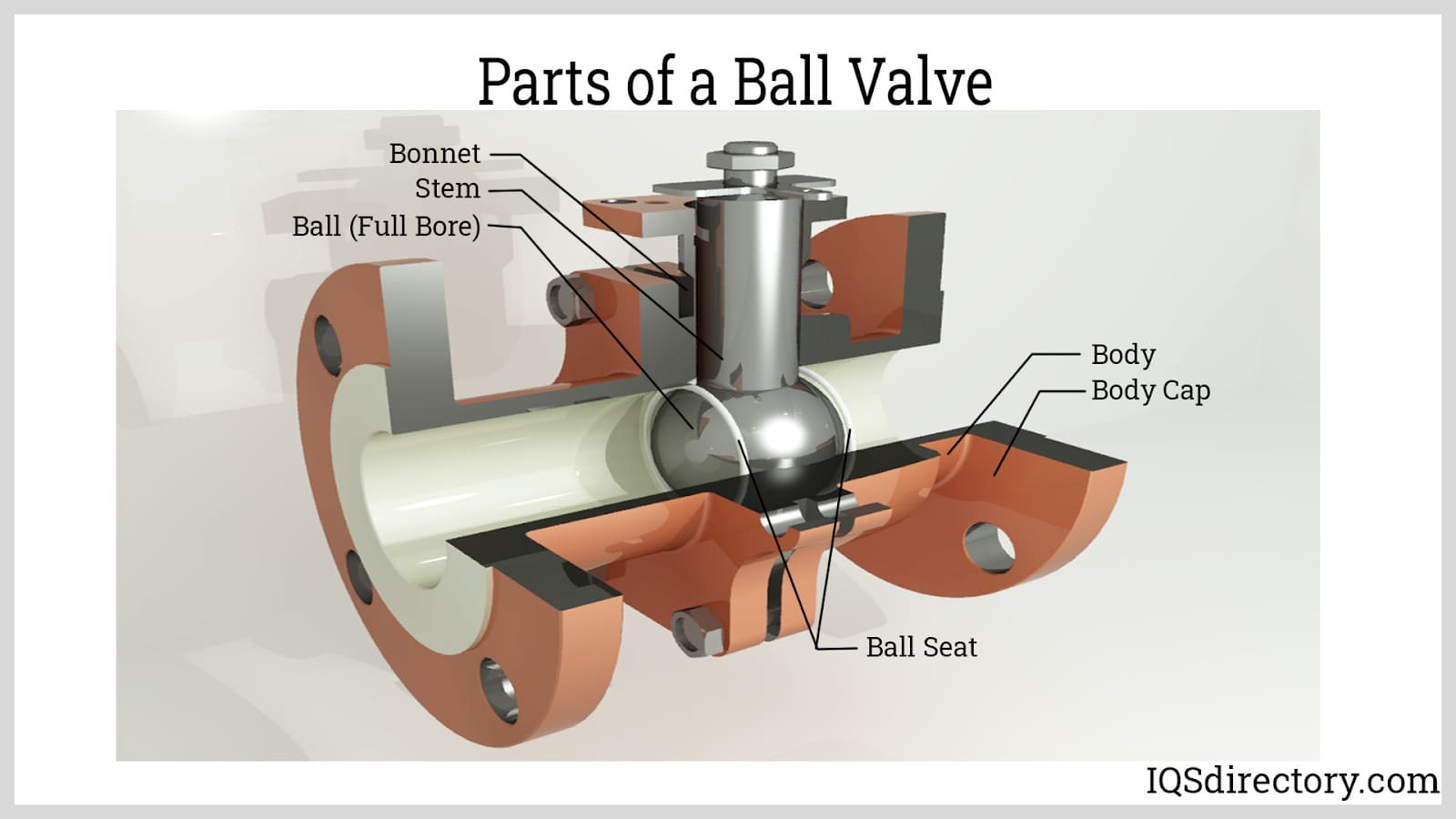 Internal ball valve components within the valve body.
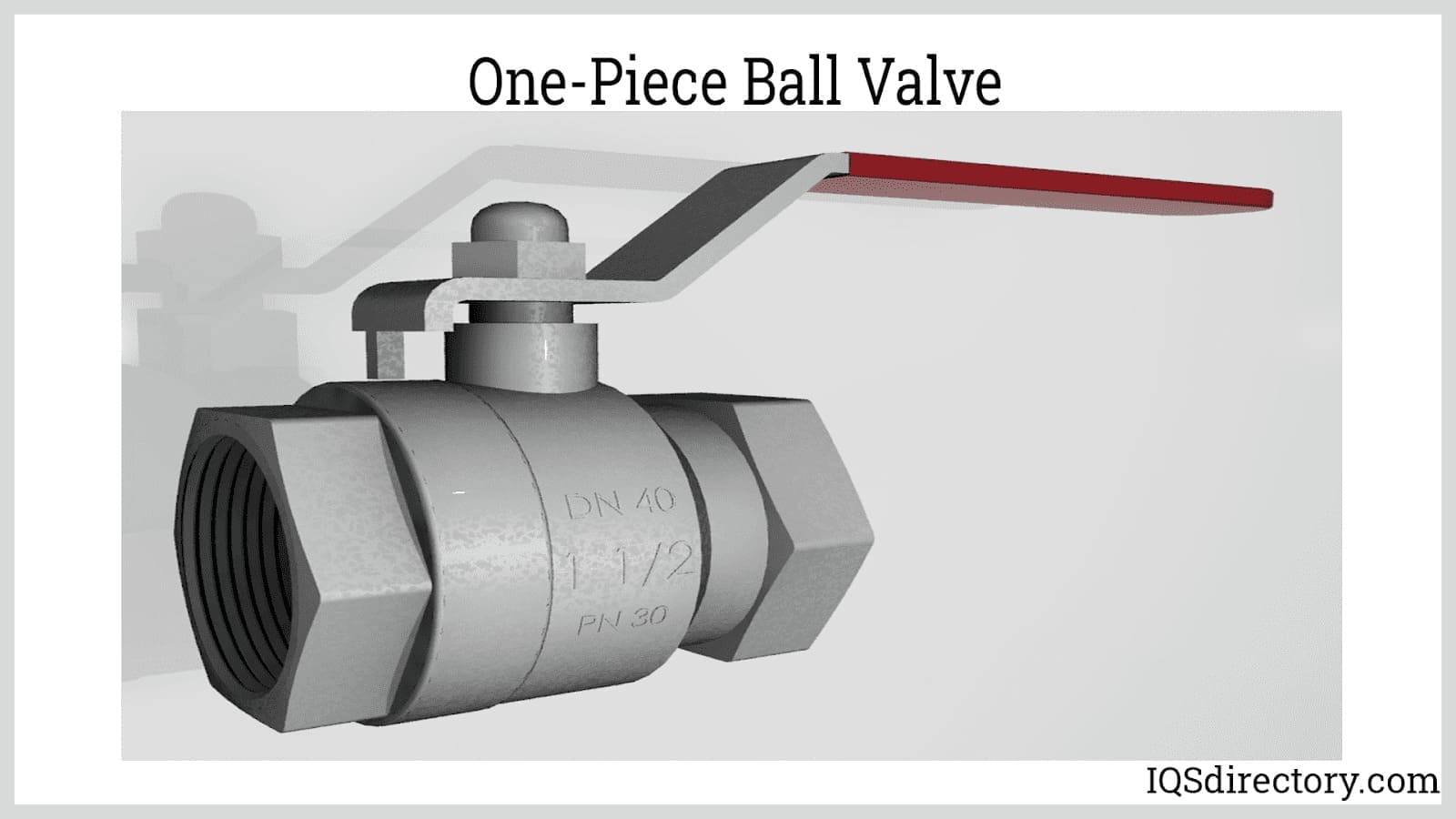 A one-piece ball valve with a compact cast body design.
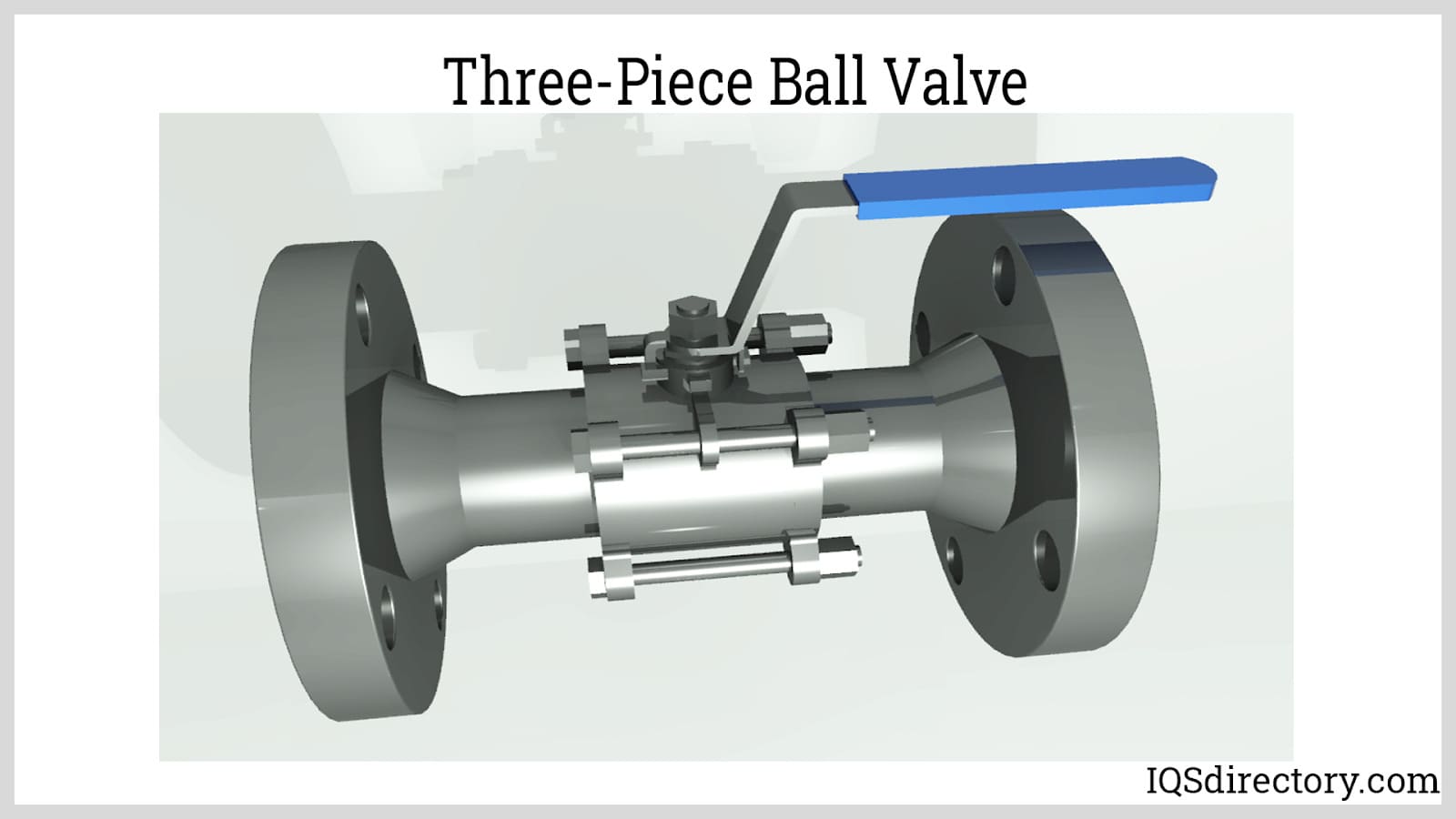 A three-piece ball valve assembled with bolted end connections.
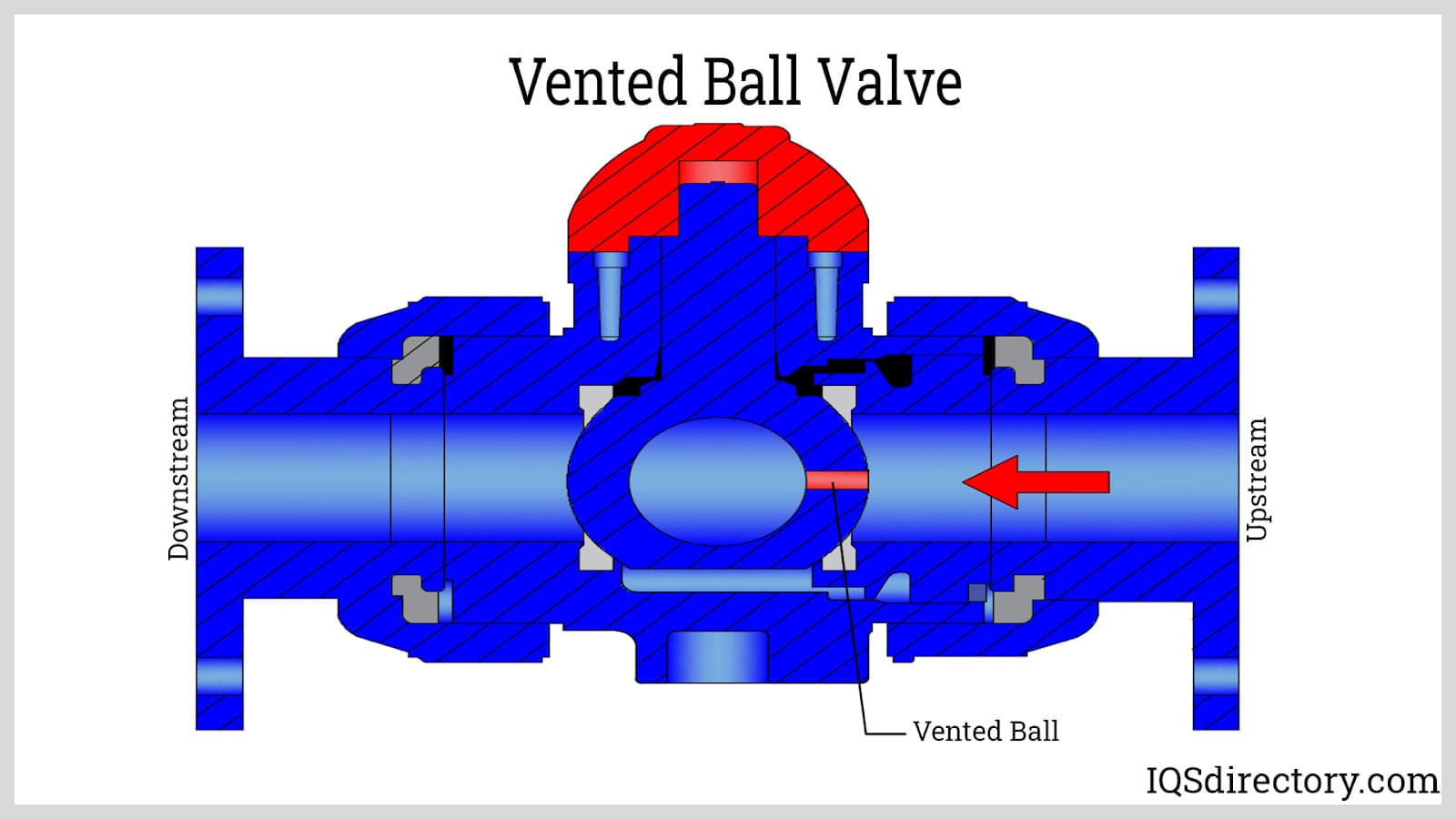 A vented ball valve with pressure-relief holes in the ball.
Types of Ball Valves
Ball valves are often classified by port size, body style, and how the ball is supported. Full port, reduced port, floating, trunnion, two-way, three-way, and V-port designs all change how the valve handles pressure drop, flow path, automation, and shutoff performance.
- 3-Way Ball Valves
- Three-way ball valves use three ports to divert, mix, or isolate flow paths. L-port and T-port configurations support different routing needs.
- Actuated Ball Valves
- Actuated ball valves use electric, pneumatic, or hydraulic power for automated open-close control in process systems, remote installations, and OEM equipment.
- Ball Check Valves
- Ball check valves allow flow in one direction and close when pressure reverses, helping protect pumps, lines, and downstream equipment from backflow.
- Brass Ball Valves
- Brass ball valves are widely used because they combine good corrosion resistance, strength, machinability, and value for utility and plumbing service.
- Flanged Ball Valve
- Flanged ball valves bolt into piping systems for secure installation, easier removal, and service access in larger process lines.
- Floating Ball Valve
- Floating ball valves let the ball move slightly against the seat to create sealing force, making them common in general industrial shutoff service.
- Full Port Ball Valve
- Full port ball valves match the pipe bore closely, reducing turbulence and pressure drop where higher flow efficiency is preferred.
- High Pressure Ball Valves
- High-pressure ball valves are built with stronger bodies, seats, and stems for demanding pressure and temperature conditions.
- Mini Ball Valves
- Mini ball valves provide quarter-turn shutoff in compact piping, instrumentation, and hard-to-reach installations.
- Motorized Ball Valves
- Motorized ball valves use an electric drive to automate cycling in HVAC, water control, industrial automation, and remote systems.
- Multiport Ball Valves
- Multiport ball valves connect several lines to one valve body for mixing, diverting, sampling, or distribution duties.
- Plug Valves
- Plug valves are quarter-turn valves that use a tapered or cylindrical plug instead of a ball to control flow.
- PVC Ball Valves
- PVC ball valves resist corrosion and many chemicals, making them a common choice in water treatment, irrigation, and light chemical service.
- Stainless Steel Ball Valves
- Stainless steel ball valves offer strong corrosion resistance, higher strength, and broad compatibility with washdown, chemical, and higher-temperature applications.
- Swing Check Valves
- Swing check valves use a hinged closure to slow reverse flow and reduce shock in some piping systems.
- Trunnion Ball Valve
- Trunnion ball valves support the ball at both ends, lowering torque and improving stability in large or high-pressure valves.
- Two Way Valves
- Two-way ball valves have one inlet and one outlet, making them the standard format for direct on-off flow control.
- V-Port Ball Valve
- V-port ball valves use a shaped opening for better control when partial opening and more measured flow adjustment are needed.
Installing a Ball Valve
Install ball valves according to manufacturer instructions, piping codes, and plant safety procedures. Proper orientation, torque, line cleaning, pressure testing, and confirmation of media compatibility help prevent leaks, seat damage, and startup issues.
Ball valves are popular because they are easy to operate, fast to cycle, and dependable after long idle periods. Their compact design and straightforward maintenance make them a practical choice for industrial, commercial, utility, and residential systems.
Ball Valve Standards and Specifications
Ball valve production and use are shaped by piping, testing, and safety requirements for the industries they serve. For example, hazardous-liquid pipeline service may call for compliance with federal rules such as 49 CFR 195.116 alongside project-specific specifications.
Standards groups and code bodies help manufacturers, engineers, and buyers verify design, testing, and material requirements. Documents such as ASME B31.3 support consistent expectations for piping systems, valve selection, inspection, and safe operation.
Ball Valve Care and Maintenance
Routine maintenance includes checking for buildup, corrosion, seat wear, stem wear, and leakage around the packing or body seals. If the stem or ball is damaged, repair kits or valve replacement may be needed to restore dependable shutoff.
How to Select a Ball Valve Manufacturer
Choosing a ball valve supplier starts with application fit, product quality, lead times, and documentation. Above, we highlight manufacturers that can support pressure ratings, materials, end connections, customization, and ongoing supply needs. The best source is usually one that matches your technical requirements and provides dependable service after the sale.
Ball Valve Accessories
Ball valve accessories may include stem extensions, locking devices, mounting hardware, position indicators, repair kits, and actuator brackets. Buyers should confirm accessory compatibility, code requirements, and OEM guidance before installing replacement or add-on components.
Ball Valve Terms
- Actuator
- An actuator operates the valve automatically or remotely using manual, electric, pneumatic, or hydraulic power.
- Ball
- The ball is the rotating closure element that opens or blocks the flow path inside the valve body.
- Butterfly Valve
-
A butterfly valve uses a rotating disc to control flow inside the pipe.
- Flange
- A flange is a projecting rim used to connect valves, pipes, and fittings securely.
- Full Bore Value
- A full bore valve has an internal opening close to the pipe inside diameter for higher flow capacity.
- Globe Valve
- A globe valve uses a stem and seat arrangement suited to throttling and finer flow regulation.
- Poppet Valve
- A poppet valve moves toward and away from its seat to open or close flow.
- Port
- A port is the passage opening through which media enters, exits, or changes direction in a valve.
- Pressure Control Valve
- A pressure control valve helps maintain a target pressure within the system.
- Pressure Relief Valve
- A pressure relief valve opens automatically when pressure rises above a set limit.
- PSI (Pounds Per Square Inch)
- PSI is a common unit used to measure pressure in liquid and gas systems.
- Reduced Bore Value
- A reduced bore valve has a smaller internal opening than the pipe, which increases pressure drop compared with full port designs.
- Relief Valve
- A relief valve vents excess pressure or temperature to protect equipment and piping.
- Slurry
- Slurry is a liquid mixed with suspended solids, often requiring abrasion-resistant valve materials.
- Trunnion
- A trunnion is the support that stabilizes the ball in a trunnion-mounted valve.
- Valve Seat
- The valve seat is the sealing surface that contacts the closure element to stop flow.