Ball Bearings
Ball bearings are a foundational component in machinery, serving an important role in an enormous range of industrial, commercial, and consumer applications. Their primary purpose is to reduce friction between two moving parts and support smooth, controlled rotation, which makes them highly valuable in modern mechanical systems. The story of ball bearings reaches back to ancient Egypt, where wooden roller bearings were used to move heavy loads. The first modern ball bearing was invented by Philip Vaughan in 1794, marking an important step in mechanical design. By the 19th century, ball bearings had become a standard part of industrial machinery and contributed to the growth of manufacturing during the industrial revolution. Today, buyers researching ball bearings often compare bearing types, bearing materials, precision classes, load ratings, and operating environments before selecting the right solution.
These components have shaped the efficiency, performance, and service life of machinery across many industries. By lowering friction, they improve operating efficiency, support smooth motion, and help extend equipment life in demanding applications. This capability has supported progress in sectors ranging from automotive and aerospace to medical technology, industrial automation, agriculture, and household appliances. Ball bearings help reduce wear on moving parts, improve energy efficiency, and maintain dependable performance where shafts, housings, motors, pumps, conveyors, and rotating assemblies must operate consistently. For companies comparing bearing options, questions often focus on speed capability, radial and axial load handling, lubrication needs, maintenance intervals, noise reduction, and long-term reliability in real-world operating conditions.
Ball Bearings FAQs
What is the main purpose of ball bearings in machinery?
Ball bearings reduce friction between moving parts and allow smooth rotation. This improves efficiency, minimizes wear, and extends the lifespan of equipment used in industries such as automotive, aerospace, and manufacturing.
What are the main types of ball bearings and their uses?
Common types include deep groove, angular contact, self-aligning, and thrust ball bearings. Each serves specific purposes such as handling high speeds, managing misalignment, or supporting axial and radial loads in industrial systems.
How do ball bearings improve machinery efficiency?
By minimizing friction and enabling precise, smooth motion, ball bearings reduce energy consumption and operational strain. This leads to higher efficiency and consistent performance in both high-speed and heavy-duty machinery.
Where are ball bearings commonly used?
Ball bearings are used in aerospace engines, vehicle transmissions, electric motors, medical devices, and agricultural machinery. Their ability to reduce friction and support smooth motion makes them vital across many industries.
What factors determine which ball bearing to choose?
Key factors include load capacity, operating speed, precision requirements, temperature range, lubrication, and environmental conditions. The correct selection ensures reliability, performance, and extended equipment life.
What are the main benefits of using ball bearings?
Ball bearings offer reduced friction, greater efficiency, longer service life, and quieter operation. They enhance performance and reliability in precision equipment and industrial applications.
How can buyers select the right ball bearing manufacturer?
Buyers should compare several manufacturers based on expertise, capabilities, and pricing. Reviewing profiles and requesting multiple quotes helps identify suppliers best suited to meet performance and cost requirements.
Types of Ball Bearings and their Specific Use
Ball bearings are available in several distinct types, each tailored to specific uses. Among the most common are:
- Deep Groove Ball Bearings: Renowned for their versatility, these bearings are widely used in high-speed and high-precision applications. They can carry radial loads and moderate axial loads, which makes them a frequent choice for electric motors, pumps, fans, compressors, gearboxes, appliances, and general industrial equipment. Buyers looking for an all-purpose ball bearing often begin with deep groove designs because they combine compact size, dependable speed performance, and efficient operation.

- Angular Contact Ball Bearings: Designed to manage both radial and axial loads, they are integral to machine tools, automotive transmissions, and pumps. Their contact angle allows them to perform well where combined loading and higher rotational accuracy are needed, making them a popular choice for demanding motion-control systems and assemblies that operate at elevated speeds.
- Self-Aligning Ball Bearings: These bearings accommodate misalignment between the shaft and housing, making them suitable for electric motors and agricultural machinery. In applications where shaft deflection or mounting variation is likely, self-aligning ball bearings help maintain smooth rotation and reduce the risk of uneven loading, excess vibration, and early wear.
- Thrust Ball Bearings: Engineered to handle axial loads exclusively, they find common use in machine tools and automotive transmissions. They are often selected where end thrust must be supported efficiently and where designers need stable axial positioning in a compact assembly.
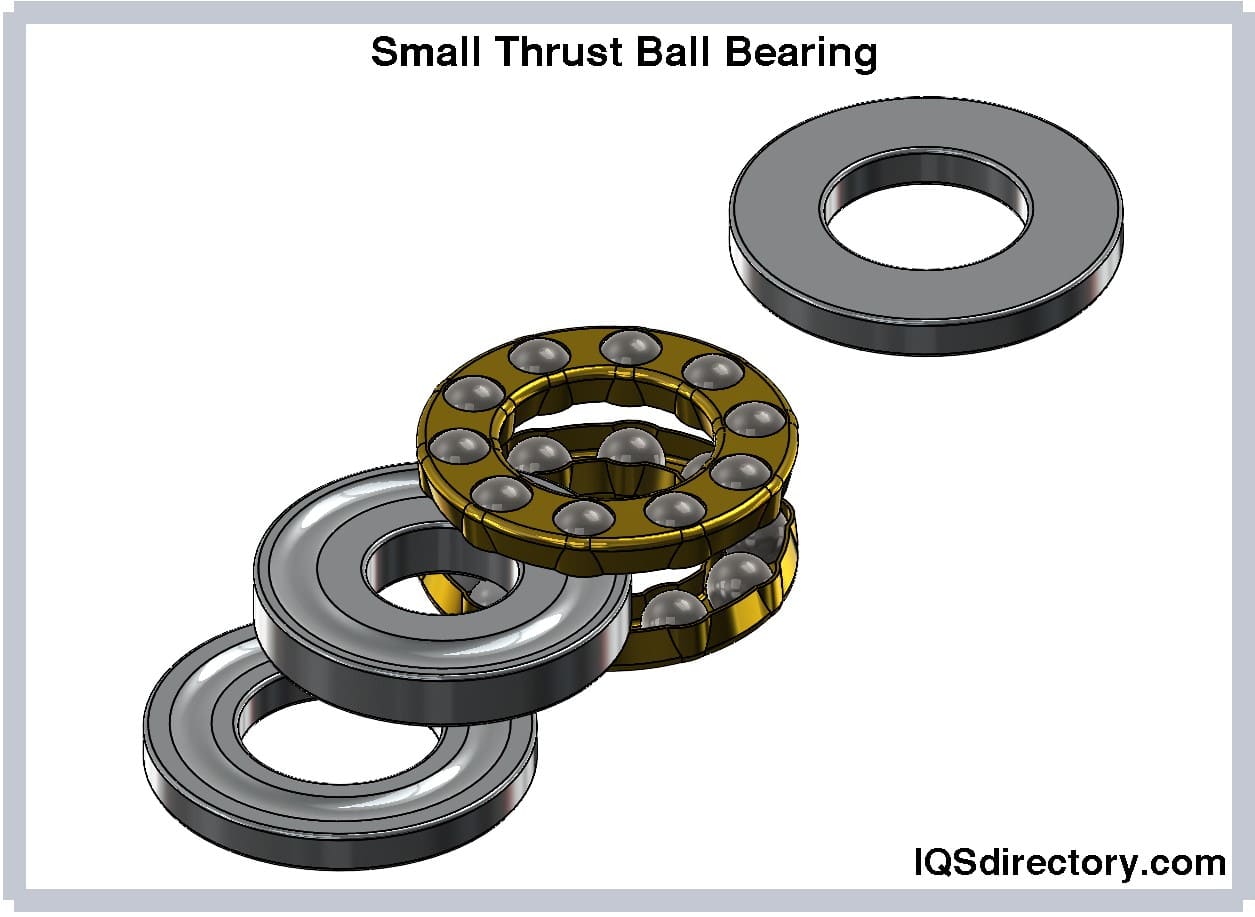
In every application, ball bearings reflect mechanical precision and practical engineering value, contributing to the reliability and advancement of countless technologies. Their continued importance can be seen in production lines, transportation equipment, medical systems, and precision assemblies where consistent motion, low friction, and dependable service life directly affect equipment performance. When engineers or buyers ask, “Which type of ball bearing fits my application?” the answer depends on speed, load direction, mounting conditions, operating temperature, lubrication method, and expected duty cycle.
Benefits of Ball Bearings
Ball bearings offer numerous advantages that make them highly valuable in machinery and equipment. They excel at reducing friction and wear between moving parts, supporting smooth rotation, and improving overall efficiency. Known for durability and long service life, ball bearings are well suited for heavy machinery, precision devices, automation systems, and rotating equipment that must operate with consistency. Their benefits span many applications, helping manufacturers, maintenance teams, and equipment buyers improve performance, uptime, and long-term dependability.
Reduced Friction: By minimizing friction between moving parts, ball bearings help decrease wear and tear, allowing equipment to run more efficiently and with less strain on shafts, housings, and connected components. Reduced friction can also support better energy use and smoother startup performance in motor-driven systems.
Increased Efficiency: Ball bearings enable smooth and consistent rotation, boosting operational efficiency while also reducing energy consumption. This makes them a key component in machinery that demands dependable output, controlled motion, and repeatable performance over long production cycles.
Extended Lifespan: Their robust construction and long-lasting nature enhance the durability of machinery and equipment, reducing the frequency of maintenance and replacements. This extends the overall service life of the system and can lower lifecycle cost for equipment owners focused on uptime and maintenance planning.
High-Speed Capability: Ball bearings are designed to handle high-speed rotations with precision, making them highly useful in applications that require both speed and accuracy, such as automotive engines, machine tools, electric motors, and production equipment where smooth rotation directly affects output quality.
Noise and Vibration Reduction: Ball bearings contribute to quieter operation by reducing noise and vibration. This is particularly valuable in environments where low noise levels matter, such as medical devices, laboratory systems, office equipment, and household appliances where smoother operation improves user experience and product quality.
Enhanced Precision: By ensuring smooth and accurate movement, ball bearings play a major role in applications that demand close tolerances, such as aerospace assemblies, defense systems, robotics, instrumentation, and advanced medical equipment where repeatability and motion accuracy affect system performance.
These attributes make ball bearings highly useful for improving the functionality, efficiency, and longevity of machinery, giving them lasting value in modern mechanical systems. For buyers comparing bearing options, common questions include how to reduce maintenance costs, how to improve machine uptime, and how to select a bearing that balances load capacity, speed, precision, and price without overengineering the application.
Limitations of Ball Bearings
While ball bearings are widely used in many applications, they do have limitations and potential drawbacks that should be considered to achieve dependable performance. Improper installation, poor shaft alignment, contamination, insufficient lubrication, overload, or exposure to demanding environmental conditions can lead to premature failure. Over time, bearings may experience corrosion, wear, heat buildup, or lubricant breakdown, reducing effectiveness and increasing maintenance needs. Ball bearings can also generate noise and vibration during operation, although these issues can often be reduced through sound design, correct internal clearance, accurate mounting, and proper lubrication practices. In high-load or shock-load environments, some applications may require alternative bearing styles, upgraded materials, sealing arrangements, or more specialized bearing configurations.
Applications of Ball Bearings
Ball bearings are valuable across a wide range of industries because they reduce friction and wear between moving parts, support smooth rotation, and improve operating efficiency. They are used in many systems and equipment categories, making them useful in both everyday and highly specialized applications. Whether the goal is to increase speed, improve motion control, support radial or axial loads, or extend equipment life, ball bearings remain one of the most widely selected bearing solutions in rotating machinery.
Aerospace Industry: Ball bearings play a major role in aerospace applications, such as aircraft engines, landing gear, and control systems. Their ability to minimize friction and wear supports efficient and safe aircraft operation while helping systems maintain performance, precision, and long service life under demanding operating conditions.
Automotive Industry: In the automotive sector, ball bearings are used extensively in wheel bearings, transmission systems, and engine components. They help reduce friction between moving parts so vehicles can operate smoothly, efficiently, and reliably in a broad range of temperatures, loads, and driving conditions.
Medical Equipment Industry: Precision and reliability are highly valued in medical devices, and ball bearings are used in surgical tools, diagnostic equipment, imaging systems, pumps, and laboratory instruments. They support smooth operation and accuracy, which helps medical equipment maintain steady, repeatable performance.
Industrial Equipment Industry: Ball bearings are fundamental to industrial equipment, such as conveyor systems, pumps, and electric motors. By reducing friction and supporting efficient operation, they help improve productivity and reliability in demanding production environments where uptime, throughput, and maintenance control matter.
Household Appliance Industry: Common appliances like washing machines, dryers, and refrigerators rely on ball bearings to support smooth and efficient operation. Their ability to reduce wear on moving parts contributes to longer product life, quieter performance, and better overall user satisfaction.
Agriculture Industry: Agricultural equipment, including tractors, harvesters, and irrigation systems, benefits from ball bearings' ability to minimize friction and support efficient performance. Their durability and reliability are highly valued for meeting the demanding conditions of field operations, seasonal workloads, dirt exposure, vibration, and variable weather.

Ball bearings continue to be a cornerstone of mechanical engineering, supporting the functionality and efficiency of equipment in industries ranging from aerospace and automotive to medical, industrial, household, and agriculture. Their versatility, compact design, and dependable performance explain why they are so widely specified in rotating equipment. As searchers compare bearing manufacturers, bearing materials, sealing options, and operating capabilities, ball bearings remain one of the most familiar and widely adopted solutions for reducing friction and improving rotating system performance.
Factors Determining Ball Bearing Choice
Selecting the appropriate ball bearing for a specific application requires a thorough understanding of the various types of ball bearings and their intended uses. Each application has unique operating demands, and the right bearing must meet those requirements to support dependable performance. For example, deep groove ball bearings are often chosen for high-speed, high-precision applications, while self-aligning ball bearings are better suited for setups involving misalignment between the shaft and housing. Buyers and engineers also compare materials, sealing options, lubrication methods, clearance classes, and expected maintenance intervals when narrowing down the right bearing style. Several major factors influence the choice of a ball bearing:
Load Capacity: The load capacity of a ball bearing defines the maximum weight or force it can support. It is important to select a bearing that can handle the radial and axial load requirements of the application to reduce the risk of premature failure and support long-term reliability.
Speed: High-speed applications demand bearings capable of sustaining rapid rotation without generating excessive heat or wear. Matching bearing design, cage style, lubrication method, and tolerance to the intended speed range helps maintain efficient operation and long service life.
Precision: Precision determines the bearing’s ability to rotate accurately without wobbling or excess vibration. Applications requiring exact positioning or stable rotational accuracy, such as medical devices, robotics, instrumentation, or aerospace systems, often rely on higher-precision bearings.
Temperature Range: Extreme temperatures can cause a ball bearing to expand or contract, which may affect internal clearance, lubrication performance, and service life. Bearings should be selected based on their ability to operate within the application's temperature range so performance remains stable under changing conditions.
Lubrication: Proper lubrication strongly affects the performance and longevity of ball bearings. The type and amount of lubrication required vary by application, operating speed, temperature, contamination risk, and maintenance plan, which makes lubrication strategy a major selection factor.
Environmental Factors: Conditions such as humidity, dust, debris, washdown exposure, and chemical contact can affect a bearing's performance and lifespan. Bearings designed for specific environmental demands, including sealed or shielded designs, can help support durability and cleaner operation.
Cost: The cost of a ball bearing can vary significantly based on design, material, tolerance, sealing, and performance requirements. Balancing price with the needed operating performance helps buyers achieve better value while maintaining quality, durability, and application fit.
Choosing the right ball bearing for an application can improve equipment performance, increase efficiency, extend service life, and reduce maintenance costs. Reviewing application requirements in advance can also help buyers avoid overspecifying or underspecifying the bearing. When selecting a bearing, many decision-makers compare bearing type, load handling, speed rating, lubrication requirements, maintenance expectations, and supplier support to identify the best match for both performance goals and budget.
Choosing the Correct Ball Bearings Manufacturer
To achieve the best results when purchasing ball bearings, it is wise to evaluate multiple suppliers. Comparing at least four manufacturers can reveal differences in specialization, engineering support, production capability, lead times, and pricing structure. Each manufacturer typically has a business profile that highlights strengths, applications served, and available products, along with a contact form to request additional information or obtain a quote. Buyers often search for terms such as ball bearing manufacturers, precision ball bearing suppliers, custom bearing solutions, or industrial bearing companies when narrowing down suppliers for a project.
Using resources such as proprietary website preview tools, buyers can review each supplier's offerings to better understand product focus and industry coverage. A simple Request for Quote (RFQ) process can then be used to contact multiple manufacturers at once, helping buyers compare capabilities, pricing, and response quality. This approach can streamline supplier evaluation and lead to a more informed purchasing decision. For companies asking how to choose a ball bearing manufacturer, the most useful starting points are application knowledge, product range, quote responsiveness, quality standards, and the supplier’s ability to support long-term performance goals.