Air Filters
Air filters are engineered to capture, reduce, or remove unwanted airborne particles from moving or stationary air. These filtration products are used in ventilation systems, HVAC equipment, process air lines, and indoor environments where cleaner air supports comfort, equipment protection, product quality, and healthier breathing conditions. Industrial air filtration systems help improve indoor air quality, reduce particulate buildup, and extend the service life of machinery, engines, appliances, and sensitive production equipment exposed to dust, fumes, smoke, and airborne contaminants.
Air Filters FAQ
What are air filters used for in industrial and residential settings?
Air filters remove harmful particles, airborne contaminants, and nuisance pollutants from the air. In industries such as oil and gas, pharmaceuticals, food processing, and manufacturing, they help protect equipment, processes, and workers, while in homes they reduce allergens, dust, pet dander, and odors for cleaner, healthier indoor air.
What is the difference between HEPA and ULPA filters?
HEPA filters capture 99.97% of airborne particles at their tested size range and are common in HVAC systems, hospitals, cleanrooms, and healthcare facilities. ULPA filters provide even finer particulate control, trapping smaller contaminants for laboratories, semiconductor spaces, and other environments with demanding air cleanliness requirements.
How does the MERV rating system measure air filter efficiency?
The MERV rating, established by ASHRAE, ranges from 1 to 20 and helps compare filter efficiency. It reflects how well a filter captures particles across different size ranges while also relating to airflow resistance and expected performance, with higher ratings indicating stronger filtration capability.
Why are air filters important in manufacturing facilities?
Air filters help manufacturers support EPA compliance efforts, extend equipment life, and improve worker safety and comfort. By removing dust, fumes, smoke, and harmful airborne particles, they play a major role in production environments, fabrication shops, processing plants, and facilities throughout the Midwest and across the country.
What materials are commonly used to make air filters?
Air filters can be made from fabrics, paper, metals, plastics, fiberglass, or charcoal-based media. Each material serves a different purpose, such as reusable fabric bags for dust collection, disposable paper filters for routine replacement, durable metal screens for rugged service, or activated carbon media for odor and gas control.
How often should air filters be maintained or replaced?
Maintenance schedules depend on the filter type, contaminant load, airflow conditions, and operating environment. With proper care, many filters can perform beyond a basic service estimate, but regular inspection, cleaning, and replacement help maintain steady air quality, airflow balance, and reliable system performance.
What advantages do air filtration systems provide?
Air filtration systems improve indoor air quality, reduce odors, control particulate levels, and help businesses align with environmental and workplace standards. They are efficient, cost-effective, and versatile enough for residential use, commercial buildings, industrial plants, and specialized process applications.
The History of Air Filters
The concept of air filtration can be traced to the 16th century, when workers used early protective respirators over the nose and mouth to reduce the inhalation of harmful fumes, gases, vapors, and dust. In the 1700s and 1800s, inventors such as Alexander von Humboldt and Lewis P. Haslett advanced air-purifying respirator design. Haslett’s “Lung Protector” used moistened wool and a one-way clapper valve to screen out dust and improve breathing safety in harsh environments.
In the late 1940s, the U.S. Army Chemical Corps and the U.S. Atomic Energy Commission worked together to develop the first HEPA (High-Efficiency Particulate Air) filters. Originally created to protect against radioactive and hazardous particles during the Manhattan Project era, these filters were first known as collective protector filters. After World War II, the technology was declassified and adapted for residential, commercial, and industrial filtration systems. Early versions included asbestos components, but those materials were phased out by the late 1950s as health concerns became better understood.
In the 1960s, after performance concerns were raised about defective filters, the Atomic Energy Commission introduced more formal quality assurance testing. In 1963, German mechanical engineer Klaus Hammes and his brother Manfred designed one of the first clean air filters for residential ovens. Their magnetic filter-pad system attached to an oven air outlet and trapped dust as cool air entered and heated, reducing the black dust buildup often seen on interior surfaces. As people reported improvements in allergy and asthma symptoms, interest in the Hammes design increased. Hammes later developed similar filtration products for radiators, forced-air systems, and the first cabin air filter for the American division of Mercedes-Benz.
Over the decades that followed, engineers refined filter media, frame construction, testing methods, and airflow design. As research revealed more about particulate pollution, allergens, volatile compounds, and airborne health risks, the value of dependable air filtration became even clearer. Today, air filters are available in a wide range of efficiencies, sizes, and configurations for homes, vehicles, healthcare spaces, laboratories, offices, and industrial process environments.
Advantages of Air Filters
Air filtration systems have become a routine part of modern manufacturing because rising pollutant levels can affect operations, emissions, equipment life, and workplace conditions. These systems help businesses manage emission rates while supporting the pollution-control standards set by the EPA.
Beyond environmental performance, air filtration systems offer practical operating advantages. They can be highly efficient, relatively straightforward to maintain, and adaptable to everything from small equipment enclosures to large central dust collection systems. In addition to removing harmful particles, many filters also help control odors, smoke, and process contaminants. For buyers comparing air cleaning options, that mix of performance, serviceability, and long-term value makes filtration a smart and cost-conscious solution.
Air Filter Uses
Air filters are used wherever air must be cleaned, conditioned, or protected, and rising awareness of indoor air quality, process control, and environmental health has increased demand across many sectors. Industries that rely on air filtration include wastewater and sewage treatment, oil and gas, paper and plastics manufacturing, fertilizer production, aerospace, pharmaceuticals, tobacco processing, transportation, rubber production, chemical treatment, meat processing, automotive manufacturing, electronics, and many more.
Within these industries, dependable air filters help protect both production systems and the people working around them. They also matter in residential environments, where everyday comfort and indoor air quality are closely tied to filtration performance. Air filters are commonly found in furnaces, vacuum cleaners, air conditioners, and humidifiers. In homes with pets or issues like mold, mildew, and dust, air filters are particularly beneficial for reducing allergens and airborne irritants. They help capture particles that can trigger allergy symptoms, improving breathing comfort for families and supporting better day-to-day air quality. This is especially valuable for people with asthma, seasonal sensitivities, or other respiratory concerns.
In medical and healthcare settings, air filters help reduce bacteria, viruses, and other harmful microbes that may travel on airborne particles. That added layer of filtration supports cleaner treatment spaces, better infection-control strategies, and healthier indoor environments for patients, staff, and visitors.
Design of Air Filters
-
Materials Found in Filters
Air filter manufacturers use a wide range of media and support materials to build products for different airflow, particle-size, and durability requirements. Common options include fabrics, paper, metal, plastics, fiberglass, and specialty materials such as charcoal or activated carbon. Material choice depends on the application, contaminant profile, service cycle, and filtration target. Fabrics are often used to capture particulate in gas streams, while reusable baghouse filters are common in dust collection. Paper is frequently selected for disposable panel filters. Metals such as stainless steel are used for rugged screen-style filtration, and plastics are common in electrostatic designs that use natural static attraction to pull in dust. Charcoal and activated carbon media are valued when odor, vapor, or chemical adsorption is part of the filtration goal.
Filter Design Considerations
When choosing the right filter for a particular application, manufacturers and buyers need to consider more than just basic efficiency. Performance is influenced by fiber size, media density, airflow velocity, pressure drop, contaminant size, particulate loading, available installation space, and power demand. Some applications also require attention to moisture, temperature, chemical exposure, or the possibility of sticky particles that may affect media performance. In general, denser filters capture more particles and deliver stronger air cleaning, but they can also create greater resistance to airflow, which may increase fan energy requirements and influence overall system design.
Customization of Air Filters
Many manufacturers also provide custom air filters for systems that require nonstandard dimensions, special frame materials, unusual airflow patterns, or process-specific media. Customization may include filter length, thickness, width, frame shape, gasket details, support layers, and media selection so the finished filter matches the exact needs of the equipment or environment.
Air Filtration Images, Diagrams and Visual Concepts
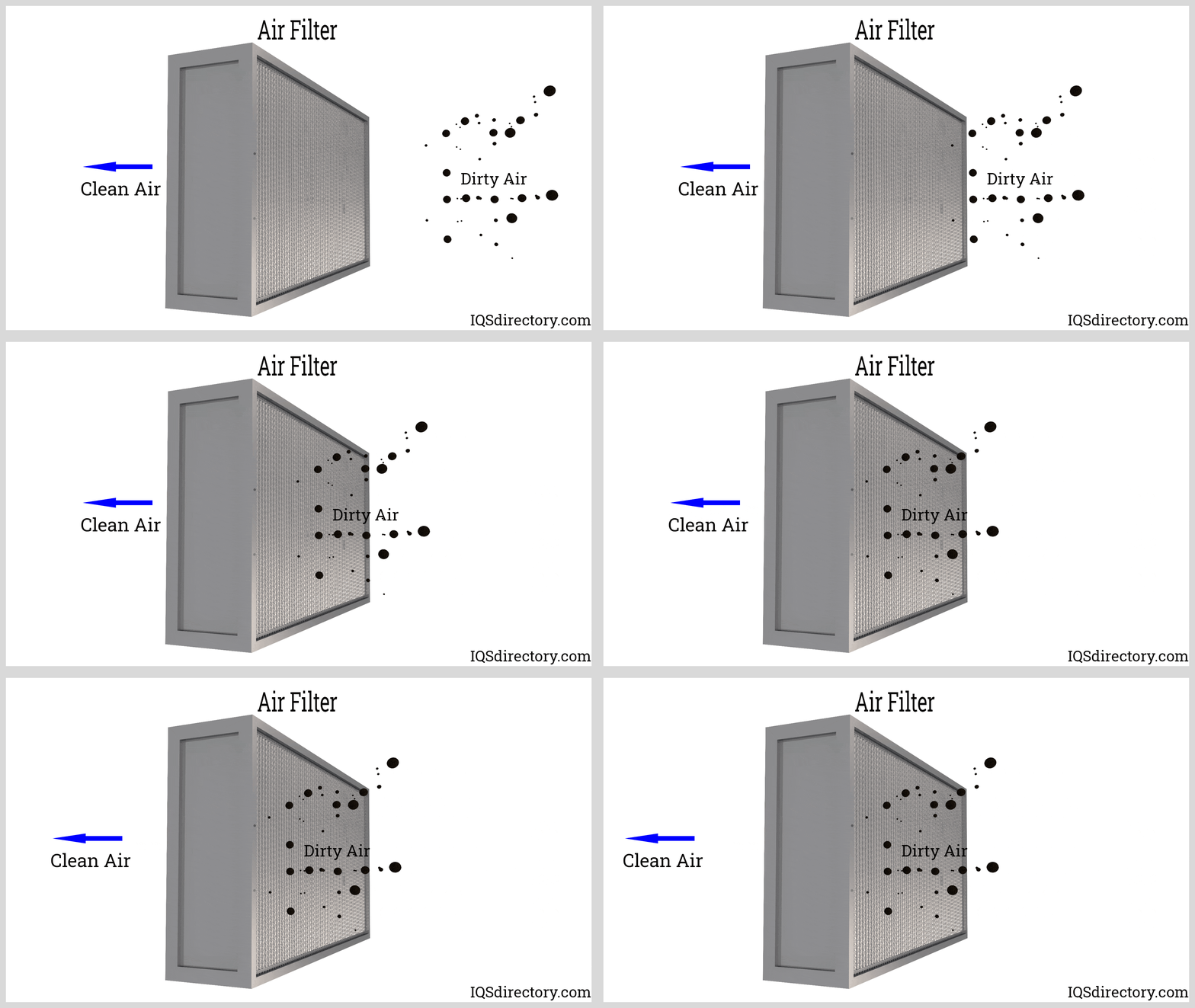 Air filters are used to remove airborne particles, pollutants, and microorganisms hazardous to health and the ecosystem.
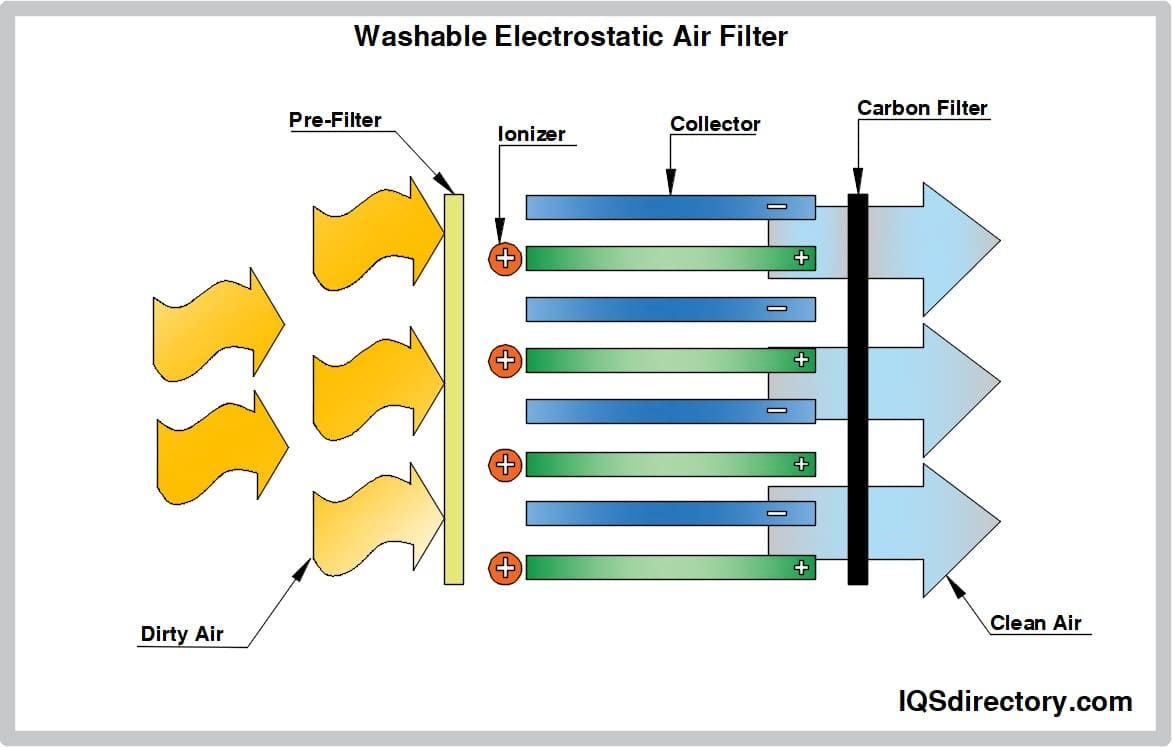 Washable electrostatic air filters operates electrostatic filter media, when the air encounter friction the media holds the particles with static electricity until the filter is washed.
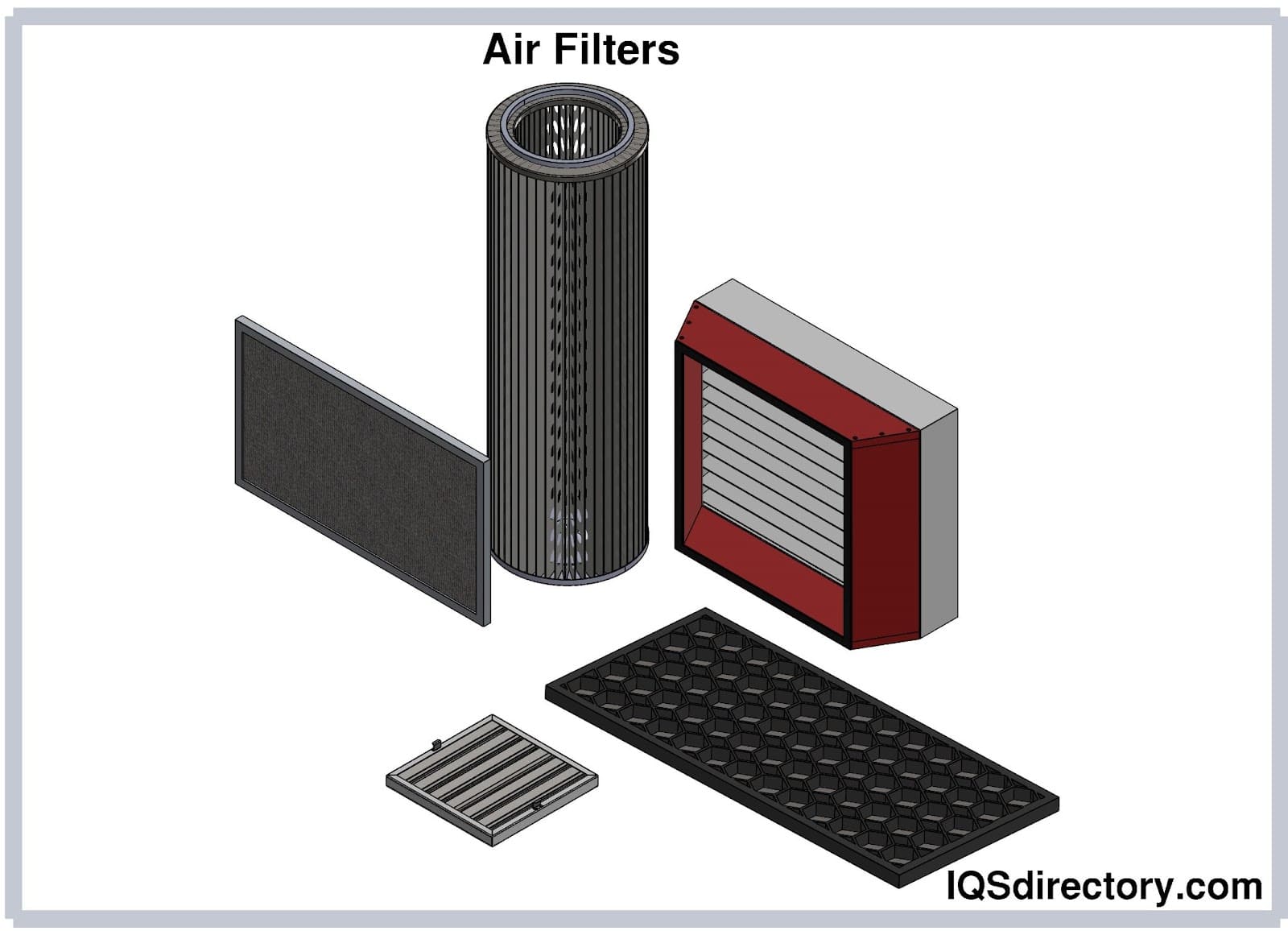 Air filters are manufactured in different shapes and sizes to remove particles and pollutants from ambient air.
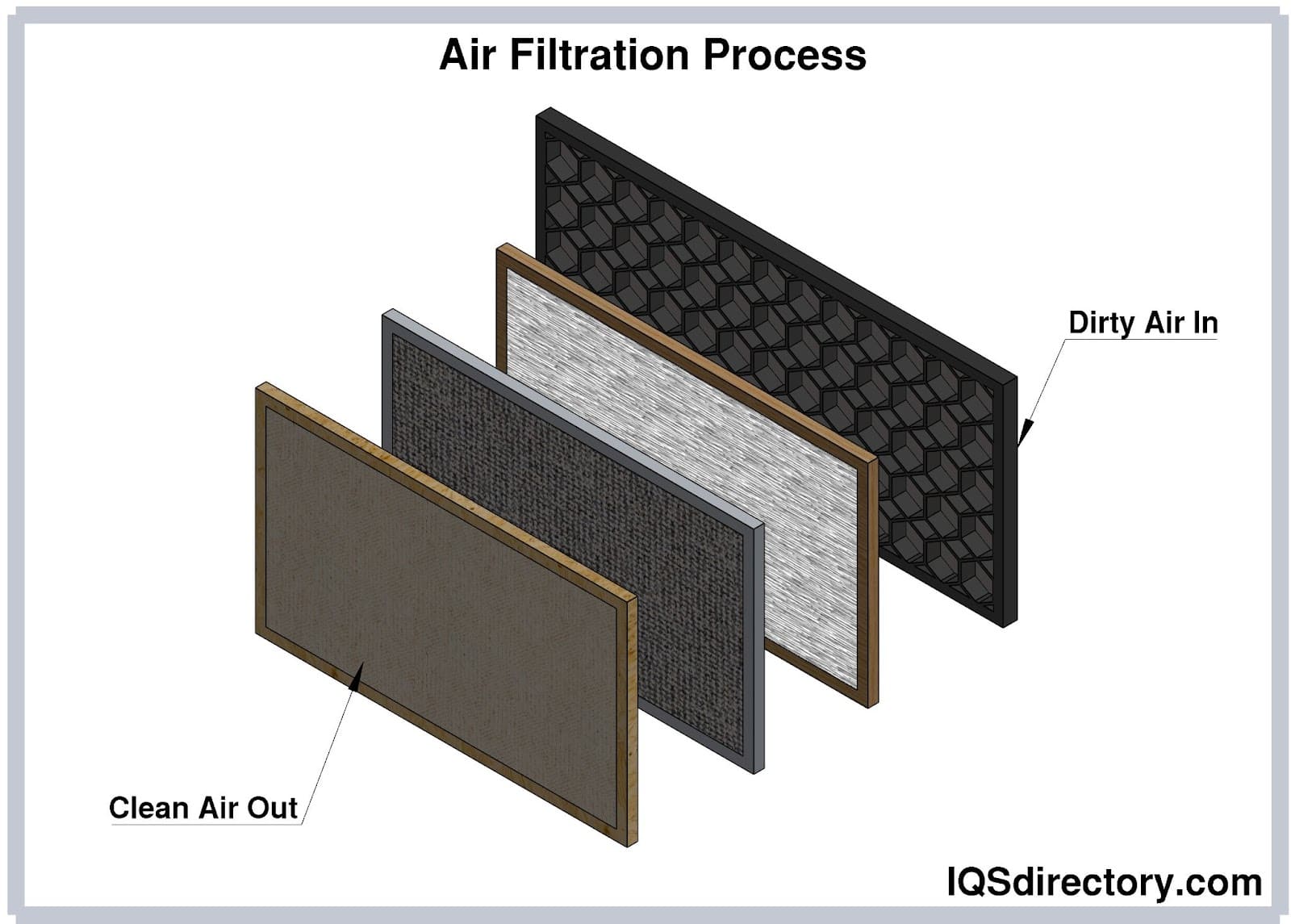 How air filters work by drawing unclean air to pass through a filtered medium with fine openings.
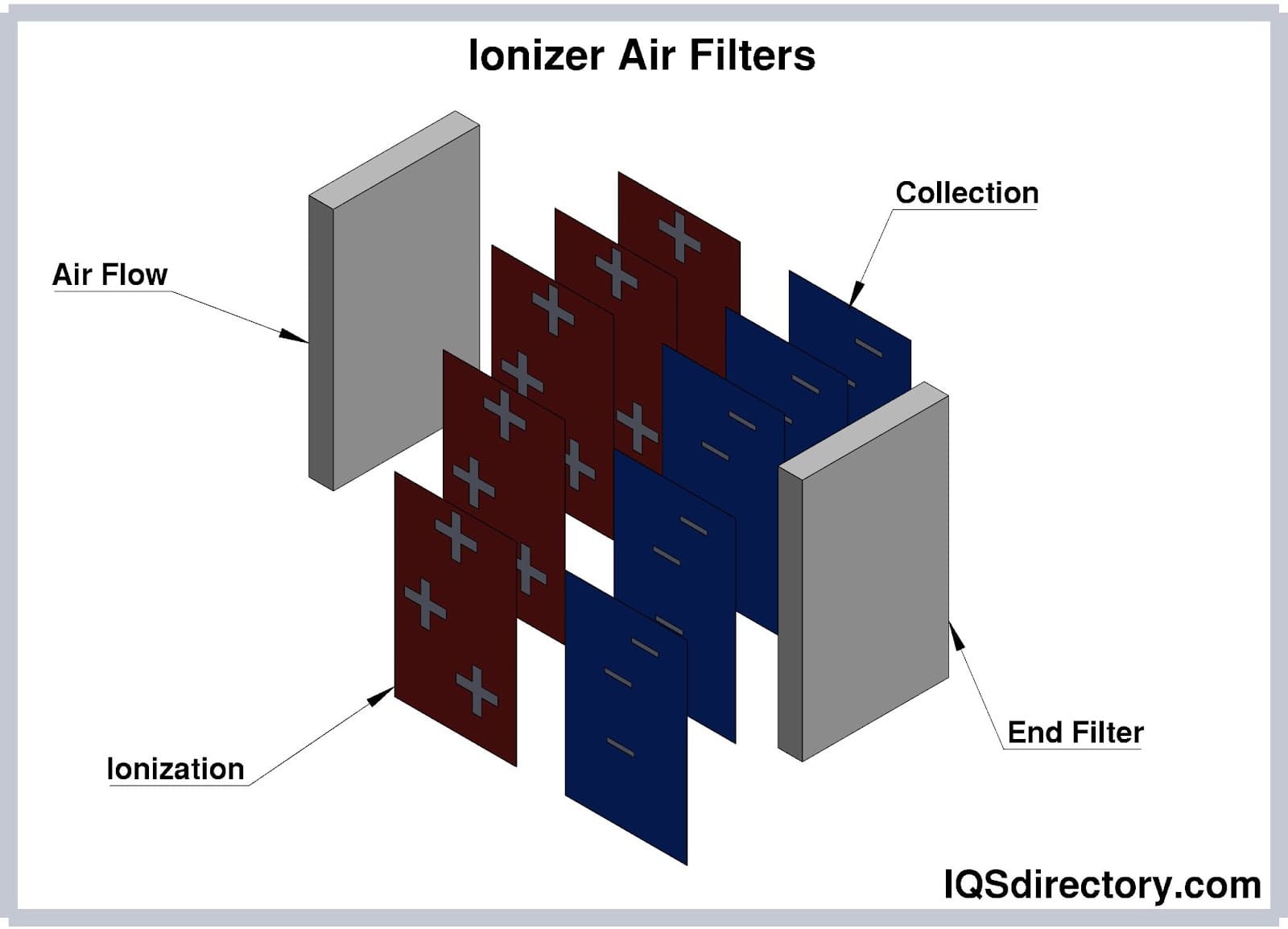 An ionizer air filters the air passes through a prefilter then an ionizer where the airborne particles are electrical charged.
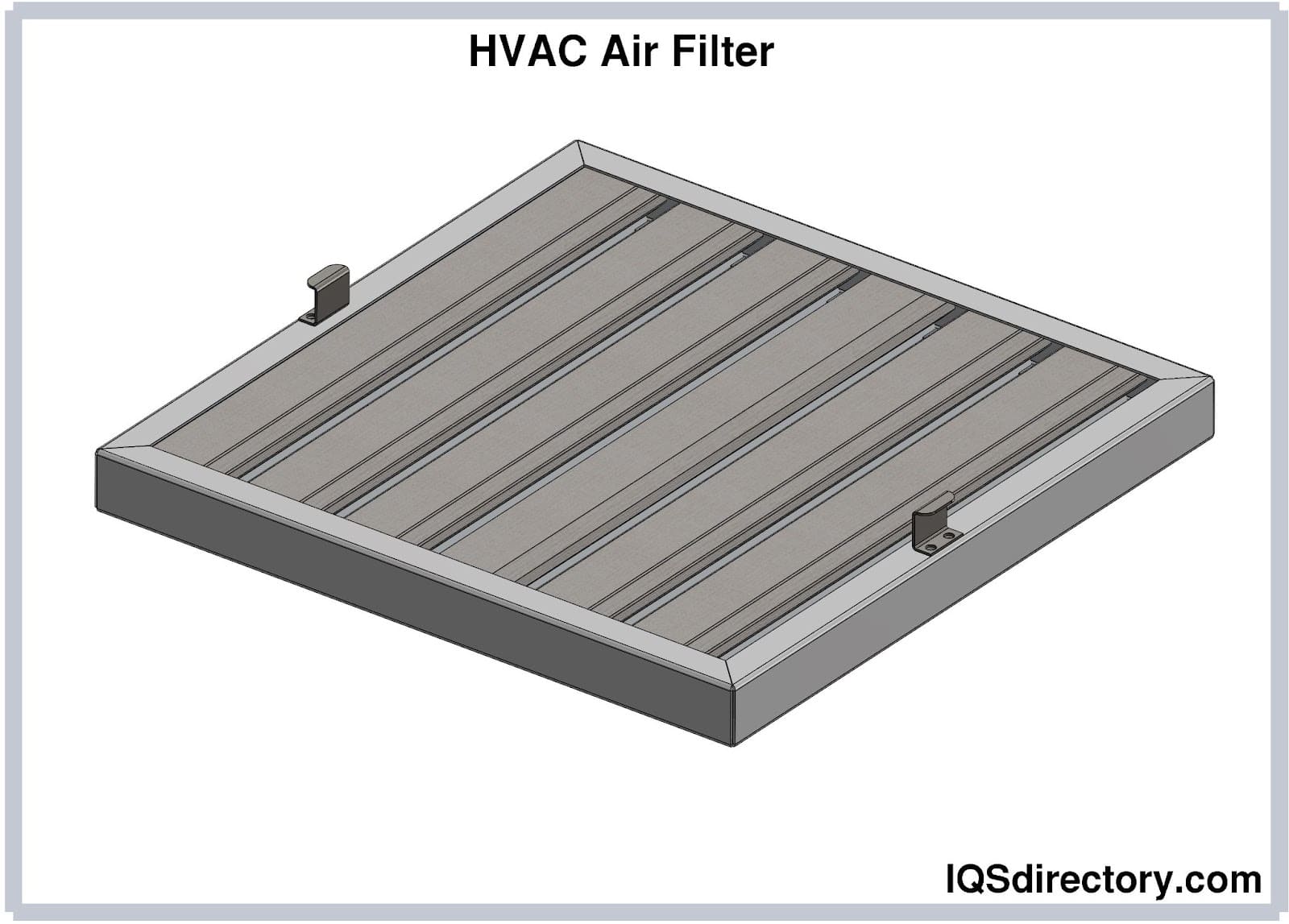 HVAC filters prevent particulates and other contaminants from entering the internal components of a HVAC system which could damage the system.
Air Filtration Types
Air Filtration System Categories
Air filtration systems generally fall into two main categories: electrical and mechanical. Within those categories are many specialized filtration technologies, each designed for a certain airflow pattern, particle range, service environment, or contaminant-control goal. Below are common types of filters and air cleaning systems along with their typical uses.
Flat-Paneled Fiberglass Filter
These filters usually provide entry-level to medium efficiency with ratings between 1 and 4. Their rigid structure helps protect the media from damage during handling and installation. They are useful for capturing larger airborne particles and protecting downstream equipment, but they are less effective against fine dust, smoke, bacteria, and other smaller contaminants.
Pleated Filter
Pleated polyester filters are disposable filters designed to capture both larger debris and many smaller airborne particles. Often rated between 7 and 13, they are widely used in residential, light commercial, and general HVAC applications because they offer a solid balance of filtration efficiency, airflow, and cost. For many buyers, they provide stronger everyday filtration than basic fiberglass panels without the higher system demands associated with true HEPA media.
HVAC Filter
High-efficiency HVAC-style filters are commonly used in home and commercial heating, ventilation, and air-conditioning systems where improved particulate control is needed. In many systems they offer stronger filtration than basic panel filters, though they can create higher airflow resistance, so buyers should confirm compatibility with the blower, duct design, and operating conditions.
HEPA Filter
HEPA filters are known for providing very high air-cleaning performance by removing 99.97% of particles at their tested size range. They are widely used in healthcare spaces, hospital operating rooms, pharmaceutical facilities, laboratories, clean process environments, and select HVAC systems where fine particulate control, allergen reduction, and dependable indoor air quality are top priorities.
Ulpa Filter
The Ultra-Low Particulate Air (ULPA) filter is similar to a HEPA filter but is designed for even finer particulate capture. ULPA filters are used in laboratories, electronics production, cleanrooms, and other environments with very strict air cleanliness standards and tightly controlled contamination limits.
Inline Filter
Inline or line filters are installed in ductwork, tubing, or process lines to remove impurities, condensate, oil, or liquid carryover from an air stream before it reaches downstream equipment or a point of use.
Membrane Filter
These filters use thin, microporous films to trap, retain, or separate particulate impurities from an air source passing through the media. They are often selected when fine particulate retention and consistent pore structure are important.
Air Compressor Filter
Air compressor filters remove contaminants such as water, oil, dust, scale, and vapors from compressed air supplies, helping protect pneumatic tools, machinery, instrumentation, and downstream production processes that require clean, dry air.
Electrostatic Filter
Electrostatic filters provide a long-service filtration option by using static attraction to capture airborne particles. Many designs are washable or reusable and can perform effectively without an external power source, which makes them appealing for buyers seeking lower recurring replacement costs.
Furnace Filter
Furnace filters are installed in residential and commercial heating systems to capture dust, dirt, mold spores, lint, pet dander, and other common airborne allergens. They are generally easy to install and replace, making them one of the most familiar and widely purchased categories of HVAC filter.
Carbon Air Filter
Carbon air filters are specialized filtration products designed to remove gases, odors, fumes, and certain volatile compounds from air streams. They are often paired with particulate filters when buyers need both particle control and odor or vapor reduction.
Exhaust Filter
Exhaust filters remove soot and particulate matter from vehicle or process exhaust streams before discharge, helping reduce pollution and support cleaner emissions control.
Cabin Air Filter
Cabin air filters are used in vehicles to clean outside air before it enters the passenger compartment, helping create a fresher, lower-dust, and more comfortable cabin environment for drivers and passengers.
Oil Filter
Oil filters remove contaminants from circulating oil in machinery and fluid systems, especially in hydraulic applications. Common examples include filters for engine oil, transmission oil, hydraulic oil, and lubrication systems where fluid cleanliness directly affects wear and performance.
Thermodynamic Sterilization
Thermodynamic sterilization devices use heat, sometimes reaching 200°C, to treat an airflow and deactivate many organisms such as bacteria, allergens, molds, and mildew. They are generally classified as air purifiers rather than true air filters because they do not physically capture particulate matter or gaseous contaminants. These units are often considered for homes and offices where biological control is the main concern and heavy gas loading is not present.
UV Germicidal Technique
Ultraviolet Germicidal Irradiation (UVGI) uses UV energy to neutralize biological contaminants moving through an air stream. In many systems, a UV lamp and fan move air past the treatment zone, after which a filter captures and removes dead biological material and other particulate matter.
Polarized-Media Electronic Air Cleaner
This filtration technology uses an enhanced electronic medium to remove contaminants from an environment or moving air stream. By creating a polarized field through AC-to-DC conversion, it attracts and captures particles on a fiber pad. The method is effective at removing very small contaminants and is often used in industrial settings that need cleaner, lower-odor operating conditions.
Photocatalytic Oxidation Filter
PCO filtration is a newer air-cleaning technique that combines contaminant reduction with building-efficiency benefits. In some applications it can support energy goals by helping manage unconditioned air movement and improving the performance of broader building-management strategies.
Ionizer
Ionizers treat the air by electrically charging particles in the airflow so they can be attracted to a negatively charged collection surface. This technique is used in industrial, commercial, and environmental applications where ongoing airborne particle control is needed.
Standards and Specifications for Air Filters
The American Society for Heating, Refrigerating, and Air-Conditioning Engineers (ASHRAE) established the Minimum Efficiency Reporting Value, or MERV, as a standard way to evaluate air filtration performance. The MERV scale ranges from 1, representing lower efficiency, to 20, representing much stronger filtration performance. Buyers often use this rating to compare how well filters remove particles, how they may affect airflow resistance, and how suitable they are for a given HVAC or industrial air-handling application.
Things to Consider When Purchasing an Air Filter
With so many air filter products, media options, sizes, and efficiency ratings on the market, finding the right solution starts with clear application details and guidance from a reliable source. The best support often comes from experienced air filter manufacturers and suppliers who can match product specifications to airflow, contaminant type, maintenance goals, and budget expectations.
At IQS, we've compiled a list of top industry manufacturers, complete with their contact details and websites, all in one convenient location. To find the right provider, browse through their websites, which are listed at the top of this page. As you compare suppliers, look for information about filtration efficiency, replacement intervals, custom sizing, frame materials, dust-holding capacity, lead times, and pricing. Ask practical search-style questions such as: Which air filter is best for my application? Do I need HEPA, carbon, pleated, or electrostatic media? What MERV rating fits my HVAC system or industrial process? Reach out to three or four manufacturers with your specifications, compare their responses, and choose the company that best matches your needs, timeline, and service expectations.
Proper Care for Air Filters
Air filters perform best when they are selected for the right particulate type, airflow volume, and operating environment. With proper maintenance, regular inspection, and timely cleaning or replacement, many filters can meet or exceed expected service life while delivering dependable performance, stronger indoor air quality, and better equipment protection over time.
Filter Accessories
Air filter accessories include items such as adaptor flanges, hardware kits, valve covers, filter vent tubes, gaskets, mounting components, and vent hose adaptors. To determine which accessories are compatible with your filter housing, airflow setup, or replacement schedule, consult with your supplier.
Air Filter Terms
-
Adsorption
The process in which gas, liquid, or solid molecules are retained on a surface due to positive interactions or attraction between the surface and the adsorbed material.
Air Borne
Referring to particles or substances that are suspended in the air.
Air Stream
A flow or current of air.
Allergen
A substance that causes an immediate immune system response in sensitive individuals.
Arrestance
An air filter’s ability to capture synthetic dust during testing.
Clean Air Delivery Rate (CADR)
The amount of clean air a filtration system can produce over a given period of time.
Containment
The act of preventing an agent from spreading or being transmitted from one location to another.
Contamination
The presence of harmful or unwanted particles, often in the air.
Decontamination
The process of removing harmful airborne particles to neutralize the air.
Filter Medium
The material used in filters that allows substances to pass through while trapping unwanted particles. This is often foam or a membrane material.
Filter Penetration
The occurrence of particles passing through an air filter without being trapped.
Filtrate
The substance that has been filtered.
Indoor Air Quality
A measure of the level of pollutants present in the air within a confined space.
Interception
The capture of particles when they come within a certain distance of a filter fiber.
Media Velocity
The speed at which air travels through the filter medium.
Micron
A unit of measurement equal to one-millionth of a meter, often used to describe particle size.
Ozone
A molecule composed of three oxygen atoms. While harmful at ground level, ozone plays an important role in the stratosphere by blocking ultraviolet radiation.
Particulate
Very small particles suspended in a gas or liquid, often targeted for removal by filtration systems.
Pleat
A fold in the filter medium that increases surface area and improves dust-holding capacity.
Pressure Drop
The reduction in air pressure that occurs as air passes through a filter.
Respirator
A personal protective device worn to filter airborne contaminants before they are inhaled.